Oriental Carpets
Func%on	
  of	
  carpets	
  
•  Floor	
  covering	
  
•  Prayer	
  rugs	
  
•  Saddle	
  blankets	
  and	
  saddle	
  bags	
  
•  Status	
  symbols	
  
•  Collect	
  individual	
  and	
  community	
  narra%ves	
  
•  Preserve	
  cultural	
  iden%ty	
  –	
  women	
  passed	
  down	
  
their	
  techniques	
  and	
  designs	
  to	
  daughters	
  
•  Carpets	
  can	
  be	
  iden%fied	
  to	
  the	
  region	
  based	
  on	
  
style	
  and	
  mo%f.	
  
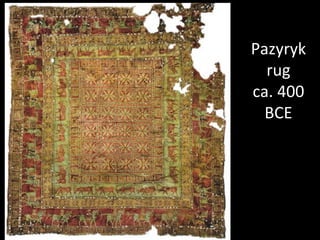
Pazyryk	
  
rug	
  
ca.	
  400	
  
BCE	
  
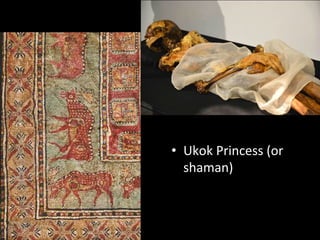
•  Ukok	
  Princess	
  (or	
  
shaman)	
  
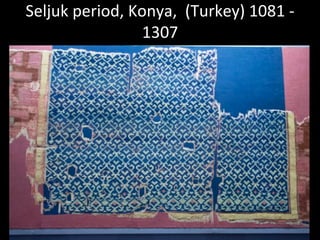
Seljuk	
  period,	
  Konya,	
  	
  (Turkey)	
  1081	
  -­‐	
  
1307	
  
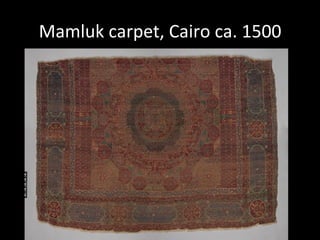
Mamluk	
  carpet,	
  Cairo	
  ca.	
  1500	
  
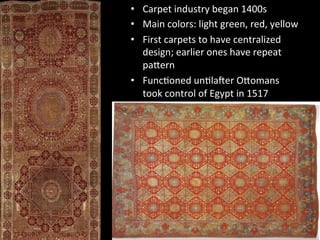
•  Carpet	
  industry	
  began	
  1400s	
  
•  Main	
  colors:	
  light	
  green,	
  red,	
  yellow	
  
•  First	
  carpets	
  to	
  have	
  centralized	
  
design;	
  earlier	
  ones	
  have	
  repeat	
  
paVern	
  
•  Func%oned	
  un%laWer	
  OVomans	
  
took	
  control	
  of	
  Egypt	
  in	
  1517	
  	
  
Major	
  centers	
  of	
  carpet	
  weaving	
  
Safavid	
  Dynasty,	
  Iran	
  (1501	
  –	
  1722)	
  
•  Generally	
  considered	
  best	
  quality	
  and	
  most	
  influen%al	
  carpets	
  
worldwide	
  
Mughal	
  Dynasty,	
  India	
  (1526	
  –	
  1858)	


OVoman	
  Empire,	
  Turkey	
  (1516	
  –	
  1918)	
  
Safavid	
  Dynasty	
  
•  Carpets	
  from	
  Persia	
  (now	
  Iran)	
  are	
  s%ll	
  named	
  
aWer	
  the	
  area	
  in	
  which	
  they	
  were	
  made:	
  
Hamadan,	
  Kerman,	
  Tabriz,	
  Shiraz,	
  Bidjar	
  
•  During	
  %me	
  of	
  Safavid	
  Dynasty,	
  carpets	
  were	
  
oWen	
  designed	
  by	
  miniature	
  painters,	
  so	
  
figura%ve	
  elements	
  were	
  not	
  uncommon.	
  
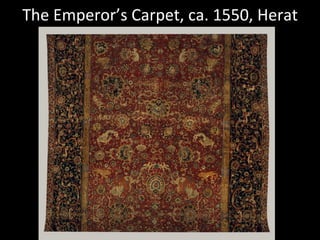
The	
  Emperor’s	
  Carpet,	
  ca.	
  1550,	
  Herat	
  
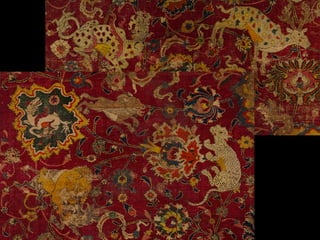
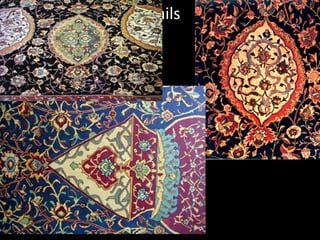
Details	
  
hVp://www.metmuseum.org/
metmedia/video/collec%ons/isl/
conserving-­‐the-­‐emperors-­‐carpet	
  
•  Restora%on	
  of	
  the	
  Emperor’s	
  Carpet	
  
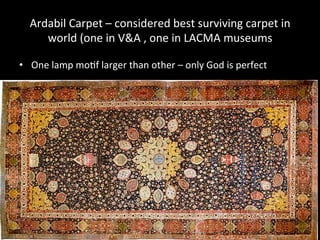
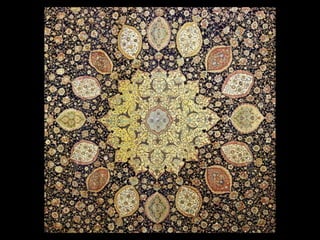
Ardabil	
  Carpet	
  –	
  considered	
  best	
  surviving	
  carpet	
  in	
  
world	
  (one	
  in	
  V&A	
  ,	
  one	
  in	
  LACMA	
  museums	
  
•  One	
  lamp	
  mo%f	
  larger	
  than	
  other	
  –	
  only	
  God	
  is	
  perfect	
  
Mughal	
  Dynasty	
  
•  Akbar	
  	
  brought	
  weavers	
  to	
  his	
  capital	
  in	
  the	
  
Agra	
  district	
  from	
  Persia.	
  
•  India	
  probably	
  had	
  no	
  cultural	
  tradi%on	
  of	
  
carpet	
  weaving	
  prior	
  to	
  this.	
  
•  Na%ve	
  Indians	
  and	
  Chinese	
  ar%sts	
  helped	
  
shape	
  a	
  unique	
  Mughal	
  style.	
  
•  Jahangir	
  encouraged	
  ar%sts	
  to	
  create	
  
naturalis%c	
  (realis%c)	
  renderings.	
  
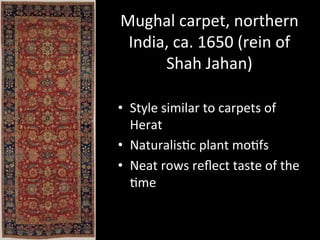
Mughal	
  carpet,	
  northern	
  
India,	
  ca.	
  1650	
  (rein	
  of	
  
Shah	
  Jahan)	
  
•  Style	
  similar	
  to	
  carpets	
  of	
  
Herat	
  
•  Naturalis%c	
  plant	
  mo%fs	
  
•  Neat	
  rows	
  reflect	
  taste	
  of	
  the	
  
%me	
  
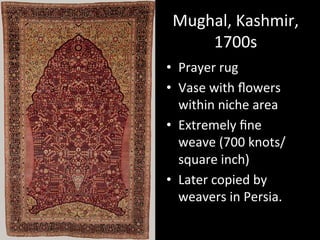
Mughal,	
  Kashmir,	
  
1700s	
  
•  Prayer	
  rug	
  
•  Vase	
  with	
  flowers	
  
within	
  niche	
  area	
  
•  Extremely	
  fine	
  
weave	
  (700	
  knots/
square	
  inch)	
  
•  Later	
  copied	
  by	
  
weavers	
  in	
  Persia.	
  
OVoman	
  Period	
  
•  Turkish	
  tribal	
  rugs	
  largely	
  used	
  geometric	
  repeat	
  
paVerns	
  and	
  animal	
  figures.	

  
•  During	
  the	
  OVoman	
  period,	
  carpets	
  were	
  
exported	
  to	
  Europe;	
  some	
  paVerns	
  were	
  so	
  
frequently	
  depicted	
  in	
  a	
  painter’s	
  work	
  that	
  the	
  
paVern	
  now	
  carries	
  their	
  name,	
  i.e.,	
  “LoVo”	
  or	
  
“Holbein”.	
  
•  In	
  court	
  workshops,	
  Egyp%an,	
  Chinese	
  and	
  
Persian	
  influences	
  could	
  be	
  seen	
  in	
  carpets	
  
produced	
  there	
  as	
  the	
  OVomans	
  conquered	
  new	
  
territories.	
  
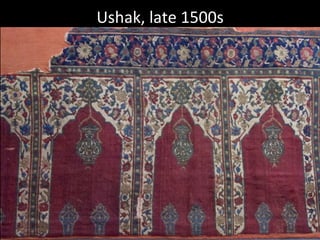
Ushak,	
  late	
  1500s	
  
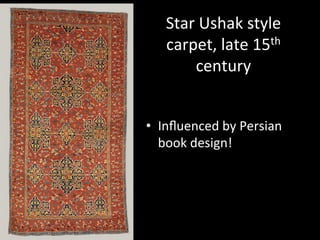
Star	
  Ushak	
  style	
  
carpet,	
  late	
  15th	
  
century	
  
•  Influenced	
  by	
  Persian	
  
book	
  design!	
  
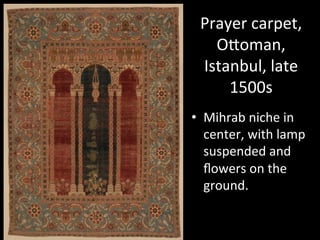
Prayer	
  carpet,	
  
OVoman,	
  
Istanbul,	
  late	
  
1500s	
  
•  Mihrab	
  niche	
  in	
  
center,	
  with	
  lamp	
  
suspended	
  and	
  
flowers	
  on	
  the	
  
ground.	
  
Tribal	
  rugs	
  
•  Other	
  side	
  of	
  the	
  spectrum	
  from	
  the	
  finely	
  
wrought	
  court	
  workshop	
  produc%on	
  of	
  the	
  
Safavid,	
  Mughals	
  or	
  OVomans.	
  
•  For	
  centuries,	
  nomadic	
  and	
  semi-­‐nomadic	
  
peoples	
  of	
  Central	
  Asia	
  have	
  woven	
  rugs	
  for	
  
personal	
  use	
  and	
  for	
  sale	
  along	
  the	
  trade	
  routes,	
  
like	
  the	
  Silk	
  Road,	
  that	
  crisscross	
  the	
  region.	
  
•  The	
  geometric	
  paVerns	
  func%on	
  much	
  like	
  
heraldry	
  in	
  the	
  medieval	
  Western	
  world,	
  and	
  as	
  
tribal	
  history	
  –	
  deno%ng	
  tribes	
  and	
  their	
  
affilia%ons,	
  marriages,	
  and	
  the	
  poli%cal	
  forces	
  
which	
  ruled	
  during	
  that	
  %me	
  period.	
  
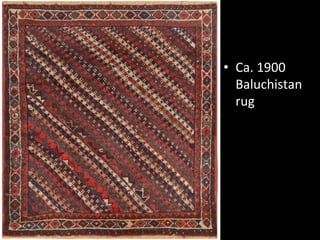
•  Ca.	
  1900	
  
Baluchistan	
  
rug	
  
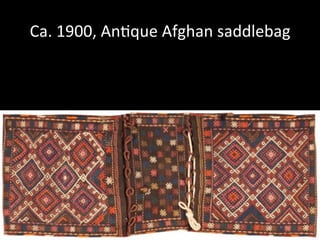
Ca.	
  1900,	
  An%que	
  Afghan	
  saddlebag	
  
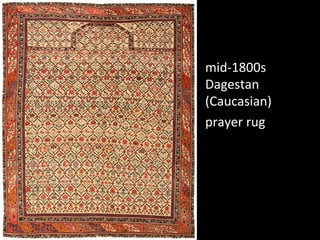
mid-­‐1800s	
  
Dagestan	
  
(Caucasian)	
  
prayer	
  rug	


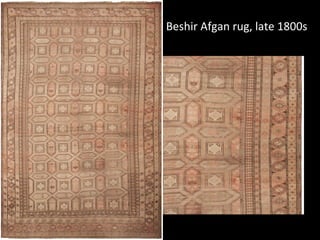
Beshir	
  Afgan	
  rug,	
  late	
  1800s	
  
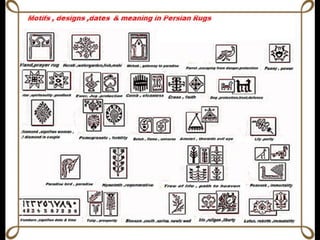
Mo%fs	
  
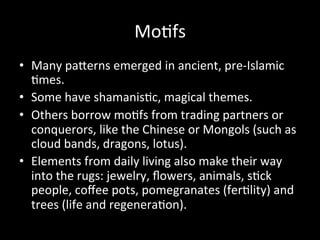
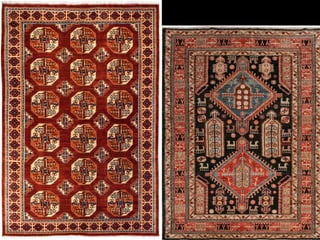
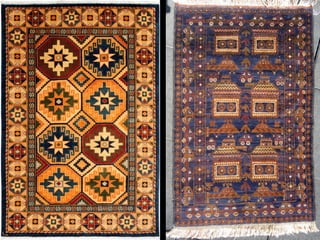
•  Many	
  paVerns	
  emerged	
  in	
  ancient,	
  pre-­‐Islamic	
  
%mes.	
  	
  
•  Some	
  have	
  shamanis%c,	
  magical	
  themes.	
  
•  Others	
  borrow	
  mo%fs	
  from	
  trading	
  partners	
  or	
  
conquerors,	
  like	
  the	
  Chinese	
  or	
  Mongols	
  (such	
  as	
  
cloud	
  bands,	
  dragons,	
  lotus).	
  	
  
•  Elements	
  from	
  daily	
  living	
  also	
  make	
  their	
  way	
  
into	
  the	
  rugs:	
  jewelry,	
  flowers,	
  animals,	
  s%ck	
  
people,	
  coffee	
  pots,	
  pomegranates	
  (fer%lity)	
  and	
  
trees	
  (life	
  and	
  regenera%on).	
  
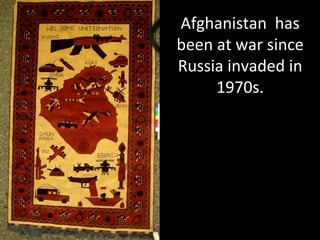
Afghanistan	
  	
  has	
  
been	
  at	
  war	
  since	
  
Russia	
  invaded	
  in	
  
1970s.	
  
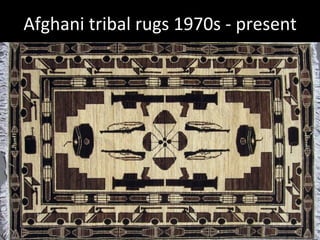
Afghani	
  tribal	
  rugs	
  1970s	
  -­‐	
  present	
  
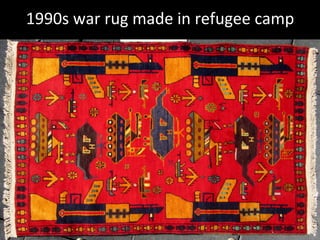
1990s	
  war	
  rug	
  made	
  in	
  refugee	
  camp	
  
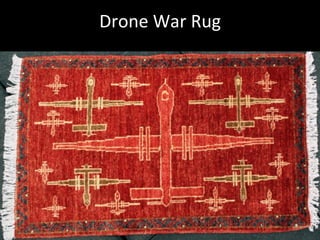
Drone	
  War	
  Rug	
  
hVp://www.npr.org/
2015/02/07/384576113/war-­‐rugs-­‐
reflect-­‐afghanistans-­‐long-­‐history-­‐
with-­‐conflict	
  

Oriental carpets 1

  • 1.
  • 2.
    Func%on  of  carpets   •  Floor  covering   •  Prayer  rugs   •  Saddle  blankets  and  saddle  bags   •  Status  symbols   •  Collect  individual  and  community  narra%ves   •  Preserve  cultural  iden%ty  –  women  passed  down   their  techniques  and  designs  to  daughters   •  Carpets  can  be  iden%fied  to  the  region  based  on   style  and  mo%f.  
  • 3.
    Pazyryk   rug   ca.  400   BCE  
  • 4.
    •  Ukok  Princess  (or   shaman)  
  • 5.
    Seljuk  period,  Konya,    (Turkey)  1081  -­‐   1307  
  • 6.
  • 7.
    •  Carpet  industry  began  1400s   •  Main  colors:  light  green,  red,  yellow   •  First  carpets  to  have  centralized   design;  earlier  ones  have  repeat   paVern   •  Func%oned  un%laWer  OVomans   took  control  of  Egypt  in  1517    
  • 8.
    Major  centers  of  carpet  weaving   Safavid  Dynasty,  Iran  (1501  –  1722)   •  Generally  considered  best  quality  and  most  influen%al  carpets   worldwide   Mughal  Dynasty,  India  (1526  –  1858)     OVoman  Empire,  Turkey  (1516  –  1918)  
  • 9.
    Safavid  Dynasty   • Carpets  from  Persia  (now  Iran)  are  s%ll  named   aWer  the  area  in  which  they  were  made:   Hamadan,  Kerman,  Tabriz,  Shiraz,  Bidjar   •  During  %me  of  Safavid  Dynasty,  carpets  were   oWen  designed  by  miniature  painters,  so   figura%ve  elements  were  not  uncommon.  
  • 11.
    The  Emperor’s  Carpet,  ca.  1550,  Herat  
  • 13.
  • 14.
  • 15.
    Ardabil  Carpet  –  considered  best  surviving  carpet  in   world  (one  in  V&A  ,  one  in  LACMA  museums   •  One  lamp  mo%f  larger  than  other  –  only  God  is  perfect  
  • 17.
    Mughal  Dynasty   • Akbar    brought  weavers  to  his  capital  in  the   Agra  district  from  Persia.   •  India  probably  had  no  cultural  tradi%on  of   carpet  weaving  prior  to  this.   •  Na%ve  Indians  and  Chinese  ar%sts  helped   shape  a  unique  Mughal  style.   •  Jahangir  encouraged  ar%sts  to  create   naturalis%c  (realis%c)  renderings.  
  • 18.
    Mughal  carpet,  northern   India,  ca.  1650  (rein  of   Shah  Jahan)   •  Style  similar  to  carpets  of   Herat   •  Naturalis%c  plant  mo%fs   •  Neat  rows  reflect  taste  of  the   %me  
  • 19.
    Mughal,  Kashmir,   1700s   •  Prayer  rug   •  Vase  with  flowers   within  niche  area   •  Extremely  fine   weave  (700  knots/ square  inch)   •  Later  copied  by   weavers  in  Persia.  
  • 20.
    OVoman  Period   • Turkish  tribal  rugs  largely  used  geometric  repeat   paVerns  and  animal  figures.   •  During  the  OVoman  period,  carpets  were   exported  to  Europe;  some  paVerns  were  so   frequently  depicted  in  a  painter’s  work  that  the   paVern  now  carries  their  name,  i.e.,  “LoVo”  or   “Holbein”.   •  In  court  workshops,  Egyp%an,  Chinese  and   Persian  influences  could  be  seen  in  carpets   produced  there  as  the  OVomans  conquered  new   territories.  
  • 21.
  • 22.
    Star  Ushak  style   carpet,  late  15th   century   •  Influenced  by  Persian   book  design!  
  • 23.
    Prayer  carpet,   OVoman,   Istanbul,  late   1500s   •  Mihrab  niche  in   center,  with  lamp   suspended  and   flowers  on  the   ground.  
  • 24.
    Tribal  rugs   • Other  side  of  the  spectrum  from  the  finely   wrought  court  workshop  produc%on  of  the   Safavid,  Mughals  or  OVomans.   •  For  centuries,  nomadic  and  semi-­‐nomadic   peoples  of  Central  Asia  have  woven  rugs  for   personal  use  and  for  sale  along  the  trade  routes,   like  the  Silk  Road,  that  crisscross  the  region.   •  The  geometric  paVerns  func%on  much  like   heraldry  in  the  medieval  Western  world,  and  as   tribal  history  –  deno%ng  tribes  and  their   affilia%ons,  marriages,  and  the  poli%cal  forces   which  ruled  during  that  %me  period.  
  • 25.
    •  Ca.  1900   Baluchistan   rug  
  • 26.
    Ca.  1900,  An%que  Afghan  saddlebag  
  • 27.
  • 28.
    Beshir  Afgan  rug,  late  1800s  
  • 29.
    Mo%fs   •  Many  paVerns  emerged  in  ancient,  pre-­‐Islamic   %mes.     •  Some  have  shamanis%c,  magical  themes.   •  Others  borrow  mo%fs  from  trading  partners  or   conquerors,  like  the  Chinese  or  Mongols  (such  as   cloud  bands,  dragons,  lotus).     •  Elements  from  daily  living  also  make  their  way   into  the  rugs:  jewelry,  flowers,  animals,  s%ck   people,  coffee  pots,  pomegranates  (fer%lity)  and   trees  (life  and  regenera%on).  
  • 32.
    Afghanistan    has   been  at  war  since   Russia  invaded  in   1970s.  
  • 33.
    Afghani  tribal  rugs  1970s  -­‐  present  
  • 34.
    1990s  war  rug  made  in  refugee  camp  
  • 35.
  • 36.