Organisational
Boundaries
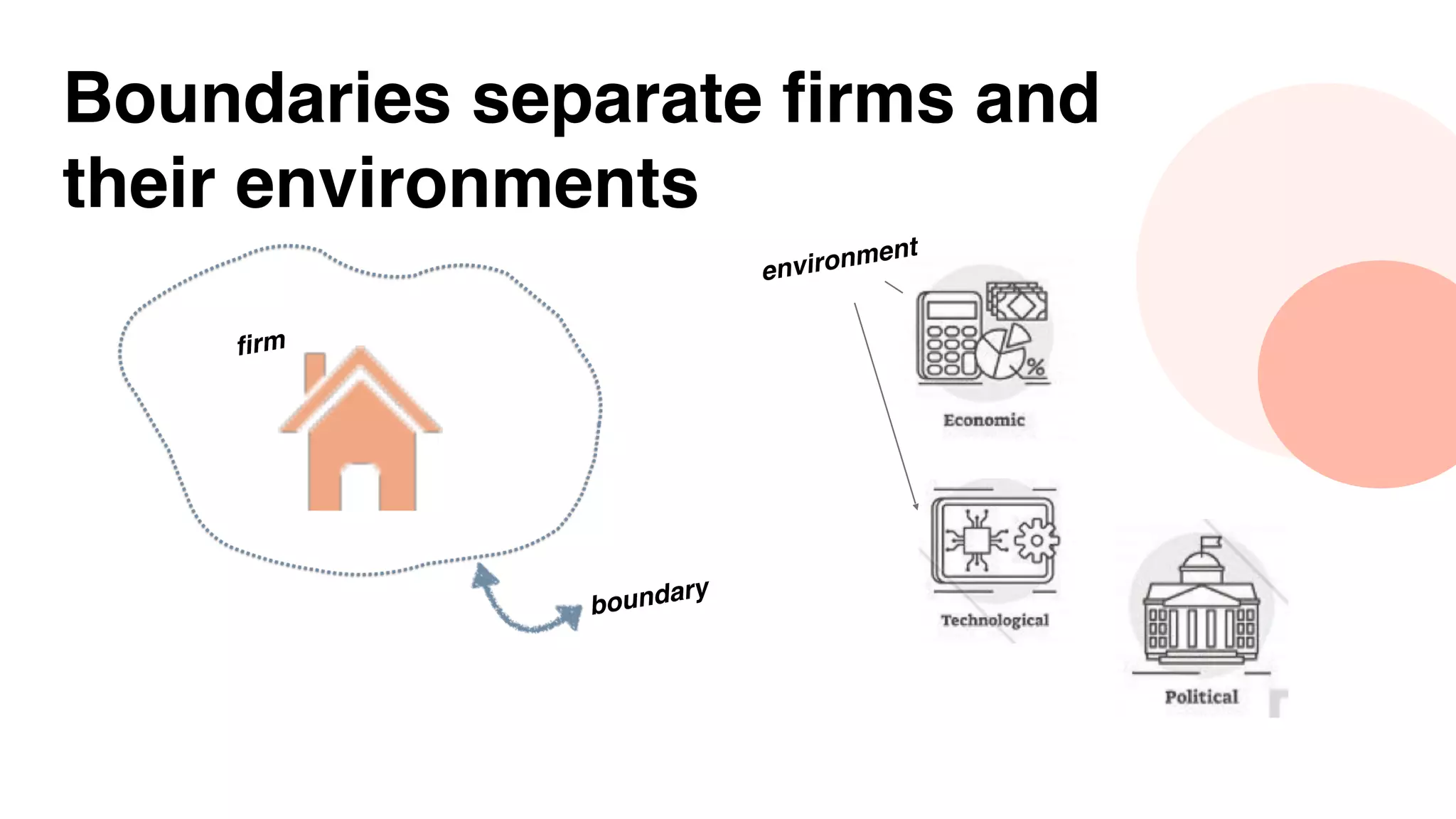
environment
boundary
firm
Boundaries separate firms and
their environments
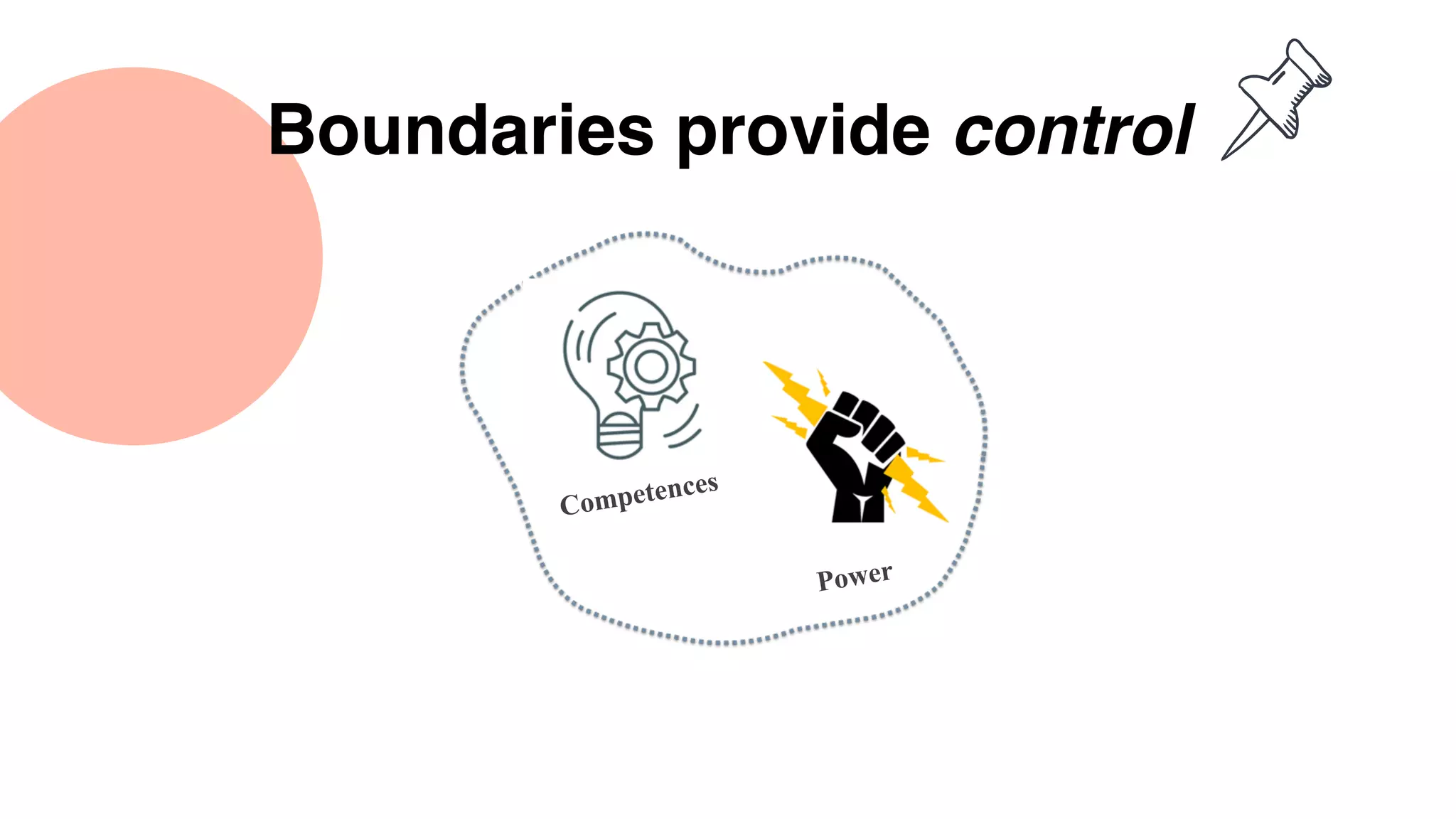
Boundaries provide control
Competences
Power
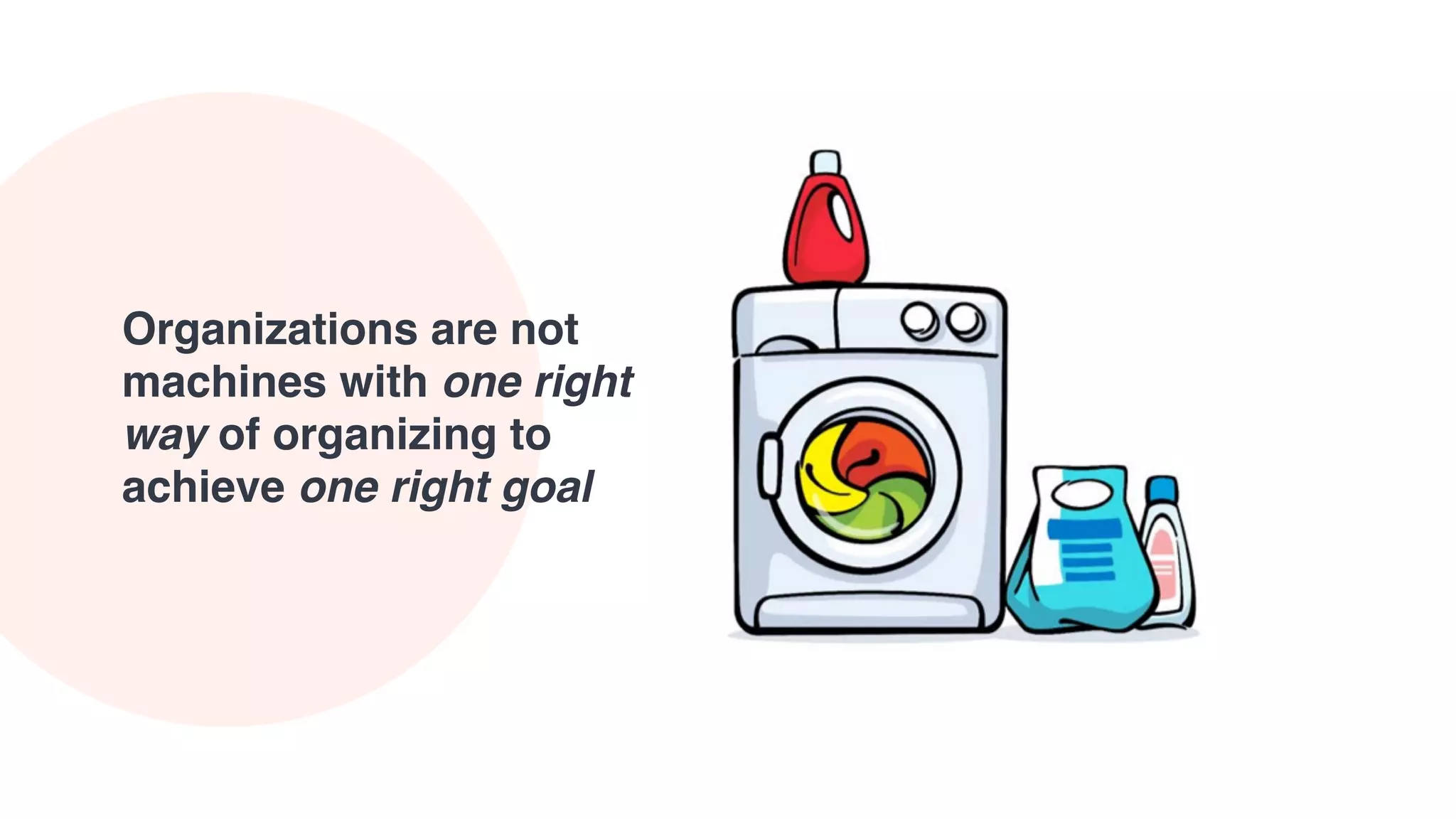
Organizations are not
machines with one right
way of organizing to
achieve one right goal
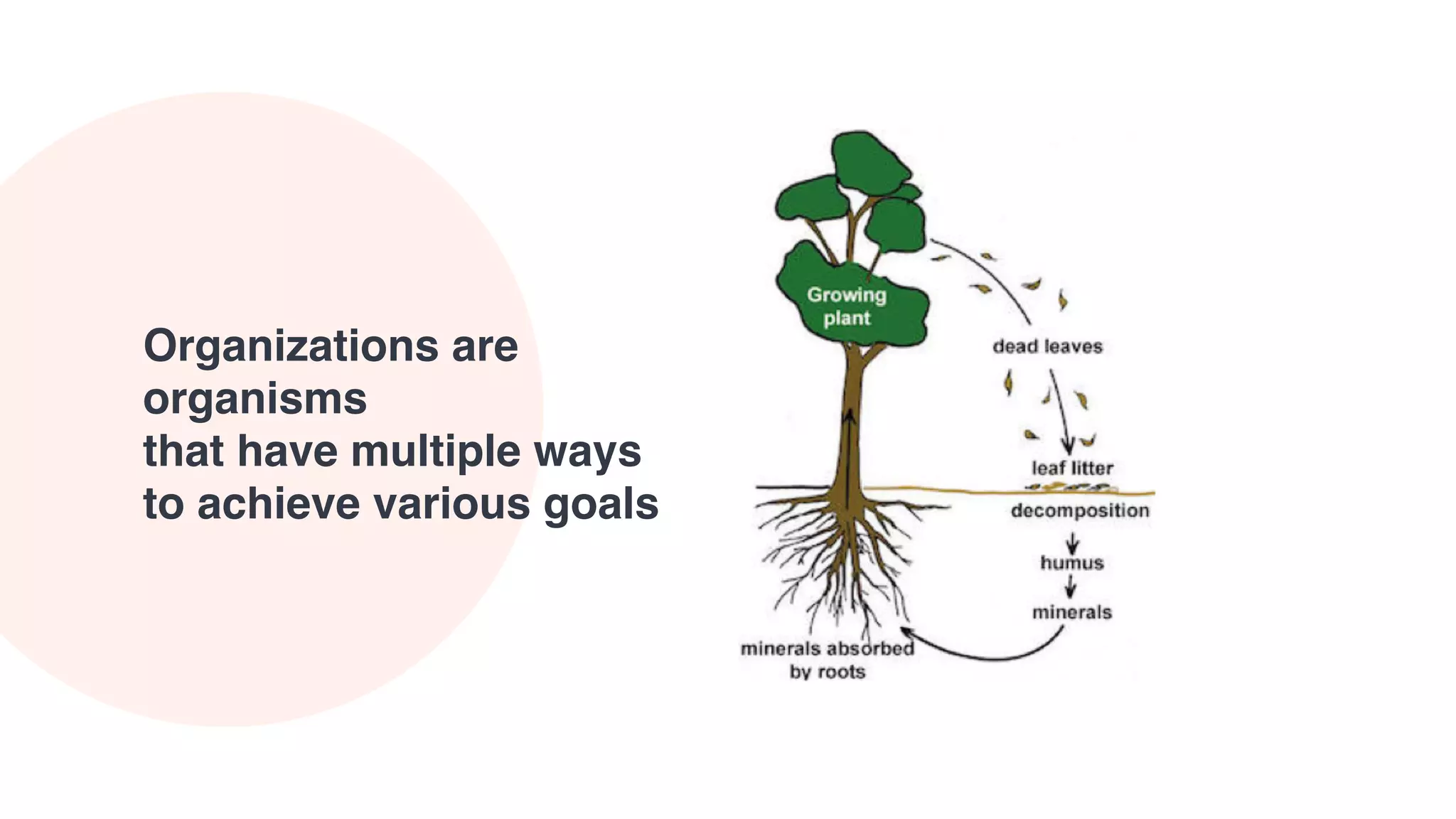
Organizations are
organisms
that have multiple ways
to achieve various goals
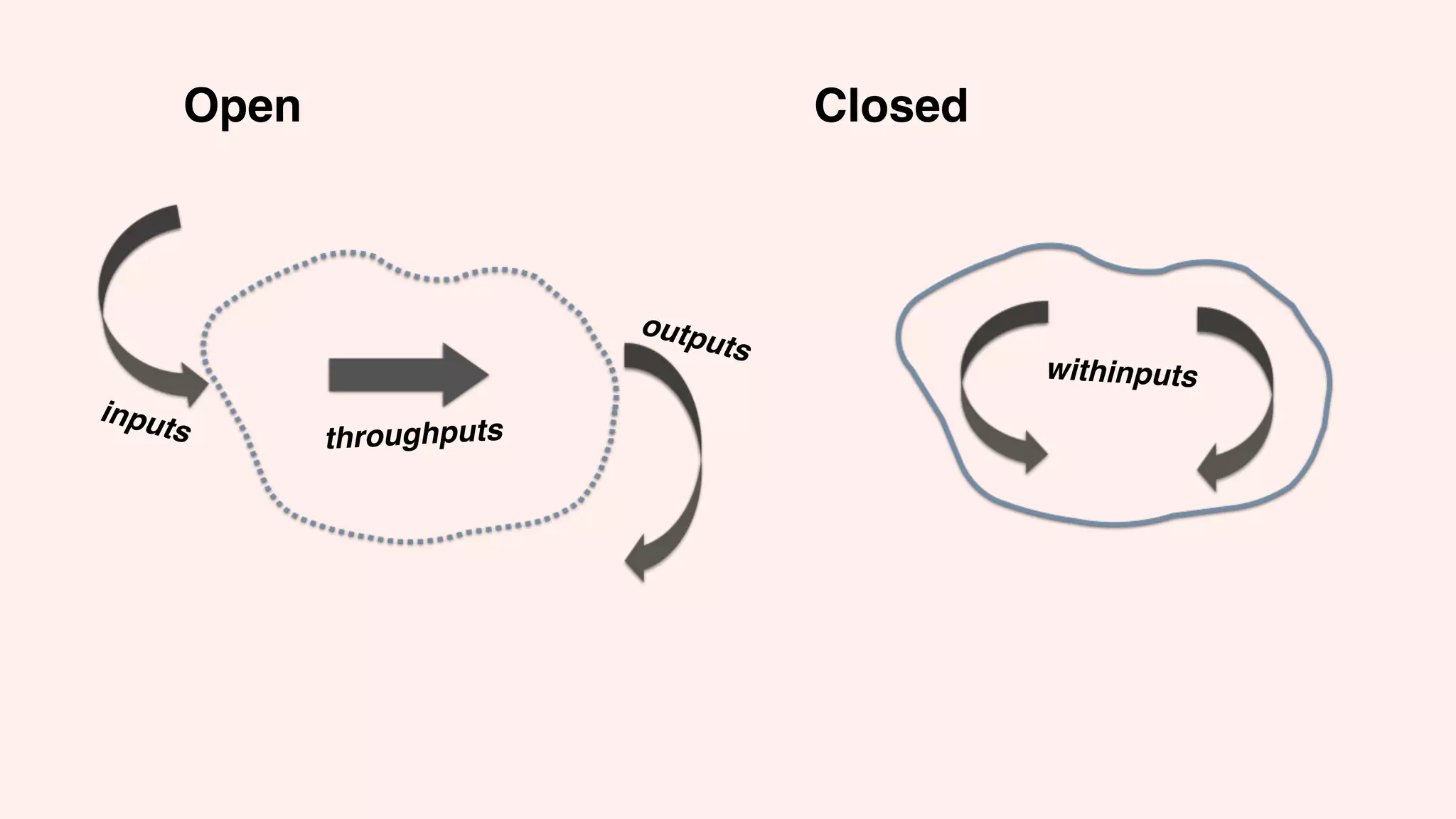
inputs
outputs
throughputs
withinputs
Open Closed
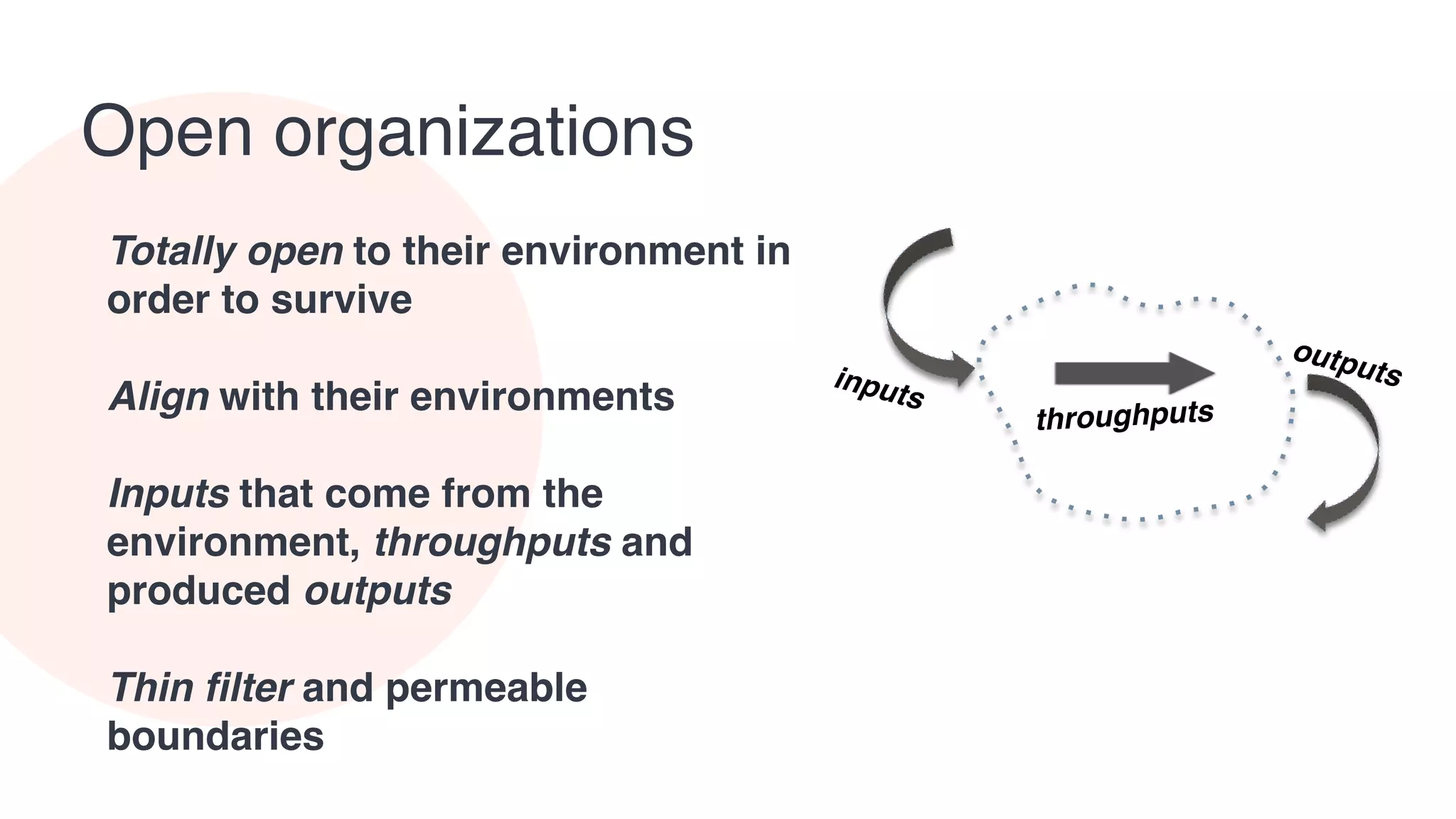
Open organizations
inputs
throughputs
outputs
Totally open to their environment in
order to survive
Align with their environments
Inputs that come from the
environment, throughputs and
produced outputs
Thin filter and permeable
boundaries
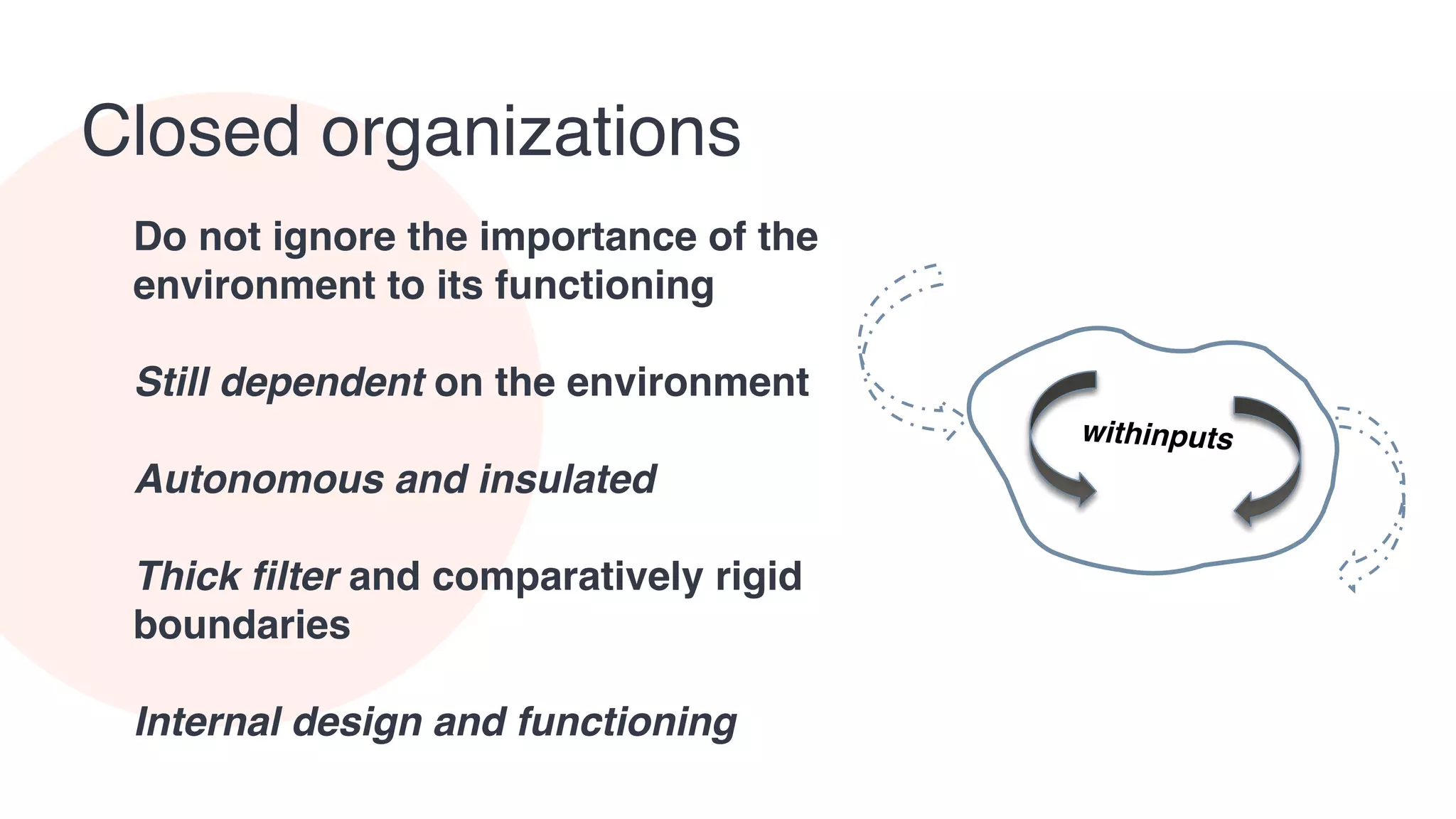
Closed organizations
withinputs
Do not ignore the importance of the
environment to its functioning
Still dependent on the environment
Autonomous and insulated
Thick filter and comparatively rigid
boundaries
Internal design and functioning
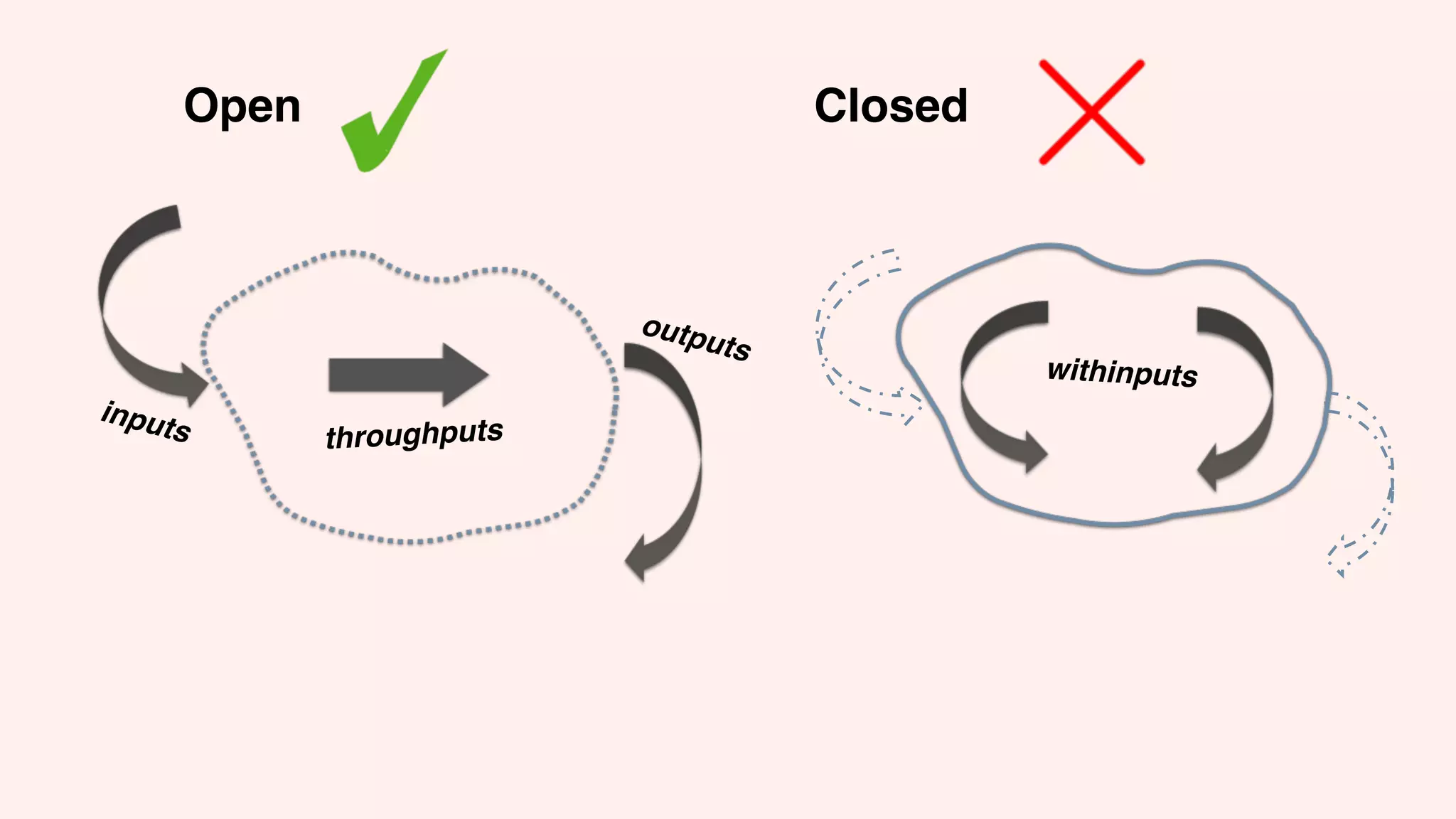
inputs
outputs
throughputs
withinputs
Open Closed
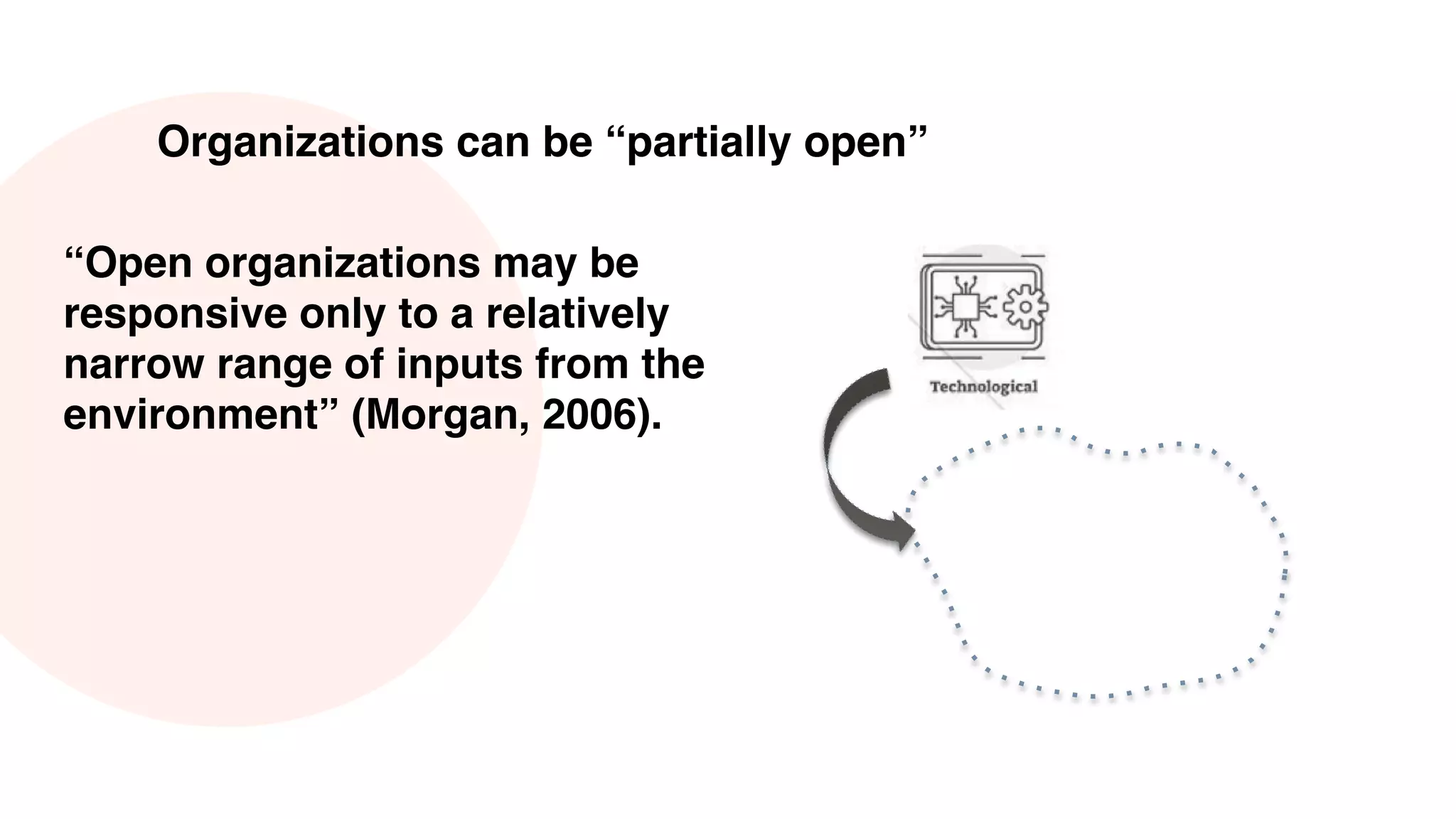
Organizations can be “partially open”
“Open organizations may be
responsive only to a relatively
narrow range of inputs from the
environment” (Morgan, 2006).
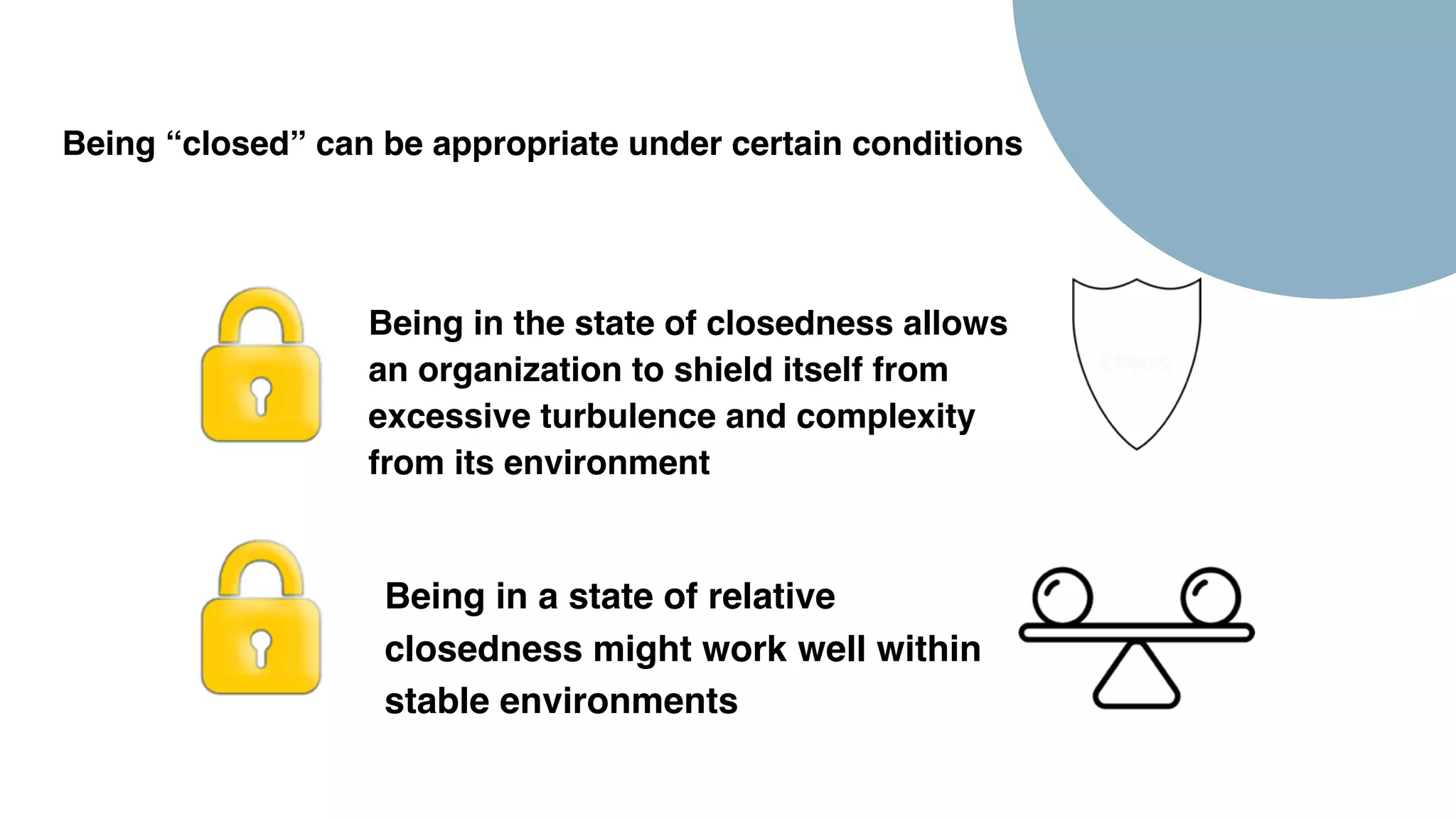
Being “closed” can be appropriate under certain conditions
Being in a state of relative
closedness might work well within
stable environments
Being in the state of closedness allows
an organization to shield itself from
excessive turbulence and complexity
from its environment
Contingency Approach
An event in the external environment might
occur and organization must plant for it
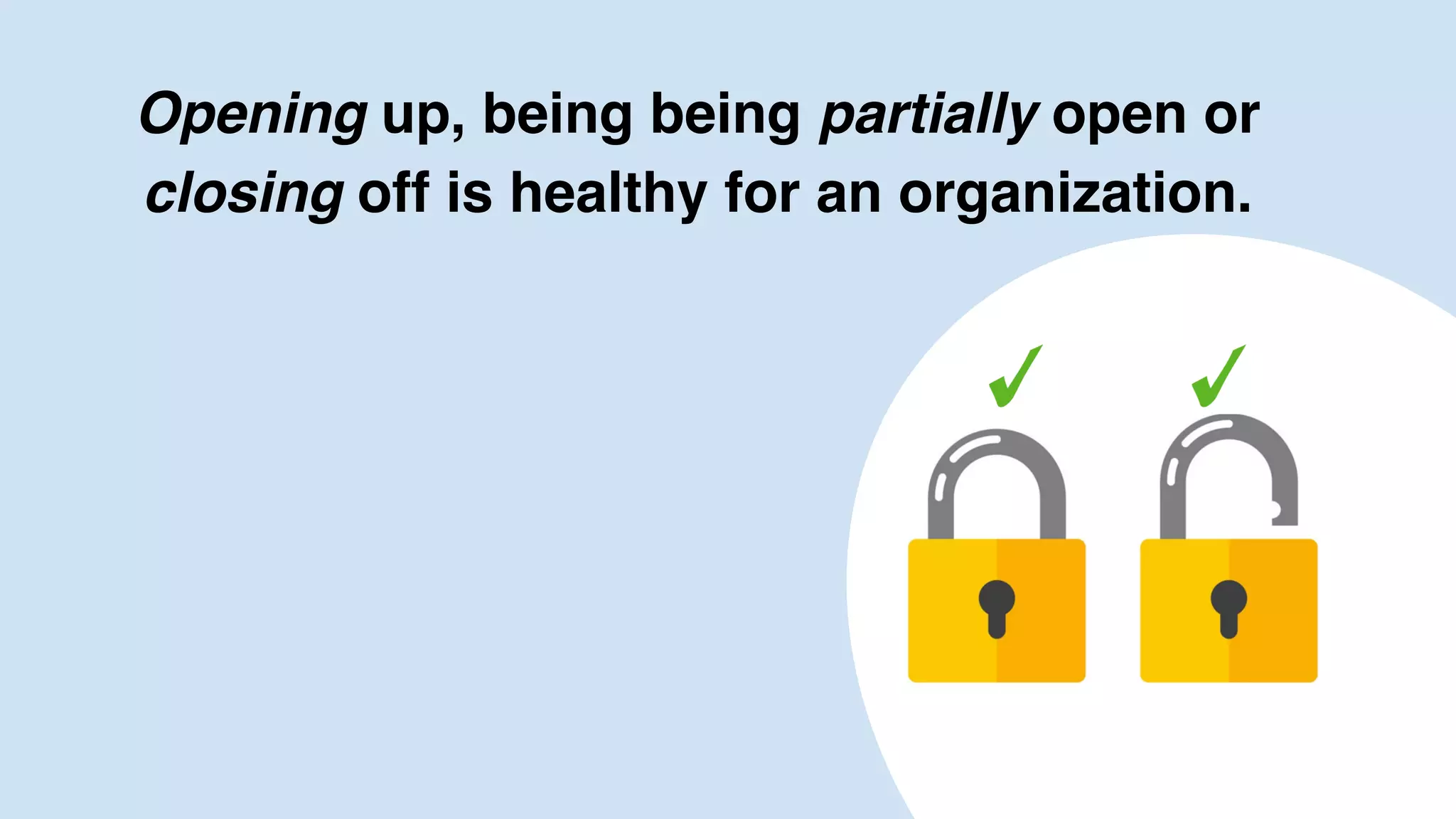
Opening up, being being partially open or
closing off is healthy for an organization.
13
At the centre of contingency
theory is the notion of ‘fit’
and “misfit” and the levels of
performance

organizational boundaries.pdf