1
Organisational
Change
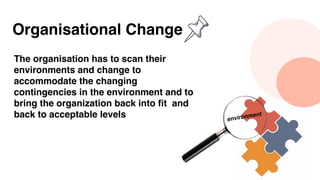
Organisational Change
The organisation has to scan their
environments and change to
accommodate the changing
contingencies in the environment and to
bring the organization back into fit and
back to acceptable levels environment
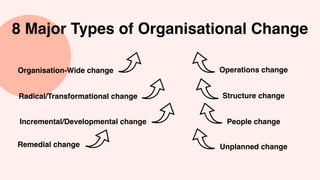
8 Major Types of Organisational Change
Organisation-Wide change
Radical/Transformational change
Incremental/Developmental change
Remedial change
Operations change
Structure change
Unplanned change
People change
Organizational change
has become a highly
managed activity
4
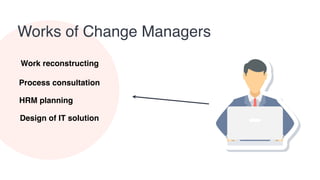
Works of Change Managers
Work reconstructing
Process consultation
HRM planning
Design of IT solution
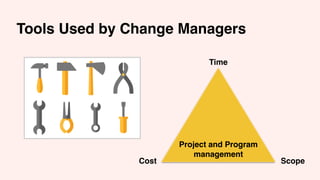
Tools Used by Change Managers
Scope
Cost
Time
Project and Program
management
7
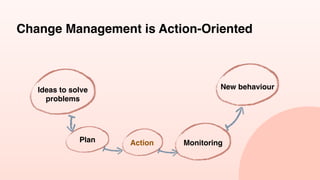
Ideas to solve
problems
Action
Plan
New behaviour
Monitoring
Change Management is Action-Oriented
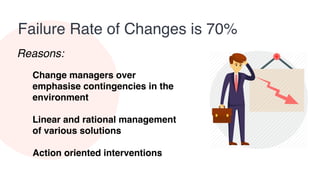
Failure Rate of Changes is 70%
Change managers over
emphasise contingencies in the
environment
Linear and rational management
of various solutions
Action oriented interventions
Reasons:
Individuals who are the
“object” of change are missed
To handle people side of change,
managers focus on:
Performance metrics
Numbers on papers
KPIs
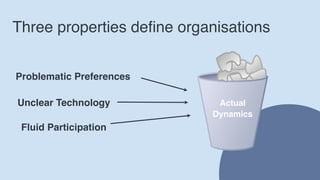
Three properties define organisations
10
Problematic Preferences
Actual
Dynamics
Unclear Technology
Fluid Participation

organizational change.pdf

  • 1.
  • 2.
    Organisational Change The organisationhas to scan their environments and change to accommodate the changing contingencies in the environment and to bring the organization back into fit and back to acceptable levels environment
  • 3.
    8 Major Typesof Organisational Change Organisation-Wide change Radical/Transformational change Incremental/Developmental change Remedial change Operations change Structure change Unplanned change People change
  • 4.
    Organizational change has becomea highly managed activity 4
  • 5.
    Works of ChangeManagers Work reconstructing Process consultation HRM planning Design of IT solution
  • 6.
    Tools Used byChange Managers Scope Cost Time Project and Program management
  • 7.
    7 Ideas to solve problems Action Plan Newbehaviour Monitoring Change Management is Action-Oriented
  • 8.
    Failure Rate ofChanges is 70% Change managers over emphasise contingencies in the environment Linear and rational management of various solutions Action oriented interventions Reasons:
  • 9.
    Individuals who arethe “object” of change are missed To handle people side of change, managers focus on: Performance metrics Numbers on papers KPIs
  • 10.
    Three properties defineorganisations 10 Problematic Preferences Actual Dynamics Unclear Technology Fluid Participation