Leadership
Leadership
Not a property of a person, but a process of
influencing and motivating others
Since leadership is a process of motivating, all
leaders have in common: followers
Leadership
Exhibiting leadership is influencing followers in a
manner that enables organisation to attain its
goals
Therefore, all leaders have in common: situation
and context
Heroic Conception
Early research described leadership as a
personal trait independent of the context
“Innovative leaders were born
and such leaders possess
certain qualities and traits that
lead them to greatness” (Draft,
2005).
5
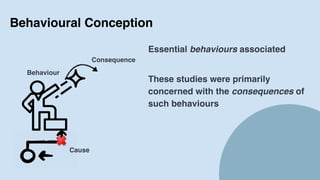
Essential behaviours associated
These studies were primarily
concerned with the consequences of
such behaviours
Behaviour
Consequence
Cause
Behavioural Conception
Contingency Approach
Contingency approach is the most relevant to
understand leadership and innovation outcomes
Leadership is dependent rather than
independent variable and there is no one best
way
Contingency Approach
The most suitable leadership for organisational
innovation is the one that fits the nature of the
situation and followers
Innovativeness of leadership is contingent
upon organisational situations and followers
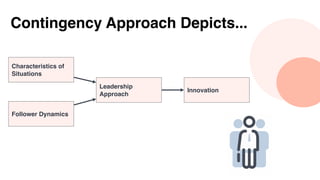
Contingency Approach Depicts...
Characteristics of
Situations
Leadership
Approach
Innovation
Follower Dynamics
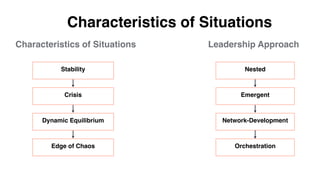
Characteristics of Situations
Leadership Approach
Stability
Crisis
Dynamic Equilibrium
Edge of Chaos
Nested
Emergent
Network-Development
Orchestration
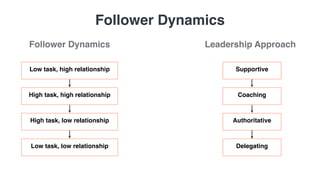
Follower Dynamics
Follower Dynamics
Leadership Approach
Low task, high relationship
High task, high relationship
High task, low relationship
Low task, low relationship
Supportive
Coaching
Authoritative
Delegating
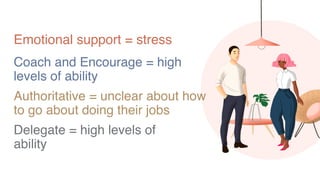
Emotional support = stress
Coach and Encourage = high
levels of ability
Authoritative = unclear about how
to go about doing their jobs
Delegate = high levels of
ability
12
Leadership is a process
Leaders can influence innovation by
mustering their behaviour and
flexibility
However…leadership is not a
simple reaction to situational events
Leadership is a dynamic process
that is shaped in multiple ways
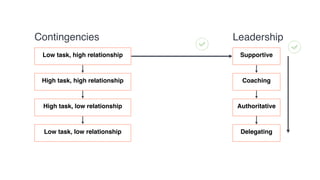
Low task, high relationship
High task, high relationship
High task, low relationship
Low task, low relationship
Supportive
Coaching
Authoritative
Delegating
Contingencies Leadership
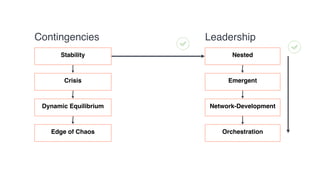
Stability
Crisis
Dynamic Equilibrium
Edge of Chaos
Nested
Emergent
Network-Development
Orchestration
Contingencies Leadership

organizational leadership.pdf

  • 1.
  • 2.
    Leadership Not a propertyof a person, but a process of influencing and motivating others Since leadership is a process of motivating, all leaders have in common: followers
  • 3.
    Leadership Exhibiting leadership isinfluencing followers in a manner that enables organisation to attain its goals Therefore, all leaders have in common: situation and context
  • 4.
    Heroic Conception Early researchdescribed leadership as a personal trait independent of the context “Innovative leaders were born and such leaders possess certain qualities and traits that lead them to greatness” (Draft, 2005).
  • 5.
    5 Essential behaviours associated Thesestudies were primarily concerned with the consequences of such behaviours Behaviour Consequence Cause Behavioural Conception
  • 6.
    Contingency Approach Contingency approachis the most relevant to understand leadership and innovation outcomes Leadership is dependent rather than independent variable and there is no one best way
  • 7.
    Contingency Approach The mostsuitable leadership for organisational innovation is the one that fits the nature of the situation and followers Innovativeness of leadership is contingent upon organisational situations and followers
  • 8.
    Contingency Approach Depicts... Characteristicsof Situations Leadership Approach Innovation Follower Dynamics
  • 9.
    Characteristics of Situations Characteristicsof Situations Leadership Approach Stability Crisis Dynamic Equilibrium Edge of Chaos Nested Emergent Network-Development Orchestration
  • 10.
    Follower Dynamics Follower Dynamics LeadershipApproach Low task, high relationship High task, high relationship High task, low relationship Low task, low relationship Supportive Coaching Authoritative Delegating
  • 11.
    Emotional support =stress Coach and Encourage = high levels of ability Authoritative = unclear about how to go about doing their jobs Delegate = high levels of ability
  • 12.
    12 Leadership is aprocess Leaders can influence innovation by mustering their behaviour and flexibility However…leadership is not a simple reaction to situational events Leadership is a dynamic process that is shaped in multiple ways
  • 13.
    Low task, highrelationship High task, high relationship High task, low relationship Low task, low relationship Supportive Coaching Authoritative Delegating Contingencies Leadership
  • 14.
    Stability Crisis Dynamic Equilibrium Edge ofChaos Nested Emergent Network-Development Orchestration Contingencies Leadership