Organisational
Design Enablers
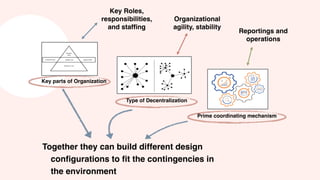
Key parts of Organization
Type of Decentralization
Together they can build different design
configurations to fit the contingencies in
the environment
Organizational
agility, stability
Reportings and
operations
Key Roles,
responsibilities,
and staffing
Prime coordinating mechanism
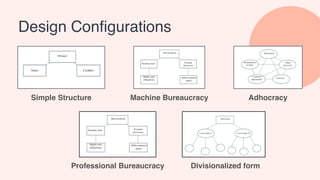
Design Configurations
Simple Structure Machine Bureaucracy Adhocracy
Divisionalized form
Professional Bureaucracy
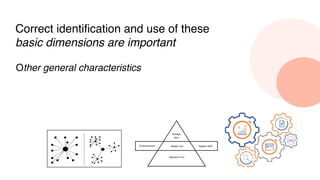
Correct identification and use of these
basic dimensions are important
Other general characteristics
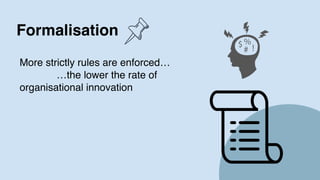
Formalisation
5
More strictly rules are enforced…
…the lower the rate of
organisational innovation
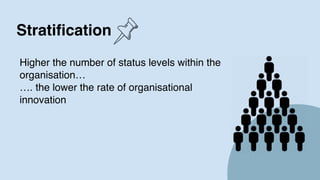
Stratification
6
Higher the number of status levels within the
organisation…
…. the lower the rate of organisational
innovation
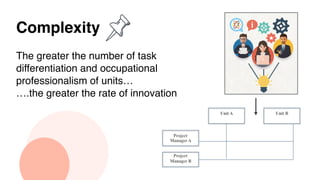
The greater the number of task
differentiation and occupational
professionalism of units…
….the greater the rate of innovation
Complexity
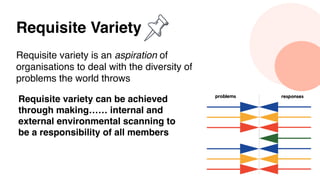
Requisite variety is an aspiration of
organisations to deal with the diversity of
problems the world throws
Requisite Variety
Requisite variety can be achieved
through making…… internal and
external environmental scanning to
be a responsibility of all members
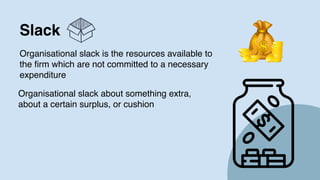
Slack
9
Organisational slack is the resources available to
the firm which are not committed to a necessary
expenditure
Organisational slack about something extra,
about a certain surplus, or cushion
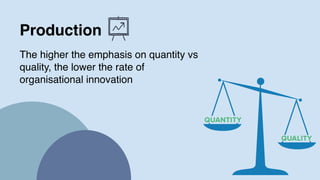
Production
The higher the emphasis on quantity vs
quality, the lower the rate of
organisational innovation
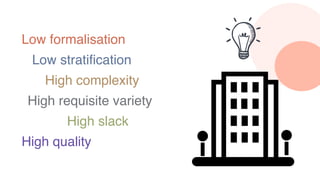
Low formalisation
Low stratification
High complexity
High requisite variety
High slack
High quality

organizational design enabler.pdf

  • 1.
  • 2.
    Key parts ofOrganization Type of Decentralization Together they can build different design configurations to fit the contingencies in the environment Organizational agility, stability Reportings and operations Key Roles, responsibilities, and staffing Prime coordinating mechanism
  • 3.
    Design Configurations Simple StructureMachine Bureaucracy Adhocracy Divisionalized form Professional Bureaucracy
  • 4.
    Correct identification anduse of these basic dimensions are important Other general characteristics
  • 5.
    Formalisation 5 More strictly rulesare enforced… …the lower the rate of organisational innovation
  • 6.
    Stratification 6 Higher the numberof status levels within the organisation… …. the lower the rate of organisational innovation
  • 7.
    The greater thenumber of task differentiation and occupational professionalism of units… ….the greater the rate of innovation Complexity
  • 8.
    Requisite variety isan aspiration of organisations to deal with the diversity of problems the world throws Requisite Variety Requisite variety can be achieved through making…… internal and external environmental scanning to be a responsibility of all members
  • 9.
    Slack 9 Organisational slack isthe resources available to the firm which are not committed to a necessary expenditure Organisational slack about something extra, about a certain surplus, or cushion
  • 10.
    Production The higher theemphasis on quantity vs quality, the lower the rate of organisational innovation
  • 11.
    Low formalisation Low stratification Highcomplexity High requisite variety High slack High quality