Organisational Structure
Fundamental resources People Organisation Technology
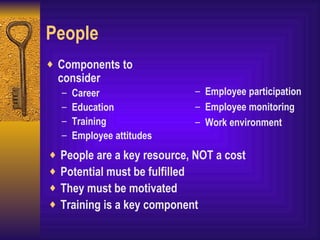
People Components to consider Career Education Training Employee attitudes Employee participation Employee monitoring Work environment People are a key resource, NOT a cost Potential must be fulfilled They must be motivated Training is a key component
Organisation Strategy Policy Mission statement Culture Management Bureaucracy Competition Environment
Technology Hardware Software Telecommunications Information systems
Successful organisations : Have visionary, enthusiastic leaders Unlock and develop the potential of employees Create an empowered workforce Invest in people through good communications & training Flatten and invert the organisational pyramid Know their customers Learn from others Respond positively to demanding customers Constantly introduce new products and services Know their competitors Encourage innovation Focus on core business and explore strategic alliances Exceed customers’ expectations Source:DTI ‘Winning’ Report 1997
Main elements of the organisation Production Sales and marketing Personnel or Human Resources Finance and accounting
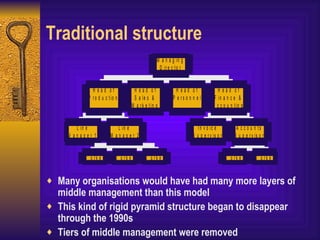
Traditional structure  Many organisations would have had many more layers of middle management than this model This kind of rigid pyramid structure began to disappear through the 1990s Tiers of middle management were removed
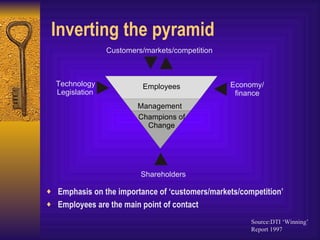
Inverting the pyramid  Emphasis on the importance of ‘customers/markets/competition’ Employees are the main point of contact Source:DTI ‘Winning’ Report 1997 Customers/markets/competition Champions of  Change Management Economy/ finance Employees Technology Legislation Shareholders
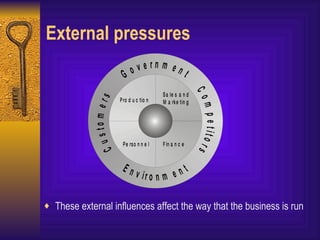
External pressures These external influences affect the way that the business is run
Information systems Three major levels within organisation production workers Information workers Management workers Each level has its unique class of information system: Data or transaction processing systems  for production workers to deal with customers and suppliers Knowledge work systems  for clerical and professional people to process and create information and knowledge Management information systems  for management to control and plan the organisation
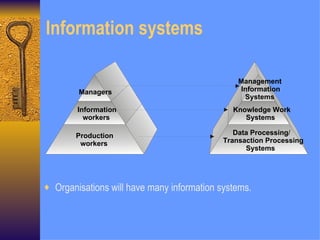
Information systems Organisations will have many information systems. Managers Information   workers Production workers Management Information Systems Knowledge   Work Systems Data   Processing / Transaction   Processing Systems
Types of information system Data / Transaction processing systems Batch systems transactions collected over time and processed together; On-line systems  data is processed as soon as it is collected. Knowledge work systems used by information workers to help deal with problems requiring knowledge or technical expertise Management information systems help managers monitor and control organisational performance and plan for the future

Organisational Structure

  • 1.
  • 2.
    Fundamental resources PeopleOrganisation Technology
  • 3.
    People Components toconsider Career Education Training Employee attitudes Employee participation Employee monitoring Work environment People are a key resource, NOT a cost Potential must be fulfilled They must be motivated Training is a key component
  • 4.
    Organisation Strategy PolicyMission statement Culture Management Bureaucracy Competition Environment
  • 5.
    Technology Hardware SoftwareTelecommunications Information systems
  • 6.
    Successful organisations :Have visionary, enthusiastic leaders Unlock and develop the potential of employees Create an empowered workforce Invest in people through good communications & training Flatten and invert the organisational pyramid Know their customers Learn from others Respond positively to demanding customers Constantly introduce new products and services Know their competitors Encourage innovation Focus on core business and explore strategic alliances Exceed customers’ expectations Source:DTI ‘Winning’ Report 1997
  • 7.
    Main elements ofthe organisation Production Sales and marketing Personnel or Human Resources Finance and accounting
  • 8.
    Traditional structure Many organisations would have had many more layers of middle management than this model This kind of rigid pyramid structure began to disappear through the 1990s Tiers of middle management were removed
  • 9.
    Inverting the pyramid Emphasis on the importance of ‘customers/markets/competition’ Employees are the main point of contact Source:DTI ‘Winning’ Report 1997 Customers/markets/competition Champions of Change Management Economy/ finance Employees Technology Legislation Shareholders
  • 10.
    External pressures Theseexternal influences affect the way that the business is run
  • 11.
    Information systems Threemajor levels within organisation production workers Information workers Management workers Each level has its unique class of information system: Data or transaction processing systems for production workers to deal with customers and suppliers Knowledge work systems for clerical and professional people to process and create information and knowledge Management information systems for management to control and plan the organisation
  • 12.
    Information systems Organisationswill have many information systems. Managers Information workers Production workers Management Information Systems Knowledge Work Systems Data Processing / Transaction Processing Systems
  • 13.
    Types of informationsystem Data / Transaction processing systems Batch systems transactions collected over time and processed together; On-line systems data is processed as soon as it is collected. Knowledge work systems used by information workers to help deal with problems requiring knowledge or technical expertise Management information systems help managers monitor and control organisational performance and plan for the future