Organizational complexity as a
challenge to research assessment
Sally Rumsey
The Bodleian Libraries
University of Oxford
A case study of the University of Oxford
Complexity
A result of
• Size of the institution
and the amount of
research produced
(research intensive)
Coupled with
• Organisational
complexity of the
institution
(administrative
structure; governance;
etc)
University of Oxford
Facts and figures*
• > 5800 academic and research staff
• > 5600 research students
• 4 university academic divisions (> 70 departments)
– Humanities: 9 faculties + Ruskin School of Art
– Social Sciences: 16 departments
– MPLS (Mathematical, Physical & Life Sciences): 12 departments
– Medical Sciences: 16 departments
– Plus cross disciplinary institutes eg Oxford Martin School and others
• 44 colleges and PPHs (Permanent Private Halls) (separate legal
entities to University)
• External research funding £478.3m
• Approx 4700 active research awards
• Estimated 16,000 journal articles published p.a.
• > 120 libraries
* 2013 and 2013/14 figures: Annual Review 2013-14
Democracy
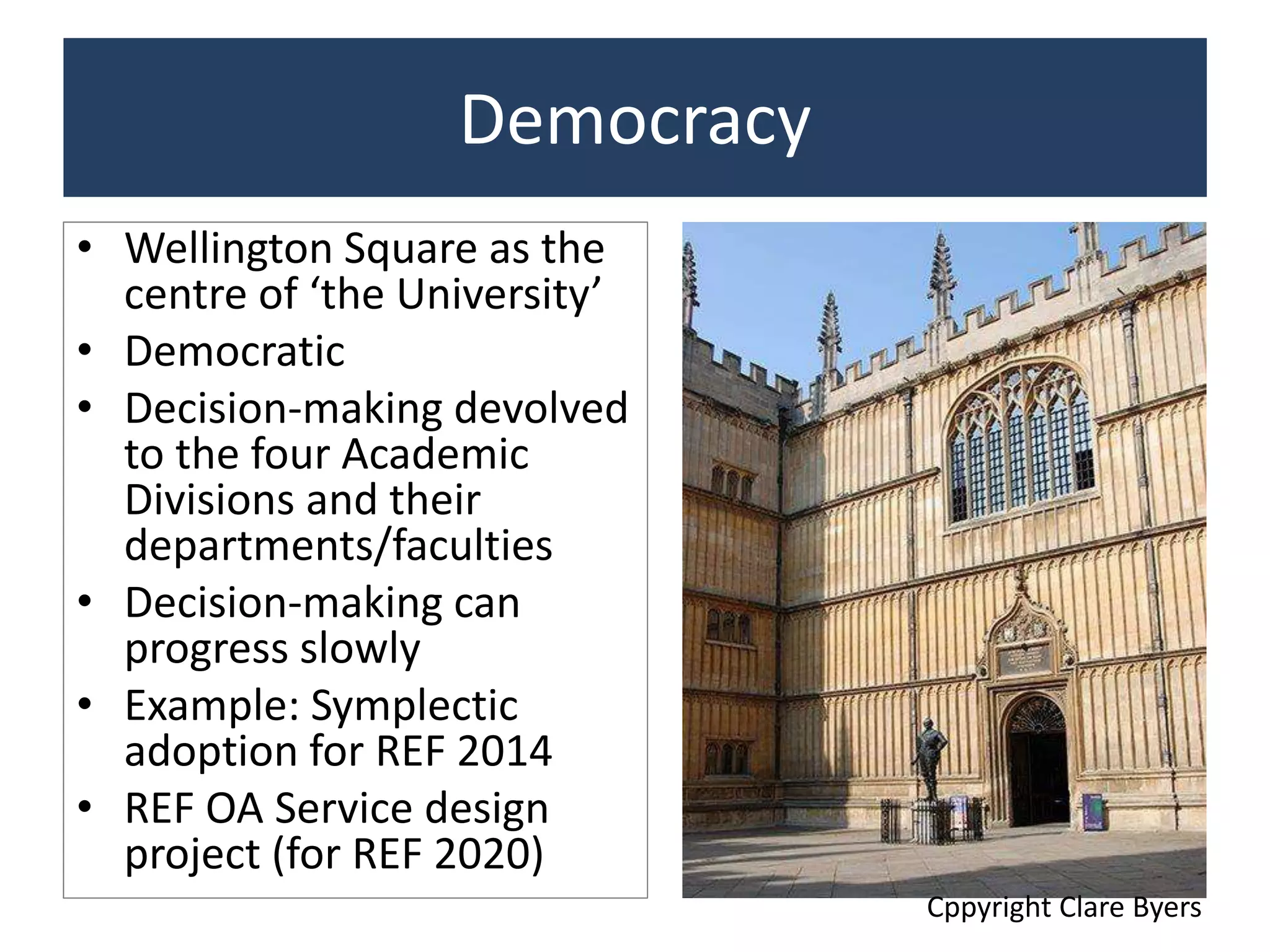
• Wellington Square as the
centre of ‘the University’
• Democratic
• Decision-making devolved
to the four Academic
Divisions and their
departments/faculties
• Decision-making can
progress slowly
• Example: Symplectic
adoption for REF 2014
• REF OA Service design
project (for REF 2020)
Cppyright Clare Byers
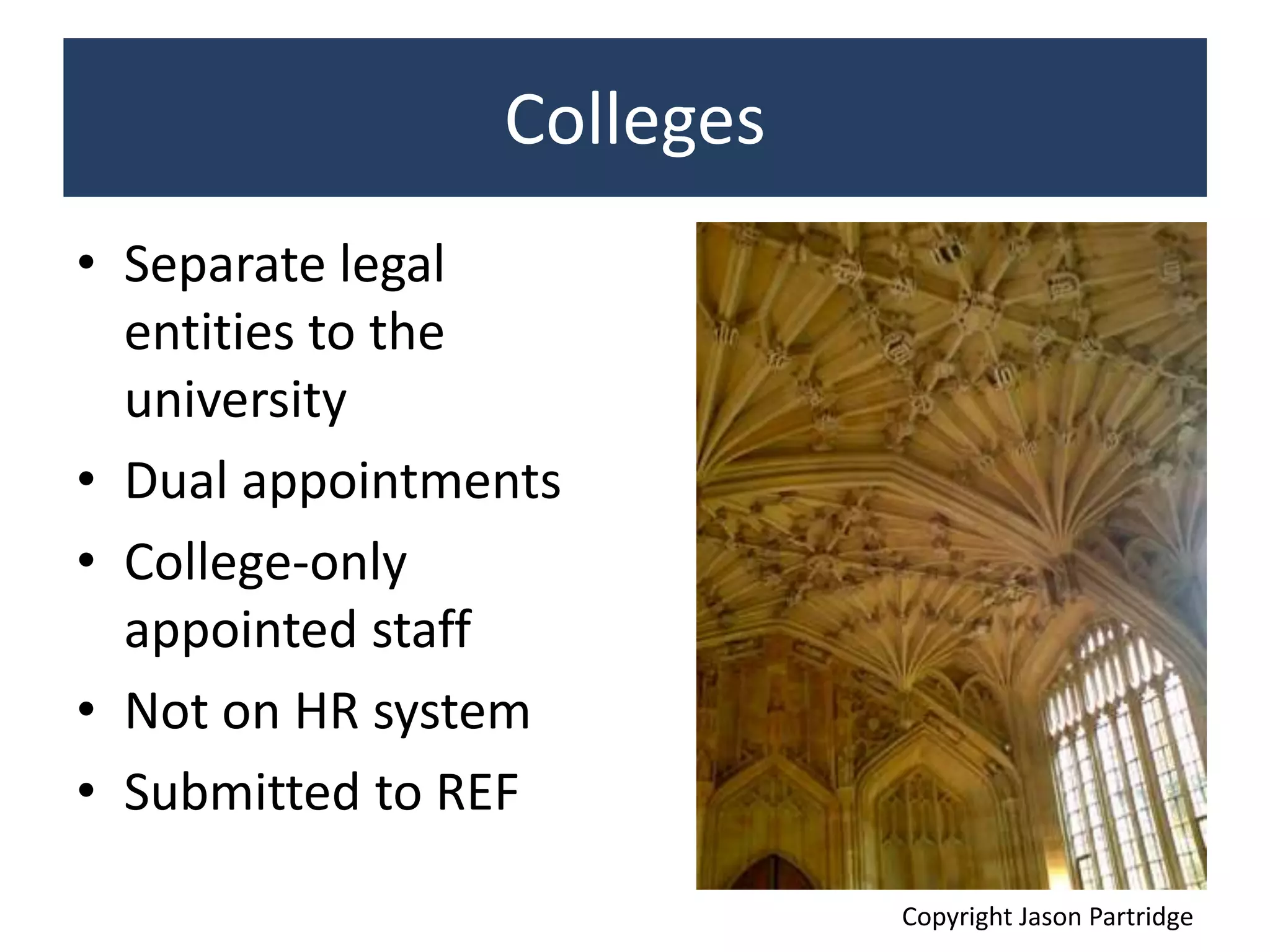
Colleges
• Separate legal
entities to the
university
• Dual appointments
• College-only
appointed staff
• Not on HR system
• Submitted to REF
Copyright Jason Partridge
Governance and infrastructure
• Complex committee structure
• Routes and timing of committees
• Systems integration (WIP)
• RIM data quality
• Lack of unique identifiers and controlled vocabularies
across the entire institution (Divisions, Colleges, NHS
etc)
• Devolved model
• Internal matters also relevant to external integration
• Compliance with standards (eg RIOXX)
Facts and figures
Oxford REF 2014 submission
Submitted to
31 Units of
Assessment
(UoA)*
(out of 36)
c.2400
research staff
submitted
c. 8500
outputs
submitted
Returned
380,000 data
fields
REF 2008
resulted in £1.9
billion research
income over 6
year period
Reported
4892.5 doctoral
degrees
awarded
Took 2½ years
to manage and
compile return
* http://www.ref.ac.uk/panels/unitsofassessment/
REF complexity illustrative case
OII – Oxford Internet Institute
• A department of Social Sciences Division
• Multi/cross disciplinary
• Submitted under 9 UoAs (inc psychology,
economics, law, geography)
• Difficulty in identifying which are the ‘best’
outputs. Best for whom?
Quality control for REF Case studies
• Quality control was a challenge
• 31 UoAs split across 4 academic divisions
• Needed consistency across all submitted case
studies across:
– Unit
– Within the division
– Across all 4 divisions
REF complexity illustrative case:
Impact
• Medical sciences – broad areas such as
‘cancer’ or ‘neuroscience’ over a large
academic division
• Do not ‘sit’ in any one department
• Administrative staff cannot know all the
details to report impact
• Impact can be reported back 20 years
previously. Difficult to identify and track back
so far – people leave. Generally cite only 10
years
The effect on assessment
• Locating data required for
assessment
• Dealing with a variety of
systems
• Lack of single location for
each data type
• Data entry/import
(quantity)
• Consistency
• Size of the operation and
numbers of people involved
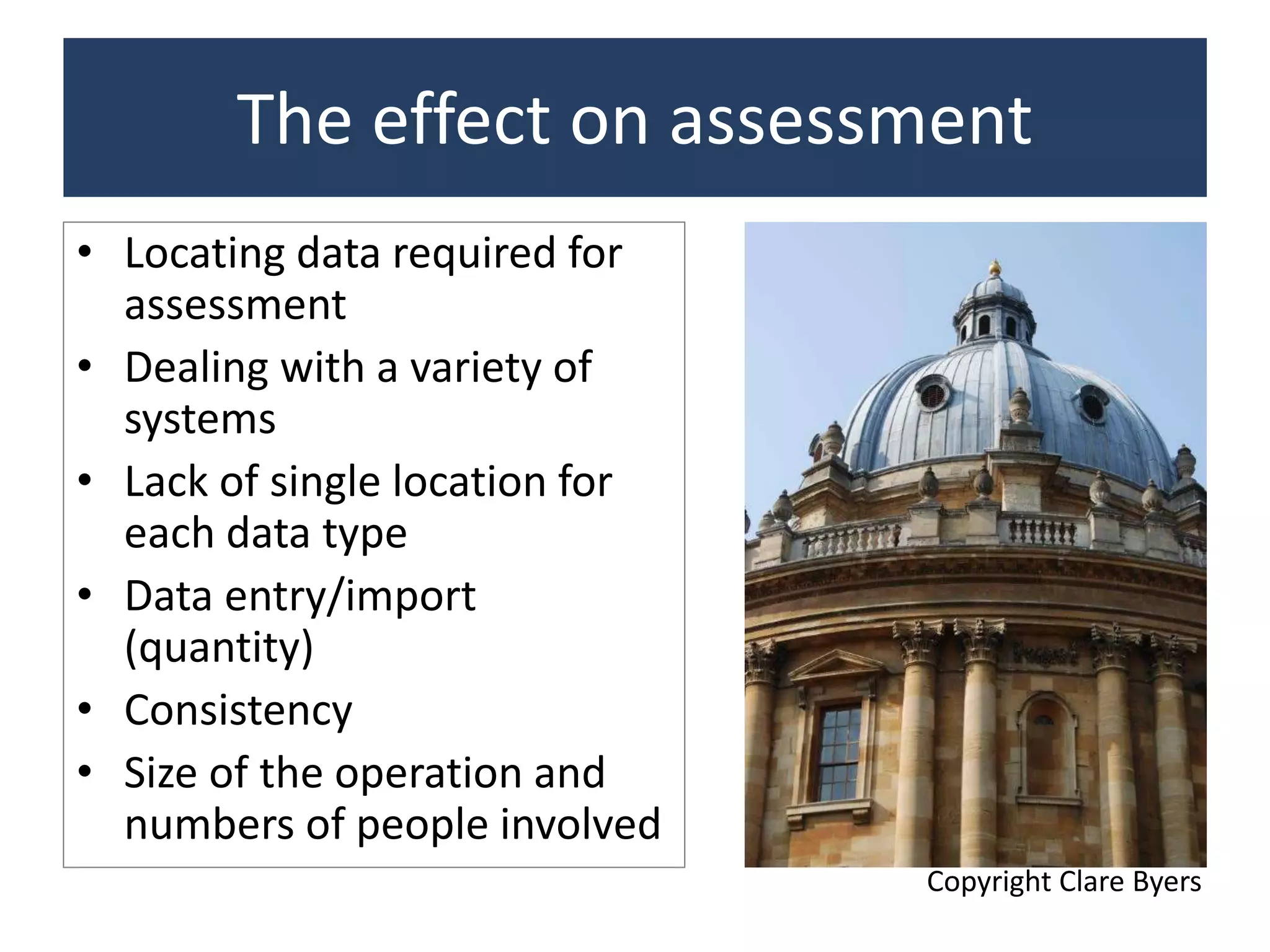
Copyright Clare Byers
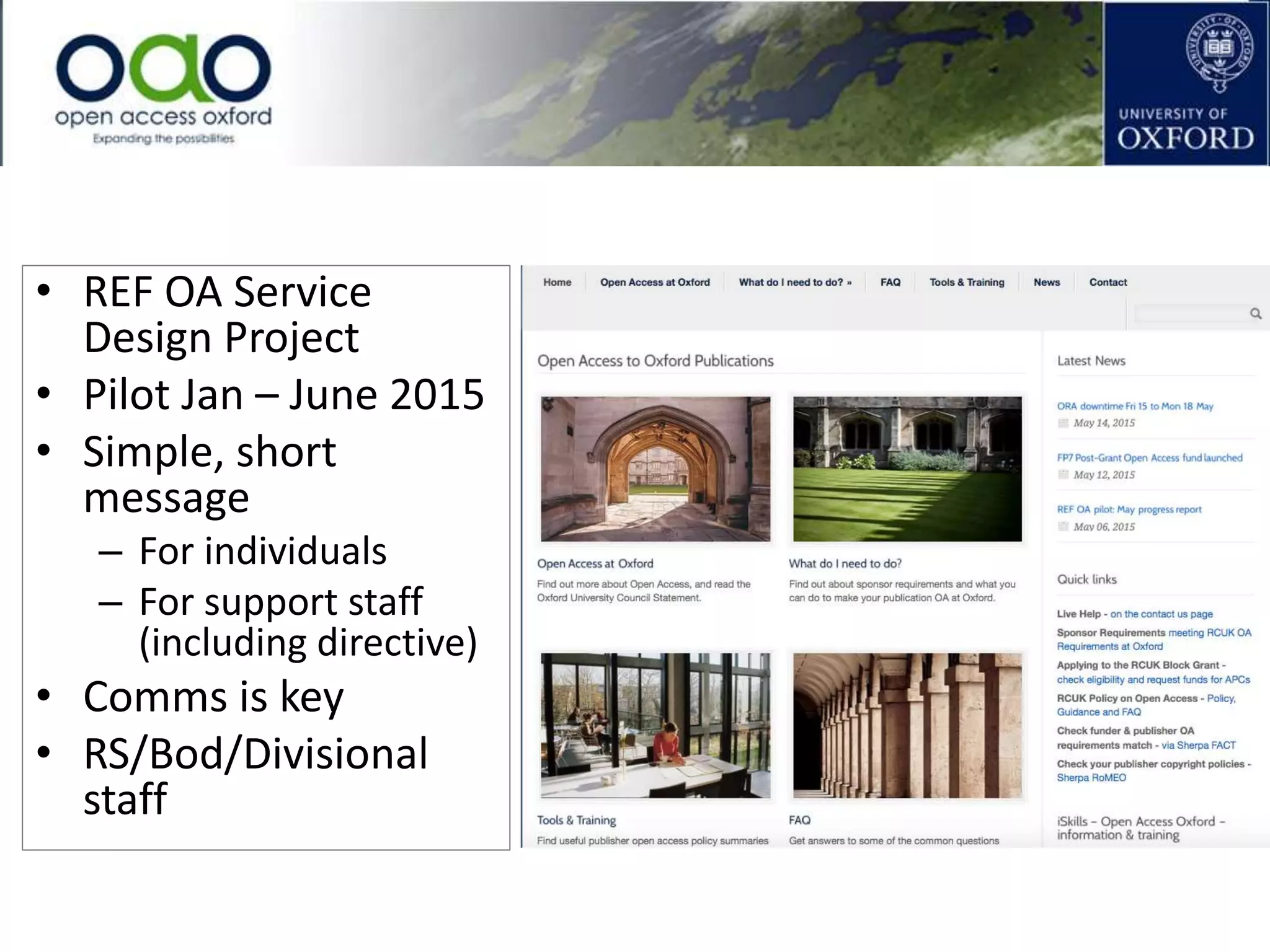
• REF OA Service
Design Project
• Pilot Jan – June 2015
• Simple, short
message
– For individuals
– For support staff
(including directive)
• Comms is key
• RS/Bod/Divisional
staff
ORCIDs
• How ORCIDs should help
– De facto standard
– Common across all units of the University
– Supports integration externally
– To be required for REF 2020?
– Ultimately link individuals, publications, funding
– Assist automation
• Difficulties eg College staff not on HR/CUD system
• Limitations
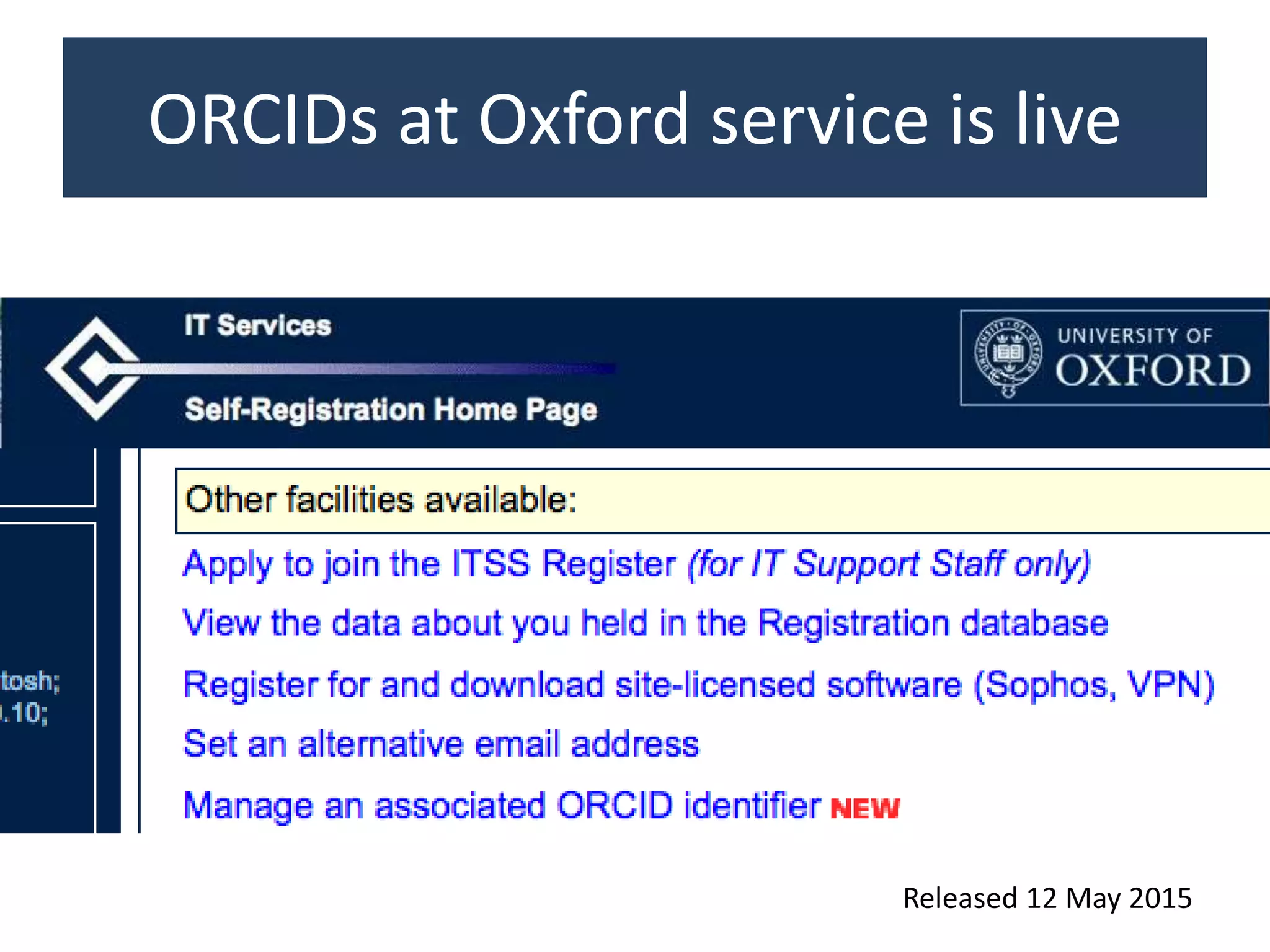
• ORCIDs at Oxford service
ORCIDs at Oxford service is live
Released 12 May 2015
Points for discussion
• Data quality
• Systems integration
• Standards
compliance
• Common framework
between agencies
• Reduce
administrative
burden
• Automation to cope
with scale
Sally Rumsey, the Bodleian Libraries, 2015

Organisational complexity as a challenge to research assessment: a case study of the University of Oxford

  • 1.
    Organizational complexity asa challenge to research assessment Sally Rumsey The Bodleian Libraries University of Oxford A case study of the University of Oxford
  • 2.
    Complexity A result of •Size of the institution and the amount of research produced (research intensive) Coupled with • Organisational complexity of the institution (administrative structure; governance; etc)
  • 3.
    University of Oxford Factsand figures* • > 5800 academic and research staff • > 5600 research students • 4 university academic divisions (> 70 departments) – Humanities: 9 faculties + Ruskin School of Art – Social Sciences: 16 departments – MPLS (Mathematical, Physical & Life Sciences): 12 departments – Medical Sciences: 16 departments – Plus cross disciplinary institutes eg Oxford Martin School and others • 44 colleges and PPHs (Permanent Private Halls) (separate legal entities to University) • External research funding £478.3m • Approx 4700 active research awards • Estimated 16,000 journal articles published p.a. • > 120 libraries * 2013 and 2013/14 figures: Annual Review 2013-14
  • 4.
    Democracy • Wellington Squareas the centre of ‘the University’ • Democratic • Decision-making devolved to the four Academic Divisions and their departments/faculties • Decision-making can progress slowly • Example: Symplectic adoption for REF 2014 • REF OA Service design project (for REF 2020) Cppyright Clare Byers
  • 5.
    Colleges • Separate legal entitiesto the university • Dual appointments • College-only appointed staff • Not on HR system • Submitted to REF Copyright Jason Partridge
  • 6.
    Governance and infrastructure •Complex committee structure • Routes and timing of committees • Systems integration (WIP) • RIM data quality • Lack of unique identifiers and controlled vocabularies across the entire institution (Divisions, Colleges, NHS etc) • Devolved model • Internal matters also relevant to external integration • Compliance with standards (eg RIOXX)
  • 7.
    Facts and figures OxfordREF 2014 submission Submitted to 31 Units of Assessment (UoA)* (out of 36) c.2400 research staff submitted c. 8500 outputs submitted Returned 380,000 data fields REF 2008 resulted in £1.9 billion research income over 6 year period Reported 4892.5 doctoral degrees awarded Took 2½ years to manage and compile return * http://www.ref.ac.uk/panels/unitsofassessment/
  • 8.
    REF complexity illustrativecase OII – Oxford Internet Institute • A department of Social Sciences Division • Multi/cross disciplinary • Submitted under 9 UoAs (inc psychology, economics, law, geography) • Difficulty in identifying which are the ‘best’ outputs. Best for whom?
  • 9.
    Quality control forREF Case studies • Quality control was a challenge • 31 UoAs split across 4 academic divisions • Needed consistency across all submitted case studies across: – Unit – Within the division – Across all 4 divisions
  • 10.
    REF complexity illustrativecase: Impact • Medical sciences – broad areas such as ‘cancer’ or ‘neuroscience’ over a large academic division • Do not ‘sit’ in any one department • Administrative staff cannot know all the details to report impact • Impact can be reported back 20 years previously. Difficult to identify and track back so far – people leave. Generally cite only 10 years
  • 11.
    The effect onassessment • Locating data required for assessment • Dealing with a variety of systems • Lack of single location for each data type • Data entry/import (quantity) • Consistency • Size of the operation and numbers of people involved Copyright Clare Byers
  • 12.
    • REF OAService Design Project • Pilot Jan – June 2015 • Simple, short message – For individuals – For support staff (including directive) • Comms is key • RS/Bod/Divisional staff
  • 13.
    ORCIDs • How ORCIDsshould help – De facto standard – Common across all units of the University – Supports integration externally – To be required for REF 2020? – Ultimately link individuals, publications, funding – Assist automation • Difficulties eg College staff not on HR/CUD system • Limitations • ORCIDs at Oxford service
  • 14.
    ORCIDs at Oxfordservice is live Released 12 May 2015
  • 15.
    Points for discussion •Data quality • Systems integration • Standards compliance • Common framework between agencies • Reduce administrative burden • Automation to cope with scale Sally Rumsey, the Bodleian Libraries, 2015

Editor's Notes

  • #15 The publicity machine yet to be started up A few tweaks to guidance and details