Learning technologies
at the service of the
Case Study
Methodology in the
21st century
classroom
Cristian Opazo, Lillian Moran
New York University
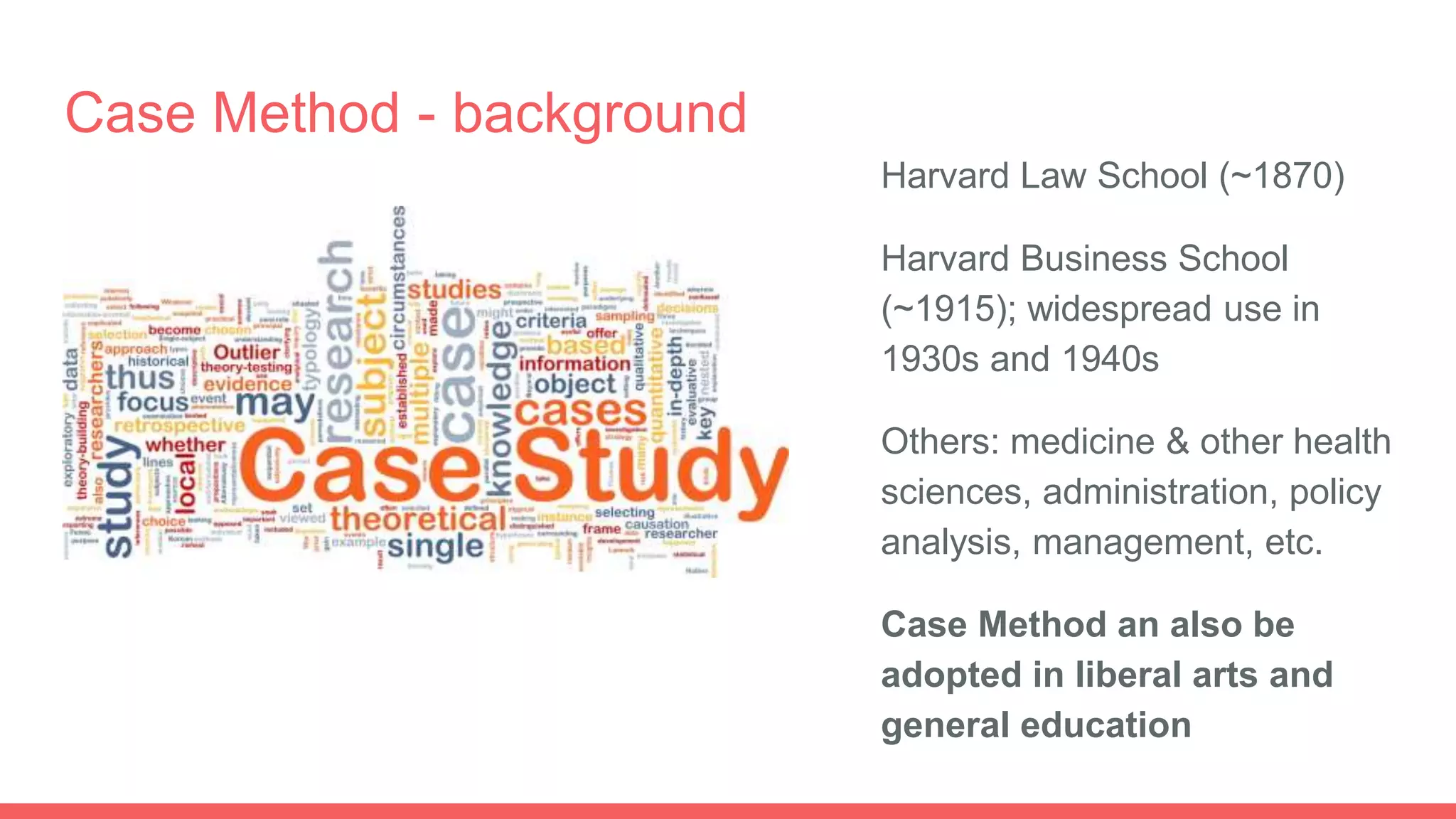
Case Method - background
Harvard Law School (~1870)
Harvard Business School
(~1915); widespread use in
1930s and 1940s
Others: medicine & other health
sciences, administration, policy
analysis, management, etc.
Case Method an also be
adopted in liberal arts and
general education
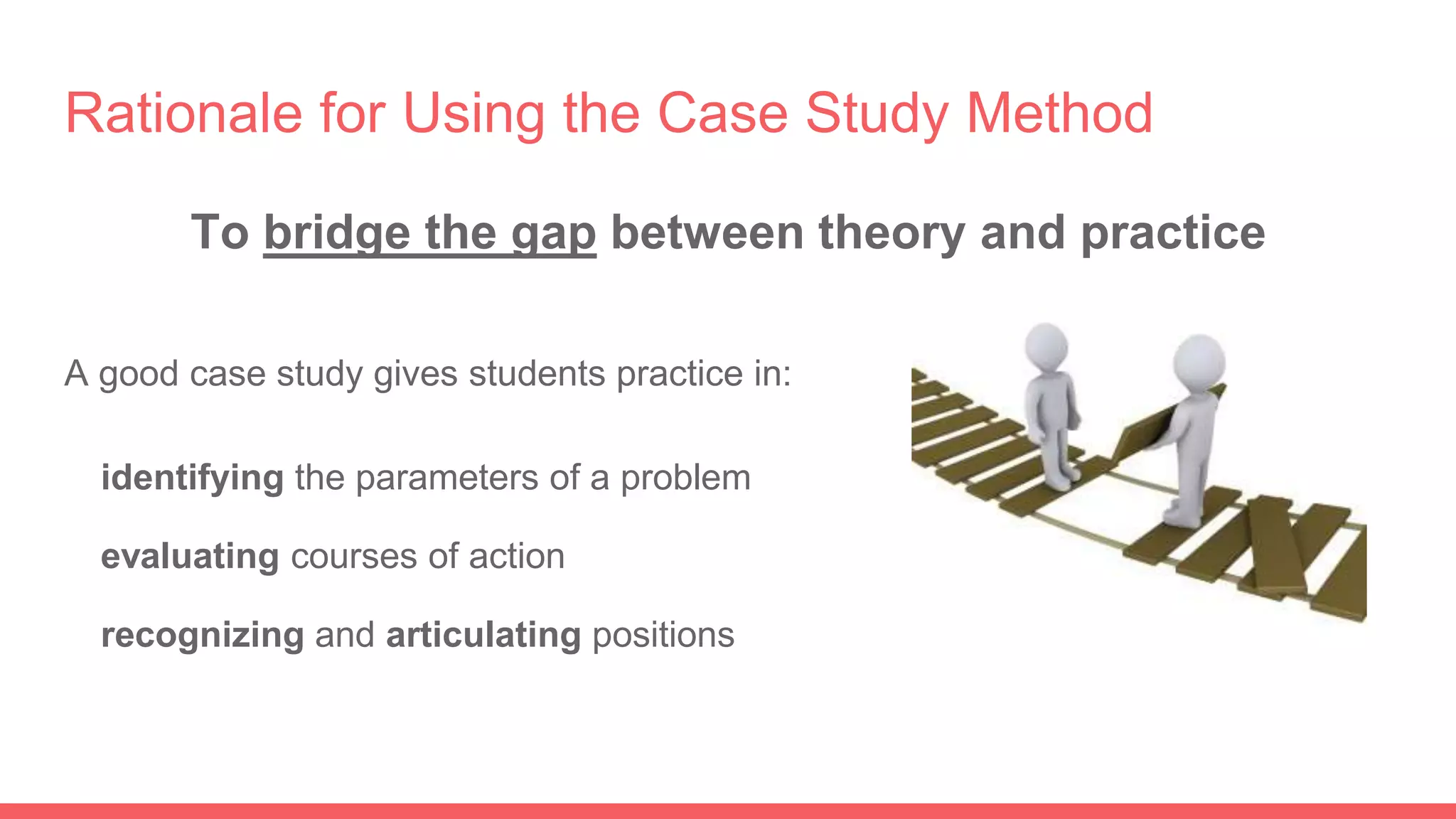
Rationale for Using the Case Study Method
To bridge the gap between theory and practice
A good case study gives students practice in:
identifying the parameters of a problem
evaluating courses of action
recognizing and articulating positions
Case studies are contextual narratives
Consist of the following elements:
1. a specific, reality-based story
2. a rich scenario that describes a relatively complex
issue
3. a conflict to be solved
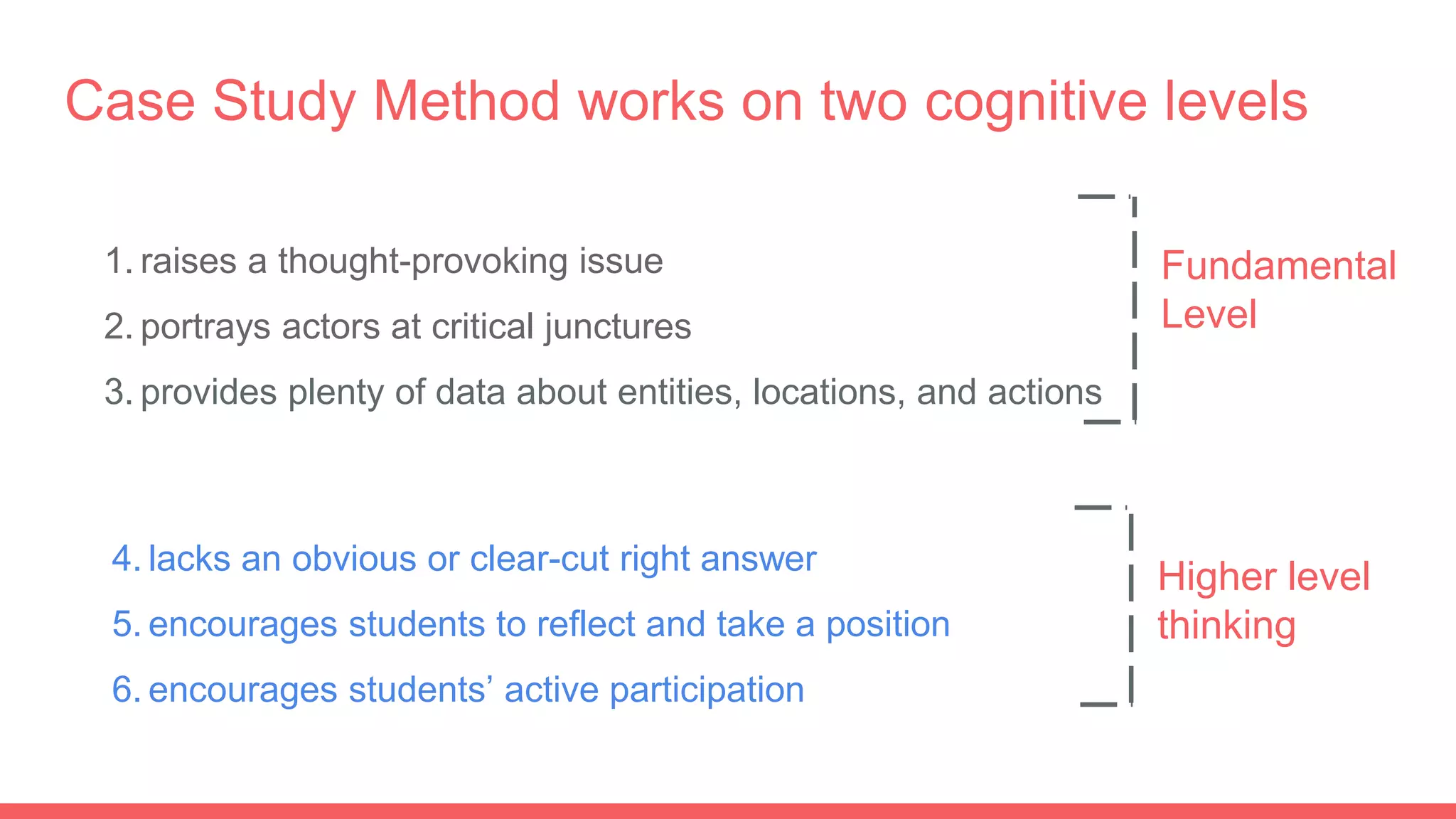
Case Study Method works on two cognitive levels
Fundamental
Level
1. raises a thought-provoking issue
2. portrays actors at critical junctures
3. provides plenty of data about entities, locations, and actions
4. lacks an obvious or clear-cut right answer
5. encourages students to reflect and take a position
6. encourages students’ active participation
Higher level
thinking
Examples vs. Case Studies
CASE STUDIES:
student applies
the facts with
active guidance
over time
EXAMPLES:
instructor
describes
the facts
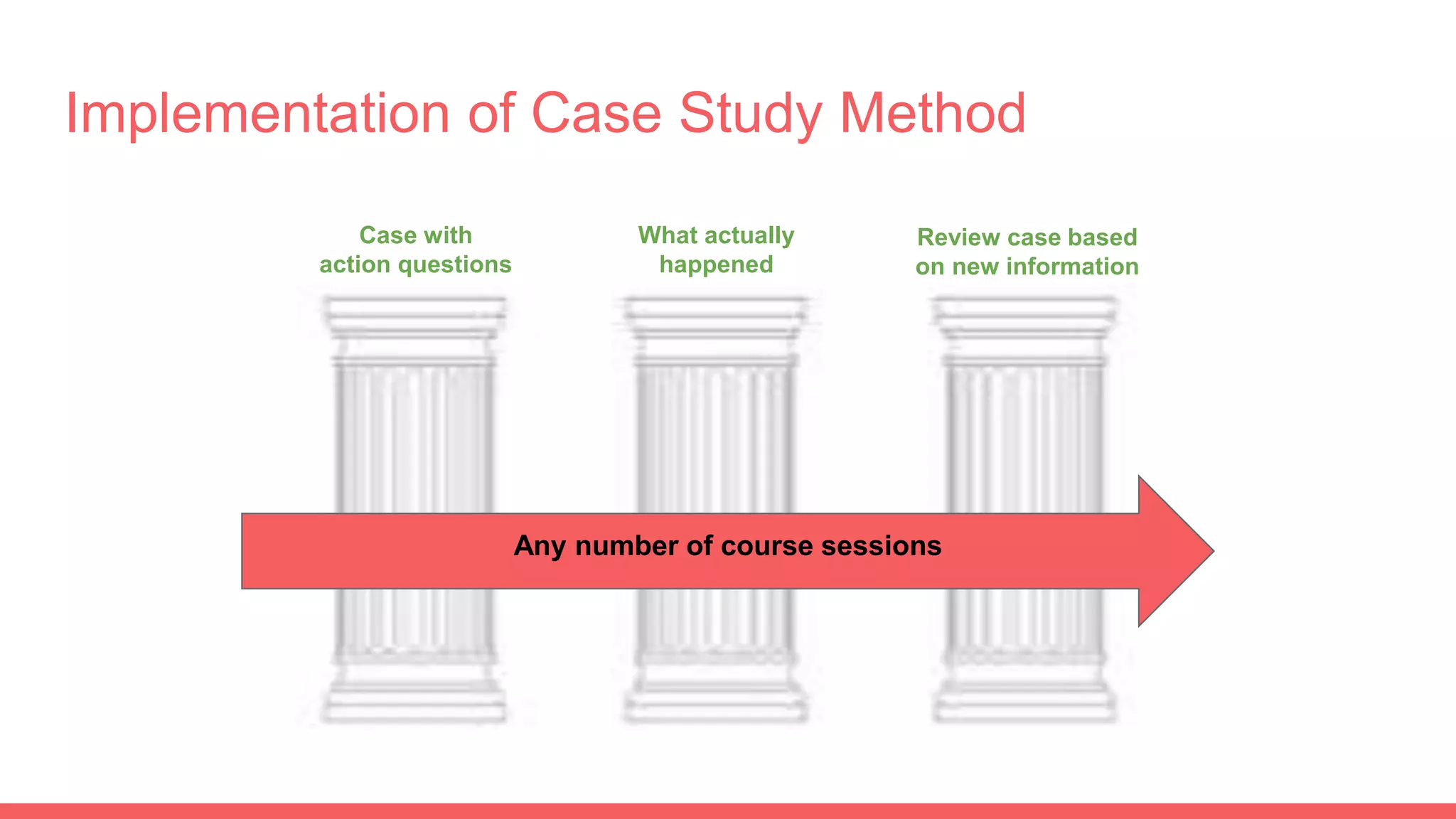
Implementation of Case Study Method
Case with
action questions
What actually
happened
Review case based
on new information
Any number of course sessions
Two examples at NYU
Wide spectrum of implementations (from very simple to very complex)
Evaluating clinical competencies through Qualtrics surveys
Multimedia Interactive Case Study: Family Homelessness in
NYC
Resources: Free Cases
Thanks EdMedia
and thanks Vancouver!

Learning technologies for case studies [EdMedia 2016]

  • 1.
    Learning technologies at theservice of the Case Study Methodology in the 21st century classroom Cristian Opazo, Lillian Moran New York University
  • 2.
    Case Method -background Harvard Law School (~1870) Harvard Business School (~1915); widespread use in 1930s and 1940s Others: medicine & other health sciences, administration, policy analysis, management, etc. Case Method an also be adopted in liberal arts and general education
  • 3.
    Rationale for Usingthe Case Study Method To bridge the gap between theory and practice A good case study gives students practice in: identifying the parameters of a problem evaluating courses of action recognizing and articulating positions
  • 4.
    Case studies arecontextual narratives Consist of the following elements: 1. a specific, reality-based story 2. a rich scenario that describes a relatively complex issue 3. a conflict to be solved
  • 5.
    Case Study Methodworks on two cognitive levels Fundamental Level 1. raises a thought-provoking issue 2. portrays actors at critical junctures 3. provides plenty of data about entities, locations, and actions 4. lacks an obvious or clear-cut right answer 5. encourages students to reflect and take a position 6. encourages students’ active participation Higher level thinking
  • 6.
    Examples vs. CaseStudies CASE STUDIES: student applies the facts with active guidance over time EXAMPLES: instructor describes the facts
  • 7.
    Implementation of CaseStudy Method Case with action questions What actually happened Review case based on new information Any number of course sessions
  • 8.
    Two examples atNYU Wide spectrum of implementations (from very simple to very complex) Evaluating clinical competencies through Qualtrics surveys Multimedia Interactive Case Study: Family Homelessness in NYC
  • 9.
  • 10.

Editor's Notes

  • #3 Idea of using teaching cases in a university setting started at the Harvard Law School around 1870 Migrated into Harvard Business School about 1915; widespread use in 1930s and 1940s Gradual adoption by other professional schools: medicine, administration, policy analysis, etc.
  • #4 STUDENT OUTCOMES!
  • #5 Fundamental level: tells a “real” and engaging story is relatively concise raises a thought-provoking issue has elements of conflict provides plenty of data about character, location, and actions portrays actors at critical junctures / moments of decision
  • #6 Fundamental level tells a “real” and engaging story is relatively concise raises a thought-provoking issue has elements of conflict provides plenty of data about character, location, and actions portrays actors at critical junctures / moments of decision
  • #7 student applies facts in a more complex situation over time Eg. McDonalds is a globalized company = example How did McDonald’s become so globalized = case study
  • #8 You can do it in one session or over multiple sessions
  • #9 Cristian
  • #10 The Case Center - FREE and fee cases - http://www.thecasecentre.org/educators/casemethod/resources/freecasesoverview National Center for Case Study Teaching in Science - LARGE searchable free case studies - http://sciencecases.lib.buffalo.edu/cs/collection/ MITSloan Learning Edge - https://mitsloan.mit.edu/LearningEdge/Pages/About.aspx Acadia Institute of Case Studies - http://aics.acadiau.ca/index.html British Columbia Innovation Council - http://aics.acadiau.ca/index.html Penske - small set of company/customer case studies - http://www.penskelogistics.com/insights/case-studies/ Case Place.org - free and for fee cases - http://www.caseplace.org/ Stanford Graduate School of Business - http://www.penskelogistics.com/insights/case-studies/