How learning analytics can
influence the digital strategy
in an institution
6 March 2018 | ICC, Birmingham
Digital strategy
How learning analytics can influence
the digital strategy in an institution
Introducing learning analytics to the University of Greenwich
6 March 2018 | ICC, Birmingham
>To understand more about the learning processes of our
students so that we can provide the best possible customised
learning experience
>To maximize student engagement so that retention,
achievement and employability are optimized
>To provide a learning experience that students enjoy
Aims
>Applicant and Student data from BANNER
>VLE data from Moodle
>Attendance monitoring in-house solution
>Survey data from Achievability (EVASYS)
>Additional datasets coming on stream
>Library Usage from SirsiDynix Symphony
>Tutor engagement in-house solution
>Assessment data from Turnitin
Background – data sources
>SAP reporting tools Business Objects, Lumira 2,
Dashboards
>Key strategic dashboards in Tableau
>Excel (for some ad hoc or preliminary scoping)
>Alteryx for processing large/complex datasets
>Data warehouse of applicant, student, destinations and
HESA data
Background – analytics tools used at Greenwich
>Got senior level buy-in
>Joined the Jisc learning analytics network in February 2015
>Tested Jisc’s data submission and data modelling processes
>Participated in a discovery / institutional readiness assessment
>Became a Jisc pathfinder institution
>First predictive model (Marist College) not accurate enough so
have had to review
>New model, developed by Jisc, is giving 80% accuracy.
Progress so far
> Finalizing automation of key data feeds (demographics and attendance)
> Developing a feed of library data
> Piloting Data Explorer and Study Goal with key staff / students
> Planning for roll-out of Data Explorer and Study Goal in September 2018
> Linking Data Explorer to our own tutor dashboard
> Linking Study Goal to our own student app
> Communications
> Training
> Governance
> Working with Jisc to optimize the predictive analytics model
> Planning for roll-out of predictive analytics in September 2019
Current tasks
Why Jisc?
Allowed us to develop our
understanding of learning
analytics alongside our capability
to access and manipulate
additional key data
>Vice-Chancellor has been very engaged from the outset
>Key academics have seen what is available and are supportive
>Professional Directorates are on-board
>Students Union are keen for the system to be available
>Now planning a communications strategy to inform the wider
university community
Staff engagement
>Learning Analytics is an approved project overseen by our IT
Strategy Board
>Routine oversight by our Business Intelligence and Reporting
Sub-committee which includes both academic and professional
services staff
>Reviewed the Jisc Code of Practice and modified slightly
>Reviewed GDPR compliance issues and are now finalizing
arrangements for implementation in September 2018
>Roll-out Committee, chaired by Deputy Vice-Chancellor will
ensure best practice when using learning analytics data
Governance
>Getting tutors/students to engage with the data
>Developing consistent protocols for intervention
>Supporting key staff who will be providing advice and guidance
>Ensuring there is a feed-back loop related to interventions that
does not breach data confidentiality
>Adding the feed-back loops into the learning analytics dataset
>Good communications
>Comprehensive training
>Clear methods for reporting back to the project team
>Monitoring success
Challenges of roll-out
>Interpreting and validating the predictive model
>Identifying behaviours of key population groups
>Subject
>Mode of study
>Level of study
>Previous academic history
>Identifying additional data streams that could provide insight
>Explaining what the outcomes mean in non-technical terms
>Explaining what the outcomes don’t mean
>Using the outcomes to drive positive change processes
Challenges with the predictive model
>Embed our survey work into learning analytics
>Sentiment analysis
>Insights into module level response patterns
>Link to review of teaching practices at module and
programme level
>Add information on commuter students
>Review engagement patterns from application to employment
>Embed best practice from the work of others in the sector
Where next
>Good data (accurate, rich, centrally held) in real time
>In-house skills to manipulate datasets
>Some understanding of statistical patterns within the datasets
>Agreed governance, data security, data protection, data sharing
>Capability to work flexibly as part of a club
>Interest and buy-in from staff and students
>Understanding that this is a journey not a project
Key Findings – what you need to work successfully with Jisc
Except where otherwise noted, this work is licensed under CC-BY-NC-ND.
Christine Couper
Director of strategic planning
c.j.couper@gre.ac.uk
I have been…
University of Greenwich, Park Row, London SE10 9LS
T 0208 331 9142
Thank you!
Any questions?
Digital strategy
Learning Analytics at the University
of Gloucestershire
Why Learning Analytics
6 March 2018 | ICC, Birmingham
Why Learning Analytics
Full-bleed image slide
>To help students succeed – giving them feedback on how
they study so they can control their learning
>To give data to Personal Tutors to inform their discussions
with their tutees and to focus effort
>To enable Modules to share best practice as part of
continuous improvement
Motivation
Full-bleed image slide
How to go about it
>Discovery process and readiness assessment
–To test Senior appetite
–To understand Student views
>Technical Qualification
>Policy agreement
>Pilot rollout
>Use hooks to encourage use
– Feedback from students
– Attendance monitoring
>…..eventually……Full rollout and integration
Overall Plan
>Working with Academics to explain value
>Using ‘advocates’ to encourage uptake
>Being realistic about the systems and the understanding
>Generating anecdotes and examples
>Moving from diary-based to interrupt-based
Process Change
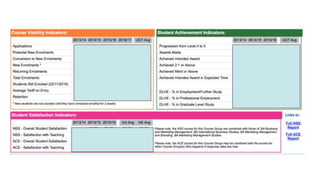
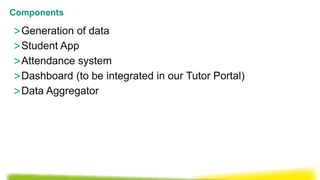
>Generation of data
>Student App
>Attendance system
>Dashboard (to be integrated in our Tutor Portal)
>Data Aggregator
Components
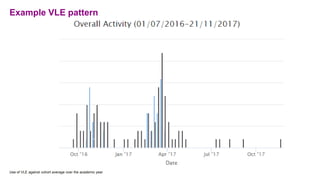
The Value of Descriptive Data
Example VLE pattern
Use of VLE against cohort average over the academic year
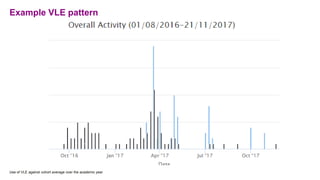
Example VLE pattern
Use of VLE against cohort average over the academic year
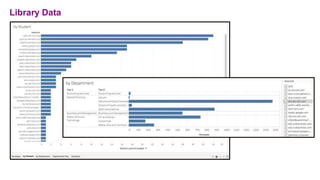
Library Data
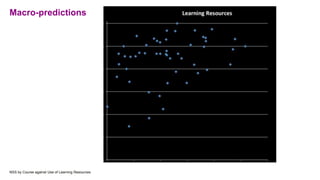
Macro-predictions
NSS by Course against Use of Learning Resources
The Promise of Predictive Data
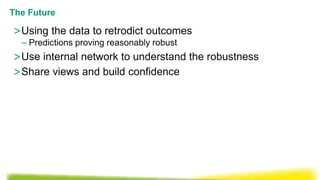
>Using the data to retrodict outcomes
– Predictions proving reasonably robust
>Use internal network to understand the robustness
>Share views and build confidence
The Future
Except where otherwise noted, this work is licensed under CC-BY-NC-ND.
Nick Moore
Director of LTI
University of Gloucestershire
nmoore@glos.ac.uk
I have been…
T 01242 714274
Thank you!
Any questions?

How learning analytics can influence the digital strategy in an institution

  • 1.
    How learning analyticscan influence the digital strategy in an institution 6 March 2018 | ICC, Birmingham
  • 2.
    Digital strategy How learninganalytics can influence the digital strategy in an institution Introducing learning analytics to the University of Greenwich 6 March 2018 | ICC, Birmingham
  • 3.
    >To understand moreabout the learning processes of our students so that we can provide the best possible customised learning experience >To maximize student engagement so that retention, achievement and employability are optimized >To provide a learning experience that students enjoy Aims
  • 4.
    >Applicant and Studentdata from BANNER >VLE data from Moodle >Attendance monitoring in-house solution >Survey data from Achievability (EVASYS) >Additional datasets coming on stream >Library Usage from SirsiDynix Symphony >Tutor engagement in-house solution >Assessment data from Turnitin Background – data sources
  • 5.
    >SAP reporting toolsBusiness Objects, Lumira 2, Dashboards >Key strategic dashboards in Tableau >Excel (for some ad hoc or preliminary scoping) >Alteryx for processing large/complex datasets >Data warehouse of applicant, student, destinations and HESA data Background – analytics tools used at Greenwich
  • 6.
    >Got senior levelbuy-in >Joined the Jisc learning analytics network in February 2015 >Tested Jisc’s data submission and data modelling processes >Participated in a discovery / institutional readiness assessment >Became a Jisc pathfinder institution >First predictive model (Marist College) not accurate enough so have had to review >New model, developed by Jisc, is giving 80% accuracy. Progress so far
  • 7.
    > Finalizing automationof key data feeds (demographics and attendance) > Developing a feed of library data > Piloting Data Explorer and Study Goal with key staff / students > Planning for roll-out of Data Explorer and Study Goal in September 2018 > Linking Data Explorer to our own tutor dashboard > Linking Study Goal to our own student app > Communications > Training > Governance > Working with Jisc to optimize the predictive analytics model > Planning for roll-out of predictive analytics in September 2019 Current tasks
  • 8.
    Why Jisc? Allowed usto develop our understanding of learning analytics alongside our capability to access and manipulate additional key data
  • 9.
    >Vice-Chancellor has beenvery engaged from the outset >Key academics have seen what is available and are supportive >Professional Directorates are on-board >Students Union are keen for the system to be available >Now planning a communications strategy to inform the wider university community Staff engagement
  • 10.
    >Learning Analytics isan approved project overseen by our IT Strategy Board >Routine oversight by our Business Intelligence and Reporting Sub-committee which includes both academic and professional services staff >Reviewed the Jisc Code of Practice and modified slightly >Reviewed GDPR compliance issues and are now finalizing arrangements for implementation in September 2018 >Roll-out Committee, chaired by Deputy Vice-Chancellor will ensure best practice when using learning analytics data Governance
  • 11.
    >Getting tutors/students toengage with the data >Developing consistent protocols for intervention >Supporting key staff who will be providing advice and guidance >Ensuring there is a feed-back loop related to interventions that does not breach data confidentiality >Adding the feed-back loops into the learning analytics dataset >Good communications >Comprehensive training >Clear methods for reporting back to the project team >Monitoring success Challenges of roll-out
  • 12.
    >Interpreting and validatingthe predictive model >Identifying behaviours of key population groups >Subject >Mode of study >Level of study >Previous academic history >Identifying additional data streams that could provide insight >Explaining what the outcomes mean in non-technical terms >Explaining what the outcomes don’t mean >Using the outcomes to drive positive change processes Challenges with the predictive model
  • 13.
    >Embed our surveywork into learning analytics >Sentiment analysis >Insights into module level response patterns >Link to review of teaching practices at module and programme level >Add information on commuter students >Review engagement patterns from application to employment >Embed best practice from the work of others in the sector Where next
  • 14.
    >Good data (accurate,rich, centrally held) in real time >In-house skills to manipulate datasets >Some understanding of statistical patterns within the datasets >Agreed governance, data security, data protection, data sharing >Capability to work flexibly as part of a club >Interest and buy-in from staff and students >Understanding that this is a journey not a project Key Findings – what you need to work successfully with Jisc
  • 15.
    Except where otherwisenoted, this work is licensed under CC-BY-NC-ND. Christine Couper Director of strategic planning c.j.couper@gre.ac.uk I have been… University of Greenwich, Park Row, London SE10 9LS T 0208 331 9142
  • 16.
  • 17.
    Digital strategy Learning Analyticsat the University of Gloucestershire Why Learning Analytics 6 March 2018 | ICC, Birmingham
  • 18.
  • 19.
  • 20.
    >To help studentssucceed – giving them feedback on how they study so they can control their learning >To give data to Personal Tutors to inform their discussions with their tutees and to focus effort >To enable Modules to share best practice as part of continuous improvement Motivation
  • 21.
  • 22.
    How to goabout it
  • 23.
    >Discovery process andreadiness assessment –To test Senior appetite –To understand Student views >Technical Qualification >Policy agreement >Pilot rollout >Use hooks to encourage use – Feedback from students – Attendance monitoring >…..eventually……Full rollout and integration Overall Plan
  • 24.
    >Working with Academicsto explain value >Using ‘advocates’ to encourage uptake >Being realistic about the systems and the understanding >Generating anecdotes and examples >Moving from diary-based to interrupt-based Process Change
  • 25.
    >Generation of data >StudentApp >Attendance system >Dashboard (to be integrated in our Tutor Portal) >Data Aggregator Components
  • 26.
    The Value ofDescriptive Data
  • 27.
    Example VLE pattern Useof VLE against cohort average over the academic year
  • 28.
    Example VLE pattern Useof VLE against cohort average over the academic year
  • 29.
  • 30.
    Macro-predictions NSS by Courseagainst Use of Learning Resources
  • 31.
    The Promise ofPredictive Data
  • 32.
    >Using the datato retrodict outcomes – Predictions proving reasonably robust >Use internal network to understand the robustness >Share views and build confidence The Future
  • 33.
    Except where otherwisenoted, this work is licensed under CC-BY-NC-ND. Nick Moore Director of LTI University of Gloucestershire nmoore@glos.ac.uk I have been… T 01242 714274
  • 34.