

Dissertation Presentation on
Design and Optimization of Optical Yagi-Uda
Nantenna for beam steering applications
Presented By-
Kartik Goyal
M.Tech(Microwave Engineering)
Final Year (1201468505)
01-02-2016 08:03:56 1
Guide By-
Abhishek Srivastava
Assistant Professor
SRSMCET, Bareilly
Topics to be covered
 What is an optical nantenna
 Need of optical nantenna
 Applications of optical nantenna
 Base papers
 Problem identification
 Proposed work
 Designs & results
 Final design
 Formulae to calculate various parameters & final results
 Conclusion
 References
01-02-2016 08:03:56 2
Optical Nantenna
 Like microwave/RF antenna, it convert freely propagating
optical radiation into localized energy & vice versa
 It is made up of metallic or high-permittivity nanoparticles
 It basically origins from near field optics
 In a general way, when conventional antenna is operated at
optical frequency, then it is called an optical antenna
 It interacts with a receiver or transmitter in the form of a discrete
quantum system
 It can take various unusual forms like tip or a nanoparticles, etc
 It along with Tx/Rx must be regarded as a coupled system
01-02-2016 08:03:56 3
Need of optical Nantenna
Primary needs for communication are
 Faster & more secure networks
 Flexible & user friendly networks
 Low latency of transmission
 Low cost & high capacity
01-02-2016 08:03:56 4
Applications of Optical Nantenna
 Beam Steering applications
 In photo detection
 In photovoltaic
 In non-linear signal conversion
 In information processing
 In spectroscopic applications
 Medical imaging applications
01-02-2016 08:03:56 5
Concept of Beam Steering
 Beam steering is about changing the direction of the main lobe of
a radiation
 In optical systems, it is done by changing the medium through
which the beam is transmitted
 Beam steering plays an important role in ultra-fast switching and
scanning applications
 Traditionally, MEMS technology was used for the purpose of
beam steering applications that include complex arrangements
01-02-2016 08:03:56 6
Optical Yagi-Uda Nano-antenna: Base Papers
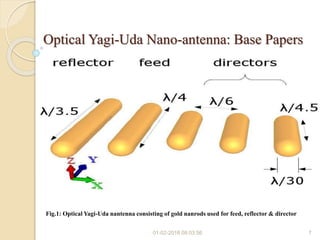
Fig.1: Optical Yagi-Uda nantenna consisting of gold nanrods used for feed, reflector & director
01-02-2016 08:03:56 7
Contd…
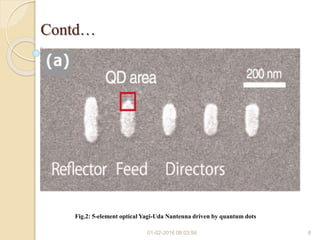
Fig.2: 5-element optical Yagi-Uda Nantenna driven by quantum dots
01-02-2016 08:03:56 8
Contd…
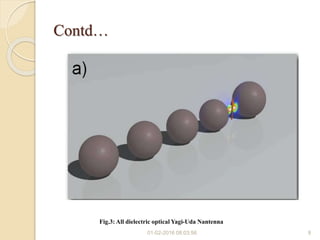
Fig.3: All dielectric optical Yagi-Uda Nantenna
01-02-2016 08:03:56 9
Problem Identification
Modern communication demands high speed data processing which
relies on the speed and bandwidth of special detectors and emitters
designed on the optical frequency. To justify the demand of todays’
high speed data communication and future Nano photonic circuits,
there is a need of proper materials & structures that a designer can use
to design required detectors and emitters at the optical frequencies.
Also, for potential beam steering applications, MEMS technology was
used which included a complex arrangement. There is a need of such
antenna that can direct the beam into a particular direction. According
to literature survey done, there are various optical antennas studied
like Yagi-Uda nantennas, log-periodic optical nantennas, spiral
nanoantennas, etc. but there is no any specification mentioned on the
basis of materials in the optical regime.
01-02-2016 08:03:56 10
Objective
To design an optimized optical Yagi-Uda nantenna at 1550nm for beam
steering and high speed data communication applications
01-02-2016 08:03:56 11
Proposed Work
 Elemental material based study is done with the help of various
designs
 Substrate based study is done
 Effect of number of elements is analyzed
 Different Structures are analyzed
 Finally, based on all studies & comparison made, an optimized design
has been proposed
01-02-2016 08:03:56 12
01-02-2016 08:03:56 13
Factors & Parameters for
designs Parameters to be studied:
1. Material based study
2. Elements based study
3. Structure based study
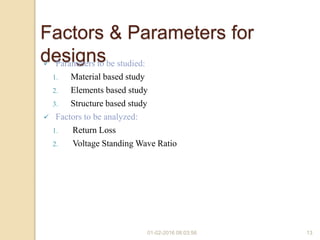
 Factors to be analyzed:
1. Return Loss
2. Voltage Standing Wave Ratio
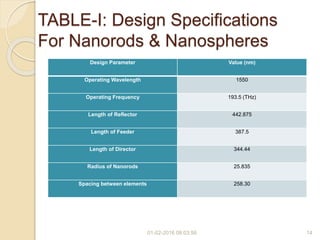
TABLE-I: Design Specifications
For Nanorods & Nanospheres
01-02-2016 08:03:56 14
Design Parameter Value (nm)
Operating Wavelength 1550
Operating Frequency 193.5 (THz)
Length of Reflector 442.875
Length of Feeder 387.5
Length of Director 344.44
Radius of Nanorods 25.835
Spacing between elements 258.30
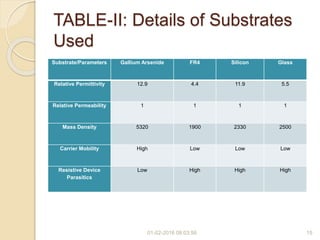
TABLE-II: Details of Substrates
Used
01-02-2016 08:03:56 15
Substrate/Parameters Gallium Arsenide FR4 Silicon Glass
Relative Permittivity 12.9 4.4 11.9 5.5
Relative Permeability 1 1 1 1
Mass Density 5320 1900 2330 2500
Carrier Mobility High Low Low Low
Resistive Device
Parasitics
Low High High High
Design-I
01-02-2016 08:03:56 16
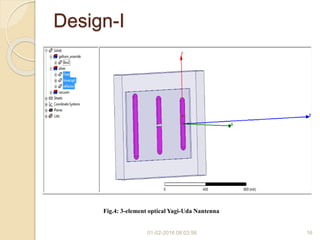
Fig.4: 3-element optical Yagi-Uda Nantenna
Result
01-02-2016 08:03:56 17
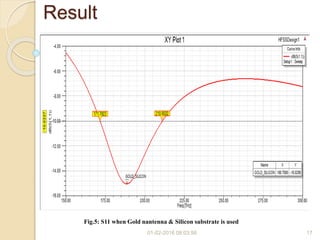
Fig.5: S11 when Gold nantenna & Silicon substrate is used
01-02-2016 08:03:56 18
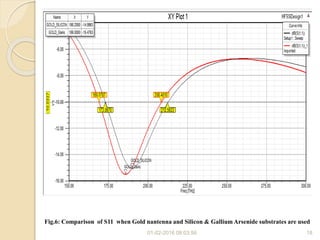
Fig.6: Comparison of S11 when Gold nantenna and Silicon & Gallium Arsenide substrates are used
01-02-2016 08:03:56 19
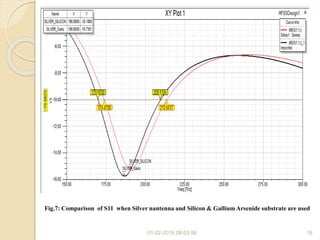
Fig.7: Comparison of S11 when Silver nantenna and Silicon & Gallium Arsenide substrate are used
01-02-2016 08:03:56 20
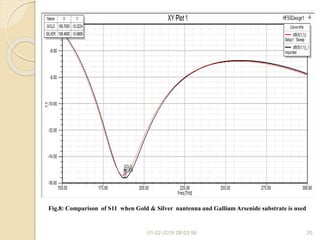
Fig.8: Comparison of S11 when Gold & Silver nantenna and Gallium Arsenide substrate is used
Design-II
01-02-2016 08:03:56 21
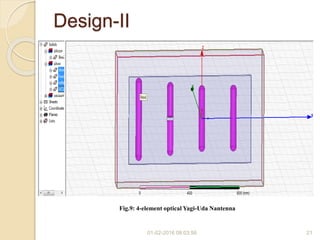
Fig.9: 4-element optical Yagi-Uda Nantenna
Results
01-02-2016 08:03:56 22
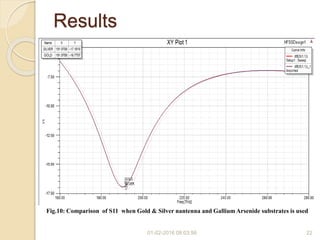
Fig.10: Comparison of S11 when Gold & Silver nantenna and Gallium Arsenide substrates is used
01-02-2016 08:03:56 23
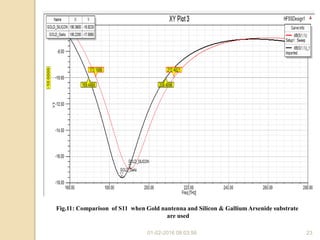
Fig.11: Comparison of S11 when Gold nantenna and Silicon & Gallium Arsenide substrate
are used
01-02-2016 08:03:56 24
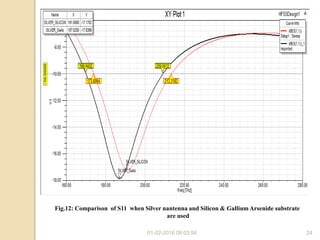
Fig.12: Comparison of S11 when Silver nantenna and Silicon & Gallium Arsenide substrate
are used
Design-III
01-02-2016 08:03:56 25
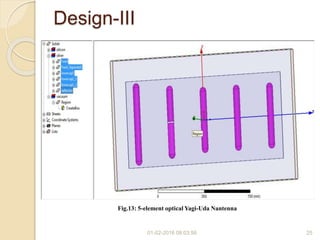
Fig.13: 5-element optical Yagi-Uda Nantenna
Results
01-02-2016 08:03:56 26
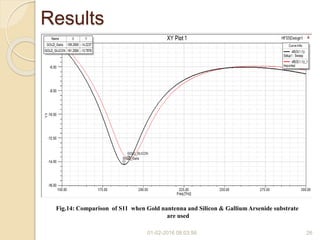
Fig.14: Comparison of S11 when Gold nantenna and Silicon & Gallium Arsenide substrate
are used
01-02-2016 08:03:56 27
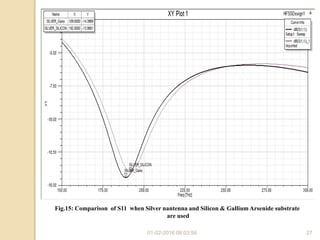
Fig.15: Comparison of S11 when Silver nantenna and Silicon & Gallium Arsenide substrate
are used
Design-IV
01-02-2016 08:03:56 28
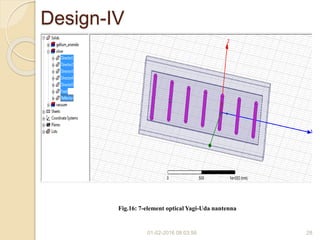
Fig.16: 7-element optical Yagi-Uda nantenna
Results
01-02-2016 08:03:56 29
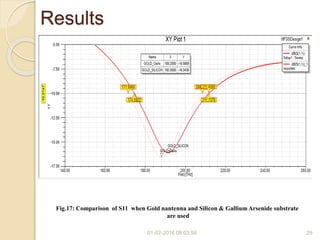
Fig.17: Comparison of S11 when Gold nantenna and Silicon & Gallium Arsenide substrate
are used
01-02-2016 08:03:56 30
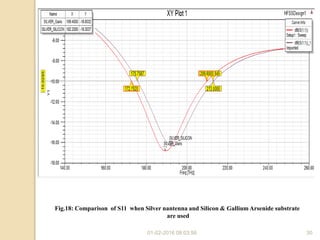
Fig.18: Comparison of S11 when Silver nantenna and Silicon & Gallium Arsenide substrate
are used
Design-V
01-02-2016 08:03:56 31
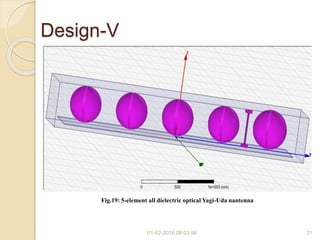
Fig.19: 5-element all dielectric optical Yagi-Uda nantenna
01-02-2016 08:03:56 32
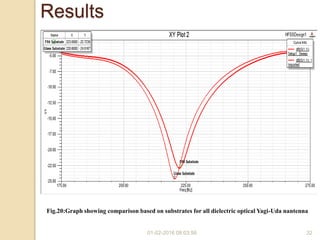
Fig.20:Graph showing comparison based on substrates for all dielectric optical Yagi-Uda nantenna
Results
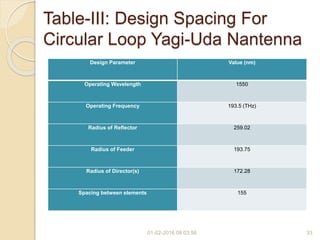
Table-III: Design Spacing For
Circular Loop Yagi-Uda Nantenna
01-02-2016 08:03:56 33
Design Parameter Value (nm)
Operating Wavelength 1550
Operating Frequency 193.5 (THz)
Radius of Reflector 259.02
Radius of Feeder 193.75
Radius of Director(s) 172.28
Spacing between elements 155
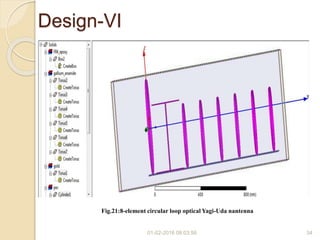
Design-VI
01-02-2016 08:03:56 34
Fig.21:8-element circular loop optical Yagi-Uda nantenna
01-02-2016 08:03:56 35
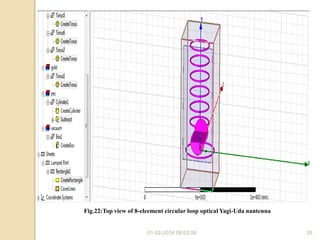
Fig.22:Top view of 8-eleement circular loop optical Yagi-Uda nantenna
01-02-2016 08:03:56 36
Results
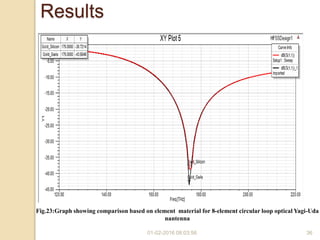
Fig.23:Graph showing comparison based on element material for 8-element circular loop optical Yagi-Uda
nantenna
01-02-2016 08:03:56 37
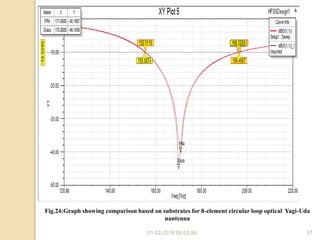
Fig.24:Graph showing comparison based on substrates for 8-element circular loop optical Yagi-Uda
nantenna
01-02-2016 08:03:56 38
Final Design
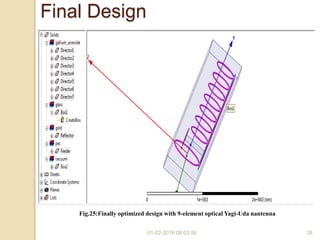
Fig.25:Finally optimized design with 9-element optical Yagi-Uda nantenna
01-02-2016 08:03:56 39
Results
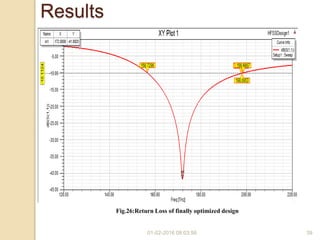
Fig.26:Return Loss of finally optimized design
01-02-2016 08:03:56 40
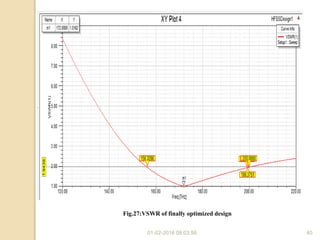
Fig.27:VSWR of finally optimized design
01-02-2016 08:03:56 41
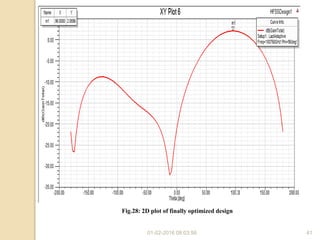
Fig.28: 2D plot of finally optimized design
01-02-2016 08:03:56 42
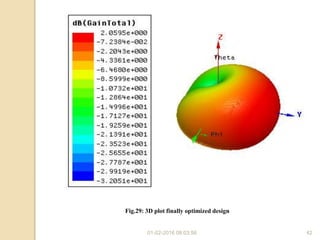
Fig.29: 3D plot finally optimized design
01-02-2016 08:03:56 43
Formulae to calculate various
parameters
If we have return loss, we can calculate the following
parameters directly:
Reflection Coefficient
VSWR
Through Power
Average Power
Reflected Power
( Re /20)
10 turnloss
 
2
100(1 )  
2
100* 
( Re /20)
( Re /20)
[1 10 ]
[1 10 ]
turnloss
turnloss





2
Re (1 )avP turnloss  
01-02-2016 08:03:56 44
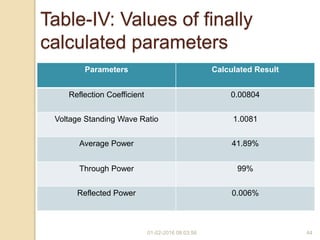
Table-IV: Values of finally
calculated parameters
Parameters Calculated Result
Reflection Coefficient 0.00804
Voltage Standing Wave Ratio 1.0081
Average Power 41.89%
Through Power 99%
Reflected Power 0.006%
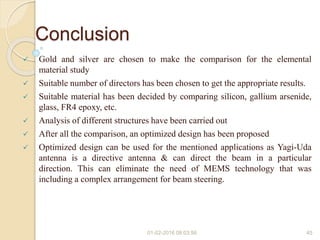
Conclusion
 Gold and silver are chosen to make the comparison for the elemental
material study
 Suitable number of directors has been chosen to get the appropriate results.
 Suitable material has been decided by comparing silicon, gallium arsenide,
glass, FR4 epoxy, etc.
 Analysis of different structures have been carried out
 After all the comparison, an optimized design has been proposed
 Optimized design can be used for the mentioned applications as Yagi-Uda
antenna is a directive antenna & can direct the beam in a particular
direction. This can eliminate the need of MEMS technology that was
including a complex arrangement for beam steering.
01-02-2016 08:03:56 45
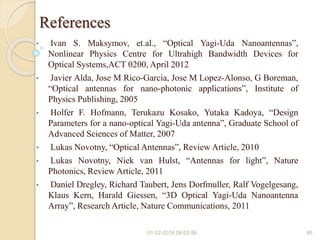
References
• Ivan S. Maksymov, et.al., “Optical Yagi-Uda Nanoantennas”,
Nonlinear Physics Centre for Ultrahigh Bandwidth Devices for
Optical Systems,ACT 0200, April 2012
• Javier Alda, Jose M Rico-Garcia, Jose M Lopez-Alonso, G Boreman,
“Optical antennas for nano-photonic applications”, Institute of
Physics Publishing, 2005
• Holfer F. Hofmann, Terukazu Kosako, Yutaka Kadoya, “Design
Parameters for a nano-optical Yagi-Uda antenna”, Graduate School of
Advanced Sciences of Matter, 2007
• Lukas Novotny, “Optical Antennas”, Review Article, 2010
• Lukas Novotny, Niek van Hulst, “Antennas for light”, Nature
Photonics, Review Article, 2011
• Daniel Dregley, Richard Taubert, Jens Dorfmuller, Ralf Vogelgesang,
Klaus Kern, Harald Giessen, “3D Optical Yagi-Uda Nanoantenna
Array”, Research Article, Nature Communications, 2011
01-02-2016 08:03:56 46
01-02-2016 08:03:56 47

Optical Yagi-Uda Nanoantenna

  • 1.
    Dissertation Presentation on Designand Optimization of Optical Yagi-Uda Nantenna for beam steering applications Presented By- Kartik Goyal M.Tech(Microwave Engineering) Final Year (1201468505) 01-02-2016 08:03:56 1 Guide By- Abhishek Srivastava Assistant Professor SRSMCET, Bareilly
  • 2.
    Topics to becovered  What is an optical nantenna  Need of optical nantenna  Applications of optical nantenna  Base papers  Problem identification  Proposed work  Designs & results  Final design  Formulae to calculate various parameters & final results  Conclusion  References 01-02-2016 08:03:56 2
  • 3.
    Optical Nantenna  Likemicrowave/RF antenna, it convert freely propagating optical radiation into localized energy & vice versa  It is made up of metallic or high-permittivity nanoparticles  It basically origins from near field optics  In a general way, when conventional antenna is operated at optical frequency, then it is called an optical antenna  It interacts with a receiver or transmitter in the form of a discrete quantum system  It can take various unusual forms like tip or a nanoparticles, etc  It along with Tx/Rx must be regarded as a coupled system 01-02-2016 08:03:56 3
  • 4.
    Need of opticalNantenna Primary needs for communication are  Faster & more secure networks  Flexible & user friendly networks  Low latency of transmission  Low cost & high capacity 01-02-2016 08:03:56 4
  • 5.
    Applications of OpticalNantenna  Beam Steering applications  In photo detection  In photovoltaic  In non-linear signal conversion  In information processing  In spectroscopic applications  Medical imaging applications 01-02-2016 08:03:56 5
  • 6.
    Concept of BeamSteering  Beam steering is about changing the direction of the main lobe of a radiation  In optical systems, it is done by changing the medium through which the beam is transmitted  Beam steering plays an important role in ultra-fast switching and scanning applications  Traditionally, MEMS technology was used for the purpose of beam steering applications that include complex arrangements 01-02-2016 08:03:56 6
  • 7.
    Optical Yagi-Uda Nano-antenna:Base Papers Fig.1: Optical Yagi-Uda nantenna consisting of gold nanrods used for feed, reflector & director 01-02-2016 08:03:56 7
  • 8.
    Contd… Fig.2: 5-element opticalYagi-Uda Nantenna driven by quantum dots 01-02-2016 08:03:56 8
  • 9.
    Contd… Fig.3: All dielectricoptical Yagi-Uda Nantenna 01-02-2016 08:03:56 9
  • 10.
    Problem Identification Modern communicationdemands high speed data processing which relies on the speed and bandwidth of special detectors and emitters designed on the optical frequency. To justify the demand of todays’ high speed data communication and future Nano photonic circuits, there is a need of proper materials & structures that a designer can use to design required detectors and emitters at the optical frequencies. Also, for potential beam steering applications, MEMS technology was used which included a complex arrangement. There is a need of such antenna that can direct the beam into a particular direction. According to literature survey done, there are various optical antennas studied like Yagi-Uda nantennas, log-periodic optical nantennas, spiral nanoantennas, etc. but there is no any specification mentioned on the basis of materials in the optical regime. 01-02-2016 08:03:56 10
  • 11.
    Objective To design anoptimized optical Yagi-Uda nantenna at 1550nm for beam steering and high speed data communication applications 01-02-2016 08:03:56 11
  • 12.
    Proposed Work  Elementalmaterial based study is done with the help of various designs  Substrate based study is done  Effect of number of elements is analyzed  Different Structures are analyzed  Finally, based on all studies & comparison made, an optimized design has been proposed 01-02-2016 08:03:56 12
  • 13.
    01-02-2016 08:03:56 13 Factors& Parameters for designs Parameters to be studied: 1. Material based study 2. Elements based study 3. Structure based study  Factors to be analyzed: 1. Return Loss 2. Voltage Standing Wave Ratio
  • 14.
    TABLE-I: Design Specifications ForNanorods & Nanospheres 01-02-2016 08:03:56 14 Design Parameter Value (nm) Operating Wavelength 1550 Operating Frequency 193.5 (THz) Length of Reflector 442.875 Length of Feeder 387.5 Length of Director 344.44 Radius of Nanorods 25.835 Spacing between elements 258.30
  • 15.
    TABLE-II: Details ofSubstrates Used 01-02-2016 08:03:56 15 Substrate/Parameters Gallium Arsenide FR4 Silicon Glass Relative Permittivity 12.9 4.4 11.9 5.5 Relative Permeability 1 1 1 1 Mass Density 5320 1900 2330 2500 Carrier Mobility High Low Low Low Resistive Device Parasitics Low High High High
  • 16.
    Design-I 01-02-2016 08:03:56 16 Fig.4:3-element optical Yagi-Uda Nantenna
  • 17.
    Result 01-02-2016 08:03:56 17 Fig.5:S11 when Gold nantenna & Silicon substrate is used
  • 18.
    01-02-2016 08:03:56 18 Fig.6:Comparison of S11 when Gold nantenna and Silicon & Gallium Arsenide substrates are used
  • 19.
    01-02-2016 08:03:56 19 Fig.7:Comparison of S11 when Silver nantenna and Silicon & Gallium Arsenide substrate are used
  • 20.
    01-02-2016 08:03:56 20 Fig.8:Comparison of S11 when Gold & Silver nantenna and Gallium Arsenide substrate is used
  • 21.
    Design-II 01-02-2016 08:03:56 21 Fig.9:4-element optical Yagi-Uda Nantenna
  • 22.
    Results 01-02-2016 08:03:56 22 Fig.10:Comparison of S11 when Gold & Silver nantenna and Gallium Arsenide substrates is used
  • 23.
    01-02-2016 08:03:56 23 Fig.11:Comparison of S11 when Gold nantenna and Silicon & Gallium Arsenide substrate are used
  • 24.
    01-02-2016 08:03:56 24 Fig.12:Comparison of S11 when Silver nantenna and Silicon & Gallium Arsenide substrate are used
  • 25.
    Design-III 01-02-2016 08:03:56 25 Fig.13:5-element optical Yagi-Uda Nantenna
  • 26.
    Results 01-02-2016 08:03:56 26 Fig.14:Comparison of S11 when Gold nantenna and Silicon & Gallium Arsenide substrate are used
  • 27.
    01-02-2016 08:03:56 27 Fig.15:Comparison of S11 when Silver nantenna and Silicon & Gallium Arsenide substrate are used
  • 28.
    Design-IV 01-02-2016 08:03:56 28 Fig.16:7-element optical Yagi-Uda nantenna
  • 29.
    Results 01-02-2016 08:03:56 29 Fig.17:Comparison of S11 when Gold nantenna and Silicon & Gallium Arsenide substrate are used
  • 30.
    01-02-2016 08:03:56 30 Fig.18:Comparison of S11 when Silver nantenna and Silicon & Gallium Arsenide substrate are used
  • 31.
    Design-V 01-02-2016 08:03:56 31 Fig.19:5-element all dielectric optical Yagi-Uda nantenna
  • 32.
    01-02-2016 08:03:56 32 Fig.20:Graphshowing comparison based on substrates for all dielectric optical Yagi-Uda nantenna Results
  • 33.
    Table-III: Design SpacingFor Circular Loop Yagi-Uda Nantenna 01-02-2016 08:03:56 33 Design Parameter Value (nm) Operating Wavelength 1550 Operating Frequency 193.5 (THz) Radius of Reflector 259.02 Radius of Feeder 193.75 Radius of Director(s) 172.28 Spacing between elements 155
  • 34.
    Design-VI 01-02-2016 08:03:56 34 Fig.21:8-elementcircular loop optical Yagi-Uda nantenna
  • 35.
    01-02-2016 08:03:56 35 Fig.22:Topview of 8-eleement circular loop optical Yagi-Uda nantenna
  • 36.
    01-02-2016 08:03:56 36 Results Fig.23:Graphshowing comparison based on element material for 8-element circular loop optical Yagi-Uda nantenna
  • 37.
    01-02-2016 08:03:56 37 Fig.24:Graphshowing comparison based on substrates for 8-element circular loop optical Yagi-Uda nantenna
  • 38.
    01-02-2016 08:03:56 38 FinalDesign Fig.25:Finally optimized design with 9-element optical Yagi-Uda nantenna
  • 39.
    01-02-2016 08:03:56 39 Results Fig.26:ReturnLoss of finally optimized design
  • 40.
    01-02-2016 08:03:56 40 Fig.27:VSWRof finally optimized design
  • 41.
    01-02-2016 08:03:56 41 Fig.28:2D plot of finally optimized design
  • 42.
    01-02-2016 08:03:56 42 Fig.29:3D plot finally optimized design
  • 43.
    01-02-2016 08:03:56 43 Formulaeto calculate various parameters If we have return loss, we can calculate the following parameters directly: Reflection Coefficient VSWR Through Power Average Power Reflected Power ( Re /20) 10 turnloss   2 100(1 )   2 100*  ( Re /20) ( Re /20) [1 10 ] [1 10 ] turnloss turnloss      2 Re (1 )avP turnloss  
  • 44.
    01-02-2016 08:03:56 44 Table-IV:Values of finally calculated parameters Parameters Calculated Result Reflection Coefficient 0.00804 Voltage Standing Wave Ratio 1.0081 Average Power 41.89% Through Power 99% Reflected Power 0.006%
  • 45.
    Conclusion  Gold andsilver are chosen to make the comparison for the elemental material study  Suitable number of directors has been chosen to get the appropriate results.  Suitable material has been decided by comparing silicon, gallium arsenide, glass, FR4 epoxy, etc.  Analysis of different structures have been carried out  After all the comparison, an optimized design has been proposed  Optimized design can be used for the mentioned applications as Yagi-Uda antenna is a directive antenna & can direct the beam in a particular direction. This can eliminate the need of MEMS technology that was including a complex arrangement for beam steering. 01-02-2016 08:03:56 45
  • 46.
    References • Ivan S.Maksymov, et.al., “Optical Yagi-Uda Nanoantennas”, Nonlinear Physics Centre for Ultrahigh Bandwidth Devices for Optical Systems,ACT 0200, April 2012 • Javier Alda, Jose M Rico-Garcia, Jose M Lopez-Alonso, G Boreman, “Optical antennas for nano-photonic applications”, Institute of Physics Publishing, 2005 • Holfer F. Hofmann, Terukazu Kosako, Yutaka Kadoya, “Design Parameters for a nano-optical Yagi-Uda antenna”, Graduate School of Advanced Sciences of Matter, 2007 • Lukas Novotny, “Optical Antennas”, Review Article, 2010 • Lukas Novotny, Niek van Hulst, “Antennas for light”, Nature Photonics, Review Article, 2011 • Daniel Dregley, Richard Taubert, Jens Dorfmuller, Ralf Vogelgesang, Klaus Kern, Harald Giessen, “3D Optical Yagi-Uda Nanoantenna Array”, Research Article, Nature Communications, 2011 01-02-2016 08:03:56 46
  • 47.