Presented by:
Ahmed Mamdouh Mohammed
Assistant lecturer of neurology
Asyut university
Optical Coherence Tomography in Multiple Sclerosis
BACKGROUND
• One of the major pathological Characteristics of MS is neuroaxonal
damage.
• Axonal degeneration resulted from demyelination and/or incomplete
remyelination since myelin is thought to play an integral role in the
maintenance of axonal health through the provision of a protective
environment.
• Approximately 20 % of patients with multiple sclerosis (MS) develop

acute MS associated optic neuritis (MSON) as the initial symptom of their
disease.
BACKGROUND “CONT.”
• Half of MS patients suffer acute MSON during the course of their disease.
• Almost all MS patients have evidence of optic nerve demyelination at autopsy, indicating
that occult, subclinical optic nerve demyelination occurs in virtually all MS patients.
• In addition there is an evidence that subclinical or asymptomatic optic neuropathy was
present in a significant proportion of fellow “unaffected” eyes at 10 years follow-up.
• As a direct result of these findings, it was proposed that the afferent visual pathway may be a
suitable model to study neurodegeneration in MS.
• Optical coherence tomography (OCT) is a is a novel technique similar to ultrasound,
although using a light source “ near-infrared light.” Rather than an acoustic source, to take
cross-section pictures of the retina. With OCT, each of the retina’s distinctive layers can be
seen, allowing to map and measure their thickness.
• OCT is inexpensive, reproducible, well tolerated, fast, painless, and easily repeatable.
• The first commercially available OCT 1991 (OCT 1, humphrey instruments, inc.) Provided
an axial resolution of 15 μm in tissue, (time domain OCT [TD-OCT]), more recent OCT
devices are capable of acquiring scans with an axial resolution of up to 2 μm in tissue,
frequency domain OCT (FD-OCT) or spectral domain OCT (SD-OCT).
BACKGROUNG “CONT.”
BACKGROUNG “CONT.”
• OCT is employed routinely in ophthalmology to assess changes or damage to the
retina in a large variety of diseases, for example, glaucoma, age- related macular
degeneration, or macular edema. More recently, the introduction of OCT into
neurologic research.
• Since the first study of optical coherence tomography (OCT) in MS “1999” OCT
has proven to be a sensitive, precise, and reproducible method of quantifying and
tracking retinal axonal loss in MS, an important cause of sustained disability.
Anatomy of the Retina
• The photosensitive part of the retina lines the posterior two-thirds of the eyeball
and blends with the anterior insensitive part at a junction called the ora serrata.
• It has a diameter of 30–40 mm.
• The posterior part of the retina Is the central retina and measures about 6 mm
Diameter. The central retina is occupied by an Elliptical area called the macula
lutea, which represents An area with the highest visual acuity.
ANATOMY OF THE RETINA “CONT.”
• The retinal thickness varies, being thickest at The area of the optic disk (0.56 mm),
Peripheral to the optic disk, the retina is thinner And becomes about 0.1 mm at the most
peripheral Part near the ora serrata junction.
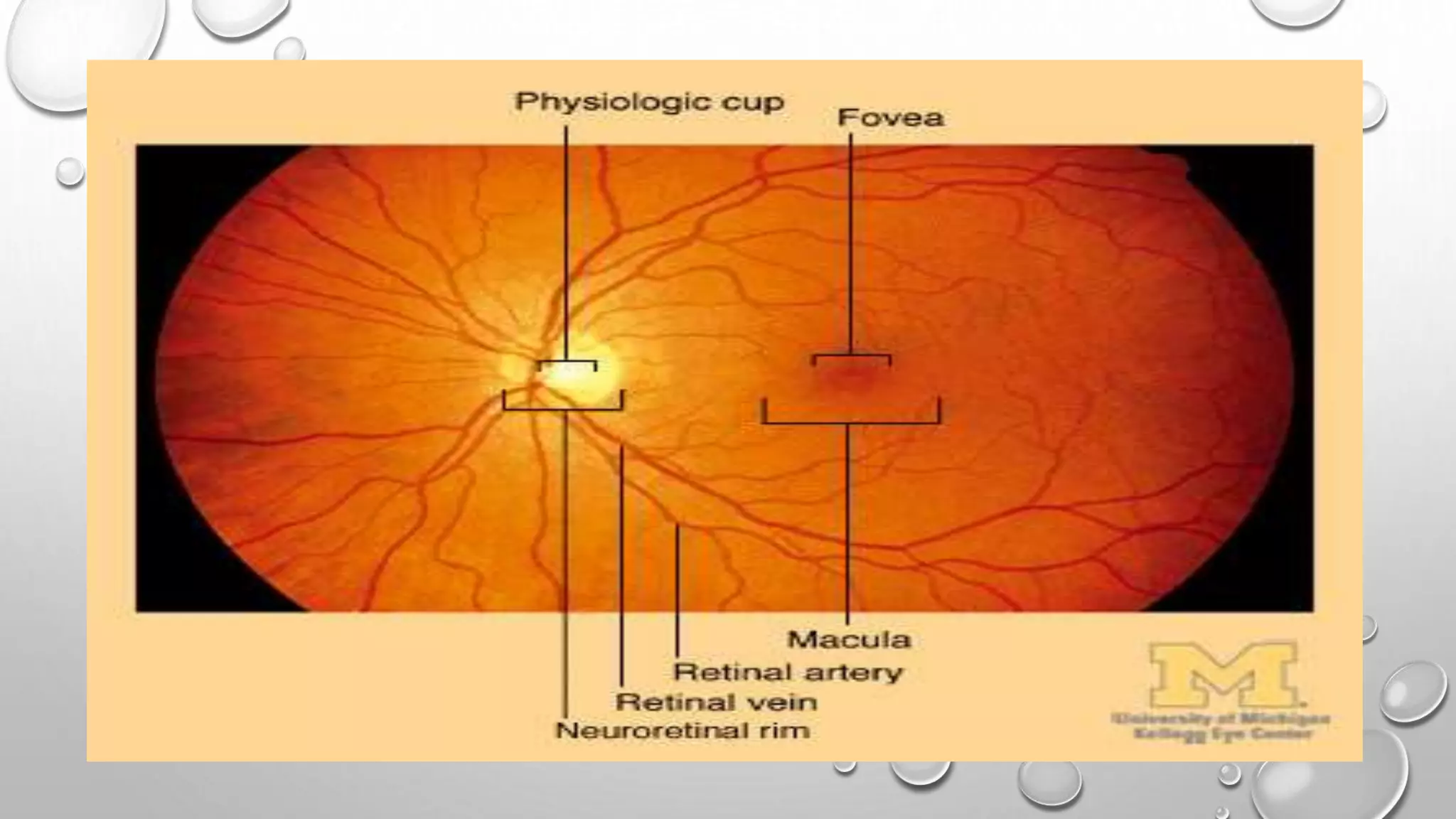
• The optic disk 1.5 mm in diameter and appears paler on ophthalmoscopy than the rest of
the retina, with a central depression for the passage of central retinal vessels. The area of
the optic disk is devoid of photoreceptors and therefore it is insensitive to light (detected
as a blind spot during the conventional neurological examination)
ANATOMY OF THE RETINA “CONT.”
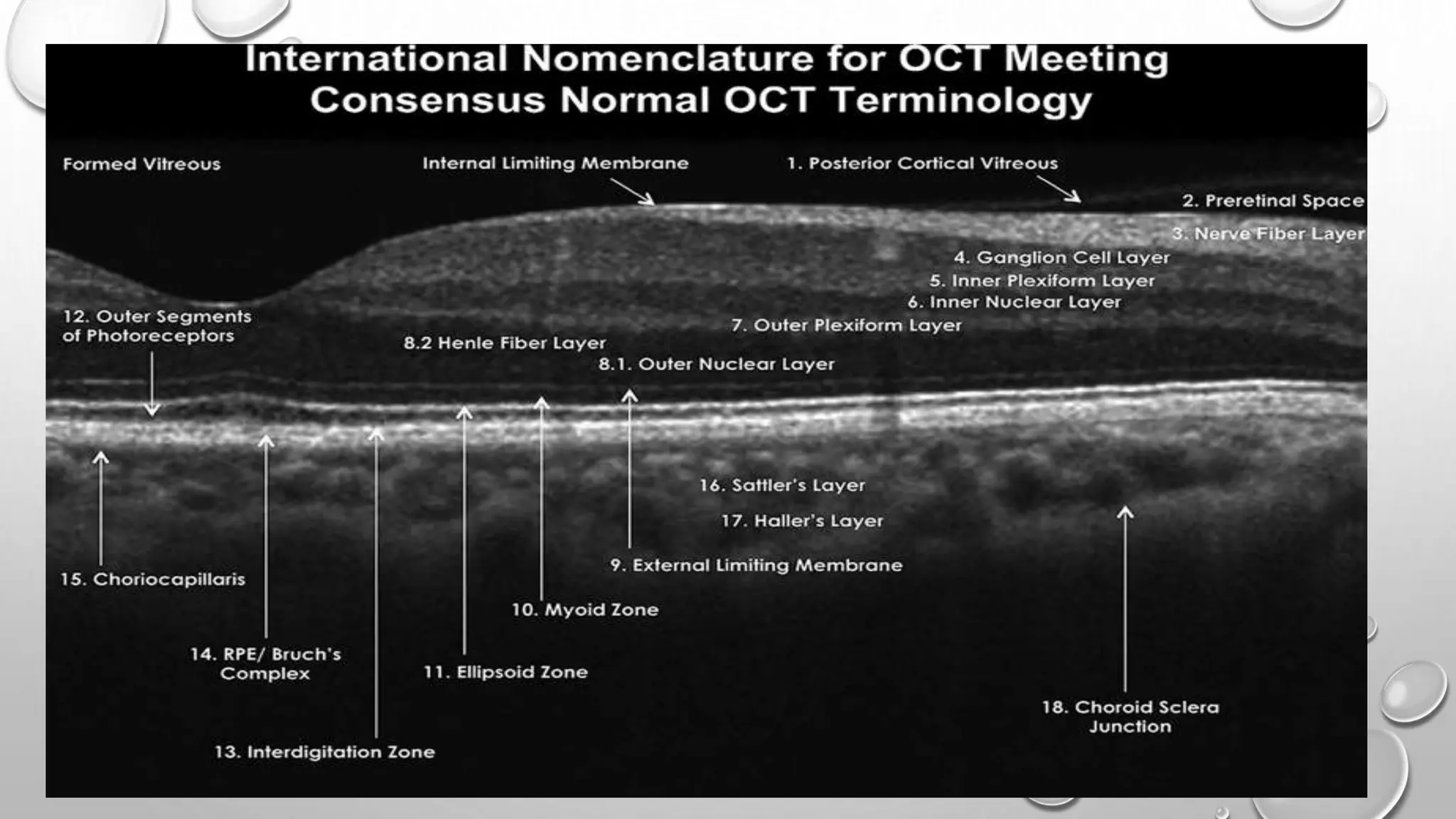
• LAYERS OF THE RETINA
Most textbooks describe ten histological retinal layers, which are described from the
outermost layer (layer 1 near the choroid) to the innermost layer (layer 10 near the vitreous
body).
• LAYER 1: RETINAL PIGMENT EPITHELIUM
• LAYER 2: PHOTORECEPTOR LAYER
• LAYER 3: EXTERNAL LIMITING MEMBRANE
• LAYER 4: OUTER NUCLEAR LAYER
• LAYER 5: OUTER PLEXIFORM LAYER
• LAYER 6: THE INNER NUCLEAR LAYER
• LAYER 7: INNER PLEXIFORM LAYER “IPL”
• LAYER 8: GANGLION CELL LAYER “GCL”
• LAYER 9: NERVE FIBER LAYER “NFL”
• LAYER 10: INTERNAL LIMITING MEMBRANE
Layers of the Retina
ANATOMY OF THE RETINA “CONT.”
LAYER 1: RETINAL PIGMENT EPITHELIUM
• There are about four million epithelial cells in each human retina .
• The greatest density of these cells is in the fovea the basal surface of the RPE is separated
from the underlying choroid capillaries by a membrane called bruch’s membrane the whole
zone has been recently referred to as the RPE/bruch’s complex.
• The apical surface of the cuboidal epithelium is in contact with the photoreceptors (cone
and rod processes) every single epithelial cell faces 40 photoreceptors “interdigitation
zone”.
ANATOMY OF THE RETINA “CONT.”
• Create a barrier between the choriocapillaris and the outer retina. To protect the
retina from the immune system and systemic infections. These barriers are
selective and allow for small molecules such as O 2 , CO2 and retinol to diffuse.
• Also it absorbs the energy from the reflected light and prevents it from
overheating the eye.
• Oct: hyperreflective
ANATOMY OF THE RETINA “CONT.”
LAYER 2: PHOTORECEPTOR LAYER
• This layer contains processes of cone and rod cells that receive light signals and convert
them into electric signals.`
• Each of these processes has an outer segment and inner segment:
the outer segment contain photopigments “OCT: hyporeflective”.
The inner segment is divided into two parts: the outer zone (ellipsoid zone), is packed with
mitochondria making “hyperreflective” and the inner zone (myoid zone) contains smooth
and rough endoplasmic reticulum and appears hyporeflective with retinal OCT.
ANATOMY OF THE RETINA “CONT.”
LAYER 3: EXTERNAL LIMITING MEMBRANE
• The external limiting membrane appears on the OCT as a thin hyperreflective membrane
LAYER 4: OUTER NUCLEAR LAYER
• The outer nuclear layer is formed of the cone and rod cell bodies containing their nuclei.
• Cone cells are primarily responsible for color vision with high resolution during daylight
or under good lighting. The number of cones in the human retina is 4.6 million highest in
the area with the greatest visual acuity (the fovea), where the concentration reaches
199,000 cones/mm 2 .
• cone cells are classified into three types: blue, red, and green ones. The most common
cells are the red cones forming 63 % of all cone cells, followed by the green cones (32 %)
and the blue cone cells (5 %).
ANATOMY OF THE RETINA “CONT.”
• Rod cells are responsible for night vision Rods number is greater than cones,
with a total number of 92 million. Rods are absent in the “fovea”.
• Each cell of the rods and cones has two processes: The other process is the
photoreceptor axons, travel vertically to reach the outer plexiform forming a
membrane called Henle’s fiber layer.
• With OCT, the outer nuclear layer and Henle’s fiber layer appear as one
hyporeflective zone
ANATOMY OF THE RETINA “CONT.”
LAYER 5: OUTER PLEXIFORM LAYER
• It is a complex layer of synapses between different processes of
cone and rod cells and other interneurons “bipolar cells, Amacrine,
horizontal cells, and interplexiform cells”.
• on OCT as a hyperreflective layer
ANATOMY OF THE RETINA “CONT.”
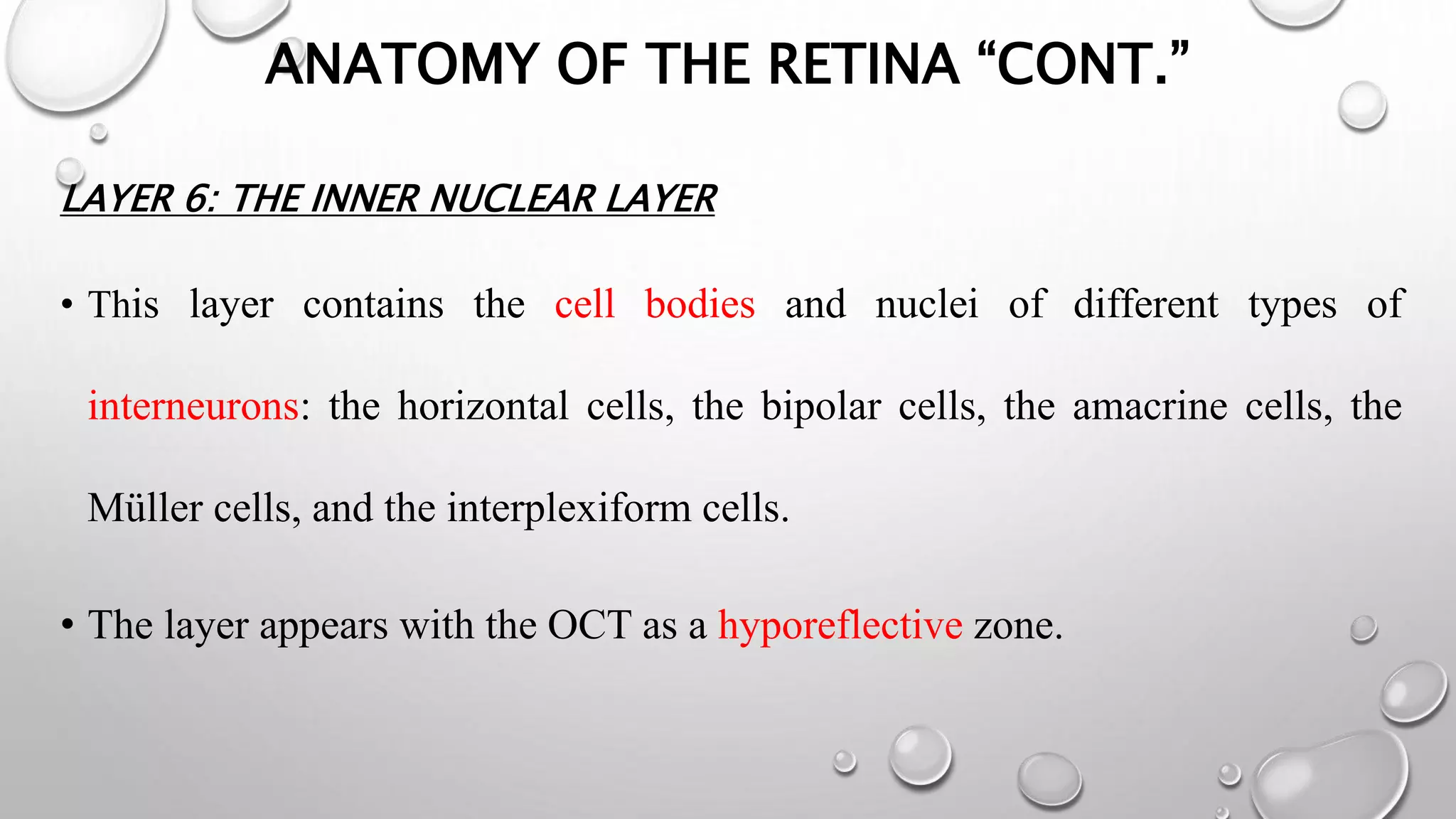
LAYER 6: THE INNER NUCLEAR LAYER
• This layer contains the cell bodies and nuclei of different types of
interneurons: the horizontal cells, the bipolar cells, the amacrine cells, the
Müller cells, and the interplexiform cells.
• The layer appears with the OCT as a hyporeflective zone.
ANATOMY OF THE RETINA “CONT.”
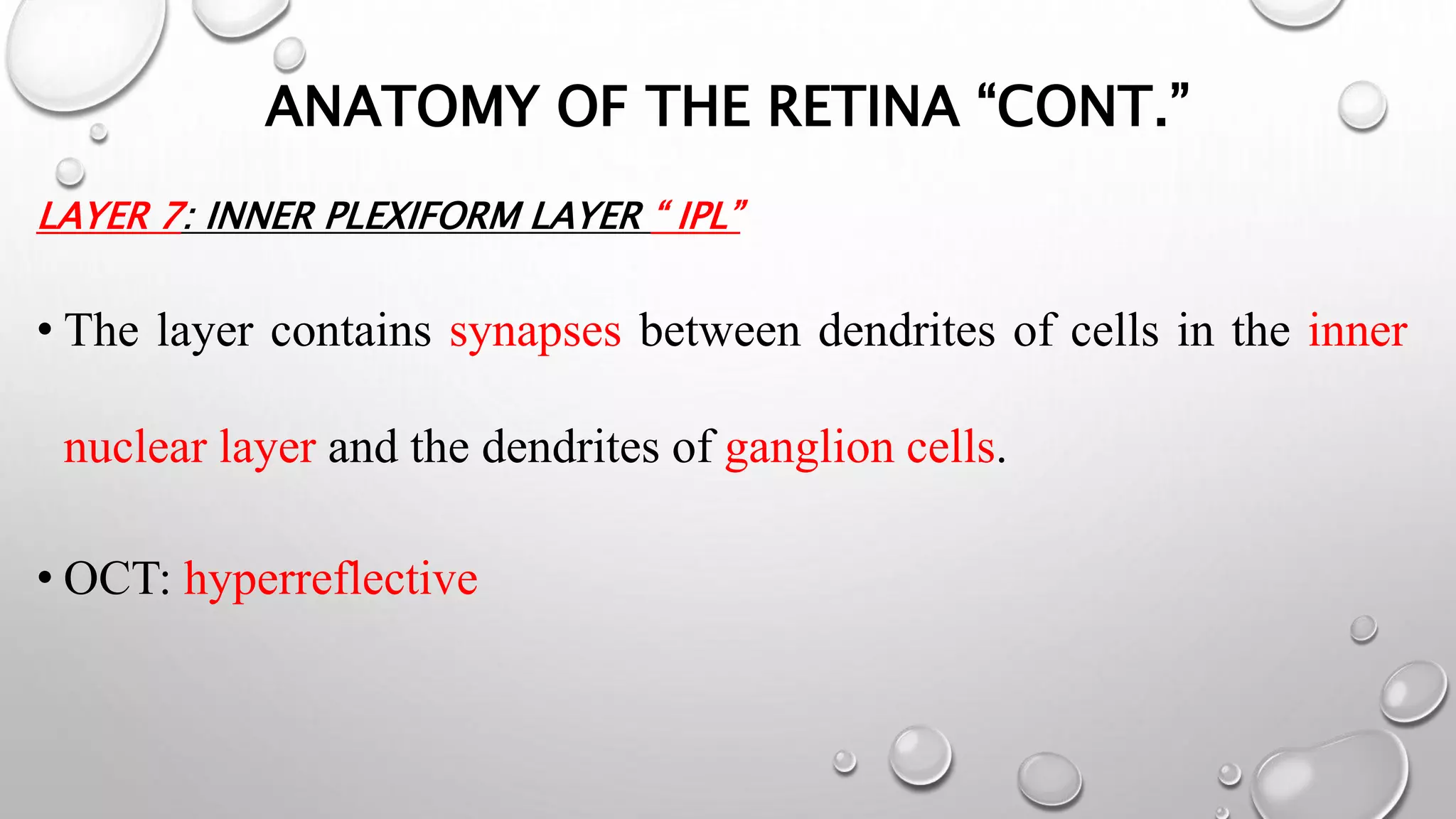
LAYER 7: INNER PLEXIFORM LAYER “ IPL”
• The layer contains synapses between dendrites of cells in the inner
nuclear layer and the dendrites of ganglion cells.
• OCT: hyperreflective
ANATOMY OF THE RETINA “CONT.”
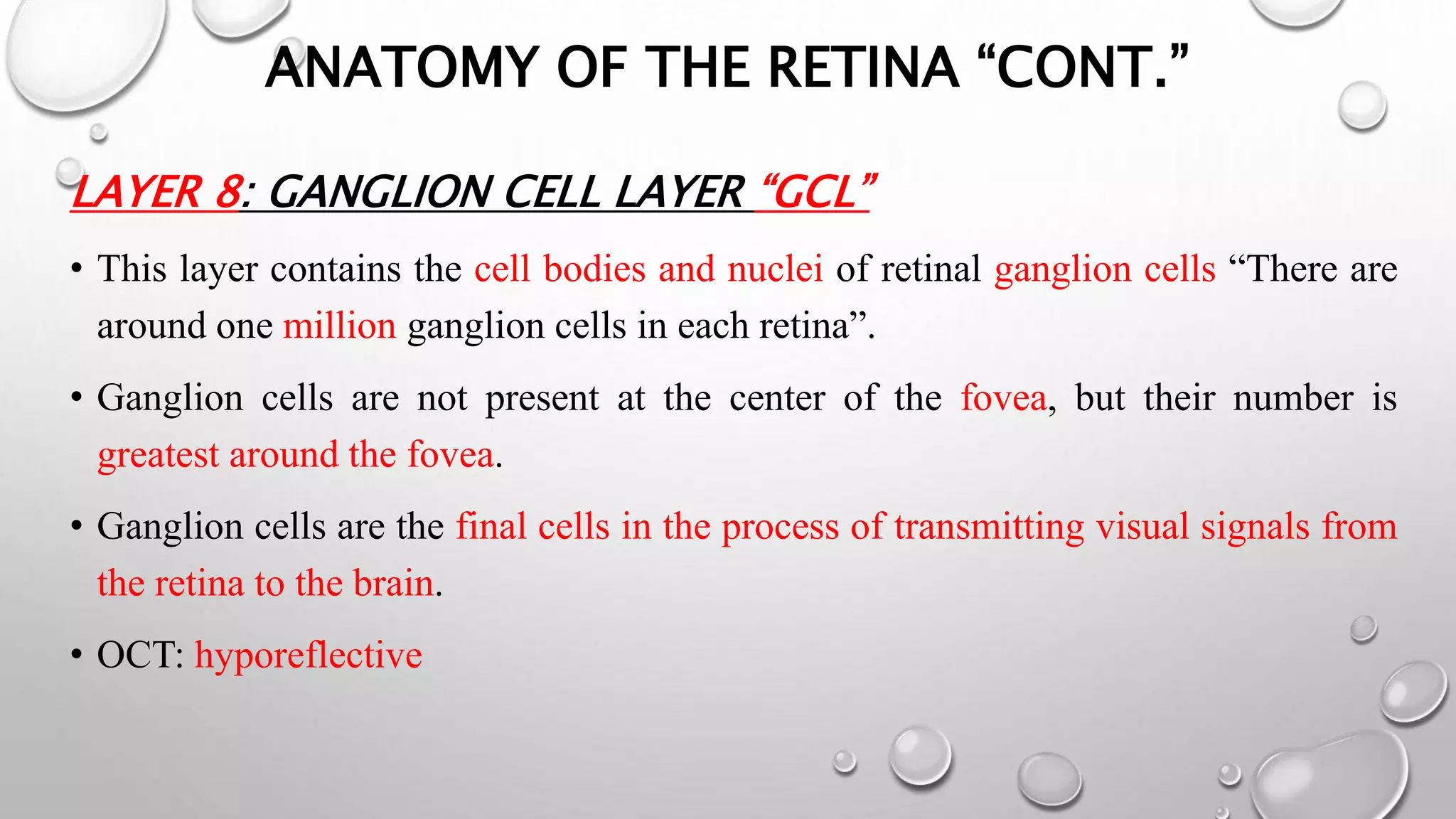
LAYER 8: GANGLION CELL LAYER “GCL”
• This layer contains the cell bodies and nuclei of retinal ganglion cells “There are
around one million ganglion cells in each retina”.
• Ganglion cells are not present at the center of the fovea, but their number is
greatest around the fovea.
• Ganglion cells are the final cells in the process of transmitting visual signals from
the retina to the brain.
• OCT: hyporeflective
ANATOMY OF THE RETINA “CONT.”
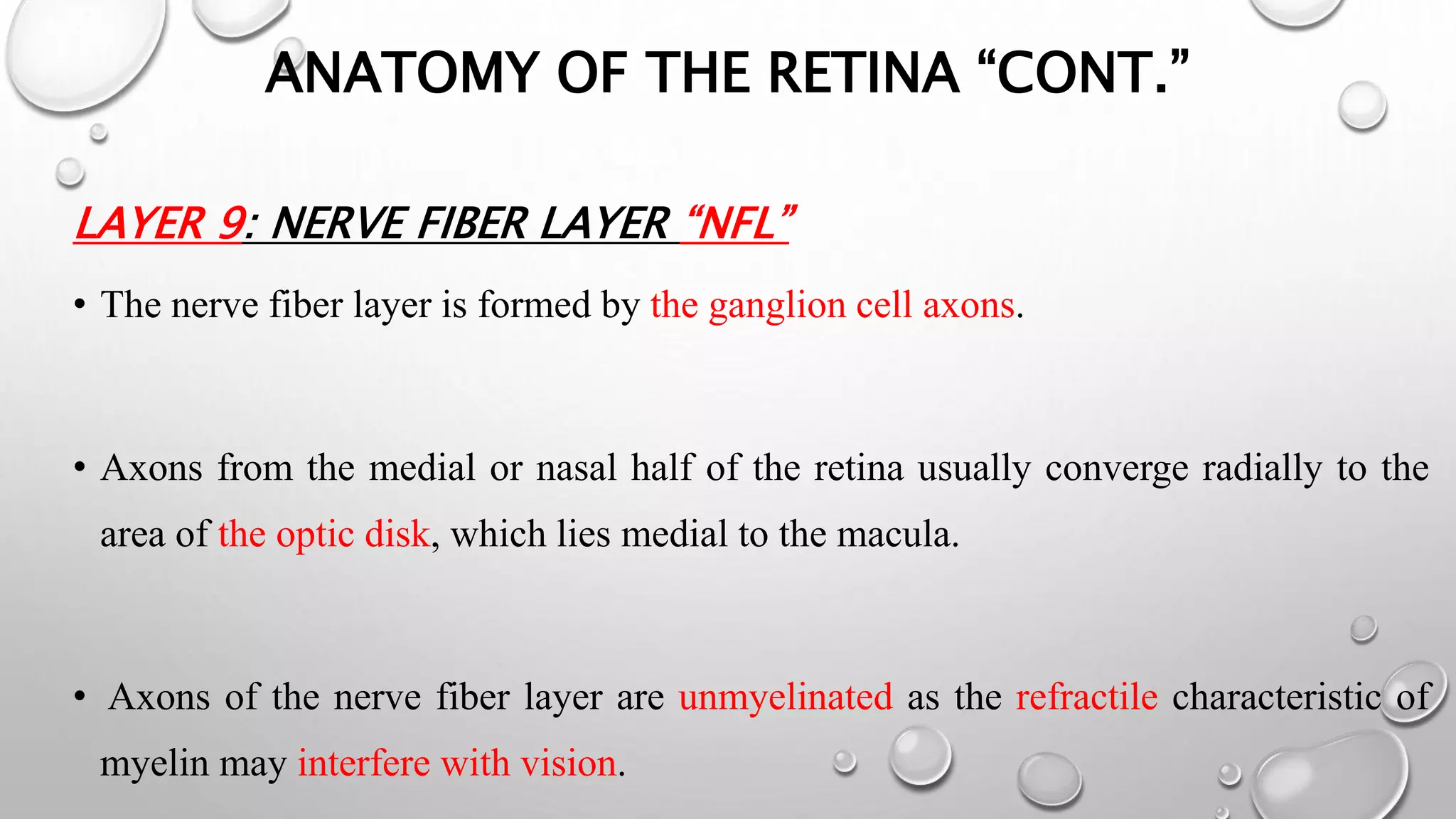
LAYER 9: NERVE FIBER LAYER “NFL”
• The nerve fiber layer is formed by the ganglion cell axons.
• Axons from the medial or nasal half of the retina usually converge radially to the
area of the optic disk, which lies medial to the macula.
• Axons of the nerve fiber layer are unmyelinated as the refractile characteristic of
myelin may interfere with vision.
ANATOMY OF THE RETINA “CONT.”
• but most retinal axons acquire myelin sheath once they pass an area
at the optic disk called lamina cribrosa “The more posterior region
of the optic nerve head’’.
• OCT: highly hyperreflective.
ANATOMY OF THE RETINA “CONT.”
LAYER 10: INTERNAL LIMITING MEMBRANE
• Selective fluid exchange between the retina and the vitreous body takes
place through the membrane.
• The membrane appears hyperreflective on OCT.
• OCT Occasionally a hyporeflective narrow zone can be seen on normal
OCT between the ILM and the vitreous called the preretinal space This
space is a potential space for vitreous preretinal hemorrhage.
ANATOMY OF THE RETINA “CONT.”
THE MACULA LUTEA
• The macula lutea appears yellow in color and its diameter measures about 5 mm .
• At the center of the macula is a reddish depression, of a diameter of 1.5 mm, called the
fovea.
• The area of the macula is responsible for most of the photobic vision.
• The fovea appears shiny when examined with the ophthalmoscope (foveal reflex) .
• the fovea has no rods, inner nuclear layer, inner plexiform layer, ganglion layer, and
nerve fiber layers. Therefore, the retina is more transparent at the foveal area
ANATOMY OF THE RETINA “CONT.”
OPTIC NERVE:
• The optic nerve is formed of one million nerve fibers “axons of ganglion
cells”, These axons are arranged in bundles (about 1200 bundles).
• Unlike peripheral nerves, the optic nerve is myelinated by oligodendrocytes
and can be affected by CNS inflammatory demyelinating conditions such as
MS.
BASIC OCT PROTOCOL
As a minimal requirements:
1- Area where all axons leave the eye, the optic nerve head .
2- The area most relevant for our vision, the macula.
• The advantage of the macular GCL is that optic disk edema does not mask onset and progression of
atrophy.
• For multiple sclerosis the most relevant layers to assess neurodegeneration are:
1- the RNFL as a measure of axonal damage.
2- GCL and IPL “GANGLION CELL COMPLEX” as a measure of neuronal damage.
• OCT is a more specific measurement of neurodegeneration than brain atrophy quantified by MRI.
BASIC OCT PROTOCOL
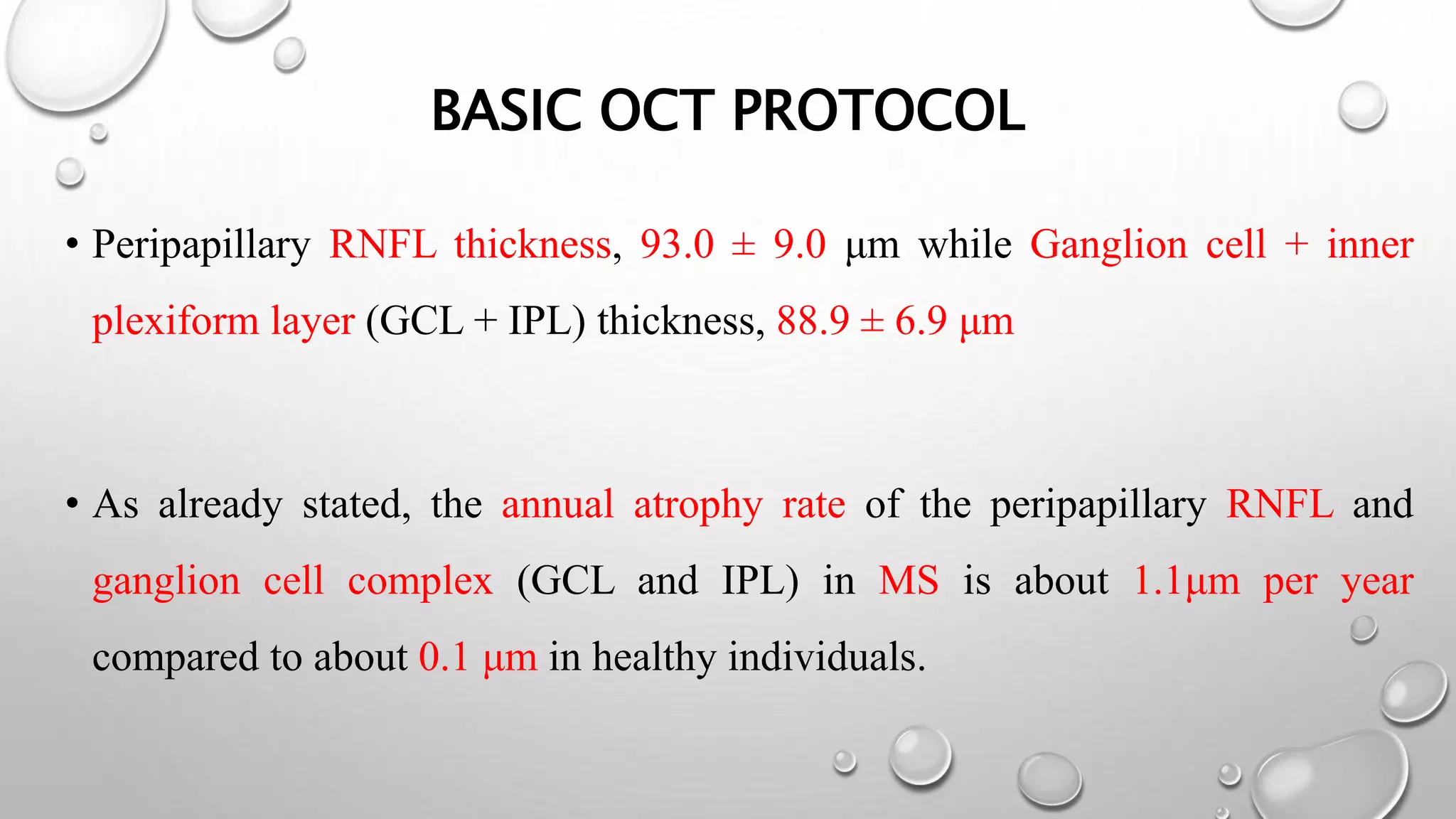
• Peripapillary RNFL thickness, 93.0 ± 9.0 μm while Ganglion cell + inner
plexiform layer (GCL + IPL) thickness, 88.9 ± 6.9 μm
• As already stated, the annual atrophy rate of the peripapillary RNFL and
ganglion cell complex (GCL and IPL) in MS is about 1.1μm per year
compared to about 0.1 μm in healthy individuals.
OCT and MS
Peripapillary RNFL and M
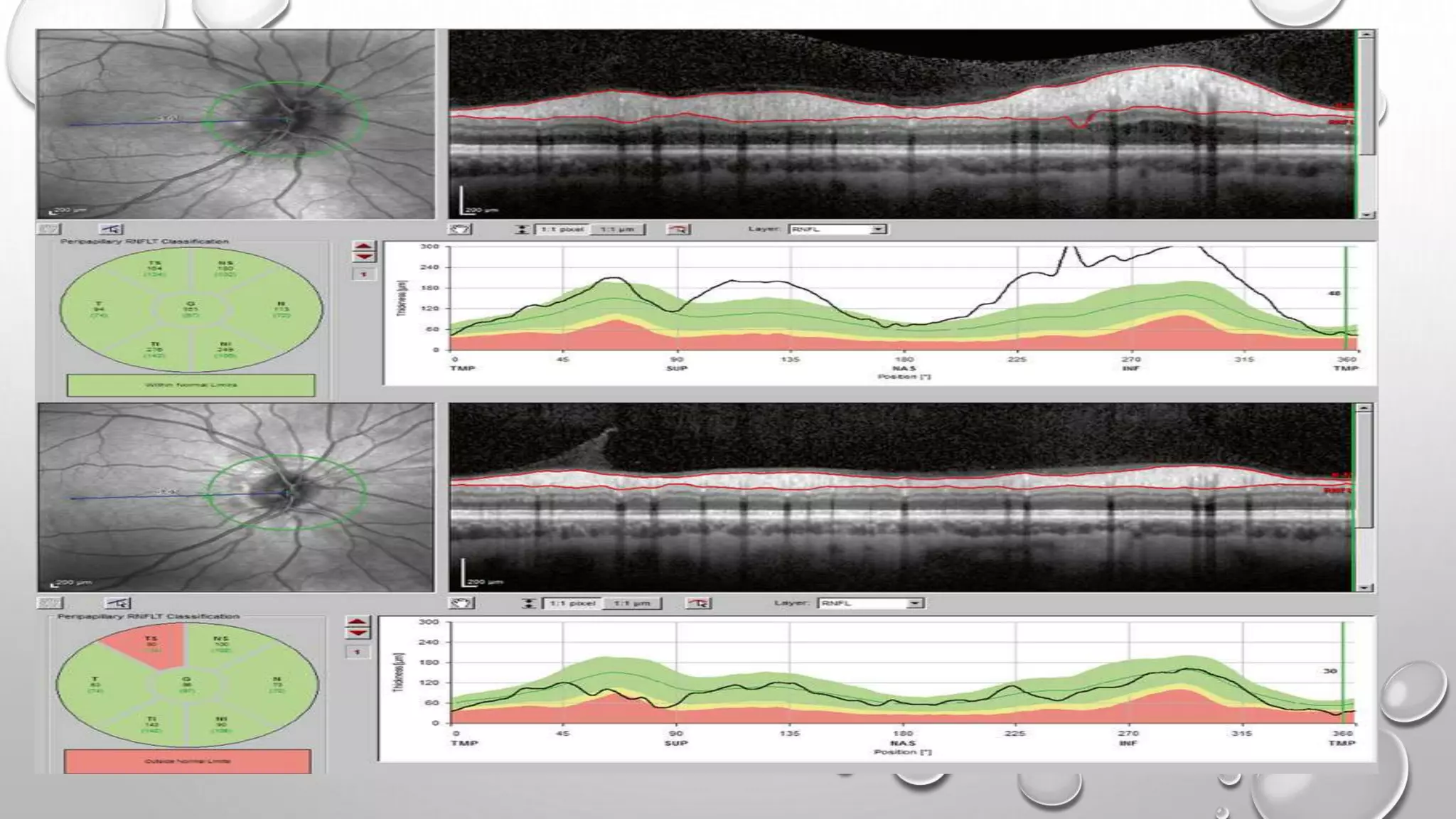
• All OCT studies have shown that mean peripapillary RNFL thickness is
decreased in MS patients compared to normal subjects.
• Greater RNFL thinning occurs in MS patients who are not treated with
immunomodulatory agents.
Peripapillary RNFL and MS:
Peripapillary RNFL and MS
1- in MSON:
• The magnitude of RNFL atrophy is greater in the eyes with a history of prior
acute MSON; on average, the RNFL thins by about 20 % following an attack
of acute MSON.
• The majority of patients experience significant RNFL loss within 1 year after
an attack of acute MSON; most of this loss occurs within 3–6 months
following the event and stabilizes at between 6 and 12 months
1- in MSON:
Peripapillary RNFL and MS
• The earliest and most prominent RNFL loss occurs in the temporal quadrant,
corresponding with the fibers of the papillomacular bundle, which mediates central
vision “The diameter of axons in the PMB is only around 0.4 μm but up to 2.5 μm fibers
elsewhere in the retina.
• patients with clinically isolated syndrome (CIS) had the highest overall RNFL thickness
values (mean 87.8 μm), while patients with secondary progressive MS (SPMS) had the
greatest degree of thinning compared to control reference values (mean RNFL thickness
70.8 μm).
Peripapillary RNFL and MS
• 2- RETROBULBAR OPTIC NEURITIS:
• In most of these cases, in the acute stage there is an increase in RNFL
thickness was subtle and not beyond the range of normal (100.7 μm in -
affected eyes, versus 92.9 μm in ON unaffected fellow eyes), then thinning
occurs as early as 2–4 months after the onset of the visual loss.
2- Retrobulbar Optic
Neuritis:
Peripapillary RNFL and MS
3- NEUROMYELITIS OPTICA:
• Episode of ON in NMO causes an estimated decrease of 31 μm in pRNFL
thickness compared to an estimated decrease of 10 μm in RRMS.
• All studies reporting sub analysis of pRNFL quadrants reported significant
atrophy in all quadrants.
3- Neuromyelitis
optica:
Peripapillary RNFL and MS
4. PRFNL LOSS IS STRONGLY RELATED TO VISUAL FUNNTION:
A- Visual acuity:
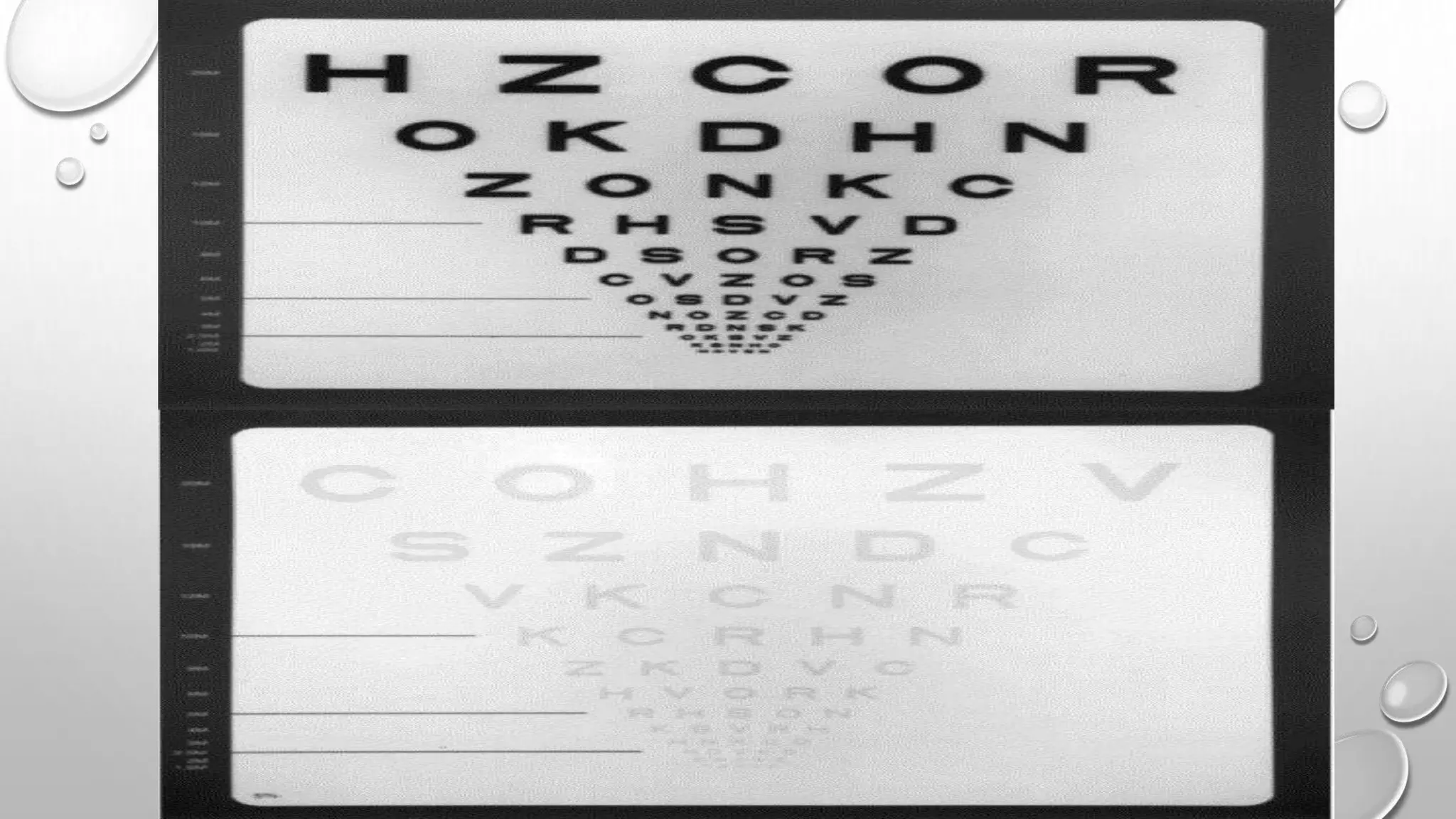
• RNF loss correlates with reduced Snellen (high contrast) visual acuity.
• interestingly, RNFL atrophy may be present despite 20/20 Snellen visual acuity,
suggesting that RNFL thickness is a more sensitive marker of MS disease activity,
compared to high-contrast visual acuity.
• Alternately, low-contrast letter acuity correlates better with RNFL loss for every one
line of low- contrast letter acuity lost, the mean RNFL thickness decreased by 4 μm.
4. pRNFL loss is strongly related to visual
function:
Peripapillary RNFL and MS
B- Visual field:
• Visual field loss Once the RNFL thickness falls below 75 μm, every 10 μm
drop in RNFL is associated with a 6.46 dB decrease in visual field.
C- Visual evoked potential “VEP”:
• RNFL loss correlates with abnormalities in VEP (the electrophysiologic
hallmark of visual pathway demyelination), amplitudes and latencies are
affected in patients with RNFL atrophy, However, electrophysiologic
dysfunction may precede any detectable RNFL atrophy.
Peripapillary RNFL and MS
• 5- MS-RELATED CHANGES
• MS-related changes in the visual pathway mirror the pathological damage
sustained by other anatomically distinct neural structures.
RNFL atrophy has been shown to correlate with;
The severity of neurologic disability.
Loss of quality of life.
Cognitive impairment.
Radiologic markers, particularly those related to brain atrophy (t1 lesion volume
t2 lesion volume gray matter volume, white matter volume, bicaudate ratio).
5- Other MS-related
changes:
Total macular volume “TMV” and
MS
• Total macular volume (TMV) loss indicates neuronal death since retinal
ganglion cells constitute a large population of the macula.
• A 10-μm difference in RNFL thickness corresponds to a 0.20 mm reduction in
TMV.
• TMV loss has been correlated with impaired ambulatory capabilities in MS
patients, as measured by the timed 25-ft and the 6-min walk.
Ganglion cell–inner plexiform layer and MS:
(GCIPL) thickness correlates better with visual function and radiologic markers of MS
disease activity, compared to RNFL thinning and that due to:
GCIPL thickness is unaffected by inflammatory edema in the acute stages of acute
MSON
GCIPL atrophy occurs rapidly following acute MSON (even in a matter of days) and
is marked at 1 month following the ictus.
GCIPL atrophy precedes macular volume and macular RNFL loss.
GANGLION CELL–INNER PLEXIFORM LAYER AND MS “CONT.”
Indeed, GCIPL loss in the first month following acute MSON is a good
predictor of short-term visual dysfunction; if the loss does not exceed 7
μm, acuity recovery; good visual field and color vision recovery will
usually take place.
OCT and MS
• The OCT may be used as a clinical tool for evaluating suspected ocular pathology in MS
patients with visual complaints, OCT is very useful in monitoring patients on fingolimod for
evidence of macular edema an infrequent but serious adverse effect of the drug.
• OCT is a promising tool for screening and studying neuroprotective and repair-promoting
therapies For neuroprotective trials using GCIPL thickness as an outcome For example,
Anti-IL-17 antibodies were shown to prevent RNFL and GCIPL loss autoimmune
encephalomyelitis mouse studies.
OCT and MS
In MS clinical trials,
 Erythropoietin.
Phenytoin.
Amiloride.
Anti- lingo- 1 mab drug promoting myelin repair.
 Lipoic acid.
Fingolimod.
Interferon beta-1a.
CONCLUSION
• despite the future promise of OCT as a biomarker of MS it remains
unclear how this information would impact clinical practice.
• With more clinical trials utilizing OCT metrics as an outcome measure,
its role in monitoring treatment in MS will become clearer in the near
future, and OCT may very well be a routine part of the clinical evaluation
of MS patients and may even be considered as an “extension” of the
clinical examination.
THANK YOU

Optical coherence tomography in multiple sclerosis

  • 1.
    Presented by: Ahmed MamdouhMohammed Assistant lecturer of neurology Asyut university Optical Coherence Tomography in Multiple Sclerosis
  • 2.
    BACKGROUND • One ofthe major pathological Characteristics of MS is neuroaxonal damage. • Axonal degeneration resulted from demyelination and/or incomplete remyelination since myelin is thought to play an integral role in the maintenance of axonal health through the provision of a protective environment. • Approximately 20 % of patients with multiple sclerosis (MS) develop acute MS associated optic neuritis (MSON) as the initial symptom of their disease.
  • 3.
    BACKGROUND “CONT.” • Halfof MS patients suffer acute MSON during the course of their disease. • Almost all MS patients have evidence of optic nerve demyelination at autopsy, indicating that occult, subclinical optic nerve demyelination occurs in virtually all MS patients. • In addition there is an evidence that subclinical or asymptomatic optic neuropathy was present in a significant proportion of fellow “unaffected” eyes at 10 years follow-up. • As a direct result of these findings, it was proposed that the afferent visual pathway may be a suitable model to study neurodegeneration in MS.
  • 4.
    • Optical coherencetomography (OCT) is a is a novel technique similar to ultrasound, although using a light source “ near-infrared light.” Rather than an acoustic source, to take cross-section pictures of the retina. With OCT, each of the retina’s distinctive layers can be seen, allowing to map and measure their thickness. • OCT is inexpensive, reproducible, well tolerated, fast, painless, and easily repeatable. • The first commercially available OCT 1991 (OCT 1, humphrey instruments, inc.) Provided an axial resolution of 15 μm in tissue, (time domain OCT [TD-OCT]), more recent OCT devices are capable of acquiring scans with an axial resolution of up to 2 μm in tissue, frequency domain OCT (FD-OCT) or spectral domain OCT (SD-OCT). BACKGROUNG “CONT.”
  • 5.
    BACKGROUNG “CONT.” • OCTis employed routinely in ophthalmology to assess changes or damage to the retina in a large variety of diseases, for example, glaucoma, age- related macular degeneration, or macular edema. More recently, the introduction of OCT into neurologic research. • Since the first study of optical coherence tomography (OCT) in MS “1999” OCT has proven to be a sensitive, precise, and reproducible method of quantifying and tracking retinal axonal loss in MS, an important cause of sustained disability.
  • 7.
    Anatomy of theRetina • The photosensitive part of the retina lines the posterior two-thirds of the eyeball and blends with the anterior insensitive part at a junction called the ora serrata. • It has a diameter of 30–40 mm. • The posterior part of the retina Is the central retina and measures about 6 mm Diameter. The central retina is occupied by an Elliptical area called the macula lutea, which represents An area with the highest visual acuity.
  • 8.
    ANATOMY OF THERETINA “CONT.” • The retinal thickness varies, being thickest at The area of the optic disk (0.56 mm), Peripheral to the optic disk, the retina is thinner And becomes about 0.1 mm at the most peripheral Part near the ora serrata junction. • The optic disk 1.5 mm in diameter and appears paler on ophthalmoscopy than the rest of the retina, with a central depression for the passage of central retinal vessels. The area of the optic disk is devoid of photoreceptors and therefore it is insensitive to light (detected as a blind spot during the conventional neurological examination)
  • 9.
    ANATOMY OF THERETINA “CONT.” • LAYERS OF THE RETINA Most textbooks describe ten histological retinal layers, which are described from the outermost layer (layer 1 near the choroid) to the innermost layer (layer 10 near the vitreous body). • LAYER 1: RETINAL PIGMENT EPITHELIUM • LAYER 2: PHOTORECEPTOR LAYER • LAYER 3: EXTERNAL LIMITING MEMBRANE • LAYER 4: OUTER NUCLEAR LAYER • LAYER 5: OUTER PLEXIFORM LAYER • LAYER 6: THE INNER NUCLEAR LAYER • LAYER 7: INNER PLEXIFORM LAYER “IPL” • LAYER 8: GANGLION CELL LAYER “GCL” • LAYER 9: NERVE FIBER LAYER “NFL” • LAYER 10: INTERNAL LIMITING MEMBRANE Layers of the Retina
  • 11.
    ANATOMY OF THERETINA “CONT.” LAYER 1: RETINAL PIGMENT EPITHELIUM • There are about four million epithelial cells in each human retina . • The greatest density of these cells is in the fovea the basal surface of the RPE is separated from the underlying choroid capillaries by a membrane called bruch’s membrane the whole zone has been recently referred to as the RPE/bruch’s complex. • The apical surface of the cuboidal epithelium is in contact with the photoreceptors (cone and rod processes) every single epithelial cell faces 40 photoreceptors “interdigitation zone”.
  • 12.
    ANATOMY OF THERETINA “CONT.” • Create a barrier between the choriocapillaris and the outer retina. To protect the retina from the immune system and systemic infections. These barriers are selective and allow for small molecules such as O 2 , CO2 and retinol to diffuse. • Also it absorbs the energy from the reflected light and prevents it from overheating the eye. • Oct: hyperreflective
  • 13.
    ANATOMY OF THERETINA “CONT.” LAYER 2: PHOTORECEPTOR LAYER • This layer contains processes of cone and rod cells that receive light signals and convert them into electric signals.` • Each of these processes has an outer segment and inner segment: the outer segment contain photopigments “OCT: hyporeflective”. The inner segment is divided into two parts: the outer zone (ellipsoid zone), is packed with mitochondria making “hyperreflective” and the inner zone (myoid zone) contains smooth and rough endoplasmic reticulum and appears hyporeflective with retinal OCT.
  • 14.
    ANATOMY OF THERETINA “CONT.” LAYER 3: EXTERNAL LIMITING MEMBRANE • The external limiting membrane appears on the OCT as a thin hyperreflective membrane LAYER 4: OUTER NUCLEAR LAYER • The outer nuclear layer is formed of the cone and rod cell bodies containing their nuclei. • Cone cells are primarily responsible for color vision with high resolution during daylight or under good lighting. The number of cones in the human retina is 4.6 million highest in the area with the greatest visual acuity (the fovea), where the concentration reaches 199,000 cones/mm 2 . • cone cells are classified into three types: blue, red, and green ones. The most common cells are the red cones forming 63 % of all cone cells, followed by the green cones (32 %) and the blue cone cells (5 %).
  • 15.
    ANATOMY OF THERETINA “CONT.” • Rod cells are responsible for night vision Rods number is greater than cones, with a total number of 92 million. Rods are absent in the “fovea”. • Each cell of the rods and cones has two processes: The other process is the photoreceptor axons, travel vertically to reach the outer plexiform forming a membrane called Henle’s fiber layer. • With OCT, the outer nuclear layer and Henle’s fiber layer appear as one hyporeflective zone
  • 16.
    ANATOMY OF THERETINA “CONT.” LAYER 5: OUTER PLEXIFORM LAYER • It is a complex layer of synapses between different processes of cone and rod cells and other interneurons “bipolar cells, Amacrine, horizontal cells, and interplexiform cells”. • on OCT as a hyperreflective layer
  • 17.
    ANATOMY OF THERETINA “CONT.” LAYER 6: THE INNER NUCLEAR LAYER • This layer contains the cell bodies and nuclei of different types of interneurons: the horizontal cells, the bipolar cells, the amacrine cells, the Müller cells, and the interplexiform cells. • The layer appears with the OCT as a hyporeflective zone.
  • 18.
    ANATOMY OF THERETINA “CONT.” LAYER 7: INNER PLEXIFORM LAYER “ IPL” • The layer contains synapses between dendrites of cells in the inner nuclear layer and the dendrites of ganglion cells. • OCT: hyperreflective
  • 19.
    ANATOMY OF THERETINA “CONT.” LAYER 8: GANGLION CELL LAYER “GCL” • This layer contains the cell bodies and nuclei of retinal ganglion cells “There are around one million ganglion cells in each retina”. • Ganglion cells are not present at the center of the fovea, but their number is greatest around the fovea. • Ganglion cells are the final cells in the process of transmitting visual signals from the retina to the brain. • OCT: hyporeflective
  • 20.
    ANATOMY OF THERETINA “CONT.” LAYER 9: NERVE FIBER LAYER “NFL” • The nerve fiber layer is formed by the ganglion cell axons. • Axons from the medial or nasal half of the retina usually converge radially to the area of the optic disk, which lies medial to the macula. • Axons of the nerve fiber layer are unmyelinated as the refractile characteristic of myelin may interfere with vision.
  • 21.
    ANATOMY OF THERETINA “CONT.” • but most retinal axons acquire myelin sheath once they pass an area at the optic disk called lamina cribrosa “The more posterior region of the optic nerve head’’. • OCT: highly hyperreflective.
  • 22.
    ANATOMY OF THERETINA “CONT.” LAYER 10: INTERNAL LIMITING MEMBRANE • Selective fluid exchange between the retina and the vitreous body takes place through the membrane. • The membrane appears hyperreflective on OCT. • OCT Occasionally a hyporeflective narrow zone can be seen on normal OCT between the ILM and the vitreous called the preretinal space This space is a potential space for vitreous preretinal hemorrhage.
  • 23.
    ANATOMY OF THERETINA “CONT.” THE MACULA LUTEA • The macula lutea appears yellow in color and its diameter measures about 5 mm . • At the center of the macula is a reddish depression, of a diameter of 1.5 mm, called the fovea. • The area of the macula is responsible for most of the photobic vision. • The fovea appears shiny when examined with the ophthalmoscope (foveal reflex) . • the fovea has no rods, inner nuclear layer, inner plexiform layer, ganglion layer, and nerve fiber layers. Therefore, the retina is more transparent at the foveal area
  • 25.
    ANATOMY OF THERETINA “CONT.” OPTIC NERVE: • The optic nerve is formed of one million nerve fibers “axons of ganglion cells”, These axons are arranged in bundles (about 1200 bundles). • Unlike peripheral nerves, the optic nerve is myelinated by oligodendrocytes and can be affected by CNS inflammatory demyelinating conditions such as MS.
  • 26.
    BASIC OCT PROTOCOL Asa minimal requirements: 1- Area where all axons leave the eye, the optic nerve head . 2- The area most relevant for our vision, the macula. • The advantage of the macular GCL is that optic disk edema does not mask onset and progression of atrophy. • For multiple sclerosis the most relevant layers to assess neurodegeneration are: 1- the RNFL as a measure of axonal damage. 2- GCL and IPL “GANGLION CELL COMPLEX” as a measure of neuronal damage. • OCT is a more specific measurement of neurodegeneration than brain atrophy quantified by MRI.
  • 27.
    BASIC OCT PROTOCOL •Peripapillary RNFL thickness, 93.0 ± 9.0 μm while Ganglion cell + inner plexiform layer (GCL + IPL) thickness, 88.9 ± 6.9 μm • As already stated, the annual atrophy rate of the peripapillary RNFL and ganglion cell complex (GCL and IPL) in MS is about 1.1μm per year compared to about 0.1 μm in healthy individuals.
  • 30.
    OCT and MS PeripapillaryRNFL and M • All OCT studies have shown that mean peripapillary RNFL thickness is decreased in MS patients compared to normal subjects. • Greater RNFL thinning occurs in MS patients who are not treated with immunomodulatory agents. Peripapillary RNFL and MS:
  • 31.
    Peripapillary RNFL andMS 1- in MSON: • The magnitude of RNFL atrophy is greater in the eyes with a history of prior acute MSON; on average, the RNFL thins by about 20 % following an attack of acute MSON. • The majority of patients experience significant RNFL loss within 1 year after an attack of acute MSON; most of this loss occurs within 3–6 months following the event and stabilizes at between 6 and 12 months 1- in MSON:
  • 32.
    Peripapillary RNFL andMS • The earliest and most prominent RNFL loss occurs in the temporal quadrant, corresponding with the fibers of the papillomacular bundle, which mediates central vision “The diameter of axons in the PMB is only around 0.4 μm but up to 2.5 μm fibers elsewhere in the retina. • patients with clinically isolated syndrome (CIS) had the highest overall RNFL thickness values (mean 87.8 μm), while patients with secondary progressive MS (SPMS) had the greatest degree of thinning compared to control reference values (mean RNFL thickness 70.8 μm).
  • 33.
    Peripapillary RNFL andMS • 2- RETROBULBAR OPTIC NEURITIS: • In most of these cases, in the acute stage there is an increase in RNFL thickness was subtle and not beyond the range of normal (100.7 μm in - affected eyes, versus 92.9 μm in ON unaffected fellow eyes), then thinning occurs as early as 2–4 months after the onset of the visual loss. 2- Retrobulbar Optic Neuritis:
  • 34.
    Peripapillary RNFL andMS 3- NEUROMYELITIS OPTICA: • Episode of ON in NMO causes an estimated decrease of 31 μm in pRNFL thickness compared to an estimated decrease of 10 μm in RRMS. • All studies reporting sub analysis of pRNFL quadrants reported significant atrophy in all quadrants. 3- Neuromyelitis optica:
  • 35.
    Peripapillary RNFL andMS 4. PRFNL LOSS IS STRONGLY RELATED TO VISUAL FUNNTION: A- Visual acuity: • RNF loss correlates with reduced Snellen (high contrast) visual acuity. • interestingly, RNFL atrophy may be present despite 20/20 Snellen visual acuity, suggesting that RNFL thickness is a more sensitive marker of MS disease activity, compared to high-contrast visual acuity. • Alternately, low-contrast letter acuity correlates better with RNFL loss for every one line of low- contrast letter acuity lost, the mean RNFL thickness decreased by 4 μm. 4. pRNFL loss is strongly related to visual function:
  • 37.
    Peripapillary RNFL andMS B- Visual field: • Visual field loss Once the RNFL thickness falls below 75 μm, every 10 μm drop in RNFL is associated with a 6.46 dB decrease in visual field. C- Visual evoked potential “VEP”: • RNFL loss correlates with abnormalities in VEP (the electrophysiologic hallmark of visual pathway demyelination), amplitudes and latencies are affected in patients with RNFL atrophy, However, electrophysiologic dysfunction may precede any detectable RNFL atrophy.
  • 38.
    Peripapillary RNFL andMS • 5- MS-RELATED CHANGES • MS-related changes in the visual pathway mirror the pathological damage sustained by other anatomically distinct neural structures. RNFL atrophy has been shown to correlate with; The severity of neurologic disability. Loss of quality of life. Cognitive impairment. Radiologic markers, particularly those related to brain atrophy (t1 lesion volume t2 lesion volume gray matter volume, white matter volume, bicaudate ratio). 5- Other MS-related changes:
  • 39.
    Total macular volume“TMV” and MS • Total macular volume (TMV) loss indicates neuronal death since retinal ganglion cells constitute a large population of the macula. • A 10-μm difference in RNFL thickness corresponds to a 0.20 mm reduction in TMV. • TMV loss has been correlated with impaired ambulatory capabilities in MS patients, as measured by the timed 25-ft and the 6-min walk.
  • 40.
    Ganglion cell–inner plexiformlayer and MS: (GCIPL) thickness correlates better with visual function and radiologic markers of MS disease activity, compared to RNFL thinning and that due to: GCIPL thickness is unaffected by inflammatory edema in the acute stages of acute MSON GCIPL atrophy occurs rapidly following acute MSON (even in a matter of days) and is marked at 1 month following the ictus. GCIPL atrophy precedes macular volume and macular RNFL loss.
  • 41.
    GANGLION CELL–INNER PLEXIFORMLAYER AND MS “CONT.” Indeed, GCIPL loss in the first month following acute MSON is a good predictor of short-term visual dysfunction; if the loss does not exceed 7 μm, acuity recovery; good visual field and color vision recovery will usually take place.
  • 42.
    OCT and MS •The OCT may be used as a clinical tool for evaluating suspected ocular pathology in MS patients with visual complaints, OCT is very useful in monitoring patients on fingolimod for evidence of macular edema an infrequent but serious adverse effect of the drug. • OCT is a promising tool for screening and studying neuroprotective and repair-promoting therapies For neuroprotective trials using GCIPL thickness as an outcome For example, Anti-IL-17 antibodies were shown to prevent RNFL and GCIPL loss autoimmune encephalomyelitis mouse studies.
  • 43.
    OCT and MS InMS clinical trials,  Erythropoietin. Phenytoin. Amiloride. Anti- lingo- 1 mab drug promoting myelin repair.  Lipoic acid. Fingolimod. Interferon beta-1a.
  • 44.
    CONCLUSION • despite thefuture promise of OCT as a biomarker of MS it remains unclear how this information would impact clinical practice. • With more clinical trials utilizing OCT metrics as an outcome measure, its role in monitoring treatment in MS will become clearer in the near future, and OCT may very well be a routine part of the clinical evaluation of MS patients and may even be considered as an “extension” of the clinical examination.
  • 45.