Downloaded 25 times

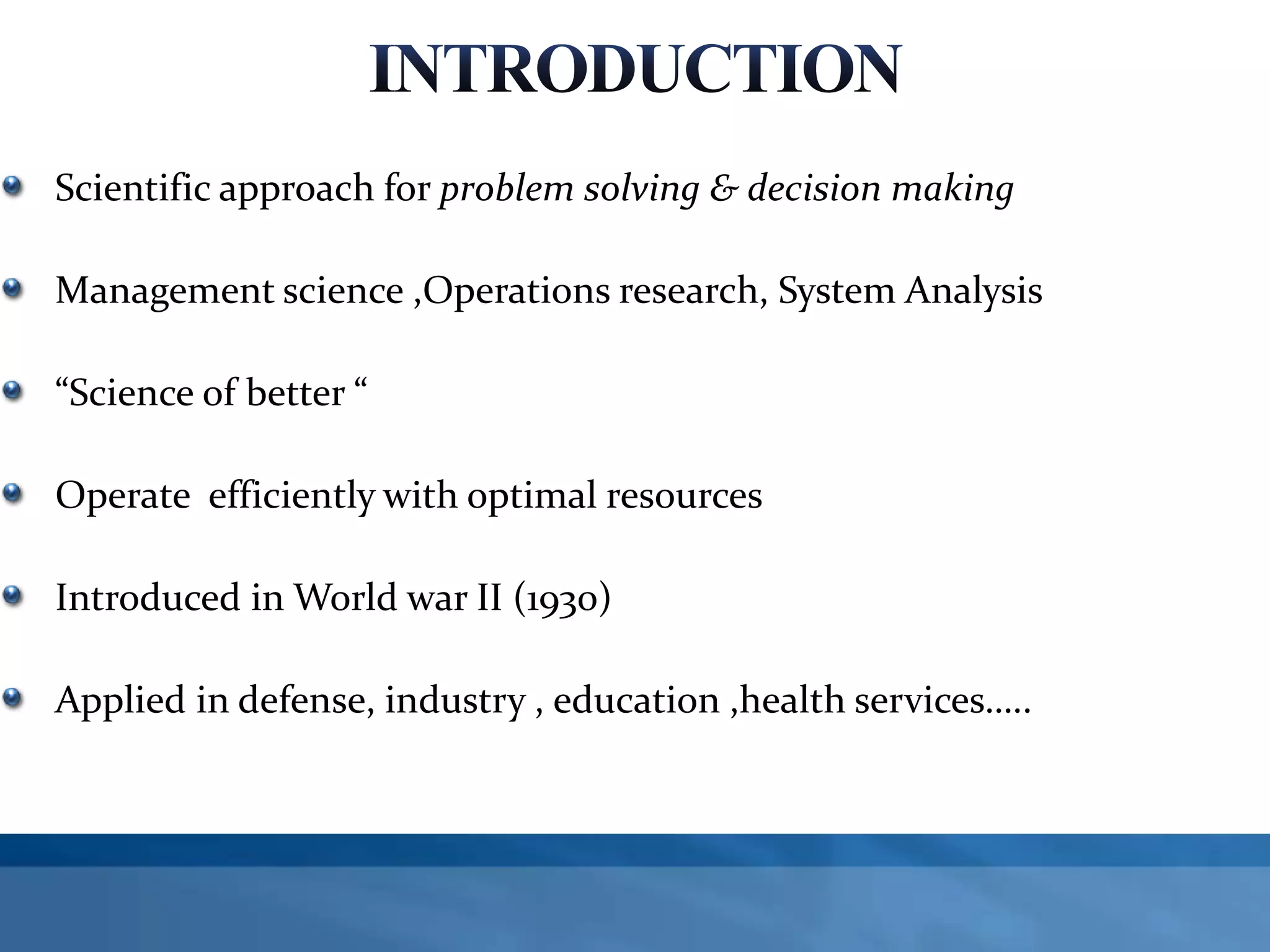
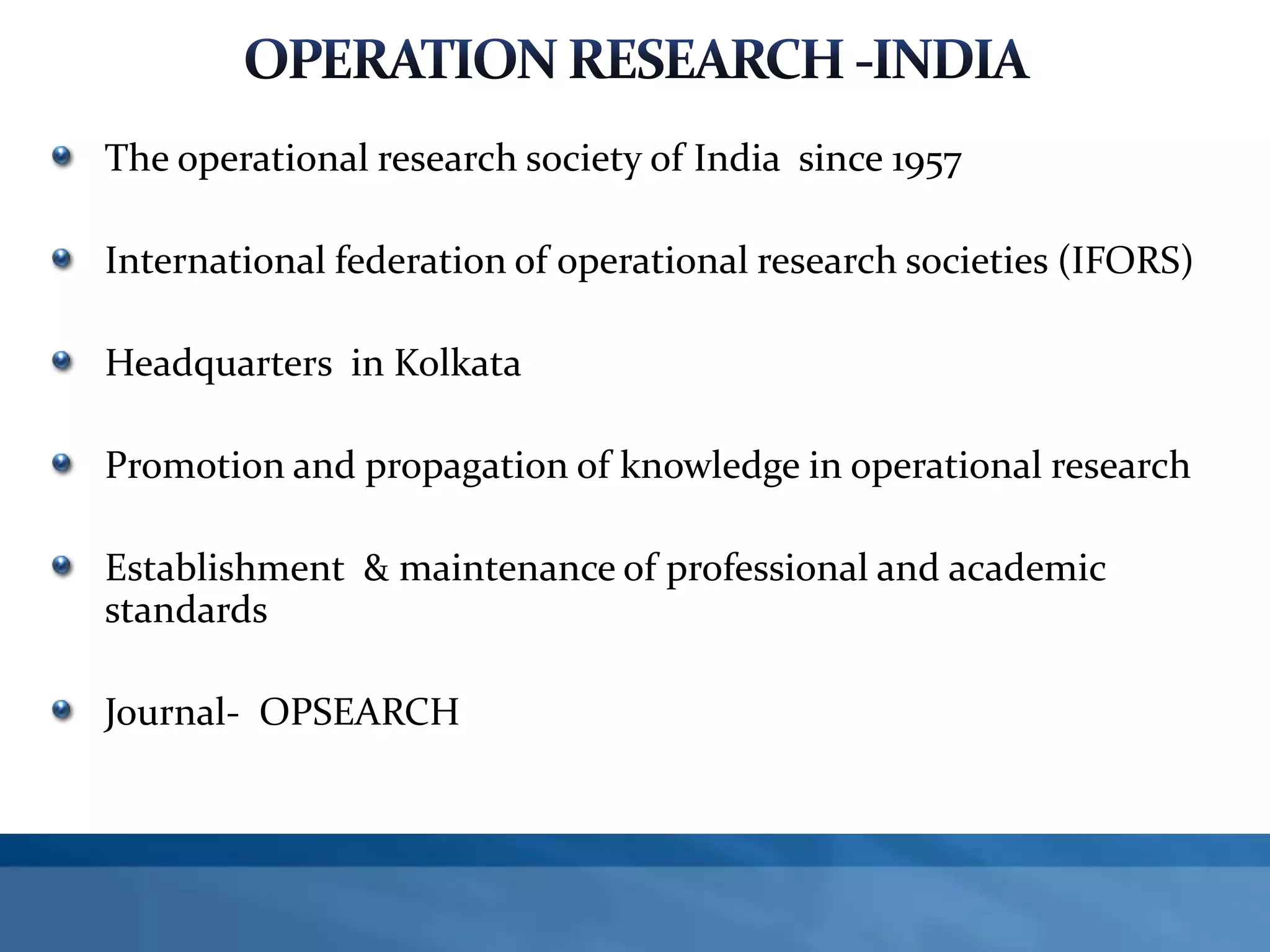


1. Operational research began in the 1930s to help optimize resource allocation for problems in defense, industry, education, and health services. 2. It uses scientific techniques to help policymakers and program managers review, redirect, and restructure programs to improve efficiency, effectiveness, and evidence-based decision making. 3. Some examples of operational research include optimizing tuberculosis screening and treatment, improving adherence to HIV/AIDS treatment, and evaluating new interventions through implementation research before scaling up programs.


