Film opening sequence-
codes and conventions
Ada Dzamic and Nikoleta Wu
AS Media Studies
Introduction
My main task is to make a film opening sequence. This includes researching the
film opening sequence codes and conventions.
The purpose of a film opening sequence is to introduce the audience to the genre
of the movie, establish the setting, indicate the mood and visual aspects of the
film, amongst other elements. This can be done by using certain types of shots,
angles, sounds, colors and animation.
It also enables companies to present their title, production and cast.
There are many ways for directors to accomplish such things from the very start
of the film, which include an establishment shot, narration and flashbacks. All
these aspects are used to draw people in, keep their attention from the beginning,
and target the fans of the specific genre. The opening sequence needs to reveal
the film’s tone and mood, as well as present it in the best possible light, and set
the expectations for the events that happen later in it.
Elements of a film opening sequence
 Studio
 Titles
 Establishing the genre
 Character introduction
 Themes and topics
 Narration
 Sound
 Enigma
 Credits
 Flashback
 Establishing shot
 Action
 Animation
Studio
A film opening sequence will always show a logo of a company that executed the
production.
The ‘Big Six’ film studios:
20th Century Fox, Warner Bros, Universal, Disney, Paramount, Sony Pictures Entertainment
Titles
The purpose of a film title is to represent and portray its mood. It is usually clear,
readable, and visually appealing so it attracts viewers. Titles often fit the genre of
the movie, for example, a movie for children will have a childish, decorative font,
in contrast to a heavy drama or thriller, which will have a more serious-looking
font.
Establishing the genre
Establishing the genre of a film is usually done by positioning a character in a
situation that is typical for the genre. The importance of the genre and
establishing it properly, is to target a specific audience that enjoys the produced
content.
Character introduction
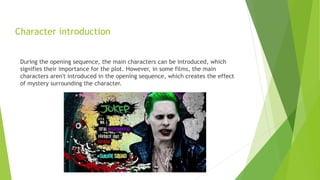
During the opening sequence, the main characters can be introduced, which
signifies their importance for the plot. However, in some films, the main
characters aren't introduced in the opening sequence, which creates the effect
of mystery surrounding the character.
Themes and topics
 The topic of the film is introduced in the opening sequence and is used to
give the audience a sense of what the film is about, without giving any details
away. Along with that, it also introduces the genre of the film. A theme is the
idea or purpose of a film. The theme is the heart of the movie.
Narration
 Narration in films has a very different function to a voice over. The latter is
an off-screen voice, rather than a character with dialogue. The simplest role
of the narrator is the exposition. They summarize the key plot points so the
movie can rapidly progress to the next scene, and keep the story moving
forward.
Sound
 Sound is one of the key elements of a film. There is no film without sound.
Imagine how boring a film would be without any sound to listen to. Films are
produced using three types of sounds: human voices, music and sound effects.
These three types of sounds are crucial for a film to feel realistic for the
audience. Sound and dialogue must perfectly sync with the actions in a film,
without delay, and must sound the way they look.
Enigma
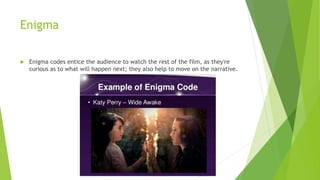
 Enigma codes entice the audience to watch the rest of the film, as they're
curious as to what will happen next; they also help to move on the narrative.
Credits
 The opening credits inform the audience which studios or production
companies were involved in making the film, and they run the names of the
major stars in the cast. The end credits, which appear after the final scene of
a film, list everyone involved in the production. Where opening credits appear
at the beginning of a work, closing credits appear close to or at the very end
of a work. They are an extension of the film's art form. Just as the opening of
a film sets the emotional mood, and the tone of the film, the closing credits
complete that movie watching experience.
Flashback
 A flashback is an inserted scene that takes the narrative back in time from
the current point in the story. In film, flashbacks portray the subjective
experience of a character by showing a memory of a previous event, and they
are often used to resolve an enigma.
Establishing shot
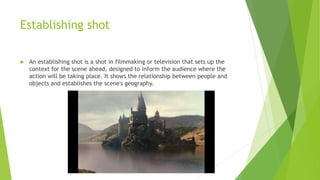
 An establishing shot is a shot in filmmaking or television that sets up the
context for the scene ahead, designed to inform the audience where the
action will be taking place. It shows the relationship between people and
objects and establishes the scene's geography.
Animation
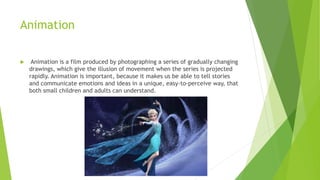
 Animation is a film produced by photographing a series of gradually changing
drawings, which give the illusion of movement when the series is projected
rapidly. Animation is important, because it makes us be able to tell stories
and communicate emotions and ideas in a unique, easy-to-perceive way, that
both small children and adults can understand.

Opening sequence codes and conventions

  • 1.
    Film opening sequence- codesand conventions Ada Dzamic and Nikoleta Wu AS Media Studies
  • 2.
    Introduction My main taskis to make a film opening sequence. This includes researching the film opening sequence codes and conventions. The purpose of a film opening sequence is to introduce the audience to the genre of the movie, establish the setting, indicate the mood and visual aspects of the film, amongst other elements. This can be done by using certain types of shots, angles, sounds, colors and animation. It also enables companies to present their title, production and cast. There are many ways for directors to accomplish such things from the very start of the film, which include an establishment shot, narration and flashbacks. All these aspects are used to draw people in, keep their attention from the beginning, and target the fans of the specific genre. The opening sequence needs to reveal the film’s tone and mood, as well as present it in the best possible light, and set the expectations for the events that happen later in it.
  • 3.
    Elements of afilm opening sequence  Studio  Titles  Establishing the genre  Character introduction  Themes and topics  Narration  Sound  Enigma  Credits  Flashback  Establishing shot  Action  Animation
  • 4.
    Studio A film openingsequence will always show a logo of a company that executed the production. The ‘Big Six’ film studios: 20th Century Fox, Warner Bros, Universal, Disney, Paramount, Sony Pictures Entertainment
  • 5.
    Titles The purpose ofa film title is to represent and portray its mood. It is usually clear, readable, and visually appealing so it attracts viewers. Titles often fit the genre of the movie, for example, a movie for children will have a childish, decorative font, in contrast to a heavy drama or thriller, which will have a more serious-looking font.
  • 6.
    Establishing the genre Establishingthe genre of a film is usually done by positioning a character in a situation that is typical for the genre. The importance of the genre and establishing it properly, is to target a specific audience that enjoys the produced content.
  • 7.
    Character introduction During theopening sequence, the main characters can be introduced, which signifies their importance for the plot. However, in some films, the main characters aren't introduced in the opening sequence, which creates the effect of mystery surrounding the character.
  • 8.
    Themes and topics The topic of the film is introduced in the opening sequence and is used to give the audience a sense of what the film is about, without giving any details away. Along with that, it also introduces the genre of the film. A theme is the idea or purpose of a film. The theme is the heart of the movie.
  • 9.
    Narration  Narration infilms has a very different function to a voice over. The latter is an off-screen voice, rather than a character with dialogue. The simplest role of the narrator is the exposition. They summarize the key plot points so the movie can rapidly progress to the next scene, and keep the story moving forward.
  • 10.
    Sound  Sound isone of the key elements of a film. There is no film without sound. Imagine how boring a film would be without any sound to listen to. Films are produced using three types of sounds: human voices, music and sound effects. These three types of sounds are crucial for a film to feel realistic for the audience. Sound and dialogue must perfectly sync with the actions in a film, without delay, and must sound the way they look.
  • 11.
    Enigma  Enigma codesentice the audience to watch the rest of the film, as they're curious as to what will happen next; they also help to move on the narrative.
  • 12.
    Credits  The openingcredits inform the audience which studios or production companies were involved in making the film, and they run the names of the major stars in the cast. The end credits, which appear after the final scene of a film, list everyone involved in the production. Where opening credits appear at the beginning of a work, closing credits appear close to or at the very end of a work. They are an extension of the film's art form. Just as the opening of a film sets the emotional mood, and the tone of the film, the closing credits complete that movie watching experience.
  • 13.
    Flashback  A flashbackis an inserted scene that takes the narrative back in time from the current point in the story. In film, flashbacks portray the subjective experience of a character by showing a memory of a previous event, and they are often used to resolve an enigma.
  • 14.
    Establishing shot  Anestablishing shot is a shot in filmmaking or television that sets up the context for the scene ahead, designed to inform the audience where the action will be taking place. It shows the relationship between people and objects and establishes the scene's geography.
  • 15.
    Animation  Animation isa film produced by photographing a series of gradually changing drawings, which give the illusion of movement when the series is projected rapidly. Animation is important, because it makes us be able to tell stories and communicate emotions and ideas in a unique, easy-to-perceive way, that both small children and adults can understand.