Polina Zalevskaya
AS level Media Studies
Film Opening Sequence
Codes and Conventions
Introduction
 Before completing my main task in AS level Media Studies course-making a
film opening sequence I would have to find out what is included in the film
opening sequence, what should be done to keep the audience interested from
the beginning and how to introduce the genre of a movie. In addition I had
done a research about establishing shots, titles, company logos, sound and
other codes and conventions of a film opening sequence.
Element of a Film Opening Sequence
 Studio
 Themes and Topics
 Titles
 Establishing Shot
 Establishing the Genre
 Character Introduction
 Credits
 Action and Chase scene
 Animation
 Flashback
 Sound
 Enigma
 Narration
Studio
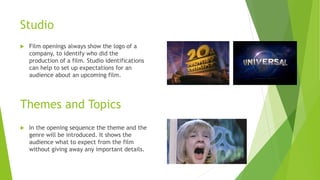
 Film openings always show the logo of a
company, to identify who did the
production of a film. Studio identifications
can help to set up expectations for an
audience about an upcoming film.
 In the opening sequence the theme and the
genre will be introduced. It shows the
audience what to expect from the film
without giving away any important details.
Themes and Topics
Titles
 The purpose of a title in film is to depict a certain mood and tone.
It is supposed to be readable (clear) and it should be made to
attract a viewer's attention by making a good first impression of the
screenplay. The font and the appearance is supposed to
complementary to the film's genre.
Establishing Shot
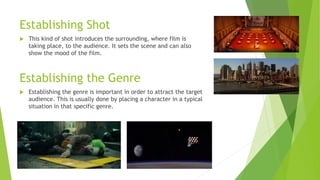
 This kind of shot introduces the surrounding, where film is
taking place, to the audience. It sets the scene and can also
show the mood of the film.
Establishing the Genre
 Establishing the genre is important in order to attract the target
audience. This is usually done by placing a character in a typical
situation in that specific genre.
Character Introduction
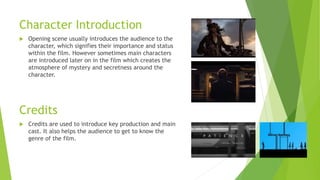
 Opening scene usually introduces the audience to the
character, which signifies their importance and status
within the film. However sometimes main characters
are introduced later on in the film which creates the
atmosphere of mystery and secretness around the
character.
Credits
 Credits are used to introduce key production and main
cast. It also helps the audience to get to know the
genre of the film.
Action and Chase Scene
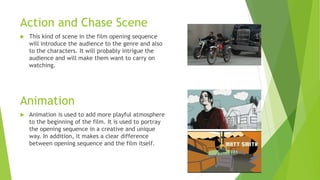
 This kind of scene in the film opening sequence
will introduce the audience to the genre and also
to the characters. It will probably intrigue the
audience and will make them want to carry on
watching.
Animation
 Animation is used to add more playful atmosphere
to the beginning of the film. It is used to portray
the opening sequence in a creative and unique
way. In addition, it makes a clear difference
between opening sequence and the film itself.
Flashback
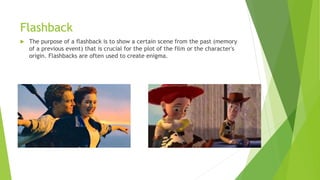
 The purpose of a flashback is to show a certain scene from the past (memory
of a previous event) that is crucial for the plot of the film or the character's
origin. Flashbacks are often used to create enigma.
Enigma
 The goal of using enigma codes in film is to captivate the audience and
intrigue them by creating a sense of mysterious tension. This will leave the
audience in anticipation which means that they will continue watching the
film in order to find out what happens next.
Sound
 Sound is used to display a range of different emotions and it keeps the
audience's main focus on the film. The sound typically sets the scene and
conveys the genre of the film.
 Sound can be the use of dialogue (speech), ambient sound ( environmental
sounds/background noise), sound effects (sounds made artificially/foley
sounds) and/or a soundtrack (recorded sound element of a film).
 Sound is divided into two categories: Diegetic (belongs to the world of the
film) and Non-Diegetic (no onscreen source).
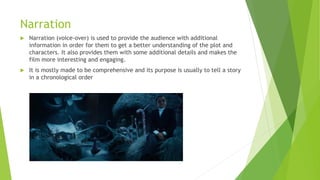
Narration
 Narration (voice-over) is used to provide the audience with additional
information in order for them to get a better understanding of the plot and
characters. It also provides them with some additional details and makes the
film more interesting and engaging.
 It is mostly made to be comprehensive and its purpose is usually to tell a story
in a chronological order

Film Opening Sequence Codes and Conventions

  • 1.
    Polina Zalevskaya AS levelMedia Studies Film Opening Sequence Codes and Conventions
  • 2.
    Introduction  Before completingmy main task in AS level Media Studies course-making a film opening sequence I would have to find out what is included in the film opening sequence, what should be done to keep the audience interested from the beginning and how to introduce the genre of a movie. In addition I had done a research about establishing shots, titles, company logos, sound and other codes and conventions of a film opening sequence.
  • 3.
    Element of aFilm Opening Sequence  Studio  Themes and Topics  Titles  Establishing Shot  Establishing the Genre  Character Introduction  Credits  Action and Chase scene  Animation  Flashback  Sound  Enigma  Narration
  • 4.
    Studio  Film openingsalways show the logo of a company, to identify who did the production of a film. Studio identifications can help to set up expectations for an audience about an upcoming film.  In the opening sequence the theme and the genre will be introduced. It shows the audience what to expect from the film without giving away any important details. Themes and Topics
  • 5.
    Titles  The purposeof a title in film is to depict a certain mood and tone. It is supposed to be readable (clear) and it should be made to attract a viewer's attention by making a good first impression of the screenplay. The font and the appearance is supposed to complementary to the film's genre.
  • 6.
    Establishing Shot  Thiskind of shot introduces the surrounding, where film is taking place, to the audience. It sets the scene and can also show the mood of the film. Establishing the Genre  Establishing the genre is important in order to attract the target audience. This is usually done by placing a character in a typical situation in that specific genre.
  • 7.
    Character Introduction  Openingscene usually introduces the audience to the character, which signifies their importance and status within the film. However sometimes main characters are introduced later on in the film which creates the atmosphere of mystery and secretness around the character. Credits  Credits are used to introduce key production and main cast. It also helps the audience to get to know the genre of the film.
  • 8.
    Action and ChaseScene  This kind of scene in the film opening sequence will introduce the audience to the genre and also to the characters. It will probably intrigue the audience and will make them want to carry on watching. Animation  Animation is used to add more playful atmosphere to the beginning of the film. It is used to portray the opening sequence in a creative and unique way. In addition, it makes a clear difference between opening sequence and the film itself.
  • 9.
    Flashback  The purposeof a flashback is to show a certain scene from the past (memory of a previous event) that is crucial for the plot of the film or the character's origin. Flashbacks are often used to create enigma.
  • 10.
    Enigma  The goalof using enigma codes in film is to captivate the audience and intrigue them by creating a sense of mysterious tension. This will leave the audience in anticipation which means that they will continue watching the film in order to find out what happens next. Sound  Sound is used to display a range of different emotions and it keeps the audience's main focus on the film. The sound typically sets the scene and conveys the genre of the film.  Sound can be the use of dialogue (speech), ambient sound ( environmental sounds/background noise), sound effects (sounds made artificially/foley sounds) and/or a soundtrack (recorded sound element of a film).  Sound is divided into two categories: Diegetic (belongs to the world of the film) and Non-Diegetic (no onscreen source).
  • 11.
    Narration  Narration (voice-over)is used to provide the audience with additional information in order for them to get a better understanding of the plot and characters. It also provides them with some additional details and makes the film more interesting and engaging.  It is mostly made to be comprehensive and its purpose is usually to tell a story in a chronological order