ISO/OSI MODEL
The OSI (Open Systems Interconnection) model is a framework developed by the International
Organization for Standardization (ISO) to standardize network communications. It divides
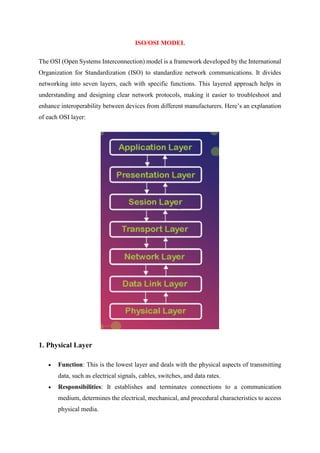
networking into seven layers, each with specific functions. This layered approach helps in
understanding and designing clear network protocols, making it easier to troubleshoot and
enhance interoperability between devices from different manufacturers. Here’s an explanation
of each OSI layer:
1. Physical Layer
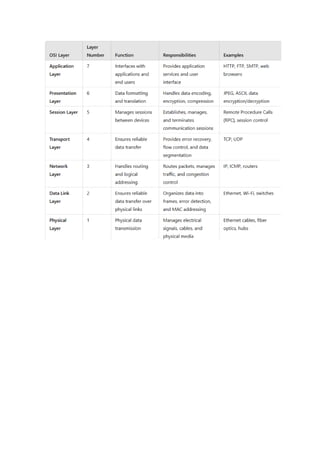
 Function: This is the lowest layer and deals with the physical aspects of transmitting
data, such as electrical signals, cables, switches, and data rates.
 Responsibilities: It establishes and terminates connections to a communication
medium, determines the electrical, mechanical, and procedural characteristics to access
physical media.
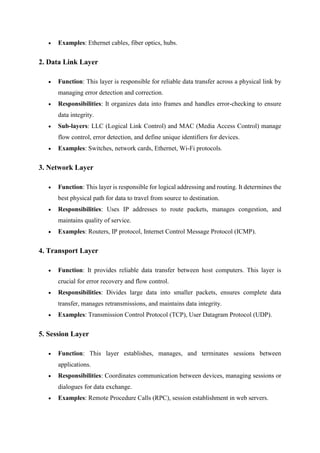
 Examples: Ethernet cables, fiber optics, hubs.
2. Data Link Layer
 Function: This layer is responsible for reliable data transfer across a physical link by
managing error detection and correction.
 Responsibilities: It organizes data into frames and handles error-checking to ensure
data integrity.
 Sub-layers: LLC (Logical Link Control) and MAC (Media Access Control) manage
flow control, error detection, and define unique identifiers for devices.
 Examples: Switches, network cards, Ethernet, Wi-Fi protocols.
3. Network Layer
 Function: This layer is responsible for logical addressing and routing. It determines the
best physical path for data to travel from source to destination.
 Responsibilities: Uses IP addresses to route packets, manages congestion, and
maintains quality of service.
 Examples: Routers, IP protocol, Internet Control Message Protocol (ICMP).
4. Transport Layer
 Function: It provides reliable data transfer between host computers. This layer is
crucial for error recovery and flow control.
 Responsibilities: Divides large data into smaller packets, ensures complete data
transfer, manages retransmissions, and maintains data integrity.
 Examples: Transmission Control Protocol (TCP), User Datagram Protocol (UDP).
5. Session Layer
 Function: This layer establishes, manages, and terminates sessions between
applications.
 Responsibilities: Coordinates communication between devices, managing sessions or
dialogues for data exchange.
 Examples: Remote Procedure Calls (RPC), session establishment in web servers.
6. Presentation Layer
 Function: This layer formats and translates data for the application layer. It ensures
data is in a readable format.
 Responsibilities: Handles data encoding, compression, encryption, and translation
between different formats.
 Examples: JPEG, ASCII, encryption/decryption processes.
7. Application Layer
 Function: This is the topmost layer and interfaces directly with end-user applications.
It facilitates communication by providing application services.
 Responsibilities: Supports applications and end-user processes, ensuring a seamless
user experience.
 Examples: HTTP, FTP, SMTP, and applications like web browsers and email clients.
Summary:
Each OSI layer serves a distinct purpose, from managing physical connections (Physical Layer)
to delivering user applications (Application Layer). The model enhances interoperability,
allowing seamless communication across diverse networks and devices, and helps in
diagnosing and isolating network problems by focusing on individual layers. Understanding
these layers is critical for network management, as it provides insight into how data travels
from one device to another.
Open System Interconnection model and its layers.pdf

Open System Interconnection model and its layers.pdf

  • 1.
    ISO/OSI MODEL The OSI(Open Systems Interconnection) model is a framework developed by the International Organization for Standardization (ISO) to standardize network communications. It divides networking into seven layers, each with specific functions. This layered approach helps in understanding and designing clear network protocols, making it easier to troubleshoot and enhance interoperability between devices from different manufacturers. Here’s an explanation of each OSI layer: 1. Physical Layer  Function: This is the lowest layer and deals with the physical aspects of transmitting data, such as electrical signals, cables, switches, and data rates.  Responsibilities: It establishes and terminates connections to a communication medium, determines the electrical, mechanical, and procedural characteristics to access physical media.
  • 2.
     Examples: Ethernetcables, fiber optics, hubs. 2. Data Link Layer  Function: This layer is responsible for reliable data transfer across a physical link by managing error detection and correction.  Responsibilities: It organizes data into frames and handles error-checking to ensure data integrity.  Sub-layers: LLC (Logical Link Control) and MAC (Media Access Control) manage flow control, error detection, and define unique identifiers for devices.  Examples: Switches, network cards, Ethernet, Wi-Fi protocols. 3. Network Layer  Function: This layer is responsible for logical addressing and routing. It determines the best physical path for data to travel from source to destination.  Responsibilities: Uses IP addresses to route packets, manages congestion, and maintains quality of service.  Examples: Routers, IP protocol, Internet Control Message Protocol (ICMP). 4. Transport Layer  Function: It provides reliable data transfer between host computers. This layer is crucial for error recovery and flow control.  Responsibilities: Divides large data into smaller packets, ensures complete data transfer, manages retransmissions, and maintains data integrity.  Examples: Transmission Control Protocol (TCP), User Datagram Protocol (UDP). 5. Session Layer  Function: This layer establishes, manages, and terminates sessions between applications.  Responsibilities: Coordinates communication between devices, managing sessions or dialogues for data exchange.  Examples: Remote Procedure Calls (RPC), session establishment in web servers.
  • 3.
    6. Presentation Layer Function: This layer formats and translates data for the application layer. It ensures data is in a readable format.  Responsibilities: Handles data encoding, compression, encryption, and translation between different formats.  Examples: JPEG, ASCII, encryption/decryption processes. 7. Application Layer  Function: This is the topmost layer and interfaces directly with end-user applications. It facilitates communication by providing application services.  Responsibilities: Supports applications and end-user processes, ensuring a seamless user experience.  Examples: HTTP, FTP, SMTP, and applications like web browsers and email clients. Summary: Each OSI layer serves a distinct purpose, from managing physical connections (Physical Layer) to delivering user applications (Application Layer). The model enhances interoperability, allowing seamless communication across diverse networks and devices, and helps in diagnosing and isolating network problems by focusing on individual layers. Understanding these layers is critical for network management, as it provides insight into how data travels from one device to another.