


Knowledge Unlimited: open education networks  Takeaway Festival 2009  Dana Centre, Science Museum London
open education networks: 1- ‘bricks and mortars’ universities 2- open online learning communities 3- social learning networks/ education start ups 4-artist-led learning projects 5-the classroom of the read/write web
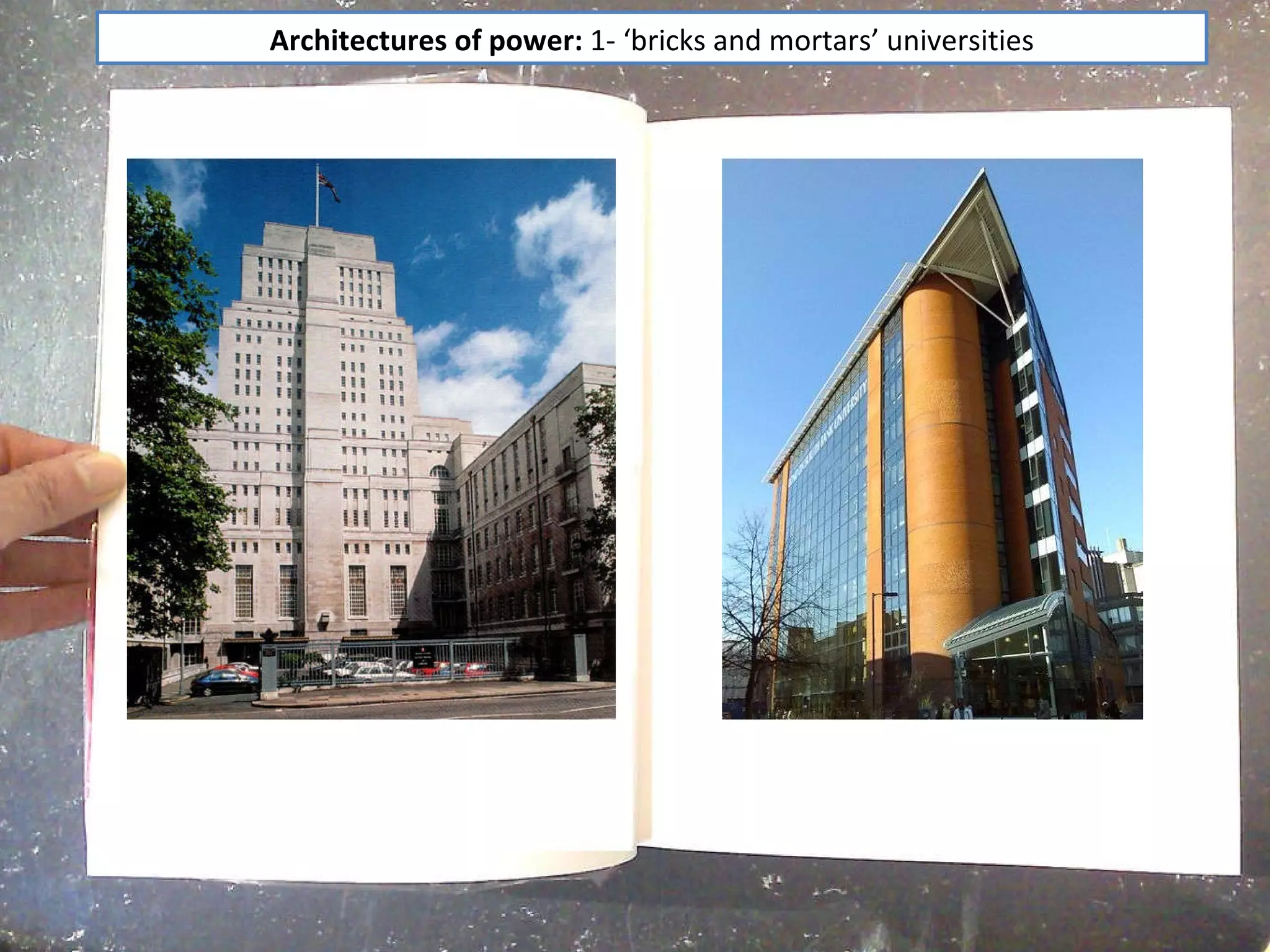
Architectures of power:  1- ‘bricks and mortars’ universities
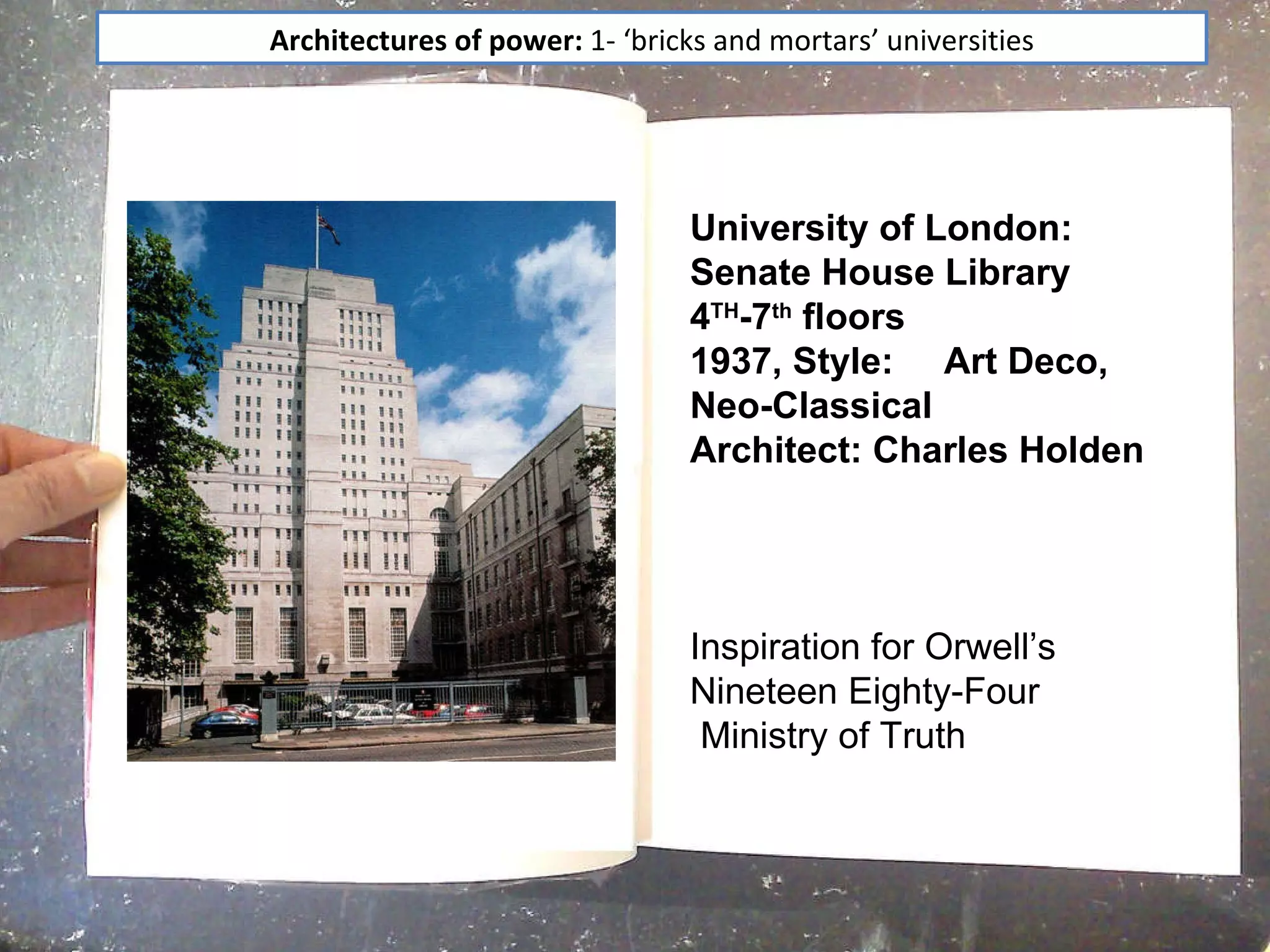
Architectures of power: "bricks and mortar" universities  University of London: Senate House Library 4 TH -7 th  floors 1937, Style:  Art Deco, Neo-Classical  Architect: Charles Holden Inspiration for Orwell’s Nineteen Eighty-Four  Ministry of Truth  Architectures of power:  1- ‘bricks and mortars’ universities
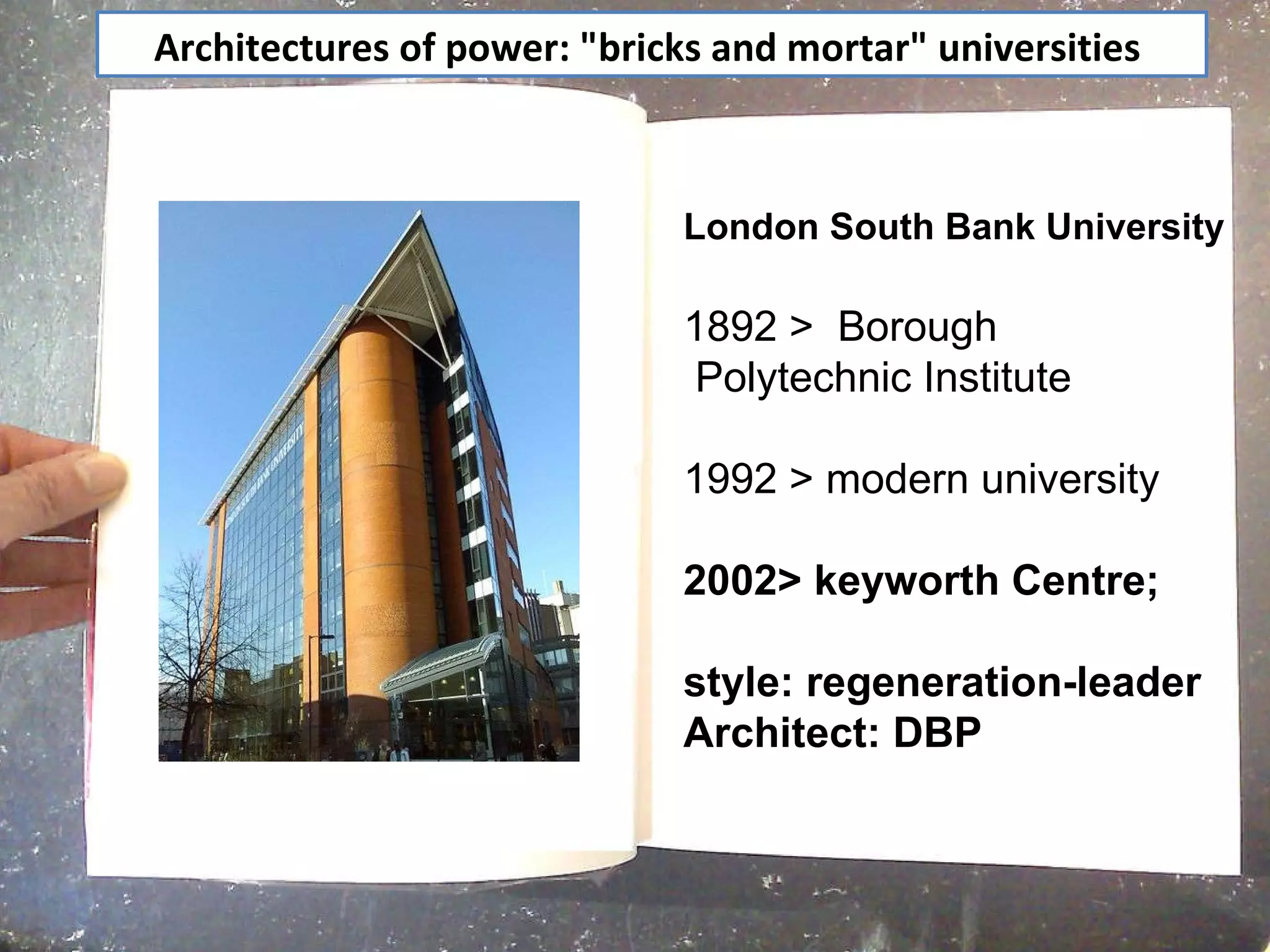
Architectures of power: "bricks and mortar" universities  London South Bank University   1892 >  Borough Polytechnic Institute 1992 > modern university  2002> keyworth Centre;  style: regeneration-leader  Architect: DBP
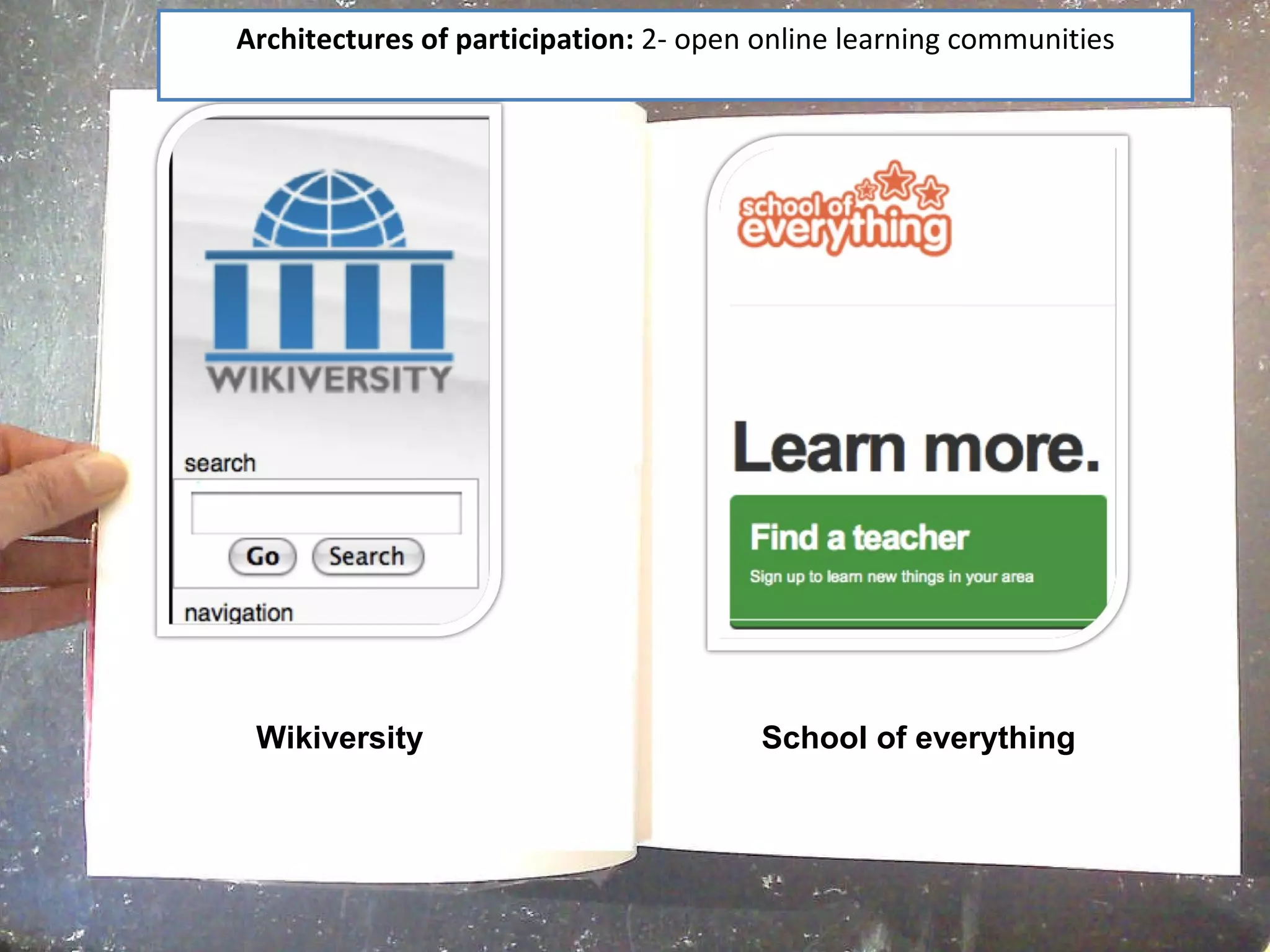
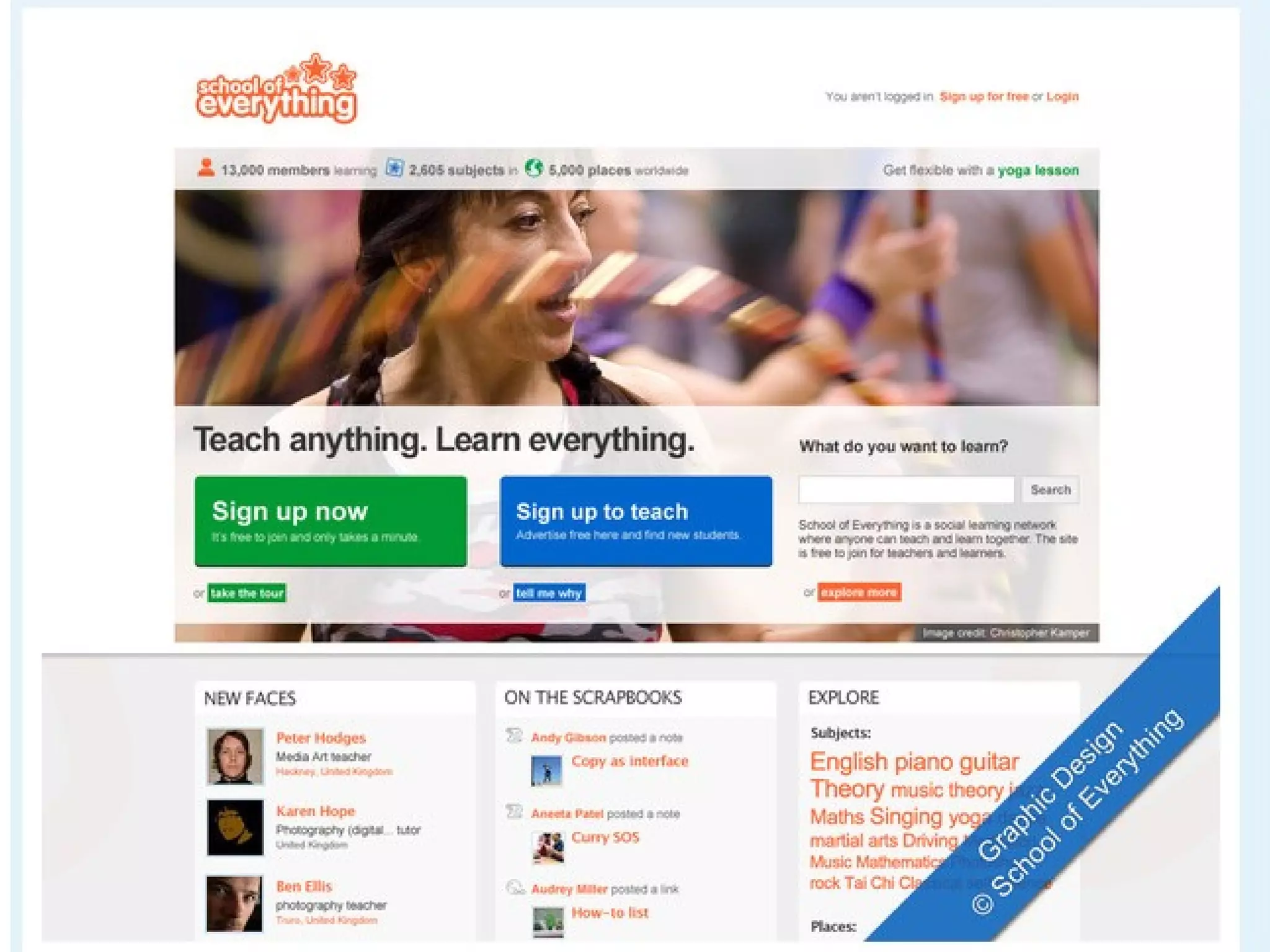
Architectures of participation:  2- open online learning communities Wikiversity School of everything
Architectures of participation: wiki  http://en.wikiversity.org sister project: wikipedia, Wikimedia Foundation launched June 2006 SF offices   “ e-Learning/ online model“ Aims: create open educational community + open educational contents
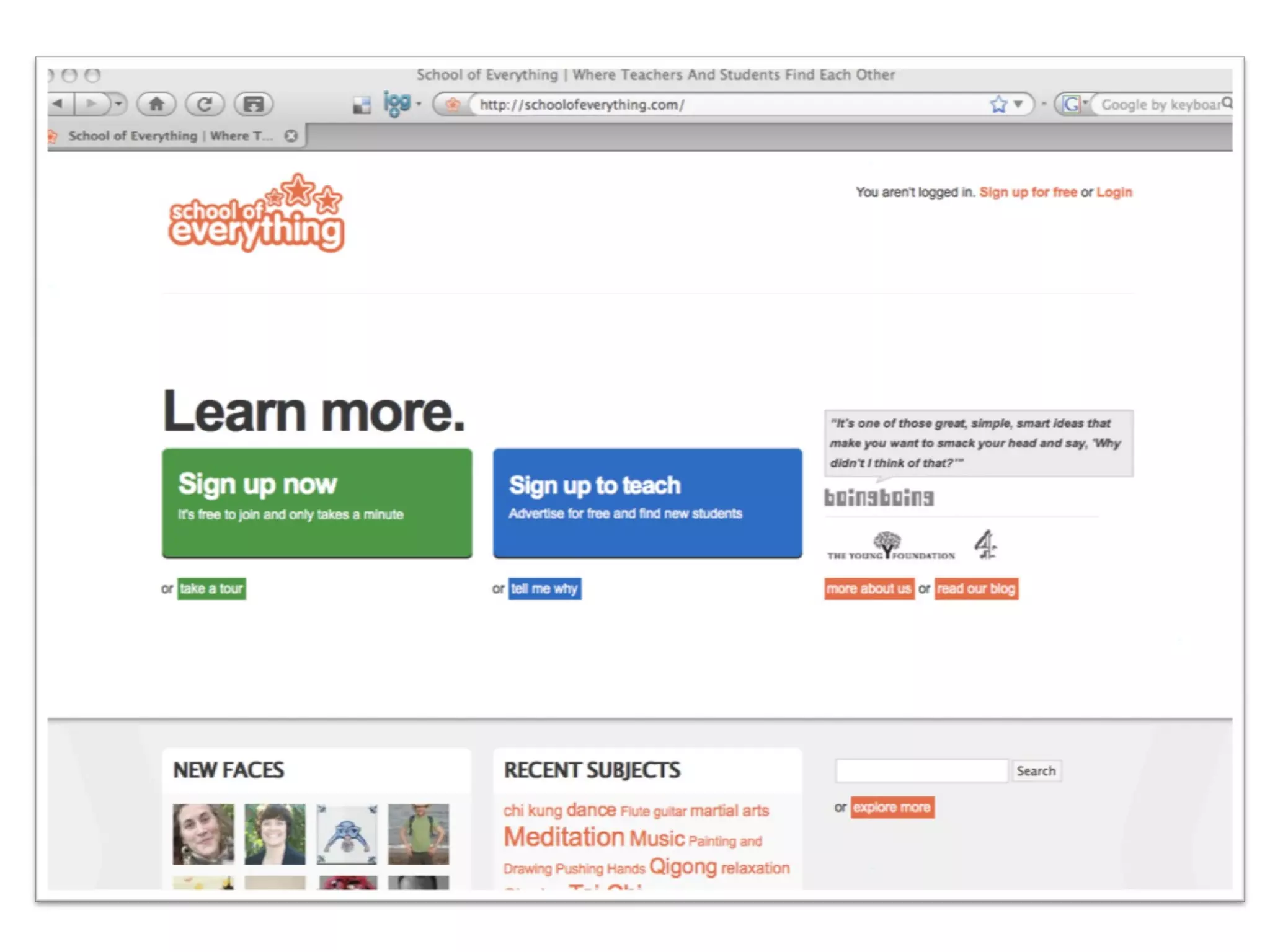
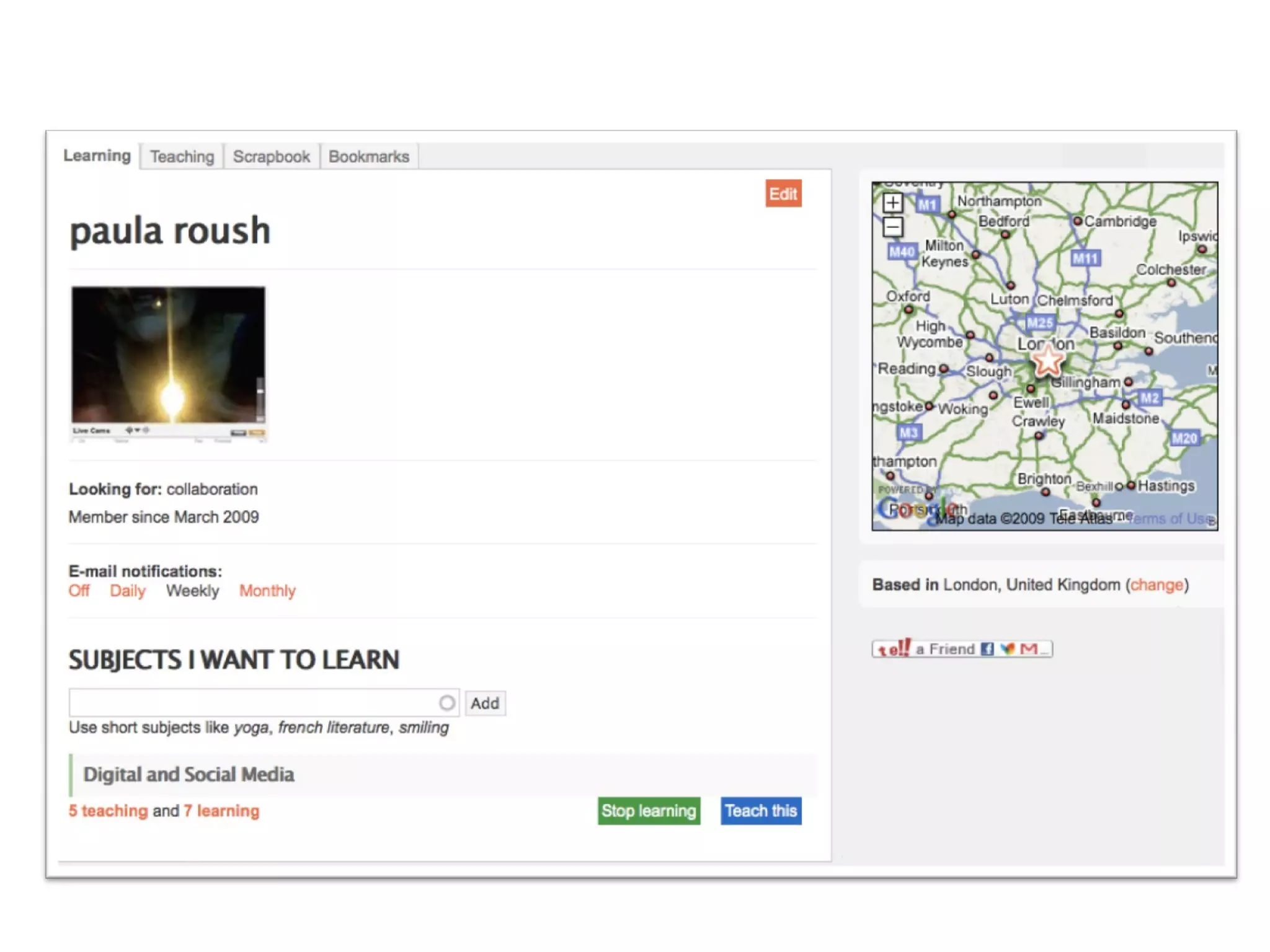
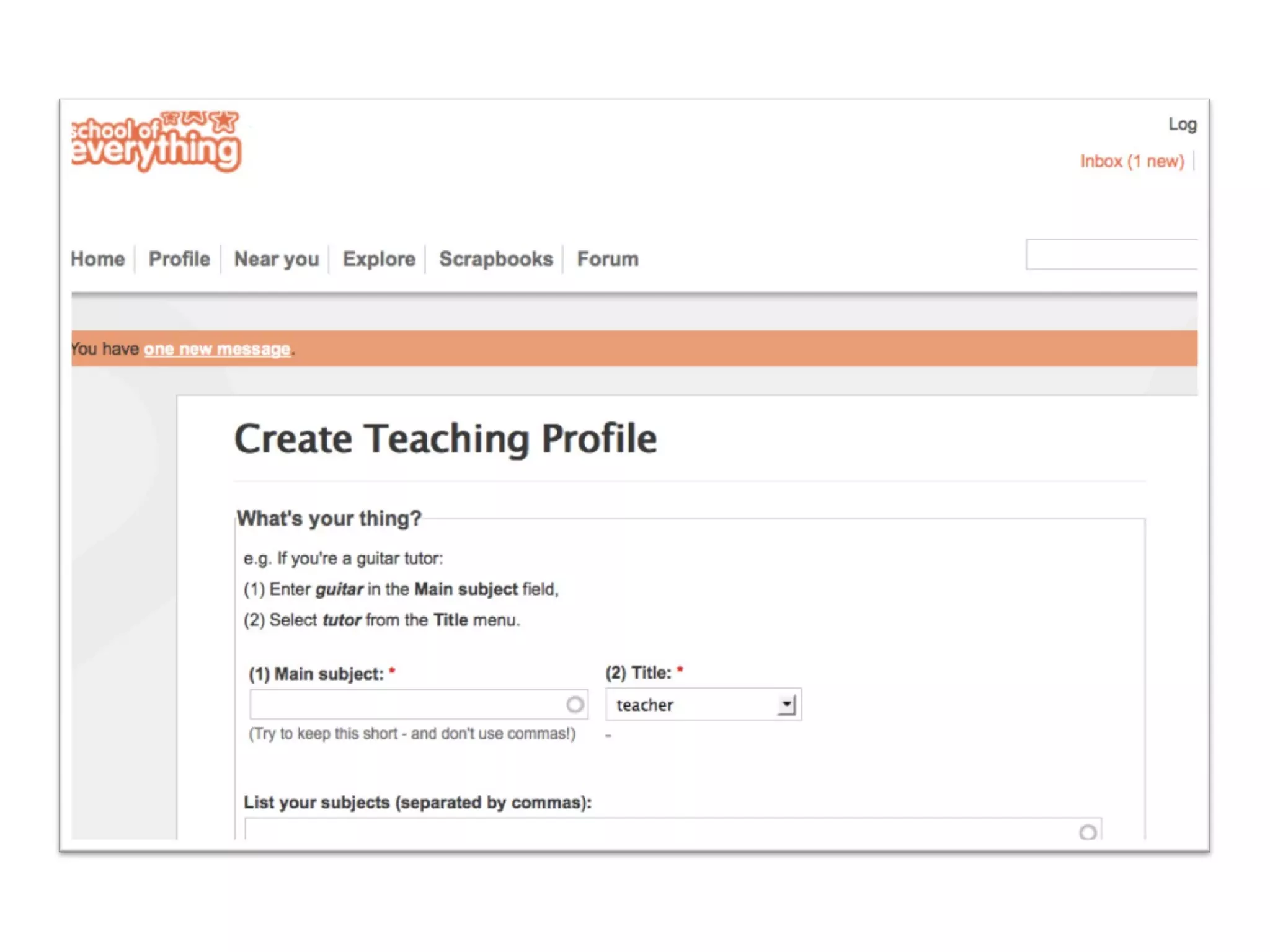
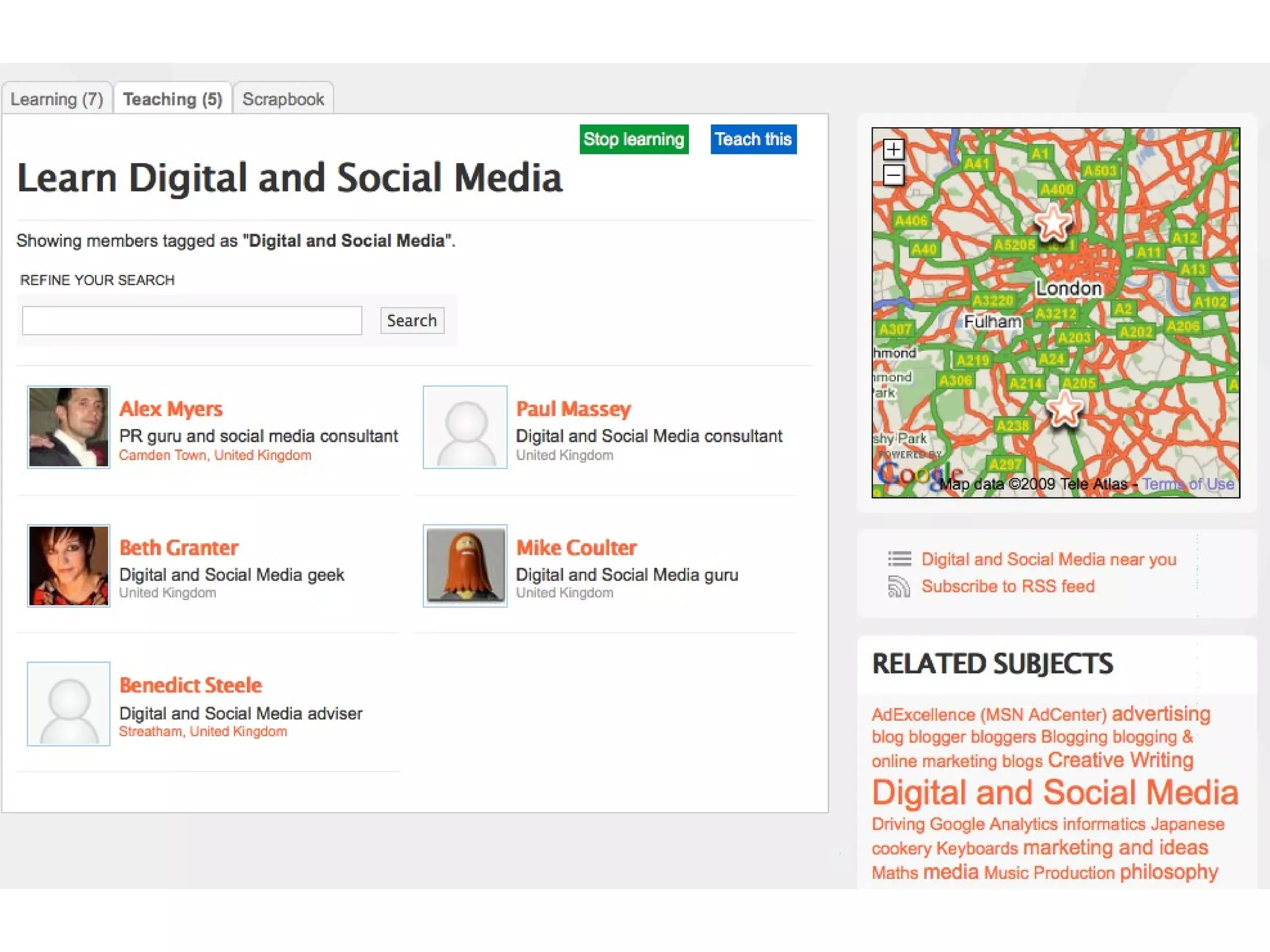
Architectures of participation:  3- social learning networks/ education start ups School of everything School of everything 2006/2008 (website) Web start up  (co-founders: Dougald Hine,Paul Miller et al) Bethnal green office “ a social learning network that connects people who can teach with people who want to learn.
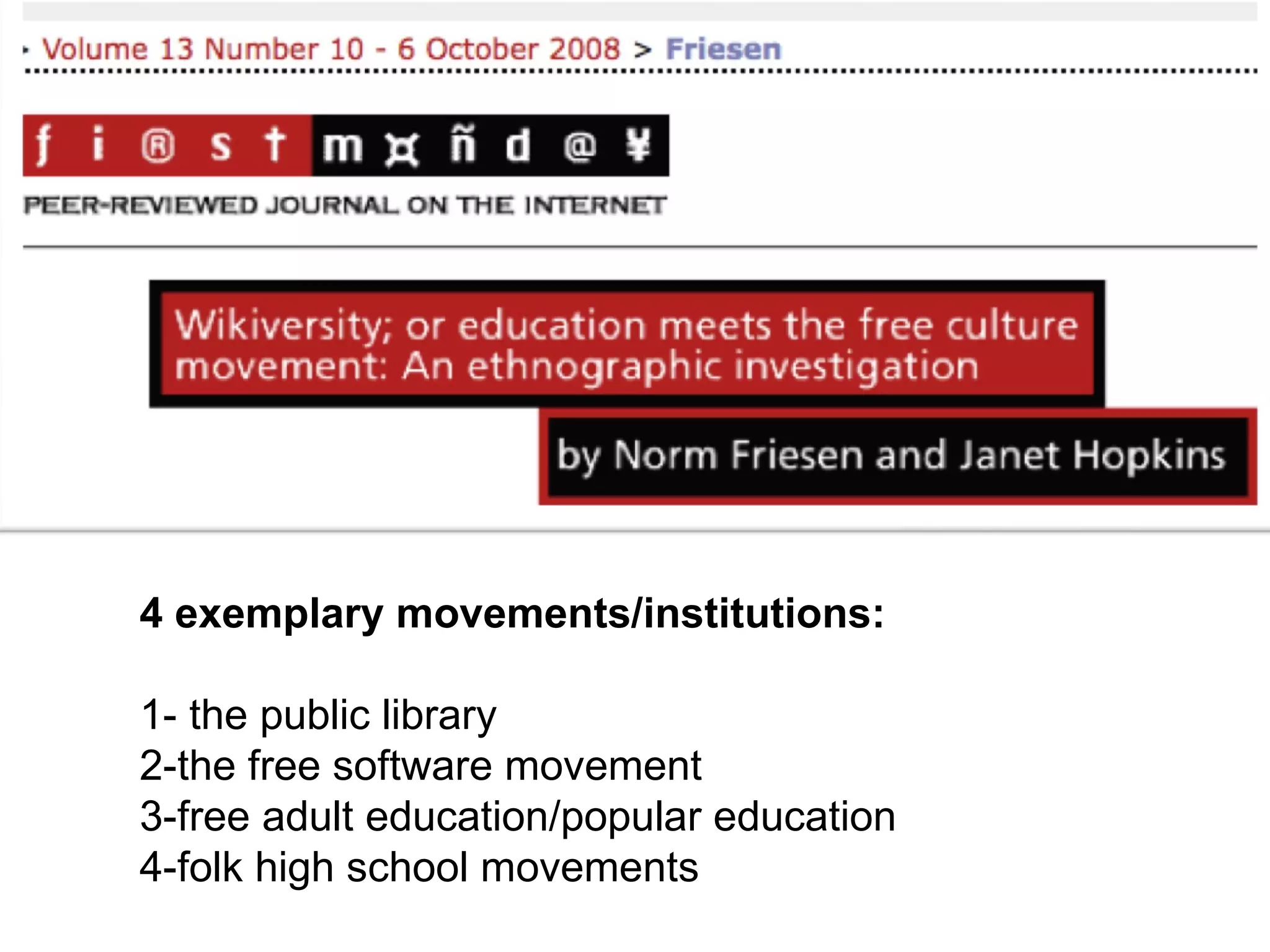
4 exemplary movements/institutions: 1- the public library 2-the free software movement 3-free adult education/popular education 4-folk high school movements
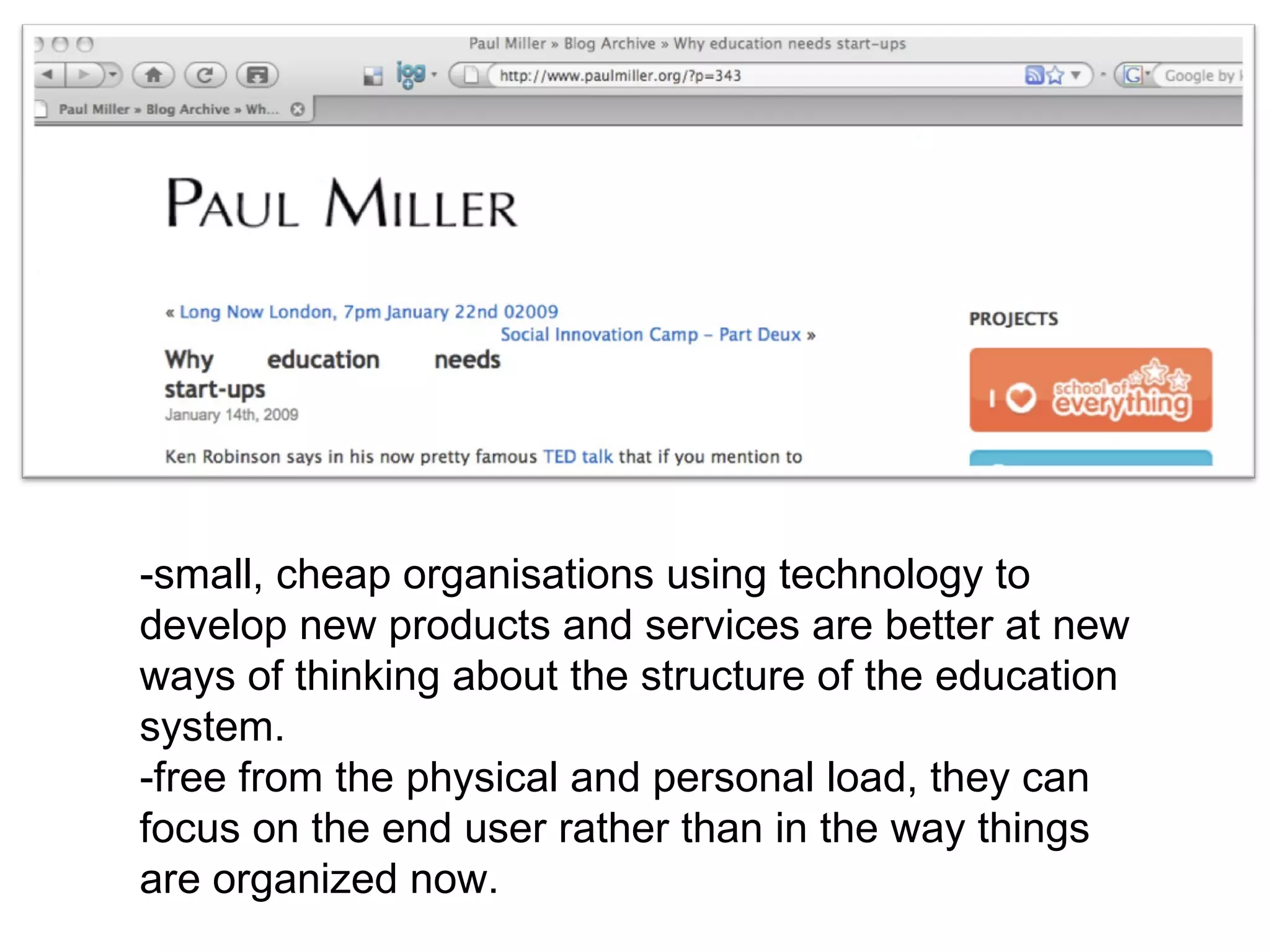
-small, cheap organisations using technology to develop new products and services are better at new ways of thinking about the structure of the education system.  -free from the physical and personal load, they can focus on the end user rather than in the way things are organized now.


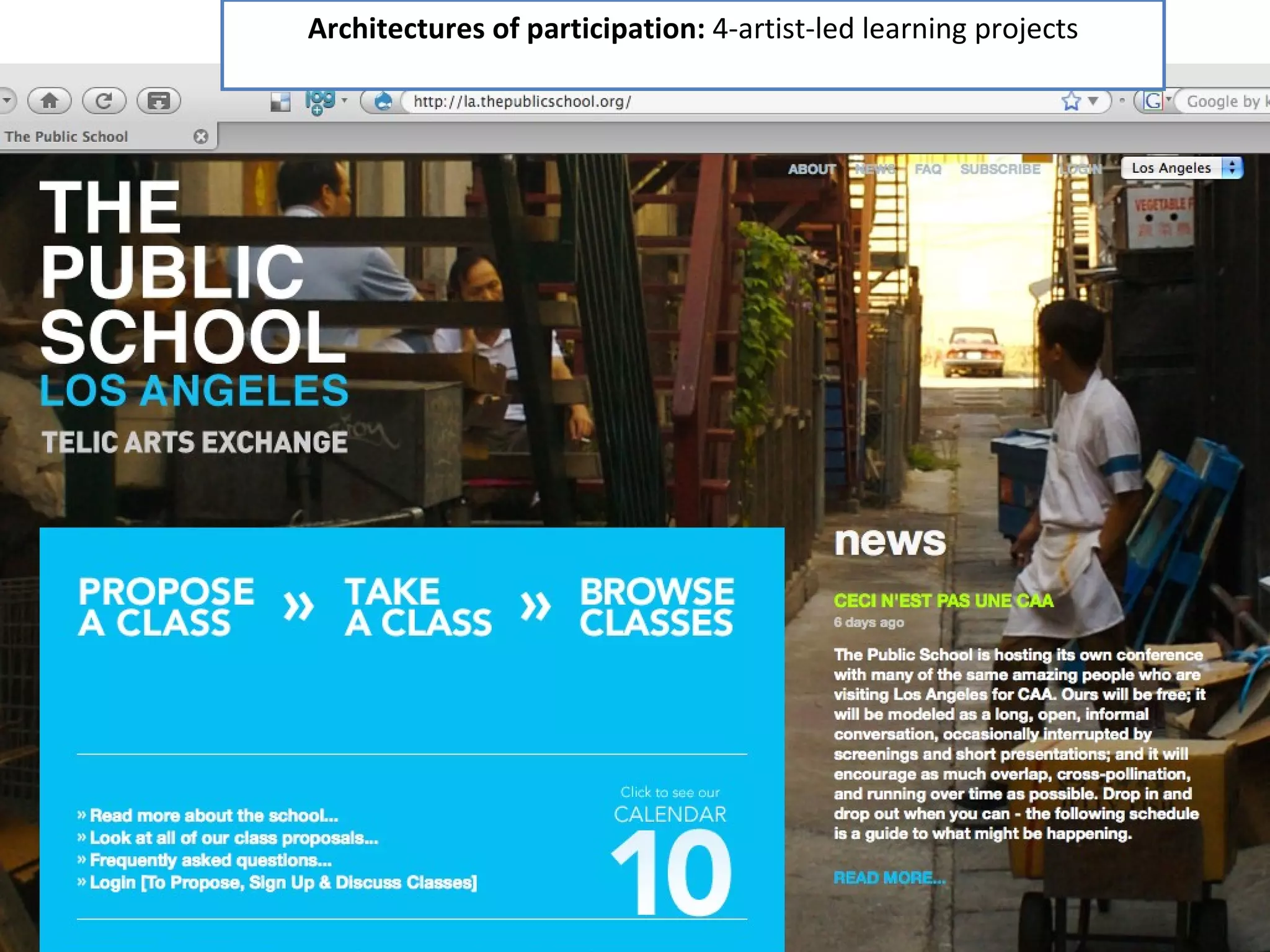
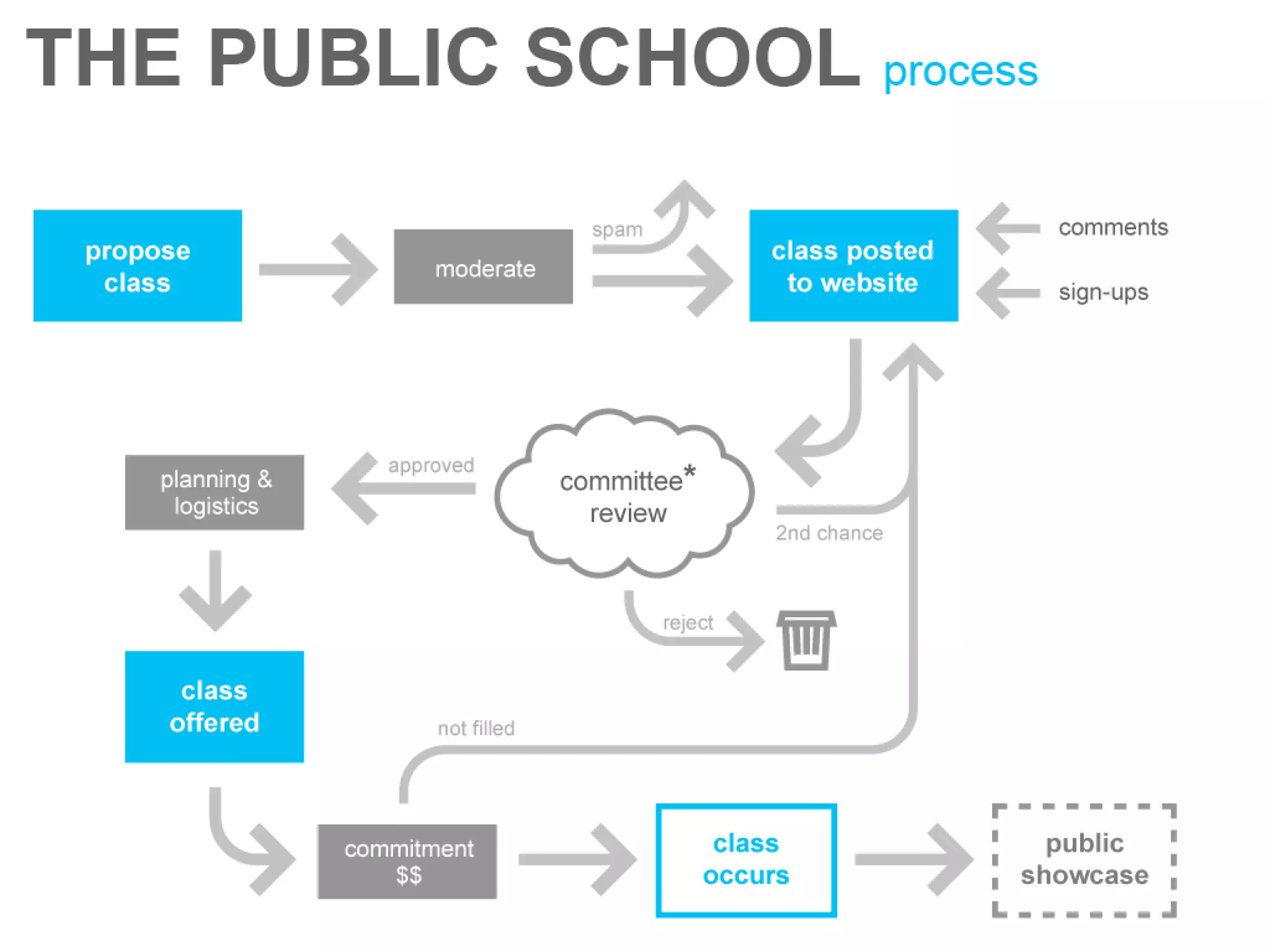
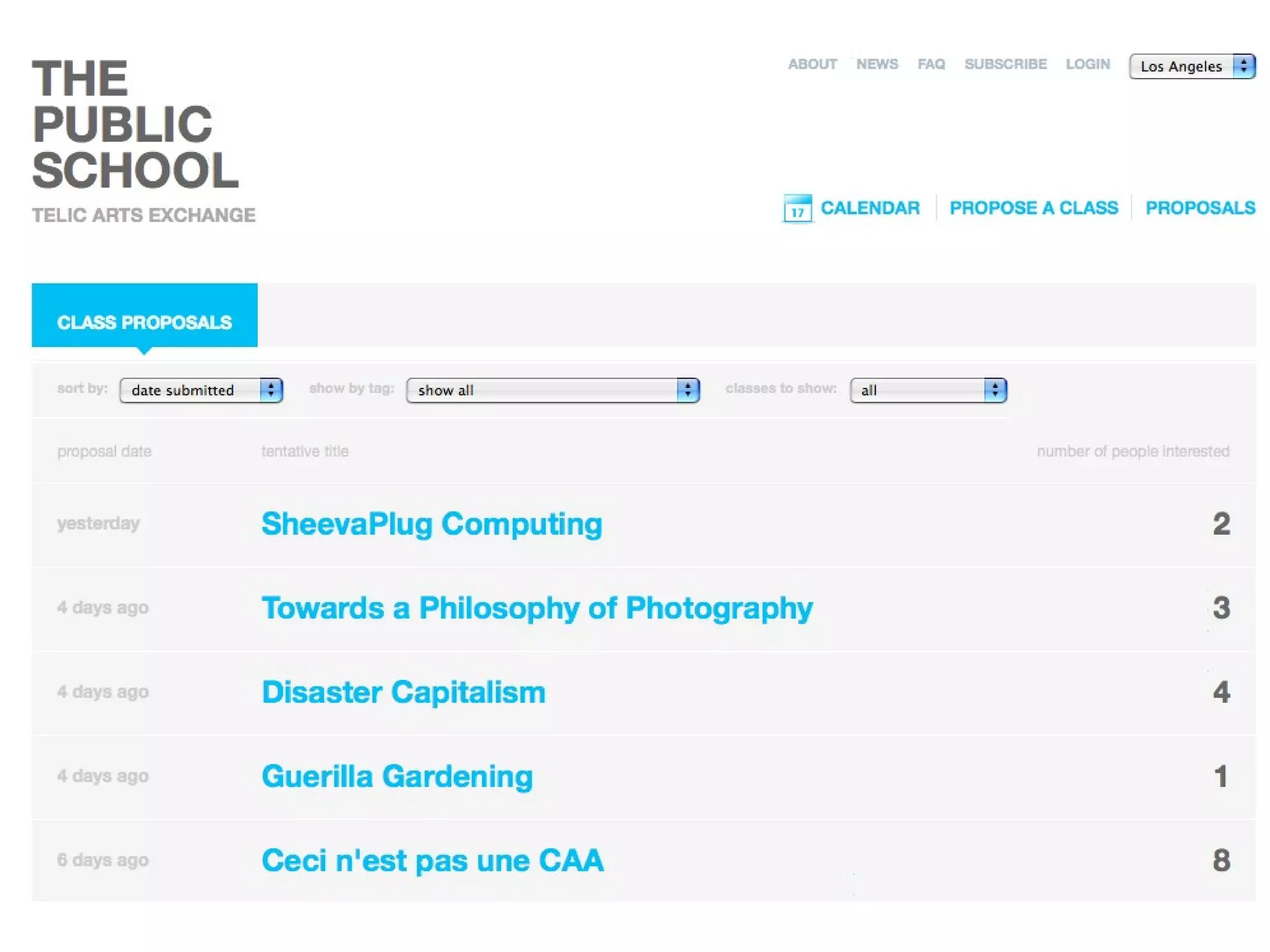
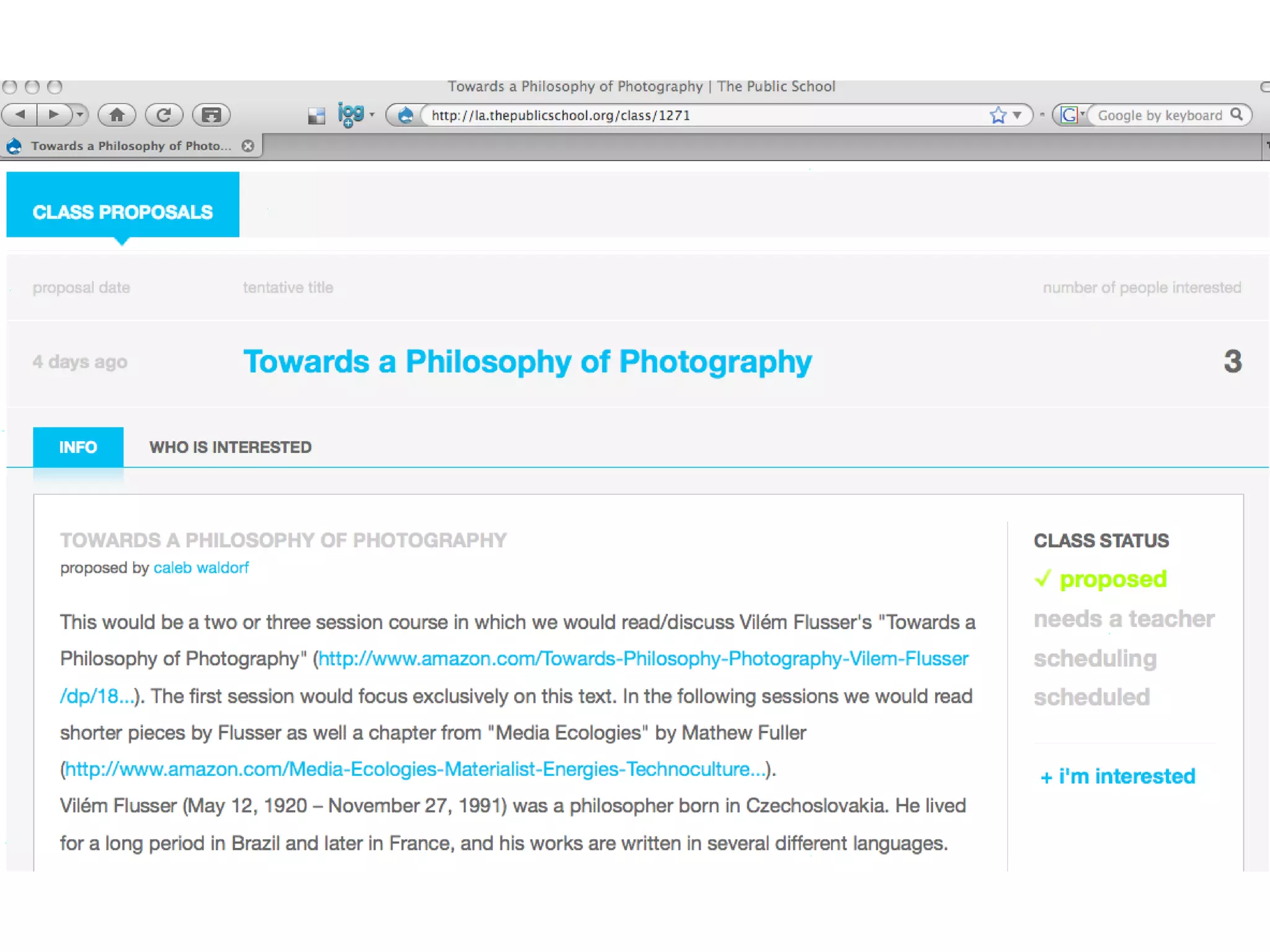
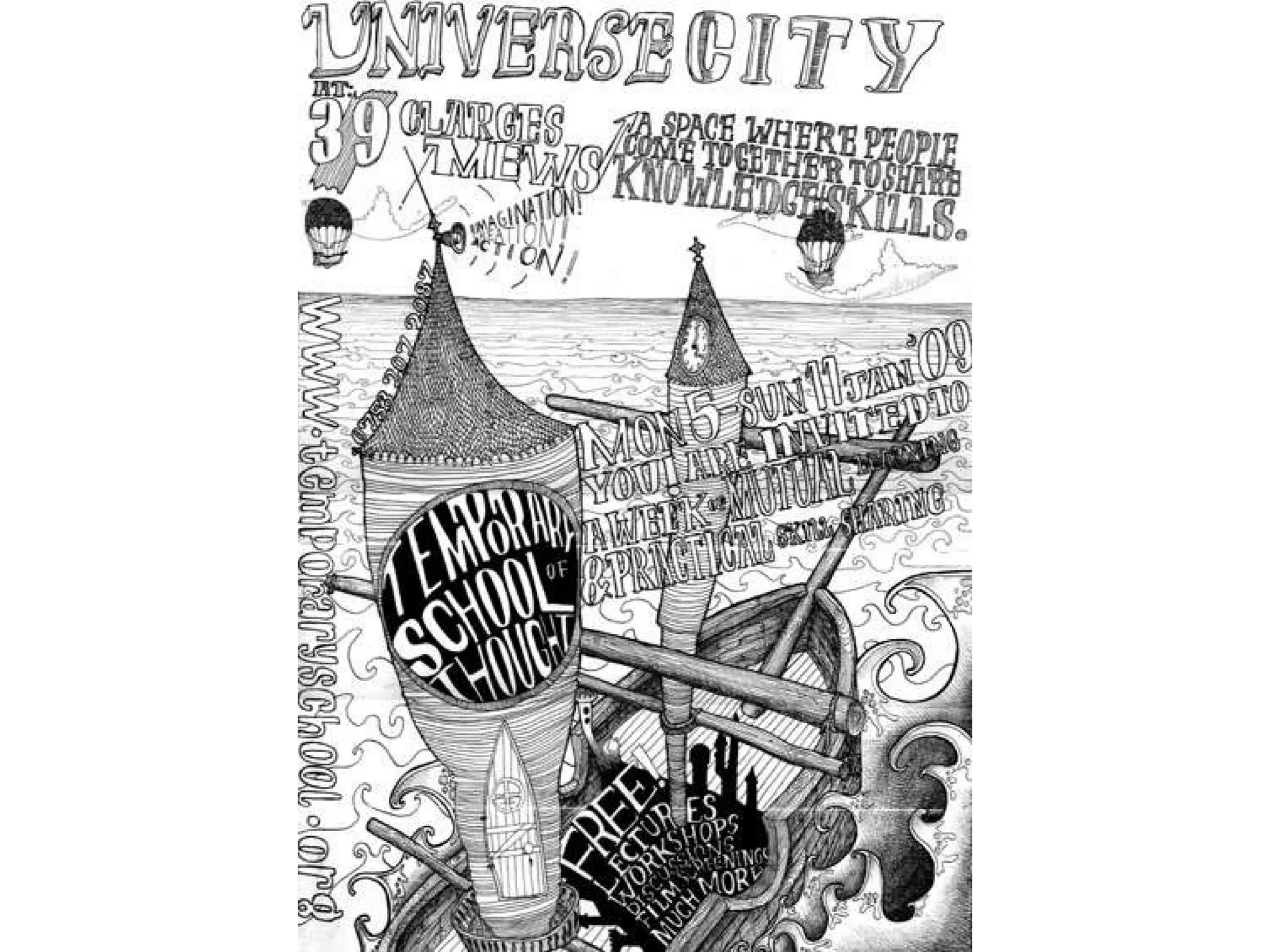
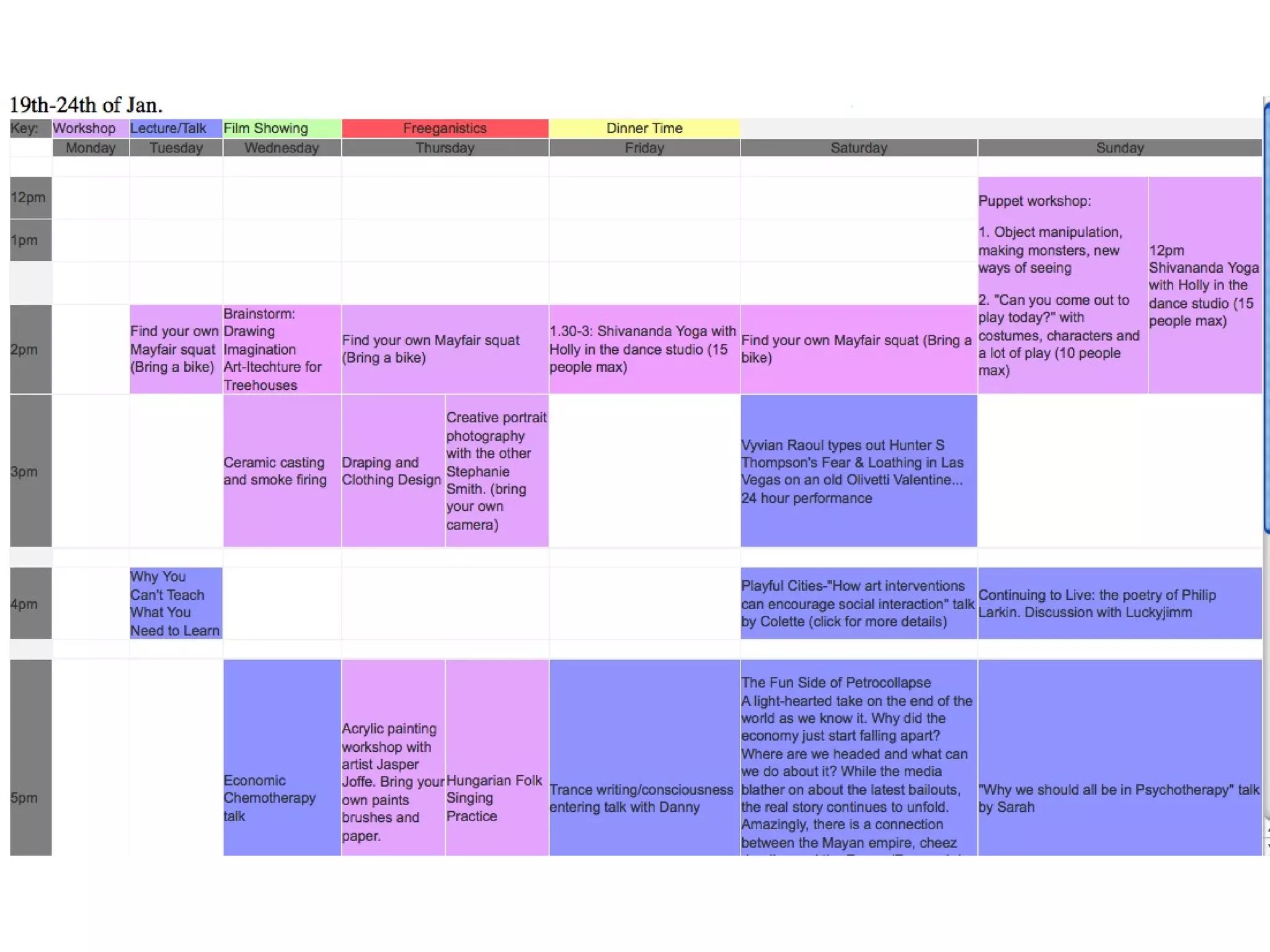
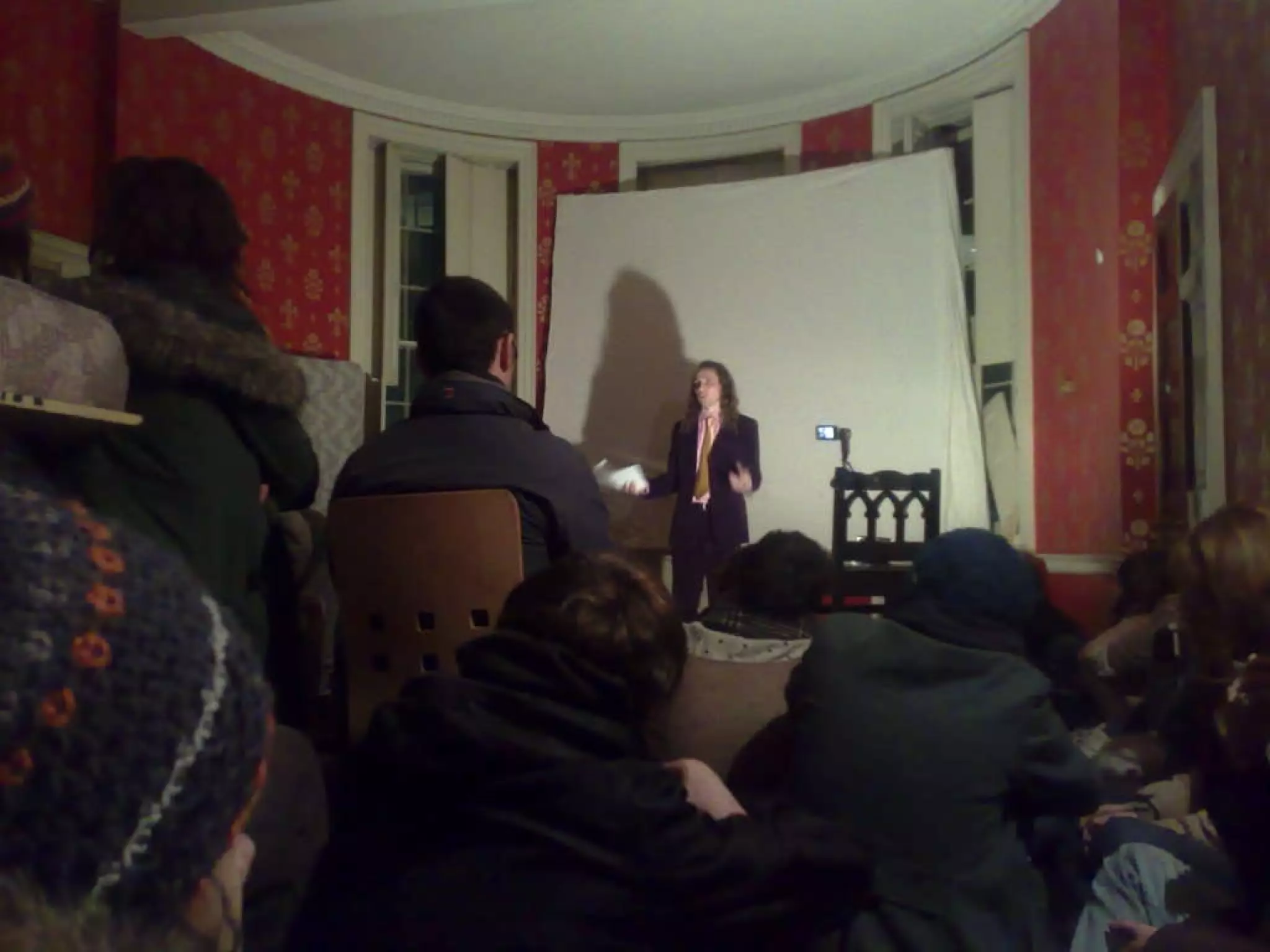
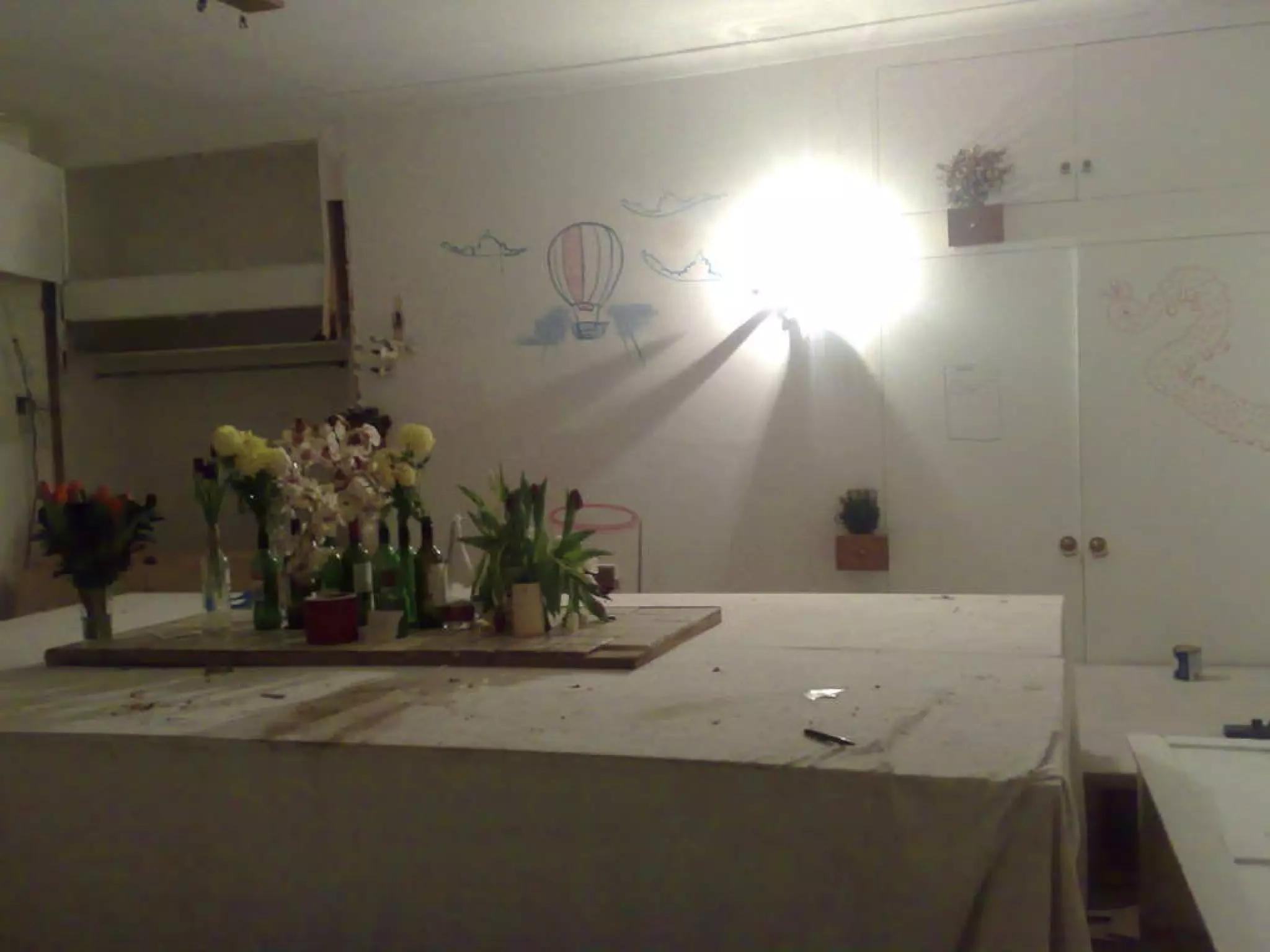
Architectures of participation:  4-artist-led learning projects


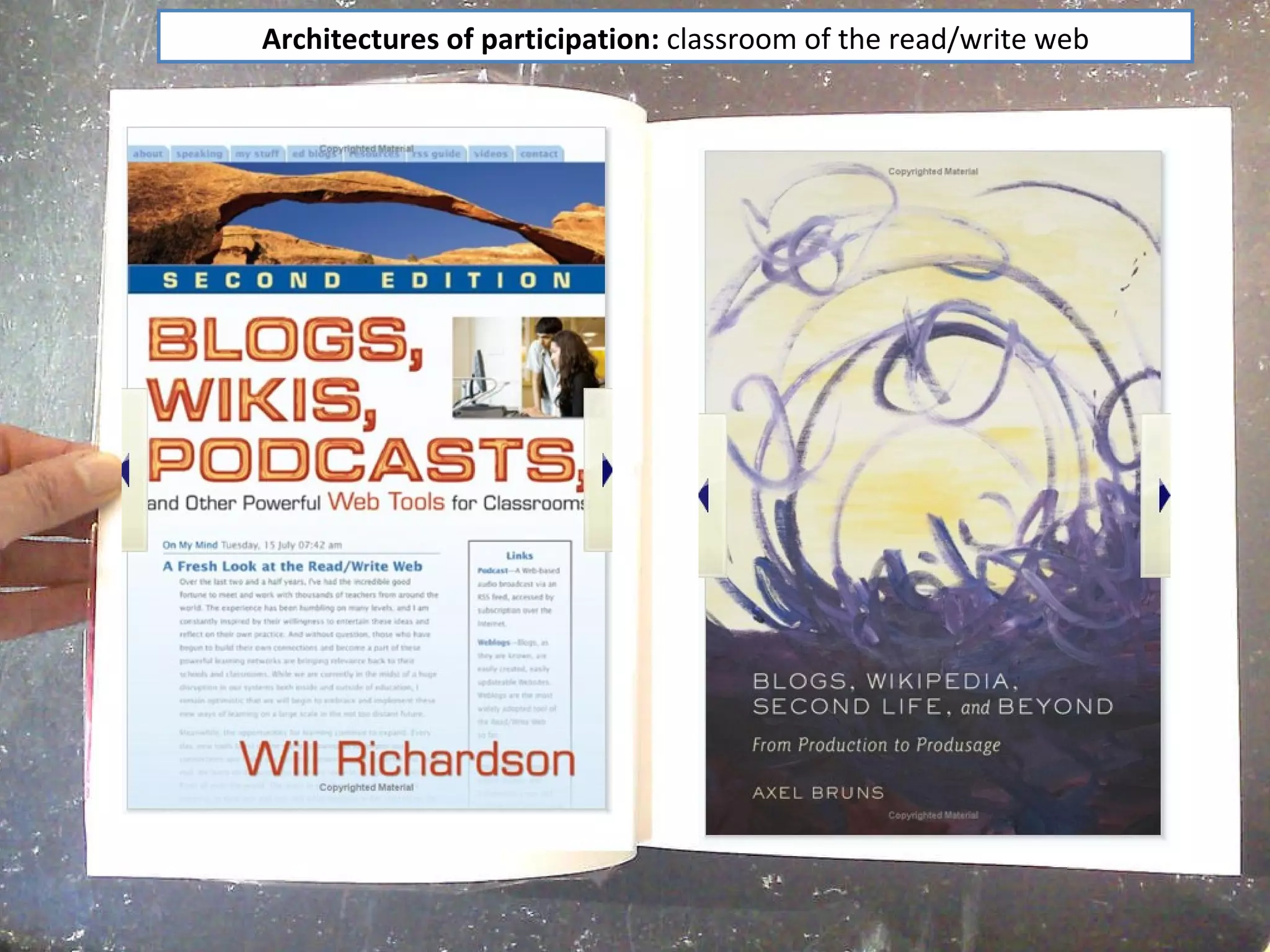
Architectures of participation:  classroom of the read/write web
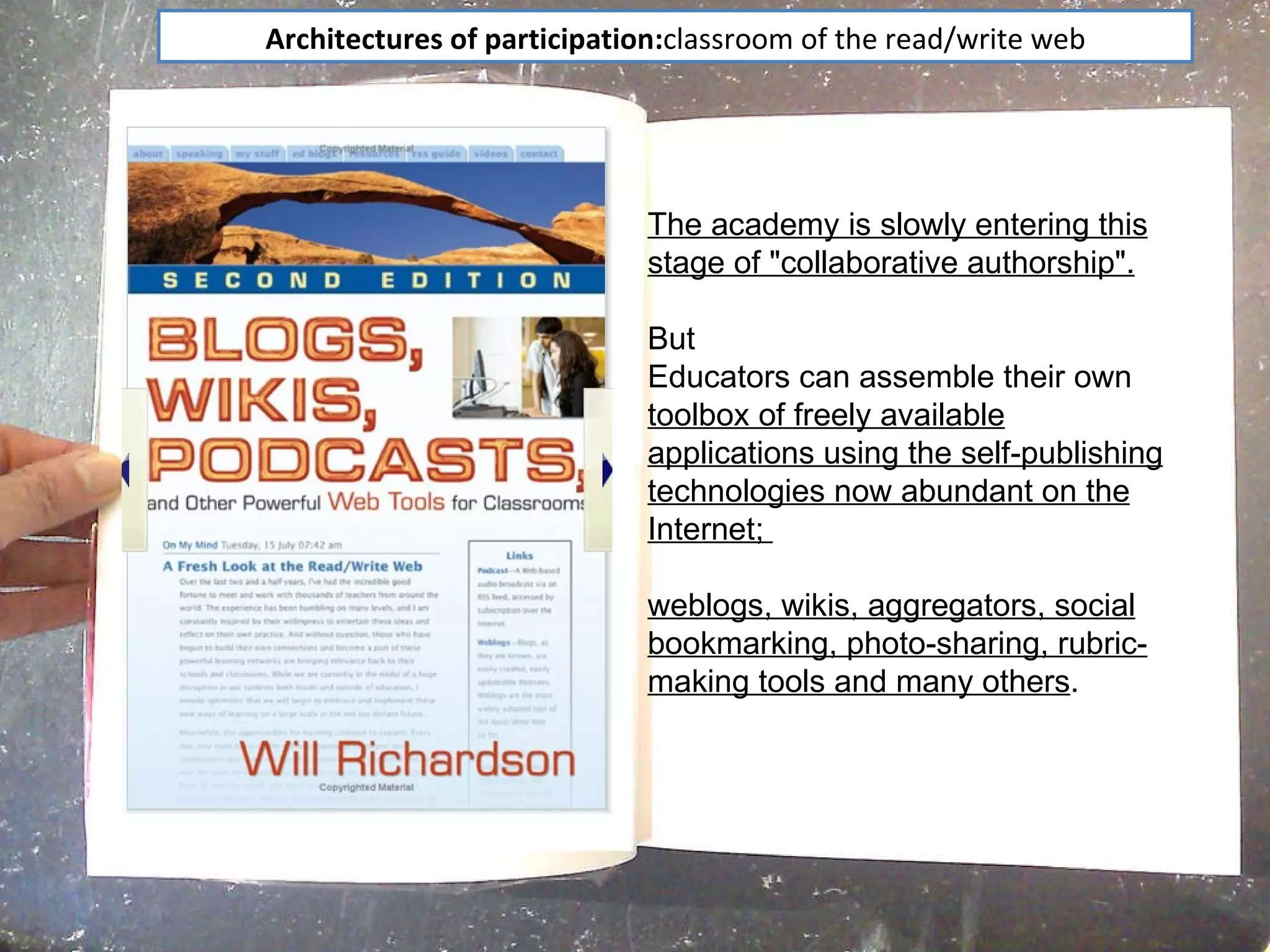
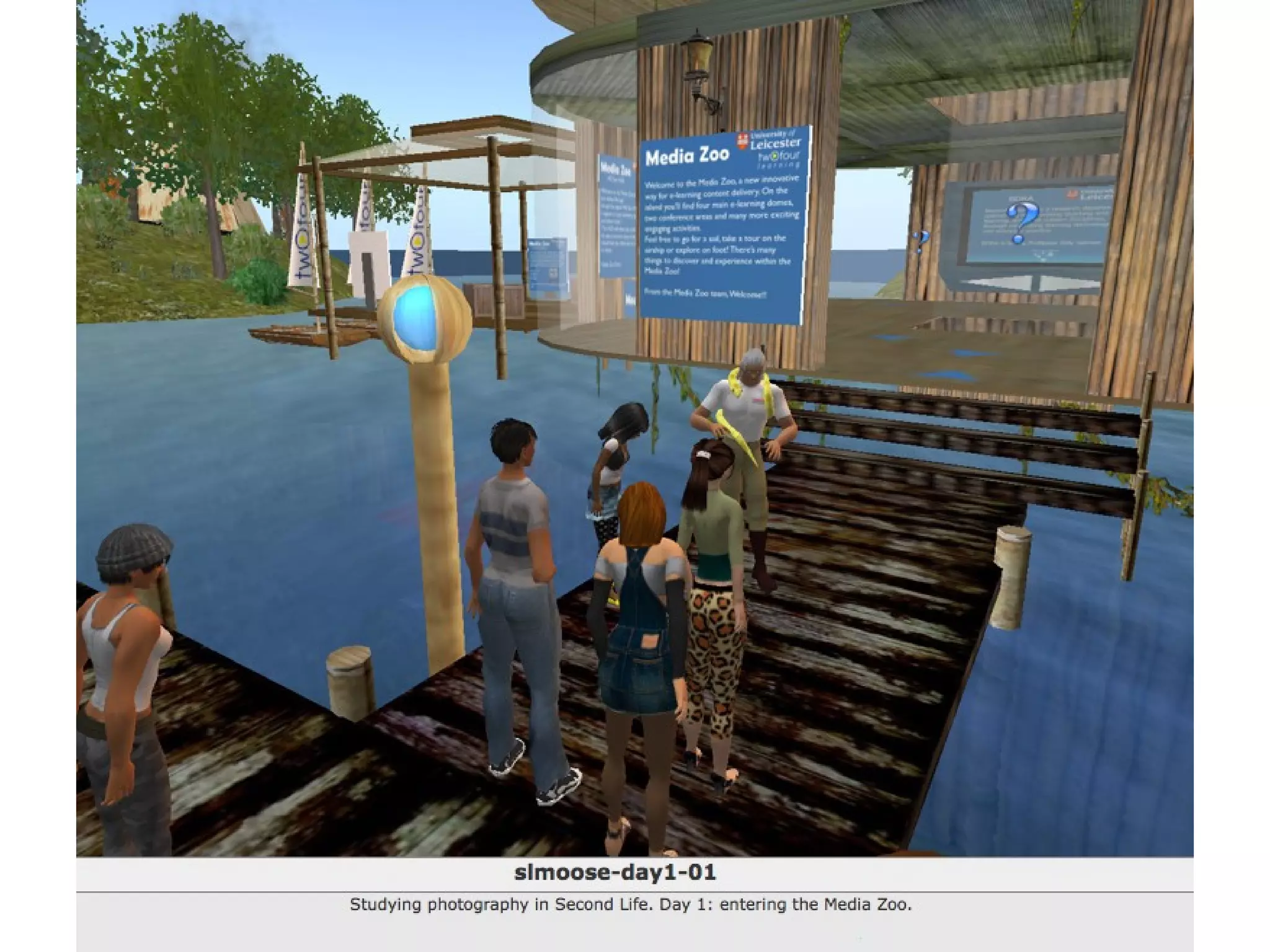
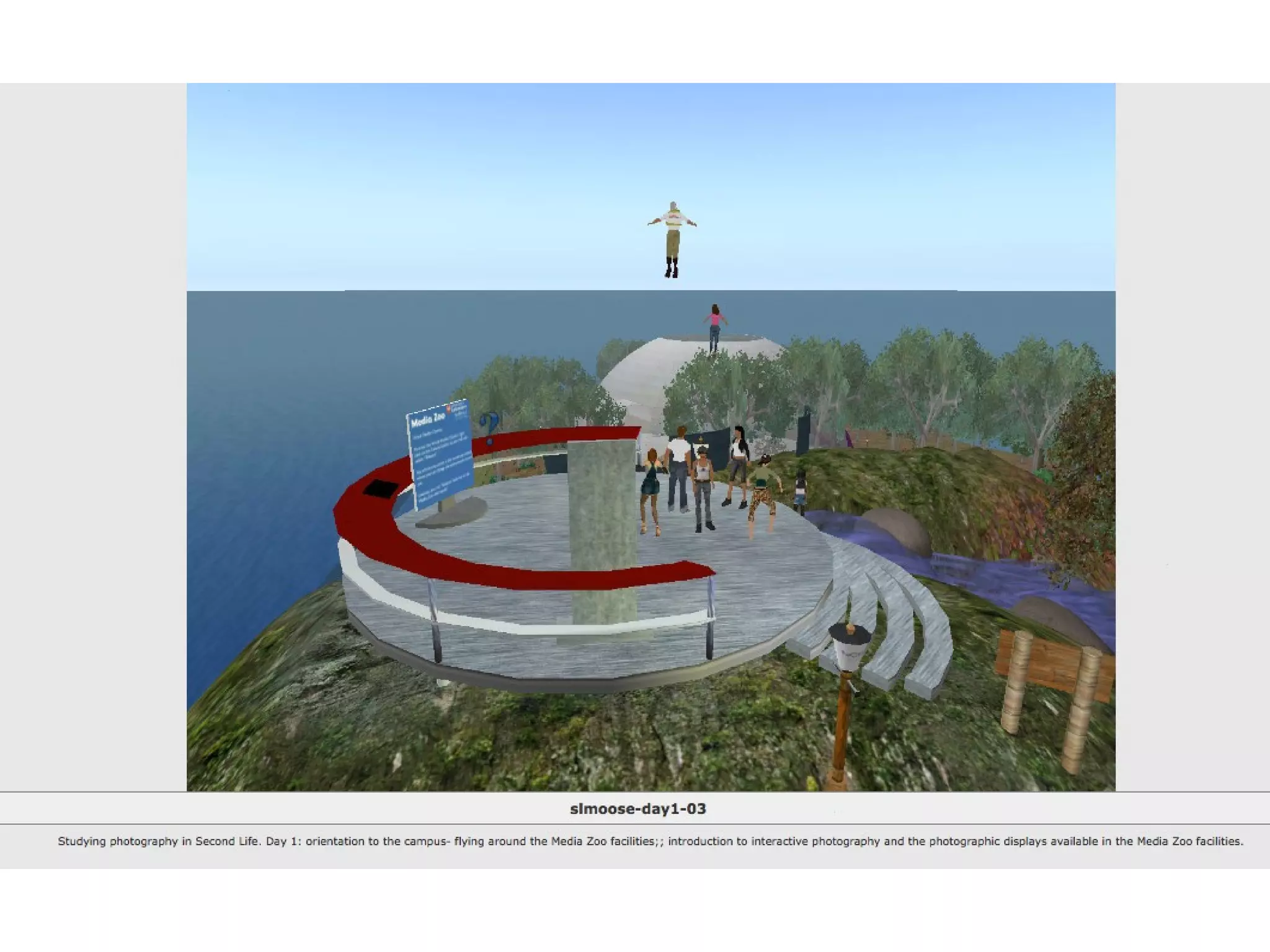
Architectures of participation: classroom of the read/write web The academy is slowly entering this stage of "collaborative authorship". But Educators can assemble their own  toolbox of freely available applications using the self-publishing technologies now abundant on the Internet;  weblogs, wikis, aggregators, social bookmarking, photo-sharing, rubric-making tools and many others .
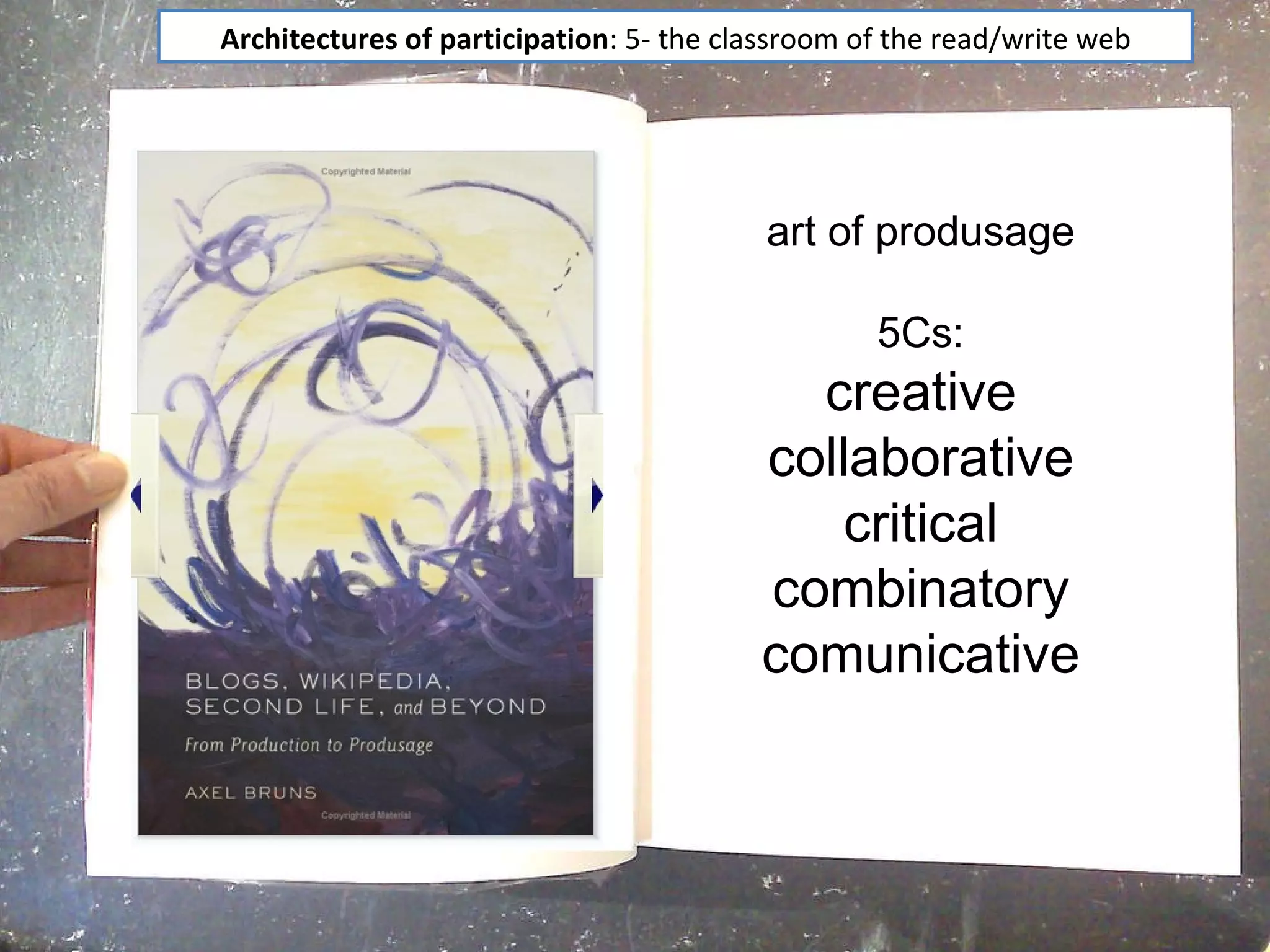
Architectures of participation : 5- the  classroom of the read/write web art of produsage 5Cs: creative collaborative critical combinatory comunicative
 
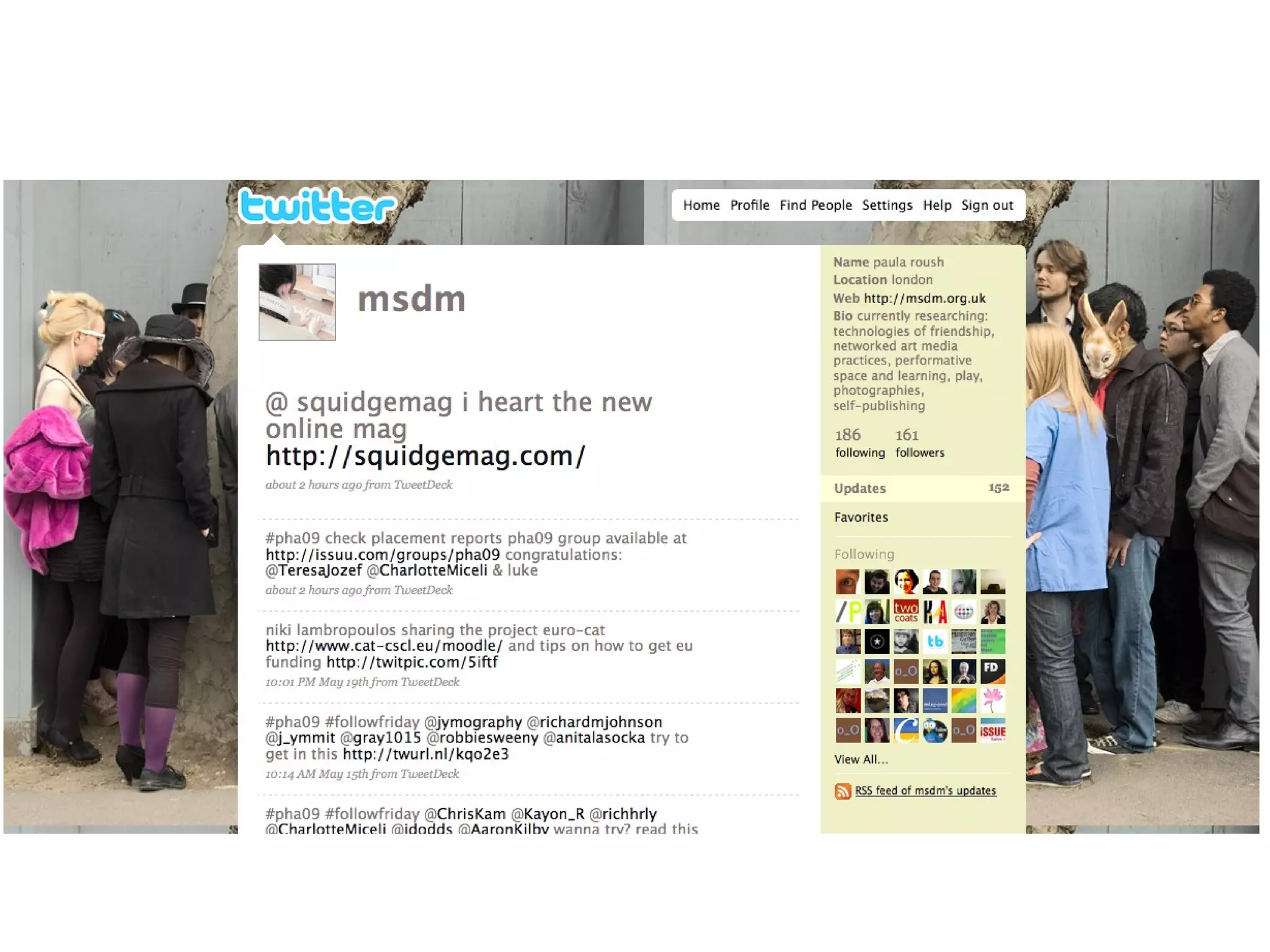
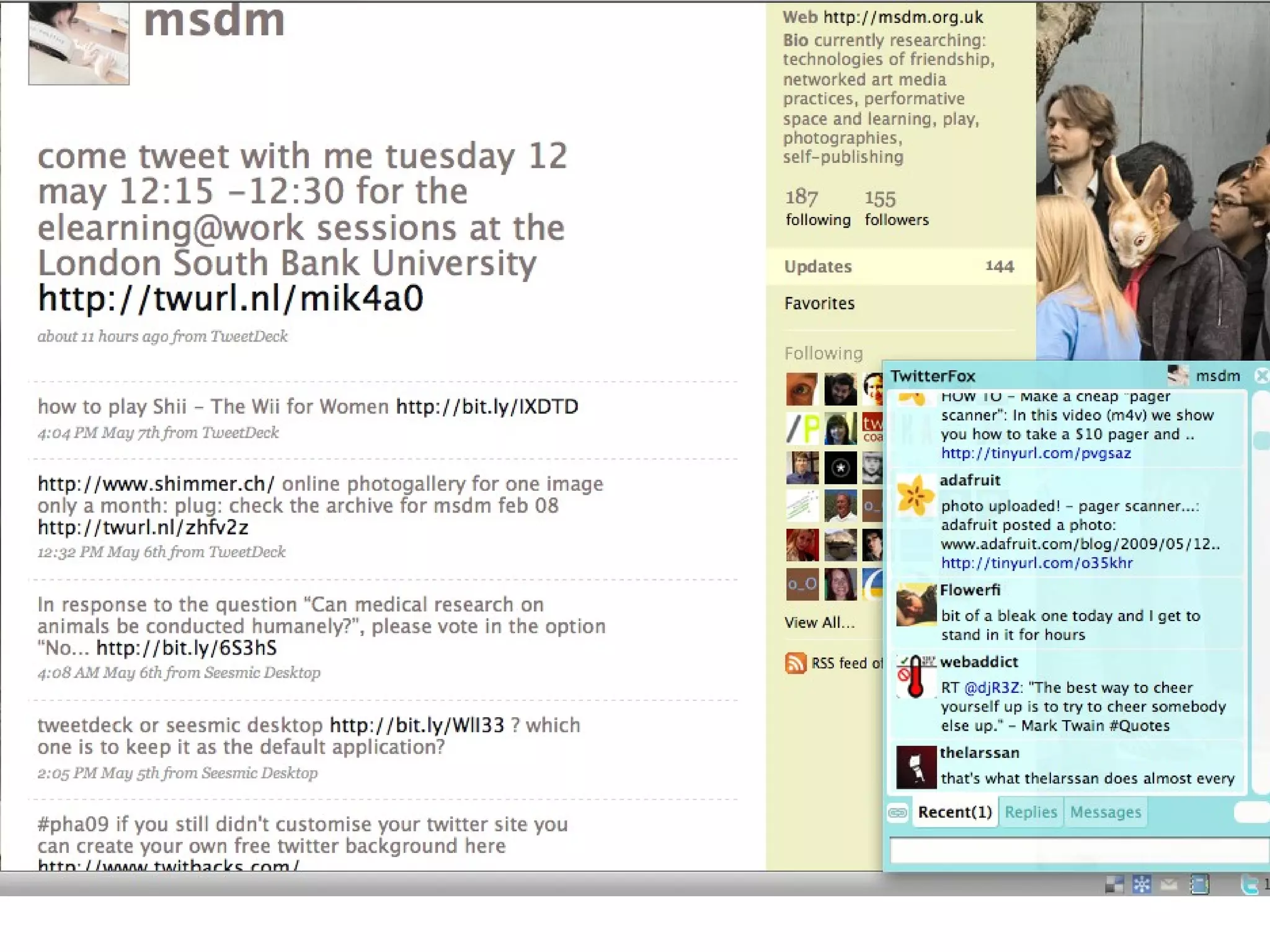
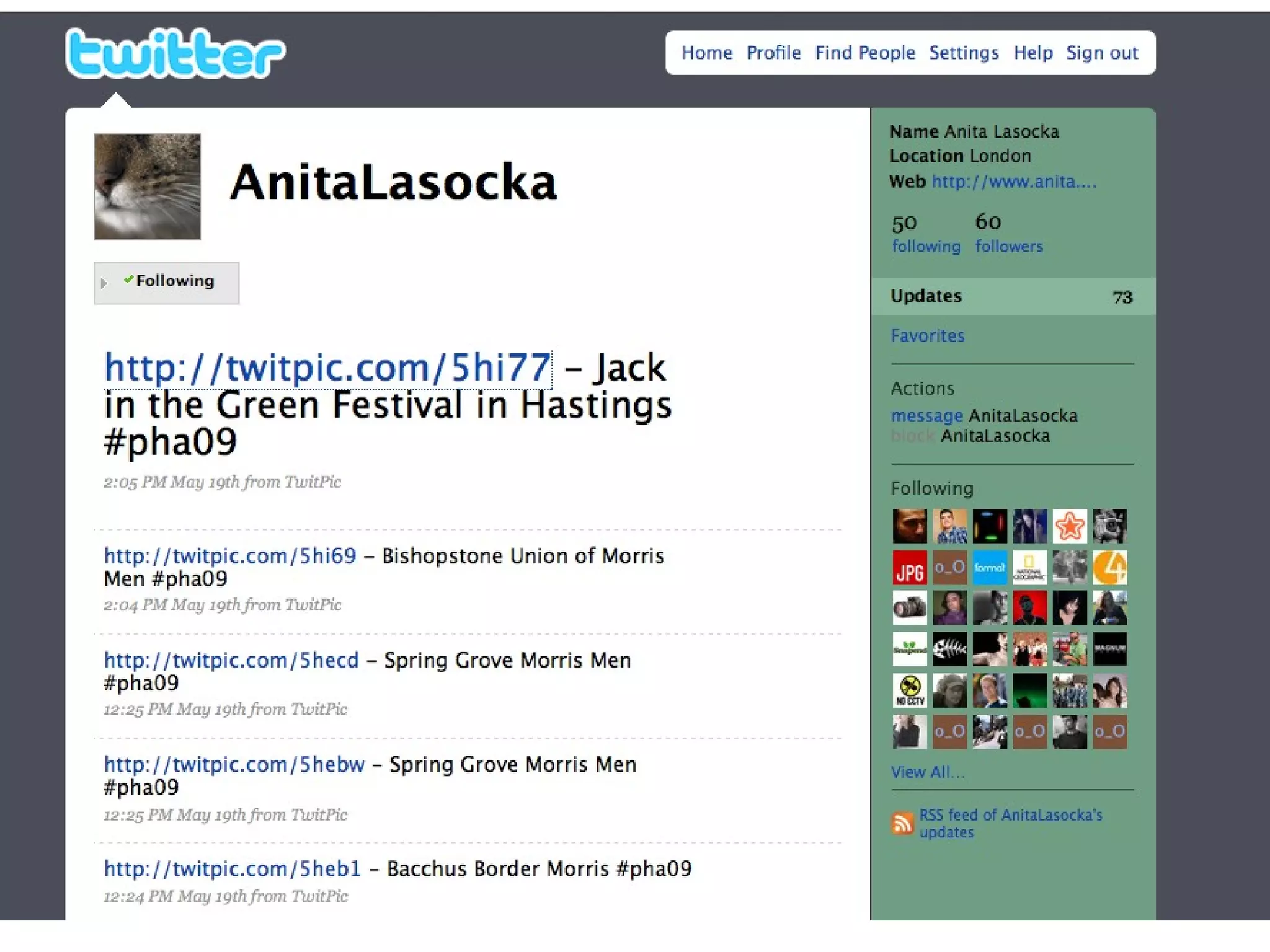
Twitter in the classroom of the read/write web: how I use it for work placement (level 2 digital photography) http://twitter.com/msdm
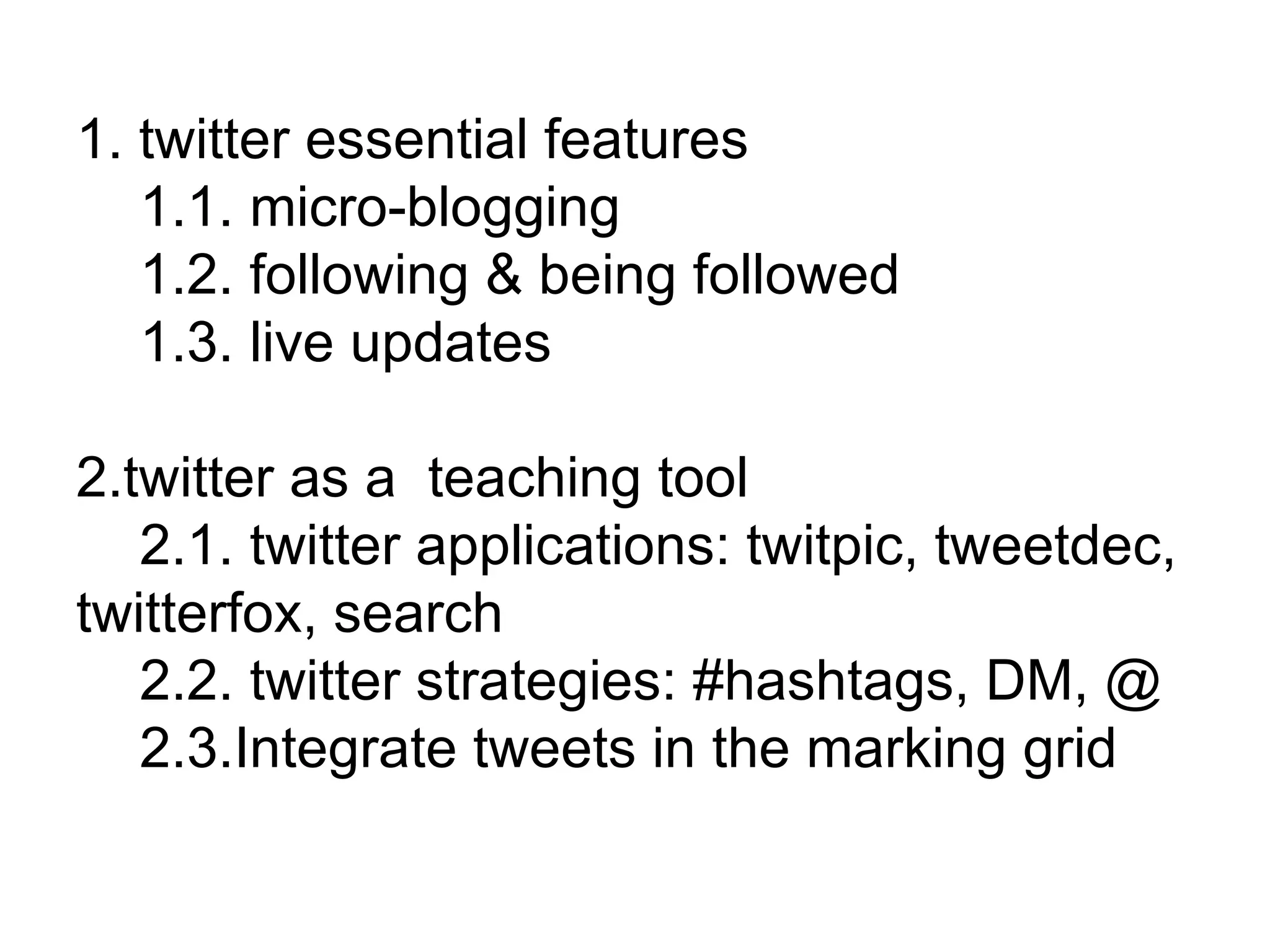
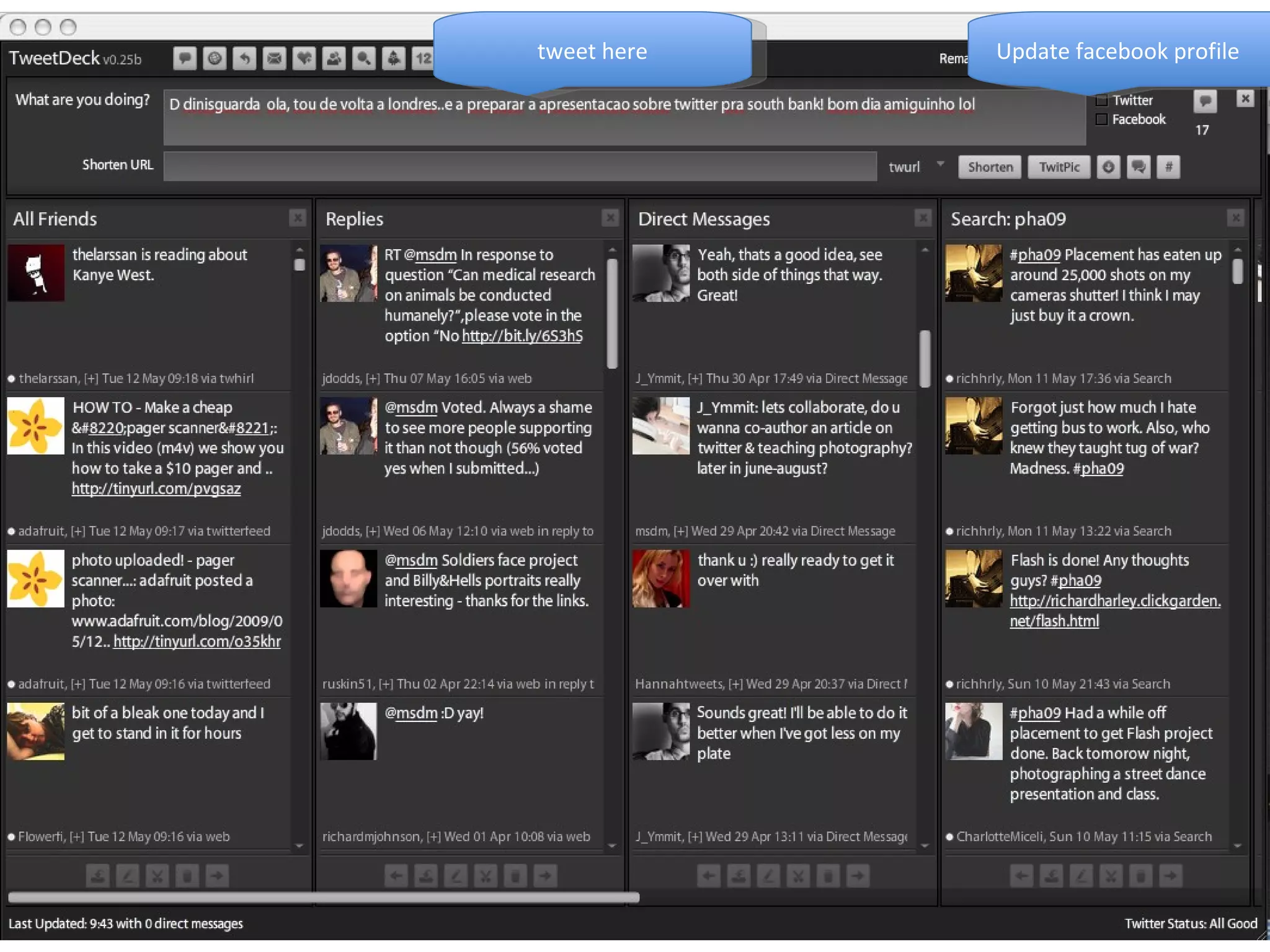
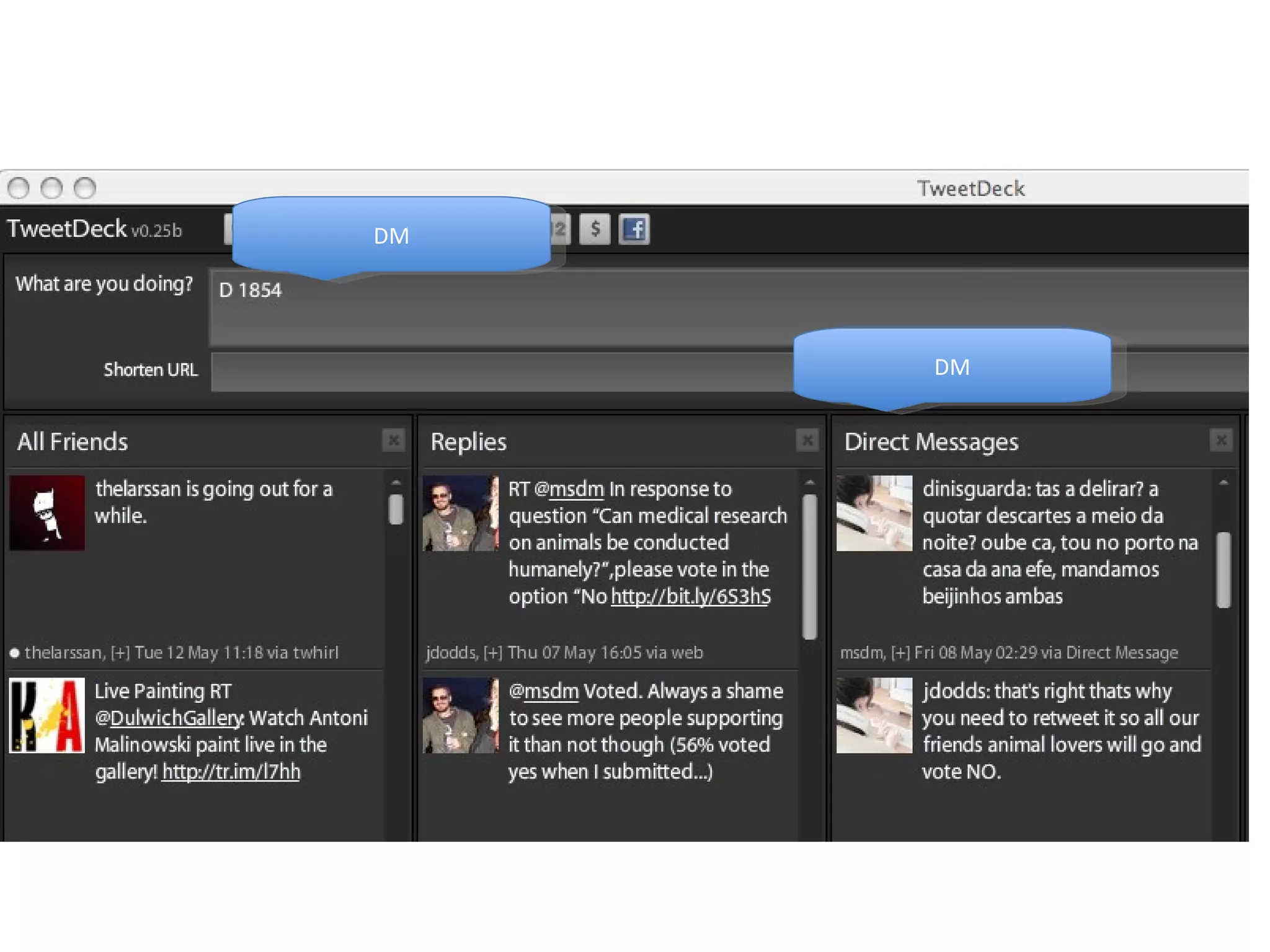
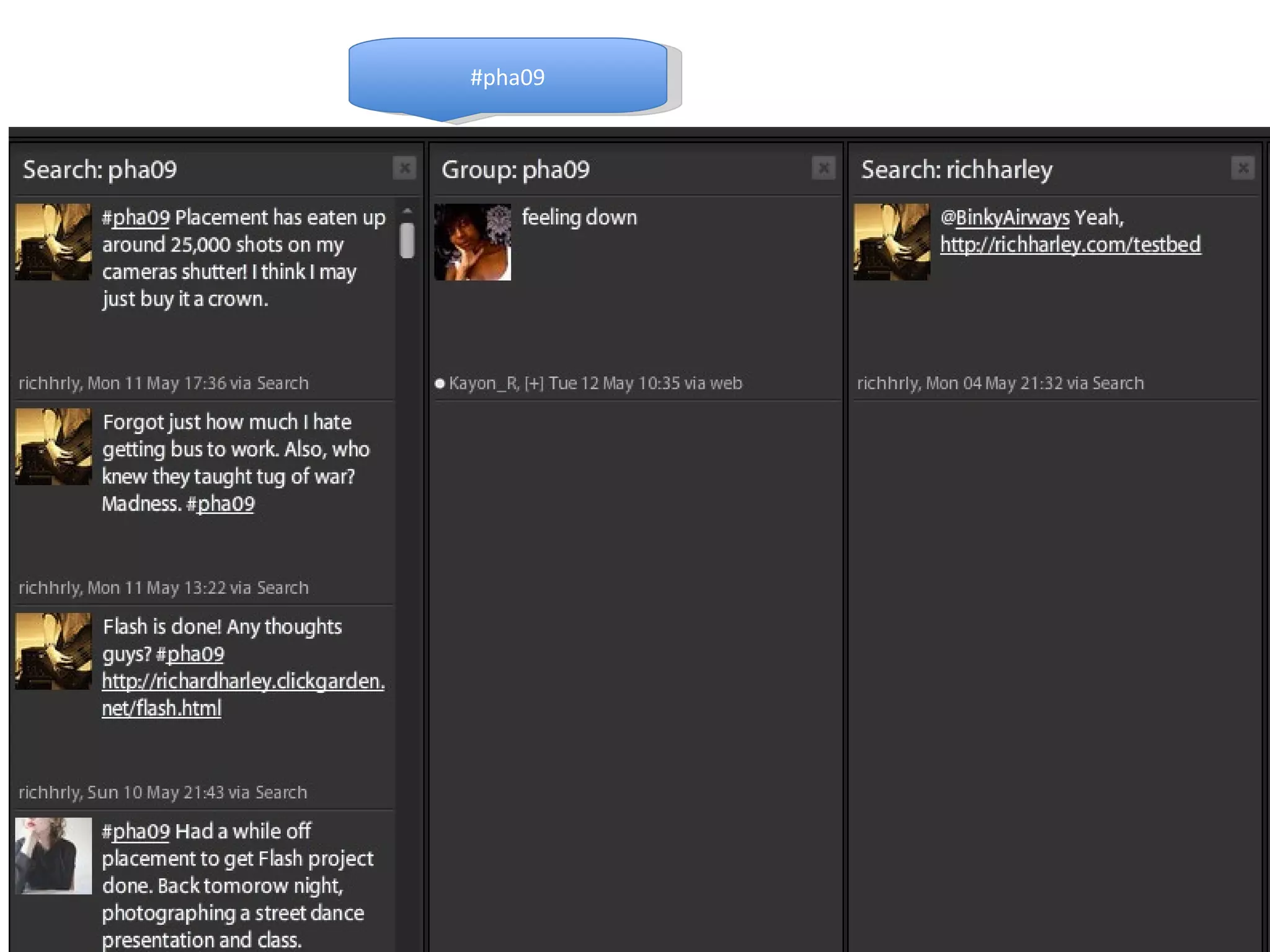
1. twitter essential features 1.1. micro-blogging 1.2. following & being followed 1.3. live updates 2.twitter as a  teaching tool 2.1. twitter applications: twitpic, tweetdec, twitterfox, search 2.2. twitter strategies: #hashtags, DM, @ 2.3.Integrate tweets in the marking grid
 
tweet here Update facebook profile
DM DM
#pha09


Thank you!

Open Education Networks

  • 1.
    Knowledge Unlimited: openeducation networks Takeaway Festival 2009 Dana Centre, Science Museum London
  • 2.
    open education networks:1- ‘bricks and mortars’ universities 2- open online learning communities 3- social learning networks/ education start ups 4-artist-led learning projects 5-the classroom of the read/write web
  • 3.
    Architectures of power: 1- ‘bricks and mortars’ universities
  • 4.
    Architectures of power:"bricks and mortar" universities University of London: Senate House Library 4 TH -7 th floors 1937, Style: Art Deco, Neo-Classical Architect: Charles Holden Inspiration for Orwell’s Nineteen Eighty-Four Ministry of Truth Architectures of power: 1- ‘bricks and mortars’ universities
  • 5.
    Architectures of power:"bricks and mortar" universities London South Bank University 1892 > Borough Polytechnic Institute 1992 > modern university 2002> keyworth Centre; style: regeneration-leader Architect: DBP
  • 6.
    Architectures of participation: 2- open online learning communities Wikiversity School of everything
  • 7.
    Architectures of participation:wiki http://en.wikiversity.org sister project: wikipedia, Wikimedia Foundation launched June 2006 SF offices   “ e-Learning/ online model“ Aims: create open educational community + open educational contents
  • 8.
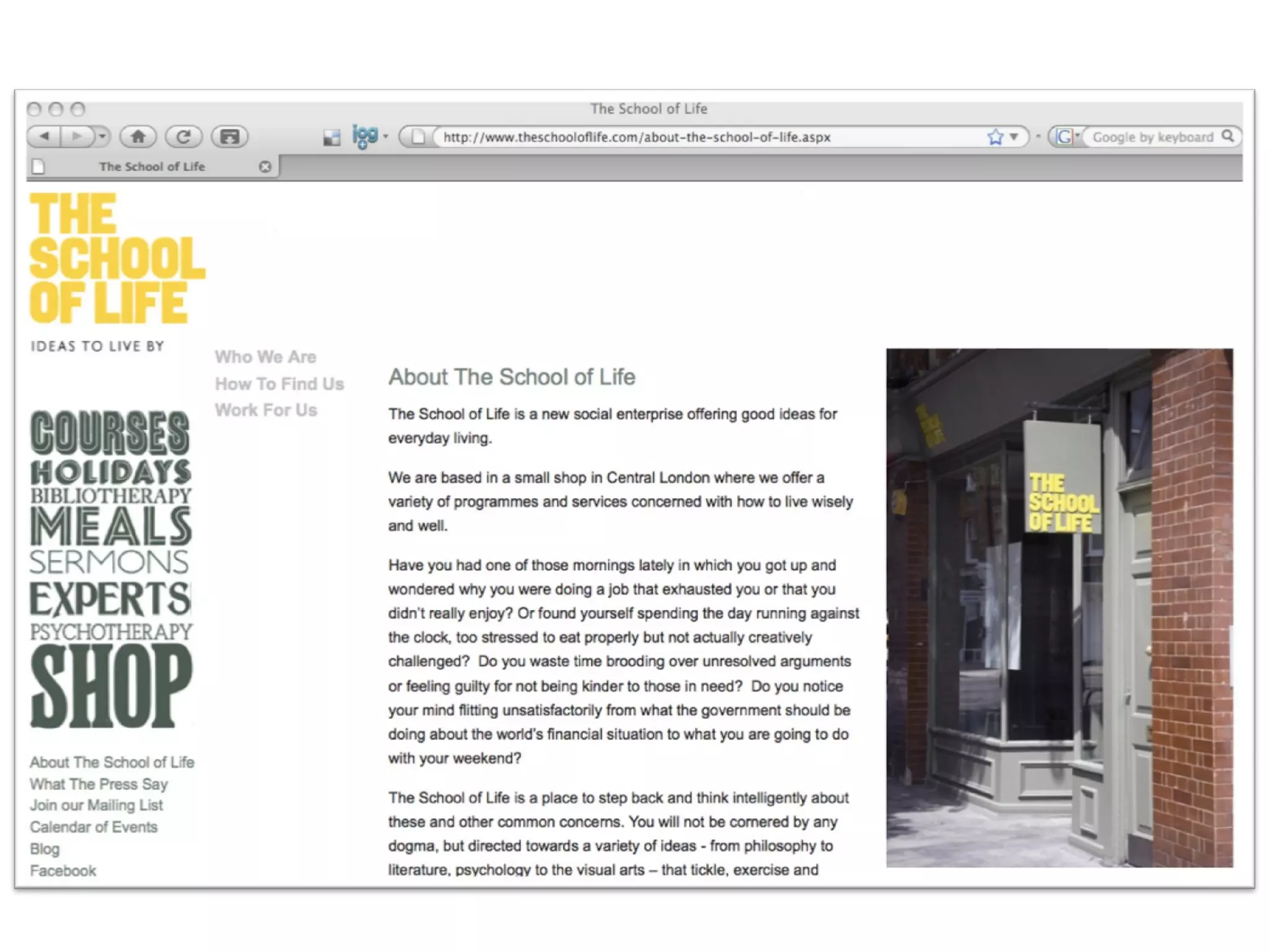
    Architectures of participation: 3- social learning networks/ education start ups School of everything School of everything 2006/2008 (website) Web start up (co-founders: Dougald Hine,Paul Miller et al) Bethnal green office “ a social learning network that connects people who can teach with people who want to learn.
  • 9.
    4 exemplary movements/institutions:1- the public library 2-the free software movement 3-free adult education/popular education 4-folk high school movements
  • 10.
    -small, cheap organisationsusing technology to develop new products and services are better at new ways of thinking about the structure of the education system. -free from the physical and personal load, they can focus on the end user rather than in the way things are organized now.
  • 11.
  • 12.
  • 13.
  • 14.
  • 15.
  • 16.
  • 17.
    Architectures of participation: 4-artist-led learning projects
  • 18.
  • 19.
  • 20.
  • 21.
  • 22.
  • 23.
  • 24.
  • 25.
  • 26.
  • 27.
  • 28.
  • 29.
  • 30.
  • 31.
  • 32.
  • 33.
    Architectures of participation: classroom of the read/write web
  • 34.
    Architectures of participation:classroom of the read/write web The academy is slowly entering this stage of "collaborative authorship". But Educators can assemble their own toolbox of freely available applications using the self-publishing technologies now abundant on the Internet; weblogs, wikis, aggregators, social bookmarking, photo-sharing, rubric-making tools and many others .
  • 35.
    Architectures of participation: 5- the classroom of the read/write web art of produsage 5Cs: creative collaborative critical combinatory comunicative
  • 36.
  • 37.
    Twitter in theclassroom of the read/write web: how I use it for work placement (level 2 digital photography) http://twitter.com/msdm
  • 38.
    1. twitter essentialfeatures 1.1. micro-blogging 1.2. following & being followed 1.3. live updates 2.twitter as a teaching tool 2.1. twitter applications: twitpic, tweetdec, twitterfox, search 2.2. twitter strategies: #hashtags, DM, @ 2.3.Integrate tweets in the marking grid
  • 39.
  • 40.
    tweet here Updatefacebook profile
  • 41.
  • 42.
  • 43.
  • 44.
  • 45.
  • 46.
  • 47.
  • 48.
  • 49.