







CaliVita® International presents


   Get more of the good fats!
         www.zivisastilom.com
In 2008
             an estimated
         17.3 million people
              died from
            cardiovascular
         diseases (CVDs) in
              the world!
*Source:http://www.who.int/mediacentre/factsheets/fs317/en/index.html
By 2030 almost
                                                                        23.6 million people
                                                                              will die
                                                                          from CVDs...


*Source:http://www.who.int/mediacentre/factsheets/fs317/en/index.html
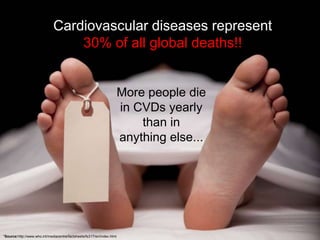
Cardiovascular diseases represent
                                  30% of all global deaths!!


                                                                        More people die
                                                                        in CVDs yearly
                                                                            than in
                                                                        anything else...


*Source:http://www.who.int/mediacentre/factsheets/fs317/en/index.html
What may lead to this?
Tobacco damage
blood vessels
and heart,
causes cancer
and lung disease,
harms babies
during pregnancy.

It takes the place of the oxygen in the
blood which your heart and brain need to
work properly.
If you eat few fruit or
vegetable, but too much
fat, sugar, salt and too much
food,
+
you are not doing enough
physical activity to burn it off,
=>
you may put on weight and
slowly become overweight,
=>
which may lead to
diabetes, high blood
pressure, and high blood fat
levels
(triglyceride, cholesterol, mainly
LDL cholesterol).
The good news!


                      80% of premature heart attacks
                       and strokes are preventable.


*Source:http://www.who.int/cardiovascular_diseases/resources/avoid_heart_attack_report/en/
Stop tobacco use!

        If a person stop using
        tobacco products the risk of
        heart attack and stroke can
        drop by half after one year.


                    *Source:http://www.who.int/features/qa/27/en/index.html
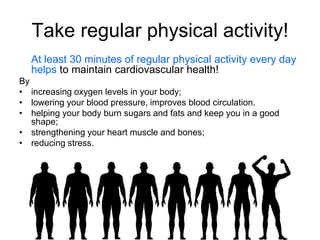
Take regular physical activity!
  At least 30 minutes of regular physical activity every day
  helps to maintain cardiovascular health!
By
• increasing oxygen levels in your body;
• lowering your blood pressure, improves blood circulation.
• helping your body burn sugars and fats and keep you in a good
   shape;
• strengthening your heart muscle and bones;
• reducing stress.
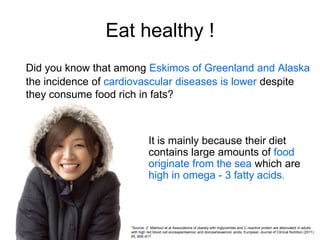
Eat healthy !
Did you know that among Eskimos of Greenland and Alaska
the incidence of cardiovascular diseases is lower despite
they consume food rich in fats?


                                It is mainly because their diet
                                contains large amounts of food
                                originate from the sea which are
                                high in omega - 3 fatty acids.


                     *Source: Z. Makhoul et.al Associations of obesity with triglycerides and C-reactive protein are attenuated in adults
                     with high red blood cell eicosapentaenoic and docosahexaenoic acids; European Journal of Clinical Nutrition (2011)
                     65, 808–817
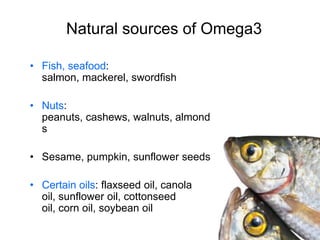
Natural sources of Omega3

• Fish, seafood:
  salmon, mackerel, swordfish

• Nuts:
  peanuts, cashews, walnuts, almond
  s

• Sesame, pumpkin, sunflower seeds

• Certain oils: flaxseed oil, canola
  oil, sunflower oil, cottonseed
  oil, corn oil, soybean oil
Don’t you like fish? Or you think
 you do not consume enough
       seafood and nuts?


      No Problem!
More and more people see the
solution in dietary supplements
containing omega-3.


                                                    The U.S. omega-3
                                                    ingredient market
                                                    was predicted to
                                                    grow 40% between
                                                    2010-2015.


                              *Source:Packaged Facts’ new Omega 3 Foods and Beverages in the U.S., 3rd Edition
Calivita® is introducing
          you
 the further developed
   Omega 3, the new
       OMEGA 3
   CONCENTRATE!
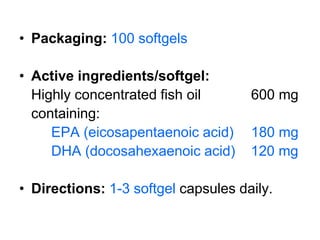
• Packaging: 100 softgels

• Active ingredients/softgel:
  Highly concentrated fish oil       600 mg
  containing:
     EPA (eicosapentaenoic acid)     180 mg
     DHA (docosahexaenoic acid)      120 mg

• Directions: 1-3 softgel capsules daily.
What is the NEW feature?
High omega 3 (EPA+DHA)
    per other oil ratio
      Now there is more of the “more valuable”
             oil (EPA+DHA)(50%) and
            less of the other fats (50%).

      Hereby it becomes also more digestible!
Using advanced high
      technology –
  purified by molecular
        distillation
In order to protect valuable fish oil from
  different harmful effects, it is purified
             with a very mild
   technology,            the so called
          molecular distillation!
Smaller capsules, easier to
         swallow

             This concentrated serving fits
            also to smaller capsules which
              are more easy to swallow,
             so children, pregnant women
            and the elderly may have more
                   courage to take it!
To whom?
For everyone to maintain healthy heart
functioning, normal blood pressure and blood lipids
                       level.
During pregnancy and for children
for normal development of nervous system.
For those who wants
      to support
   brain functions
          and
        vision.
For those living in a stressful way.
Available at
CaliVita® International


       www.zivisastilom.com

Omega 3 concentrate

  • 1.
    CaliVita® International presents Get more of the good fats! www.zivisastilom.com
  • 2.
    In 2008 an estimated 17.3 million people died from cardiovascular diseases (CVDs) in the world! *Source:http://www.who.int/mediacentre/factsheets/fs317/en/index.html
  • 3.
    By 2030 almost 23.6 million people will die from CVDs... *Source:http://www.who.int/mediacentre/factsheets/fs317/en/index.html
  • 4.
    Cardiovascular diseases represent 30% of all global deaths!! More people die in CVDs yearly than in anything else... *Source:http://www.who.int/mediacentre/factsheets/fs317/en/index.html
  • 5.
    What may leadto this?
  • 6.
    Tobacco damage blood vessels andheart, causes cancer and lung disease, harms babies during pregnancy. It takes the place of the oxygen in the blood which your heart and brain need to work properly.
  • 7.
    If you eatfew fruit or vegetable, but too much fat, sugar, salt and too much food, + you are not doing enough physical activity to burn it off, => you may put on weight and slowly become overweight, => which may lead to diabetes, high blood pressure, and high blood fat levels (triglyceride, cholesterol, mainly LDL cholesterol).
  • 8.
    The good news! 80% of premature heart attacks and strokes are preventable. *Source:http://www.who.int/cardiovascular_diseases/resources/avoid_heart_attack_report/en/
  • 9.
    Stop tobacco use! If a person stop using tobacco products the risk of heart attack and stroke can drop by half after one year. *Source:http://www.who.int/features/qa/27/en/index.html
  • 10.
    Take regular physicalactivity! At least 30 minutes of regular physical activity every day helps to maintain cardiovascular health! By • increasing oxygen levels in your body; • lowering your blood pressure, improves blood circulation. • helping your body burn sugars and fats and keep you in a good shape; • strengthening your heart muscle and bones; • reducing stress.
  • 11.
    Eat healthy ! Didyou know that among Eskimos of Greenland and Alaska the incidence of cardiovascular diseases is lower despite they consume food rich in fats? It is mainly because their diet contains large amounts of food originate from the sea which are high in omega - 3 fatty acids. *Source: Z. Makhoul et.al Associations of obesity with triglycerides and C-reactive protein are attenuated in adults with high red blood cell eicosapentaenoic and docosahexaenoic acids; European Journal of Clinical Nutrition (2011) 65, 808–817
  • 12.
    Natural sources ofOmega3 • Fish, seafood: salmon, mackerel, swordfish • Nuts: peanuts, cashews, walnuts, almond s • Sesame, pumpkin, sunflower seeds • Certain oils: flaxseed oil, canola oil, sunflower oil, cottonseed oil, corn oil, soybean oil
  • 13.
    Don’t you likefish? Or you think you do not consume enough seafood and nuts? No Problem!
  • 14.
    More and morepeople see the solution in dietary supplements containing omega-3. The U.S. omega-3 ingredient market was predicted to grow 40% between 2010-2015. *Source:Packaged Facts’ new Omega 3 Foods and Beverages in the U.S., 3rd Edition
  • 15.
    Calivita® is introducing you the further developed Omega 3, the new OMEGA 3 CONCENTRATE!
  • 16.
    • Packaging: 100softgels • Active ingredients/softgel: Highly concentrated fish oil 600 mg containing: EPA (eicosapentaenoic acid) 180 mg DHA (docosahexaenoic acid) 120 mg • Directions: 1-3 softgel capsules daily.
  • 17.
    What is theNEW feature?
  • 18.
    High omega 3(EPA+DHA) per other oil ratio Now there is more of the “more valuable” oil (EPA+DHA)(50%) and less of the other fats (50%). Hereby it becomes also more digestible!
  • 19.
    Using advanced high technology – purified by molecular distillation In order to protect valuable fish oil from different harmful effects, it is purified with a very mild technology, the so called molecular distillation!
  • 20.
    Smaller capsules, easierto swallow This concentrated serving fits also to smaller capsules which are more easy to swallow, so children, pregnant women and the elderly may have more courage to take it!
  • 21.
  • 22.
    For everyone tomaintain healthy heart functioning, normal blood pressure and blood lipids level.
  • 23.
    During pregnancy andfor children for normal development of nervous system.
  • 24.
    For those whowants to support brain functions and vision.
  • 25.
    For those livingin a stressful way.
  • 26.