

Agricultural Extension and Rural
Advisory Services Policies
review in (East) Africa and their
alignment to the CAADP
framework
Oladele O I
Professor of Agricultural Extension
South Africa
Introduction
Policy has been generally and variously defined as :
a course or principle of action adopted or proposed by an organization
or individual;
a principle or rule to guide decisions and achieve rational outcomes,
a statement of intent, framework for operations and practices, and
legal framework (Oladele 2011, 2012, GFRAS 2012, Suleiman and Hall
2005).
.Oladele (2012) stated the dearth of extension policy in sub-Saharan
African (SSA) countries
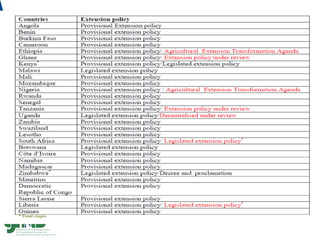
Different forms of extension policy in sub-Saharan African countries
are provisional extension policies, decrees and proclamation and
legislated extension policy,
GFRAS through the Nairobi 2011 and Manila 2012 declarations and
other alliances as the frontiers of knowledge in RAS process have
gained the attention of the research and development world on the
need for RAS policy
Introduction
Policy beliefs have been neglected in the literature
on agricultural policy-making
Donors and domestic policy makers hold
fundamentally different policy beliefs in Ghana and
Uganda (Mockshell and Birner 2015)
Globally, the advocate and proponents of RAS policy
are stressing the need for many governments and
organizations to move from “opinion-based policy”
towards “evidence-based policy.
This is mainly due to the fact that the policy-making
process is inherently political and, that the
processes through which evidence translates into
policy options often fails to meet required quality
Introduction
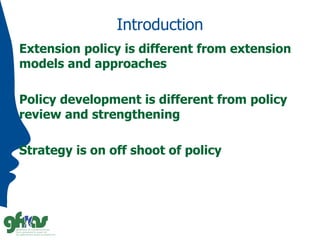
Extension policy is different from extension
models and approaches
Policy development is different from policy
review and strengthening
Strategy is on off shoot of policy
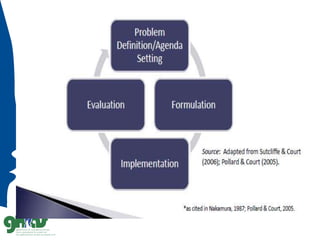
Policy
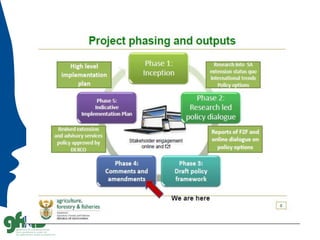
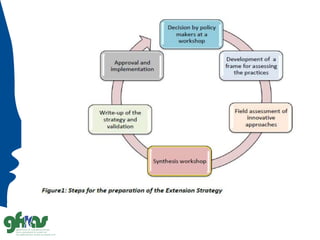
formulation
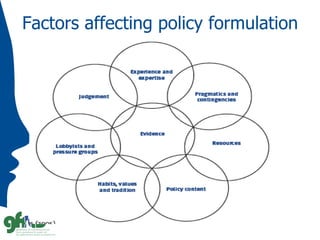
Factors affecting policy formulation
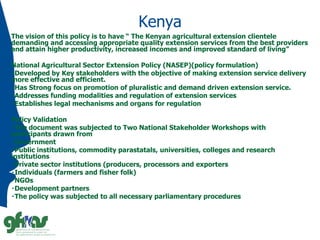
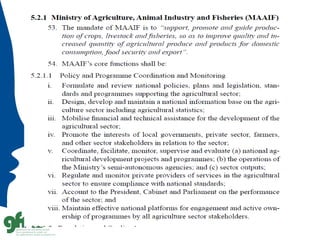
Kenya
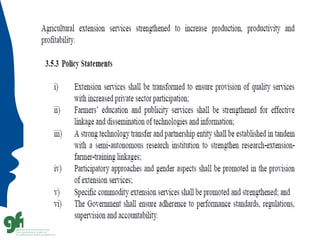
The vision of this policy is to have “ The Kenyan agricultural extension clientele
demanding and accessing appropriate quality extension services from the best providers
and attain higher productivity, increased incomes and improved standard of living”
National Agricultural Sector Extension Policy (NASEP)(policy formulation)
Developed by Key stakeholders with the objective of making extension service delivery
more effective and efficient.
Has Strong focus on promotion of pluralistic and demand driven extension service.
Addresses funding modalities and regulation of extension services
Establishes legal mechanisms and organs for regulation
Policy Validation
The document was subjected to Two National Stakeholder Workshops with
participants drawn from
Government
Public institutions, commodity parastatals, universities, colleges and research
institutions
Private sector institutions (producers, processors and exporters
Individuals (farmers and fisher folk)
NGOs
Development partners
The policy was subjected to all necessary parliamentary procedures
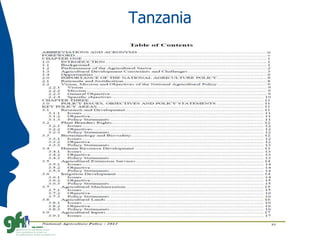
Tanzania
Uganda
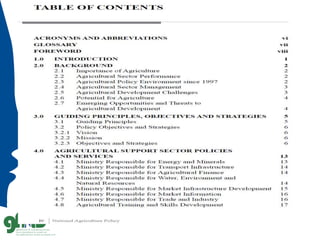
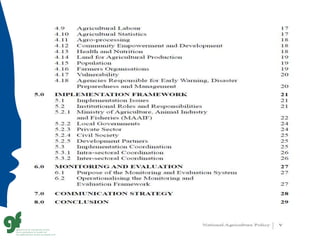
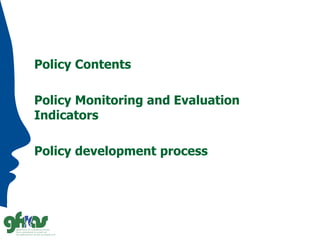
Policy Contents
Policy Monitoring and Evaluation
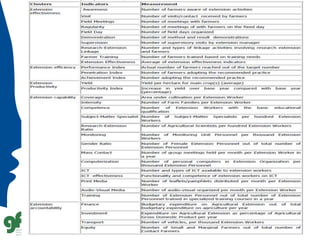
Indicators
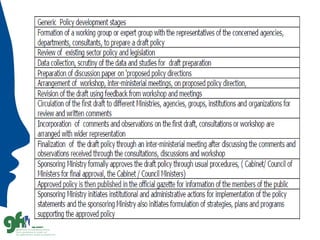
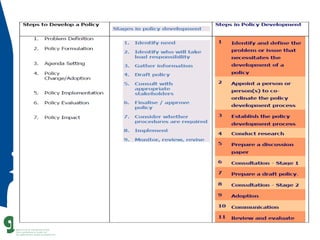
Policy development process
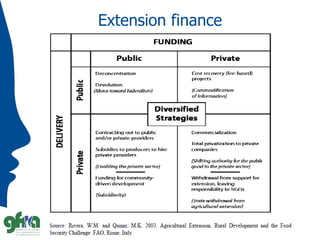
Extension finance
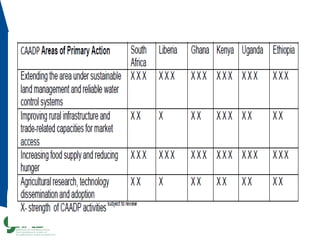
Policy alignment to
CAADP
Thank you for your
attention
30

AGRICULTURAL EXTENSION AND RAS POLICIES REVIEW

  • 1.
    Agricultural Extension andRural Advisory Services Policies review in (East) Africa and their alignment to the CAADP framework Oladele O I Professor of Agricultural Extension South Africa
  • 2.
    Introduction Policy has beengenerally and variously defined as : a course or principle of action adopted or proposed by an organization or individual; a principle or rule to guide decisions and achieve rational outcomes, a statement of intent, framework for operations and practices, and legal framework (Oladele 2011, 2012, GFRAS 2012, Suleiman and Hall 2005). .Oladele (2012) stated the dearth of extension policy in sub-Saharan African (SSA) countries Different forms of extension policy in sub-Saharan African countries are provisional extension policies, decrees and proclamation and legislated extension policy, GFRAS through the Nairobi 2011 and Manila 2012 declarations and other alliances as the frontiers of knowledge in RAS process have gained the attention of the research and development world on the need for RAS policy
  • 3.
    Introduction Policy beliefs havebeen neglected in the literature on agricultural policy-making Donors and domestic policy makers hold fundamentally different policy beliefs in Ghana and Uganda (Mockshell and Birner 2015) Globally, the advocate and proponents of RAS policy are stressing the need for many governments and organizations to move from “opinion-based policy” towards “evidence-based policy. This is mainly due to the fact that the policy-making process is inherently political and, that the processes through which evidence translates into policy options often fails to meet required quality
  • 4.
    Introduction Extension policy isdifferent from extension models and approaches Policy development is different from policy review and strengthening Strategy is on off shoot of policy
  • 7.
  • 8.
  • 14.
    Kenya The vision ofthis policy is to have “ The Kenyan agricultural extension clientele demanding and accessing appropriate quality extension services from the best providers and attain higher productivity, increased incomes and improved standard of living” National Agricultural Sector Extension Policy (NASEP)(policy formulation) Developed by Key stakeholders with the objective of making extension service delivery more effective and efficient. Has Strong focus on promotion of pluralistic and demand driven extension service. Addresses funding modalities and regulation of extension services Establishes legal mechanisms and organs for regulation Policy Validation The document was subjected to Two National Stakeholder Workshops with participants drawn from Government Public institutions, commodity parastatals, universities, colleges and research institutions Private sector institutions (producers, processors and exporters Individuals (farmers and fisher folk) NGOs Development partners The policy was subjected to all necessary parliamentary procedures
  • 15.
  • 19.
  • 24.
    Policy Contents Policy Monitoringand Evaluation Indicators Policy development process
  • 26.
  • 27.
  • 30.
    Thank you foryour attention 30