Open Education


                          A brief introduction


By: Dr. Andreas Meiszner, United Nations University UNU-MERIT – The Netherlands
   Workshop on “The Why and How of Open Education: Concepts and Practices”
                    OKCon 2011, June 31st – Berlin, Germany
Traditional formal class based Higher Education


                            This is definitely
                            NOT Open Education
                            ---
                            OK, it might be Open in the
                            sense that students can exercise
                            their right of Free Speech
                            (and accept bad grades in return)
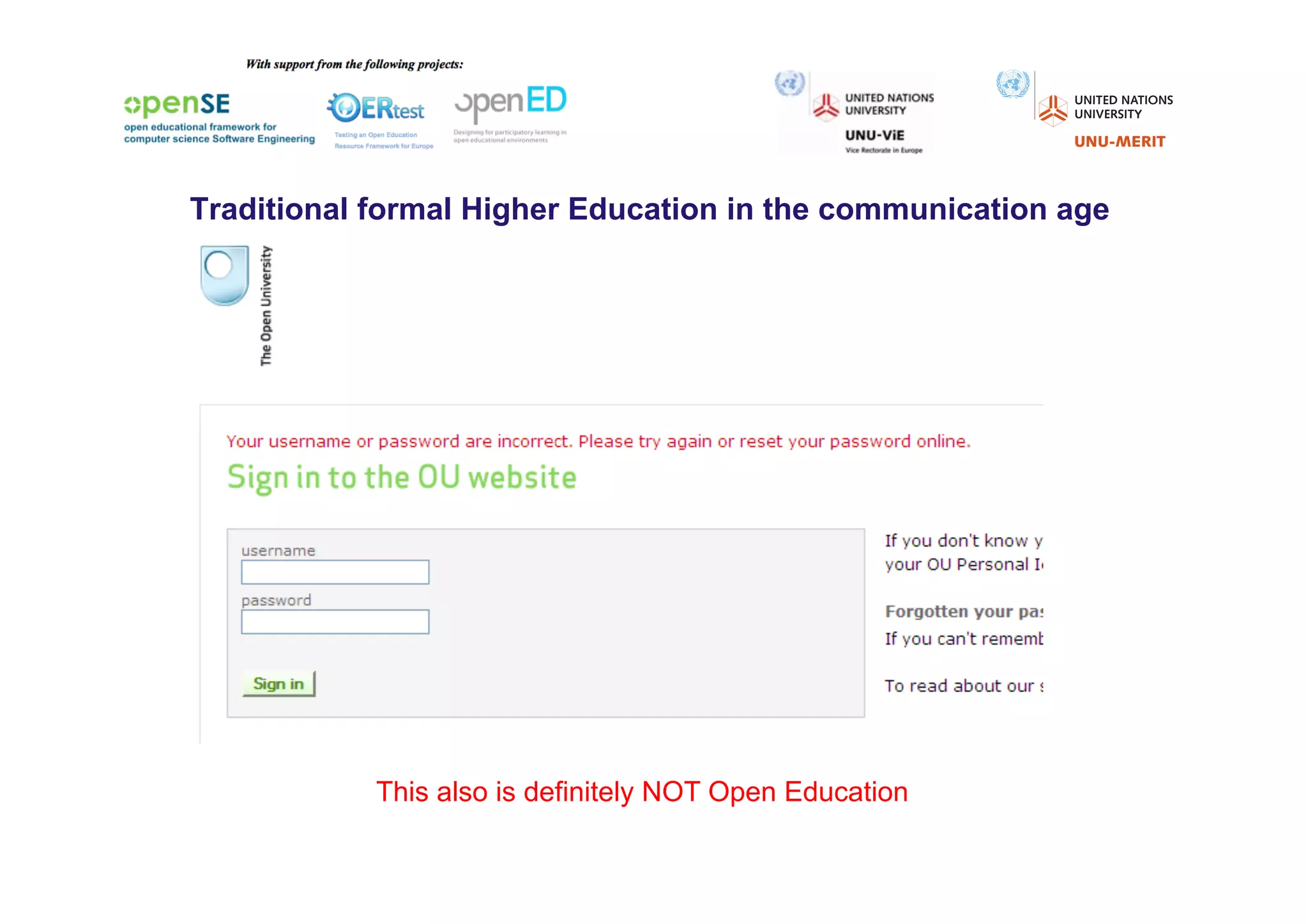
Traditional formal Higher Education in the communication age


            This also is definitely NOT Open Education
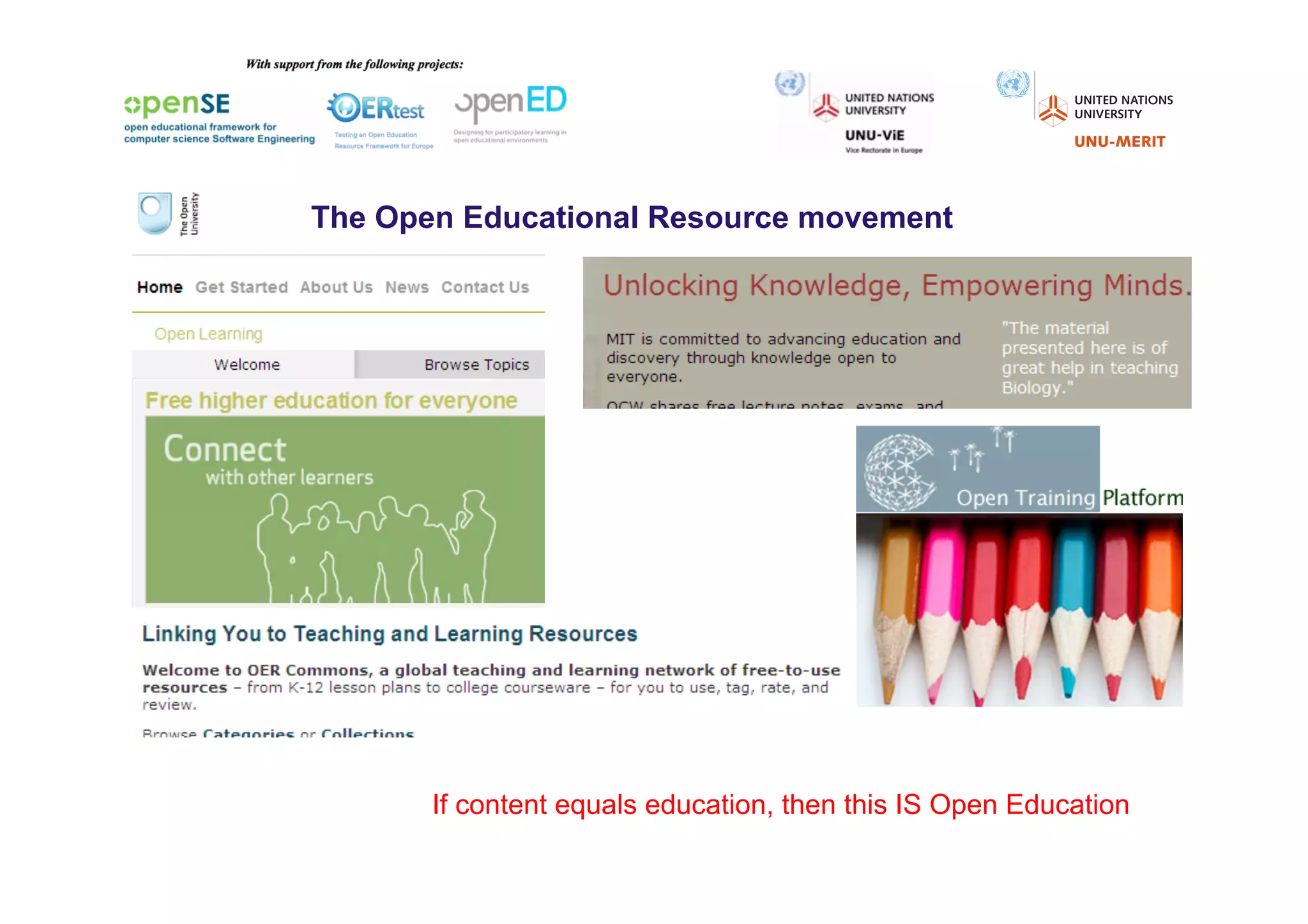
The Open Educational Resource movement


       If content equals education, then this IS Open Education
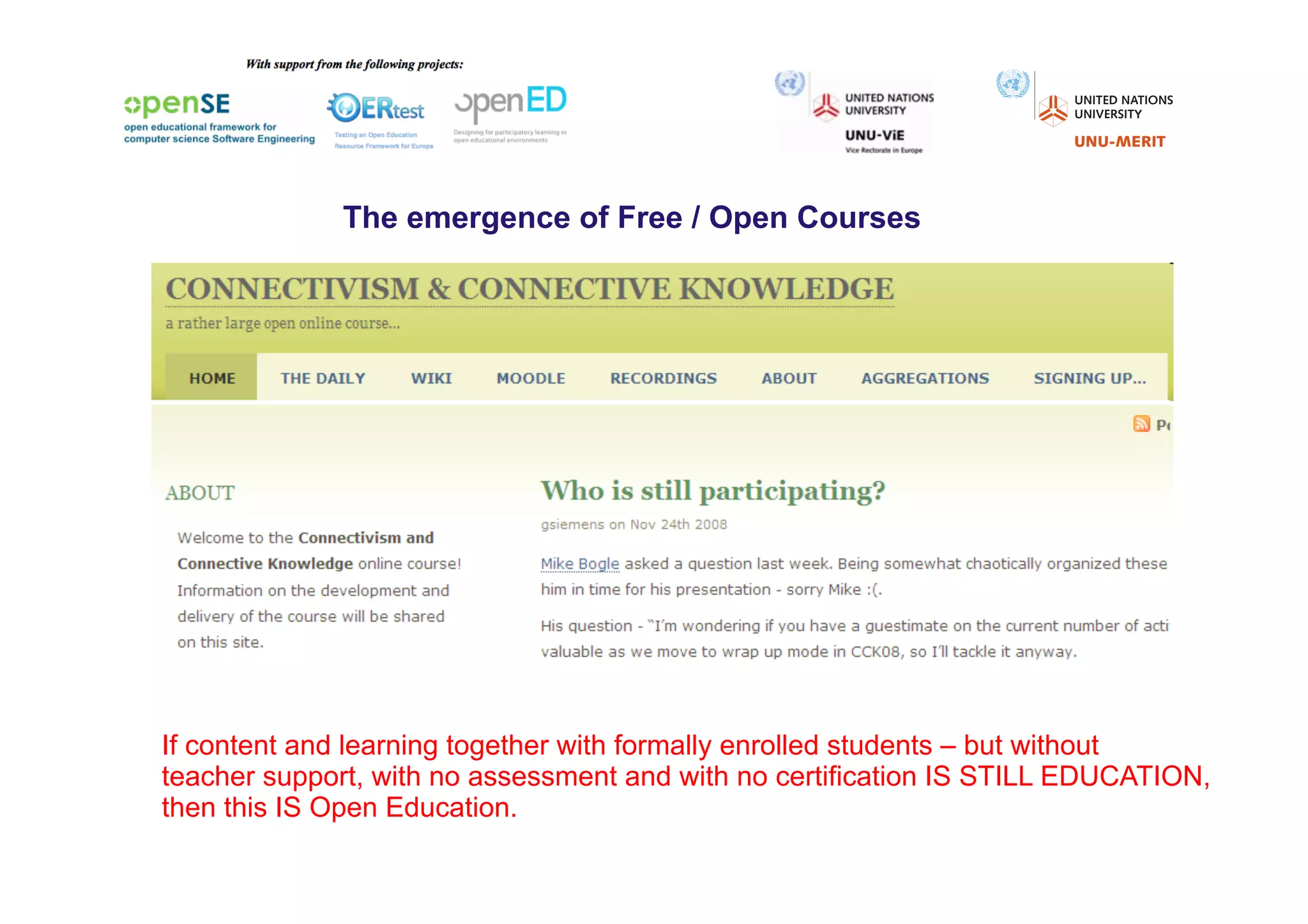
The emergence of Free / Open Courses


If content and learning together with formally enrolled students – but without
teacher support, with no assessment and with no certification IS STILL EDUCATION,
then this IS Open Education.
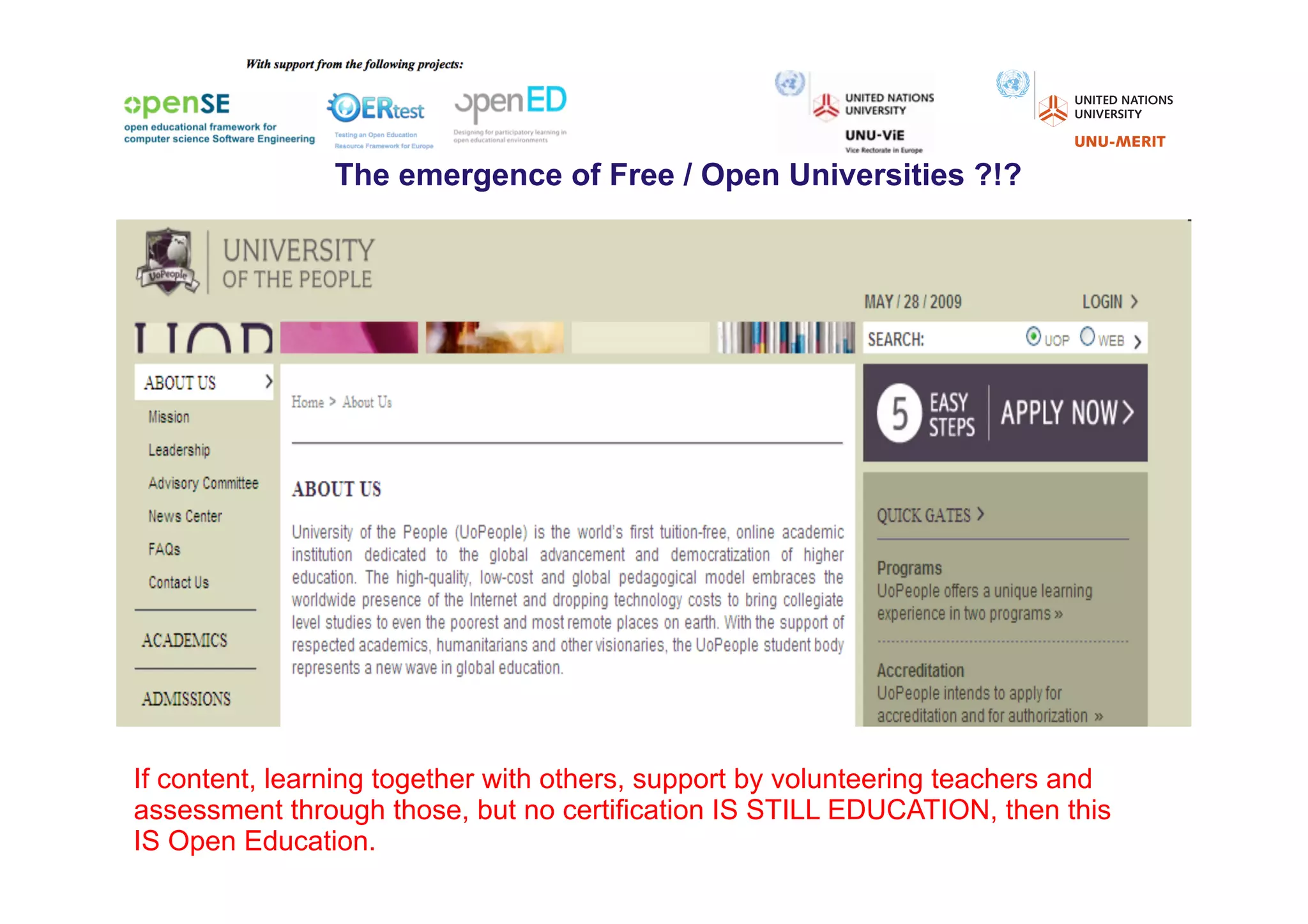
The emergence of Free / Open Universities ?!?


If content, learning together with others, support by volunteering teachers and
assessment through those, but no certification IS STILL EDUCATION, then this
IS Open Education.
•  How we define Open Education depends on how we define Education.

•  In many societies Education equals to obtaining Formal Degrees or
Certifications.

•  If Formal Degrees or Certifications are indeed the relevant criterion that
defines Education, then Open Education pretty much the same then Closed
traditional formal education as we know it – except that it is not “Closed”,
but “Open”.

•  Luckily there are more shades then “black” and “white”, and the same
likely holds valid for Education.
Thank you for your attention!


   Dr. Andreas Meiszner,
  United Nations University
        UNU-MERIT
  meiszner@merit.unu.edu

The Why and How of Open Education: Introduction

  • 1.
    Open Education A brief introduction By: Dr. Andreas Meiszner, United Nations University UNU-MERIT – The Netherlands Workshop on “The Why and How of Open Education: Concepts and Practices” OKCon 2011, June 31st – Berlin, Germany
  • 4.
    Traditional formal classbased Higher Education This is definitely NOT Open Education --- OK, it might be Open in the sense that students can exercise their right of Free Speech (and accept bad grades in return)
  • 5.
    Traditional formal HigherEducation in the communication age This also is definitely NOT Open Education
  • 6.
    The Open EducationalResource movement If content equals education, then this IS Open Education
  • 7.
    The emergence ofFree / Open Courses If content and learning together with formally enrolled students – but without teacher support, with no assessment and with no certification IS STILL EDUCATION, then this IS Open Education.
  • 8.
    The emergence ofFree / Open Universities ?!? If content, learning together with others, support by volunteering teachers and assessment through those, but no certification IS STILL EDUCATION, then this IS Open Education.
  • 9.
    •  How wedefine Open Education depends on how we define Education. •  In many societies Education equals to obtaining Formal Degrees or Certifications. •  If Formal Degrees or Certifications are indeed the relevant criterion that defines Education, then Open Education pretty much the same then Closed traditional formal education as we know it – except that it is not “Closed”, but “Open”. •  Luckily there are more shades then “black” and “white”, and the same likely holds valid for Education.
  • 11.
    Thank you foryour attention! Dr. Andreas Meiszner, United Nations University UNU-MERIT meiszner@merit.unu.edu