


“If You’re Happy and You Know It,GO TO WORK!”A Guide to Promoting Morale in Your OfficeMarissa Saenz, Ashley RansomTexas State University-San Marcos
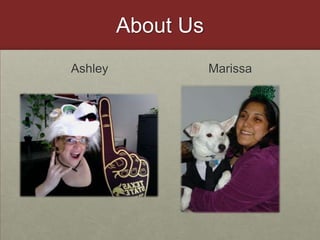
About UsAshleyMarissa
Texas State University – San MarcosCollege of Education9 Academic Advisors, 1 Administrative Assistant.Advisors rotate into a satellite office on the main campus. One advisor at the Round Rock Higher Education Center.University College6 Academic Advisors, 1 Administrative Assistant. All advisors are located in one location.
OutlineIntroductionWhat is an Office Culture?How do we influence an Office Culture?MotivationExpectationsConflictHow do we create a Culture of Recognition?RecognitionRewardsBoosting MoraleConclusionQuestions
Office CultureWhat is culture?The behaviors and beliefs characteristic of a particular ______ group.Culture. (n.d.). Dictionary.com Unabridged. Retrieved February 26, 2011, from Dictionary.com website: http://dictionary.reference.com/     browse/culture
Culture auditActivity
Individual – Team – Office CultureWhy is understanding our own office culture important?Culture helps us understand core values and behaviors of a group; it helps us maintain a sense of direction as a member of the groupSenn, L., & Hart, J. (2006). Winning teams-winning cultures. Long Beach, CA: Leadership Press.
How do we influence our office culture?MotivationExpectationsConflict
How do we build a culture of recognition?RecognitionActivitiesRewardsPrograms
Why should we build a culture of recognition?To improve:MoraleMotivationTeamworkRetentionQualityProductivity
Job SatisfactionActivity
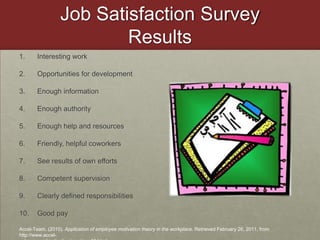
Job Satisfaction Survey ResultsInteresting workOpportunities for developmentEnough informationEnough authorityEnough help and resources6.	Friendly, helpful coworkersSee results of own effortsCompetent supervisionClearly defined responsibilitiesGood payAccel-Team. (2010). Application of employee motivation theory in the workplace. Retrieved February 26, 2011, from http://www.accel-    team.com/motivation/practice_01.html
MotivationWhat is Motivation?The desire to do; interest or drive; incentive or inducement. Theory of MotivationTheory HandoutMotivation. (n.d.). Dictionary.com Unabridged. Retrieved February 26, 2011, from Dictionary.com website: http://dictionary.reference.com/browse/motivation
Motivation: IndividualBreak into 4 groups by using the numbers on your nametag. Intrinsic Individual Motivation(Ex: Helping Students…)Extrinsic Individual Motivation(Ex: Compliments, Recognition, Rewards…)
Motivation:TeamStay in your groups: Intrinsic Team Motivation(Ex: Mission, Vision, Goals…)Extrinsic Team Motivation(Ex: Model Advising Center, Recognition, Rewards…)
Motivation BasicsMyths about Employee Motivation & Tips for Improving Employee Motivation.Handout in folder.
Expectations: TeamWrite on the Blue Paw index card:Think about your office (yourself and the other members of your team) from the “stakeholders” (students, parents, department, Deans, etc.) point of view. What are their expectations from your office?
Expectations: IndividualWrite on theOrange Paw index card:On one side, think about your expectations of:Your jobOffice/team members. On the other side of the card, think about what others expectations may be for you.
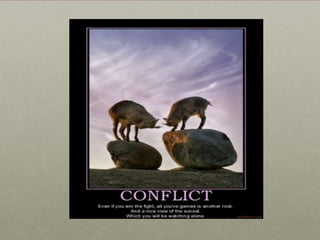
cONFLICTWhat is Conflict?Discord of action, feeling, or effect; antagonism or opposition, as of interests or principles: a conflict of ideas.Incompatibility or interference, as of one idea, desire, event, or activity with another: a conflict in the schedule.Communication Breakdown…*Conflict. (n.d.). Dictionary.com Unabridged. Retrieved February 26, 2011, from Dictionary.com website: http://dictionary.reference.com/browse/conflict*Led Zeppelin. (1969).Led Zeppelin.
One Question:Round 1Activity:What do you like about your job?
One question:round 2Activity:How can understanding conflict help to boost morale in your office?
Discussion Questions:What did you notice during the activity?Did you improve your time during the second round?What did you learn during the first round that allowed for you to do that?Do we usually take the time to ask questions when we’re in conflict with another? Why or why not?How might asking questions change the course of the conflict?
RecognitionNot just acknowledging the work, it is also about recognizing the person. What is currently done at Texas State:College Newsletter: Gives an update on what everyone is currently doing/has done. Student survey results. The “Cone” of recognition. Monthly/Birthday PotlucksIndividual Birthday Celebrations
RewardsFormal programs already in place:Advisor of the Month. Certificates of Appreciation.Professional DevelopmentTravelMerit raise/Bonuses/Raise – Any monetary reward.
Office MoraleWhat is morale?The confidence, enthusiasm, and discipline of a person or group at a particular time.Activity: Recognition – A Self-Diagnostic ChecklistMorale. (n.d.). Dictionary.com Unabridged. Retrieved February 26, 2011, from Dictionary.com website: http://dictionary.reference.com/browse/morale
ConclusionCommunicateIdentify what motivates us/each otherEstablish clearly defined expectationsAcknowledge conflictRecognize each other Reward accomplishments
Happy Advisors!
Questions?

"If You're Happy and You Know It, GO TO WORK!" A Guide to Promoting Morale in Your Office

  • 1.
    “If You’re Happyand You Know It,GO TO WORK!”A Guide to Promoting Morale in Your OfficeMarissa Saenz, Ashley RansomTexas State University-San Marcos
  • 2.
  • 3.
    Texas State University– San MarcosCollege of Education9 Academic Advisors, 1 Administrative Assistant.Advisors rotate into a satellite office on the main campus. One advisor at the Round Rock Higher Education Center.University College6 Academic Advisors, 1 Administrative Assistant. All advisors are located in one location.
  • 4.
    OutlineIntroductionWhat is anOffice Culture?How do we influence an Office Culture?MotivationExpectationsConflictHow do we create a Culture of Recognition?RecognitionRewardsBoosting MoraleConclusionQuestions
  • 5.
    Office CultureWhat isculture?The behaviors and beliefs characteristic of a particular ______ group.Culture. (n.d.). Dictionary.com Unabridged. Retrieved February 26, 2011, from Dictionary.com website: http://dictionary.reference.com/ browse/culture
  • 6.
  • 7.
    Individual – Team– Office CultureWhy is understanding our own office culture important?Culture helps us understand core values and behaviors of a group; it helps us maintain a sense of direction as a member of the groupSenn, L., & Hart, J. (2006). Winning teams-winning cultures. Long Beach, CA: Leadership Press.
  • 8.
    How do weinfluence our office culture?MotivationExpectationsConflict
  • 9.
    How do webuild a culture of recognition?RecognitionActivitiesRewardsPrograms
  • 10.
    Why should webuild a culture of recognition?To improve:MoraleMotivationTeamworkRetentionQualityProductivity
  • 11.
  • 12.
    Job Satisfaction SurveyResultsInteresting workOpportunities for developmentEnough informationEnough authorityEnough help and resources6. Friendly, helpful coworkersSee results of own effortsCompetent supervisionClearly defined responsibilitiesGood payAccel-Team. (2010). Application of employee motivation theory in the workplace. Retrieved February 26, 2011, from http://www.accel- team.com/motivation/practice_01.html
  • 14.
    MotivationWhat is Motivation?Thedesire to do; interest or drive; incentive or inducement. Theory of MotivationTheory HandoutMotivation. (n.d.). Dictionary.com Unabridged. Retrieved February 26, 2011, from Dictionary.com website: http://dictionary.reference.com/browse/motivation
  • 15.
    Motivation: IndividualBreak into4 groups by using the numbers on your nametag. Intrinsic Individual Motivation(Ex: Helping Students…)Extrinsic Individual Motivation(Ex: Compliments, Recognition, Rewards…)
  • 16.
    Motivation:TeamStay in yourgroups: Intrinsic Team Motivation(Ex: Mission, Vision, Goals…)Extrinsic Team Motivation(Ex: Model Advising Center, Recognition, Rewards…)
  • 17.
    Motivation BasicsMyths aboutEmployee Motivation & Tips for Improving Employee Motivation.Handout in folder.
  • 19.
    Expectations: TeamWrite onthe Blue Paw index card:Think about your office (yourself and the other members of your team) from the “stakeholders” (students, parents, department, Deans, etc.) point of view. What are their expectations from your office?
  • 20.
    Expectations: IndividualWrite ontheOrange Paw index card:On one side, think about your expectations of:Your jobOffice/team members. On the other side of the card, think about what others expectations may be for you.
  • 22.
    cONFLICTWhat is Conflict?Discordof action, feeling, or effect; antagonism or opposition, as of interests or principles: a conflict of ideas.Incompatibility or interference, as of one idea, desire, event, or activity with another: a conflict in the schedule.Communication Breakdown…*Conflict. (n.d.). Dictionary.com Unabridged. Retrieved February 26, 2011, from Dictionary.com website: http://dictionary.reference.com/browse/conflict*Led Zeppelin. (1969).Led Zeppelin.
  • 23.
    One Question:Round 1Activity:Whatdo you like about your job?
  • 24.
    One question:round 2Activity:Howcan understanding conflict help to boost morale in your office?
  • 25.
    Discussion Questions:What didyou notice during the activity?Did you improve your time during the second round?What did you learn during the first round that allowed for you to do that?Do we usually take the time to ask questions when we’re in conflict with another? Why or why not?How might asking questions change the course of the conflict?
  • 27.
    RecognitionNot just acknowledgingthe work, it is also about recognizing the person. What is currently done at Texas State:College Newsletter: Gives an update on what everyone is currently doing/has done. Student survey results. The “Cone” of recognition. Monthly/Birthday PotlucksIndividual Birthday Celebrations
  • 28.
    RewardsFormal programs alreadyin place:Advisor of the Month. Certificates of Appreciation.Professional DevelopmentTravelMerit raise/Bonuses/Raise – Any monetary reward.
  • 29.
    Office MoraleWhat ismorale?The confidence, enthusiasm, and discipline of a person or group at a particular time.Activity: Recognition – A Self-Diagnostic ChecklistMorale. (n.d.). Dictionary.com Unabridged. Retrieved February 26, 2011, from Dictionary.com website: http://dictionary.reference.com/browse/morale
  • 30.
    ConclusionCommunicateIdentify what motivatesus/each otherEstablish clearly defined expectationsAcknowledge conflictRecognize each other Reward accomplishments
  • 31.
  • 32.

Editor's Notes

  • #6 disclosure
  • #7 aspects of culture: Visible (Artifacts, Behaviors) and Invisible (Values, Attitudes, Assumptions, Beliefs)
  • #9 Individual and team
  • #10 Through recognition activities and programs (that support strategic goals)Recognition-acknowledgement, appreciation
  • #11 Addresses the human element
  • #12 Job
  • #14 Define motivation – the reason(s) one has for acting or behaving in a particular way; briefly review theory (handout)
  • #16 Intrinsic - Ex. helping students; Extrinsic - Ex. compliments, recognition, reward
  • #17 Intrinsic – Ex. Mission, vision, goals; Extrinsic – model advising center, recognition, reward
  • #21 Respective roles as part of a team
  • #27 Tie into negotiation
  • #28 2 levels: the individual as a person, the individual as a contributing member of the team