By Shahna Pinnock This PowerPoint is my research on Ofcom and to help me understand rules and regulations in order to make my documentary meet them . OFCOM
What is OFCOM? “ Ofcom is the communications regulator. We regulate the TV and radio sectors, fixed line telecoms and mobiles, plus the airwaves over which wireless devices operate. We make sure that people in the UK get the best from their communications services and are protected from scams and sharp practices, while ensuring that competition can thrive. Ofcom operates under the Communications Act 2003. This detailed Act of Parliament spells out exactly what Ofcom should do – we can do no more or no less than is spelt out in the Act. The Act says that Ofcom’s general duties should be to further the interests of citizens and of consumers. Meeting these two duties is at the heart of everything we do.”
Officially know as the Office of Communication. Ofcom organisation deals with responsibilities, complaints, licensing, protection and consultation when it comes to broadcasting.
Watershed The time in which programmes with adult content can air. It divides the time where programmes for families are aired and when programmes for adults can be aired. Adult content includes- sexual references, violence, horror, nudity, drug use and so on. Ofcom- the watershed in the UK is between 8pm and 5:30am.
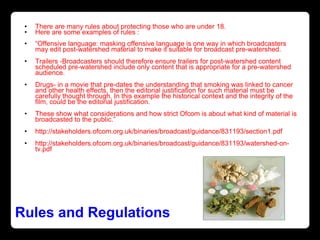
Rules and Regulations There are many rules about protecting those who are under 18.  Here are some examples of rules :  “ Offensive language: masking offensive language is one way in which broadcasters may edit post-watershed material to make it suitable for broadcast pre-watershed. Trailers -Broadcasters should therefore ensure trailers for post-watershed content scheduled pre-watershed include only content that is appropriate for a pre-watershed audience. Drugs- in a movie that pre-dates the understanding that smoking was linked to cancer and other health effects, then the editorial justification for such material must be carefully thought through. In this example the historical context and the integrity of the film, could be the editorial justification. These show what considerations and how strict Ofcom is about what kind of material is broadcasted to the public.” http://stakeholders.ofcom.org.uk/binaries/broadcast/guidance/831193/section1.pdf  http://stakeholders.ofcom.org.uk/binaries/broadcast/guidance/831193/watershed-on-tv.pdf
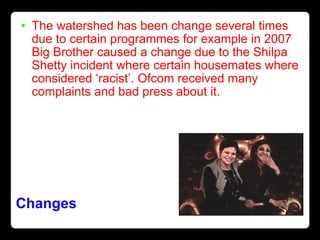
Changes   The watershed has been change several times due to certain programmes for example in 2007 Big Brother caused a change due to the Shilpa Shetty incident where certain housemates where considered ‘racist’. Ofcom received many complaints and bad press about it.

Ofcom

  • 1.
    By Shahna PinnockThis PowerPoint is my research on Ofcom and to help me understand rules and regulations in order to make my documentary meet them . OFCOM
  • 2.
    What is OFCOM?“ Ofcom is the communications regulator. We regulate the TV and radio sectors, fixed line telecoms and mobiles, plus the airwaves over which wireless devices operate. We make sure that people in the UK get the best from their communications services and are protected from scams and sharp practices, while ensuring that competition can thrive. Ofcom operates under the Communications Act 2003. This detailed Act of Parliament spells out exactly what Ofcom should do – we can do no more or no less than is spelt out in the Act. The Act says that Ofcom’s general duties should be to further the interests of citizens and of consumers. Meeting these two duties is at the heart of everything we do.”
  • 3.
    Officially know asthe Office of Communication. Ofcom organisation deals with responsibilities, complaints, licensing, protection and consultation when it comes to broadcasting.
  • 4.
    Watershed The timein which programmes with adult content can air. It divides the time where programmes for families are aired and when programmes for adults can be aired. Adult content includes- sexual references, violence, horror, nudity, drug use and so on. Ofcom- the watershed in the UK is between 8pm and 5:30am.
  • 5.
    Rules and RegulationsThere are many rules about protecting those who are under 18. Here are some examples of rules : “ Offensive language: masking offensive language is one way in which broadcasters may edit post-watershed material to make it suitable for broadcast pre-watershed. Trailers -Broadcasters should therefore ensure trailers for post-watershed content scheduled pre-watershed include only content that is appropriate for a pre-watershed audience. Drugs- in a movie that pre-dates the understanding that smoking was linked to cancer and other health effects, then the editorial justification for such material must be carefully thought through. In this example the historical context and the integrity of the film, could be the editorial justification. These show what considerations and how strict Ofcom is about what kind of material is broadcasted to the public.” http://stakeholders.ofcom.org.uk/binaries/broadcast/guidance/831193/section1.pdf http://stakeholders.ofcom.org.uk/binaries/broadcast/guidance/831193/watershed-on-tv.pdf
  • 6.
    Changes The watershed has been change several times due to certain programmes for example in 2007 Big Brother caused a change due to the Shilpa Shetty incident where certain housemates where considered ‘racist’. Ofcom received many complaints and bad press about it.