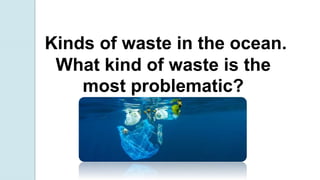
Kinds of waste in the ocean.
What kind of waste is the
most problematic?
Marine debris, also known as marine litter, is humancreated waste
that has deliberately or accidentally been released in a sea or
ocean. Floating oceanic debris tends to accumulate on coastlines,
when it is known as beach litter or tidewrack. Deliberate disposal
of wastes at sea is called ocean dumping. Naturally occurring
debris, such as driftwood, are also present.
What is Marine debris
With the increasing use of plastic, human influence has become
an issue as many types of (petrochemical) plastics do not
biodegrade. Waterborne plastic poses a serious threat to fish,
seabirds, marine reptiles, and marine mammals, as well as to
boats and coasts. Dumping, container spillages, litter washed
into storm drains and waterways and wind-blown landfill waste,
all contribute to this problem.
The increasing use of plastic
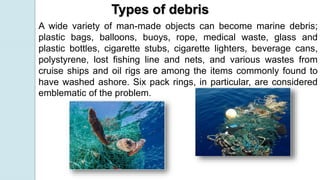
A wide variety of man-made objects can become marine debris;
plastic bags, balloons, buoys, rope, medical waste, glass and
plastic bottles, cigarette stubs, cigarette lighters, beverage cans,
polystyrene, lost fishing line and nets, and various wastes from
cruise ships and oil rigs are among the items commonly found to
have washed ashore. Six pack rings, in particular, are considered
emblematic of the problem.
Types of debris
The 10 largest emitters of
oceanic plastic pollution
worldwide and accounting for “90
percent of all the plastic that
reaches the world's oceans” are
the following from the most to
the least: China, Indonesia,
Philippines, Vietnam, Sri Lanka,
Thailand, Egypt, Malaysia,
Nigeria, and Bangladesh.
Moreover an estimated 10,000
containers at sea each year are
lost by container ships, usually
during storms.
Sources of derbis
Effects of ocean waste- special
reference to plastic
The adverse effects of marine pollution are two-fold. From the
one hand Marine creatures and plants bear the brunt of the
harmful substances in the dumped materials. From the other
hand the wastes that are dumped into the oceans tend to
have toxic substances, which soak in all the oceanic oxygen.
Ocean pollution kills animals
As a consequence this leads to a marked depletion of oxygen
available to mammals and other fishes causing them to die in
their natural habitat. Every year, according to reports, more than
one million seabirds are being killed by ocean pollution. In
addition, thousands of dolphins and porpoises are dying every
year due to the increased human intervention.
The impact of harmful
wastes at humans
Τhe presence of harmful wastes in
the waters make impacts on the
food habits and health of human
being because it spoils the food
chain and fails the reproductive
system of fish and other aquatic
beings.
The picture on the left shows chemical substances
dangerous for our health, such as paraffin,
benzene and triclosan, that we use in everyday
life.
Ocean plastic pollution
Our ocean and the array of species that call it home are
succumbing to the poison of plastic. At least 800 species
worldwide are affected by marine debris, and as much as 80
percent of that litter, is plastic.
A recent study found that sea turtles that ingest just 14 pieces
of plastic have an increased risk of death. Also plastic waste
kills up to a million seabirds a year. As with sea turtles, when
seabirds ingest plastic, it takes up room in their stomachs,
sometimes causing starvation.
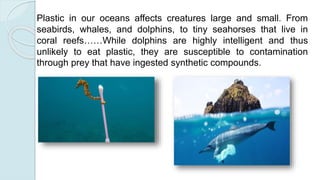
Plastic in our oceans affects creatures large and small. From
seabirds, whales, and dolphins, to tiny seahorses that live in
coral reefs……While dolphins are highly intelligent and thus
unlikely to eat plastic, they are susceptible to contamination
through prey that have ingested synthetic compounds.
Ways to decrease
waste in the ocean
1.Use less plastic
It is very difficult to break down plastic after it is produced. Much
of the plastic we consume ends up in the world’s water supply,
where it is even harder to fish out and safely throw away. If you
can use as few plastic items as possible, you are helping the
environment. Plastic waste also spreads in the water supply.
2.reuse items
Whenever you buy something that is not recyclable, such as
plastic, it is better to reuse this item as many times as
possible. This limits your consumption and means less of
those products will end up in the world’s rivers, lakes and
oceans.
3. Do not throw away medicine
Never throw away medicines in the water supply. Even if you
have whole pills that you do not need, it is a bad idea to flush
them down the toilet or crush them in your kitchen sink
disposal.
4. Dishwashing or laundry
Only use your dishwasher or washing machine when it is
close to being full. Using these machines to clean one or
two dishes, or a few pairs of clothes, is an incredible waste
of water.
5. Use water sparingly
Turn off the tap while you are brushing your teeth. Bathing
actually uses a lot more water than showering. But do not take
20 minute showers when 10 minutes is all you need. Every bit of
water you conserve is a way to help the environment.
6. Stop chemical pollution
If you notice someone throwing chemicals into the water, or
hear about such an incident, talk to your local water authorities
about the matter. Tell them what you saw or know and implore
them to take action. If you stay quiet, you are letting the
problem get worse.
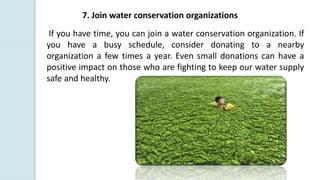
7. Join water conservation organizations
If you have time, you can join a water conservation organization. If
you have a busy schedule, consider donating to a nearby
organization a few times a year. Even small donations can have a
positive impact on those who are fighting to keep our water supply
safe and healthy.
Laws and conventions
There are many laws that protect
the world’s oceans, rivers and
lakes from unnecessary water
pollution. Each continent and
country may differ in which laws
they enforce but they aim to have
the same overall positive
influence.
In Europe, there have been a
number laws enforced to protect
the surrounding ocean from
marine dumping.
•In 1989, the dumping of industrial waste was terminated in
all countries in North-Western Europe, apart from the UK.
Dumping was terminated in the UK in 1993.
•In 1990, the dumping of sewage sludge was terminated in
all countries in North-Western Europe, apart from the UK.
Dumping of sewage sludge was terminated in the UK in
1998.
•Dumping of nuclear waste in European waters has been
terminated since 1986.
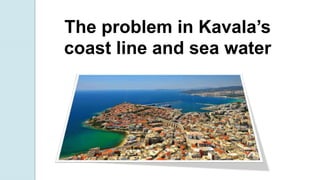
The problem in Kavala’s
coast line and sea water
In the coastal areas of the prefecture of Kavala and in
particular in the area of Nea Karvali, many industrial
units are located, whose waste ends up in the coastal
ecosystems through aquifers (torrents, tributaries).
Industrial waste comprises a wide range of compounds,
which can be classified into three categories: organic
matter, petroleum products and metals.
Although existing legislation sets prices for each category of
waste in the marine environment, in some cases the disposal
is uncontrolled and untreated. Industrial waste, urban waste
water in the residential complex of Kavala, and the leaching
of fertilizers and pesticides from cultivated areas are the
main sources of pollution of coastal ecosystems.
Thanks for watching
Fraggopoulou Katerina
Georgiadou Mara
Ischnopoulou Konstantina
Negreponti Valia
Sarafoudis Orestis
Stimpiri Marina

Ocean waste

  • 2.
    Kinds of wastein the ocean. What kind of waste is the most problematic?
  • 3.
    Marine debris, alsoknown as marine litter, is humancreated waste that has deliberately or accidentally been released in a sea or ocean. Floating oceanic debris tends to accumulate on coastlines, when it is known as beach litter or tidewrack. Deliberate disposal of wastes at sea is called ocean dumping. Naturally occurring debris, such as driftwood, are also present. What is Marine debris
  • 4.
    With the increasinguse of plastic, human influence has become an issue as many types of (petrochemical) plastics do not biodegrade. Waterborne plastic poses a serious threat to fish, seabirds, marine reptiles, and marine mammals, as well as to boats and coasts. Dumping, container spillages, litter washed into storm drains and waterways and wind-blown landfill waste, all contribute to this problem. The increasing use of plastic
  • 5.
    A wide varietyof man-made objects can become marine debris; plastic bags, balloons, buoys, rope, medical waste, glass and plastic bottles, cigarette stubs, cigarette lighters, beverage cans, polystyrene, lost fishing line and nets, and various wastes from cruise ships and oil rigs are among the items commonly found to have washed ashore. Six pack rings, in particular, are considered emblematic of the problem. Types of debris
  • 6.
    The 10 largestemitters of oceanic plastic pollution worldwide and accounting for “90 percent of all the plastic that reaches the world's oceans” are the following from the most to the least: China, Indonesia, Philippines, Vietnam, Sri Lanka, Thailand, Egypt, Malaysia, Nigeria, and Bangladesh. Moreover an estimated 10,000 containers at sea each year are lost by container ships, usually during storms. Sources of derbis
  • 7.
    Effects of oceanwaste- special reference to plastic
  • 8.
    The adverse effectsof marine pollution are two-fold. From the one hand Marine creatures and plants bear the brunt of the harmful substances in the dumped materials. From the other hand the wastes that are dumped into the oceans tend to have toxic substances, which soak in all the oceanic oxygen. Ocean pollution kills animals
  • 9.
    As a consequencethis leads to a marked depletion of oxygen available to mammals and other fishes causing them to die in their natural habitat. Every year, according to reports, more than one million seabirds are being killed by ocean pollution. In addition, thousands of dolphins and porpoises are dying every year due to the increased human intervention.
  • 10.
    The impact ofharmful wastes at humans Τhe presence of harmful wastes in the waters make impacts on the food habits and health of human being because it spoils the food chain and fails the reproductive system of fish and other aquatic beings. The picture on the left shows chemical substances dangerous for our health, such as paraffin, benzene and triclosan, that we use in everyday life.
  • 11.
    Ocean plastic pollution Ourocean and the array of species that call it home are succumbing to the poison of plastic. At least 800 species worldwide are affected by marine debris, and as much as 80 percent of that litter, is plastic.
  • 12.
    A recent studyfound that sea turtles that ingest just 14 pieces of plastic have an increased risk of death. Also plastic waste kills up to a million seabirds a year. As with sea turtles, when seabirds ingest plastic, it takes up room in their stomachs, sometimes causing starvation.
  • 13.
    Plastic in ouroceans affects creatures large and small. From seabirds, whales, and dolphins, to tiny seahorses that live in coral reefs……While dolphins are highly intelligent and thus unlikely to eat plastic, they are susceptible to contamination through prey that have ingested synthetic compounds.
  • 14.
  • 15.
    1.Use less plastic Itis very difficult to break down plastic after it is produced. Much of the plastic we consume ends up in the world’s water supply, where it is even harder to fish out and safely throw away. If you can use as few plastic items as possible, you are helping the environment. Plastic waste also spreads in the water supply.
  • 16.
    2.reuse items Whenever youbuy something that is not recyclable, such as plastic, it is better to reuse this item as many times as possible. This limits your consumption and means less of those products will end up in the world’s rivers, lakes and oceans.
  • 17.
    3. Do notthrow away medicine Never throw away medicines in the water supply. Even if you have whole pills that you do not need, it is a bad idea to flush them down the toilet or crush them in your kitchen sink disposal.
  • 18.
    4. Dishwashing orlaundry Only use your dishwasher or washing machine when it is close to being full. Using these machines to clean one or two dishes, or a few pairs of clothes, is an incredible waste of water.
  • 19.
    5. Use watersparingly Turn off the tap while you are brushing your teeth. Bathing actually uses a lot more water than showering. But do not take 20 minute showers when 10 minutes is all you need. Every bit of water you conserve is a way to help the environment.
  • 20.
    6. Stop chemicalpollution If you notice someone throwing chemicals into the water, or hear about such an incident, talk to your local water authorities about the matter. Tell them what you saw or know and implore them to take action. If you stay quiet, you are letting the problem get worse.
  • 21.
    7. Join waterconservation organizations If you have time, you can join a water conservation organization. If you have a busy schedule, consider donating to a nearby organization a few times a year. Even small donations can have a positive impact on those who are fighting to keep our water supply safe and healthy.
  • 22.
    Laws and conventions Thereare many laws that protect the world’s oceans, rivers and lakes from unnecessary water pollution. Each continent and country may differ in which laws they enforce but they aim to have the same overall positive influence. In Europe, there have been a number laws enforced to protect the surrounding ocean from marine dumping.
  • 23.
    •In 1989, thedumping of industrial waste was terminated in all countries in North-Western Europe, apart from the UK. Dumping was terminated in the UK in 1993. •In 1990, the dumping of sewage sludge was terminated in all countries in North-Western Europe, apart from the UK. Dumping of sewage sludge was terminated in the UK in 1998. •Dumping of nuclear waste in European waters has been terminated since 1986.
  • 24.
    The problem inKavala’s coast line and sea water
  • 25.
    In the coastalareas of the prefecture of Kavala and in particular in the area of Nea Karvali, many industrial units are located, whose waste ends up in the coastal ecosystems through aquifers (torrents, tributaries). Industrial waste comprises a wide range of compounds, which can be classified into three categories: organic matter, petroleum products and metals.
  • 26.
    Although existing legislationsets prices for each category of waste in the marine environment, in some cases the disposal is uncontrolled and untreated. Industrial waste, urban waste water in the residential complex of Kavala, and the leaching of fertilizers and pesticides from cultivated areas are the main sources of pollution of coastal ecosystems.
  • 27.
    Thanks for watching FraggopoulouKaterina Georgiadou Mara Ischnopoulou Konstantina Negreponti Valia Sarafoudis Orestis Stimpiri Marina