PRACTICE
OCCUPATIONAL HEALTH
AND SAFETY
PROCEDURES
Identify and Evaluate
Hazards and Risks
PHILIPPINE
OCCUPATIONAL
HEALTH AND SAFETY
STANDARDS
Occupational Safety
and Health
The MAIN OBJECTIVES
of the OSHC are as follows:
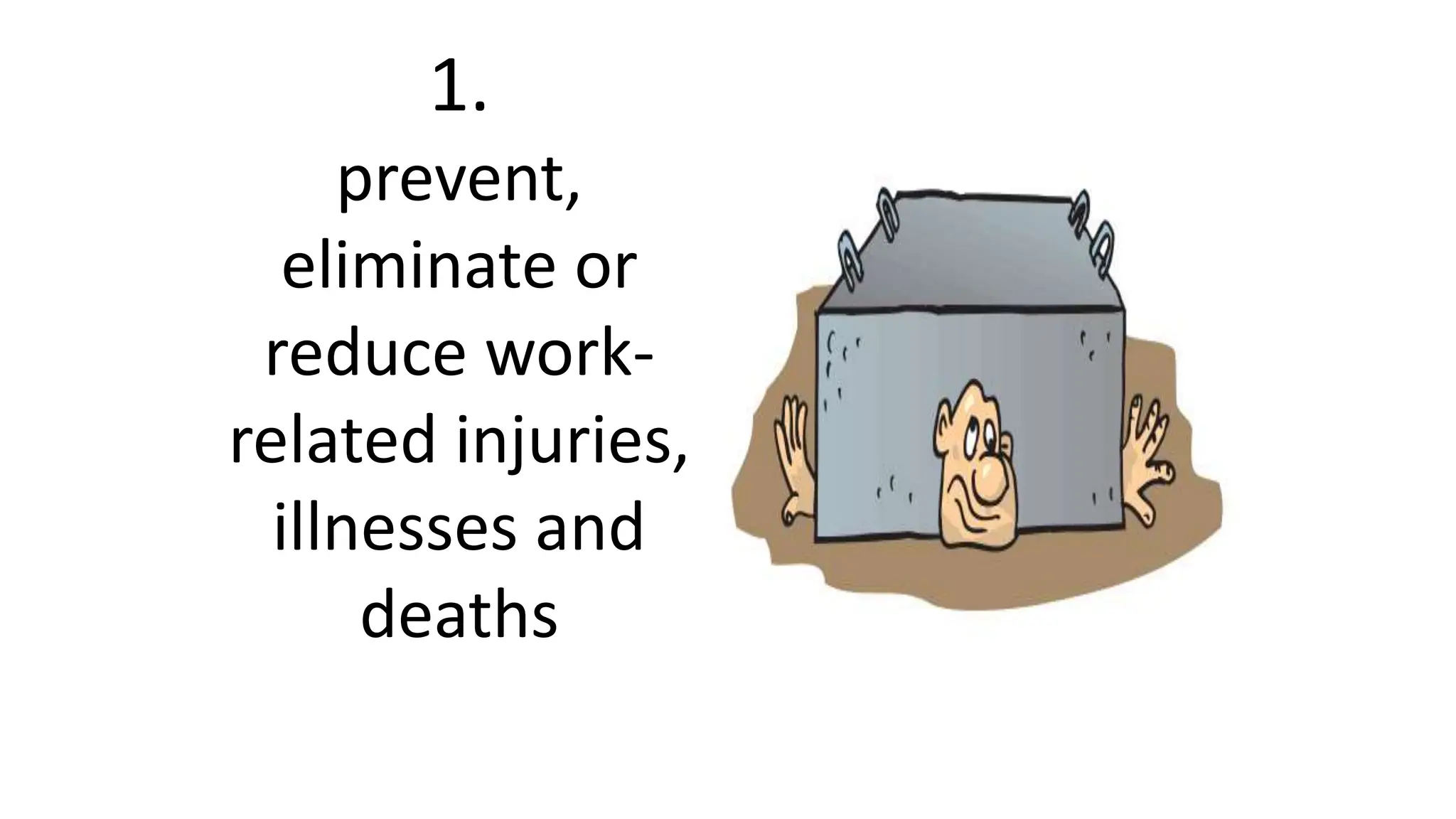
1.
prevent,
eliminate or
reduce work-
related injuries,
illnesses and
deaths
2.
Effectively implement
occupational health
and safety programs
that will promote
health, efficiency and
general well-being
among Filipino workers
through the
improvement of the
quality of his working
life; and,
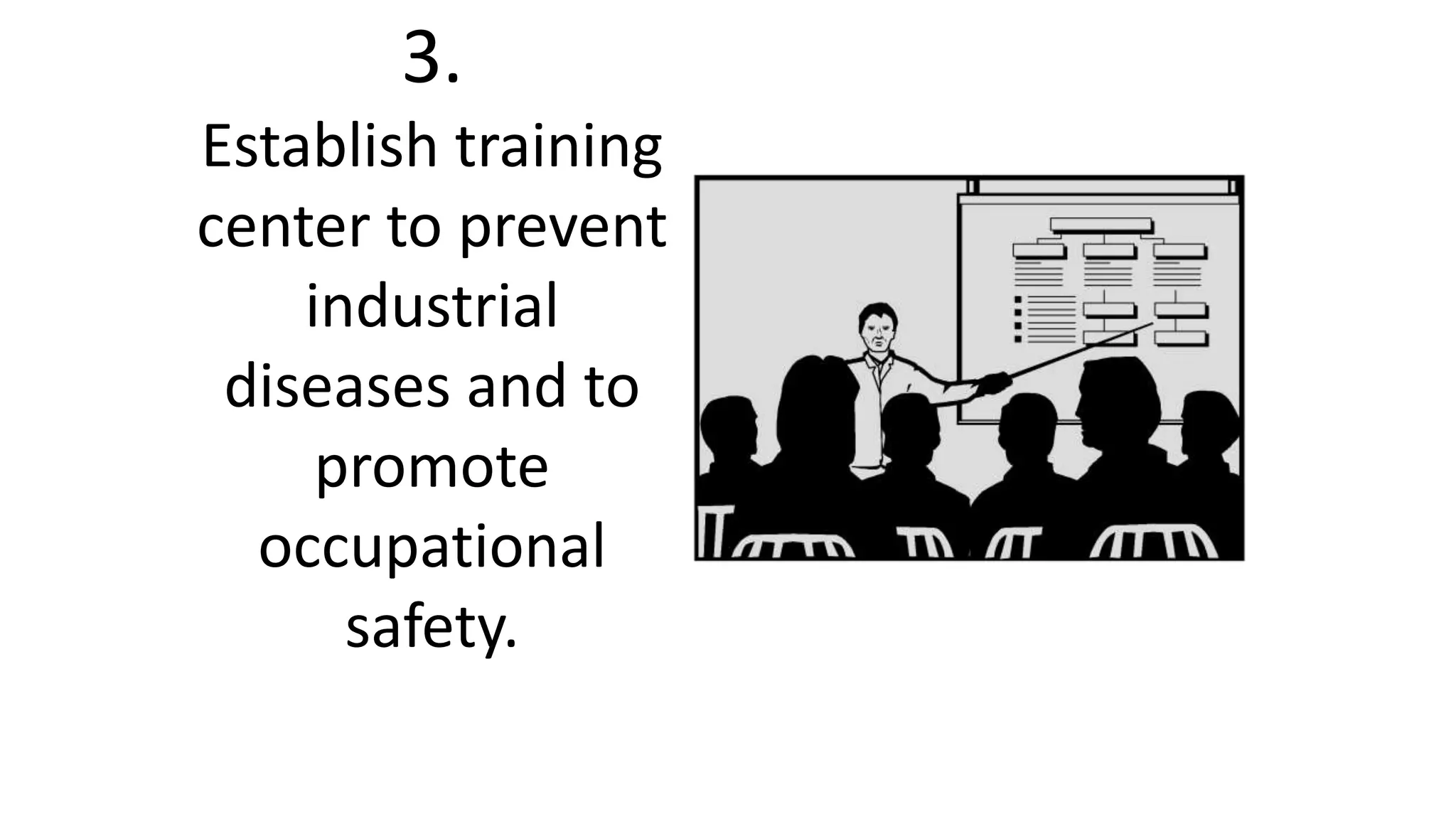
3.
Establish training
center to prevent
industrial
diseases and to
promote
occupational
safety.
Occupational
Health Service
- the continuous, systematic use
of routinely collected health
data to guide OSHC decisions and
actions.
Personal Protective
Equipment (PPE)
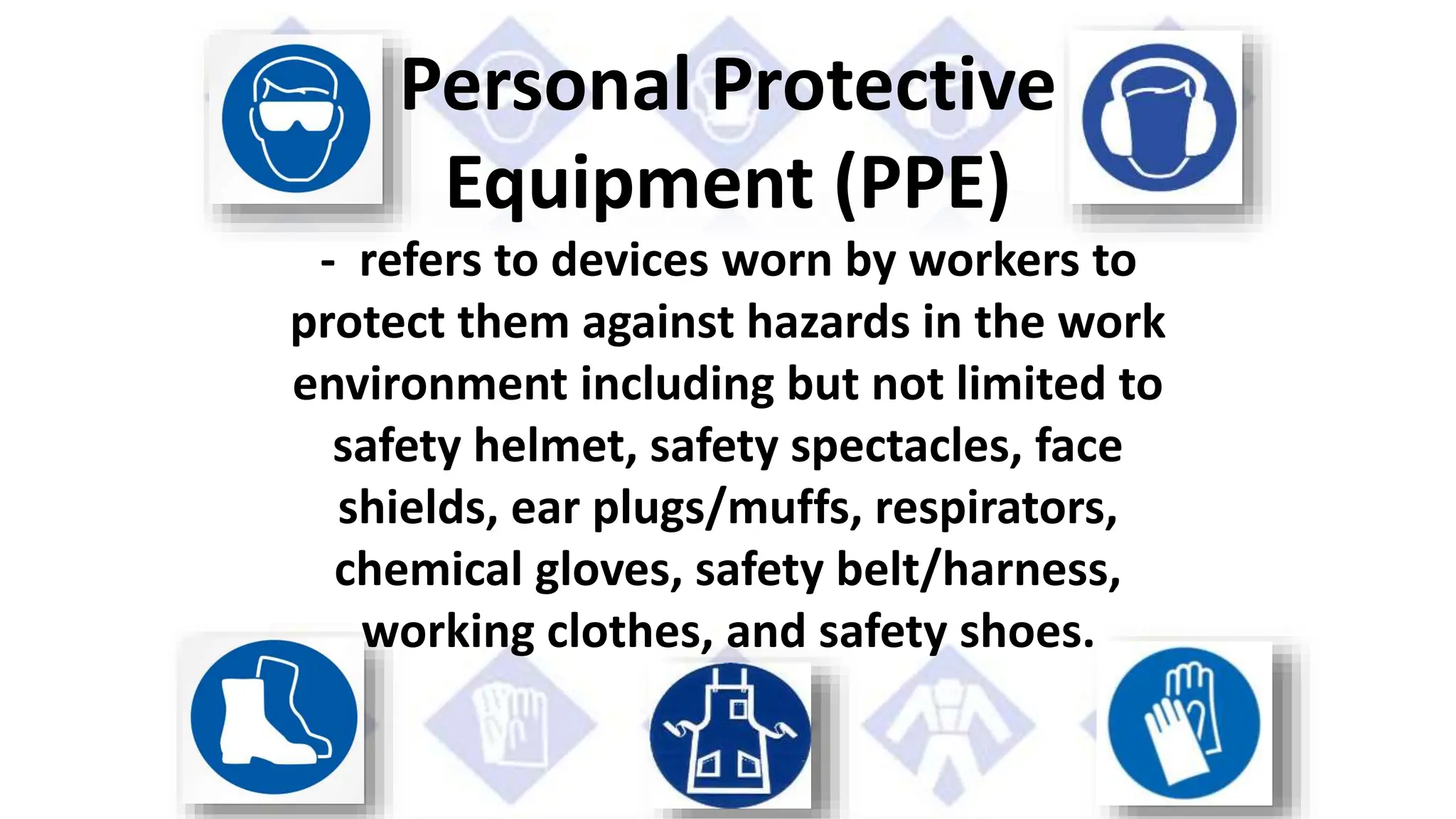
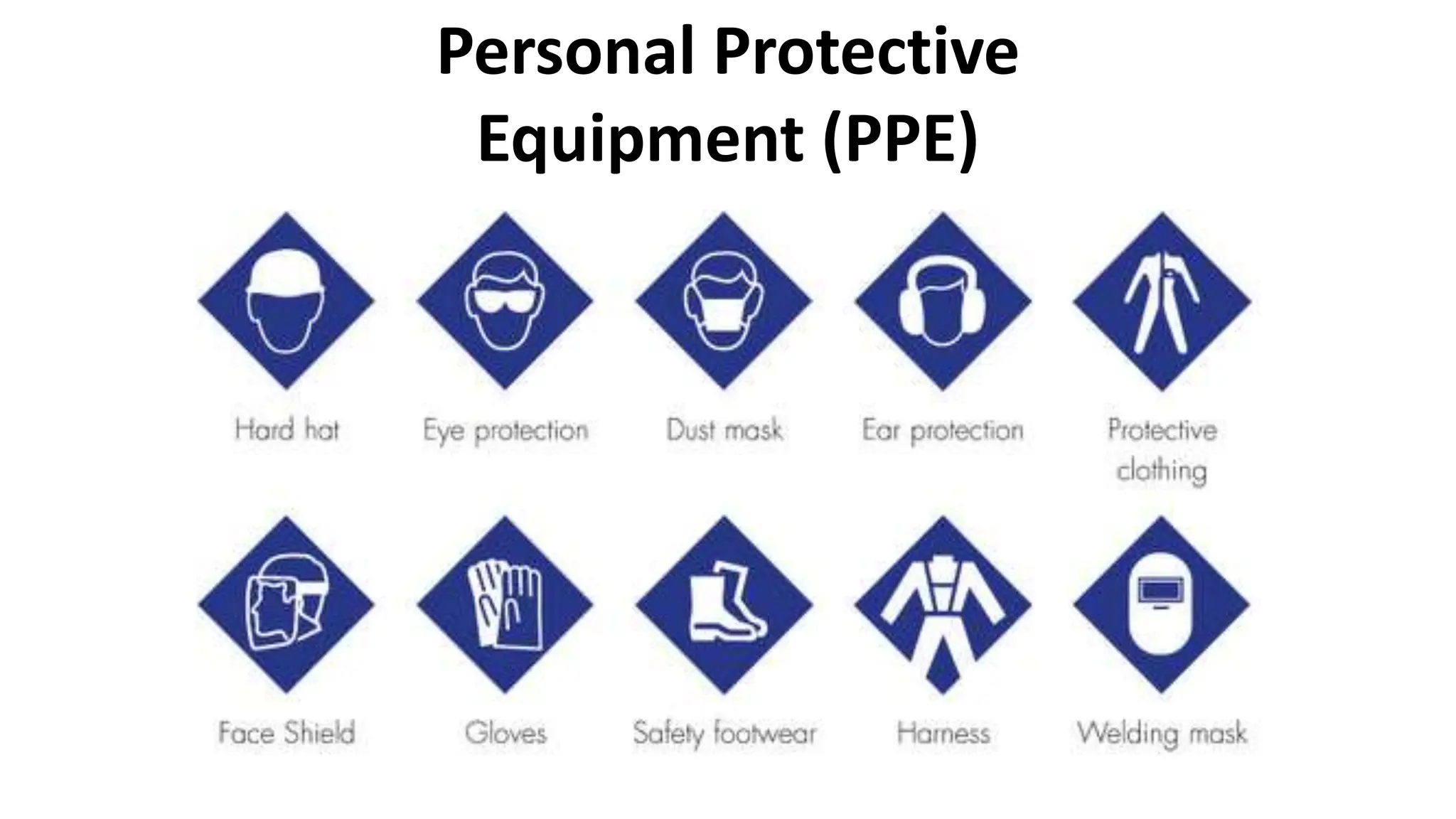
- refers to devices worn by workers to
protect them against hazards in the work
environment including but not limited to
safety helmet, safety spectacles, face
shields, ear plugs/muffs, respirators,
chemical gloves, safety belt/harness,
working clothes, and safety shoes.
Personal Protective
Equipment (PPE)
UNDER SECTION 8 OF
EXECUTIVE ORDER NO. 307
IMPLEMENTING
RULES AND REGULATIONS
are issued by the
EMPLOYEES COMPENSATION
COMMISSION (ECC)
They are the workers, companies, public or
private offices, trade unions and workers’
organizations or any organizations
/communities requesting for or requiring
technical assistance from the OSHC.
CLIENTS
He/She refers to any member of the labor
force, whether employed or unemployed,
wage or non-wage.
WORKERS
This refers to the office, premises
or worksite where a worker is
temporary or
habitually assigned.
WORKPLACE
Conduct actual first aid training
CLASS ACTIVITY
a situation that poses a level
of threat to life, health,
property, or environment.
HAZARD
A hazard is a situation that poses a level of threat
to life, health, property, or environment. Most
hazards are dormant or potential, with only a
theoretical risk of harm. However, once a hazard
becomes "active", it can create an emergency
situation. A hazard does not exist when it is not
happening. A hazardous situation that has come to
pass is called an incident. Hazard and vulnerability
interact together to create risk.
Hazards and Risks and its Effects
HAZARDS vs. RISK
a hazard is any biological,
chemical, mechanical, or physical
agent that is reasonably likely to
cause harm or damage to humans or
the environment with sufficient
exposure or dose
HAZARDS
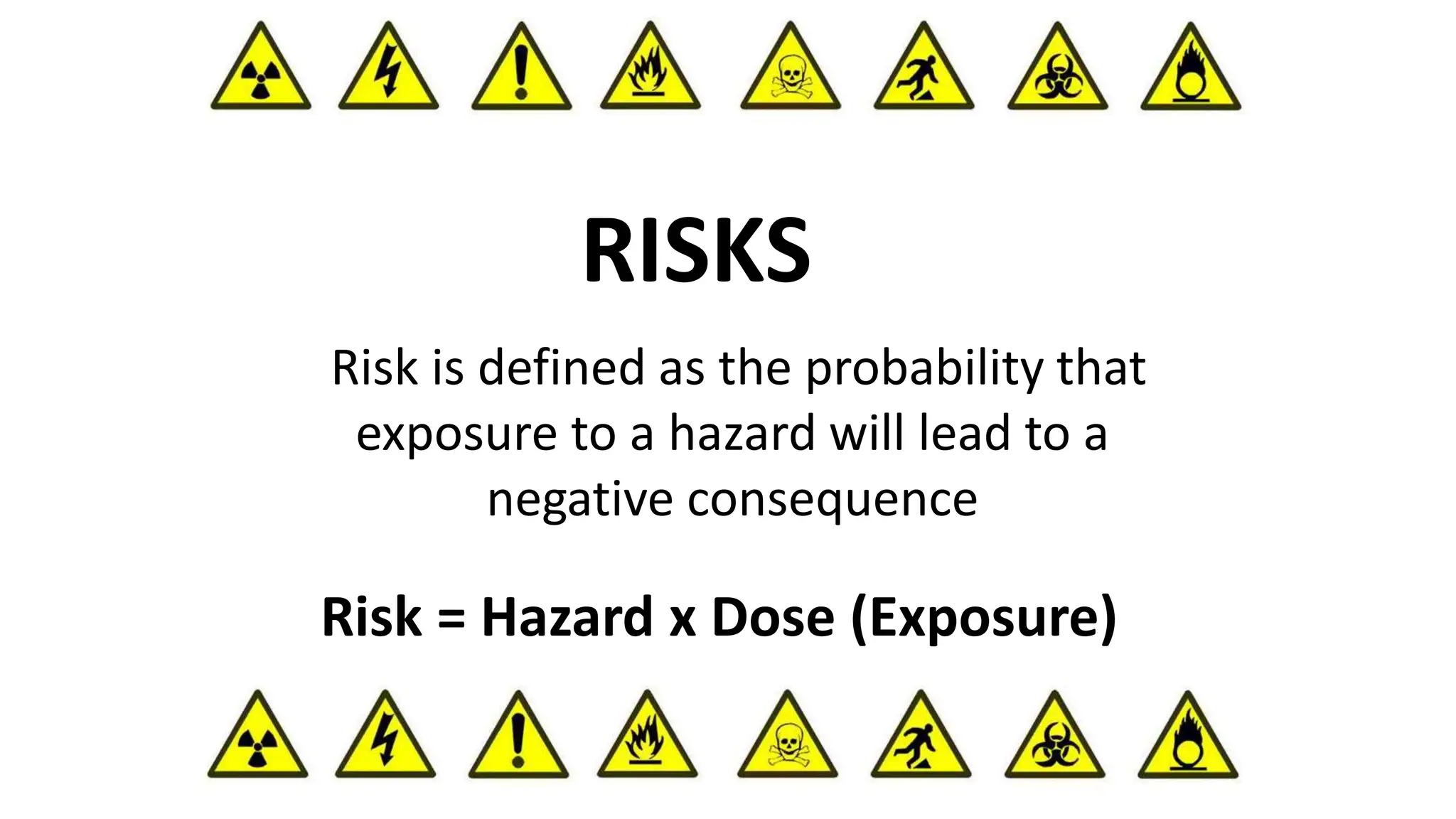
Risk is defined as the probability that
exposure to a hazard will lead to a
negative consequence
RISKS
Risk = Hazard x Dose (Exposure)
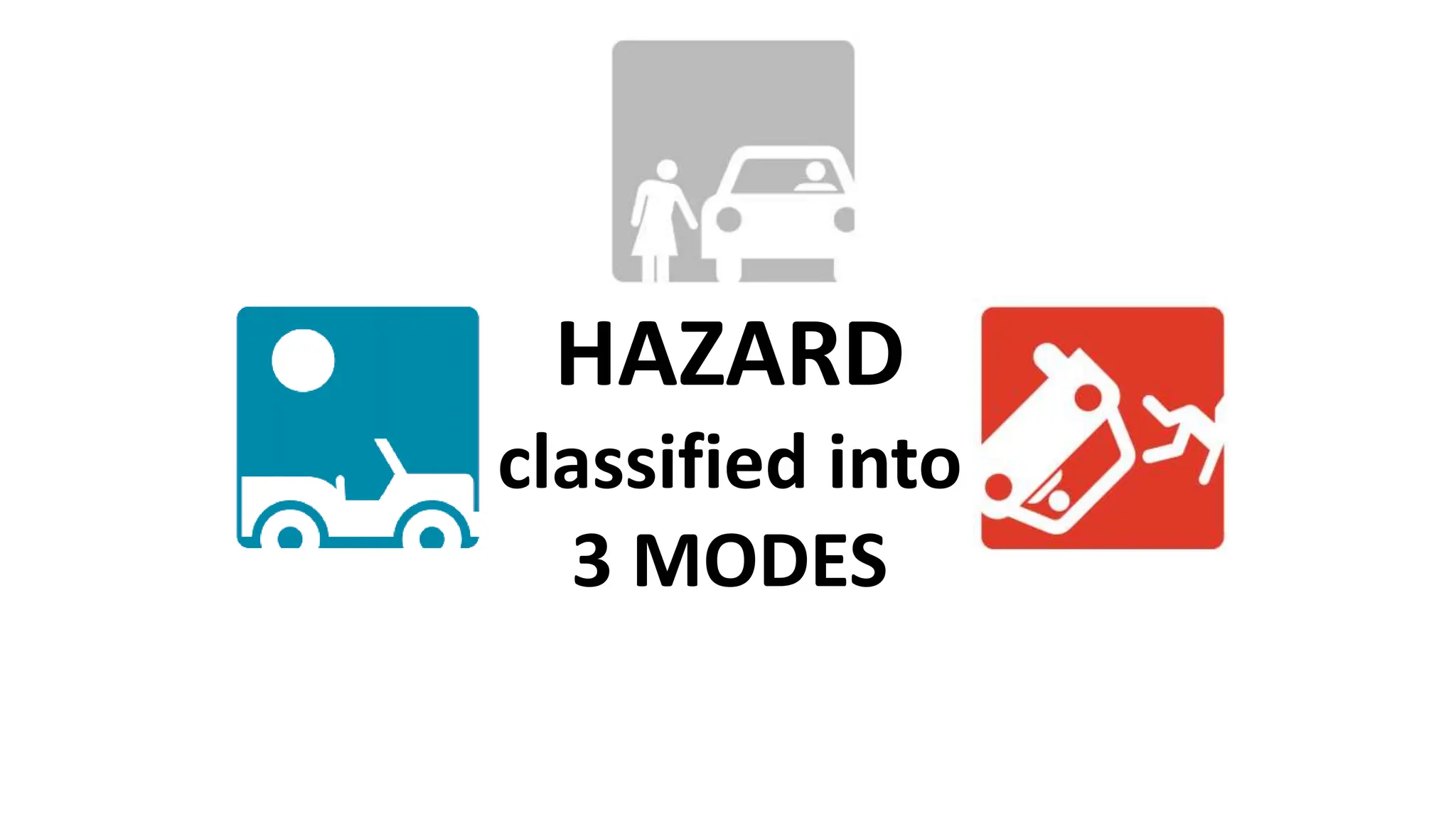
HAZARD
classified into
3 MODES
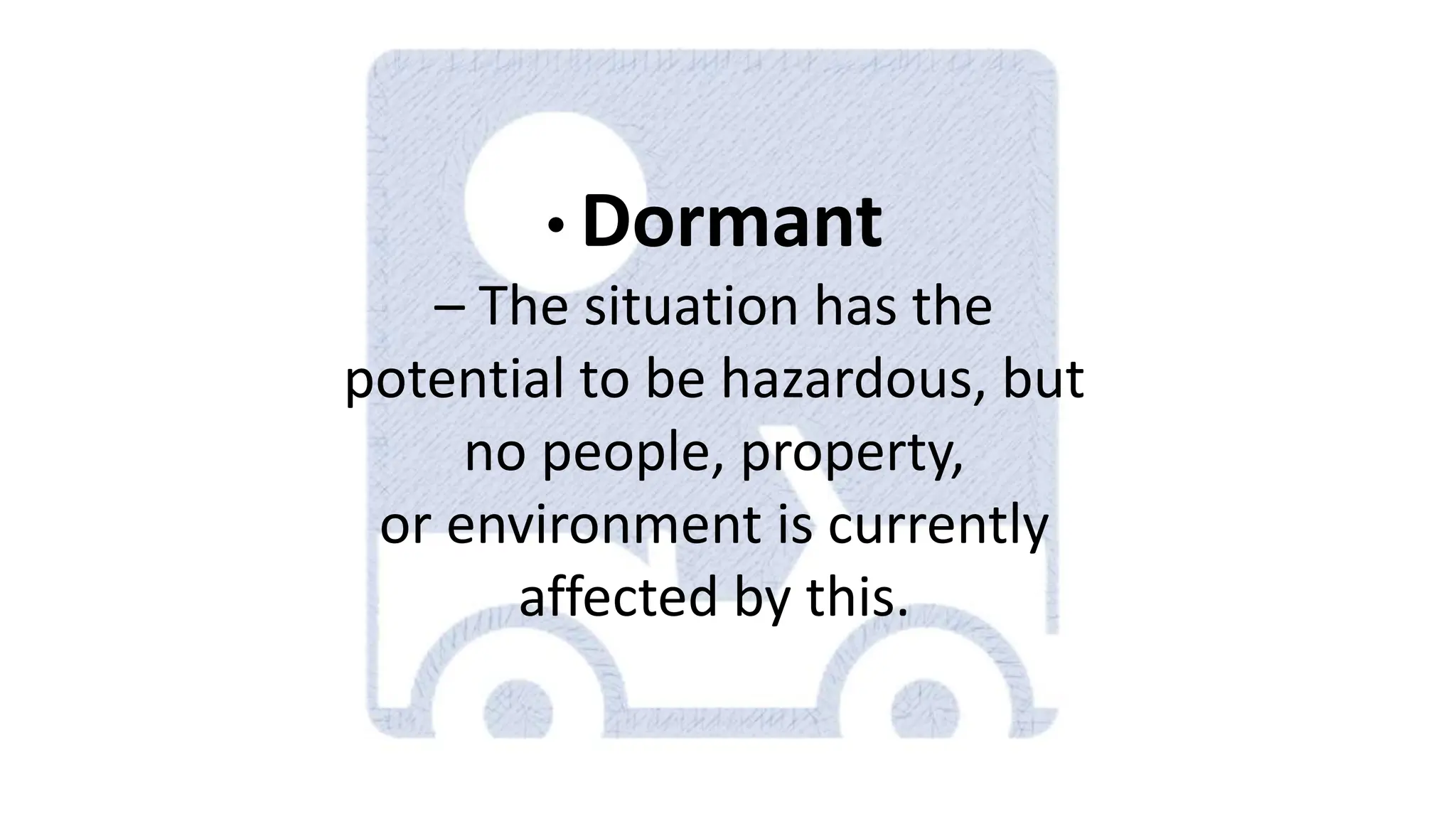
• Dormant
– The situation has the
potential to be hazardous, but
no people, property,
or environment is currently
affected by this.
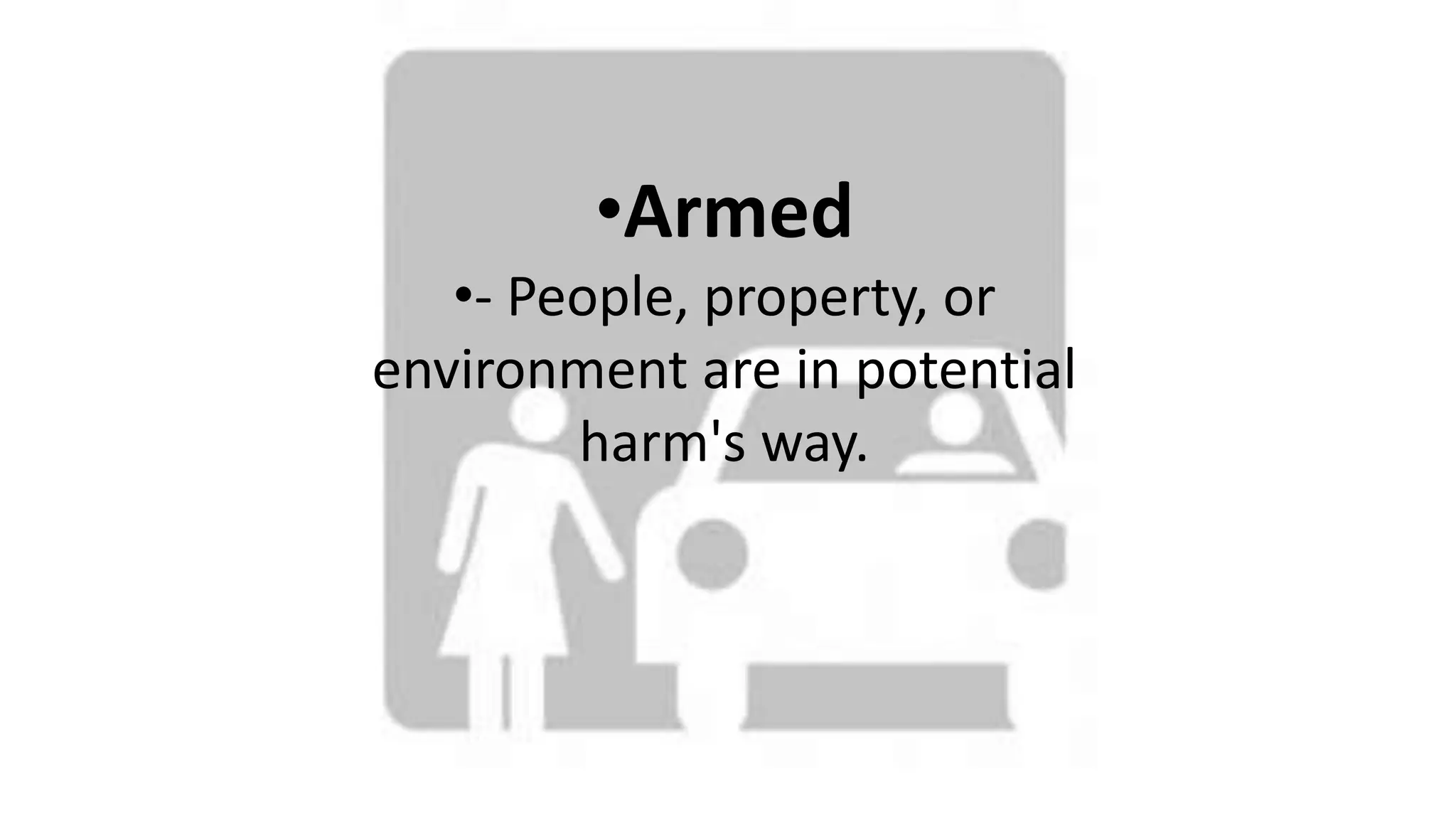
•Armed
•- People, property, or
environment are in potential
harm's way.
• Active
•- A harmful incident
involving the hazard has
actually occurred. Often this
is referred to not as an
"active hazard" but as an:
accident, emergency,
incident, or disaster.
Occupational Hazards
-refers to various environmental factors
or stresses that can cause sickness,
impaired health,
or significant discomfort in workers and
can be classified as chemical, physical,
biological or ergonomic.
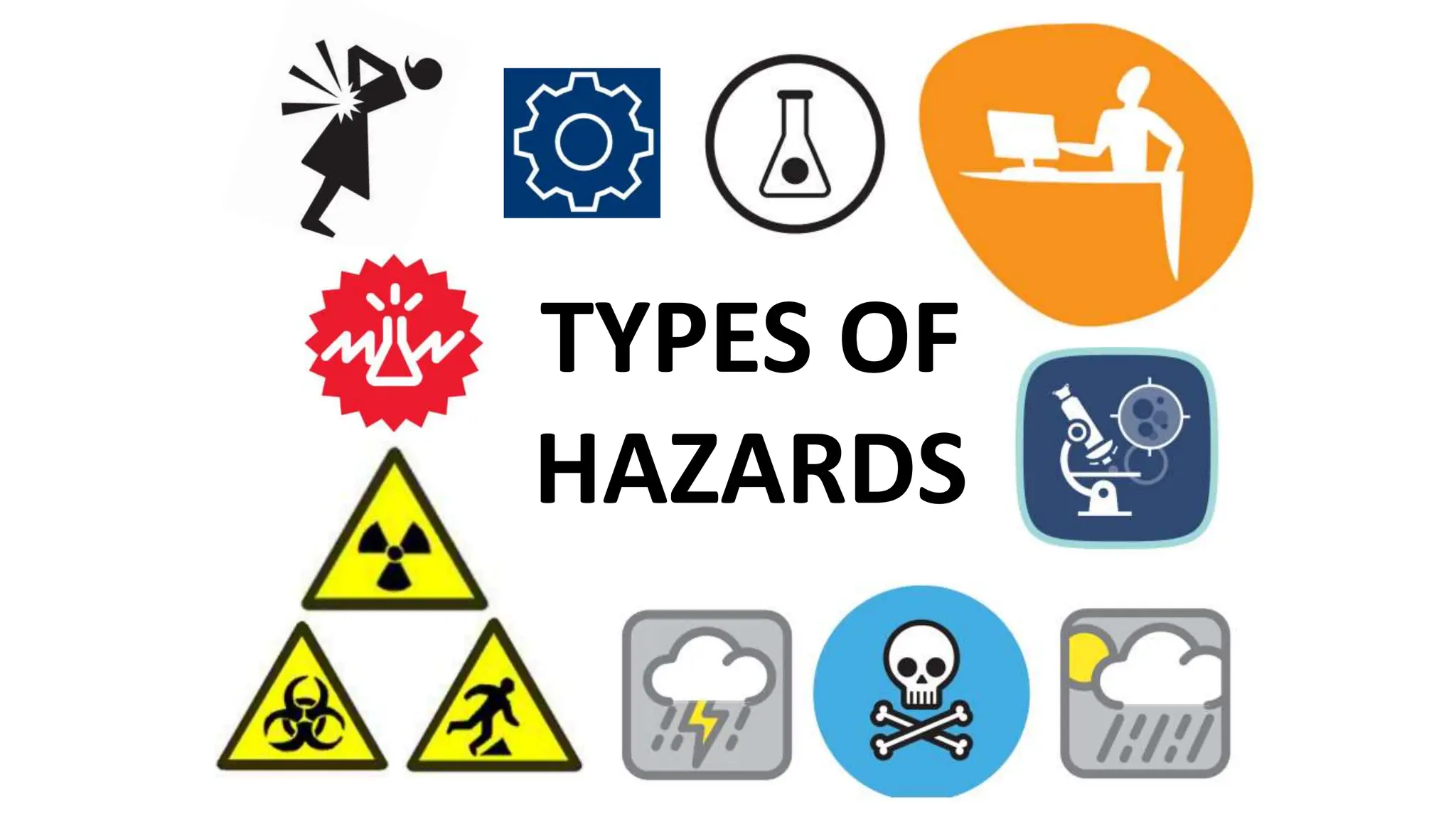
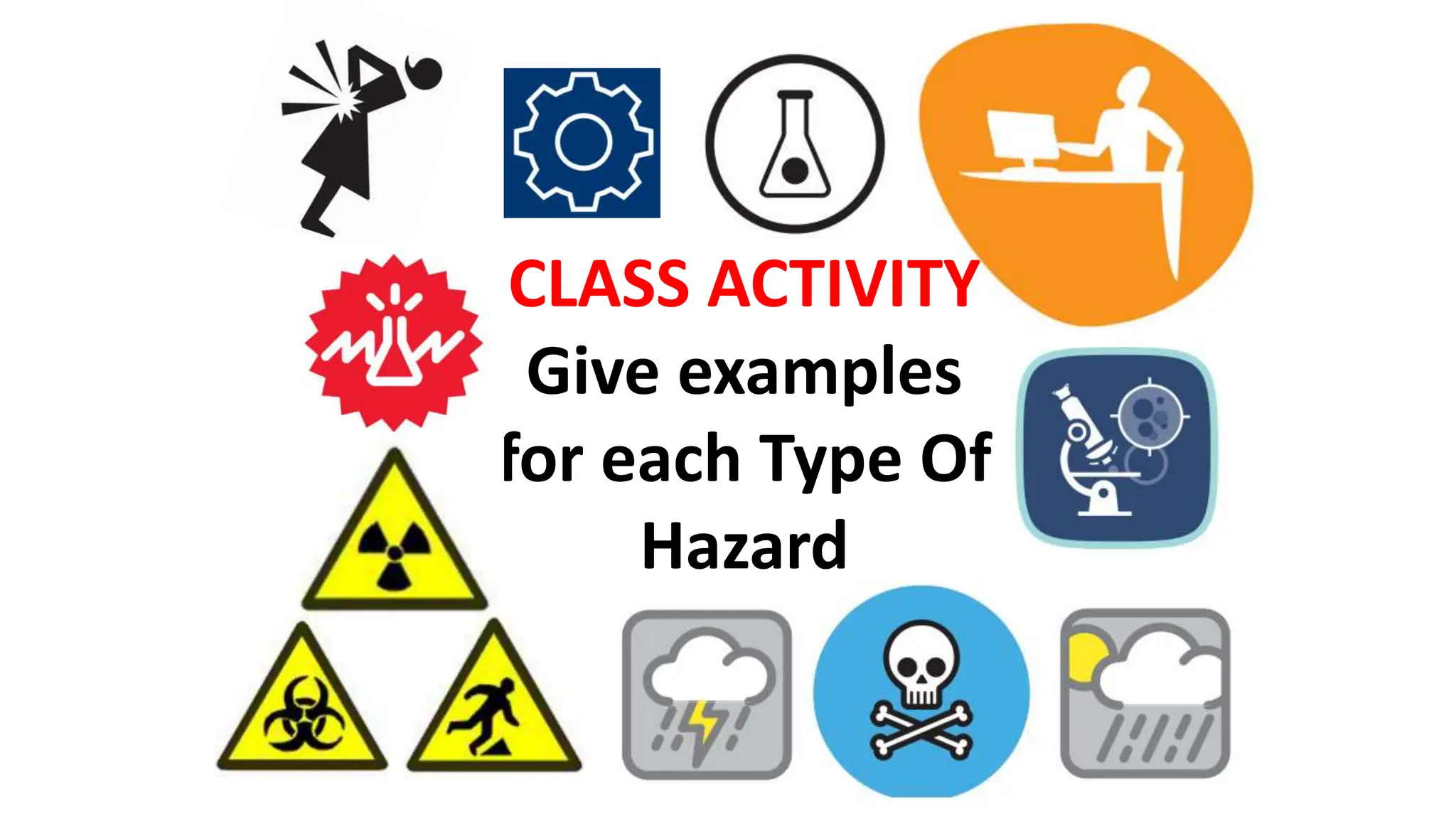
TYPES OF
HAZARDS
1. BIOLOGICAL
one originating from an
organism that is foreign (in
presence or concentration) to
the organism being affected.
2. CHEMICAL
A chemical that can be considered a
hazard if by virtue of its intrinsic
properties can cause harm or
danger to humans, property, or the
environment.
3. MECHANICAL
any hazard involving
a machine or process.
Motor vehicles, aircraft,
and air bags pose mechanical
hazards. Compressed gases or
liquids can also be considered
a mechanical hazard.
4. PHYSICAL
a naturally occurring process that has
the potential to create loss or damage.
These include, but are not limited to,
earthquakes, floods, and tornadoes.
They often have both human and
natural elements.
5. ERGONOMIC
It is a physical factor within the environment
that harms the musculoskeletal system.
These include improperly designed tools or
work areas, improper lifting or
reaching, poor visual conditions, or repeated
motions in an awkward position which can
result in accidents or illnesses in the
workplace.
CLASS ACTIVITY
Give examples
for each Type Of
Hazard
QUIZ: GIVEN THESE CHOICES, IDENTIFY
THE TYPE OF HAZARD FOR THE GIVEN
EXAMPLES
• BIOLOGICAL
• MECHANICAL
• CHEMICAL
• PHYSICAL
• ERGONOMIC
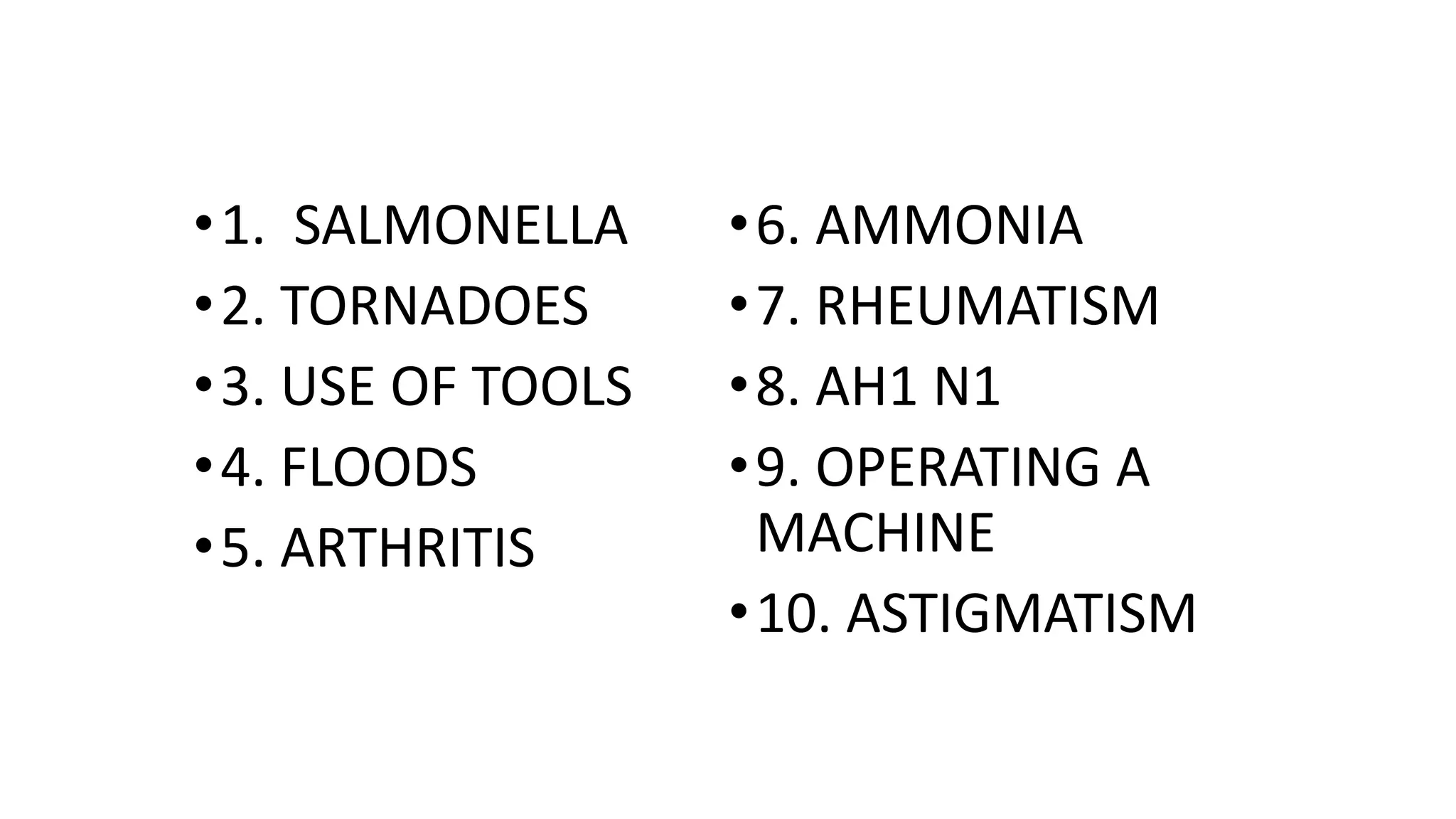
•1. SALMONELLA
•2. TORNADOES
•3. USE OF TOOLS
•4. FLOODS
•5. ARTHRITIS
•6. AMMONIA
•7. RHEUMATISM
•8. AH1 N1
•9. OPERATING A
MACHINE
•10. ASTIGMATISM
• Dormant
• Armed
• Active
QUIZ: IDENTIFY THE MODE OF HAZARD
FOR THE GIVEN SITUATIONS
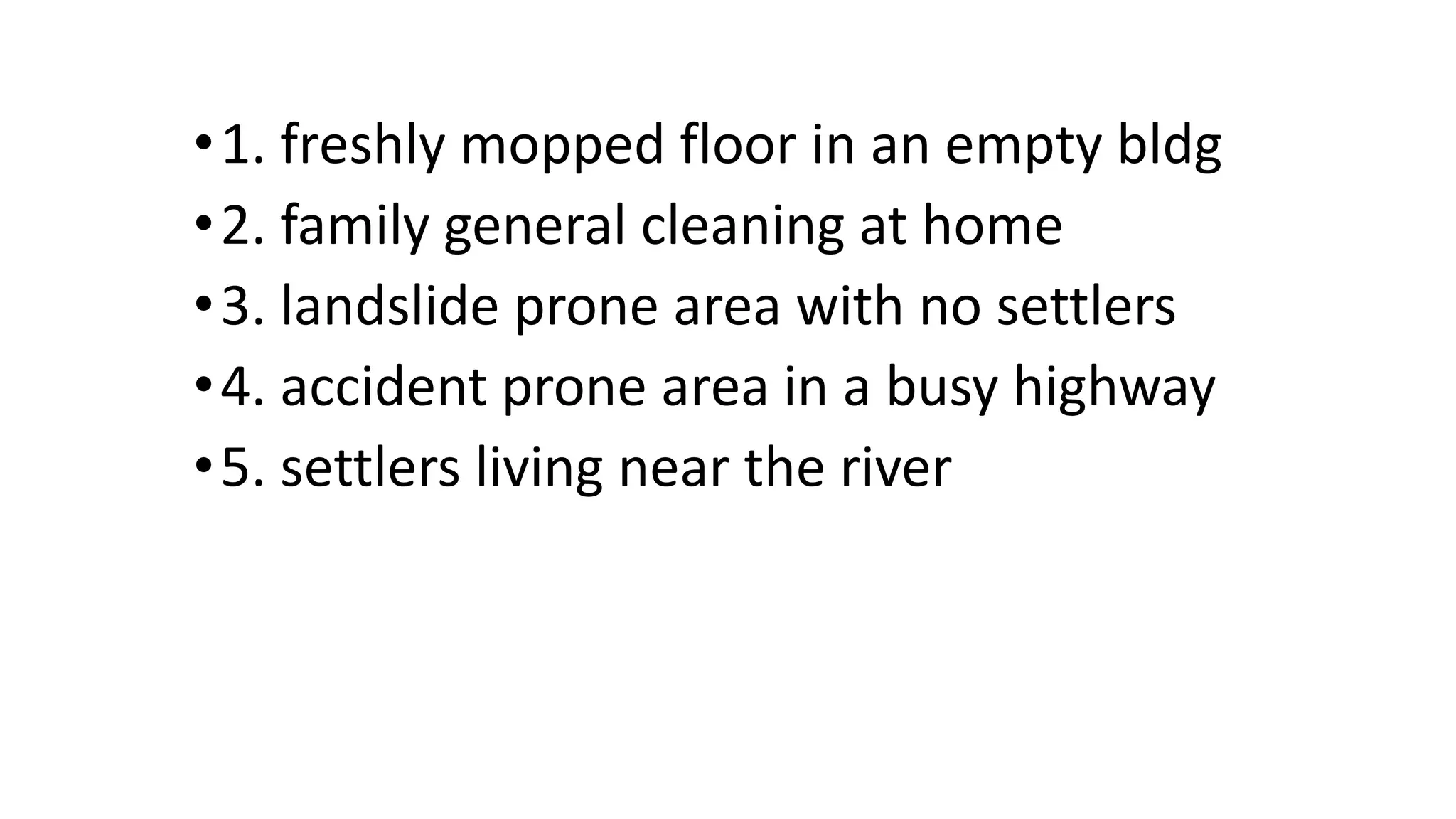
•1. freshly mopped floor in an empty bldg
•2. family general cleaning at home
•3. landslide prone area with no settlers
•4. accident prone area in a busy highway
•5. settlers living near the river
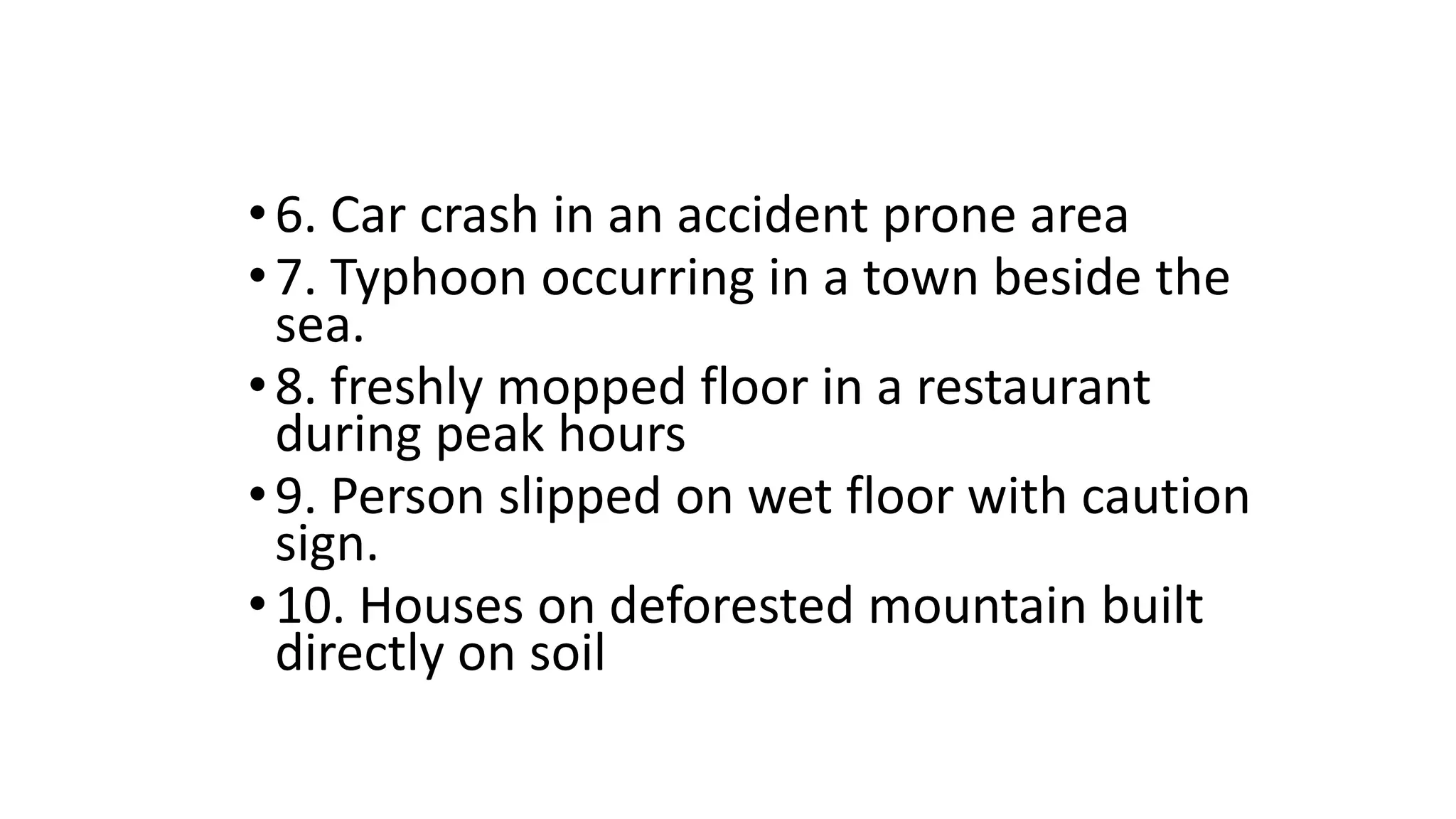
•6. Car crash in an accident prone area
•7. Typhoon occurring in a town beside the
sea.
•8. freshly mopped floor in a restaurant
during peak hours
•9. Person slipped on wet floor with caution
sign.
•10. Houses on deforested mountain built
directly on soil

OCCUPATIONAL HEALTH AND SAFETY PROCEDURES-HAZARDS ppt.ppt

  • 1.
  • 2.
  • 4.
  • 9.
    The MAIN OBJECTIVES ofthe OSHC are as follows:
  • 10.
    1. prevent, eliminate or reduce work- relatedinjuries, illnesses and deaths
  • 11.
    2. Effectively implement occupational health andsafety programs that will promote health, efficiency and general well-being among Filipino workers through the improvement of the quality of his working life; and,
  • 12.
    3. Establish training center toprevent industrial diseases and to promote occupational safety.
  • 14.
    Occupational Health Service - thecontinuous, systematic use of routinely collected health data to guide OSHC decisions and actions.
  • 15.
    Personal Protective Equipment (PPE) -refers to devices worn by workers to protect them against hazards in the work environment including but not limited to safety helmet, safety spectacles, face shields, ear plugs/muffs, respirators, chemical gloves, safety belt/harness, working clothes, and safety shoes.
  • 16.
  • 17.
    UNDER SECTION 8OF EXECUTIVE ORDER NO. 307 IMPLEMENTING RULES AND REGULATIONS are issued by the EMPLOYEES COMPENSATION COMMISSION (ECC)
  • 18.
    They are theworkers, companies, public or private offices, trade unions and workers’ organizations or any organizations /communities requesting for or requiring technical assistance from the OSHC. CLIENTS
  • 19.
    He/She refers toany member of the labor force, whether employed or unemployed, wage or non-wage. WORKERS
  • 20.
    This refers tothe office, premises or worksite where a worker is temporary or habitually assigned. WORKPLACE
  • 21.
    Conduct actual firstaid training CLASS ACTIVITY
  • 22.
    a situation thatposes a level of threat to life, health, property, or environment. HAZARD
  • 23.
    A hazard isa situation that poses a level of threat to life, health, property, or environment. Most hazards are dormant or potential, with only a theoretical risk of harm. However, once a hazard becomes "active", it can create an emergency situation. A hazard does not exist when it is not happening. A hazardous situation that has come to pass is called an incident. Hazard and vulnerability interact together to create risk. Hazards and Risks and its Effects
  • 24.
  • 25.
    a hazard isany biological, chemical, mechanical, or physical agent that is reasonably likely to cause harm or damage to humans or the environment with sufficient exposure or dose HAZARDS
  • 26.
    Risk is definedas the probability that exposure to a hazard will lead to a negative consequence RISKS Risk = Hazard x Dose (Exposure)
  • 27.
  • 28.
    • Dormant – Thesituation has the potential to be hazardous, but no people, property, or environment is currently affected by this.
  • 29.
    •Armed •- People, property,or environment are in potential harm's way.
  • 30.
    • Active •- Aharmful incident involving the hazard has actually occurred. Often this is referred to not as an "active hazard" but as an: accident, emergency, incident, or disaster.
  • 31.
    Occupational Hazards -refers tovarious environmental factors or stresses that can cause sickness, impaired health, or significant discomfort in workers and can be classified as chemical, physical, biological or ergonomic.
  • 32.
  • 33.
    1. BIOLOGICAL one originatingfrom an organism that is foreign (in presence or concentration) to the organism being affected.
  • 34.
    2. CHEMICAL A chemicalthat can be considered a hazard if by virtue of its intrinsic properties can cause harm or danger to humans, property, or the environment.
  • 35.
    3. MECHANICAL any hazardinvolving a machine or process. Motor vehicles, aircraft, and air bags pose mechanical hazards. Compressed gases or liquids can also be considered a mechanical hazard.
  • 36.
    4. PHYSICAL a naturallyoccurring process that has the potential to create loss or damage. These include, but are not limited to, earthquakes, floods, and tornadoes. They often have both human and natural elements.
  • 37.
    5. ERGONOMIC It isa physical factor within the environment that harms the musculoskeletal system. These include improperly designed tools or work areas, improper lifting or reaching, poor visual conditions, or repeated motions in an awkward position which can result in accidents or illnesses in the workplace.
  • 38.
  • 39.
    QUIZ: GIVEN THESECHOICES, IDENTIFY THE TYPE OF HAZARD FOR THE GIVEN EXAMPLES • BIOLOGICAL • MECHANICAL • CHEMICAL • PHYSICAL • ERGONOMIC
  • 40.
    •1. SALMONELLA •2. TORNADOES •3.USE OF TOOLS •4. FLOODS •5. ARTHRITIS •6. AMMONIA •7. RHEUMATISM •8. AH1 N1 •9. OPERATING A MACHINE •10. ASTIGMATISM
  • 41.
    • Dormant • Armed •Active QUIZ: IDENTIFY THE MODE OF HAZARD FOR THE GIVEN SITUATIONS
  • 42.
    •1. freshly moppedfloor in an empty bldg •2. family general cleaning at home •3. landslide prone area with no settlers •4. accident prone area in a busy highway •5. settlers living near the river
  • 43.
    •6. Car crashin an accident prone area •7. Typhoon occurring in a town beside the sea. •8. freshly mopped floor in a restaurant during peak hours •9. Person slipped on wet floor with caution sign. •10. Houses on deforested mountain built directly on soil