Occupational Hazard; Examples & Prevention
Measures
Occupational hazard is a hazard experienced in the workplace, it can encompass many types of hazards, including chemical
hazards, biological hazards (biohazards), psychosocial hazards, and physical hazards.
In other words, occupational hazard explains the risks of illnesses or accidents in the workplace. An occupational hazard is
something unpleasant that a person experiences or suffers as a result of doing their job. Some dictionaries say that the term also
includes hazards that people experience as a result of working on their hobbies.
Occupational hazard as a term signifies both long-term and short-term risks associated with the workplace environment and is a
field of study within occupational safety and health and public health. Short term risks may include physical injury, while long-term
risks may be increased risk of developing cancer or heart disease.
Examples of occupational hazards
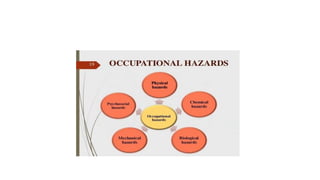
Occupational hazards are divided into five groups according to their nature:
1) Physical hazard: Related to exposure to noise, ionizing radiation, and temperature.
2) Chemical hazard: Related to exposure to gases, vapors, fumes, and chemicals.
3) Biological hazard: This includes exposure to viruses, bacteria, blood and blood products.
4) Ergonomic hazard: Relate to the requirement of improper posture, monotony, repetitiveness, work shifts, and situations causing
stress.
5) Psychosocial hazard
This group of risks is constantly present at work in or, responsible for a large number of occupational diseases, such as
hypertension, stress, and cancer.
Physical hazards may be factors, agents, or circumstances that can cause harm without or with contact. We classify them as either
environmental or occupational hazards. Examples are Radiation, heat, cold stress, vibrations, and noise, etc.
Read Full Article Here

Occupational Hazard.pdf

  • 1.
    Occupational Hazard; Examples& Prevention Measures
  • 3.
    Occupational hazard isa hazard experienced in the workplace, it can encompass many types of hazards, including chemical hazards, biological hazards (biohazards), psychosocial hazards, and physical hazards. In other words, occupational hazard explains the risks of illnesses or accidents in the workplace. An occupational hazard is something unpleasant that a person experiences or suffers as a result of doing their job. Some dictionaries say that the term also includes hazards that people experience as a result of working on their hobbies.
  • 4.
    Occupational hazard asa term signifies both long-term and short-term risks associated with the workplace environment and is a field of study within occupational safety and health and public health. Short term risks may include physical injury, while long-term risks may be increased risk of developing cancer or heart disease.
  • 5.
    Examples of occupationalhazards Occupational hazards are divided into five groups according to their nature: 1) Physical hazard: Related to exposure to noise, ionizing radiation, and temperature. 2) Chemical hazard: Related to exposure to gases, vapors, fumes, and chemicals. 3) Biological hazard: This includes exposure to viruses, bacteria, blood and blood products. 4) Ergonomic hazard: Relate to the requirement of improper posture, monotony, repetitiveness, work shifts, and situations causing stress. 5) Psychosocial hazard
  • 6.
    This group ofrisks is constantly present at work in or, responsible for a large number of occupational diseases, such as hypertension, stress, and cancer. Physical hazards may be factors, agents, or circumstances that can cause harm without or with contact. We classify them as either environmental or occupational hazards. Examples are Radiation, heat, cold stress, vibrations, and noise, etc. Read Full Article Here