If Your Not Counted You Don't 
Count 
Notisha Massaquoi 
Executive Director 
Women’s Health in Women’s Hands CHC
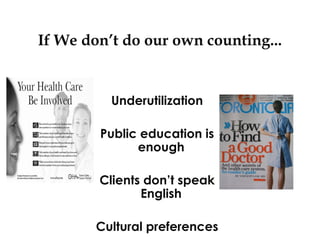
If We don’t do our own counting... 
Underutilization 
Public education is 
enough 
Clients don’t speak 
English 
Cultural preferences
Critical issues are often lost 
• The negative side of immigration is frequently not 
addressed 
• How do we move past the “Healthy Immigrant 
Effect” 
• Immigration discussions often do not focus on women 
when looking at migration and economic development. 
• Very little information on individuals without status
Research used to create Unrepresentative 
Narratives 
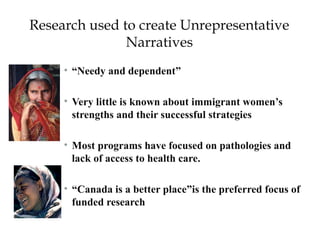
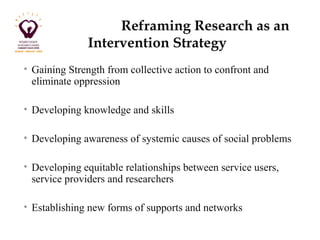
• “Needy and dependent” 
• Very little is known about immigrant women’s 
strengths and their successful strategies 
• Most programs have focused on pathologies and 
lack of access to health care. 
• “Canada is a better place”is the preferred focus of 
funded research
Reframing Research as an 
Intervention Strategy 
• Gaining Strength from collective action to confront and 
eliminate oppression 
• Developing knowledge and skills 
• Developing awareness of systemic causes of social problems 
• Developing equitable relationships between service users, 
service providers and researchers 
• Establishing new forms of supports and networks
Research at WHIWH - CHC 
• Began in 1999 due to lack of published literature on health issues 
impacting racialized women 
• Difficult to develop effective programs without appropriate 
research 
• We needed to generate scientific knowledge to fill existing gaps 
• Increased requests by health researchers to partner on projects 
We required a research strategy 
• Dissemination of knowledge needed to be prioritized 
• Women and their communities
Objectives of our Research 
Program 
• To build scientific knowledge on the health of 
Racialized Women 
• Foster autonomy , self determination and leadership 
skills of Racialized Women 
• To generate knowledge and evidence to inform and 
support WHIWH’s strategic plan, programs and 
services 
• Translation of knowledge into action 
• Share knowledge and evidence as widely as possible 
• Facilitate mutual respect and equal partnerships with Academic - 
community partnerships
Research Capacity building 
and Priority Setting 
1. Conduct Staff Research Needs Assessment 
1. Client Survey/Interviews /Focus groups on 
Research Priorities 
1. Developed and administered survey to 
potential academic and community 
partners
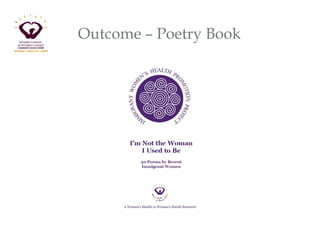
Outcome – Poetry Book
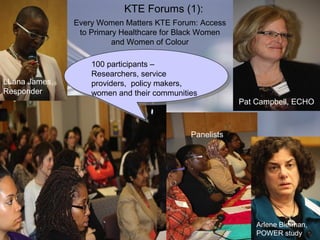
KTE Forums (1): 
Every Women Matters KTE Forum: Access 
to Primary Healthcare for Black Women 
and Women of Colour 
100 participants – 
Researchers, service 
providers, policy makers, 
women and their communities 
Panelists 
Pat Campbell, ECHO 
Arlene Bierman, 
POWER study 
LLana James, 
Responder 
100 participants – 
Researchers, service 
providers, policy makers, 
women and their communities
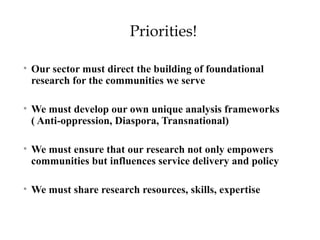
Priorities! 
• Our sector must direct the building of foundational 
research for the communities we serve 
• We must develop our own unique analysis frameworks 
( Anti-oppression, Diaspora, Transnational) 
• We must ensure that our research not only empowers 
communities but influences service delivery and policy 
• We must share research resources, skills, expertise
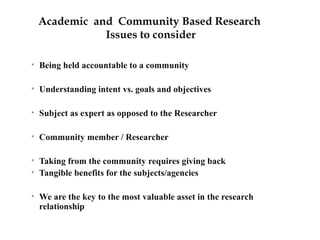
Academic and Community Based Research 
Issues to consider 
• Being held accountable to a community 
• Understanding intent vs. goals and objectives 
• Subject as expert as opposed to the Researcher 
• Community member / Researcher 
• Taking from the community requires giving back 
• Tangible benefits for the subjects/agencies 
• We are the key to the most valuable asset in the research 
relationship
Thank You 
For more information 
www.whiwh.com

The Importance of Research in the Immigrant and Refugee Serving Sector- Notisha Massaquoi

  • 1.
    If Your NotCounted You Don't Count Notisha Massaquoi Executive Director Women’s Health in Women’s Hands CHC
  • 2.
    If We don’tdo our own counting... Underutilization Public education is enough Clients don’t speak English Cultural preferences
  • 3.
    Critical issues areoften lost • The negative side of immigration is frequently not addressed • How do we move past the “Healthy Immigrant Effect” • Immigration discussions often do not focus on women when looking at migration and economic development. • Very little information on individuals without status
  • 4.
    Research used tocreate Unrepresentative Narratives • “Needy and dependent” • Very little is known about immigrant women’s strengths and their successful strategies • Most programs have focused on pathologies and lack of access to health care. • “Canada is a better place”is the preferred focus of funded research
  • 5.
    Reframing Research asan Intervention Strategy • Gaining Strength from collective action to confront and eliminate oppression • Developing knowledge and skills • Developing awareness of systemic causes of social problems • Developing equitable relationships between service users, service providers and researchers • Establishing new forms of supports and networks
  • 6.
    Research at WHIWH- CHC • Began in 1999 due to lack of published literature on health issues impacting racialized women • Difficult to develop effective programs without appropriate research • We needed to generate scientific knowledge to fill existing gaps • Increased requests by health researchers to partner on projects We required a research strategy • Dissemination of knowledge needed to be prioritized • Women and their communities
  • 7.
    Objectives of ourResearch Program • To build scientific knowledge on the health of Racialized Women • Foster autonomy , self determination and leadership skills of Racialized Women • To generate knowledge and evidence to inform and support WHIWH’s strategic plan, programs and services • Translation of knowledge into action • Share knowledge and evidence as widely as possible • Facilitate mutual respect and equal partnerships with Academic - community partnerships
  • 8.
    Research Capacity building and Priority Setting 1. Conduct Staff Research Needs Assessment 1. Client Survey/Interviews /Focus groups on Research Priorities 1. Developed and administered survey to potential academic and community partners
  • 9.
  • 12.
    KTE Forums (1): Every Women Matters KTE Forum: Access to Primary Healthcare for Black Women and Women of Colour 100 participants – Researchers, service providers, policy makers, women and their communities Panelists Pat Campbell, ECHO Arlene Bierman, POWER study LLana James, Responder 100 participants – Researchers, service providers, policy makers, women and their communities
  • 13.
    Priorities! • Oursector must direct the building of foundational research for the communities we serve • We must develop our own unique analysis frameworks ( Anti-oppression, Diaspora, Transnational) • We must ensure that our research not only empowers communities but influences service delivery and policy • We must share research resources, skills, expertise
  • 14.
    Academic and CommunityBased Research Issues to consider • Being held accountable to a community • Understanding intent vs. goals and objectives • Subject as expert as opposed to the Researcher • Community member / Researcher • Taking from the community requires giving back • Tangible benefits for the subjects/agencies • We are the key to the most valuable asset in the research relationship
  • 15.
    Thank You Formore information www.whiwh.com

Editor's Notes

  • #4 Commonly, South-North and East-West migration are taken as an opportunity to prosper. Contradicting traditional migration theory that assumes that immigrants are primarily male, women made up over half of the total immigrant population Despite all the statistics available on immigration, some aspects of it, such as the downside of immigration, are not frequently socially addressed