Obstetrical
pelvic
measurements
• The transverse diameter of the outlet is assessed
  clinically by measuring the distance between the
  ischial tuberosities along a plane passing across the
  anus;
• The anteroposterior outlet diameter is measured
  from the pubis to the sacrococcygeal joint.
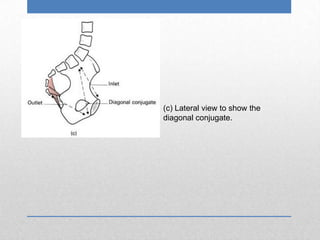
• The most useful measurement clinically is, however,
  the diagonal conjugate—from the lower border of
  the pubic symphysis to the promontory of the
  sacrum.
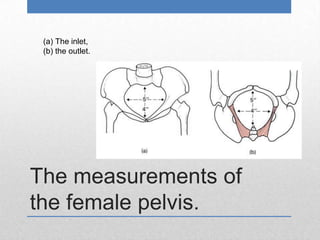
(a) The inlet,
 (b) the outlet.


The measurements of
the female pelvis.
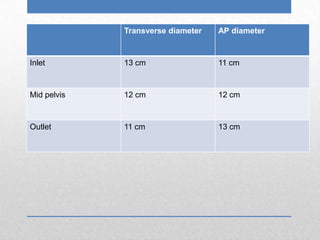
Transverse diameter   AP diameter


Inlet        13 cm                 11 cm


Mid pelvis   12 cm                 12 cm


Outlet       11 cm                 13 cm
(c) Lateral view to show the
diagonal conjugate.
• Another useful clinical guide is the subpubic arch:
  the examiner’s four knuckles (i.e. his clenched fist)
  should rest comfortably between the ischial
  tuberosities below the pubic symphysis.
• Note that these measurements are all of the bony
  pelvis; the ‘dynamic pelvis’ of the birth-canal, in fact,
  is narrowed by the pelvic musculature, the rectum
  and the thickness of the uterine wall. Today accurate
  imaging techniques enable exact measurements to
  be made of the bony pelvis.
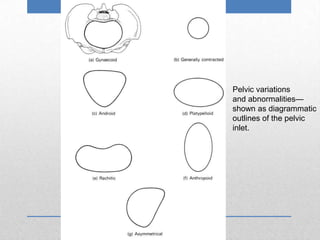
• 1 The normal and its variants
• (a) Gynaecoid—normal.
• (b) Android—the masculine type of pelvis.
• (c) Platypelloid—shortened in the anteroposterior
  diameter, increased in the transverse diameter (the
  ‘non-rachitic flat pelvis’).
• (d) Anthropoid—resembling that of an anthropoid
  ape with a much lengthened anteroposterior and a
  shortened transverse diameter.

Variations of the
pelvic shape
Pelvic variations
and abnormalities—
shown as diagrammatic
outlines of the pelvic
inlet.
• 2◊◊Symmetrically contracted pelvis
• That of a small woman but with a symmetrical shape.

• 3◊◊The Rachitic flat pelvis
• The sacrum is rotated so that the sacral promontory projects
  forward and the coccyx tips backwards. The anteroposterior
  diameter of the inlet is therefore narrowed, but that of the outlet is
  increased. This deformity is typical of rickets, the result of vitamin D
  deficiency.

• 4◊◊The asymmetrical
• Asymmetry can be due to a variety of causes such as
  scoliosis, longstanding hip disease (e.g. congenital
  dislocation), poliomyelitis, pelvic frac ture, congenital abnormality
  due to thalidomide and the Naegele pelvis which is due to the
  congenital absence of one wing of the sacrum or its destruction by
  disease.

Obstetrical pelvic measurements

  • 1.
  • 2.
    • The transversediameter of the outlet is assessed clinically by measuring the distance between the ischial tuberosities along a plane passing across the anus; • The anteroposterior outlet diameter is measured from the pubis to the sacrococcygeal joint. • The most useful measurement clinically is, however, the diagonal conjugate—from the lower border of the pubic symphysis to the promontory of the sacrum.
  • 3.
    (a) The inlet, (b) the outlet. The measurements of the female pelvis.
  • 4.
    Transverse diameter AP diameter Inlet 13 cm 11 cm Mid pelvis 12 cm 12 cm Outlet 11 cm 13 cm
  • 5.
    (c) Lateral viewto show the diagonal conjugate.
  • 6.
    • Another usefulclinical guide is the subpubic arch: the examiner’s four knuckles (i.e. his clenched fist) should rest comfortably between the ischial tuberosities below the pubic symphysis. • Note that these measurements are all of the bony pelvis; the ‘dynamic pelvis’ of the birth-canal, in fact, is narrowed by the pelvic musculature, the rectum and the thickness of the uterine wall. Today accurate imaging techniques enable exact measurements to be made of the bony pelvis.
  • 7.
    • 1 Thenormal and its variants • (a) Gynaecoid—normal. • (b) Android—the masculine type of pelvis. • (c) Platypelloid—shortened in the anteroposterior diameter, increased in the transverse diameter (the ‘non-rachitic flat pelvis’). • (d) Anthropoid—resembling that of an anthropoid ape with a much lengthened anteroposterior and a shortened transverse diameter. Variations of the pelvic shape
  • 8.
    Pelvic variations and abnormalities— shownas diagrammatic outlines of the pelvic inlet.
  • 9.
    • 2◊◊Symmetrically contractedpelvis • That of a small woman but with a symmetrical shape. • 3◊◊The Rachitic flat pelvis • The sacrum is rotated so that the sacral promontory projects forward and the coccyx tips backwards. The anteroposterior diameter of the inlet is therefore narrowed, but that of the outlet is increased. This deformity is typical of rickets, the result of vitamin D deficiency. • 4◊◊The asymmetrical • Asymmetry can be due to a variety of causes such as scoliosis, longstanding hip disease (e.g. congenital dislocation), poliomyelitis, pelvic frac ture, congenital abnormality due to thalidomide and the Naegele pelvis which is due to the congenital absence of one wing of the sacrum or its destruction by disease.