Giving a giftGiving a gift
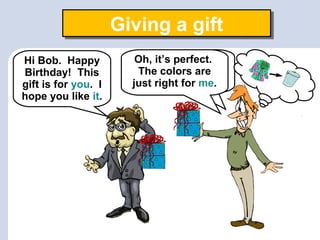
Hi Bob. Happy
Birthday! This
gift is for you. I
hope you like it.
It’s for me? Oh,
thank you. You
shouldn’t have.
Oh, it’s perfect.
The colors are
just right for me.
Re-GiftingRe-Gifting
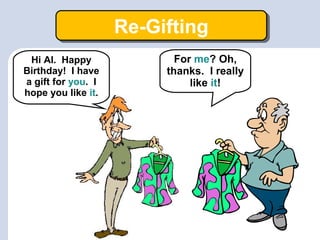
Hi Al. Happy
Birthday! I have
a gift for you. I
hope you like it.
For me? Oh,
thanks. I really
like it!
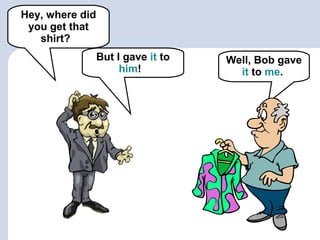
Hey, where did
you get that
shirt?
But I gave it to
him!
Well, Bob gave
it to me.
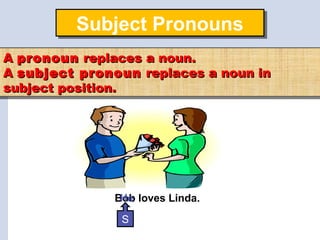
Bob loves Linda.He
Subject PronounsSubject Pronouns
AA pronounpronoun replaces a noun.replaces a noun.
AA subject pronounsubject pronoun replaces a noun inreplaces a noun in
subject position.subject position.
S
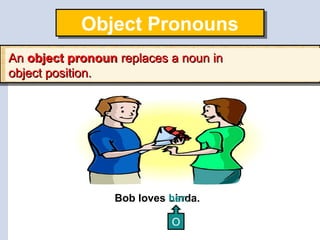
Bob loves Linda.her.
O
Object PronounsObject Pronouns
AnAn object pronounobject pronoun replaces a noun inreplaces a noun in
object position.object position.
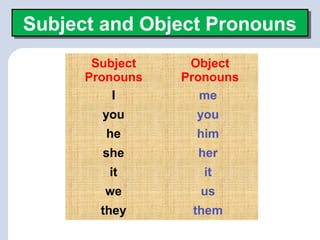
Subject
Pronouns
Object
Pronouns
me
you
him
her
it
us
them
I
you
he
she
it
we
they
Subject and Object PronounsSubject and Object Pronouns
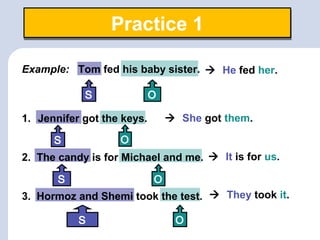
Example: Tom fed his baby sister.
1. Jennifer got the keys.
2. The candy is for Michael and me.
3. Hormoz and Shemi took the test.
S
S
S
 He fed her.
 She got them.
 It is for us.
 They took it.
Practice 1Practice 1
O
O
O
O
S
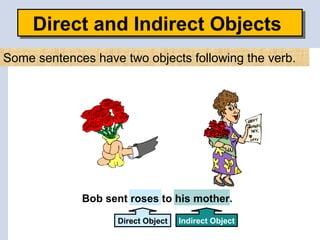
Direct Object
Bob sent roses to his mother.
Direct and Indirect ObjectsDirect and Indirect Objects
Some sentences have two objects following the verb.
Indirect Object
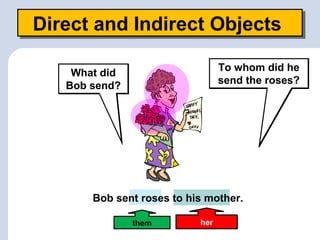
them
Direct and Indirect ObjectsDirect and Indirect Objects
Bob sent roses to his mother.
What did
Bob send?
What did
Bob send?
To whom did he
send the roses?
To whom did he
send the roses?
her
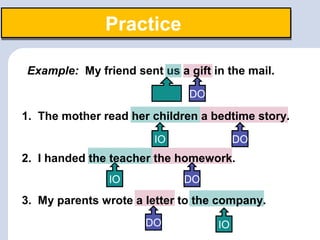
Example: My friend sent us a gift in the mail.
PracticePractice
DO
DOIO
DOIO
DO IO
1. The mother read her children a bedtime story.
2. I handed the teacher the homework.
3. My parents wrote a letter to the company.
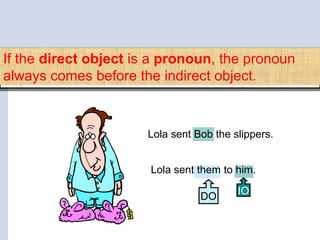
IO
DO
Lola sent them to him.
Lola sent Bob the slippers.
If the direct object is a pronoun, the pronoun
always comes before the indirect object.
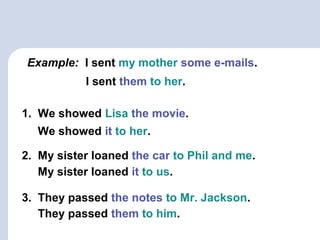
Example: I sent my mother some e-mails.
1. We showed Lisa the movie.
2. My sister loaned the car to Phil and me.
3. They passed the notes to Mr. Jackson.
I sent them to her.
We showed it to her.
My sister loaned it to us.
They passed them to him.
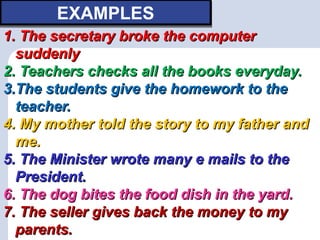
EXAMPLESEXAMPLES
1. The secretary broke the computer1. The secretary broke the computer
suddenlysuddenly
2. Teachers checks all the books everyday.2. Teachers checks all the books everyday.
3.The students give the homework to the3.The students give the homework to the
teacher.teacher.
4. My mother told the story to my father and4. My mother told the story to my father and
me.me.
5. The Minister wrote many e mails to the5. The Minister wrote many e mails to the
President.President.
6. The dog bites the food dish in the yard.6. The dog bites the food dish in the yard.
7. The seller gives back the money to my7. The seller gives back the money to my
parents.parents.
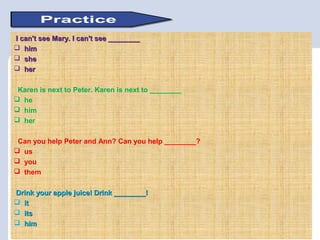
I can't see Mary. I can't see ________I can't see Mary. I can't see ________
 himhim
 sheshe
 herher
Karen is next to Peter. Karen is next to ________
 he
 him
 her
Can you help Peter and Ann? Can you help ________?
 us
 you
 them
 
Drink your apple juice! Drink ________!Drink your apple juice! Drink ________!
 itit
 itsits
 himhim
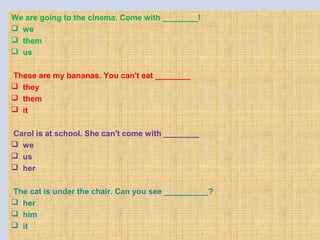
We are going to the cinema. Come with ________!
 we
 them
 us
 
These are my bananas. You can't eat ________
 they
 them
 it
 
Carol is at school. She can't come with ________
 we
 us
 her
 
 The cat is under the chair. Can you see __________?
 her
 him
 it
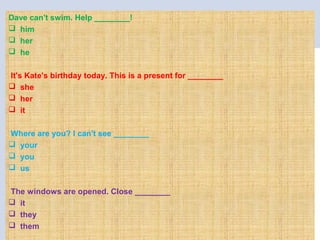
Dave can't swim. Help ________!
 him
 her
 he
 
It's Kate's birthday today. This is a present for ________
 she
 her
 it
Where are you? I can't see ________
 your
 you
 us
The windows are opened. Close ________
 it
 they
 them
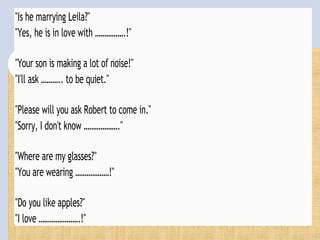
"Is he marrying Leila?"
"Yes, he is in love with …………….!"
"Your son is making a lot of noise!"
"I'll ask ……….. to be quiet."
"Please will you ask Robert to come in."
"Sorry, I don't know ………………."
"Where are my glasses?"
"You are wearing ………………!"
"Do you like apples?"
"I love ………………….!"
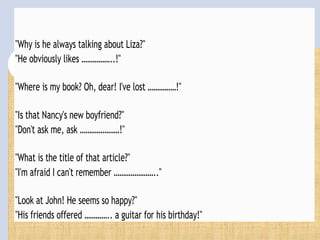
"Why is he always talking about Liza?"
"He obviously likes ……………..!"
"Where is my book? Oh, dear! I've lost ……………!"
"Is that Nancy's new boyfriend?"
"Don't ask me, ask …………………!"
"What is the title of that article?"
"I'm afraid I can't remember ………………….."
"Look at John! He seems so happy?"
"His friends offered ………….. a guitar for his birthday!"
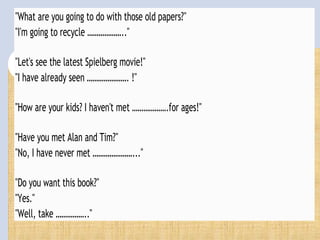
"What are you going to do with those old papers?"
"I'm going to recycle ……………….."
"Let's see the latest Spielberg movie!"
"I have already seen …………………. !"
"How are your kids? I haven't met ……………….for ages!"
"Have you met Alan and Tim?"
"No, I have never met …………………..."
"Do you want this book?"
"Yes."
"Well, take …………….."
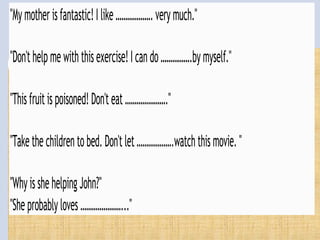
"Mymotherisfantastic!I like……………….verymuch."
"Don'thelpme withthisexercise!Icando…………….bymyself."
"Thisfruitispoisoned!Don'teat …………………."
"Takethechildrentobed.Don'tlet……………….watchthismovie. "
"WhyisshehelpingJohn?"
"Sheprobablyloves …………………..."

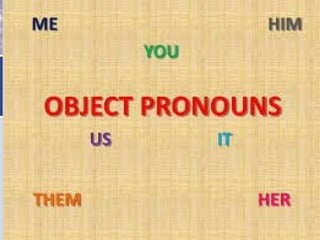
Object pronouns

  • 2.
    Giving a giftGivinga gift Hi Bob. Happy Birthday! This gift is for you. I hope you like it. It’s for me? Oh, thank you. You shouldn’t have. Oh, it’s perfect. The colors are just right for me.
  • 3.
    Re-GiftingRe-Gifting Hi Al. Happy Birthday!I have a gift for you. I hope you like it. For me? Oh, thanks. I really like it!
  • 4.
    Hey, where did youget that shirt? But I gave it to him! Well, Bob gave it to me.
  • 5.
    Bob loves Linda.He SubjectPronounsSubject Pronouns AA pronounpronoun replaces a noun.replaces a noun. AA subject pronounsubject pronoun replaces a noun inreplaces a noun in subject position.subject position. S
  • 6.
    Bob loves Linda.her. O ObjectPronounsObject Pronouns AnAn object pronounobject pronoun replaces a noun inreplaces a noun in object position.object position.
  • 7.
  • 8.
    Example: Tom fedhis baby sister. 1. Jennifer got the keys. 2. The candy is for Michael and me. 3. Hormoz and Shemi took the test. S S S  He fed her.  She got them.  It is for us.  They took it. Practice 1Practice 1 O O O O S
  • 9.
    Direct Object Bob sentroses to his mother. Direct and Indirect ObjectsDirect and Indirect Objects Some sentences have two objects following the verb. Indirect Object
  • 10.
    them Direct and IndirectObjectsDirect and Indirect Objects Bob sent roses to his mother. What did Bob send? What did Bob send? To whom did he send the roses? To whom did he send the roses? her
  • 11.
    Example: My friendsent us a gift in the mail. PracticePractice DO DOIO DOIO DO IO 1. The mother read her children a bedtime story. 2. I handed the teacher the homework. 3. My parents wrote a letter to the company.
  • 12.
    IO DO Lola sent themto him. Lola sent Bob the slippers. If the direct object is a pronoun, the pronoun always comes before the indirect object.
  • 13.
    Example: I sentmy mother some e-mails. 1. We showed Lisa the movie. 2. My sister loaned the car to Phil and me. 3. They passed the notes to Mr. Jackson. I sent them to her. We showed it to her. My sister loaned it to us. They passed them to him.
  • 14.
    EXAMPLESEXAMPLES 1. The secretarybroke the computer1. The secretary broke the computer suddenlysuddenly 2. Teachers checks all the books everyday.2. Teachers checks all the books everyday. 3.The students give the homework to the3.The students give the homework to the teacher.teacher. 4. My mother told the story to my father and4. My mother told the story to my father and me.me. 5. The Minister wrote many e mails to the5. The Minister wrote many e mails to the President.President. 6. The dog bites the food dish in the yard.6. The dog bites the food dish in the yard. 7. The seller gives back the money to my7. The seller gives back the money to my parents.parents.
  • 15.
    I can't seeMary. I can't see ________I can't see Mary. I can't see ________  himhim  sheshe  herher Karen is next to Peter. Karen is next to ________  he  him  her Can you help Peter and Ann? Can you help ________?  us  you  them   Drink your apple juice! Drink ________!Drink your apple juice! Drink ________!  itit  itsits  himhim
  • 16.
    We are goingto the cinema. Come with ________!  we  them  us   These are my bananas. You can't eat ________  they  them  it   Carol is at school. She can't come with ________  we  us  her    The cat is under the chair. Can you see __________?  her  him  it
  • 17.
    Dave can't swim.Help ________!  him  her  he   It's Kate's birthday today. This is a present for ________  she  her  it Where are you? I can't see ________  your  you  us The windows are opened. Close ________  it  they  them
  • 18.
    "Is he marryingLeila?" "Yes, he is in love with …………….!" "Your son is making a lot of noise!" "I'll ask ……….. to be quiet." "Please will you ask Robert to come in." "Sorry, I don't know ………………." "Where are my glasses?" "You are wearing ………………!" "Do you like apples?" "I love ………………….!"
  • 19.
    "Why is healways talking about Liza?" "He obviously likes ……………..!" "Where is my book? Oh, dear! I've lost ……………!" "Is that Nancy's new boyfriend?" "Don't ask me, ask …………………!" "What is the title of that article?" "I'm afraid I can't remember ………………….." "Look at John! He seems so happy?" "His friends offered ………….. a guitar for his birthday!"
  • 20.
    "What are yougoing to do with those old papers?" "I'm going to recycle ……………….." "Let's see the latest Spielberg movie!" "I have already seen …………………. !" "How are your kids? I haven't met ……………….for ages!" "Have you met Alan and Tim?" "No, I have never met …………………..." "Do you want this book?" "Yes." "Well, take …………….."
  • 21.
    "Mymotherisfantastic!I like……………….verymuch." "Don'thelpme withthisexercise!Icando…………….bymyself." "Thisfruitispoisoned!Don'teat…………………." "Takethechildrentobed.Don'tlet……………….watchthismovie. " "WhyisshehelpingJohn?" "Sheprobablyloves …………………..."