ORGANISATIONAL
BEHAVIOUR
Introduction
Organization
Organisation is any organized group of people with a particular
purpose, such as a business or government department.
Organizational Behaviour
It is the study and application of knowledge about how people,
individuals, and group act in an organisation.
• It is also the study of the way how people interact with groups.
DEFINITION
According to Callahan “OB is a branch of management concerned with
understanding, predicting and influencing individual behaviour in
organization setting
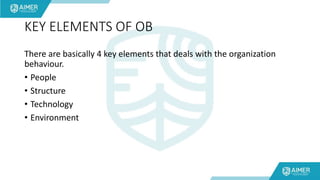
KEY ELEMENTS OF OB
There are basically 4 key elements that deals with the organization
behaviour.
• People
• Structure
• Technology
• Environment
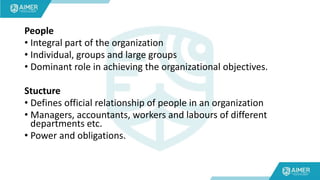
People
• Integral part of the organization
• Individual, groups and large groups
• Dominant role in achieving the organizational objectives.
Stucture
• Defines official relationship of people in an organization
• Managers, accountants, workers and labours of different
departments etc.
• Power and obligations.
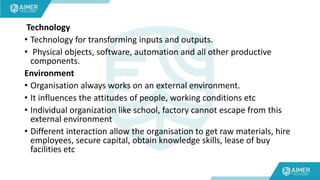
Technology
• Technology for transforming inputs and outputs.
• Physical objects, software, automation and all other productive
components.
Environment
• Organisation always works on an external environment.
• It influences the attitudes of people, working conditions etc
• Individual organization like school, factory cannot escape from this
external environment
• Different interaction allow the organisation to get raw materials, hire
employees, secure capital, obtain knowledge skills, lease of buy
facilities etc
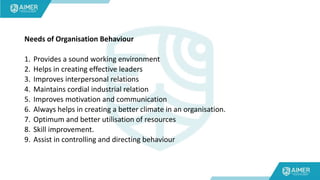
Needs of Organisation Behaviour
1. Provides a sound working environment
2. Helps in creating effective leaders
3. Improves interpersonal relations
4. Maintains cordial industrial relation
5. Improves motivation and communication
6. Always helps in creating a better climate in an organisation.
7. Optimum and better utilisation of resources
8. Skill improvement.
9. Assist in controlling and directing behaviour
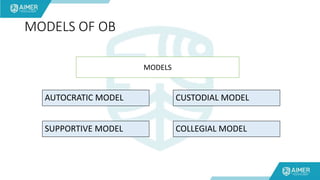
MODELS OF OB
MODELS
AUTOCRATIC MODEL CUSTODIAL MODEL
SUPPORTIVE MODEL COLLEGIAL MODEL
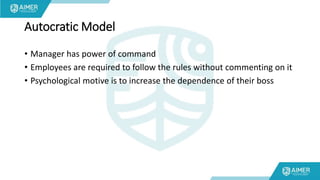
Autocratic Model
• Manager has power of command
• Employees are required to follow the rules without commenting on it
• Psychological motive is to increase the dependence of their boss
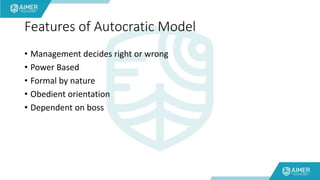
Features of Autocratic Model
• Management decides right or wrong
• Power Based
• Formal by nature
• Obedient orientation
• Dependent on boss
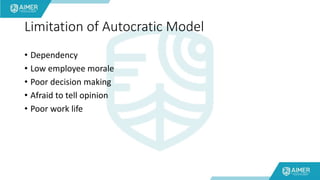
Limitation of Autocratic Model
• Dependency
• Low employee morale
• Poor decision making
• Afraid to tell opinion
• Poor work life
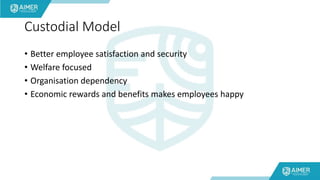
Custodial Model
• Better employee satisfaction and security
• Welfare focused
• Organisation dependency
• Economic rewards and benefits makes employees happy
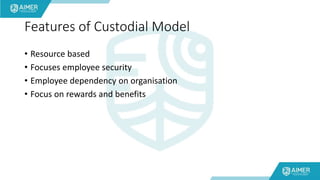
Features of Custodial Model
• Resource based
• Focuses employee security
• Employee dependency on organisation
• Focus on rewards and benefits
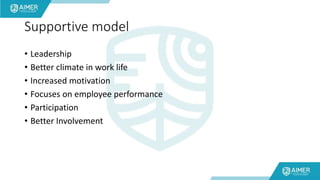
Supportive model
• Leadership
• Better climate in work life
• Increased motivation
• Focuses on employee performance
• Participation
• Better Involvement
Features of Supportive Model
• Based on Leadership
• Leader support employees
• Increases participation
• Strongly motivated employees
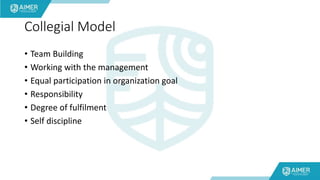
Collegial Model
• Team Building
• Working with the management
• Equal participation in organization goal
• Responsibility
• Degree of fulfilment
• Self discipline
Features of Collegial Model
• Based on employee cooperation
• Focuses teamwork
• Employees feel responsible
• Satisfaction of employees
Benefits of Studying OB
• Understand human behaviour
• Assist in controlling and directing behaviour
• Explain the use of power and obligation
• Understanding leadership
• Evaluates communication process
• Understanding organisational climate
THANK YOU

OB MODULE 1.pptx

  • 1.
  • 2.
    Introduction Organization Organisation is anyorganized group of people with a particular purpose, such as a business or government department. Organizational Behaviour It is the study and application of knowledge about how people, individuals, and group act in an organisation. • It is also the study of the way how people interact with groups.
  • 3.
    DEFINITION According to Callahan“OB is a branch of management concerned with understanding, predicting and influencing individual behaviour in organization setting
  • 4.
    KEY ELEMENTS OFOB There are basically 4 key elements that deals with the organization behaviour. • People • Structure • Technology • Environment
  • 5.
    People • Integral partof the organization • Individual, groups and large groups • Dominant role in achieving the organizational objectives. Stucture • Defines official relationship of people in an organization • Managers, accountants, workers and labours of different departments etc. • Power and obligations.
  • 6.
    Technology • Technology fortransforming inputs and outputs. • Physical objects, software, automation and all other productive components. Environment • Organisation always works on an external environment. • It influences the attitudes of people, working conditions etc • Individual organization like school, factory cannot escape from this external environment • Different interaction allow the organisation to get raw materials, hire employees, secure capital, obtain knowledge skills, lease of buy facilities etc
  • 7.
    Needs of OrganisationBehaviour 1. Provides a sound working environment 2. Helps in creating effective leaders 3. Improves interpersonal relations 4. Maintains cordial industrial relation 5. Improves motivation and communication 6. Always helps in creating a better climate in an organisation. 7. Optimum and better utilisation of resources 8. Skill improvement. 9. Assist in controlling and directing behaviour
  • 8.
    MODELS OF OB MODELS AUTOCRATICMODEL CUSTODIAL MODEL SUPPORTIVE MODEL COLLEGIAL MODEL
  • 9.
    Autocratic Model • Managerhas power of command • Employees are required to follow the rules without commenting on it • Psychological motive is to increase the dependence of their boss
  • 10.
    Features of AutocraticModel • Management decides right or wrong • Power Based • Formal by nature • Obedient orientation • Dependent on boss
  • 11.
    Limitation of AutocraticModel • Dependency • Low employee morale • Poor decision making • Afraid to tell opinion • Poor work life
  • 12.
    Custodial Model • Betteremployee satisfaction and security • Welfare focused • Organisation dependency • Economic rewards and benefits makes employees happy
  • 13.
    Features of CustodialModel • Resource based • Focuses employee security • Employee dependency on organisation • Focus on rewards and benefits
  • 14.
    Supportive model • Leadership •Better climate in work life • Increased motivation • Focuses on employee performance • Participation • Better Involvement
  • 15.
    Features of SupportiveModel • Based on Leadership • Leader support employees • Increases participation • Strongly motivated employees
  • 16.
    Collegial Model • TeamBuilding • Working with the management • Equal participation in organization goal • Responsibility • Degree of fulfilment • Self discipline
  • 17.
    Features of CollegialModel • Based on employee cooperation • Focuses teamwork • Employees feel responsible • Satisfaction of employees
  • 18.
    Benefits of StudyingOB • Understand human behaviour • Assist in controlling and directing behaviour • Explain the use of power and obligation • Understanding leadership • Evaluates communication process • Understanding organisational climate
  • 19.