BY : DR SITI AZILA 
MODERATOR : DR NIK AZMAN 
DATE : 12TH JANUARY 2012
OUTLINES 
 History 
 The Basis of Nutritional Support 
 Physiologic Effect of malnourish 
 Nutritional Requirement 
 Supplimented nutrition 
 Routes of administration ( Enteral, parenteral)
SIX SIMPLE QUESTIONS 
 Why do we feed ICU patients? 
 Which patients should we feed? 
 When should we start to feed them? 
 Which route should we feed by? 
 How much feed should we give? 
 What should the feed contain?
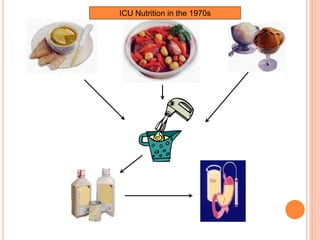
ICU Nutrition in the 1970s
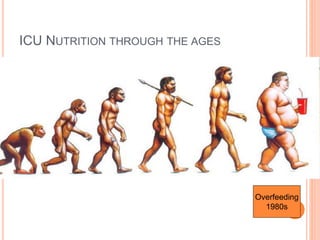
ICU NUTRITION THROUGH THE AGES 
Overfeeding 
1980s
THE BASIS OF NUTRITIONAL SUPPORT 
 Most patients in ICU are unable to tolerate normal 
diet 
 many of them are malnourished on admission 
 nutrients can be delivered directly to the GIT by 
feeding tubes( enteral feeding) or by intravenous ( 
parentral feeding) 
 nutrition is provided against a bakground of a 
continously changing physical status
THE BASIS OF NUTRITIONAL SUPPORT 
 few data directly compare feeding with no 
feeding in critical patients and it suggest 
worse outcomes in underfed patients 
 catabolism of critical illness causes 
malnutrition 
 malnutrition closely associated with poor 
outcomes
THE BASIS OF NUTRITIONAL SUPPORT 
 Stress, acute illness, surgery or trauma produce 
major changes in the metabolic milieu of the body 
changes in substrate utilization 
altered substance synthesis rates 
hypermetabolism 
catabolism
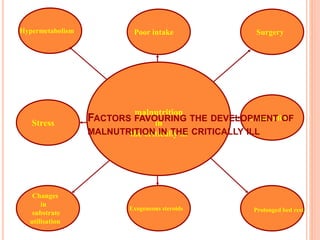
Poor intake Surgery 
malnutrition 
FACTORS FAVOURING THE DEVELOPMENT OF 
in 
MALNUTRITION IN THE CRITICALLY ILL 
the critically ill 
Hypermetabolism 
Stress 
Changes 
in 
substrate 
utilisation 
Immobility 
Exogeneous steroids Prolonged bed rest
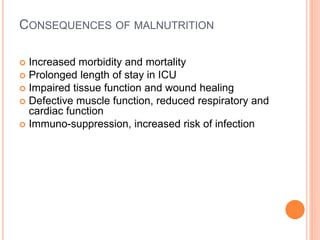
CONSEQUENCES OF MALNUTRITION 
 Increased morbidity and mortality 
 Prolonged length of stay in ICU 
 Impaired tissue function and wound healing 
 Defective muscle function, reduced respiratory and 
cardiac function 
 Immuno-suppression, increased risk of infection
Malnutrition causes widespread organ 
dysfunction, ass. with poor healing, reduce 
immune competence & poor weaning from 
ventilator. 
Stress & sepsis further increase metabolic rate 
& if the energy required is not met with 
adequate dietary intake, it will results in 
catabolism. 
Goal of nutritional support : to improve patients 
outcome and reduce the morbidity and 
mortality.
NUTRITIONAL SUPPORT IS NOT 
CRUCIAL IN “GUT FAILURE” 
Is that the right statement?
TRY TELLING THE RESPIRATORY 
PHYSICIAN THAT VENTILATORY 
SUPPORT IS NOT IMPORTANT IN 
RESPIRATORY FAILURE
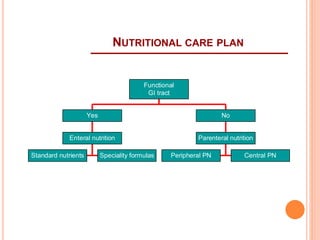
NUTRITIONAL CARE PLAN 
Yes 
Enteral nutrition 
Functional 
GI tract 
Standard nutrients Speciality formulas 
No 
Parenteral nutrition 
Peripheral PN Central PN
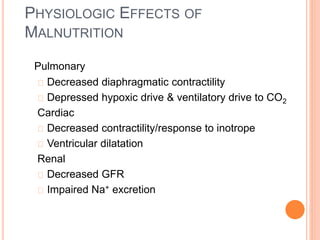
PHYSIOLOGIC EFFECTS OF 
MALNUTRITION 
Pulmonary 
Decreased diaphragmatic contractility 
Depressed hypoxic drive & ventilatory drive to CO2 
Cardiac 
Decreased contractility/response to inotrope 
Ventricular dilatation 
Renal 
Decreased GFR 
Impaired Na+ excretion
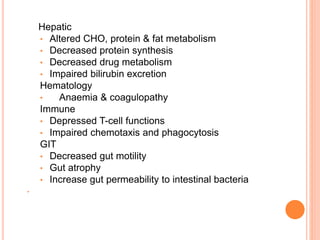
Hepatic 
• Altered CHO, protein & fat metabolism 
• Decreased protein synthesis 
• Decreased drug metabolism 
• Impaired bilirubin excretion 
Hematology 
• Anaemia & coagulopathy 
Immune 
• Depressed T-cell functions 
• Impaired chemotaxis and phagocytosis 
GIT 
• Decreased gut motility 
• Gut atrophy 
• Increase gut permeability to intestinal bacteria 
•
NUTRITION REQUIREMENT
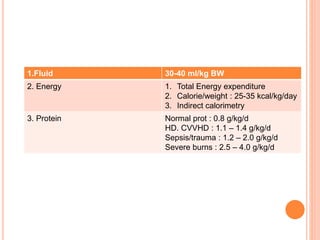
1.Fluid 30-40 ml/kg BW 
2. Energy 1. Total Energy expenditure 
2. Calorie/weight : 25-35 kcal/kg/day 
3. Indirect calorimetry 
3. Protein Normal prot : 0.8 g/kg/d 
HD. CVVHD : 1.1 – 1.4 g/kg/d 
Sepsis/trauma : 1.2 – 2.0 g/kg/d 
Severe burns : 2.5 – 4.0 g/kg/d
NUTRITIONAL REQUIREMENTS 
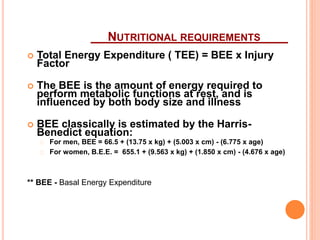
 Total Energy Expenditure ( TEE) = BEE x Injury 
Factor 
 The BEE is the amount of energy required to 
perform metabolic functions at rest, and is 
influenced by both body size and illness 
 BEE classically is estimated by the Harris- 
Benedict equation: 
For men, BEE = 66.5 + (13.75 x kg) + (5.003 x cm) - (6.775 x age) 
For women, B.E.E. = 655.1 + (9.563 x kg) + (1.850 x cm) - (4.676 x age) 
** BEE - Basal Energy Expenditure
NUTRITIONAL REQUIREMENTS 
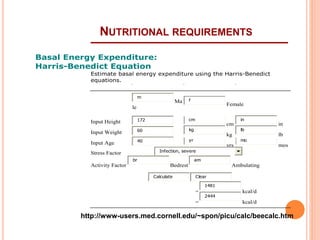
Basal Energy Expenditure: 
Harris-Benedict Equation 
Estimate basal energy expenditure using the Harris-Benedict 
equations. 
m 
Ma 
le 
f 
Female 
Input Height 172 cm 
cm 
in 
in 
Input Weight 60 kg 
kg 
lb 
lb 
Input Age 40 yr 
yrs 
mo 
mos 
Stress Factor 
Infection, severe 
Activity Factor 
br 
Bedrest 
am 
Ambulating 
Calculate Clear 
B.E.E. = 
1481 
kcal/d 
Caloric Requirement = 
2444 
kcal/d 
http://www-users.med.cornell.edu/~spon/picu/calc/beecalc.htm
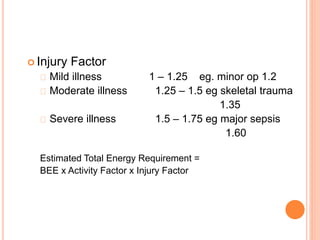
 Injury Factor 
Mild illness 1 – 1.25 eg. minor op 1.2 
Moderate illness 1.25 – 1.5 eg skeletal trauma 
1.35 
Severe illness 1.5 – 1.75 eg major sepsis 
1.60 
Estimated Total Energy Requirement = 
BEE x Activity Factor x Injury Factor
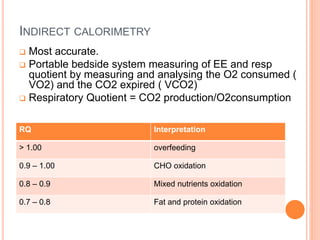
INDIRECT CALORIMETRY 
 Most accurate. 
 Portable bedside system measuring of EE and resp 
quotient by measuring and analysing the O2 consumed ( 
VO2) and the CO2 expired ( VCO2) 
 Respiratory Quotient = CO2 production/O2consumption 
RQ Interpretation 
> 1.00 overfeeding 
0.9 – 1.00 CHO oxidation 
0.8 – 0.9 Mixed nutrients oxidation 
0.7 – 0.8 Fat and protein oxidation
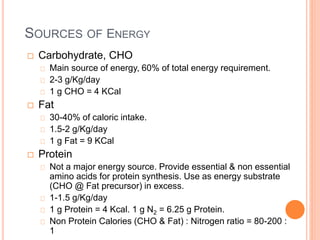
SOURCES OF ENERGY 
 Carbohydrate, CHO 
Main source of energy, 60% of total energy requirement. 
2-3 g/Kg/day 
1 g CHO = 4 KCal 
 Fat 
30-40% of caloric intake. 
1.5-2 g/Kg/day 
1 g Fat = 9 KCal 
 Protein 
Not a major energy source. Provide essential & non essential 
amino acids for protein synthesis. Use as energy substrate 
(CHO @ Fat precursor) in excess. 
1-1.5 g/Kg/day 
1 g Protein = 4 Kcal. 1 g N2 = 6.25 g Protein. 
Non Protein Calories (CHO & Fat) : Nitrogen ratio = 80-200 : 
1
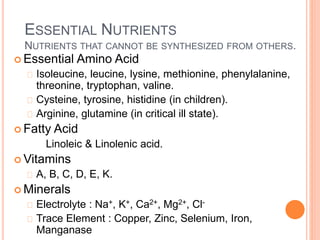
ESSENTIAL NUTRIENTS 
NUTRIENTS THAT CANNOT BE SYNTHESIZED FROM OTHERS. 
 Essential Amino Acid 
Isoleucine, leucine, lysine, methionine, phenylalanine, 
threonine, tryptophan, valine. 
Cysteine, tyrosine, histidine (in children). 
Arginine, glutamine (in critical ill state). 
 Fatty Acid 
Linoleic & Linolenic acid. 
Vitamins 
A, B, C, D, E, K. 
 Minerals 
Electrolyte : Na+, K+, Ca2+, Mg2+, Cl- 
Trace Element : Copper, Zinc, Selenium, Iron, 
Manganase
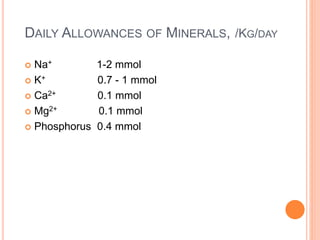
DAILY ALLOWANCES OF MINERALS, /KG/DAY 
 Na+ 1-2 mmol 
 K+ 0.7 - 1 mmol 
 Ca2+ 0.1 mmol 
 Mg2+ 0.1 mmol 
 Phosphorus 0.4 mmol
ENTERAL FEEDING
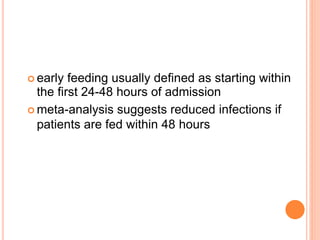
 early feeding usually defined as starting within 
the first 24-48 hours of admission 
 meta-analysis suggests reduced infections if 
patients are fed within 48 hours
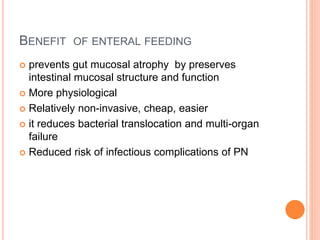
BENEFIT OF ENTERAL FEEDING 
 prevents gut mucosal atrophy by preserves 
intestinal mucosal structure and function 
 More physiological 
 Relatively non-invasive, cheap, easier 
 it reduces bacterial translocation and multi-organ 
failure 
 Reduced risk of infectious complications of PN
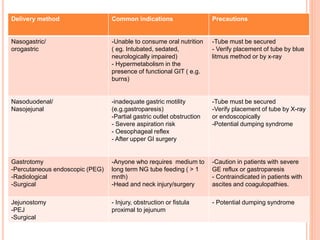
Delivery method Common indications Precautions 
Nasogastric/ 
orogastric 
-Unable to consume oral nutrition 
( eg. Intubated, sedated, 
neurologically impaired) 
- Hypermetabolism in the 
presence of functional GIT ( e.g. 
burns) 
-Tube must be secured 
- Verify placement of tube by blue 
litmus method or by x-ray 
Nasoduodenal/ 
Nasojejunal 
-inadequate gastric motility 
(e.g.gastroparesis) 
-Partial gastric outlet obstruction 
- Severe aspiration risk 
- Oesophageal reflex 
- After upper GI surgery 
-Tube must be secured 
-Verify placement of tube by X-ray 
or endoscopically 
-Potential dumping syndrome 
Gastrotomy 
-Percutaneous endoscopic (PEG) 
-Radiological 
-Surgical 
-Anyone who requires medium to 
long term NG tube feeding ( > 1 
mnth) 
-Head and neck injury/surgery 
-Caution in patients with severe 
GE reflux or gastroparesis 
- Contraindicated in patients with 
ascites and coagulopathies. 
Jejunostomy 
-PEJ 
-Surgical 
- Injury, obstruction or fistula 
proximal to jejunum 
- Potential dumping syndrome
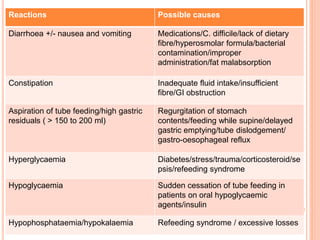
Reactions Possible causes 
Diarrhoea +/- nausea and vomiting Medications/C. difficile/lack of dietary 
fibre/hyperosmolar formula/bacterial 
contamination/improper 
administration/fat malabsorption 
Constipation Inadequate fluid intake/insufficient 
fibre/GI obstruction 
Aspiration of tube feeding/high gastric 
residuals ( > 150 to 200 ml) 
Regurgitation of stomach 
contents/feeding while supine/delayed 
gastric emptying/tube dislodgement/ 
gastro-oesophageal reflux 
Hyperglycaemia Diabetes/stress/trauma/corticosteroid/se 
psis/refeeding syndrome 
Hypoglycaemia Sudden cessation of tube feeding in 
patients on oral hypoglycaemic 
agents/insulin 
Hypophosphataemia/hypokalaemia Refeeding syndrome / excessive losses
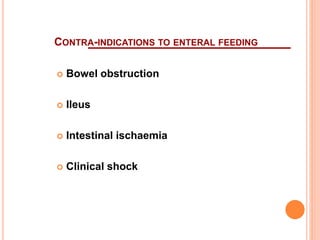
CONTRA-INDICATIONS TO ENTERAL FEEDING 
 Bowel obstruction 
 Ileus 
 Intestinal ischaemia 
 Clinical shock
PROTOCOL FOR ENTERAL FEEDING 
 Guidelines in Enteral_feeding.pdf
PARENTRAL NUTRITION
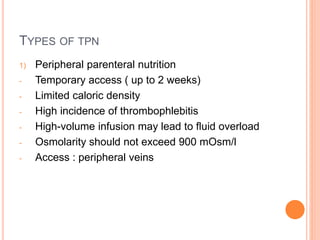
TYPES OF TPN 
1) Peripheral parenteral nutrition 
- Temporary access ( up to 2 weeks) 
- Limited caloric density 
- High incidence of thrombophlebitis 
- High-volume infusion may lead to fluid overload 
- Osmolarity should not exceed 900 mOsm/l 
- Access : peripheral veins
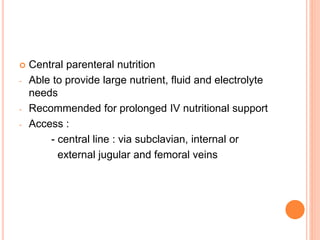
 Central parenteral nutrition 
- Able to provide large nutrient, fluid and electrolyte 
needs 
- Recommended for prolonged IV nutritional support 
- Access : 
- central line : via subclavian, internal or 
external jugular and femoral veins
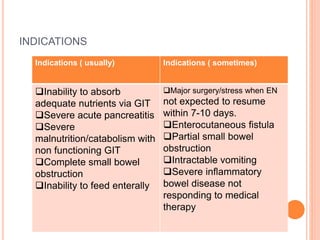
INDICATIONS 
Indications ( usually) Indications ( sometimes) 
Inability to absorb 
adequate nutrients via GIT 
Severe acute pancreatitis 
Severe 
malnutrition/catabolism with 
non functioning GIT 
Complete small bowel 
obstruction 
Inability to feed enterally 
Major surgery/stress when EN 
not expected to resume 
within 7-10 days. 
Enterocutaneous fistula 
Partial small bowel 
obstruction 
Intractable vomiting 
Severe inflammatory 
bowel disease not 
responding to medical 
therapy
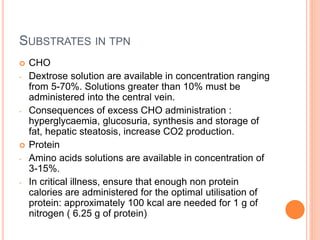
 Whenever possible, TPN should be instituted 
simultaneously with enteral feeding. Partial feeding 
via enteral route preserves intestinal mucosa 
viability and may prevent bacterial translocation 
through the gut wall.
SUBSTRATES IN TPN 
 CHO 
- Dextrose solution are available in concentration ranging 
from 5-70%. Solutions greater than 10% must be 
administered into the central vein. 
- Consequences of excess CHO administration : 
hyperglycaemia, glucosuria, synthesis and storage of 
fat, hepatic steatosis, increase CO2 production. 
 Protein 
- Amino acids solutions are available in concentration of 
3-15%. 
- In critical illness, ensure that enough non protein 
calories are administered for the optimal utilisation of 
protein: approximately 100 kcal are needed for 1 g of 
nitrogen ( 6.25 g of protein)
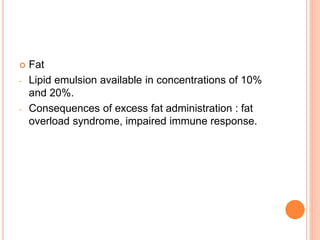
 Fat 
- Lipid emulsion available in concentrations of 10% 
and 20%. 
- Consequences of excess fat administration : fat 
overload syndrome, impaired immune response.
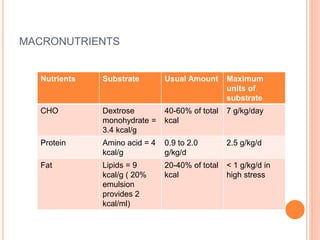
MACRONUTRIENTS 
Nutrients Substrate Usual Amount Maximum 
units of 
substrate 
CHO Dextrose 
monohydrate = 
3.4 kcal/g 
40-60% of total 
kcal 
7 g/kg/day 
Protein Amino acid = 4 
kcal/g 
0.9 to 2.0 
g/kg/d 
2.5 g/kg/d 
Fat Lipids = 9 
kcal/g ( 20% 
emulsion 
provides 2 
kcal/ml) 
20-40% of total 
kcal 
< 1 g/kg/d in 
high stress
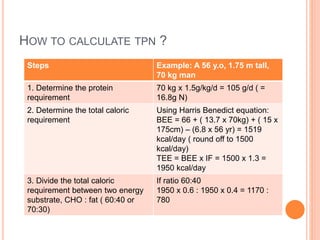
HOW TO CALCULATE TPN ? 
Steps Example: A 56 y.o, 1.75 m tall, 
70 kg man 
1. Determine the protein 
requirement 
70 kg x 1.5g/kg/d = 105 g/d ( = 
16.8g N) 
2. Determine the total caloric 
requirement 
Using Harris Benedict equation: 
BEE = 66 + ( 13.7 x 70kg) + ( 15 x 
175cm) – (6.8 x 56 yr) = 1519 
kcal/day ( round off to 1500 
kcal/day) 
TEE = BEE x IF = 1500 x 1.3 = 
1950 kcal/day 
3. Divide the total caloric 
requirement between two energy 
substrate, CHO : fat ( 60:40 or 
70:30) 
If ratio 60:40 
1950 x 0.6 : 1950 x 0.4 = 1170 : 
780
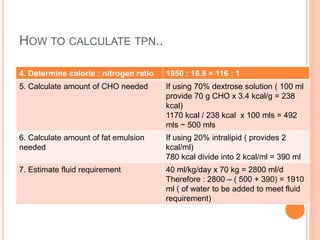
HOW TO CALCULATE TPN.. 
4. Determine calorie : nitrogen ratio 1950 : 16.8 = 116 : 1 
5. Calculate amount of CHO needed If using 70% dextrose solution ( 100 ml 
provide 70 g CHO x 3.4 kcal/g = 238 
kcal) 
1170 kcal / 238 kcal x 100 mls = 492 
mls ~ 500 mls 
6. Calculate amount of fat emulsion 
needed 
If using 20% intralipid ( provides 2 
kcal/ml) 
780 kcal divide into 2 kcal/ml = 390 ml 
7. Estimate fluid requirement 40 ml/kg/day x 70 kg = 2800 ml/d 
Therefore : 2800 – ( 500 + 390) = 1910 
ml ( of water to be added to meet fluid 
requirement)
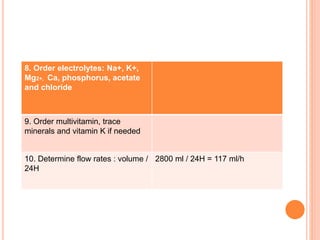
8. Order electrolytes: Na+, K+, 
Mg2+, Ca, phosphorus, acetate 
and chloride 
9. Order multivitamin, trace 
minerals and vitamin K if needed 
10. Determine flow rates : volume / 
24H 
2800 ml / 24H = 117 ml/h
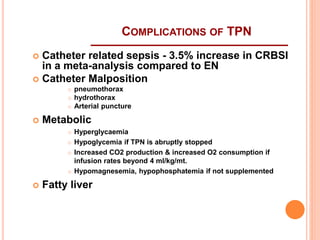
 Catheter related sepsis - 3.5% increase in CRBSI 
in a meta-analysis compared to EN 
 Catheter Malposition 
 pneumothorax 
 hydrothorax 
 Arterial puncture 
 Metabolic 
 Hyperglycaemia 
 Hypoglycemia if TPN is abruptly stopped 
 Increased CO2 production & increased O2 consumption if 
infusion rates beyond 4 ml/kg/mt. 
 Hypomagnesemia, hypophosphatemia if not supplemented 
 Fatty liver 
COMPLICATIONS OF TPN
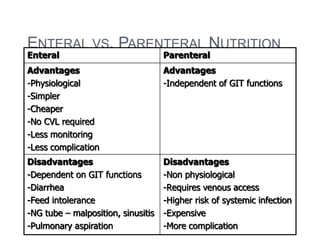
ENTERAL VS. PARENTERAL NUTRITION 
Enteral Parenteral 
Advantages 
-Physiological 
-Simpler 
-Cheaper 
-No CVL required 
-Less monitoring 
-Less complication 
Advantages 
-Independent of GIT functions 
Disadvantages 
-Dependent on GIT functions 
-Diarrhea 
-Feed intolerance 
-NG tube – malposition, sinusitis 
-Pulmonary aspiration 
Disadvantages 
-Non physiological 
-Requires venous access 
-Higher risk of systemic infection 
-Expensive 
-More complication
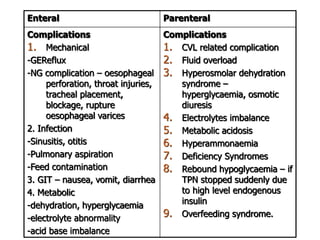
Enteral Parenteral 
Complications 
1. Mechanical 
-GEReflux 
-NG complication – oesophageal 
perforation, throat injuries, 
tracheal placement, 
blockage, rupture 
oesophageal varices 
2. Infection 
-Sinusitis, otitis 
-Pulmonary aspiration 
-Feed contamination 
3. GIT – nausea, vomit, diarrhea 
4. Metabolic 
-dehydration, hyperglycaemia 
-electrolyte abnormality 
-acid base imbalance 
Complications 
1. CVL related complication 
2. Fluid overload 
3. Hyperosmolar dehydration 
syndrome – 
hyperglycaemia, osmotic 
diuresis 
4. Electrolytes imbalance 
5. Metabolic acidosis 
6. Hyperammonaemia 
7. Deficiency Syndromes 
8. Rebound hypoglycaemia – if 
TPN stopped suddenly due 
to high level endogenous 
insulin 
9. Overfeeding syndrome.
SUPPLIMENTED NUTRITION
GLUTAMINE 
 Non-essential amino acid – ‘conditionally essential’ 
in sepsis/major trauma 
 Vital to gut, immune cells, and kidney 
 Serves as metabolic fuel; precursor to DNA 
synthesis 
 BUT Levels drop after injury, exercise and stress. 
Very low in critical illness first 72 hours 
 Glutamine deficiency at onset of critical 
illness/sepsis correlated with increased mortality
Immune enhanced diets 
 Glutamine 
 can prevent or ameliorate the gastrointestinal mucosal 
atrophy seen during prolonged parenteral nutrition and 
may help the gastrointestinal mucosa heal more promptly 
after damage by either radiotherapy or chemotherapy 
 Insufficient data to support the use of glutamine in the 
critically ill, enteral glutamine supplementation may be of 
benefit in trauma and burns patients
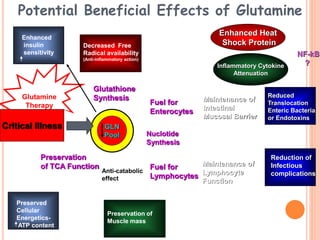
Potential Beneficial Effects of Glutamine 
Fuel for 
Enterocytes 
Nuclotide 
Synthesis 
Fuel for 
Lymphocytes 
Inflammatory Cytokine 
Maintenance of 
Intestinal 
Mucosal Barrier 
Maintenance of 
Lymphocyte 
Function 
Decreased Free 
Radical availability 
(Anti-inflammatory action) 
Glutathione 
Synthesis 
Enhanced 
insulin 
sensitivity 
Preservation 
of TCA Function 
GLN 
pool 
Glutamine 
Therapy 
Enhanced Heat 
Shock Protein 
Anti-catabolic 
effect 
Preservation of 
Muscle mass 
Reduced 
Translocation 
Enteric Bacteria 
or Endotoxins 
Reduction of 
Infectious 
complications 
Attenuation 
NF-kB 
? 
Preserved 
Cellular 
Energetics- 
ATP content 
GLN 
Pool 
Critical Illness
Immune enhanced diets 
 Arginine 
 Arginine-supplemented parenteral nutrition show an 
increased ability to synthesize acute phase proteins 
when challenged with sepsis. 
 No effect on mortality or infectious complications
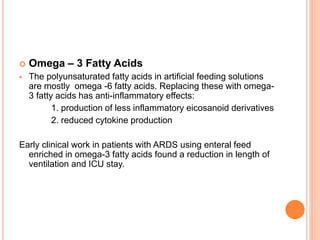
 Omega – 3 Fatty Acids 
 The polyunsaturated fatty acids in artificial feeding solutions 
are mostly omega -6 fatty acids. Replacing these with omega- 
3 fatty acids has anti-inflammatory effects: 
1. production of less inflammatory eicosanoid derivatives 
2. reduced cytokine production 
Early clinical work in patients with ARDS using enteral feed 
enriched in omega-3 fatty acids found a reduction in length of 
ventilation and ICU stay.
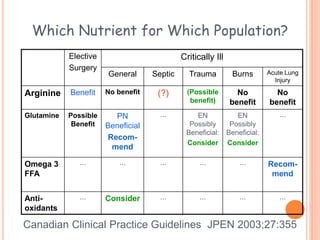
Which Nutrient for Which Population? 
Elective 
Surgery 
Critically Ill 
General Septic Trauma Burns Acute Lung 
Injury 
Arginine Benefit No benefit (?) (Possible 
benefit) 
No 
benefit 
No 
benefit 
Glutamine Possible 
Benefit 
PN 
Beneficial 
Recom-mend 
… EN 
Possibly 
Beneficial: 
Consider 
EN 
Possibly 
Beneficial: 
Consider 
… 
Omega 3 
FFA 
… … … … … Recom-mend 
Anti-oxidants 
… Consider … … … … 
Canadian Clinical Practice Guidelines JPEN 2003;27:355
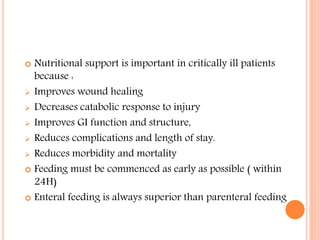
CONCLUSION
 Nutritional support is important in critically ill patients 
because : 
 Improves wound healing 
 Decreases catabolic response to injury 
 Improves GI function and structure, 
 Reduces complications and length of stay. 
 Reduces morbidity and mortality 
 Feeding must be commenced as early as possible ( within 
24H) 
 Enteral feeding is always superior than parenteral feeding
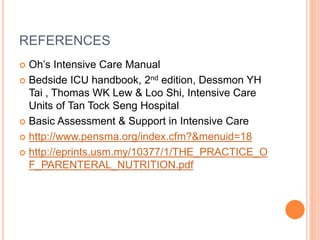
REFERENCES 
 Oh’s Intensive Care Manual 
 Bedside ICU handbook, 2nd edition, Dessmon YH 
Tai , Thomas WK Lew & Loo Shi, Intensive Care 
Units of Tan Tock Seng Hospital 
 Basic Assessment & Support in Intensive Care 
 http://www.pensma.org/index.cfm?&menuid=18 
 http://eprints.usm.my/10377/1/THE_PRACTICE_O 
F_PARENTERAL_NUTRITION.pdf
Nutritioninicu 120119095954-phpapp02

Nutritioninicu 120119095954-phpapp02

  • 1.
    BY : DRSITI AZILA MODERATOR : DR NIK AZMAN DATE : 12TH JANUARY 2012
  • 2.
    OUTLINES  History  The Basis of Nutritional Support  Physiologic Effect of malnourish  Nutritional Requirement  Supplimented nutrition  Routes of administration ( Enteral, parenteral)
  • 3.
    SIX SIMPLE QUESTIONS  Why do we feed ICU patients?  Which patients should we feed?  When should we start to feed them?  Which route should we feed by?  How much feed should we give?  What should the feed contain?
  • 4.
  • 5.
    ICU NUTRITION THROUGHTHE AGES Overfeeding 1980s
  • 6.
    THE BASIS OFNUTRITIONAL SUPPORT  Most patients in ICU are unable to tolerate normal diet  many of them are malnourished on admission  nutrients can be delivered directly to the GIT by feeding tubes( enteral feeding) or by intravenous ( parentral feeding)  nutrition is provided against a bakground of a continously changing physical status
  • 7.
    THE BASIS OFNUTRITIONAL SUPPORT  few data directly compare feeding with no feeding in critical patients and it suggest worse outcomes in underfed patients  catabolism of critical illness causes malnutrition  malnutrition closely associated with poor outcomes
  • 8.
    THE BASIS OFNUTRITIONAL SUPPORT  Stress, acute illness, surgery or trauma produce major changes in the metabolic milieu of the body changes in substrate utilization altered substance synthesis rates hypermetabolism catabolism
  • 9.
    Poor intake Surgery malnutrition FACTORS FAVOURING THE DEVELOPMENT OF in MALNUTRITION IN THE CRITICALLY ILL the critically ill Hypermetabolism Stress Changes in substrate utilisation Immobility Exogeneous steroids Prolonged bed rest
  • 10.
    CONSEQUENCES OF MALNUTRITION  Increased morbidity and mortality  Prolonged length of stay in ICU  Impaired tissue function and wound healing  Defective muscle function, reduced respiratory and cardiac function  Immuno-suppression, increased risk of infection
  • 11.
    Malnutrition causes widespreadorgan dysfunction, ass. with poor healing, reduce immune competence & poor weaning from ventilator. Stress & sepsis further increase metabolic rate & if the energy required is not met with adequate dietary intake, it will results in catabolism. Goal of nutritional support : to improve patients outcome and reduce the morbidity and mortality.
  • 12.
    NUTRITIONAL SUPPORT ISNOT CRUCIAL IN “GUT FAILURE” Is that the right statement?
  • 13.
    TRY TELLING THERESPIRATORY PHYSICIAN THAT VENTILATORY SUPPORT IS NOT IMPORTANT IN RESPIRATORY FAILURE
  • 14.
    NUTRITIONAL CARE PLAN Yes Enteral nutrition Functional GI tract Standard nutrients Speciality formulas No Parenteral nutrition Peripheral PN Central PN
  • 15.
    PHYSIOLOGIC EFFECTS OF MALNUTRITION Pulmonary Decreased diaphragmatic contractility Depressed hypoxic drive & ventilatory drive to CO2 Cardiac Decreased contractility/response to inotrope Ventricular dilatation Renal Decreased GFR Impaired Na+ excretion
  • 16.
    Hepatic • AlteredCHO, protein & fat metabolism • Decreased protein synthesis • Decreased drug metabolism • Impaired bilirubin excretion Hematology • Anaemia & coagulopathy Immune • Depressed T-cell functions • Impaired chemotaxis and phagocytosis GIT • Decreased gut motility • Gut atrophy • Increase gut permeability to intestinal bacteria •
  • 17.
  • 18.
    1.Fluid 30-40 ml/kgBW 2. Energy 1. Total Energy expenditure 2. Calorie/weight : 25-35 kcal/kg/day 3. Indirect calorimetry 3. Protein Normal prot : 0.8 g/kg/d HD. CVVHD : 1.1 – 1.4 g/kg/d Sepsis/trauma : 1.2 – 2.0 g/kg/d Severe burns : 2.5 – 4.0 g/kg/d
  • 19.
    NUTRITIONAL REQUIREMENTS Total Energy Expenditure ( TEE) = BEE x Injury Factor  The BEE is the amount of energy required to perform metabolic functions at rest, and is influenced by both body size and illness  BEE classically is estimated by the Harris- Benedict equation: For men, BEE = 66.5 + (13.75 x kg) + (5.003 x cm) - (6.775 x age) For women, B.E.E. = 655.1 + (9.563 x kg) + (1.850 x cm) - (4.676 x age) ** BEE - Basal Energy Expenditure
  • 20.
    NUTRITIONAL REQUIREMENTS BasalEnergy Expenditure: Harris-Benedict Equation Estimate basal energy expenditure using the Harris-Benedict equations. m Ma le f Female Input Height 172 cm cm in in Input Weight 60 kg kg lb lb Input Age 40 yr yrs mo mos Stress Factor Infection, severe Activity Factor br Bedrest am Ambulating Calculate Clear B.E.E. = 1481 kcal/d Caloric Requirement = 2444 kcal/d http://www-users.med.cornell.edu/~spon/picu/calc/beecalc.htm
  • 21.
     Injury Factor Mild illness 1 – 1.25 eg. minor op 1.2 Moderate illness 1.25 – 1.5 eg skeletal trauma 1.35 Severe illness 1.5 – 1.75 eg major sepsis 1.60 Estimated Total Energy Requirement = BEE x Activity Factor x Injury Factor
  • 22.
    INDIRECT CALORIMETRY Most accurate.  Portable bedside system measuring of EE and resp quotient by measuring and analysing the O2 consumed ( VO2) and the CO2 expired ( VCO2)  Respiratory Quotient = CO2 production/O2consumption RQ Interpretation > 1.00 overfeeding 0.9 – 1.00 CHO oxidation 0.8 – 0.9 Mixed nutrients oxidation 0.7 – 0.8 Fat and protein oxidation
  • 23.
    SOURCES OF ENERGY  Carbohydrate, CHO Main source of energy, 60% of total energy requirement. 2-3 g/Kg/day 1 g CHO = 4 KCal  Fat 30-40% of caloric intake. 1.5-2 g/Kg/day 1 g Fat = 9 KCal  Protein Not a major energy source. Provide essential & non essential amino acids for protein synthesis. Use as energy substrate (CHO @ Fat precursor) in excess. 1-1.5 g/Kg/day 1 g Protein = 4 Kcal. 1 g N2 = 6.25 g Protein. Non Protein Calories (CHO & Fat) : Nitrogen ratio = 80-200 : 1
  • 24.
    ESSENTIAL NUTRIENTS NUTRIENTSTHAT CANNOT BE SYNTHESIZED FROM OTHERS.  Essential Amino Acid Isoleucine, leucine, lysine, methionine, phenylalanine, threonine, tryptophan, valine. Cysteine, tyrosine, histidine (in children). Arginine, glutamine (in critical ill state).  Fatty Acid Linoleic & Linolenic acid. Vitamins A, B, C, D, E, K.  Minerals Electrolyte : Na+, K+, Ca2+, Mg2+, Cl- Trace Element : Copper, Zinc, Selenium, Iron, Manganase
  • 25.
    DAILY ALLOWANCES OFMINERALS, /KG/DAY  Na+ 1-2 mmol  K+ 0.7 - 1 mmol  Ca2+ 0.1 mmol  Mg2+ 0.1 mmol  Phosphorus 0.4 mmol
  • 26.
  • 27.
     early feedingusually defined as starting within the first 24-48 hours of admission  meta-analysis suggests reduced infections if patients are fed within 48 hours
  • 28.
    BENEFIT OF ENTERALFEEDING  prevents gut mucosal atrophy by preserves intestinal mucosal structure and function  More physiological  Relatively non-invasive, cheap, easier  it reduces bacterial translocation and multi-organ failure  Reduced risk of infectious complications of PN
  • 29.
    Delivery method Commonindications Precautions Nasogastric/ orogastric -Unable to consume oral nutrition ( eg. Intubated, sedated, neurologically impaired) - Hypermetabolism in the presence of functional GIT ( e.g. burns) -Tube must be secured - Verify placement of tube by blue litmus method or by x-ray Nasoduodenal/ Nasojejunal -inadequate gastric motility (e.g.gastroparesis) -Partial gastric outlet obstruction - Severe aspiration risk - Oesophageal reflex - After upper GI surgery -Tube must be secured -Verify placement of tube by X-ray or endoscopically -Potential dumping syndrome Gastrotomy -Percutaneous endoscopic (PEG) -Radiological -Surgical -Anyone who requires medium to long term NG tube feeding ( > 1 mnth) -Head and neck injury/surgery -Caution in patients with severe GE reflux or gastroparesis - Contraindicated in patients with ascites and coagulopathies. Jejunostomy -PEJ -Surgical - Injury, obstruction or fistula proximal to jejunum - Potential dumping syndrome
  • 30.
    Reactions Possible causes Diarrhoea +/- nausea and vomiting Medications/C. difficile/lack of dietary fibre/hyperosmolar formula/bacterial contamination/improper administration/fat malabsorption Constipation Inadequate fluid intake/insufficient fibre/GI obstruction Aspiration of tube feeding/high gastric residuals ( > 150 to 200 ml) Regurgitation of stomach contents/feeding while supine/delayed gastric emptying/tube dislodgement/ gastro-oesophageal reflux Hyperglycaemia Diabetes/stress/trauma/corticosteroid/se psis/refeeding syndrome Hypoglycaemia Sudden cessation of tube feeding in patients on oral hypoglycaemic agents/insulin Hypophosphataemia/hypokalaemia Refeeding syndrome / excessive losses
  • 31.
    CONTRA-INDICATIONS TO ENTERALFEEDING  Bowel obstruction  Ileus  Intestinal ischaemia  Clinical shock
  • 32.
    PROTOCOL FOR ENTERALFEEDING  Guidelines in Enteral_feeding.pdf
  • 33.
  • 34.
    TYPES OF TPN 1) Peripheral parenteral nutrition - Temporary access ( up to 2 weeks) - Limited caloric density - High incidence of thrombophlebitis - High-volume infusion may lead to fluid overload - Osmolarity should not exceed 900 mOsm/l - Access : peripheral veins
  • 35.
     Central parenteralnutrition - Able to provide large nutrient, fluid and electrolyte needs - Recommended for prolonged IV nutritional support - Access : - central line : via subclavian, internal or external jugular and femoral veins
  • 36.
    INDICATIONS Indications (usually) Indications ( sometimes) Inability to absorb adequate nutrients via GIT Severe acute pancreatitis Severe malnutrition/catabolism with non functioning GIT Complete small bowel obstruction Inability to feed enterally Major surgery/stress when EN not expected to resume within 7-10 days. Enterocutaneous fistula Partial small bowel obstruction Intractable vomiting Severe inflammatory bowel disease not responding to medical therapy
  • 37.
     Whenever possible,TPN should be instituted simultaneously with enteral feeding. Partial feeding via enteral route preserves intestinal mucosa viability and may prevent bacterial translocation through the gut wall.
  • 38.
    SUBSTRATES IN TPN  CHO - Dextrose solution are available in concentration ranging from 5-70%. Solutions greater than 10% must be administered into the central vein. - Consequences of excess CHO administration : hyperglycaemia, glucosuria, synthesis and storage of fat, hepatic steatosis, increase CO2 production.  Protein - Amino acids solutions are available in concentration of 3-15%. - In critical illness, ensure that enough non protein calories are administered for the optimal utilisation of protein: approximately 100 kcal are needed for 1 g of nitrogen ( 6.25 g of protein)
  • 39.
     Fat -Lipid emulsion available in concentrations of 10% and 20%. - Consequences of excess fat administration : fat overload syndrome, impaired immune response.
  • 40.
    MACRONUTRIENTS Nutrients SubstrateUsual Amount Maximum units of substrate CHO Dextrose monohydrate = 3.4 kcal/g 40-60% of total kcal 7 g/kg/day Protein Amino acid = 4 kcal/g 0.9 to 2.0 g/kg/d 2.5 g/kg/d Fat Lipids = 9 kcal/g ( 20% emulsion provides 2 kcal/ml) 20-40% of total kcal < 1 g/kg/d in high stress
  • 41.
    HOW TO CALCULATETPN ? Steps Example: A 56 y.o, 1.75 m tall, 70 kg man 1. Determine the protein requirement 70 kg x 1.5g/kg/d = 105 g/d ( = 16.8g N) 2. Determine the total caloric requirement Using Harris Benedict equation: BEE = 66 + ( 13.7 x 70kg) + ( 15 x 175cm) – (6.8 x 56 yr) = 1519 kcal/day ( round off to 1500 kcal/day) TEE = BEE x IF = 1500 x 1.3 = 1950 kcal/day 3. Divide the total caloric requirement between two energy substrate, CHO : fat ( 60:40 or 70:30) If ratio 60:40 1950 x 0.6 : 1950 x 0.4 = 1170 : 780
  • 42.
    HOW TO CALCULATETPN.. 4. Determine calorie : nitrogen ratio 1950 : 16.8 = 116 : 1 5. Calculate amount of CHO needed If using 70% dextrose solution ( 100 ml provide 70 g CHO x 3.4 kcal/g = 238 kcal) 1170 kcal / 238 kcal x 100 mls = 492 mls ~ 500 mls 6. Calculate amount of fat emulsion needed If using 20% intralipid ( provides 2 kcal/ml) 780 kcal divide into 2 kcal/ml = 390 ml 7. Estimate fluid requirement 40 ml/kg/day x 70 kg = 2800 ml/d Therefore : 2800 – ( 500 + 390) = 1910 ml ( of water to be added to meet fluid requirement)
  • 43.
    8. Order electrolytes:Na+, K+, Mg2+, Ca, phosphorus, acetate and chloride 9. Order multivitamin, trace minerals and vitamin K if needed 10. Determine flow rates : volume / 24H 2800 ml / 24H = 117 ml/h
  • 44.
     Catheter relatedsepsis - 3.5% increase in CRBSI in a meta-analysis compared to EN  Catheter Malposition  pneumothorax  hydrothorax  Arterial puncture  Metabolic  Hyperglycaemia  Hypoglycemia if TPN is abruptly stopped  Increased CO2 production & increased O2 consumption if infusion rates beyond 4 ml/kg/mt.  Hypomagnesemia, hypophosphatemia if not supplemented  Fatty liver COMPLICATIONS OF TPN
  • 45.
    ENTERAL VS. PARENTERALNUTRITION Enteral Parenteral Advantages -Physiological -Simpler -Cheaper -No CVL required -Less monitoring -Less complication Advantages -Independent of GIT functions Disadvantages -Dependent on GIT functions -Diarrhea -Feed intolerance -NG tube – malposition, sinusitis -Pulmonary aspiration Disadvantages -Non physiological -Requires venous access -Higher risk of systemic infection -Expensive -More complication
  • 46.
    Enteral Parenteral Complications 1. Mechanical -GEReflux -NG complication – oesophageal perforation, throat injuries, tracheal placement, blockage, rupture oesophageal varices 2. Infection -Sinusitis, otitis -Pulmonary aspiration -Feed contamination 3. GIT – nausea, vomit, diarrhea 4. Metabolic -dehydration, hyperglycaemia -electrolyte abnormality -acid base imbalance Complications 1. CVL related complication 2. Fluid overload 3. Hyperosmolar dehydration syndrome – hyperglycaemia, osmotic diuresis 4. Electrolytes imbalance 5. Metabolic acidosis 6. Hyperammonaemia 7. Deficiency Syndromes 8. Rebound hypoglycaemia – if TPN stopped suddenly due to high level endogenous insulin 9. Overfeeding syndrome.
  • 47.
  • 48.
    GLUTAMINE  Non-essentialamino acid – ‘conditionally essential’ in sepsis/major trauma  Vital to gut, immune cells, and kidney  Serves as metabolic fuel; precursor to DNA synthesis  BUT Levels drop after injury, exercise and stress. Very low in critical illness first 72 hours  Glutamine deficiency at onset of critical illness/sepsis correlated with increased mortality
  • 49.
    Immune enhanced diets  Glutamine  can prevent or ameliorate the gastrointestinal mucosal atrophy seen during prolonged parenteral nutrition and may help the gastrointestinal mucosa heal more promptly after damage by either radiotherapy or chemotherapy  Insufficient data to support the use of glutamine in the critically ill, enteral glutamine supplementation may be of benefit in trauma and burns patients
  • 50.
    Potential Beneficial Effectsof Glutamine Fuel for Enterocytes Nuclotide Synthesis Fuel for Lymphocytes Inflammatory Cytokine Maintenance of Intestinal Mucosal Barrier Maintenance of Lymphocyte Function Decreased Free Radical availability (Anti-inflammatory action) Glutathione Synthesis Enhanced insulin sensitivity Preservation of TCA Function GLN pool Glutamine Therapy Enhanced Heat Shock Protein Anti-catabolic effect Preservation of Muscle mass Reduced Translocation Enteric Bacteria or Endotoxins Reduction of Infectious complications Attenuation NF-kB ? Preserved Cellular Energetics- ATP content GLN Pool Critical Illness
  • 51.
    Immune enhanced diets  Arginine  Arginine-supplemented parenteral nutrition show an increased ability to synthesize acute phase proteins when challenged with sepsis.  No effect on mortality or infectious complications
  • 52.
     Omega –3 Fatty Acids  The polyunsaturated fatty acids in artificial feeding solutions are mostly omega -6 fatty acids. Replacing these with omega- 3 fatty acids has anti-inflammatory effects: 1. production of less inflammatory eicosanoid derivatives 2. reduced cytokine production Early clinical work in patients with ARDS using enteral feed enriched in omega-3 fatty acids found a reduction in length of ventilation and ICU stay.
  • 53.
    Which Nutrient forWhich Population? Elective Surgery Critically Ill General Septic Trauma Burns Acute Lung Injury Arginine Benefit No benefit (?) (Possible benefit) No benefit No benefit Glutamine Possible Benefit PN Beneficial Recom-mend … EN Possibly Beneficial: Consider EN Possibly Beneficial: Consider … Omega 3 FFA … … … … … Recom-mend Anti-oxidants … Consider … … … … Canadian Clinical Practice Guidelines JPEN 2003;27:355
  • 54.
  • 55.
     Nutritional supportis important in critically ill patients because :  Improves wound healing  Decreases catabolic response to injury  Improves GI function and structure,  Reduces complications and length of stay.  Reduces morbidity and mortality  Feeding must be commenced as early as possible ( within 24H)  Enteral feeding is always superior than parenteral feeding
  • 56.
    REFERENCES  Oh’sIntensive Care Manual  Bedside ICU handbook, 2nd edition, Dessmon YH Tai , Thomas WK Lew & Loo Shi, Intensive Care Units of Tan Tock Seng Hospital  Basic Assessment & Support in Intensive Care  http://www.pensma.org/index.cfm?&menuid=18  http://eprints.usm.my/10377/1/THE_PRACTICE_O F_PARENTERAL_NUTRITION.pdf