NUTRITION IN ICU
Dr Janvi Sarma
MBBS MD (ANAES)
INTRODUCTION
• ICU patients are in acute stress
• Pre-existing malnutrition (up to 40%)
• Altered metabolic pathways
• ~ 600 to 900 gm of lean body is lost /day
• >30% weight loss(50% lean body mass) is
incompatible to life with 100% mortality.
Nutritional Risk Screening
(NRS 2002)
• Initial Screening (yes/no )
-- BMI <20
-- Wt. Loss in last 3mths.
-- Decreased intake in last one week
-- Severe illness
ESPEN guidelines for nutrition screening 2002 Clin.
Nutr.2003:22(4):415-421)
NRS-2002 (final screening)
Score Impaired status Treatment
0 Normal nil
1 Wt. Loss>5% ( 3m)
50-70% intake in1w
Oral
supplement
2 Wt loss> 5% (2m)
50% intake in 1wk
Artificial feed
3 Wt loss>5% (1m)
<25% intake
Artificial feed
(Clinical Nutrition 2003;22(4):415-421)
NUTRITIONAL
ASSESSMENT IN
CRITICALLY ILL PATIENTS
Actual energy needs
AEN= BMR*AF*IF
REE= BEE * IF
*AF=Activity factor
*IF= injury factor
Injury Factor Stress Factor
Minor surgery 1.2
Skeletal trauma 1.3
Major sepsis 1.6
Activity Factor use
Out of bed 1.3
Confined to bed 1.2
• Harris-Benedict Equation for calculating BMR
– Men: 66 + (13.7 × W) + (5 × H in cm) - (6.8 × A)
– Women: 655 + (9.6 × W) + (1.8 × H) - (4.7 × A)
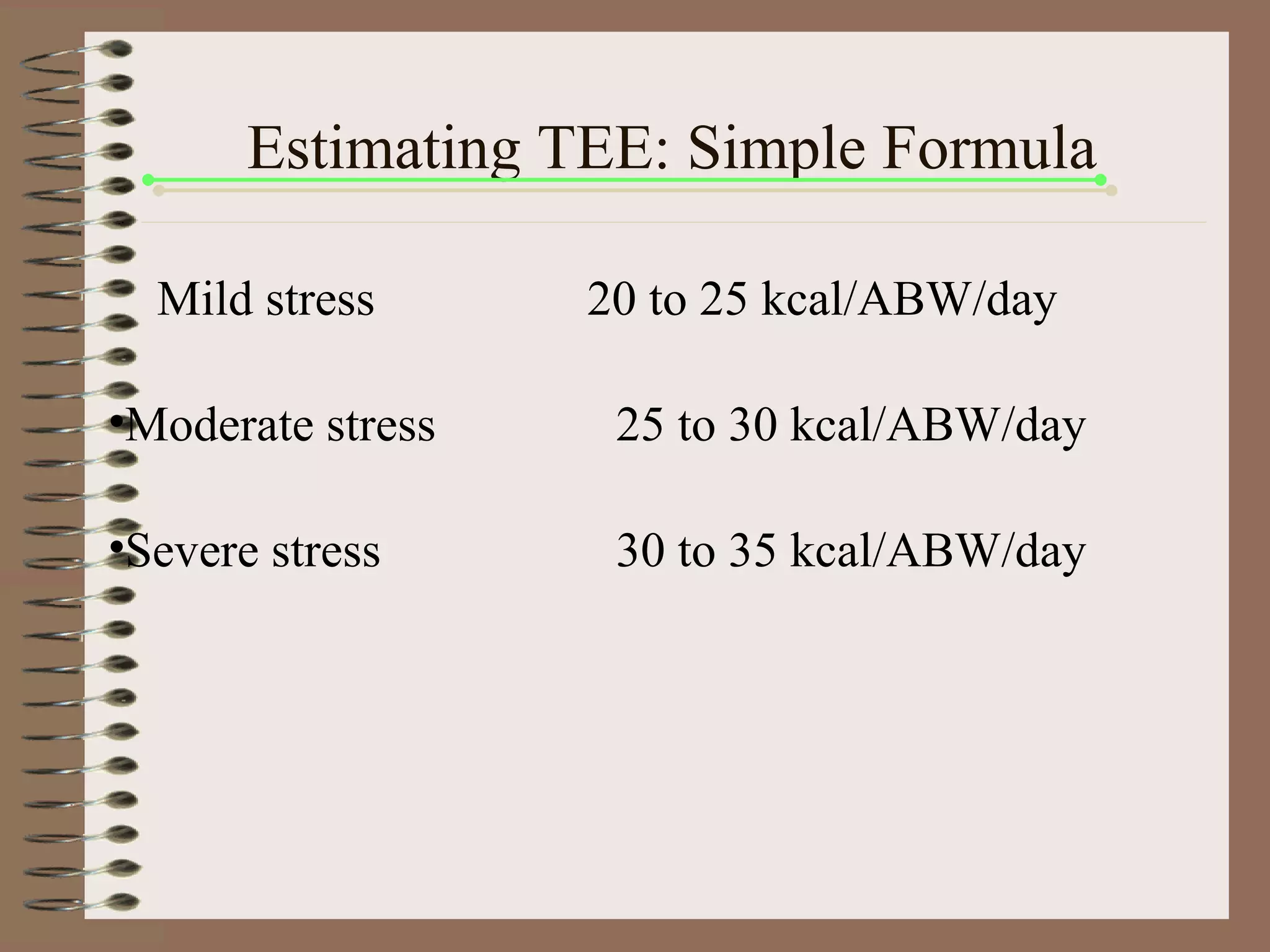
Estimating TEE: Simple Formula
Mild stress 20 to 25 kcal/ABW/day
•Moderate stress 25 to 30 kcal/ABW/day
•Severe stress 30 to 35 kcal/ABW/day
Specific method
1. INDIRECT CALORIMETRY:
• This is considered the gold standard for caloric assessment. A
computerized “metabolic cart” is used to collect the patient’s
expired gases to determine CO2production and O2consumption,
which are used to calculate the REE using
• Weir equation: REE = [VO2 (3.941) + VCO2 (1.11)] 1440 min/day
• IC also provides the respiratory quotient (RQ =
CO2production divided by O2consumption) which can
be further used to monitor the adequacy of nutritional
support
• RQ >1
• RQ<1
• RQ=1
• DESIRED IS 0.8-0.9
• LIMITATONS
2. Curreri formula = 25 * body weight (kg) +
40 * % TBSA burned
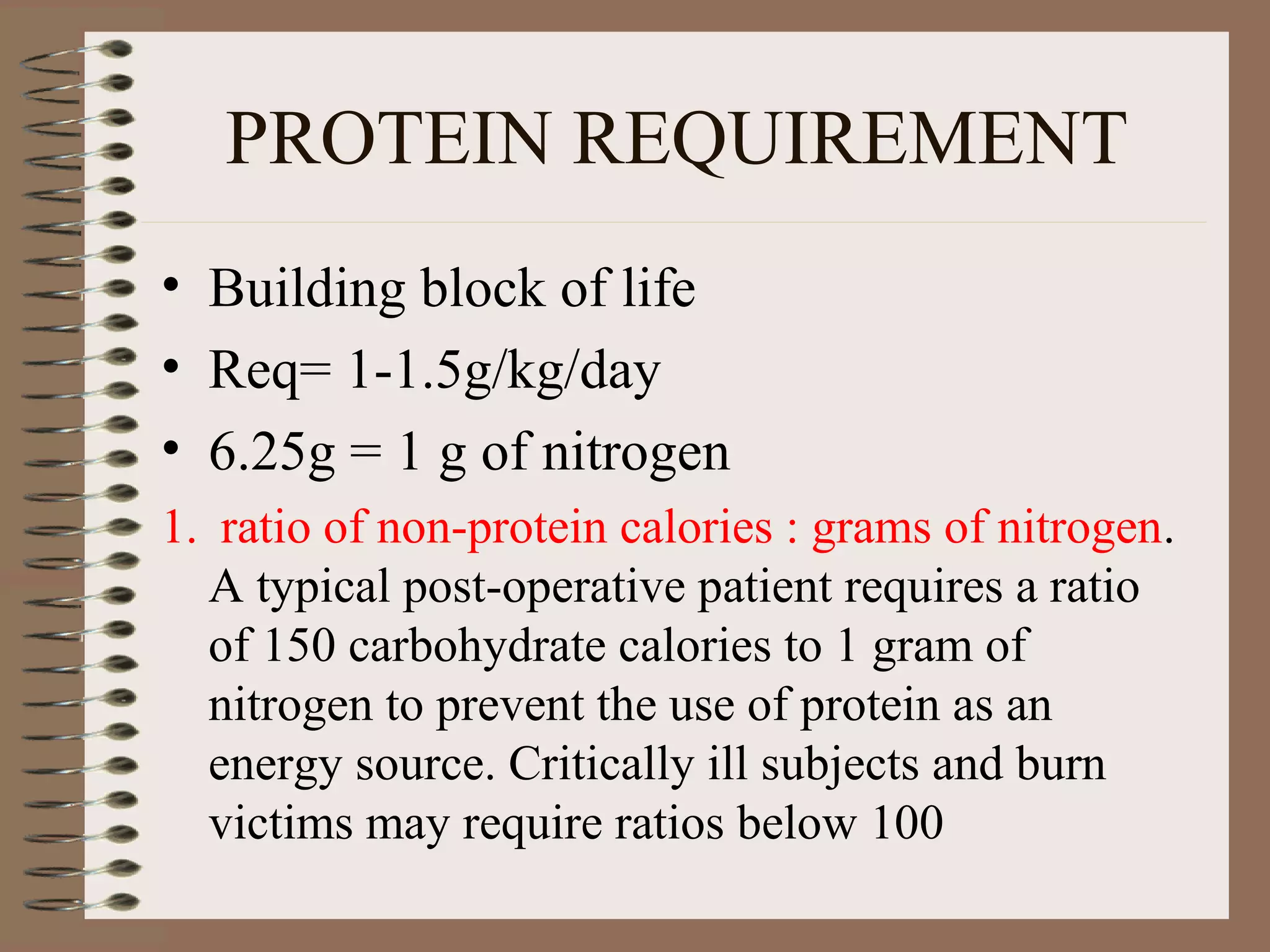
PROTEIN REQUIREMENT
• Building block of life
• Req= 1-1.5g/kg/day
• 6.25g = 1 g of nitrogen
1. ratio of non-protein calories : grams of nitrogen.
A typical post-operative patient requires a ratio
of 150 carbohydrate calories to 1 gram of
nitrogen to prevent the use of protein as an
energy source. Critically ill subjects and burn
victims may require ratios below 100
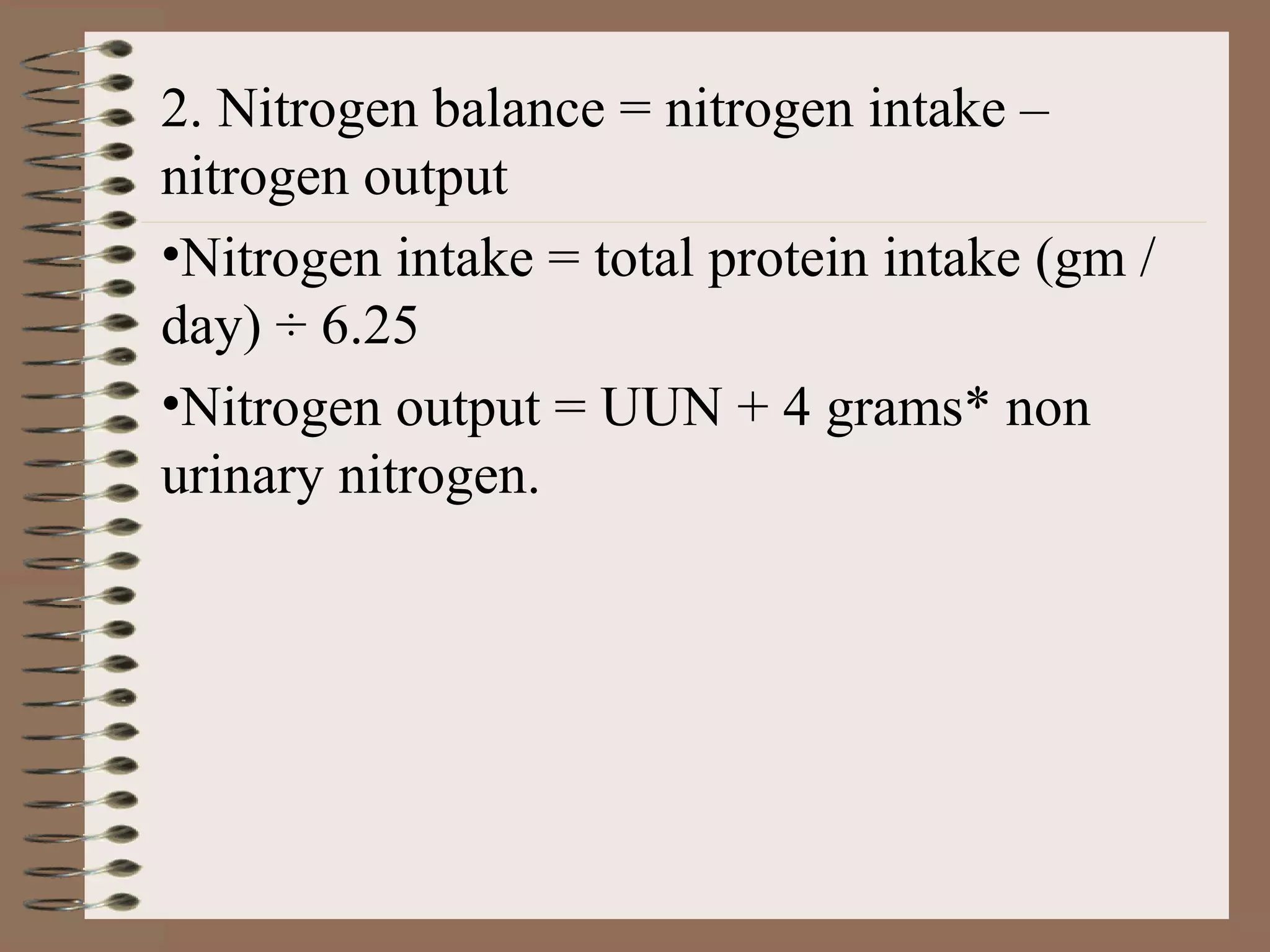
2. Nitrogen balance = nitrogen intake –
nitrogen output
•Nitrogen intake = total protein intake (gm /
day) ÷ 6.25
•Nitrogen output = UUN + 4 grams* non
urinary nitrogen.
Recommendations
• Level 1
 None
• Level 2
 Initial estimation of caloric needs using 30
kcal/kg/day (or Harris-Benedict Equation (HBE)
with appropriate stress factors) and protein needs
using 1.5 gm/kg of protein per day is a
reasonable and cost free alternative to indirect
calorimetry (IC).
• Level 3
 Pre-albumin is a practical and accurate marker of
nutritional status due to its short half-life
 .The Curreri formula should be used to estimate
the caloric needs of patients with burns greater
than 20% total body surface area (TBSA).
 Indirect calorimetry (IC) and 24 hour urine urea
nitrogen (UUN) studies should be utilized to
determine the caloric needs of mechanically
ventilated patients requiring supplemental
nutrition for greater than 7 days.
GOALS OF NUTRITION IN
ICU
• Provide substrate for metabolic functions
• Positive nitrogen balance
• Prevent any deficiency
• Improve immune function
• Improve organ functions
• Modify stress response
• Prevent metabolic complications
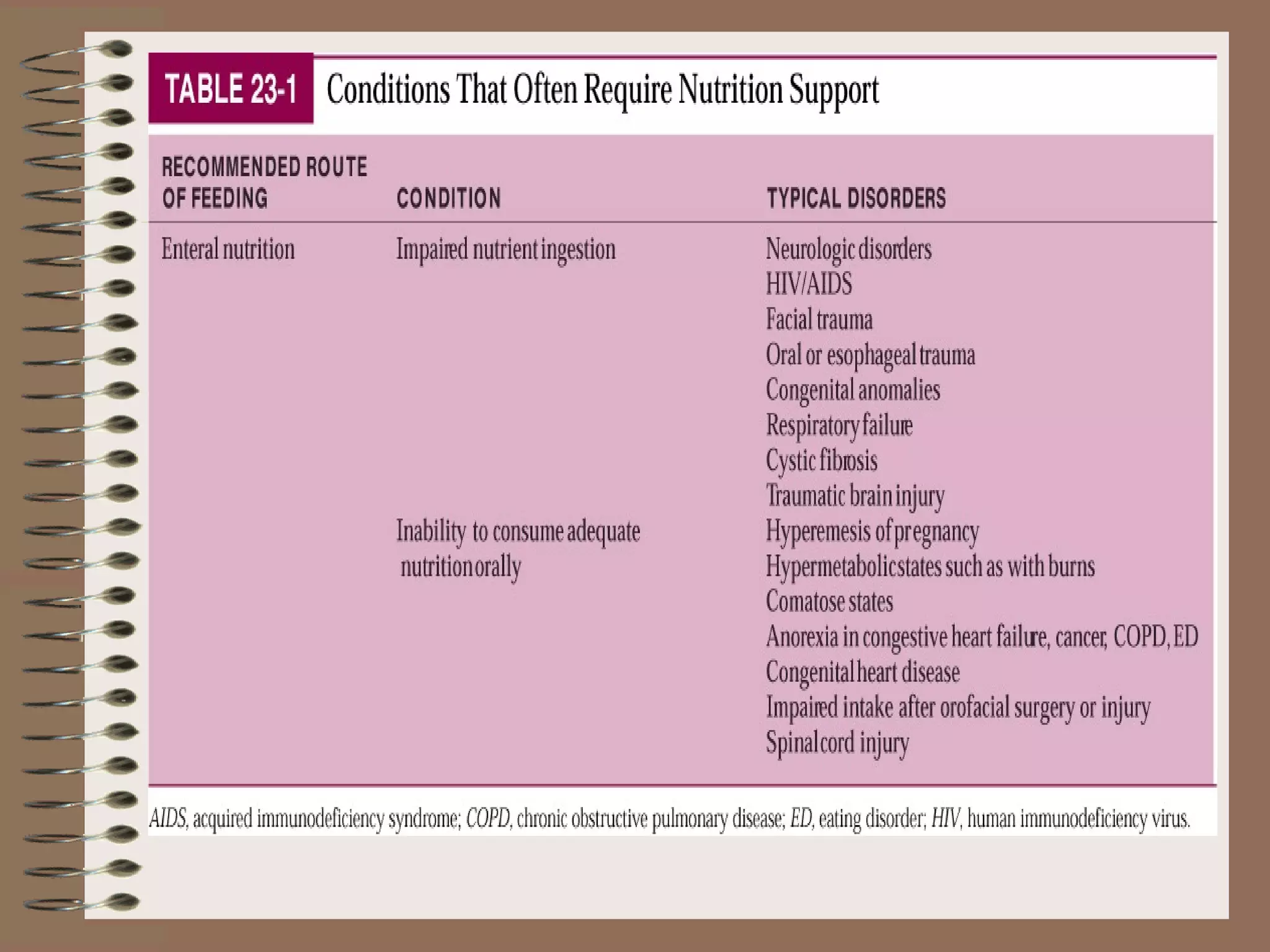
•ENTERAL Vs
PARENTRAL
Defn:-
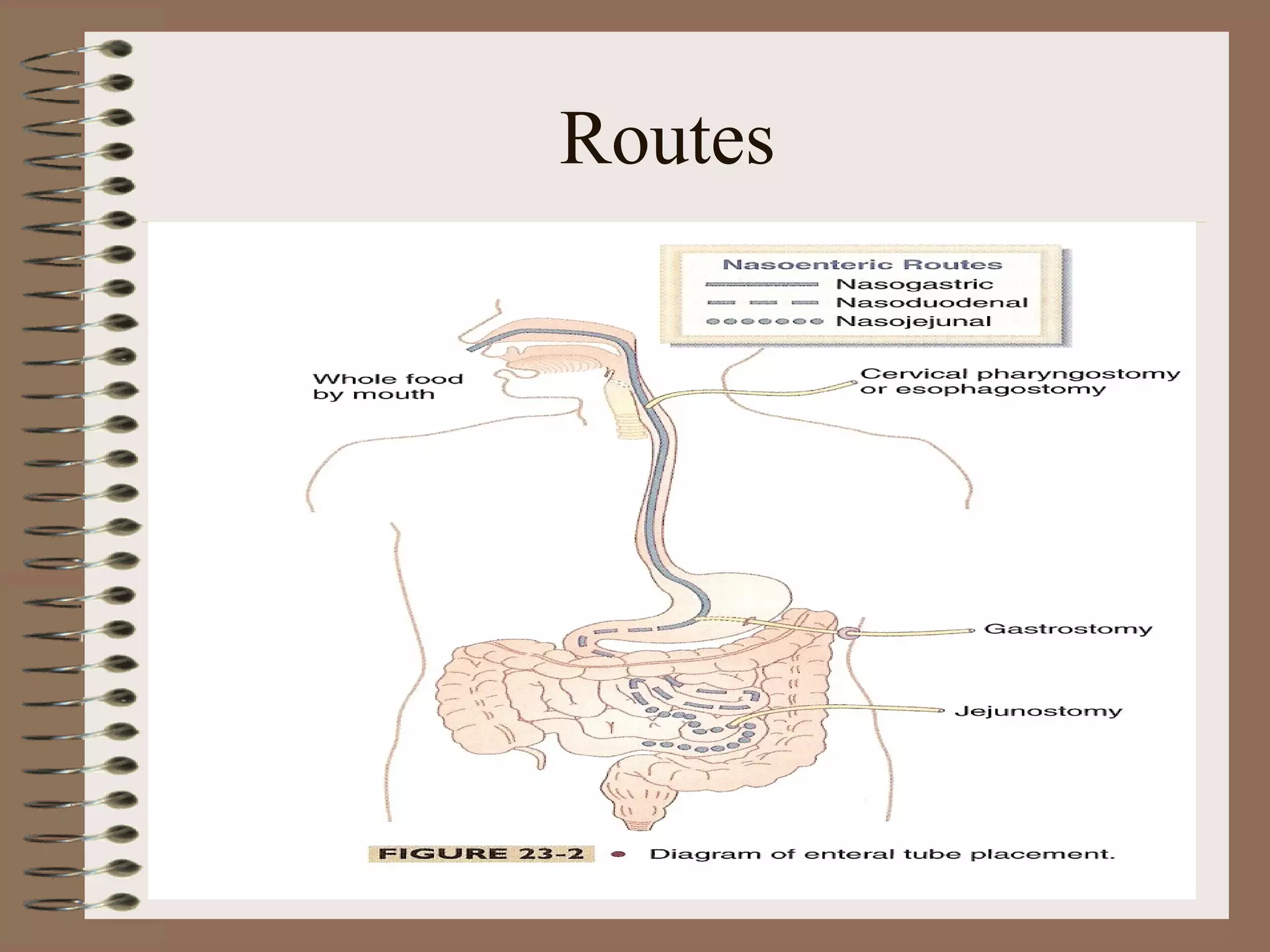
• Nutritional support via placement through the
nose, esophagus, stomach, or intestines
(duodenum or jejunum)
—Tube feedings
—Must have functioning GI tract
—IF THE GUT WORKS, USE IT!
—Exhaust all oral diet methods first
Enteral Feeding: Advantages
•Prevents atrophy and preserves enzyme function of
intestinal mucosa and pancreas (parenteral feeding alone for
>1 mo produces mucosal atrophy)
•Maintains mucosal protein and DNA concentrations
•Maintains GI IgA secretion
•Prevents cholelithiasis by stimulating gall bladder motility
•Less expensive
Enteral Nutrition: Risks
• High gastric residual volumes
• Bacterial colonization of stomach
• Increased risk of aspiration pneumonia
• Tube obstruction
Routes
Administration
• Bolus
• Intermittent
• Continuous
Pre-digested Formulas
Monomeric (elemental) formulas
• Contain nitrogen as free amino acids, carbohydrates as
glucose polymers, and minimal amounts of fat as LCT,
usually accounting for <3% of total calories
• Absorbed more efficiently over shorter length of intestine
• Recommended in short bowel syndrome
• Insufficient clinical evidence to justify routine use
Polymeric formulas
• Contain nitrogen as whole proteins, carbohydrate as
glucose polymers, and lipid as LCT with or without MCT
• Blenderized food, milk-based, and lactose-free formulas
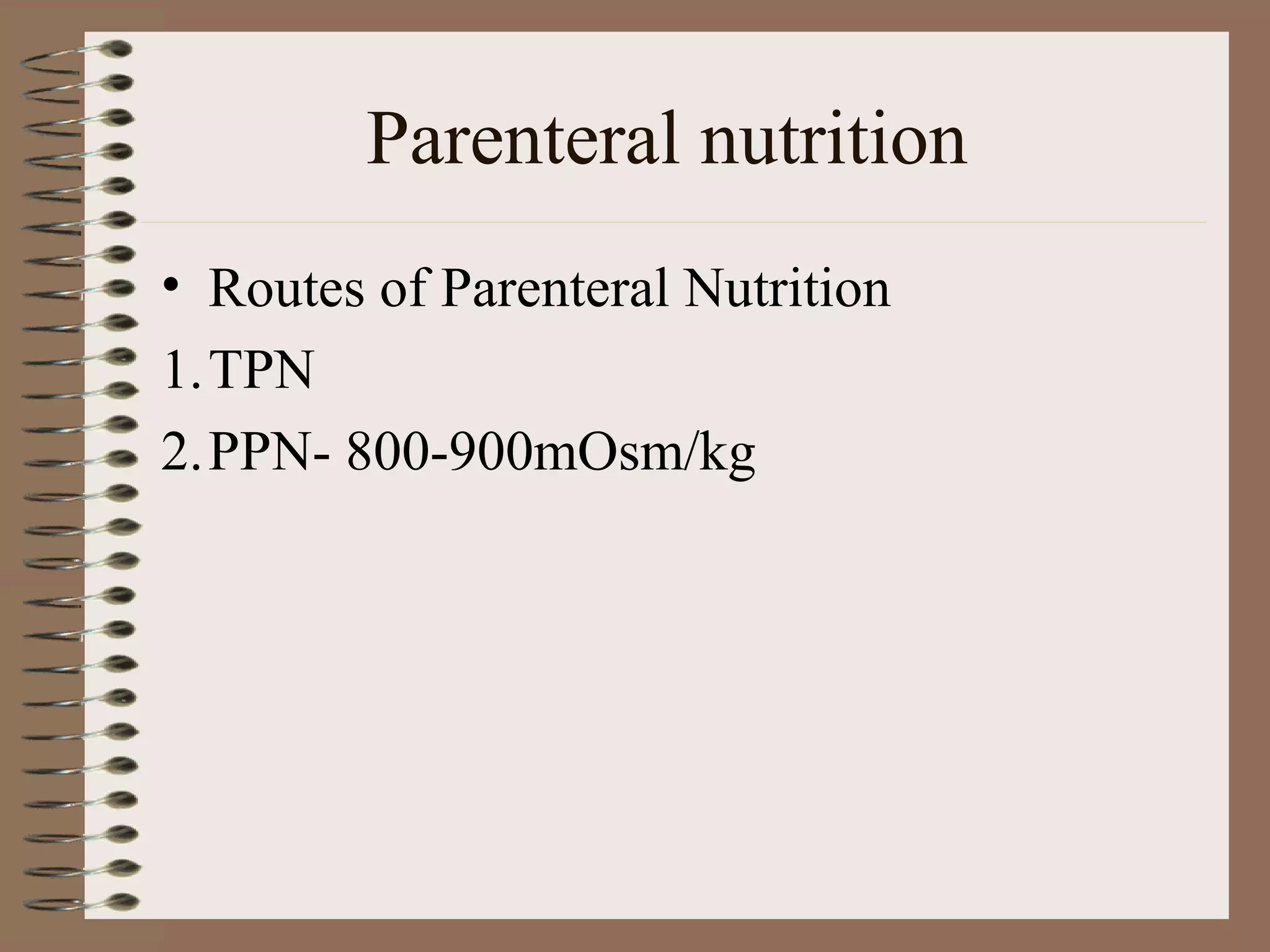
Parenteral nutrition
• Routes of Parenteral Nutrition
1.TPN
2.PPN- 800-900mOsm/kg
VENOUS SITES
• Indications
• CI
• Advantages
Risks
• Mechanical and septic
• Metabolic
– Hyperglycemia and hypoglycemia
– Hyperlipidemia
– Hypercapnia
– Acid-base and electrolyte disturbance
– Manganese, aluminum, vitamin D toxicity
– Deficiencies of selenium, methionine, carnitine, choline, calcium
– Overfeeding
• Others: re-feeding syndrome, gastrointestinal complications (gastroparesis, intestinal
atrophy), hepatobiliary disorders, renal complications, bone disease
Trace Elements
Trace Element Enteral Parenteral
Chromium 30 μg 10-15 μg
Copper 0.9 mg 0.3-0.5 mg
Fluoride 4 mg Not well defined
Iodine 150 μg Not well defined
Iron 18 mg Not routinely added
Manganese 2.3 mg 60-100 μg
Molybdenum 45 μg Not routinely added
Selenium 55 μg 20-60 μg
Zinc 11 mg 2.5-5 mg
Vitamins
Vitamin Enteral Parenteral
Thiamin (vitamin B1) 1.2 mg 3 mg
Riboflavin (vitamin B2) 1.3 mg 3.6 mg
Niacin 16 mg 40 mg
Folic acid 400 μg 400 μg
Pantothenic acid 5 mg 15 mg
Vitamin B-6 1.7 mg 4 mg
Vitamin B-12 2.4 μg 5 μg
Biotin 30 μg 60 μg
Choline 550 mg Not defined
Ascorbic acid 90 mg 100 mg
Vitamin A 900 μg 1000 μg
Vitamin D 15 μg 5 μg
Vitamin E 15 mg 10 mg
Vitamin K 120 μg 1 mg
ASPEN 2009
 Grade of recommendations
 A. Supported by at least two level I investigations
 B. Supported by one level I investigation
 C. Supported by level II investigations only
 D. Supported by at least two level III investigations
 E. Supported by level IV or level V evidence
 Level of evidence
 I. Large, randomized trials with clearcut results; low risk of false-
positive (alpha) error or falsenegative
 (beta) error
 II. Small, randomized trials with uncertain results; moderate to high
risk of false-positive
 (alpha) and/or false-negative (beta) error
 III. Nonrandomized, contemporaneous controls
 IV. Nonrandomized, historical controls
 V. Case series, uncontrolled studies, and expert opinion
INITIATE ENTERAL
FEEDING
INITIATE ENTERAL
FEEDING
 Traditional nutrition assessment tools are not
validated in critical care (albumin, prealbumin, and
anthropometry).
 Before initiation of feedings, assessment should include
evaluation of weight loss and previous nutrient intake
 before admission, level of disease severity, comorbid
conditions, and function of the gastrointestinal tract
(Grade E).
 Nutrition support therapy in the form of EN should
be initiated in the critically ill patient who is unable
to maintain volitional intake (Grade C).
 EN is the preferred route of feeding over
parenteral nutrition (PN) for the critically ill
patient who requires nutrition support therapy
(Grade B).
 Enteral feeding should be started early within
the first 24–48 hours following admission
(Grade C).
 The feedings should be advanced toward goal
over the next 48–72 hours (Grade E).
 In the setting of hemodynamic compromise
(patients requiring significant hemodynamic
support, including
 high-dose catecholamine agents,
 alone or in combination with large volume fluid or
blood product resuscitation to maintain cellular
perfusion),
 EN should be withheld until the
 patient is fully resuscitated and/or stable
(Grade E).
• In the ICU patient population, neither the
presence nor the absence of bowel sounds
and evidence of passage of flatus and stool
is required for the initiation of enteral
feeding (Grade B).
 Either gastric or small bowel feeding is
acceptable in the ICU setting. Critically ill
patients should be fed via an enteral access
tube placed in the small bowel if at high
risk of aspiration(Grade C).
 Withholding of enteral feeding for repeated
high gastric residual volumes alone may be
a sufficient reason to switch to small bowel
feeding (Grade E).
WHEN TO USE PN
WHEN TO USE PN
 If early EN is not feasible or available over the
first 7 days following admission to the ICU, no
nutrition support therapy (standard therapy)
should be provided (Grade C).
 In the patient who was previously healthy
before critical illness with no evidence of
protein-calorie malnutrition, use of PN should
be reserved and initiated only after the first 7
days of hospitalization (when EN is not
available) (Grade E).
 If there is evidence of protein-calorie
malnutrition at admission and EN is not
feasible, it is appropriate to initiate PN as soon
as possible following admission and adequate
resuscitation. ( B)
 If a patient is expected to undergo major upper
gastrointestinal surgery and EN is not feasible,
PN should be provided under very specific
conditions:
• If the patient is malnourished, PN should be
initiated 5–7 days preoperatively and continued
into the postoperative period (Grade B).
• Thus, PN should be initiated only if the duration
of therapy is anticipated to be 7 days (Grade B).
 PN should not be initiated in the immediate
postoperative period, but should be delayed for 5–7
days (should EN continue not to be feasible) (Grade
B).
 PN therapy provided for a duration of 5–7 days
would be expected to have no outcome effect and
may result in increased risk to the patient. ( B )
DOSING OF ENTERAL
FEEDING
DOSING OF ENTERAL
FEEDING
 The target goal of EN (defined by energy
requirements) should be determined and clearly
identified at the time of initiation of nutrition
support therapy (Grade C).
 Energy requirements may be calculated by
predictive equations or measured by indirect
calorimetry.
 Predictive equations should be used with caution, as
they provide a less accurate measure of energy
requirements than indirect calorimetry in the
individual patient.
• In the obese patient, the predictive equations are
even more problematic without availability of
indirect calorimetry (Grade E).
 Efforts to provide 50% to 65% of goal calories
should be made to achieve the clinical benefit of
EN over the first week of hospitalization (Grade
C).
 If unable to meet energy requirements (100% of
target goal calories) after 7–10 days by the enteral
route alone, consider initiating supplemental PN
(Grade E).
 Initiating supplemental PN before this 7–10-day
period in the patient already on EN does not improve
outcome and may be detrimental to the patient (Grade
C).
 Ongoing assessment of adequacy of protein
provision should be performed.
 The use of additional modular protein
supplements is a common practice, as standard
enteral formulations tend to have a high non
protein calorie: nitrogen ratio.
 In patients with body mass index (BMI) 30,
protein requirements should be in the range
of 1.2–2.0 g/kg actual body weight per day,
and may likely be even higher in patients
with burn or multiple trauma (Grade E).
 In the critically ill obese patient, permissive
underfeeding or hypocaloric feeding with EN is
recommended.
 For all classes of obesity where BMI is 30, the goal of
the EN regimen should not exceed 60% to 70% of
target energy requirements or 11–14 kcal/kg actual
body weight/day (or 22–25 kcal/kg ideal body
weight/day).
 Protein should be provided in a range 2.0 g/kg ideal
body weight/day for class I and class II patients (BMI
30–40), 2.5 g/kg ideal body weight/day for class III
(BMI 40).
MONITORING TOLERANCE AND
ADEQUACY
MONITORING : TOLERANCE AND
ADEQUACY OF EN
 In the ICU setting, evidence of bowel motility (resolution of
clinical ileus) is not required to initiate EN in the ICU (Grade
E).
 Patients should be monitored for tolerance of EN (determined
by patient complaints of pain and/or distention, physical
examination, passage of flatus and stool, abdominal
radiographs) (Grade E).
 Inappropriate cessation of EN should be
avoided (Grade E).
 Holding EN for gastric residual volumes 500
mL in the absence of other signs of intolerance
should be avoided (Grade B).
 Making the patient nil per os surrounding the
time of diagnostic tests or procedures should
be minimized to prevent inadequate delivery
of nutrients and prolonged periods of ileus.
 Ileus may be propagated by nil per os status
(Grade C).
 Use of enteral feeding protocols increases
the overall percentage of goal calories
provided and should be implemented (Grade
C).
 Patients placed on EN should be assessed for
risk of aspiration (Grade E).
 Steps to reduce risk of aspiration should be used
(Grade E).
REDUCING RISK OF
ASPIRATION
 In all intubated ICU patients receiving EN, the head of the bed
should be elevated 30°– 45° (Grade C).
 For high-risk patients or those shown to be intolerant to gastric
feeding, delivery of EN should be switched to continuous
infusion (Grade D).
 Agents to promote motility, such as prokinetic drugs
(metoclopramide and erythromycin) or narcotic antagonists
(naloxone), should be initiated where clinically feasible (Grade
C).
 Diverting the level of feeding by postpyloric tube placement
should be considered (Grade C).
 Use of chlorhexidine mouthwash twice a day should be
considered to reduce risk of ventilator-associated pneumonia
(Grade C).
SELECTION OF APPROPRIATE
ENTERAL FORMULATION
SELECTION OF APPROPRIATE ENTERAL
FORMULATION
 Immune-modulating Enteral formulations (supplemented
with agents, such as arginine, glutamine, nucleic acid,
omega-3 fatty acids, and antioxidants) should be used for
the appropriate patient population
 major elective surgery, trauma, burns, head and neck cancer,
 critically ill patients on mechanical ventilation),
 being cautious in patients with severe sepsis (for surgical ICU
patients Grade A) (for medical ICU patients Grade B).
 ICU patients not meeting criteria for immune-modulating
formulations should receive standard enteral formulations (Grade
B).
 Patients with acute respiratory distress
syndrome and severe acute lung injury should
be placed on an enteral formulation
characterized by an antiinflammatory lipid
profile (i.e., omega-3 fish oils, borage oil) and
antioxidants(Grade A).
 To receive optimal therapeutic benefit from the
immune-modulating formulations, at least 50%
to 65% of goal energy requirements should be
delivered (Grade C).
 If there is evidence of diarrhea, soluble fiber-
containing or small peptide formulations may
be used (Grade E).
ADJUNCTIVE THERAPY
ADJUNCTIVE THERAPY
 Administration of probiotic agents has been
shown to improve outcome (most consistently
by decreasing infection) in specific critically ill
patient populations involving transplantation,
major abdominal surgery, and severe trauma
(Grade C).
 No recommendation can currently be made for
use of probiotics in the general ICU population
because of a lack of consistent outcome effect.
 A combination of antioxidant vitamins and
trace minerals (specifically including selenium)
should be provided to all critically ill patients
receiving specialized nutrition therapy (Grade
B).
 The addition of enteral glutamine to an EN
regimen (not already containing supplemental
glutamine) should be considered in burn,
trauma, patients (Grade B).
 Soluble fiber may be beneficial for the fully
resuscitated, hemodynamically stable critically
ill patient receiving EN who develops diarrhea.
 Insoluble fiber should be avoided in all critically ill
patients.
 Both soluble and insoluble fiber should be avoided
in patients at high risk for bowel ischemia or severe
dysmotility (Grade C).
STEPS TO MAXIMIZE EFFICACY
OF PN
STEPS TO MAXIMIZE EFFICACY
OF PN
 In all ICU patients receiving PN, mild
permissive underfeeding should be considered,
at least initially.
 Once energy requirements are determined, 80% of
these requirements should serve as the ultimate goal
or dose of parenteral feeding (Grade C).
 Eventually, as the patient stabilizes, PN may be
increased to meet energy requirements (Grade E).
• In the first week of hospitalization in the
ICU, when PN is required and EN is not
feasible, patients should be given a
parenteral formulation without soy-based
lipids (Grade D).
 A protocol should be in place to promote
moderately strict control of serum glucose
when providing nutrition support therapy
(Grade B). A range of 110–150 mg/dL may be
most appropriate (Grade E).
 When PN is used in the critical care setting,
consideration should be given to
supplementation with parenteral glutamine
(Grade C).
 In patients stabilized on PN, periodically repeat
efforts should be made to initiate EN.
 As tolerance improves and the volume of EN
calories delivered increases, the amount of PN
calories supplied should be reduced.
 PN should not be terminated until 60% of target
energy requirements are being delivered by the
enteral route (Grade E).
SPECIFIC DISEASE STATES
PULMONARY FAILURE
 Specialty high-lipid low-carbohydrate
formulations designed to manipulate the
respiratory quotient and reduce CO2
production are not recommended for routine
use in ICU patients with acute respiratory
failure (Grade E)
 Fluid-restricted calorically dense formulations
should be considered for patients with acute
respiratory failure (Grade E).
 Serum phosphate levels should be monitored
closely, and replaced appropriately when
needed (Grade E).
RENAL FAILURE
 ICU patients with acute renal failure or acute
kidney injury should be placed on standard
enteral formulations, and standard ICU
recommendations for protein and calorie
provision should be followed.
 If significant electrolyte abnormalities exits or
develop, a specialty formulation designed for renal
failure (with appropriate electrolyte profile) may
be considered (Grade E).
 Patients receiving hemodialysis or continuous
renal replacement therapy should receive
increased protein, up to a maximum of 2.5-3
g/kg/day.
 Protein should not be restricted in patients with
renal insufficiency as a means to avoid or delay
initiation of dialysis therapy (Grade C).
HEPATIC FAILURE
 Traditional assessment tools should be used
with caution in patients with cirrhosis and
hepatic failure, as these tools are less accurate
and less reliable
 because of complications of ascites, intravascular
volume depletion, edema, portal hypertension, and
hypoalbuminemia (Grade E).
 EN is the preferred route of nutrition
therapy in ICU patients with acute and/or
chronic liver disease.
 Nutrition regimens should avoid restricting
protein in patients with liver failure (Grade E).
 Standard enteral formulations should be used
in ICU patients with acute and chronic liver
disease.
 The branched chain amino acid formulations
should be reserved for the rare encephalopathic
patient who is refractory to standard therapy with
luminal-acting antibiotics and lactulose (Grade C).
ACUTE PANCREATITIS
 At admission, patients with acute pancreatitis
should be evaluated for disease severity (Grade E).
 Patients with severe acute pancreatitis should have a
nasoenteric tube placed and EN initiated as soon as
fluid volume resuscitation is complete (Grade C).
 Patients with mild to moderate acute pancreatitis
do not require nutrition support therapy (unless an
unexpected complication develops or there is
failure to advance to oral diet within 7 days)
(Grade C).
 Patients with severe acute pancreatitis may
be fed enterally by the gastric or jejunal
route (Grade C).
 Tolerance to EN in patients with severe
acute pancreatitis may be enhanced by the
following measures:
 Minimizing the period of ileus after admission
by early initiation of EN (Grade D).
 Displacing the level of infusion of EN more
distally in the gastrointestinal tract (Grade C).
 Changing the content of the EN delivered
from intact protein to small peptides, and long-
chain fatty acids to medium-chain
triglycerides or a nearly fat-free elemental
formulation (Grade E).
 Switching from bolus to continuous infusion
(Grade C).
 For the patient with severe acute pancreatitis,
when EN is not feasible, use of PN should be
considered (Grade C).
 PN should not be initiated until after the first 5 days
of hospitalization (Grade E).
NUTRITION THERAPY END-OF-LIFE
SITUATIONS
 Tolerance Specialized nutrition therapy is not
obligatory in cases of futile care or end-of-life
situations.
 The decision to provide nutrition therapy should be
based on effective patient / family communication,
realistic goals, and respect for patient autonomy
( Grade E)
CONCLUSIONS
 Use a unit specific protocol for initiating EN
 Wait till patent is stable, especially if not
malnourished
 30 degrees head up position to prevent aspiration
 Monitor for feed intolerance, keep a watch for non
occlusive bowel necrosis
 Use prokinetics if required
 Use post pyloric feeding only if gastric
feeding is not tolerated
 Manage diarrhea with a protocol. Most cases
don’t require discontinuation of feeds
 Monitor for possible drug-nutrient
interactions
ESPEN
Enteral nutrition(clinical
nutrition:2006)
• Preferred way of feeding the critically ill
pts with normal GIT (C).
When is EN indicated?
• All pts who are not expected to be on a full
oral diet within 3 days ( C)
Is early EN superior
• Hemodynamically stable critically ill pts
with a functioning GIT should be fed early
i.e <24hrs ( C)
• EN therapy has to be adjusted to the
progression/course of the disease and to
gut tolerance
How much of exogenous supply
• During acute/initial phase of critical illness
exogenous energy > 20-25kcal/kg/day may be
associated with less favourable outcome. (C).
• During anabolic recovery phase,the aim should
be to provide 25-30kcal/kg/day
• Pts with a severe undernutrition should receive
EN upto 25-30kcal/kg/day
Gastric Vs Jejunal
• No sig diff in the efficacy of jejunal Vs
gastric feeding in critically ill pts but when
jejunal feeding can be devised easily it
shou;d be the 1st
choice ( C),but in other pts
it is other way round.
Peptide based Vs whole protein
• No clinical advantage of peptide based
formula over whole protein formula. ( A)
• Whole protein formula are appropriate in
most patients ( C)
• The routine use of peptide based formulas
not recommended
Immune modulating formula
• Includes:
• Superior in patients with trauma ( A),elective
UGI Sx,ARDS,pts with mild sepsis
• No recommendation in burn pts
• Pts with very severe illness who do not tolerate
>700ml enteral formulae should not receive an
IMF ( B)
Use of trace elements &
Glutamine
• Includes
• Should be supplemented in a higher than
standard dose in burn pts. ( A)
• Glutamine should be added to standard enteral
feed in burn ( A) and trauma ( B) pts.
• No recommendation to support glutamine
supplementation in surgical or heterogenous
critically ill pts
Use of motility agents
• Routine use of metoclopramide is not
supported ( A)
• IV administration of metoclopramide or
erythromycin should be considered in pts
with intolerance to enteral feeding.( C)
Parenteral nutrition
Whom,When,How
• All pts who are not expected to be on
normal nutrition with in 3 days & EN is
CI/not tolerated. ( C)
• All pts receiving< than their targeted
enteral feeding after 2 days ( C)
• The aim is to provide energy as close as
possible to the measured energy
expenditure ( B).
How much Carbohydrate
• Min amount req is 2g/kg/day. ( B)
• Hyperglycemia should be avoided
• High incidence of severe hypoglycemia in
pts treated to the tighter limits ( A)
• Kind of carbohydrate ( no
recommendation)
How much lipids
• Lipids are integral part of PN for energy &
ensure essential fatty acid provision in long
term. ( B)
• IV lipid emulsions (LCT,MCT,mixed) can
be administered safely @0.7g/kg to
1.5g/kg over 12-24hrs. ( B)
• The tolerance of mixed LCT/MCT
emulsions in standard use is sufficiently
documented. ( C)
• Olive oil based PN is well tolerated in
critically ill pts ( B)
• Addition of EPA & DHA to lipid
emulsions has demostrable effects on cell
membrane & inflammatory processes ( C)
• Fish oil enriched lipid emulsiosn probably
decrese LOS in critically ill pts. ( C)
Amino acids
• A balanced AA mixture should be infused
at approximately 1.3-1.5g/kg IBW/day in
conjugation with an adequate energy
supply ( C)
• The AA soln should contain 0.2-
0.4g/kg/day of L-glutamine(A).
• PN prescriptions should include a daily
dose of multi vitamins & trace elements.
( C)
Route & Mode
• CVC to administer the high osmolarity PN
( C)
• Peripheral for <850mosm/L
• PN should be administed as a complete all
in one bag ( B)
Trace elements,Vitamins &
micronutrients
• PN should contain AA,glucose,lipids &
some electrolytes.
• Thiamine & vit C deficits do pose special
risks ( C)
• Thiamine supplements to high risk patients
during 1st
3 days
• Pts with major burns,CRRT wil req
additional vit C supplementation.
If the Gut works, use it !
Use it or lose it !
Baskin, Am J Gastroenterol
1992 ; 87 : 1547
Estimating TEE Based on BMI
BMI (kg/m2
) Energy Requirements
(kcal/kg/day)
<15 35-40
15-19 30-35
20-29 20-25
≥30 15-20
How to Determine Energy and
Protein
kcal/ml x ml given = kcal
% protein x kcal = kcal as protein
kcal as protein x 1 g/4 kcal = g protein
• Example: Patient drinks 200 cc of a 15.3%
protein product that has 1 kcal/ml
1 kcal/ml x 200 ml = 200 kcal
0.153 % protein x 200 kcal = 30.6 kcal
30.6 kcal x 1g protein/4 kcal= 7.65 g protein
Enteral Substrates
• Carbohydrates:55-70% calories;corn starch
• Fat: 30% calories ; vegetable oils
• Proteins : 15% .Polymers or peptides or aa
• Micronutrients : adequate in 1.5-2 l/d feed
• Fiber : Soy polysaccharides, gum. 5-14 g/l.
• Water : 85% water 1cal/ ml
70% water 2cal/ml
Glutamine – Arginine Dilemma
• Glutamine serves as precursor for de novo production of
arginine through citrulline-arginine pathway
• Serves as fuel for immune cells
• Increases human leukocyte antigen-DR expression on
monocytes
• Enhances neutrophil phagocytosis
Arginine
• Affects immune system by stimulating direct or
indirect proliferation of immune cells
• Indirect effect possibly mediated by nitric oxide,
which also enhances macrophage cytotoxicity
Arginine
• Earlier studies with arginine and other immune–enhancing diets
(omega-3 fatty acids) showed lower sepsis and mortality
-- JPEN J Parenter Enteral Nutr 2001;25:299-308
-- Crit Care Med 2000;28:643-8
• Other studies showed detrimental effect, especially in patients with
SIRS, sepsis, organ failure
-- Br J Nutr 2002;87 Suppl 1:S121-S132
-- Am J Crit Care 2004;13:17-23

Nutrition (espen &amp; aspen guidelines)

  • 1.
    NUTRITION IN ICU DrJanvi Sarma MBBS MD (ANAES)
  • 2.
    INTRODUCTION • ICU patientsare in acute stress • Pre-existing malnutrition (up to 40%) • Altered metabolic pathways • ~ 600 to 900 gm of lean body is lost /day • >30% weight loss(50% lean body mass) is incompatible to life with 100% mortality.
  • 3.
    Nutritional Risk Screening (NRS2002) • Initial Screening (yes/no ) -- BMI <20 -- Wt. Loss in last 3mths. -- Decreased intake in last one week -- Severe illness ESPEN guidelines for nutrition screening 2002 Clin. Nutr.2003:22(4):415-421)
  • 4.
    NRS-2002 (final screening) ScoreImpaired status Treatment 0 Normal nil 1 Wt. Loss>5% ( 3m) 50-70% intake in1w Oral supplement 2 Wt loss> 5% (2m) 50% intake in 1wk Artificial feed 3 Wt loss>5% (1m) <25% intake Artificial feed (Clinical Nutrition 2003;22(4):415-421)
  • 5.
  • 6.
    Actual energy needs AEN=BMR*AF*IF REE= BEE * IF *AF=Activity factor *IF= injury factor
  • 7.
    Injury Factor StressFactor Minor surgery 1.2 Skeletal trauma 1.3 Major sepsis 1.6 Activity Factor use Out of bed 1.3 Confined to bed 1.2
  • 8.
    • Harris-Benedict Equationfor calculating BMR – Men: 66 + (13.7 × W) + (5 × H in cm) - (6.8 × A) – Women: 655 + (9.6 × W) + (1.8 × H) - (4.7 × A)
  • 9.
    Estimating TEE: SimpleFormula Mild stress 20 to 25 kcal/ABW/day •Moderate stress 25 to 30 kcal/ABW/day •Severe stress 30 to 35 kcal/ABW/day
  • 10.
    Specific method 1. INDIRECTCALORIMETRY: • This is considered the gold standard for caloric assessment. A computerized “metabolic cart” is used to collect the patient’s expired gases to determine CO2production and O2consumption, which are used to calculate the REE using • Weir equation: REE = [VO2 (3.941) + VCO2 (1.11)] 1440 min/day • IC also provides the respiratory quotient (RQ = CO2production divided by O2consumption) which can be further used to monitor the adequacy of nutritional support
  • 11.
    • RQ >1 •RQ<1 • RQ=1 • DESIRED IS 0.8-0.9 • LIMITATONS 2. Curreri formula = 25 * body weight (kg) + 40 * % TBSA burned
  • 12.
    PROTEIN REQUIREMENT • Buildingblock of life • Req= 1-1.5g/kg/day • 6.25g = 1 g of nitrogen 1. ratio of non-protein calories : grams of nitrogen. A typical post-operative patient requires a ratio of 150 carbohydrate calories to 1 gram of nitrogen to prevent the use of protein as an energy source. Critically ill subjects and burn victims may require ratios below 100
  • 13.
    2. Nitrogen balance= nitrogen intake – nitrogen output •Nitrogen intake = total protein intake (gm / day) ÷ 6.25 •Nitrogen output = UUN + 4 grams* non urinary nitrogen.
  • 14.
    Recommendations • Level 1 None • Level 2  Initial estimation of caloric needs using 30 kcal/kg/day (or Harris-Benedict Equation (HBE) with appropriate stress factors) and protein needs using 1.5 gm/kg of protein per day is a reasonable and cost free alternative to indirect calorimetry (IC).
  • 15.
    • Level 3 Pre-albumin is a practical and accurate marker of nutritional status due to its short half-life  .The Curreri formula should be used to estimate the caloric needs of patients with burns greater than 20% total body surface area (TBSA).  Indirect calorimetry (IC) and 24 hour urine urea nitrogen (UUN) studies should be utilized to determine the caloric needs of mechanically ventilated patients requiring supplemental nutrition for greater than 7 days.
  • 16.
    GOALS OF NUTRITIONIN ICU • Provide substrate for metabolic functions • Positive nitrogen balance • Prevent any deficiency • Improve immune function • Improve organ functions • Modify stress response • Prevent metabolic complications
  • 17.
  • 18.
    Defn:- • Nutritional supportvia placement through the nose, esophagus, stomach, or intestines (duodenum or jejunum) —Tube feedings —Must have functioning GI tract —IF THE GUT WORKS, USE IT! —Exhaust all oral diet methods first
  • 22.
    Enteral Feeding: Advantages •Preventsatrophy and preserves enzyme function of intestinal mucosa and pancreas (parenteral feeding alone for >1 mo produces mucosal atrophy) •Maintains mucosal protein and DNA concentrations •Maintains GI IgA secretion •Prevents cholelithiasis by stimulating gall bladder motility •Less expensive
  • 23.
    Enteral Nutrition: Risks •High gastric residual volumes • Bacterial colonization of stomach • Increased risk of aspiration pneumonia • Tube obstruction
  • 24.
  • 25.
  • 26.
    Pre-digested Formulas Monomeric (elemental)formulas • Contain nitrogen as free amino acids, carbohydrates as glucose polymers, and minimal amounts of fat as LCT, usually accounting for <3% of total calories • Absorbed more efficiently over shorter length of intestine • Recommended in short bowel syndrome • Insufficient clinical evidence to justify routine use
  • 27.
    Polymeric formulas • Containnitrogen as whole proteins, carbohydrate as glucose polymers, and lipid as LCT with or without MCT • Blenderized food, milk-based, and lactose-free formulas
  • 28.
    Parenteral nutrition • Routesof Parenteral Nutrition 1.TPN 2.PPN- 800-900mOsm/kg
  • 29.
  • 30.
  • 31.
    Risks • Mechanical andseptic • Metabolic – Hyperglycemia and hypoglycemia – Hyperlipidemia – Hypercapnia – Acid-base and electrolyte disturbance – Manganese, aluminum, vitamin D toxicity – Deficiencies of selenium, methionine, carnitine, choline, calcium – Overfeeding • Others: re-feeding syndrome, gastrointestinal complications (gastroparesis, intestinal atrophy), hepatobiliary disorders, renal complications, bone disease
  • 32.
    Trace Elements Trace ElementEnteral Parenteral Chromium 30 μg 10-15 μg Copper 0.9 mg 0.3-0.5 mg Fluoride 4 mg Not well defined Iodine 150 μg Not well defined Iron 18 mg Not routinely added Manganese 2.3 mg 60-100 μg Molybdenum 45 μg Not routinely added Selenium 55 μg 20-60 μg Zinc 11 mg 2.5-5 mg
  • 33.
    Vitamins Vitamin Enteral Parenteral Thiamin(vitamin B1) 1.2 mg 3 mg Riboflavin (vitamin B2) 1.3 mg 3.6 mg Niacin 16 mg 40 mg Folic acid 400 μg 400 μg Pantothenic acid 5 mg 15 mg Vitamin B-6 1.7 mg 4 mg Vitamin B-12 2.4 μg 5 μg Biotin 30 μg 60 μg Choline 550 mg Not defined Ascorbic acid 90 mg 100 mg Vitamin A 900 μg 1000 μg Vitamin D 15 μg 5 μg Vitamin E 15 mg 10 mg Vitamin K 120 μg 1 mg
  • 34.
  • 35.
     Grade ofrecommendations  A. Supported by at least two level I investigations  B. Supported by one level I investigation  C. Supported by level II investigations only  D. Supported by at least two level III investigations  E. Supported by level IV or level V evidence  Level of evidence  I. Large, randomized trials with clearcut results; low risk of false- positive (alpha) error or falsenegative  (beta) error  II. Small, randomized trials with uncertain results; moderate to high risk of false-positive  (alpha) and/or false-negative (beta) error  III. Nonrandomized, contemporaneous controls  IV. Nonrandomized, historical controls  V. Case series, uncontrolled studies, and expert opinion
  • 36.
  • 37.
    INITIATE ENTERAL FEEDING  Traditionalnutrition assessment tools are not validated in critical care (albumin, prealbumin, and anthropometry).  Before initiation of feedings, assessment should include evaluation of weight loss and previous nutrient intake  before admission, level of disease severity, comorbid conditions, and function of the gastrointestinal tract (Grade E).  Nutrition support therapy in the form of EN should be initiated in the critically ill patient who is unable to maintain volitional intake (Grade C).
  • 38.
     EN isthe preferred route of feeding over parenteral nutrition (PN) for the critically ill patient who requires nutrition support therapy (Grade B).  Enteral feeding should be started early within the first 24–48 hours following admission (Grade C).  The feedings should be advanced toward goal over the next 48–72 hours (Grade E).
  • 39.
     In thesetting of hemodynamic compromise (patients requiring significant hemodynamic support, including  high-dose catecholamine agents,  alone or in combination with large volume fluid or blood product resuscitation to maintain cellular perfusion),  EN should be withheld until the  patient is fully resuscitated and/or stable (Grade E).
  • 40.
    • In theICU patient population, neither the presence nor the absence of bowel sounds and evidence of passage of flatus and stool is required for the initiation of enteral feeding (Grade B).
  • 41.
     Either gastricor small bowel feeding is acceptable in the ICU setting. Critically ill patients should be fed via an enteral access tube placed in the small bowel if at high risk of aspiration(Grade C).  Withholding of enteral feeding for repeated high gastric residual volumes alone may be a sufficient reason to switch to small bowel feeding (Grade E).
  • 42.
  • 43.
    WHEN TO USEPN  If early EN is not feasible or available over the first 7 days following admission to the ICU, no nutrition support therapy (standard therapy) should be provided (Grade C).  In the patient who was previously healthy before critical illness with no evidence of protein-calorie malnutrition, use of PN should be reserved and initiated only after the first 7 days of hospitalization (when EN is not available) (Grade E).
  • 44.
     If thereis evidence of protein-calorie malnutrition at admission and EN is not feasible, it is appropriate to initiate PN as soon as possible following admission and adequate resuscitation. ( B)  If a patient is expected to undergo major upper gastrointestinal surgery and EN is not feasible, PN should be provided under very specific conditions:
  • 45.
    • If thepatient is malnourished, PN should be initiated 5–7 days preoperatively and continued into the postoperative period (Grade B). • Thus, PN should be initiated only if the duration of therapy is anticipated to be 7 days (Grade B).
  • 46.
     PN shouldnot be initiated in the immediate postoperative period, but should be delayed for 5–7 days (should EN continue not to be feasible) (Grade B).  PN therapy provided for a duration of 5–7 days would be expected to have no outcome effect and may result in increased risk to the patient. ( B )
  • 47.
  • 48.
    DOSING OF ENTERAL FEEDING The target goal of EN (defined by energy requirements) should be determined and clearly identified at the time of initiation of nutrition support therapy (Grade C).  Energy requirements may be calculated by predictive equations or measured by indirect calorimetry.  Predictive equations should be used with caution, as they provide a less accurate measure of energy requirements than indirect calorimetry in the individual patient.
  • 49.
    • In theobese patient, the predictive equations are even more problematic without availability of indirect calorimetry (Grade E).
  • 50.
     Efforts toprovide 50% to 65% of goal calories should be made to achieve the clinical benefit of EN over the first week of hospitalization (Grade C).  If unable to meet energy requirements (100% of target goal calories) after 7–10 days by the enteral route alone, consider initiating supplemental PN (Grade E).  Initiating supplemental PN before this 7–10-day period in the patient already on EN does not improve outcome and may be detrimental to the patient (Grade C).
  • 51.
     Ongoing assessmentof adequacy of protein provision should be performed.  The use of additional modular protein supplements is a common practice, as standard enteral formulations tend to have a high non protein calorie: nitrogen ratio.  In patients with body mass index (BMI) 30, protein requirements should be in the range of 1.2–2.0 g/kg actual body weight per day, and may likely be even higher in patients with burn or multiple trauma (Grade E).
  • 52.
     In thecritically ill obese patient, permissive underfeeding or hypocaloric feeding with EN is recommended.  For all classes of obesity where BMI is 30, the goal of the EN regimen should not exceed 60% to 70% of target energy requirements or 11–14 kcal/kg actual body weight/day (or 22–25 kcal/kg ideal body weight/day).  Protein should be provided in a range 2.0 g/kg ideal body weight/day for class I and class II patients (BMI 30–40), 2.5 g/kg ideal body weight/day for class III (BMI 40).
  • 53.
  • 54.
    MONITORING : TOLERANCEAND ADEQUACY OF EN  In the ICU setting, evidence of bowel motility (resolution of clinical ileus) is not required to initiate EN in the ICU (Grade E).  Patients should be monitored for tolerance of EN (determined by patient complaints of pain and/or distention, physical examination, passage of flatus and stool, abdominal radiographs) (Grade E).
  • 55.
     Inappropriate cessationof EN should be avoided (Grade E).  Holding EN for gastric residual volumes 500 mL in the absence of other signs of intolerance should be avoided (Grade B).  Making the patient nil per os surrounding the time of diagnostic tests or procedures should be minimized to prevent inadequate delivery of nutrients and prolonged periods of ileus.
  • 56.
     Ileus maybe propagated by nil per os status (Grade C).  Use of enteral feeding protocols increases the overall percentage of goal calories provided and should be implemented (Grade C).  Patients placed on EN should be assessed for risk of aspiration (Grade E).  Steps to reduce risk of aspiration should be used (Grade E).
  • 57.
    REDUCING RISK OF ASPIRATION In all intubated ICU patients receiving EN, the head of the bed should be elevated 30°– 45° (Grade C).  For high-risk patients or those shown to be intolerant to gastric feeding, delivery of EN should be switched to continuous infusion (Grade D).  Agents to promote motility, such as prokinetic drugs (metoclopramide and erythromycin) or narcotic antagonists (naloxone), should be initiated where clinically feasible (Grade C).  Diverting the level of feeding by postpyloric tube placement should be considered (Grade C).  Use of chlorhexidine mouthwash twice a day should be considered to reduce risk of ventilator-associated pneumonia (Grade C).
  • 58.
  • 59.
    SELECTION OF APPROPRIATEENTERAL FORMULATION  Immune-modulating Enteral formulations (supplemented with agents, such as arginine, glutamine, nucleic acid, omega-3 fatty acids, and antioxidants) should be used for the appropriate patient population  major elective surgery, trauma, burns, head and neck cancer,  critically ill patients on mechanical ventilation),  being cautious in patients with severe sepsis (for surgical ICU patients Grade A) (for medical ICU patients Grade B).  ICU patients not meeting criteria for immune-modulating formulations should receive standard enteral formulations (Grade B).
  • 60.
     Patients withacute respiratory distress syndrome and severe acute lung injury should be placed on an enteral formulation characterized by an antiinflammatory lipid profile (i.e., omega-3 fish oils, borage oil) and antioxidants(Grade A).
  • 61.
     To receiveoptimal therapeutic benefit from the immune-modulating formulations, at least 50% to 65% of goal energy requirements should be delivered (Grade C).  If there is evidence of diarrhea, soluble fiber- containing or small peptide formulations may be used (Grade E).
  • 62.
  • 63.
    ADJUNCTIVE THERAPY  Administrationof probiotic agents has been shown to improve outcome (most consistently by decreasing infection) in specific critically ill patient populations involving transplantation, major abdominal surgery, and severe trauma (Grade C).  No recommendation can currently be made for use of probiotics in the general ICU population because of a lack of consistent outcome effect.
  • 64.
     A combinationof antioxidant vitamins and trace minerals (specifically including selenium) should be provided to all critically ill patients receiving specialized nutrition therapy (Grade B).  The addition of enteral glutamine to an EN regimen (not already containing supplemental glutamine) should be considered in burn, trauma, patients (Grade B).
  • 65.
     Soluble fibermay be beneficial for the fully resuscitated, hemodynamically stable critically ill patient receiving EN who develops diarrhea.  Insoluble fiber should be avoided in all critically ill patients.  Both soluble and insoluble fiber should be avoided in patients at high risk for bowel ischemia or severe dysmotility (Grade C).
  • 66.
    STEPS TO MAXIMIZEEFFICACY OF PN
  • 67.
    STEPS TO MAXIMIZEEFFICACY OF PN  In all ICU patients receiving PN, mild permissive underfeeding should be considered, at least initially.  Once energy requirements are determined, 80% of these requirements should serve as the ultimate goal or dose of parenteral feeding (Grade C).  Eventually, as the patient stabilizes, PN may be increased to meet energy requirements (Grade E).
  • 68.
    • In thefirst week of hospitalization in the ICU, when PN is required and EN is not feasible, patients should be given a parenteral formulation without soy-based lipids (Grade D).
  • 69.
     A protocolshould be in place to promote moderately strict control of serum glucose when providing nutrition support therapy (Grade B). A range of 110–150 mg/dL may be most appropriate (Grade E).  When PN is used in the critical care setting, consideration should be given to supplementation with parenteral glutamine (Grade C).
  • 70.
     In patientsstabilized on PN, periodically repeat efforts should be made to initiate EN.  As tolerance improves and the volume of EN calories delivered increases, the amount of PN calories supplied should be reduced.  PN should not be terminated until 60% of target energy requirements are being delivered by the enteral route (Grade E).
  • 71.
  • 72.
    PULMONARY FAILURE  Specialtyhigh-lipid low-carbohydrate formulations designed to manipulate the respiratory quotient and reduce CO2 production are not recommended for routine use in ICU patients with acute respiratory failure (Grade E)  Fluid-restricted calorically dense formulations should be considered for patients with acute respiratory failure (Grade E).
  • 73.
     Serum phosphatelevels should be monitored closely, and replaced appropriately when needed (Grade E).
  • 74.
    RENAL FAILURE  ICUpatients with acute renal failure or acute kidney injury should be placed on standard enteral formulations, and standard ICU recommendations for protein and calorie provision should be followed.  If significant electrolyte abnormalities exits or develop, a specialty formulation designed for renal failure (with appropriate electrolyte profile) may be considered (Grade E).
  • 75.
     Patients receivinghemodialysis or continuous renal replacement therapy should receive increased protein, up to a maximum of 2.5-3 g/kg/day.  Protein should not be restricted in patients with renal insufficiency as a means to avoid or delay initiation of dialysis therapy (Grade C).
  • 76.
    HEPATIC FAILURE  Traditionalassessment tools should be used with caution in patients with cirrhosis and hepatic failure, as these tools are less accurate and less reliable  because of complications of ascites, intravascular volume depletion, edema, portal hypertension, and hypoalbuminemia (Grade E).
  • 77.
     EN isthe preferred route of nutrition therapy in ICU patients with acute and/or chronic liver disease.  Nutrition regimens should avoid restricting protein in patients with liver failure (Grade E).
  • 78.
     Standard enteralformulations should be used in ICU patients with acute and chronic liver disease.  The branched chain amino acid formulations should be reserved for the rare encephalopathic patient who is refractory to standard therapy with luminal-acting antibiotics and lactulose (Grade C).
  • 79.
    ACUTE PANCREATITIS  Atadmission, patients with acute pancreatitis should be evaluated for disease severity (Grade E).  Patients with severe acute pancreatitis should have a nasoenteric tube placed and EN initiated as soon as fluid volume resuscitation is complete (Grade C).  Patients with mild to moderate acute pancreatitis do not require nutrition support therapy (unless an unexpected complication develops or there is failure to advance to oral diet within 7 days) (Grade C).
  • 80.
     Patients withsevere acute pancreatitis may be fed enterally by the gastric or jejunal route (Grade C).
  • 81.
     Tolerance toEN in patients with severe acute pancreatitis may be enhanced by the following measures:  Minimizing the period of ileus after admission by early initiation of EN (Grade D).  Displacing the level of infusion of EN more distally in the gastrointestinal tract (Grade C).  Changing the content of the EN delivered from intact protein to small peptides, and long- chain fatty acids to medium-chain triglycerides or a nearly fat-free elemental formulation (Grade E).  Switching from bolus to continuous infusion (Grade C).
  • 82.
     For thepatient with severe acute pancreatitis, when EN is not feasible, use of PN should be considered (Grade C).  PN should not be initiated until after the first 5 days of hospitalization (Grade E).
  • 83.
    NUTRITION THERAPY END-OF-LIFE SITUATIONS Tolerance Specialized nutrition therapy is not obligatory in cases of futile care or end-of-life situations.  The decision to provide nutrition therapy should be based on effective patient / family communication, realistic goals, and respect for patient autonomy ( Grade E)
  • 84.
    CONCLUSIONS  Use aunit specific protocol for initiating EN  Wait till patent is stable, especially if not malnourished  30 degrees head up position to prevent aspiration  Monitor for feed intolerance, keep a watch for non occlusive bowel necrosis  Use prokinetics if required
  • 85.
     Use postpyloric feeding only if gastric feeding is not tolerated  Manage diarrhea with a protocol. Most cases don’t require discontinuation of feeds  Monitor for possible drug-nutrient interactions
  • 86.
  • 87.
    Enteral nutrition(clinical nutrition:2006) • Preferredway of feeding the critically ill pts with normal GIT (C).
  • 88.
    When is ENindicated? • All pts who are not expected to be on a full oral diet within 3 days ( C)
  • 89.
    Is early ENsuperior • Hemodynamically stable critically ill pts with a functioning GIT should be fed early i.e <24hrs ( C) • EN therapy has to be adjusted to the progression/course of the disease and to gut tolerance
  • 90.
    How much ofexogenous supply • During acute/initial phase of critical illness exogenous energy > 20-25kcal/kg/day may be associated with less favourable outcome. (C). • During anabolic recovery phase,the aim should be to provide 25-30kcal/kg/day • Pts with a severe undernutrition should receive EN upto 25-30kcal/kg/day
  • 91.
    Gastric Vs Jejunal •No sig diff in the efficacy of jejunal Vs gastric feeding in critically ill pts but when jejunal feeding can be devised easily it shou;d be the 1st choice ( C),but in other pts it is other way round.
  • 92.
    Peptide based Vswhole protein • No clinical advantage of peptide based formula over whole protein formula. ( A) • Whole protein formula are appropriate in most patients ( C) • The routine use of peptide based formulas not recommended
  • 93.
    Immune modulating formula •Includes: • Superior in patients with trauma ( A),elective UGI Sx,ARDS,pts with mild sepsis • No recommendation in burn pts • Pts with very severe illness who do not tolerate >700ml enteral formulae should not receive an IMF ( B)
  • 94.
    Use of traceelements & Glutamine • Includes • Should be supplemented in a higher than standard dose in burn pts. ( A) • Glutamine should be added to standard enteral feed in burn ( A) and trauma ( B) pts. • No recommendation to support glutamine supplementation in surgical or heterogenous critically ill pts
  • 95.
    Use of motilityagents • Routine use of metoclopramide is not supported ( A) • IV administration of metoclopramide or erythromycin should be considered in pts with intolerance to enteral feeding.( C)
  • 96.
  • 97.
    Whom,When,How • All ptswho are not expected to be on normal nutrition with in 3 days & EN is CI/not tolerated. ( C) • All pts receiving< than their targeted enteral feeding after 2 days ( C) • The aim is to provide energy as close as possible to the measured energy expenditure ( B).
  • 98.
    How much Carbohydrate •Min amount req is 2g/kg/day. ( B) • Hyperglycemia should be avoided • High incidence of severe hypoglycemia in pts treated to the tighter limits ( A) • Kind of carbohydrate ( no recommendation)
  • 99.
    How much lipids •Lipids are integral part of PN for energy & ensure essential fatty acid provision in long term. ( B) • IV lipid emulsions (LCT,MCT,mixed) can be administered safely @0.7g/kg to 1.5g/kg over 12-24hrs. ( B)
  • 100.
    • The toleranceof mixed LCT/MCT emulsions in standard use is sufficiently documented. ( C) • Olive oil based PN is well tolerated in critically ill pts ( B) • Addition of EPA & DHA to lipid emulsions has demostrable effects on cell membrane & inflammatory processes ( C) • Fish oil enriched lipid emulsiosn probably decrese LOS in critically ill pts. ( C)
  • 101.
    Amino acids • Abalanced AA mixture should be infused at approximately 1.3-1.5g/kg IBW/day in conjugation with an adequate energy supply ( C) • The AA soln should contain 0.2- 0.4g/kg/day of L-glutamine(A). • PN prescriptions should include a daily dose of multi vitamins & trace elements. ( C)
  • 102.
    Route & Mode •CVC to administer the high osmolarity PN ( C) • Peripheral for <850mosm/L • PN should be administed as a complete all in one bag ( B)
  • 103.
    Trace elements,Vitamins & micronutrients •PN should contain AA,glucose,lipids & some electrolytes. • Thiamine & vit C deficits do pose special risks ( C) • Thiamine supplements to high risk patients during 1st 3 days • Pts with major burns,CRRT wil req additional vit C supplementation.
  • 104.
    If the Gutworks, use it ! Use it or lose it ! Baskin, Am J Gastroenterol 1992 ; 87 : 1547
  • 105.
    Estimating TEE Basedon BMI BMI (kg/m2 ) Energy Requirements (kcal/kg/day) <15 35-40 15-19 30-35 20-29 20-25 ≥30 15-20
  • 106.
    How to DetermineEnergy and Protein kcal/ml x ml given = kcal % protein x kcal = kcal as protein kcal as protein x 1 g/4 kcal = g protein • Example: Patient drinks 200 cc of a 15.3% protein product that has 1 kcal/ml 1 kcal/ml x 200 ml = 200 kcal 0.153 % protein x 200 kcal = 30.6 kcal 30.6 kcal x 1g protein/4 kcal= 7.65 g protein
  • 107.
    Enteral Substrates • Carbohydrates:55-70%calories;corn starch • Fat: 30% calories ; vegetable oils • Proteins : 15% .Polymers or peptides or aa • Micronutrients : adequate in 1.5-2 l/d feed • Fiber : Soy polysaccharides, gum. 5-14 g/l. • Water : 85% water 1cal/ ml 70% water 2cal/ml
  • 108.
    Glutamine – ArginineDilemma • Glutamine serves as precursor for de novo production of arginine through citrulline-arginine pathway • Serves as fuel for immune cells • Increases human leukocyte antigen-DR expression on monocytes • Enhances neutrophil phagocytosis
  • 109.
    Arginine • Affects immunesystem by stimulating direct or indirect proliferation of immune cells • Indirect effect possibly mediated by nitric oxide, which also enhances macrophage cytotoxicity
  • 110.
    Arginine • Earlier studieswith arginine and other immune–enhancing diets (omega-3 fatty acids) showed lower sepsis and mortality -- JPEN J Parenter Enteral Nutr 2001;25:299-308 -- Crit Care Med 2000;28:643-8 • Other studies showed detrimental effect, especially in patients with SIRS, sepsis, organ failure -- Br J Nutr 2002;87 Suppl 1:S121-S132 -- Am J Crit Care 2004;13:17-23