LIBRARY RESOURCES
FOR NURSING STUDENTS
Michelle DeMars
Health Sciences Librarian
Michelle.DeMars@csulb.edu
BY THE END OF THIS SESSION
YOU WILL:
• Be able to identify scholarly and scientific information
• Know how evidence based practice can influence your search
habits
• Understand the PICO(T) questions format and use it to find key
terms
• Know how to use key terms to find articles in databases and use
limiters to refine your search
• Know how to use the Nursing Guide to get to all of this info and
more!
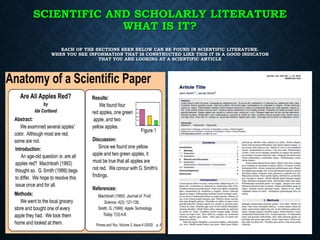
SCIENTIFIC AND SCHOLARLY LITERATURE
WHAT IS IT?
EACH OF THE SECTIONS SEEN BELOW CAN BE FOUND IN SCIENTIFIC LITERATURE.
WHEN YOU SEE INFORMATION THAT IS CONSTRUCTED LIKE THIS IT IS A GOOD INDICATOR
THAT YOU ARE LOOKING AT A SCIENTIFIC ARTICLE
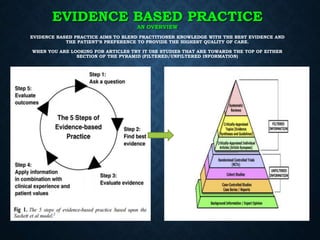
EVIDENCE BASED PRACTICE
AN OVERVIEW
EVIDENCE BASED PRACTICE AIMS TO BLEND PRACTITIONER KNOWLEDGE WITH THE BEST EVIDENCE AND
THE PATIENT’S PREFERENCE TO PROVIDE THE HIGHEST QUALITY OF CARE.
WHEN YOU ARE LOOKING FOR ARTICLES TRY IT USE STUDIES THAT ARE TOWARDS THE TOP OF EITHER
SECTION OF THE PYRAMID (FILTERED/UNFILTERED INFORMATION)
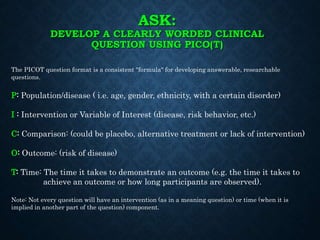
ASK:
DEVELOP A CLEARLY WORDED CLINICAL
QUESTION USING PICO(T)
The PICOT question format is a consistent "formula" for developing answerable, researchable
questions.
P: Population/disease ( i.e. age, gender, ethnicity, with a certain disorder)
I : Intervention or Variable of Interest (disease, risk behavior, etc.)
C: Comparison: (could be placebo, alternative treatment or lack of intervention)
O: Outcome: (risk of disease)
T: Time: The time it takes to demonstrate an outcome (e.g. the time it takes to
achieve an outcome or how long participants are observed).
Note: Not every question will have an intervention (as in a meaning question) or time (when it is
implied in another part of the question) component.
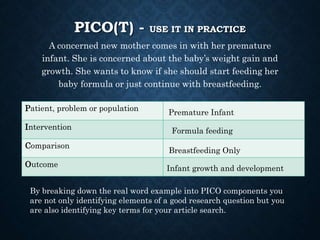
PICO(T) - USE IT IN PRACTICE
A concerned new mother comes in with her premature
infant. She is concerned about the baby’s weight gain and
growth. She wants to know if she should start feeding her
baby formula or just continue with breastfeeding.
Patient, problem or population
Intervention
Comparison
Outcome
Premature Infant
Formula feeding
Breastfeeding Only
Infant growth and development
By breaking down the real word example into PICO components you
are not only identifying elements of a good research question but you
are also identifying key terms for your article search.
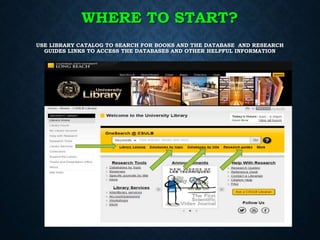
WHERE TO START?
USE LIBRARY CATALOG TO SEARCH FOR BOOKS AND THE DATABASE AND RESEARCH
GUIDES LINKS TO ACCESS THE DATABASES AND OTHER HELPFUL INFORMATION
.
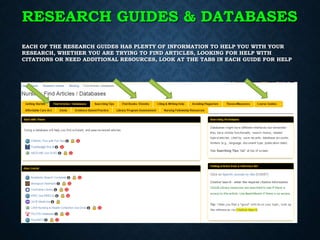
RESEARCH GUIDES & DATABASES
EACH OF THE RESEARCH GUIDES HAS PLENTY OF INFORMATION TO HELP YOU WITH YOUR
RESEARCH, WHETHER YOU ARE TRYING TO FIND ARTICLES, LOOKING FOR HELP WITH
CITATIONS OR NEED ADDITIONAL RESOURCES, LOOK AT THE TABS IN EACH GUIDE FOR HELP
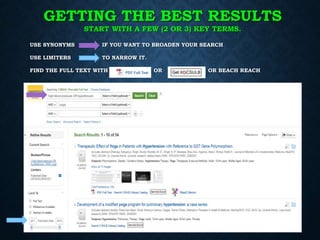
GETTING THE BEST RESULTS
START WITH A FEW (2 OR 3) KEY TERMS.
USE SYNONYMS IF YOU WANT TO BROADEN YOUR SEARCH
USE LIMITERS TO NARROW IT.
FIND THE FULL TEXT WITH OR OR BEACH REACH
TODAY WE LEARNED
• How to identify scientific literature and scholarly information
• Scholarly (Expert author, No Ads, Charts/Graphs, References)
• Scientific (Methods and Materials, Results, Specific Audience)
• Know how evidence based practice can influence your search habits
• Think pyramid!
• Understand the PICO(T) questions format and use it to find key terms
• Patient-Intervention-Comparison-Outcome-(Time)
• How to get to Databases and locate journal articles
• Use CSULB Library (Databases By Topic, Databases By Name, Research Guides)
• Use a few key terms or phrases
• How to use limiters in databases to refine your search
• 5 year publication date Population (Age, etc.) Human Subjects
• Choose article type to support EBP
• Know how to use the Nursing research guide for help
• Database searching Evidence based practice PICO(T)
THANK YOU!
IF YOU HAVE FURTHER QUESTIONS:
• Use the CSULB Research Guides for tips and help
• Go to the reference Desk:
• We are ‘Urgent Care’ for your research needs.
• E-mail me or chat with any librarian
Michelle M. DeMars
Temp Health Sciences Librarian
Michelle.demars@csulb.edu

Nursing: Searching at CSULB

  • 1.
    LIBRARY RESOURCES FOR NURSINGSTUDENTS Michelle DeMars Health Sciences Librarian Michelle.DeMars@csulb.edu
  • 2.
    BY THE ENDOF THIS SESSION YOU WILL: • Be able to identify scholarly and scientific information • Know how evidence based practice can influence your search habits • Understand the PICO(T) questions format and use it to find key terms • Know how to use key terms to find articles in databases and use limiters to refine your search • Know how to use the Nursing Guide to get to all of this info and more!
  • 3.
    SCIENTIFIC AND SCHOLARLYLITERATURE WHAT IS IT? EACH OF THE SECTIONS SEEN BELOW CAN BE FOUND IN SCIENTIFIC LITERATURE. WHEN YOU SEE INFORMATION THAT IS CONSTRUCTED LIKE THIS IT IS A GOOD INDICATOR THAT YOU ARE LOOKING AT A SCIENTIFIC ARTICLE
  • 4.
    EVIDENCE BASED PRACTICE ANOVERVIEW EVIDENCE BASED PRACTICE AIMS TO BLEND PRACTITIONER KNOWLEDGE WITH THE BEST EVIDENCE AND THE PATIENT’S PREFERENCE TO PROVIDE THE HIGHEST QUALITY OF CARE. WHEN YOU ARE LOOKING FOR ARTICLES TRY IT USE STUDIES THAT ARE TOWARDS THE TOP OF EITHER SECTION OF THE PYRAMID (FILTERED/UNFILTERED INFORMATION)
  • 5.
    ASK: DEVELOP A CLEARLYWORDED CLINICAL QUESTION USING PICO(T) The PICOT question format is a consistent "formula" for developing answerable, researchable questions. P: Population/disease ( i.e. age, gender, ethnicity, with a certain disorder) I : Intervention or Variable of Interest (disease, risk behavior, etc.) C: Comparison: (could be placebo, alternative treatment or lack of intervention) O: Outcome: (risk of disease) T: Time: The time it takes to demonstrate an outcome (e.g. the time it takes to achieve an outcome or how long participants are observed). Note: Not every question will have an intervention (as in a meaning question) or time (when it is implied in another part of the question) component.
  • 6.
    PICO(T) - USEIT IN PRACTICE A concerned new mother comes in with her premature infant. She is concerned about the baby’s weight gain and growth. She wants to know if she should start feeding her baby formula or just continue with breastfeeding. Patient, problem or population Intervention Comparison Outcome Premature Infant Formula feeding Breastfeeding Only Infant growth and development By breaking down the real word example into PICO components you are not only identifying elements of a good research question but you are also identifying key terms for your article search.
  • 7.
    WHERE TO START? USELIBRARY CATALOG TO SEARCH FOR BOOKS AND THE DATABASE AND RESEARCH GUIDES LINKS TO ACCESS THE DATABASES AND OTHER HELPFUL INFORMATION .
  • 8.
    RESEARCH GUIDES &DATABASES EACH OF THE RESEARCH GUIDES HAS PLENTY OF INFORMATION TO HELP YOU WITH YOUR RESEARCH, WHETHER YOU ARE TRYING TO FIND ARTICLES, LOOKING FOR HELP WITH CITATIONS OR NEED ADDITIONAL RESOURCES, LOOK AT THE TABS IN EACH GUIDE FOR HELP
  • 9.
    GETTING THE BESTRESULTS START WITH A FEW (2 OR 3) KEY TERMS. USE SYNONYMS IF YOU WANT TO BROADEN YOUR SEARCH USE LIMITERS TO NARROW IT. FIND THE FULL TEXT WITH OR OR BEACH REACH
  • 10.
    TODAY WE LEARNED •How to identify scientific literature and scholarly information • Scholarly (Expert author, No Ads, Charts/Graphs, References) • Scientific (Methods and Materials, Results, Specific Audience) • Know how evidence based practice can influence your search habits • Think pyramid! • Understand the PICO(T) questions format and use it to find key terms • Patient-Intervention-Comparison-Outcome-(Time) • How to get to Databases and locate journal articles • Use CSULB Library (Databases By Topic, Databases By Name, Research Guides) • Use a few key terms or phrases • How to use limiters in databases to refine your search • 5 year publication date Population (Age, etc.) Human Subjects • Choose article type to support EBP • Know how to use the Nursing research guide for help • Database searching Evidence based practice PICO(T)
  • 11.
    THANK YOU! IF YOUHAVE FURTHER QUESTIONS: • Use the CSULB Research Guides for tips and help • Go to the reference Desk: • We are ‘Urgent Care’ for your research needs. • E-mail me or chat with any librarian Michelle M. DeMars Temp Health Sciences Librarian Michelle.demars@csulb.edu