
Using Information in Healthcare
Management: NIS
Babitha K Devu, RN, RM, M.Sc (N), MBA
Assistant Professor, SMVD College of Nursing, J & K
Research Scholar, Ph.D (N), Amity University, Gurugram
2
• Nursing informatics refers to the practice and science of integrating nursing
information and knowledge with technology to manage and integrate health
information.
• The goal of nursing informatics is to improve the health of people and
communities while reducing costs.
• Nursing informatics (NI) is the specialty that integrates nursing science with
multiple information and analytical sciences to identify, define, manage and
communicate data, information, knowledge and wisdom in nursing practice.
(ANA 2001)
• Another definition of nursing informatics comes from the American Medical
Informatics Association (AMIA), which states “Nursing Informatics science and
practice integrates nursing, its information and knowledge and their
management, with information and communication technologies to promote the
health of people, families and communities worldwide”
Nursing Informatics
3
Nursing Informatics
DEFINITION
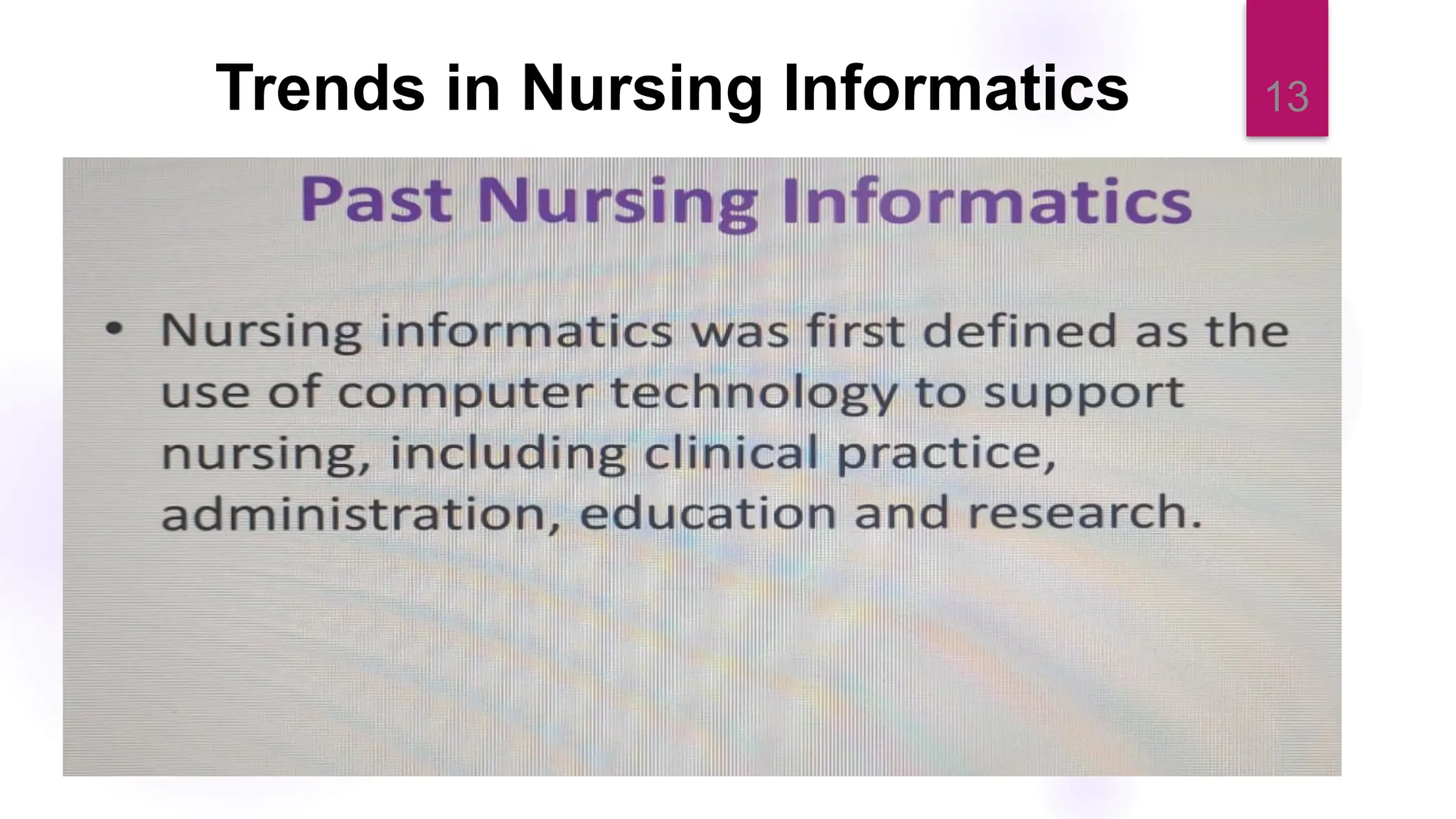
Hebda (1998), defines nursing informatics as the
use of computer technology to support nursing,
including clinical practice, administration, education
and research.
ANA (American Nurses Association) 2015, a
specialty that integrates nursing science, computer
science, and information science to manage and
communicate data, information, and knowledge in
nursing practice.
4
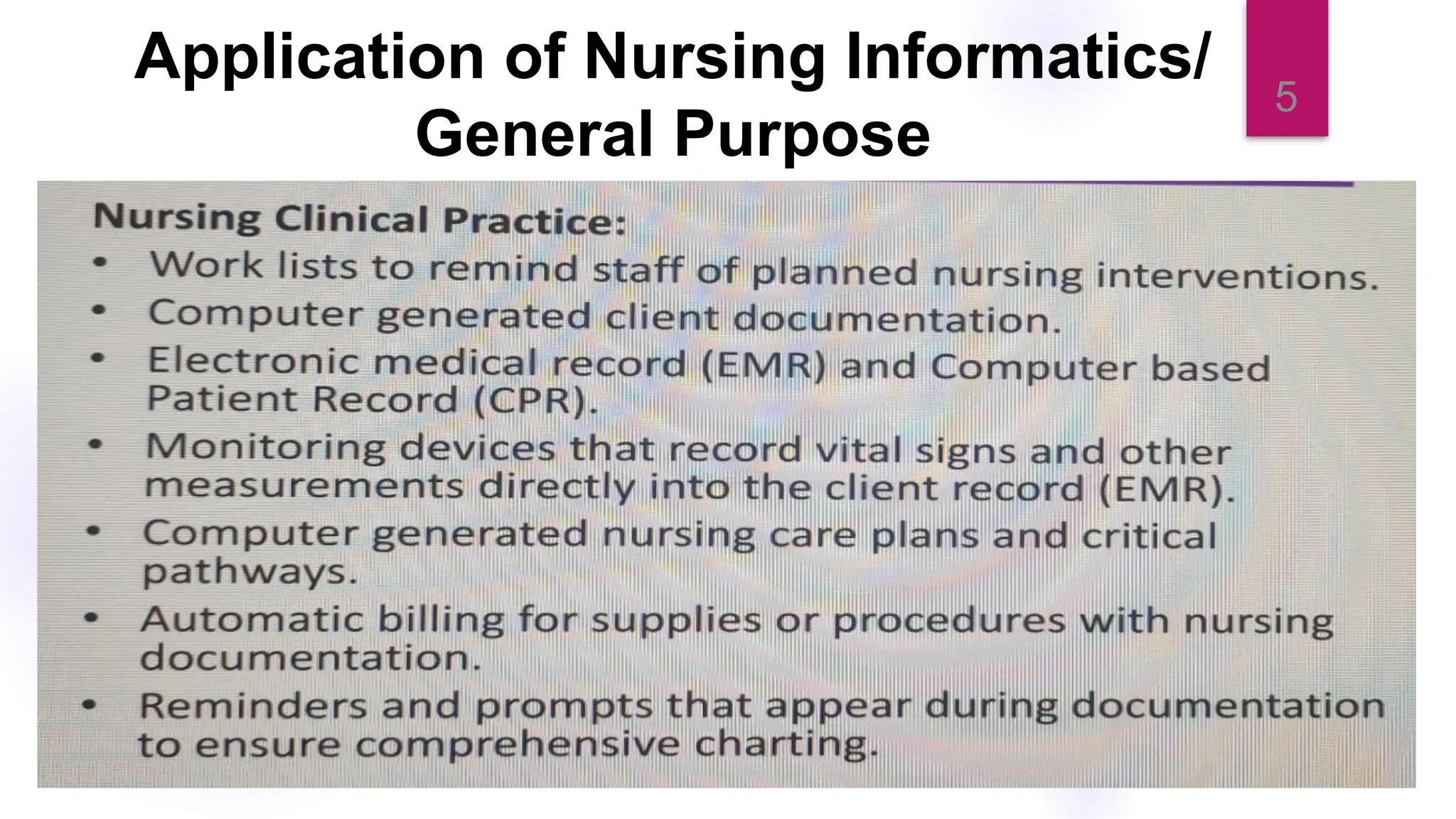
Application of Nursing Informatics/
General Purpose
Nursing Informatics (NI) is the application of computer science and
information science to nursing. NI promotes the generation, management
and processing of relevant data in order to use information and develop
knowledge that supports nursing in all practice domains such as:
 Nursing Clinical Practice
 Nursing Administration
 Nursing Education
 Nursing Research
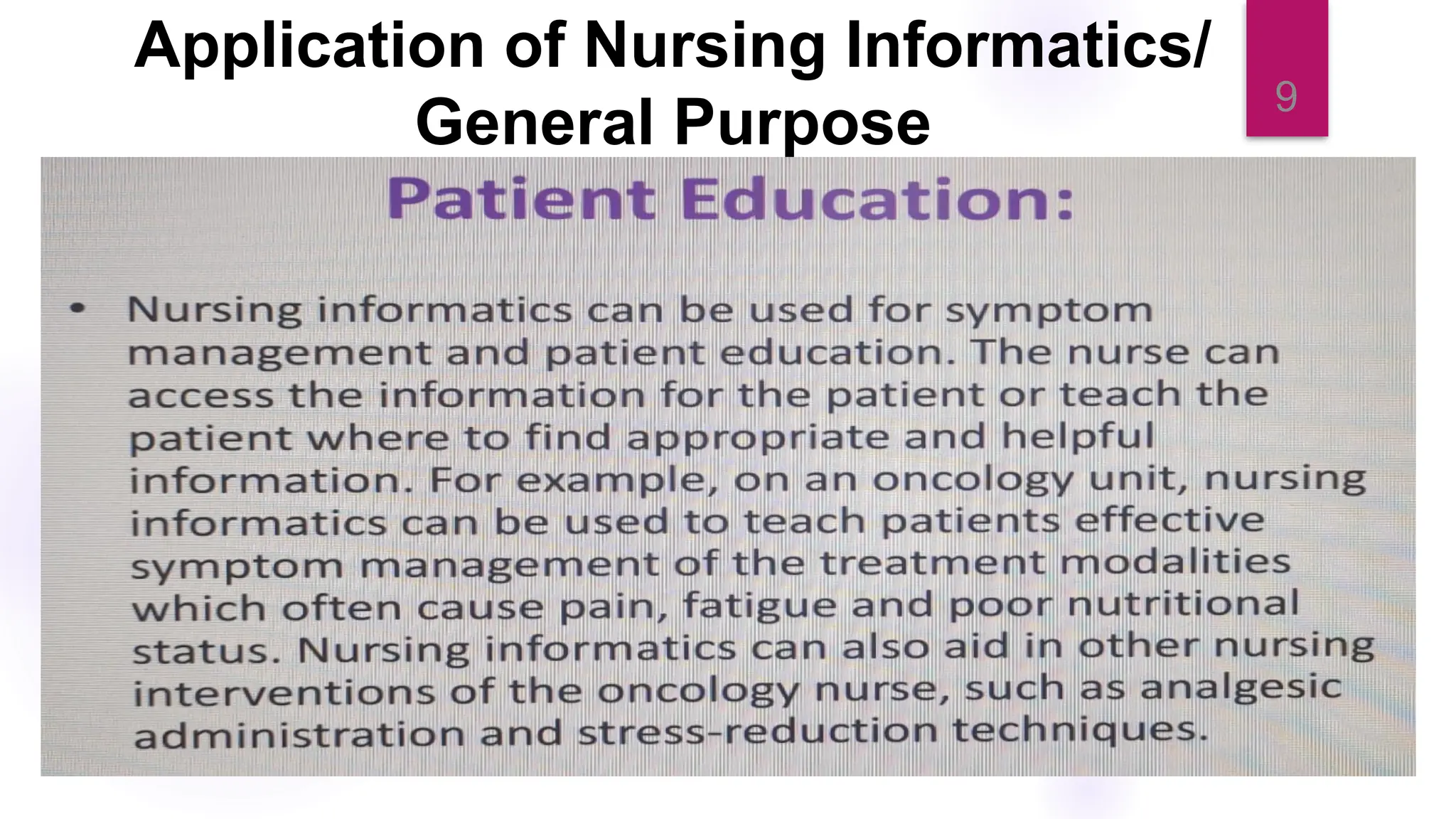
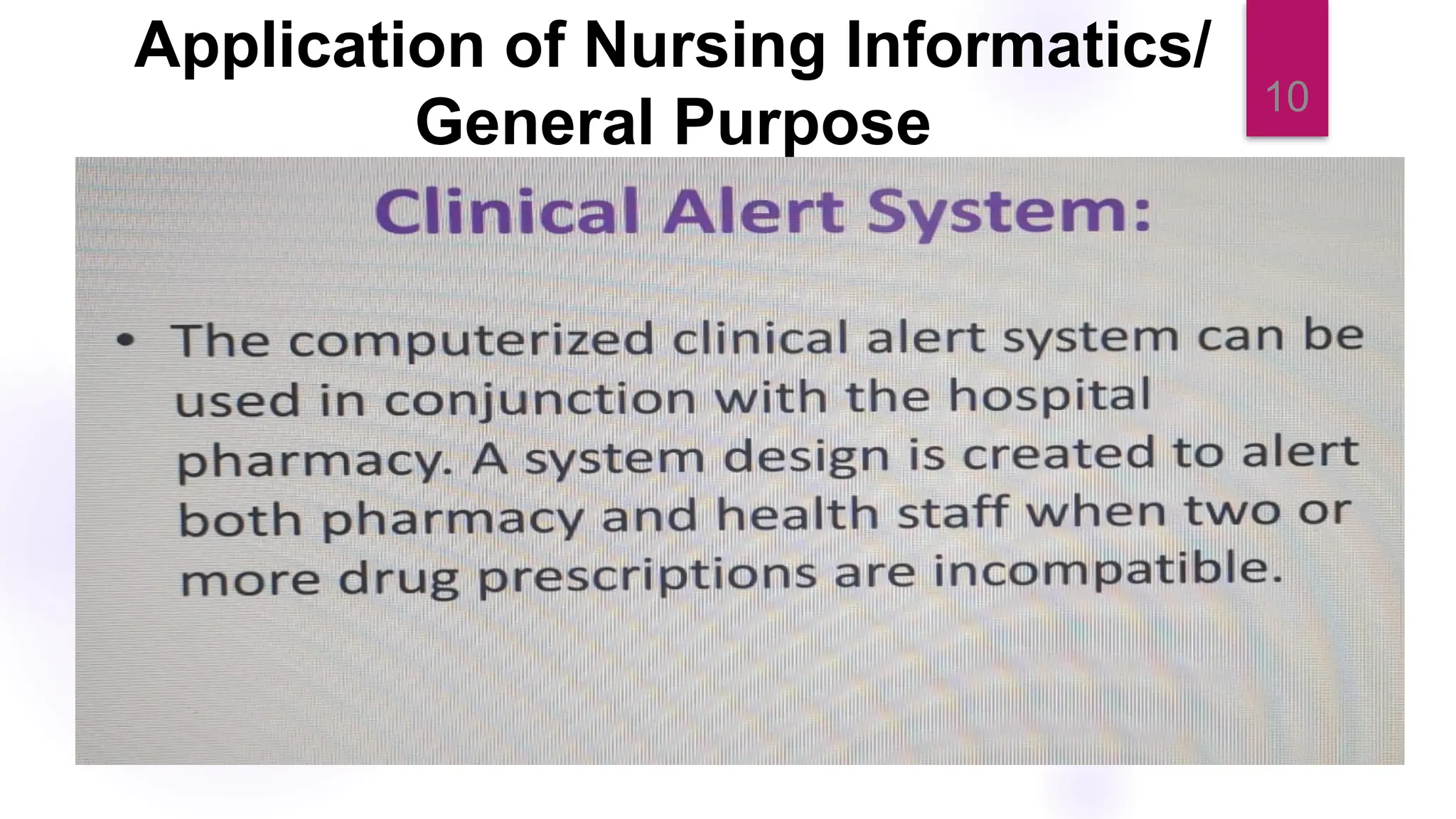
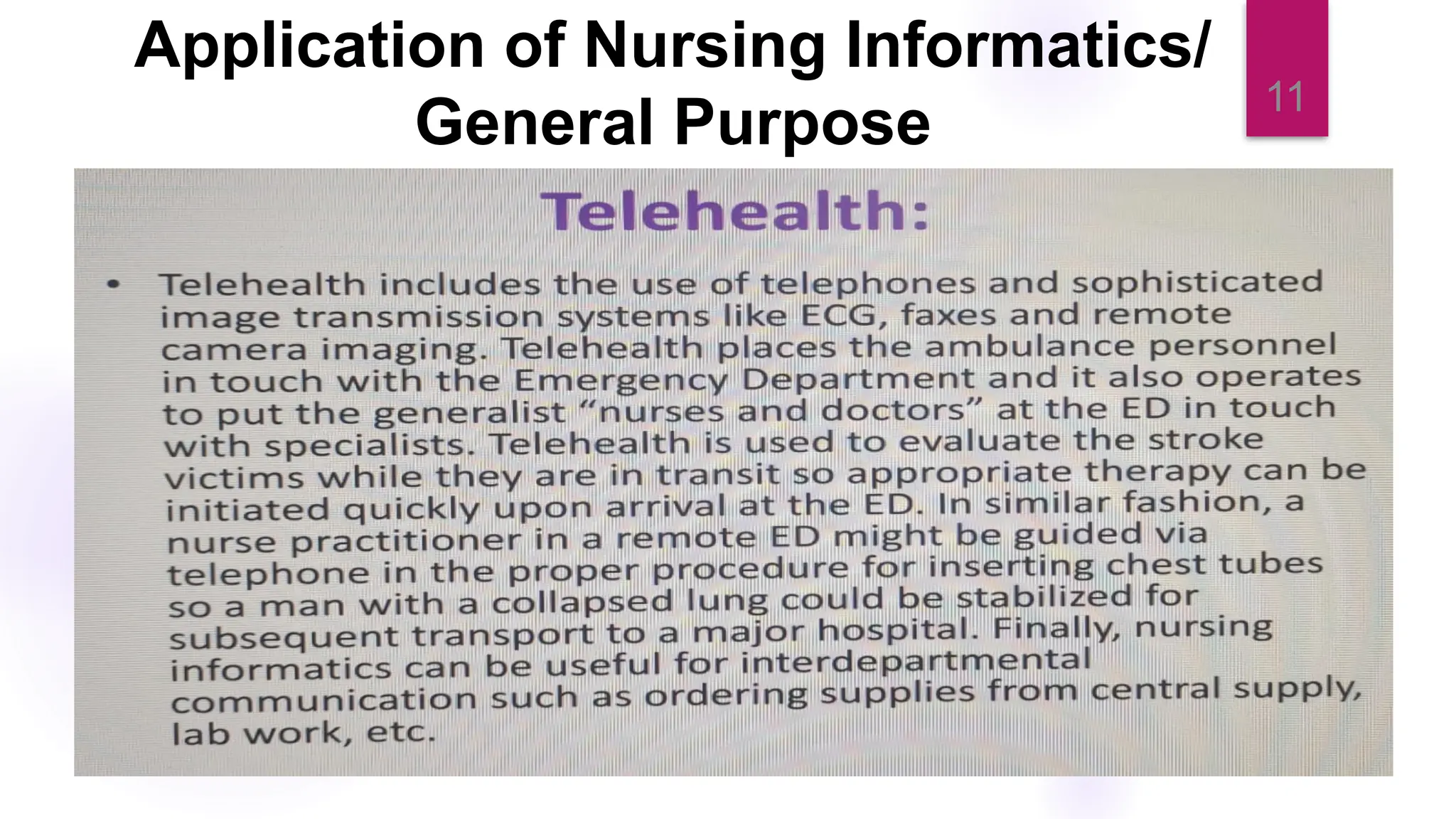
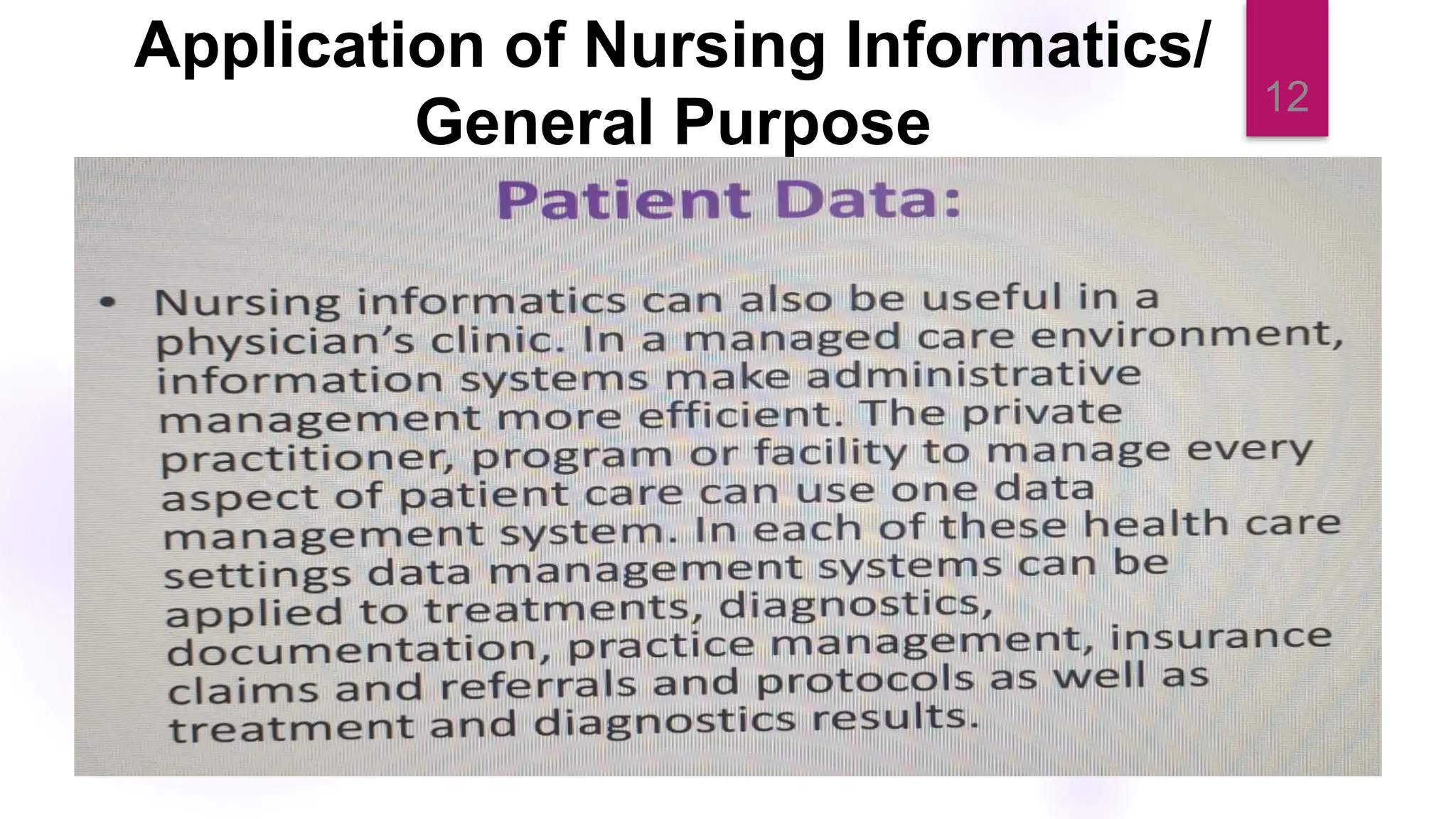
 Patient Education
 Clinical Alert System
 Telehealth
 Patient Data
5
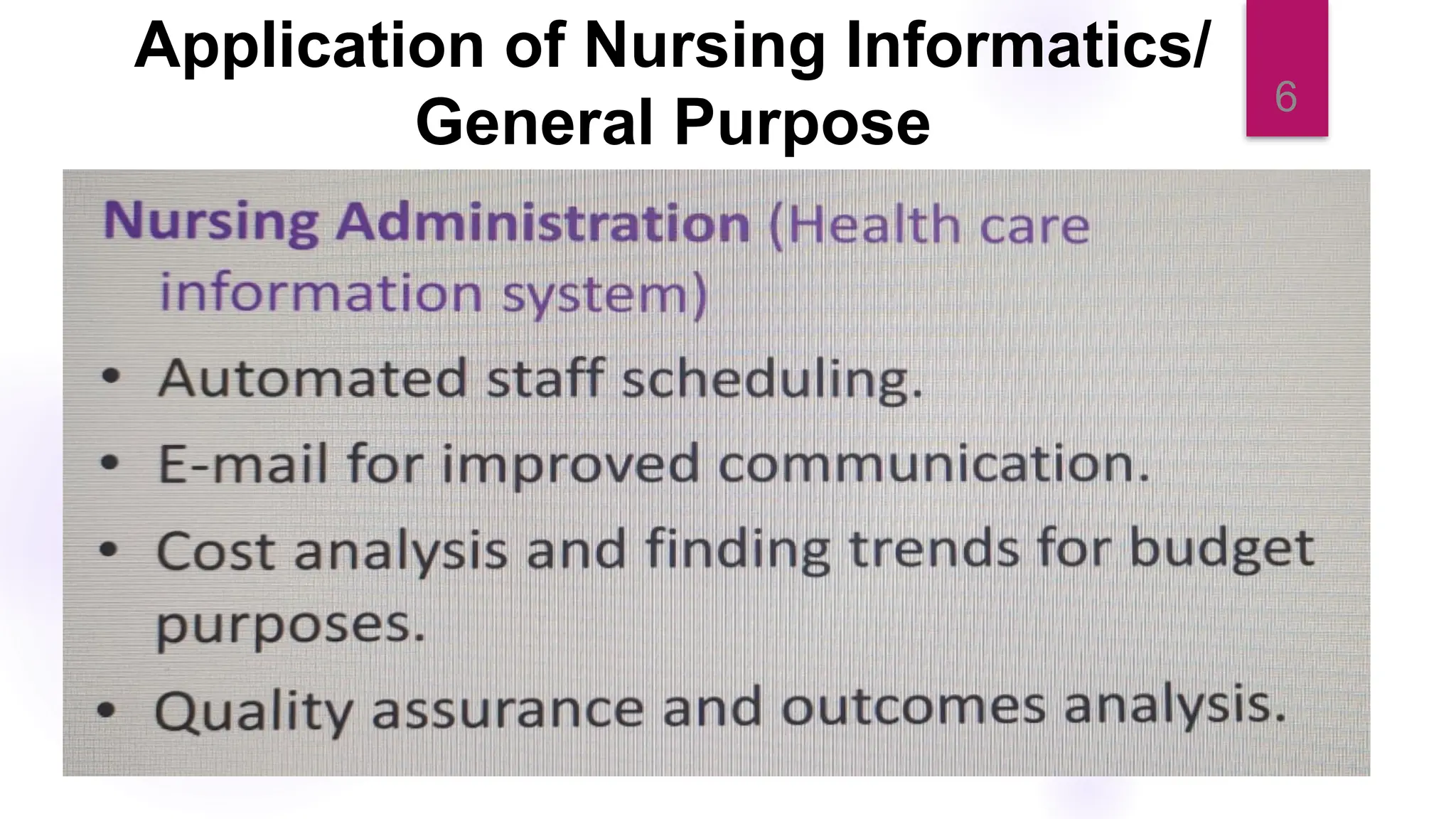
Application of Nursing Informatics/
General Purpose
6
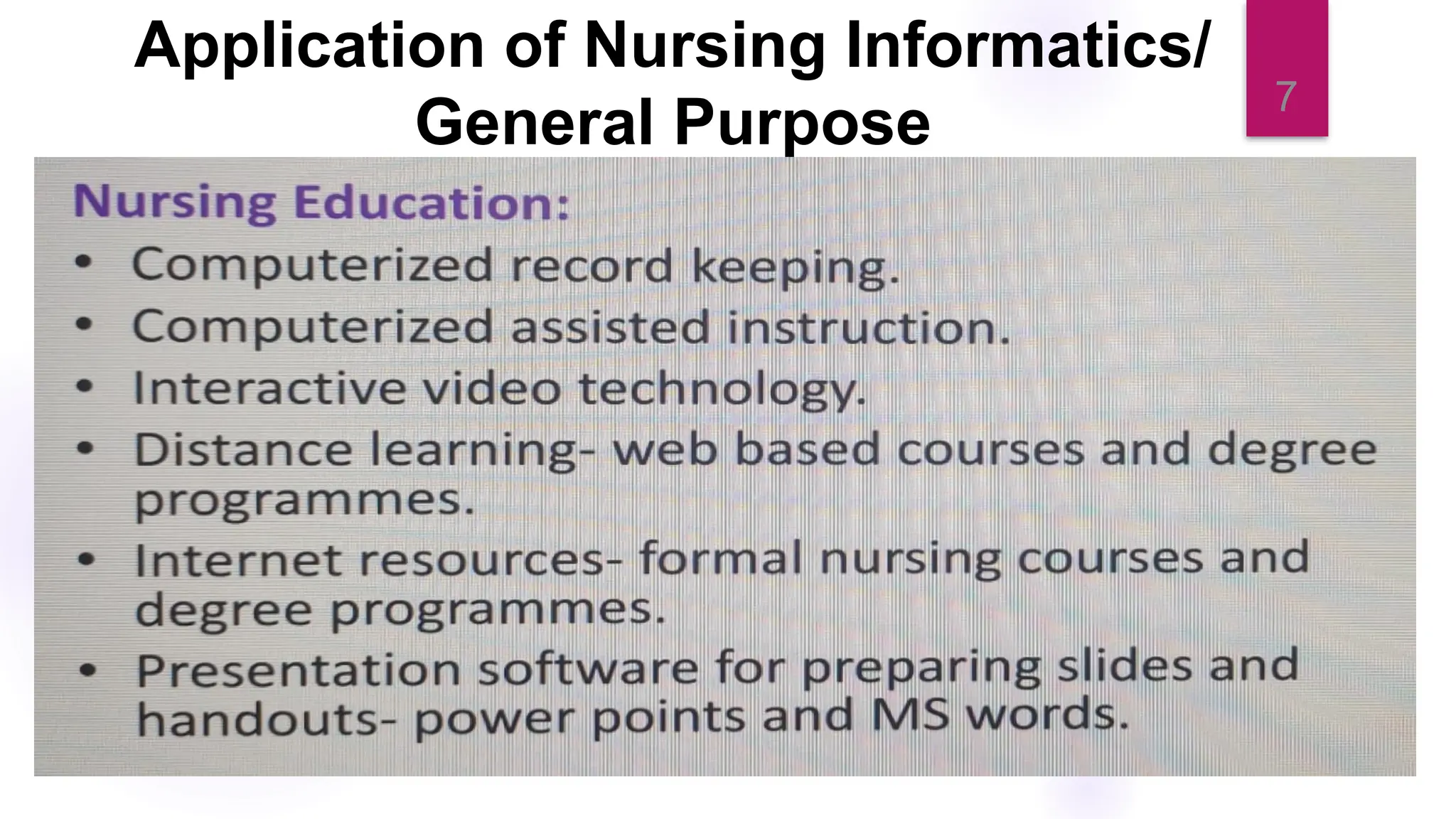
Application of Nursing Informatics/
General Purpose
7
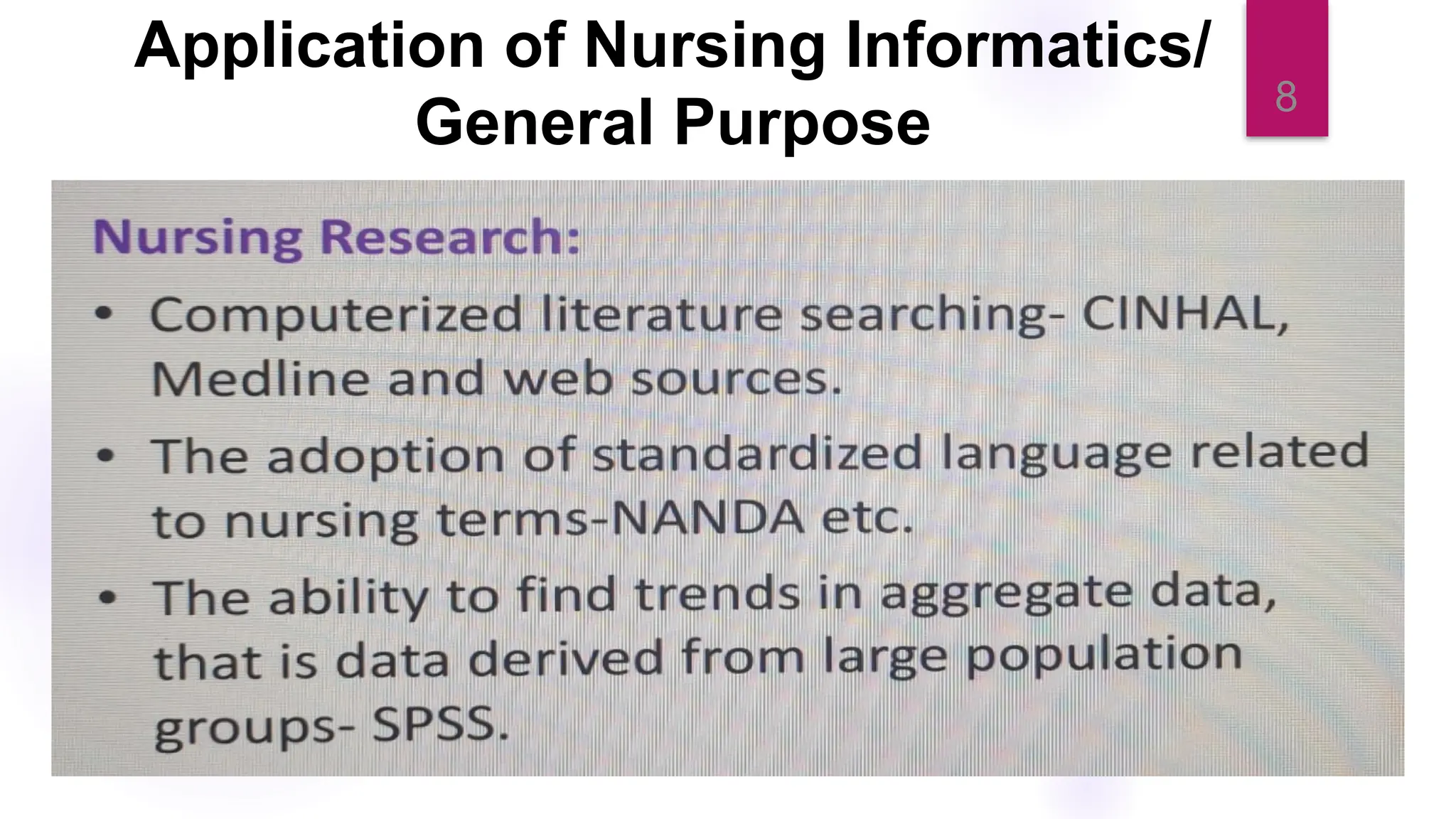
Application of Nursing Informatics/
General Purpose
8
Application of Nursing Informatics/
General Purpose
9
Application of Nursing Informatics/
General Purpose
10
Application of Nursing Informatics/
General Purpose
11
Application of Nursing Informatics/
General Purpose
12
Application of Nursing Informatics/
General Purpose
13
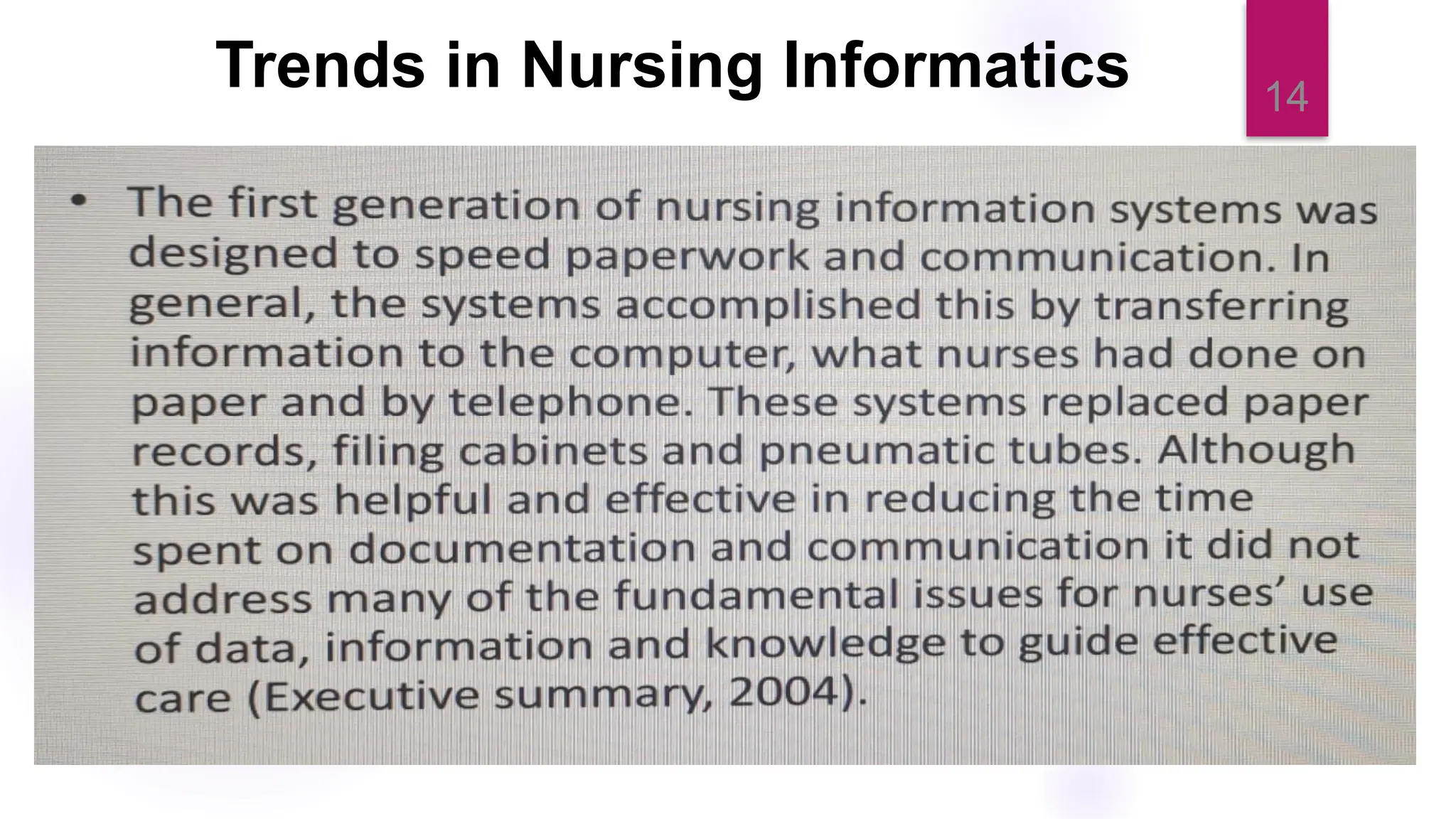
Trends in Nursing Informatics
14
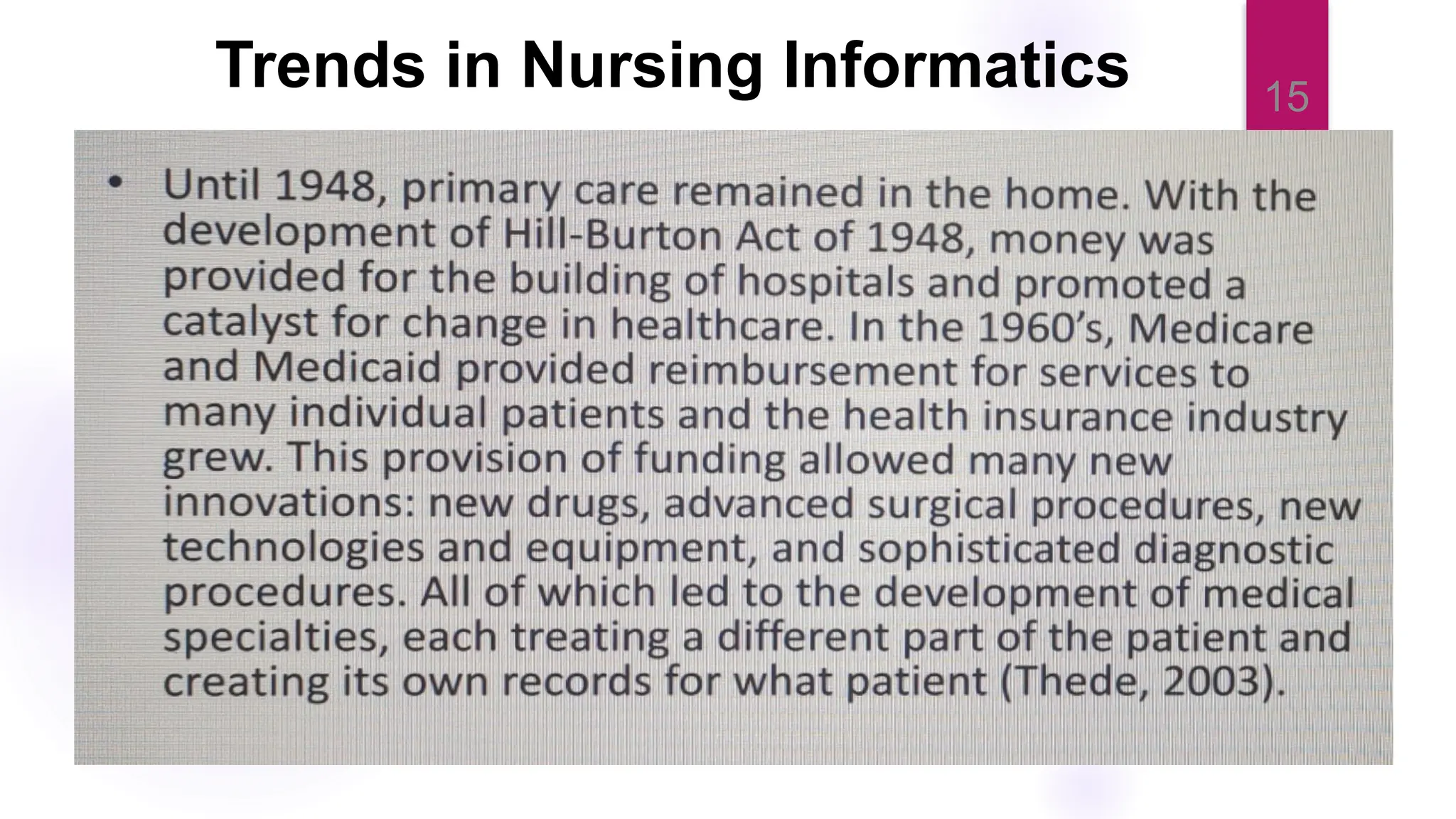
Trends in Nursing Informatics
15
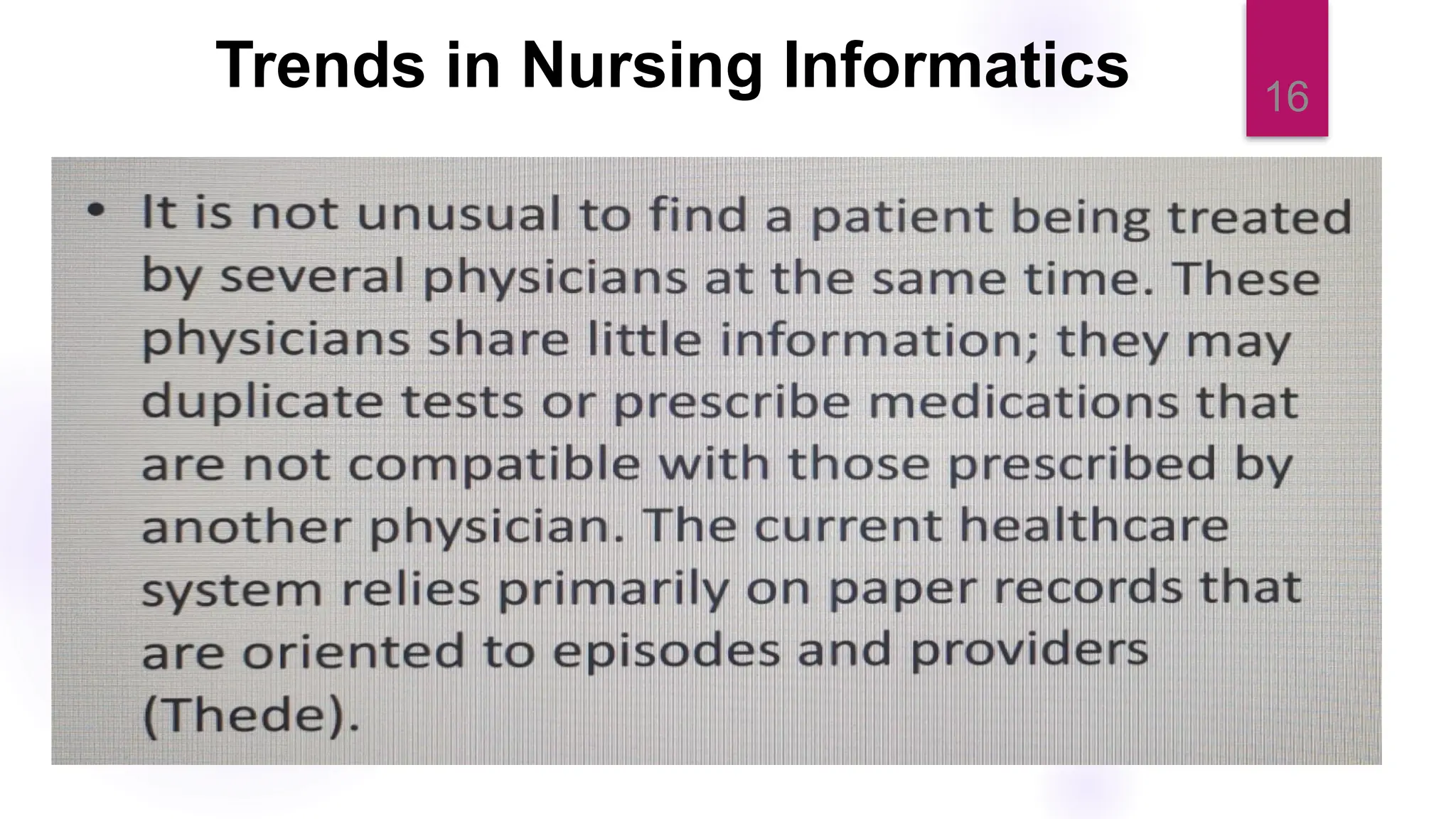
Trends in Nursing Informatics
16
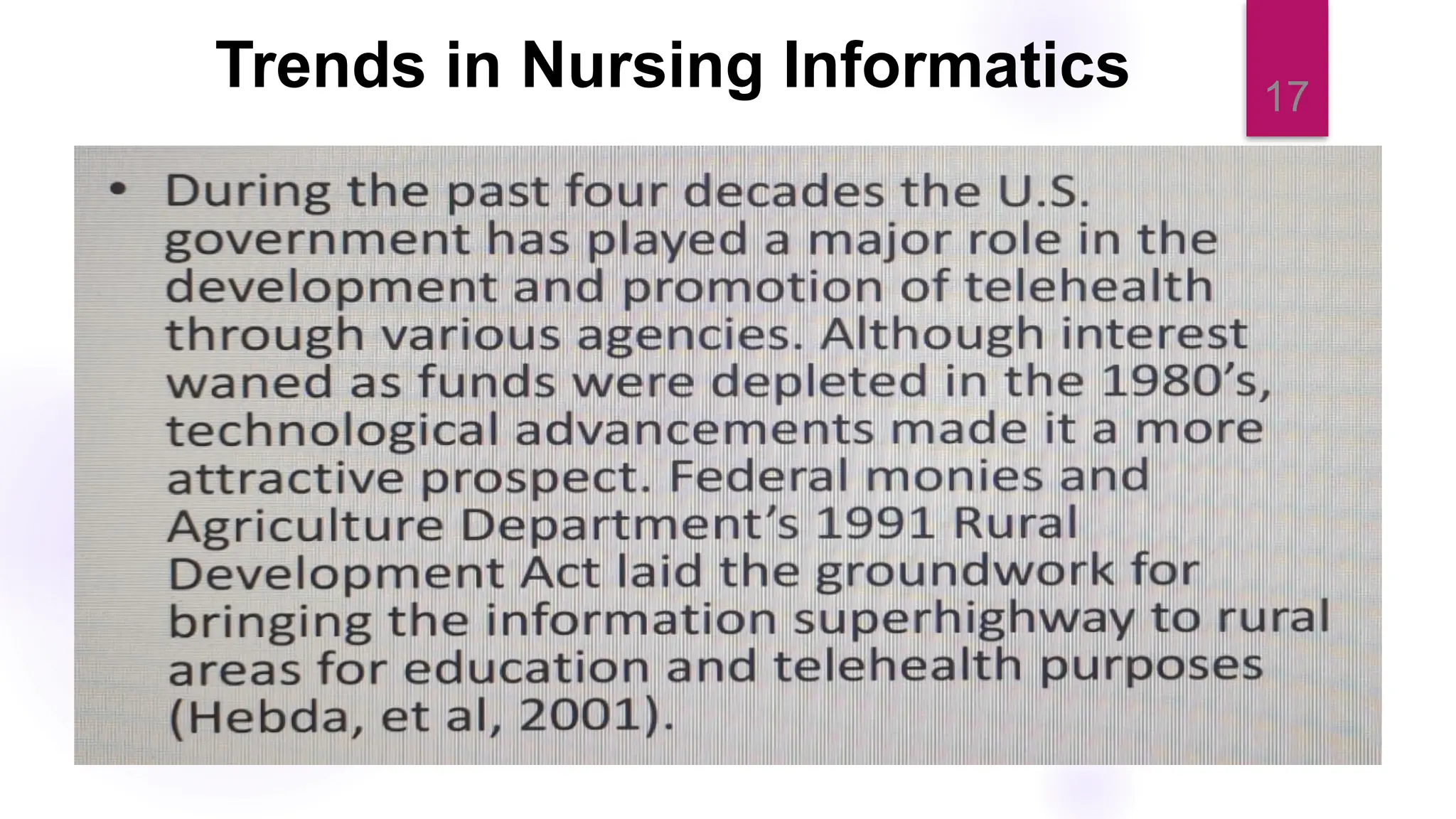
Trends in Nursing Informatics
17
Trends in Nursing Informatics
18
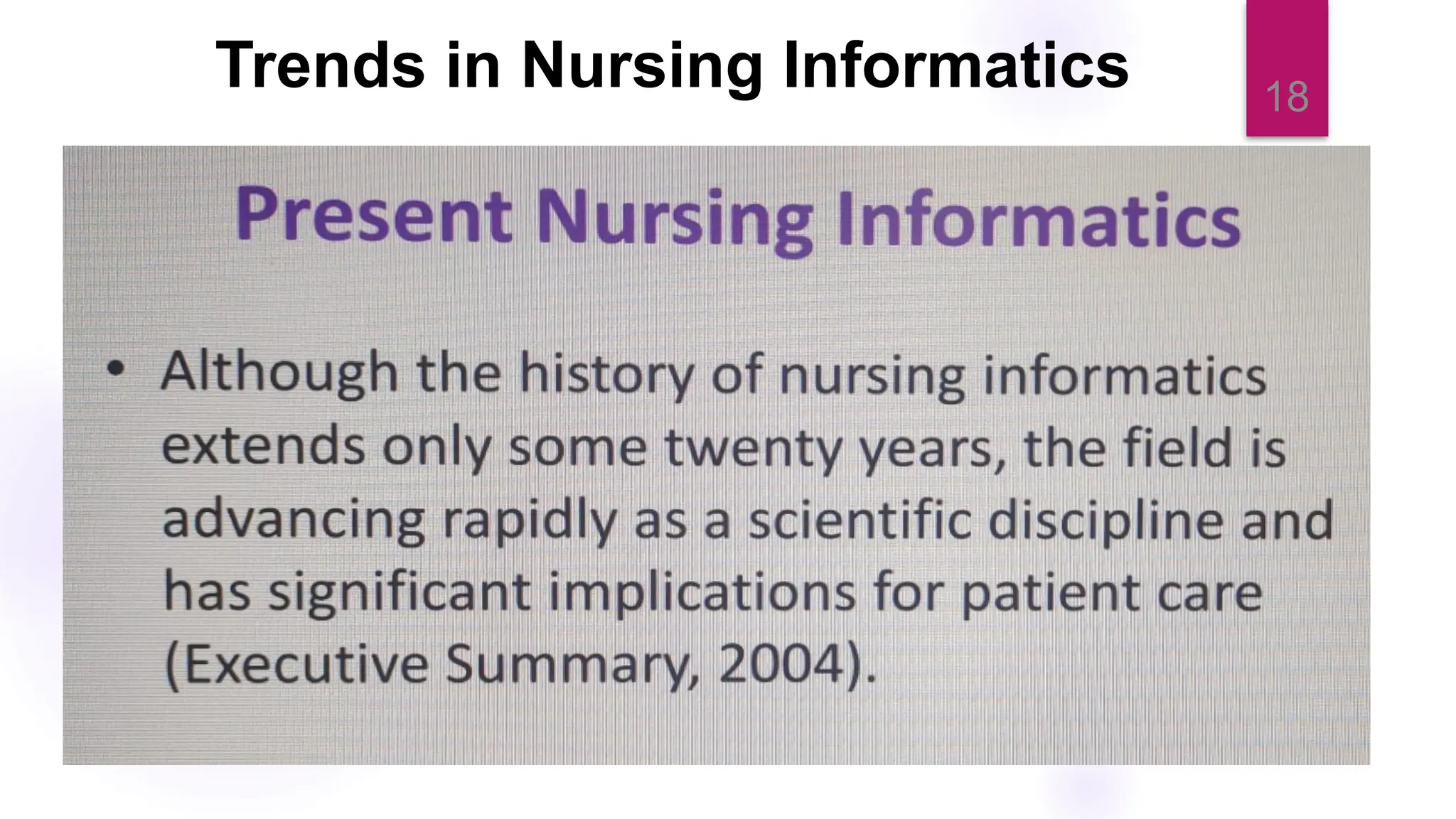
Trends in Nursing Informatics
19
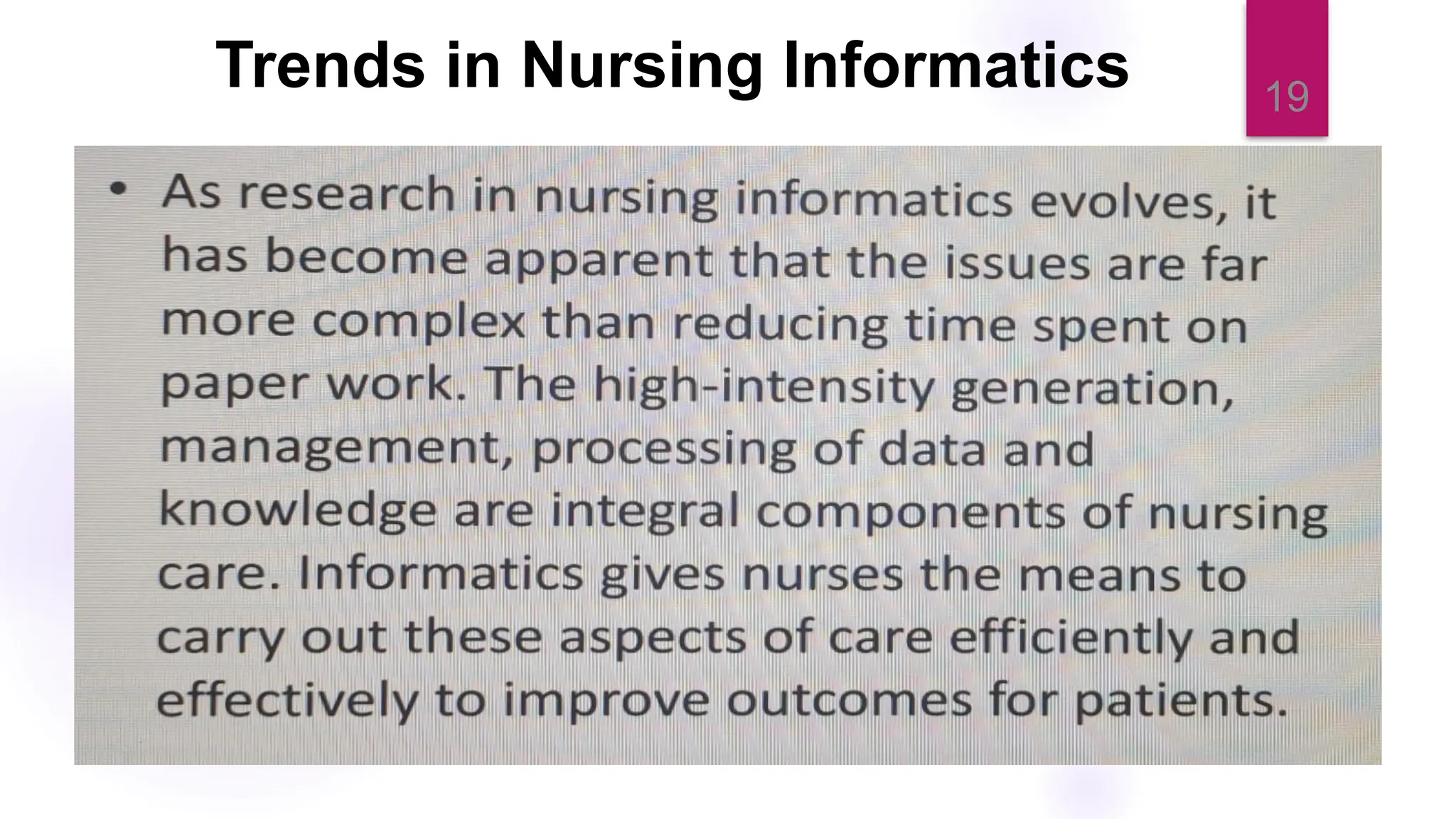
Trends in Nursing Informatics
20
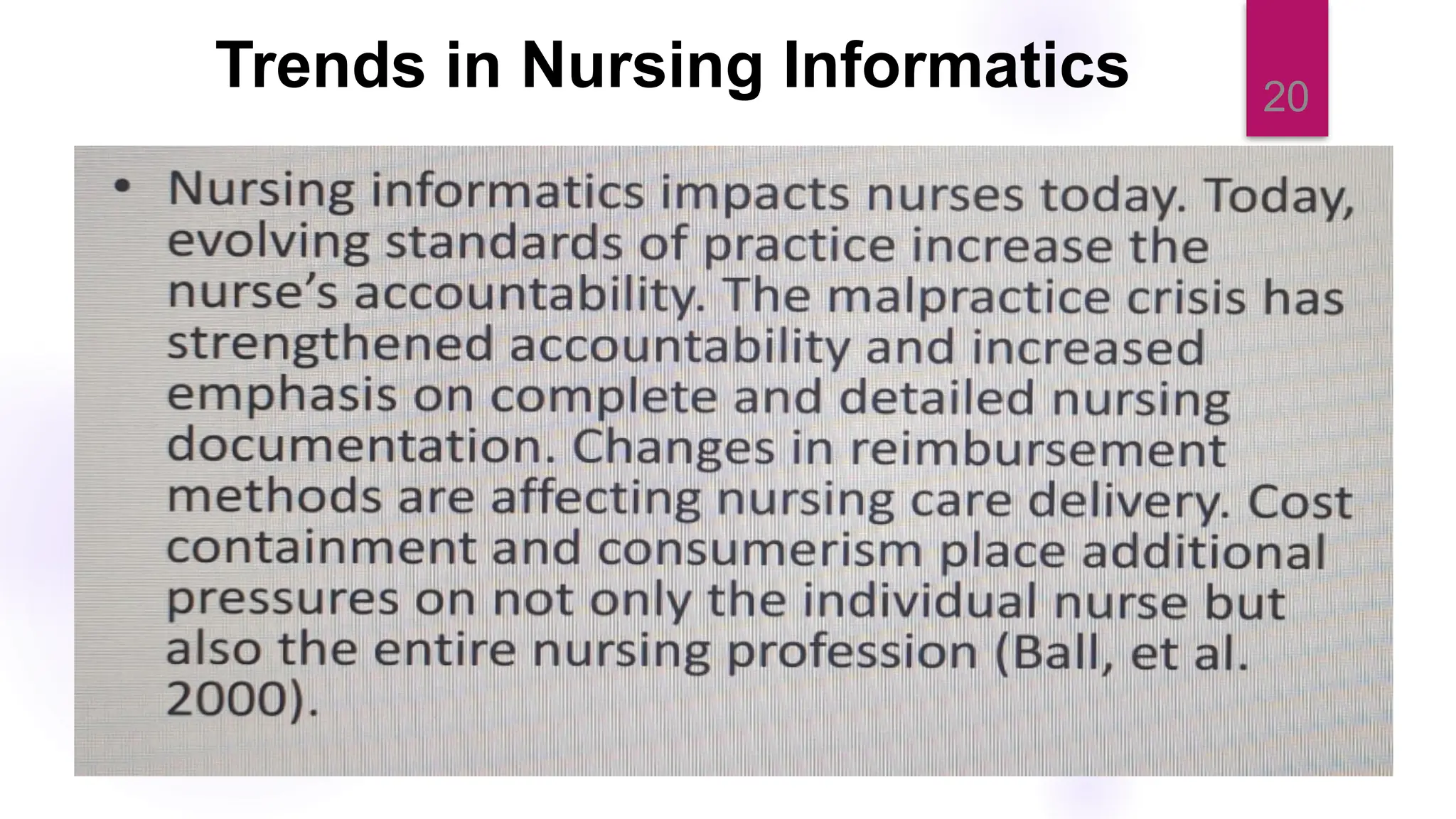
Trends in Nursing Informatics
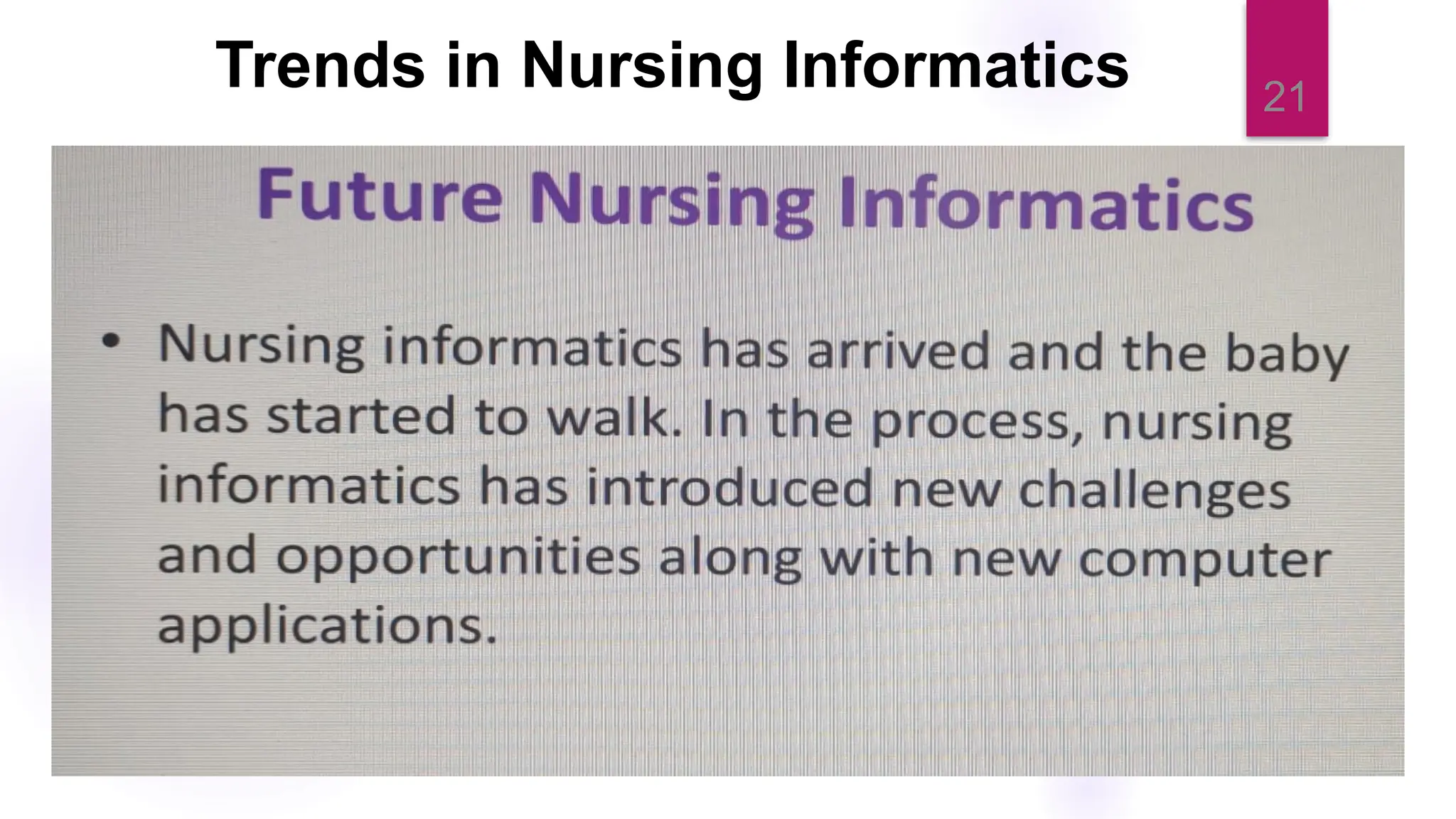
21
Trends in Nursing Informatics
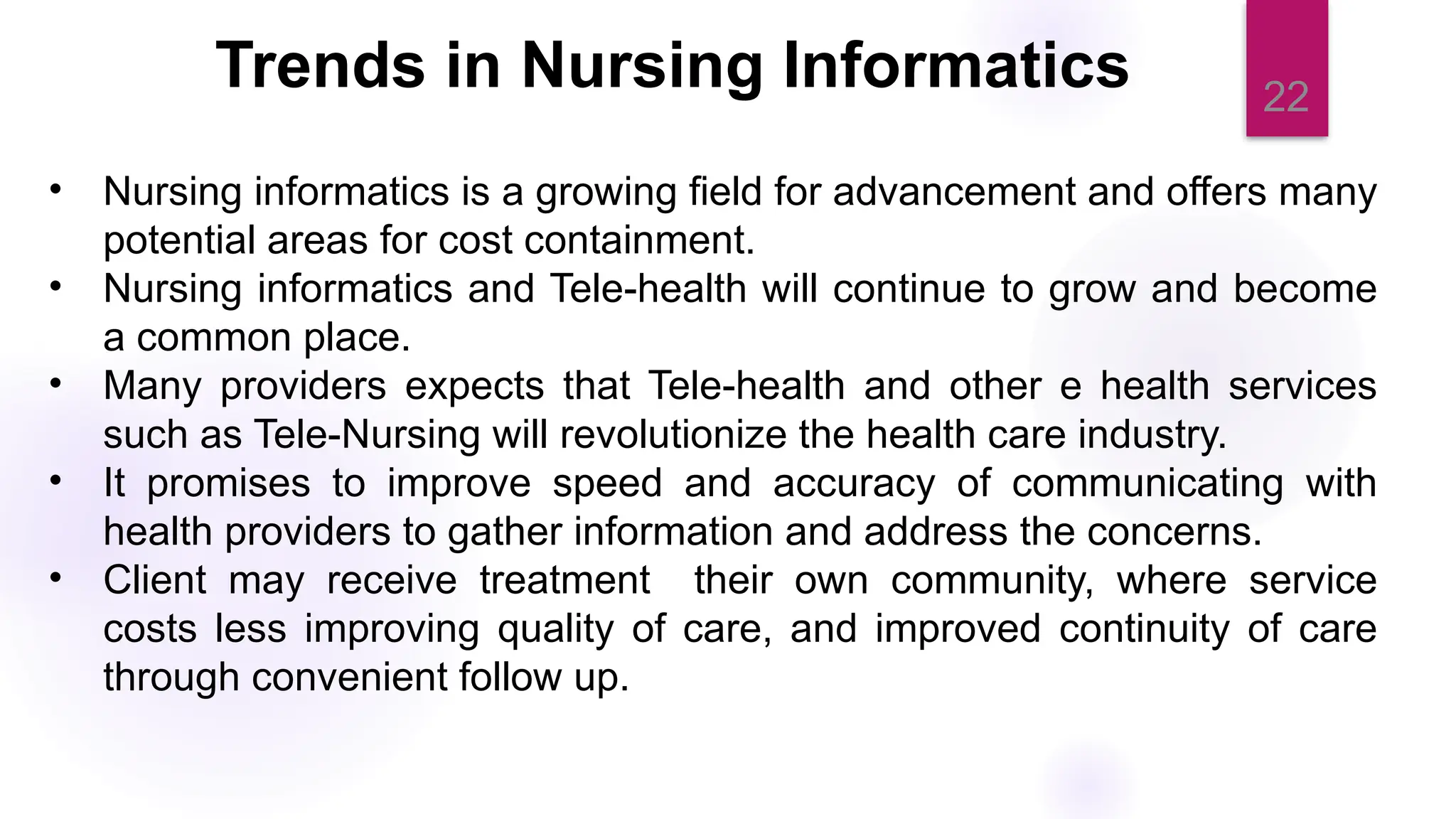
22
Trends in Nursing Informatics
• Nursing informatics is a growing field for advancement and offers many
potential areas for cost containment.
• Nursing informatics and Tele-health will continue to grow and become
a common place.
• Many providers expects that Tele-health and other e health services
such as Tele-Nursing will revolutionize the health care industry.
• It promises to improve speed and accuracy of communicating with
health providers to gather information and address the concerns.
• Client may receive treatment their own community, where service
costs less improving quality of care, and improved continuity of care
through convenient follow up.
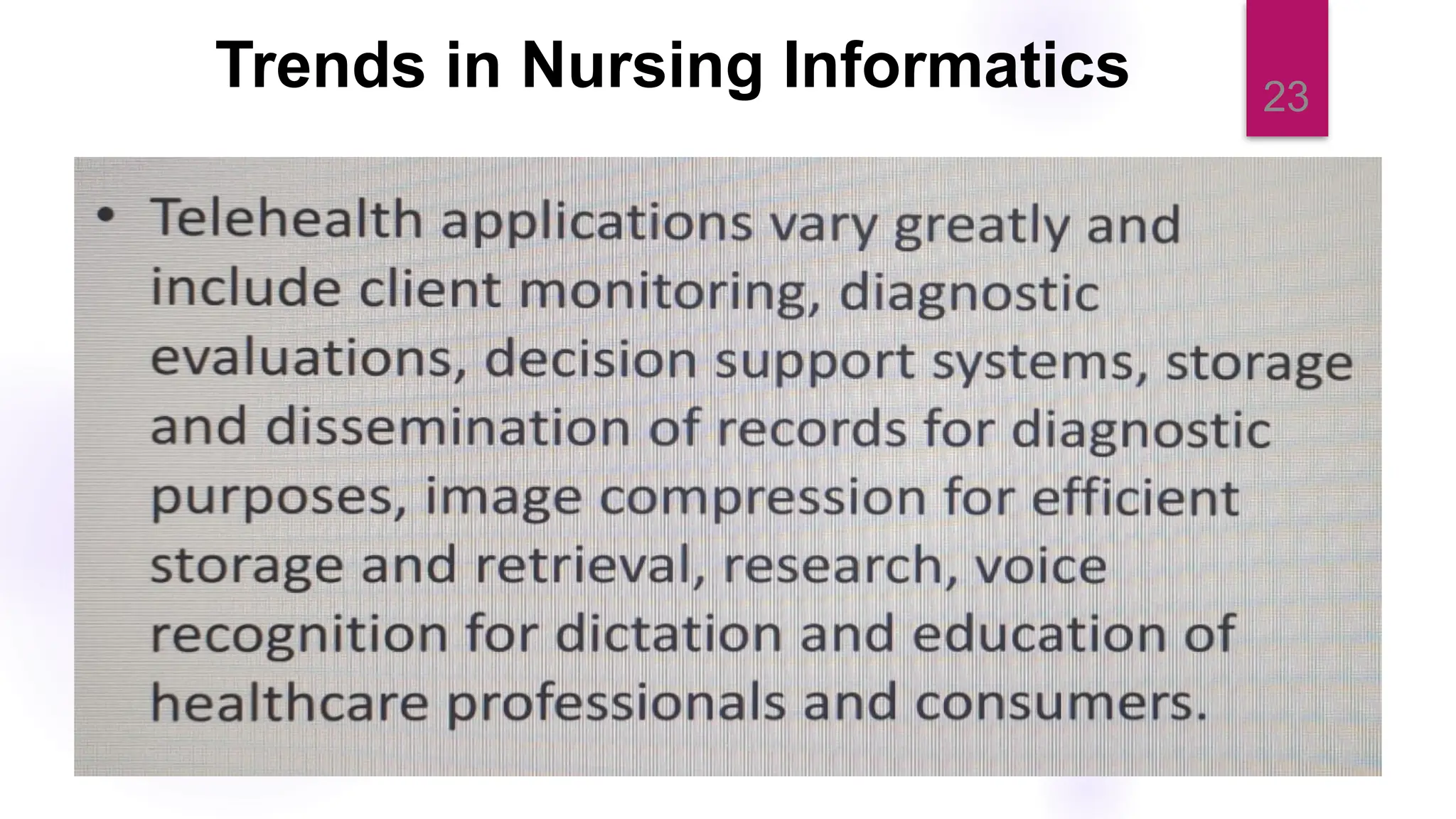
23
Trends in Nursing Informatics
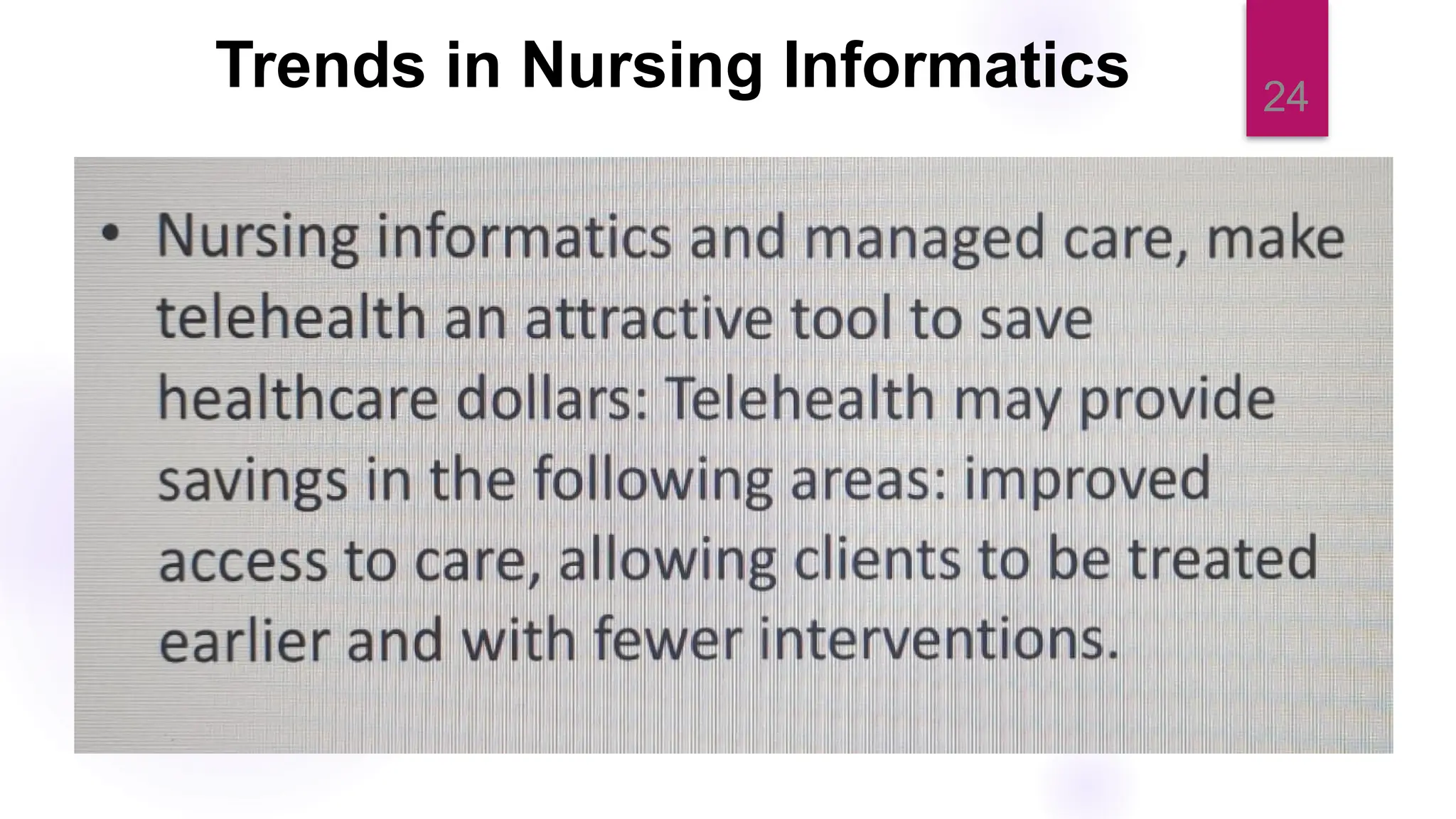
24
Trends in Nursing Informatics
25
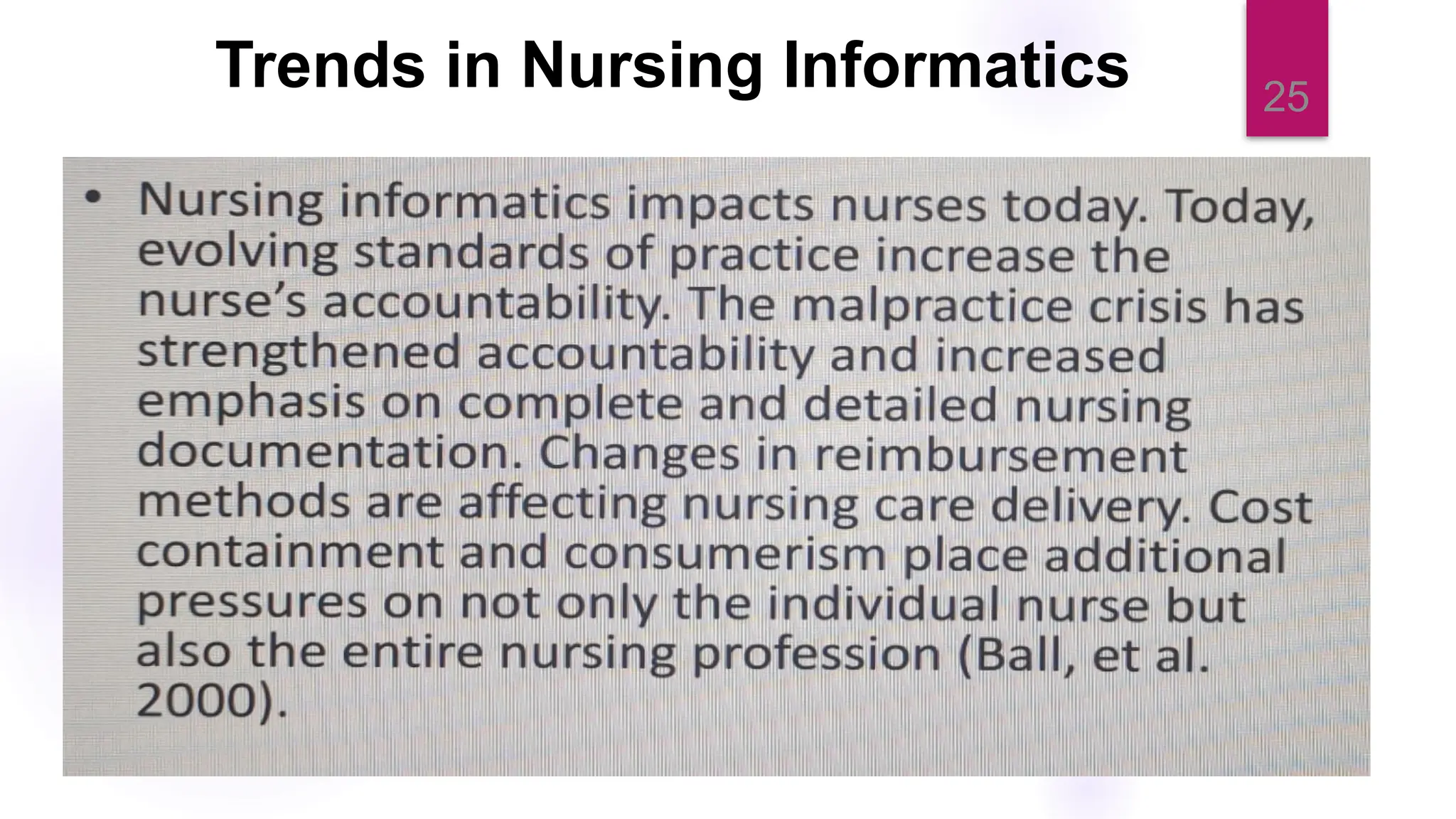
Trends in Nursing Informatics
26
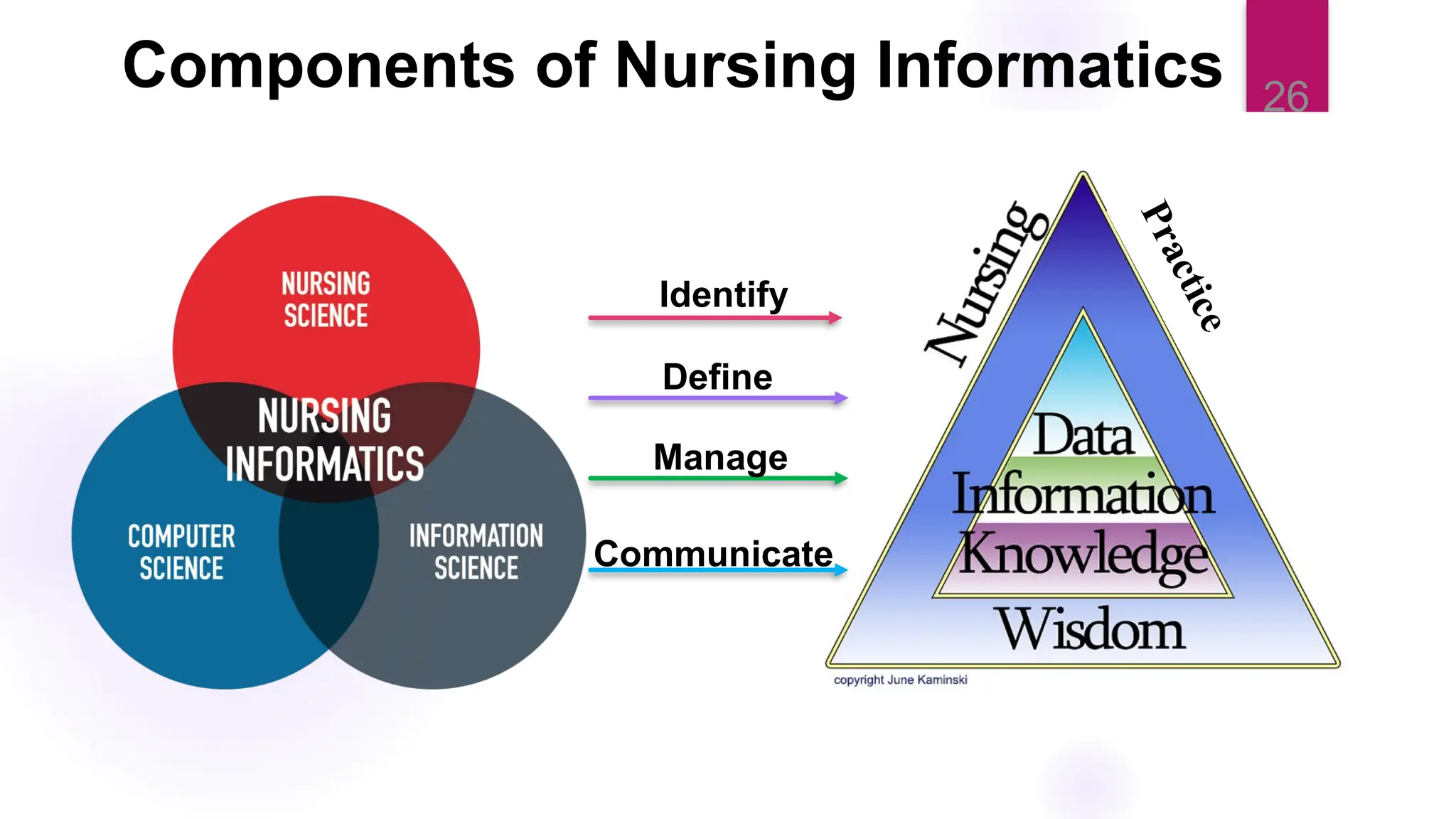
Components of Nursing Informatics
P
r
a
c
t
i
c
e
Identify
Define
Manage
Communicate
27
Components of Nursing Informatics
• The Components of Nursing Informatics are nursing science, computer
science, and information science to manage and communicate data,
information, knowledge, and wisdom into the nursing practice.
• Nursing science is a branch of science that deals with the principles and
applications of nursing and related services.
• Computer science is the study of computation, automation, and information.
Computer science spans theoretical disciplines to practical disciplines.
Computer science is generally considered an area of academic research and
distinct from computer programming.
• Information science (also known as information studies) is an academic
field which is primarily concerned with analysis, collection, classification,
manipulation, storage, retrieval, movement, dissemination, and protection of
information.
• Integration of these three components forms nursing informatics.
28
Components of Nursing Informatics
• These components forms the sub-components of NI by
Identifying, defining, managing and communicating it in the
nursing practice in the form of data, information, knowledge and
wisdom.
• These components are quite useful in the clinical practice as it
helps in the decision-making process to achieve the expected
outcomes of the health care facility.
29
Check Yourself
• Which of the following is NOT considered part of the definition of nursing
informatics?
a) Information science
b) Social science
c) Computer science
d) Nursing science
30
Meaningful use of Informatics
• There are three components of meaningful use:
a. use of an electronic health record (EHR) in a meaningful manner,
b. use of EHR technology for electronic exchange of information, and
c. use of EHR technology to submit clinical quality measures
• The environments in healthcare have encompassed more than just a physical
location.
• There is an increase in the use of technology such as mobile computers and
wireless solutions, and automated exchanges between providers and
patients.
• Adapting to these new environments requires a paradigm shift for how care is
communicated and delivered, which requires knowledge of the evolution of
new technologies.
• Nurses are at the center of this advancement as the professionals with the
greatest amount of direct patient care.
31
Check Yourself
• Meaningful use of Informatics includes three purposes. The first one is “an
electronic health record (EHR) for use in a meaningful manner” Which are the
other two purposes?
a) Upholding core measures and submission of clinical quality measures
b) Submission of clinical quality measures and protection of patient privacy
c) Protection of patient privacy and electronic exchange of information
d) Electronic exchange of information and submission of clinical quality
measures
32
Competencies for the use of Informatics
• Categories of competencies involved in nursing informatics include
basic computer skills, information literacy, and information
management.
• Nursing informatics assists nurses to communicate with all other
clinical disciplines, coordinate patient care, and manage the
information related to patient care and the nursing process.
• The Technology Informatics Guiding Education Reform (TIGER)
Initiative was created in 2004 to collaborate with nursing stakeholders
to create a vision, action, and strategies to improve nursing
education, practice, and patient care delivery through the use of
health information technology.
• TIGER formed an Informatics Competency Collaborative, which
define the competencies recommended for the NI discipline (TIGER,
2010).
33
Check Yourself
• Categories of competencies with nursing informatics include basic computer
skills, information management, and which of the following?
a) Workflow redesign
b) Health literacy
c) Information literacy
d) Leadership skills
What are the benefits of nursing
informatics?
 Aligning Nursing Best Practice with Clinical Workflows and
Care. ...
 Improving Clinical Policies, Protocols, Processes, and
Procedures. ...
 Providing Training and Learning Based on Objective Data. ...
 Selecting and Testing New Medical Devices. ...
 Reducing Medical Errors and Costs. ...
 Enhancing End-to-End Treatment and Continuity of Care
34
35
Health care Data Analysis
• The Health-care Information System (HIS) is designed to enable the
gathering and storage of data and then making them available as
information for primary and secondary use.
DATA MANAGEMENT PROCESS
Data management is a set of activities consisting of:
1.Data generation
2.Data acquisition (collection, gathering, capture)
3.Data transfer
4.Data storage
5.Data extraction
6.Data analysis
7.Data interpretation
8.Data presentation
9.Data dissemination
36
Health care Data Analysis
Analysis refers to the act of
1.computation,
2.categorization
3.comparison
4.manipulation
The purpose of analysis is to compare (similarities and differences) the
attributes of a single entity or entities within a group.
• Data Analytics is the process of examining raw datasets to find trends, draw
conclusions and identify the potential for improvement.
• Health care analytics uses current and historical data to gain insights, macro
and micro, and support decision-making at both the patient and business
level.
• The use of health data analytics allows for improvements to patient care,
faster and more accurate diagnoses, preventive measures, more personalized
treatment and more informed decision-making.
• Health data is any data relating to the health of an individual patient or
collective population.
37
Health care Data Analysis
•This information is gathered from a series of health information systems (HIS) and
other technological tools utilized by health care professionals, insurance companies
and government organizations. There are a variety of tools and systems used to
collect, store, share and analyze health data gathered through various means.
These tools include:
• Electronic Health Records (EHRs)
• Personal Health Records (PHRs)
• Electronic Prescription Services (E-prescribing)
• Patient Portals
• Master Patient Indexes (MPI)
• Health-Related Smart Phone Apps and more
•With digital data collection, there is more and more health care data to be analyzed
every second. With the increase of electronic record keeping, applications and
other electronic means of data collection and storage, there is a significant amount
of data being collected in real time.
•These data sets are so complex that traditional processing software and storage
options cannot be used. Cloud storage is a necessity when dealing with “Big Data.”
38
Importance of Health Care Data Analytics
•We can collect all the data we want, but it doesn’t do any good if we
don’t know what to do with that information. We need a centralized,
systematic way of collecting, storing and analyzing data so we can
use it to our advantage.
•Help to improve day-to-day operations and better patient care.
•We are now able to take preventive measures and track the
outcomes.
•This helps to lower costs for the practitioner, insurance company
and patient as the preventive treatment may help to stave off long-
term issues and expensive hospitalizations.
•If hospitalization is necessary, data analytics can help practitioners
predict risks of infection, deterioration and readmission. This too can
help lower costs and improve patient care outcomes.
39
Types of Health Care Analytics
Descriptive Analytics
Descriptive analytics uses historical data to draw comparisons or
discover patterns. This type of analysis is best for answering questions
about what has already occurred. We can gain insight into the past with
descriptive analytics.
It can be used to determine how contagious a virus is by examining the
rate of positive tests in a specific population over time.
Diagnostic Analytics
Diagnostic Analytics is a form of advanced analytics that examines data
or content to answer the question, “Why did it happen?” This seeks to
understand the cause of an event.
It can be used to diagnose a patient with a particular illness or injury
based on the symptoms they’re experiencing.
40
Types of Health Care Analytics
Predictive Analytics
Predictive analytics uses current and historical data to make predictions about
the future. The models created with this type of analytics are best for answering
questions about what could happen next. We can gain insight into the future with
predictive analytics.
It can be used to forecast the spread of a seasonal disease by examining case
data from previous years.
Prescriptive Analytics
Prescriptive analytics will also make predictions about future outcomes. The
information provided can help determine the best course of action. We can gain
insight on what course of action should be taken to reach the most ideal
outcome with prescriptive analytics.
It can be used to assess a patient’s pre-existing conditions, determine their risk
for developing future conditions, and implement specific preventative treatment
plans with that risk in mind.
41
Data Interpretation
Data that is analyzed is easier to interpret than raw data.
Interpretation refers to the activity of using various means
to reach a conclusion. These means include:
1.Comparison
2.Inference
3.Projection
42
Data Presentation
Data visualization is the process of creating a visual representation of the
information within a dataset.
While there are hundreds of ways to visualize data, some of the most
common data visualization techniques include:
• Pie charts
• Bar charts
• Histograms
• Gantt charts
• Heat maps
• Box-and-whisker plots
• Waterfall charts
• Area charts
• Scatter plots
• Infographics
• Maps
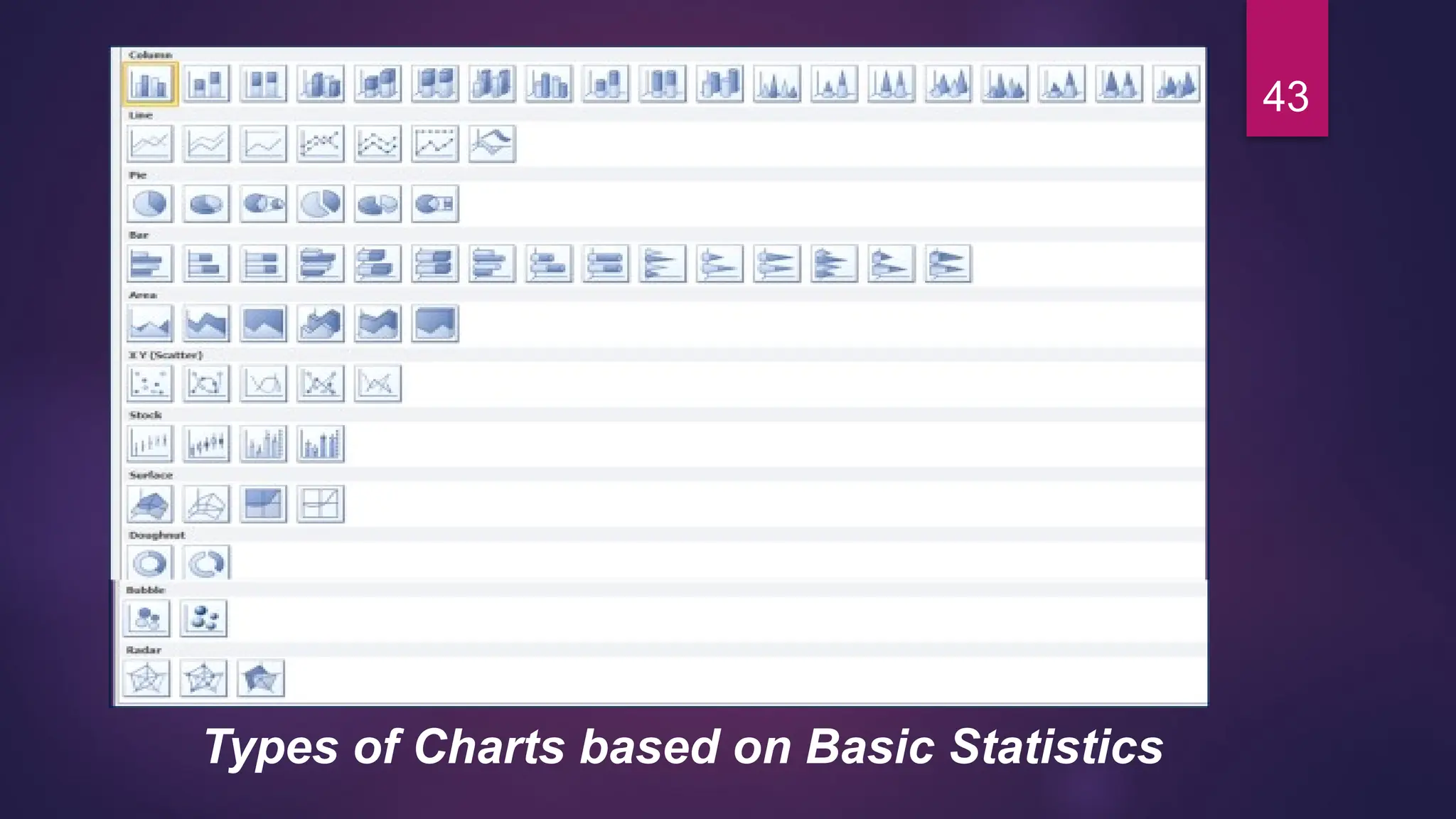
43
Types of Charts based on Basic Statistics
44
How Data Analytics Leads to Health Care Solutions
Health care data management has the potential to lead to
better care if used properly. With centralized datasets,
there is immediate access to necessary information
whenever and wherever it is needed. The addition of big
data analytics improves efficiency on all fronts. Better
data leads to better care.
• Predictive Modeling
• Reductions in Health Care Costs
THANK
YOU
45

Babitha's Notes on Nursing Informatics Unit 8.pptx

  • 1.
    Using Information inHealthcare Management: NIS Babitha K Devu, RN, RM, M.Sc (N), MBA Assistant Professor, SMVD College of Nursing, J & K Research Scholar, Ph.D (N), Amity University, Gurugram
  • 2.
    2 • Nursing informaticsrefers to the practice and science of integrating nursing information and knowledge with technology to manage and integrate health information. • The goal of nursing informatics is to improve the health of people and communities while reducing costs. • Nursing informatics (NI) is the specialty that integrates nursing science with multiple information and analytical sciences to identify, define, manage and communicate data, information, knowledge and wisdom in nursing practice. (ANA 2001) • Another definition of nursing informatics comes from the American Medical Informatics Association (AMIA), which states “Nursing Informatics science and practice integrates nursing, its information and knowledge and their management, with information and communication technologies to promote the health of people, families and communities worldwide” Nursing Informatics
  • 3.
    3 Nursing Informatics DEFINITION Hebda (1998),defines nursing informatics as the use of computer technology to support nursing, including clinical practice, administration, education and research. ANA (American Nurses Association) 2015, a specialty that integrates nursing science, computer science, and information science to manage and communicate data, information, and knowledge in nursing practice.
  • 4.
    4 Application of NursingInformatics/ General Purpose Nursing Informatics (NI) is the application of computer science and information science to nursing. NI promotes the generation, management and processing of relevant data in order to use information and develop knowledge that supports nursing in all practice domains such as:  Nursing Clinical Practice  Nursing Administration  Nursing Education  Nursing Research  Patient Education  Clinical Alert System  Telehealth  Patient Data
  • 5.
    5 Application of NursingInformatics/ General Purpose
  • 6.
    6 Application of NursingInformatics/ General Purpose
  • 7.
    7 Application of NursingInformatics/ General Purpose
  • 8.
    8 Application of NursingInformatics/ General Purpose
  • 9.
    9 Application of NursingInformatics/ General Purpose
  • 10.
    10 Application of NursingInformatics/ General Purpose
  • 11.
    11 Application of NursingInformatics/ General Purpose
  • 12.
    12 Application of NursingInformatics/ General Purpose
  • 13.
  • 14.
  • 15.
  • 16.
  • 17.
  • 18.
  • 19.
  • 20.
  • 21.
  • 22.
    22 Trends in NursingInformatics • Nursing informatics is a growing field for advancement and offers many potential areas for cost containment. • Nursing informatics and Tele-health will continue to grow and become a common place. • Many providers expects that Tele-health and other e health services such as Tele-Nursing will revolutionize the health care industry. • It promises to improve speed and accuracy of communicating with health providers to gather information and address the concerns. • Client may receive treatment their own community, where service costs less improving quality of care, and improved continuity of care through convenient follow up.
  • 23.
  • 24.
  • 25.
  • 26.
    26 Components of NursingInformatics P r a c t i c e Identify Define Manage Communicate
  • 27.
    27 Components of NursingInformatics • The Components of Nursing Informatics are nursing science, computer science, and information science to manage and communicate data, information, knowledge, and wisdom into the nursing practice. • Nursing science is a branch of science that deals with the principles and applications of nursing and related services. • Computer science is the study of computation, automation, and information. Computer science spans theoretical disciplines to practical disciplines. Computer science is generally considered an area of academic research and distinct from computer programming. • Information science (also known as information studies) is an academic field which is primarily concerned with analysis, collection, classification, manipulation, storage, retrieval, movement, dissemination, and protection of information. • Integration of these three components forms nursing informatics.
  • 28.
    28 Components of NursingInformatics • These components forms the sub-components of NI by Identifying, defining, managing and communicating it in the nursing practice in the form of data, information, knowledge and wisdom. • These components are quite useful in the clinical practice as it helps in the decision-making process to achieve the expected outcomes of the health care facility.
  • 29.
    29 Check Yourself • Whichof the following is NOT considered part of the definition of nursing informatics? a) Information science b) Social science c) Computer science d) Nursing science
  • 30.
    30 Meaningful use ofInformatics • There are three components of meaningful use: a. use of an electronic health record (EHR) in a meaningful manner, b. use of EHR technology for electronic exchange of information, and c. use of EHR technology to submit clinical quality measures • The environments in healthcare have encompassed more than just a physical location. • There is an increase in the use of technology such as mobile computers and wireless solutions, and automated exchanges between providers and patients. • Adapting to these new environments requires a paradigm shift for how care is communicated and delivered, which requires knowledge of the evolution of new technologies. • Nurses are at the center of this advancement as the professionals with the greatest amount of direct patient care.
  • 31.
    31 Check Yourself • Meaningfuluse of Informatics includes three purposes. The first one is “an electronic health record (EHR) for use in a meaningful manner” Which are the other two purposes? a) Upholding core measures and submission of clinical quality measures b) Submission of clinical quality measures and protection of patient privacy c) Protection of patient privacy and electronic exchange of information d) Electronic exchange of information and submission of clinical quality measures
  • 32.
    32 Competencies for theuse of Informatics • Categories of competencies involved in nursing informatics include basic computer skills, information literacy, and information management. • Nursing informatics assists nurses to communicate with all other clinical disciplines, coordinate patient care, and manage the information related to patient care and the nursing process. • The Technology Informatics Guiding Education Reform (TIGER) Initiative was created in 2004 to collaborate with nursing stakeholders to create a vision, action, and strategies to improve nursing education, practice, and patient care delivery through the use of health information technology. • TIGER formed an Informatics Competency Collaborative, which define the competencies recommended for the NI discipline (TIGER, 2010).
  • 33.
    33 Check Yourself • Categoriesof competencies with nursing informatics include basic computer skills, information management, and which of the following? a) Workflow redesign b) Health literacy c) Information literacy d) Leadership skills
  • 34.
    What are thebenefits of nursing informatics?  Aligning Nursing Best Practice with Clinical Workflows and Care. ...  Improving Clinical Policies, Protocols, Processes, and Procedures. ...  Providing Training and Learning Based on Objective Data. ...  Selecting and Testing New Medical Devices. ...  Reducing Medical Errors and Costs. ...  Enhancing End-to-End Treatment and Continuity of Care 34
  • 35.
    35 Health care DataAnalysis • The Health-care Information System (HIS) is designed to enable the gathering and storage of data and then making them available as information for primary and secondary use. DATA MANAGEMENT PROCESS Data management is a set of activities consisting of: 1.Data generation 2.Data acquisition (collection, gathering, capture) 3.Data transfer 4.Data storage 5.Data extraction 6.Data analysis 7.Data interpretation 8.Data presentation 9.Data dissemination
  • 36.
    36 Health care DataAnalysis Analysis refers to the act of 1.computation, 2.categorization 3.comparison 4.manipulation The purpose of analysis is to compare (similarities and differences) the attributes of a single entity or entities within a group. • Data Analytics is the process of examining raw datasets to find trends, draw conclusions and identify the potential for improvement. • Health care analytics uses current and historical data to gain insights, macro and micro, and support decision-making at both the patient and business level. • The use of health data analytics allows for improvements to patient care, faster and more accurate diagnoses, preventive measures, more personalized treatment and more informed decision-making. • Health data is any data relating to the health of an individual patient or collective population.
  • 37.
    37 Health care DataAnalysis •This information is gathered from a series of health information systems (HIS) and other technological tools utilized by health care professionals, insurance companies and government organizations. There are a variety of tools and systems used to collect, store, share and analyze health data gathered through various means. These tools include: • Electronic Health Records (EHRs) • Personal Health Records (PHRs) • Electronic Prescription Services (E-prescribing) • Patient Portals • Master Patient Indexes (MPI) • Health-Related Smart Phone Apps and more •With digital data collection, there is more and more health care data to be analyzed every second. With the increase of electronic record keeping, applications and other electronic means of data collection and storage, there is a significant amount of data being collected in real time. •These data sets are so complex that traditional processing software and storage options cannot be used. Cloud storage is a necessity when dealing with “Big Data.”
  • 38.
    38 Importance of HealthCare Data Analytics •We can collect all the data we want, but it doesn’t do any good if we don’t know what to do with that information. We need a centralized, systematic way of collecting, storing and analyzing data so we can use it to our advantage. •Help to improve day-to-day operations and better patient care. •We are now able to take preventive measures and track the outcomes. •This helps to lower costs for the practitioner, insurance company and patient as the preventive treatment may help to stave off long- term issues and expensive hospitalizations. •If hospitalization is necessary, data analytics can help practitioners predict risks of infection, deterioration and readmission. This too can help lower costs and improve patient care outcomes.
  • 39.
    39 Types of HealthCare Analytics Descriptive Analytics Descriptive analytics uses historical data to draw comparisons or discover patterns. This type of analysis is best for answering questions about what has already occurred. We can gain insight into the past with descriptive analytics. It can be used to determine how contagious a virus is by examining the rate of positive tests in a specific population over time. Diagnostic Analytics Diagnostic Analytics is a form of advanced analytics that examines data or content to answer the question, “Why did it happen?” This seeks to understand the cause of an event. It can be used to diagnose a patient with a particular illness or injury based on the symptoms they’re experiencing.
  • 40.
    40 Types of HealthCare Analytics Predictive Analytics Predictive analytics uses current and historical data to make predictions about the future. The models created with this type of analytics are best for answering questions about what could happen next. We can gain insight into the future with predictive analytics. It can be used to forecast the spread of a seasonal disease by examining case data from previous years. Prescriptive Analytics Prescriptive analytics will also make predictions about future outcomes. The information provided can help determine the best course of action. We can gain insight on what course of action should be taken to reach the most ideal outcome with prescriptive analytics. It can be used to assess a patient’s pre-existing conditions, determine their risk for developing future conditions, and implement specific preventative treatment plans with that risk in mind.
  • 41.
    41 Data Interpretation Data thatis analyzed is easier to interpret than raw data. Interpretation refers to the activity of using various means to reach a conclusion. These means include: 1.Comparison 2.Inference 3.Projection
  • 42.
    42 Data Presentation Data visualizationis the process of creating a visual representation of the information within a dataset. While there are hundreds of ways to visualize data, some of the most common data visualization techniques include: • Pie charts • Bar charts • Histograms • Gantt charts • Heat maps • Box-and-whisker plots • Waterfall charts • Area charts • Scatter plots • Infographics • Maps
  • 43.
    43 Types of Chartsbased on Basic Statistics
  • 44.
    44 How Data AnalyticsLeads to Health Care Solutions Health care data management has the potential to lead to better care if used properly. With centralized datasets, there is immediate access to necessary information whenever and wherever it is needed. The addition of big data analytics improves efficiency on all fronts. Better data leads to better care. • Predictive Modeling • Reductions in Health Care Costs
  • 45.