INTRODUCTION
Spectrum of gynaecological diseases that
causes acute symptoms, necessitating
urgent and prompt management.
Presentation of gynaecologic emergencies
 Acute pelvic pain
 Abnormal vaginal bleeding
 Abnormal vaginal discharge
 Acute pelvic swelling
CAUSES OF GYNECOLOGICAL EMERGENCY
a) Pelvic inflammatory disease
b) Ruptured ovarian cyst
c) Cystitis
d) Mittelschmertz
e) Endometriosis
f) Ectopic pregnancy
g) Vaginal hemorrhage
h) Degenerating uterine fibroid or torsion of
pedunculated fibroid.
DDx: Appendicitis
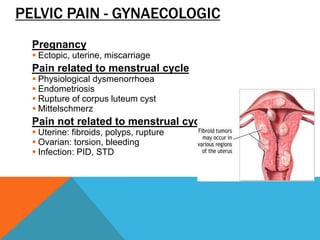
PELVIC PAIN - GYNAECOLOGIC
Pregnancy
 Ectopic, uterine, miscarriage
Pain related to menstrual cycle
 Physiological dysmenorrhoea
 Endometriosis
 Rupture of corpus luteum cyst
 Mittelschmerz
Pain not related to menstrual cycle
 Uterine: fibroids, polyps, rupture
 Ovarian: torsion, bleeding
 Infection: PID, STD
PELVIC PAIN – NON GYNAECOLOGIC
GIT:
 Appendicitis, diverticulitis, gastroenteritis, obstruction, hernia
Urinary:
 Pyelonephritis, cystitis, renal stones
Abdominal wall pain
GYNAECOLOGICAL PROBLEMS – GENERAL
APPROACH
Hx and Ex require attention to privacy and
confidentiality
Obtain full menstrual, contraceptive and
sexual hx
Digital and speculum vaginal examination
except certain circumstances (eg.
children, painful vulval ulcers)
Consider pregnancy
Most common cause of
nontraumatic abdominal
pain.
Infection of the female
reproductive tract.
Usually involves the
uterus, fallopian tubes,
and ovaries.
Common causes:
gonorrhea and
chlamydial infections.
Staph or strep can also be
causative agents.
May be either acute or
chronic.
May develop into sepsis if
left untreated.
Adhesions can occur,
causing organs to stick
together.
Adhesions is a common
cause of chronic pelvic
pain and also increase
the frequency of ectopic
pregnancies.
PELVIC INFLAMMATORY DISEASE
Most common complaint is
abdominal pain.
It is a diffuse pain and
located at the along the
lower abdomen.
Moderate to severe.
Hard to distinguish from
appendicitis.
Pain may intensify during
menstrual period
Pain may also intensify
during sexual
intercourse.
Walk in a shuffling gait,
which decreases the
pain.
May be accompanied by
fever, chills, nausea,
and vomiting.
Vaginal discharge: yellow
ASSESSMENT OF PID
MANAGEMENT OF PID
Primary treatment is antibiotics, IV infusion.
Make the patient comfortable.
ECTOPIC PREGNANCY
Implantation of a pregnancy in outside the
endometrial cavity.
Most common site is within the fallopian tubes.
This is a surgical emergency
Rupture can occur with resultant hemorrhage.
Patients present with one-sided abdominal pain,
late or missed period, occasionally with
vaginal bleeding.
OVARIAN CYSTS
Cysts are fluid-filled pockets. When in the
ovary they can rupture and be a source of
abdominal pain. May undergo torsion.
When ruptured, a small amount of blood is
spilled into the abdomen causing irritation to
the peritoneum and the cause of abdominal
pain and rebound tenderness.
APPENDICITIS
Difficult to distinguish from PID or ectopic
pregnancy.
Abdominal pain that develops around the
navel and moves to the RLQ.
Pain may be associated with anorexia, fever,
nausea, vomiting, or shock.
CYSTITIS
Bladder infection.
Because the bladder lies anterior to the
reproductive organs, it causes pain above
the symphysis pubis once inflamed.
MITTLESCHMERTZ
Abdominal pain in mid of menstrual cycle.
Ovulation pain.
This pain is referred to as mittleschmertz, and
is associated with the release of an egg
from the ovary.
Vaginal hemorrhage due to abortion may be
associated with acute severe abdominal
pain.
Degenerating uterine fibroid or torsion of
pedunculated subserosal uterine fibroid may
present with acute severe abdominal pain.
EVALUATION
HISTORY
Characteristics of pain
 Dyspareunia
Pelvic fullness, PV bleeding, discharge
Associated symptoms
 Urinary, GIT, pyrexia
Obstetrical and Gynaecological History
 LMP, previous ectopics, TA, previous PID, STDs, hx of ovarian
cysts, partners
Contraception
 IUCD, OCP, Barrier
Surgical History
PHYSICAL EXAM
General
 Looks unwell, dehydrated, colour
CVS
Chest
Abdominal
 Distension, bowel sounds, hernia, tenderness, mass
Back
PELVIC EXAMINATION
Speculum & digital Exam
Vaginal
 Lesions, discharge
Cervix
 Chandelier sign, os open/closed
Uterus
 Size, shape, regularity, tenderness, position, mobility
Adnexa
 Masses, tenderness, ovaries
Rectal
 Mass, tenderness, blood
INVESTIGATIONS
Blood
 FBC, beta-HCG, CRP, ESR
Microbiology
 Blood cultures, Endocervical swab, urine C+S
Urine
 Urinalysis, beta HCG
Radiology
 KUB, abdominal
USS
 Abdominal, pelvic
MANAGEMENT
Depends on cause
Ovarian cysts
Very common cause of adnexal enlargement with
pelvic pain
Important points:
 Ovarian torsion
 Ovarian neoplasm - older women
MANAGEMENT
A patient with acute severe abdominal
pain should be treated urgently.
May need oxygen
IV Fluids may be needed: crystalloid of
choice.
Put in position of comfort.
CAUSES OF GYNECOLOGICAL TRAUMA
Straddle Injury (bicycle)
Blows to the perineal area
Foreign body insertion into the vagina
Attempts at abortion
Lacerations following childbirth
Sexual assault
GYNECOLOGICAL TRAUMA
Injuries to the external genitalia should
be managed by simple pressure over
the laceration.
IV crystalloid if bleeding is severe.
Monitor hemodynamic state
Repair any tears
SEXUAL ASSAULT
60% are not even reported. And sexual abuse
of children is reported even less.
There is no “typical victim”
Defined: sexual contact without the consent of
the person assaulted.
Rape: Vaginal or rectal penetration without
consent.
SEXUAL ASSAULT
In most states penetration must occur for an act
to be classified as rape.
Sexual assault is a crime of violence with
serious physical and psychological
implications.
Most victims know the assailant. Motivation is
unclear, control of the victim, desire to inflict
pain, aggression have been implicated.
MANAGEMENT OF THE ASSAULT VICTIM
Counselling: Psychological and emotional
support is the most important help you can
offer. Maintain a nonjudgmental attitude.
Assure confidentiality. Provide safe
environment (well lit area).
P.E.P
Emergency Contraception
STIs Prevention
Repair of physical injuries
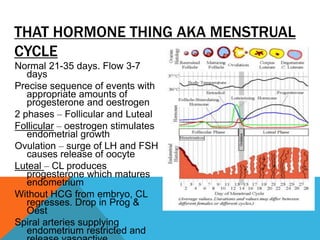
THAT HORMONE THING AKA MENSTRUAL
CYCLE
Normal 21-35 days. Flow 3-7
days
Precise sequence of events with
appropriate amounts of
progesterone and oestrogen
2 phases – Follicular and Luteal
Follicular – oestrogen stimulates
endometrial growth
Ovulation – surge of LH and FSH
causes release of oocyte
Luteal – CL produces
progesterone which matures
endometrium
Without HCG from embryo, CL
regresses. Drop in Prog &
Oest
Spiral arteries supplying
endometrium restricted and
Stroke

Stroke

  • 2.
    INTRODUCTION Spectrum of gynaecologicaldiseases that causes acute symptoms, necessitating urgent and prompt management. Presentation of gynaecologic emergencies  Acute pelvic pain  Abnormal vaginal bleeding  Abnormal vaginal discharge  Acute pelvic swelling
  • 3.
    CAUSES OF GYNECOLOGICALEMERGENCY a) Pelvic inflammatory disease b) Ruptured ovarian cyst c) Cystitis d) Mittelschmertz e) Endometriosis f) Ectopic pregnancy g) Vaginal hemorrhage h) Degenerating uterine fibroid or torsion of pedunculated fibroid. DDx: Appendicitis
  • 4.
    PELVIC PAIN -GYNAECOLOGIC Pregnancy  Ectopic, uterine, miscarriage Pain related to menstrual cycle  Physiological dysmenorrhoea  Endometriosis  Rupture of corpus luteum cyst  Mittelschmerz Pain not related to menstrual cycle  Uterine: fibroids, polyps, rupture  Ovarian: torsion, bleeding  Infection: PID, STD
  • 5.
    PELVIC PAIN –NON GYNAECOLOGIC GIT:  Appendicitis, diverticulitis, gastroenteritis, obstruction, hernia Urinary:  Pyelonephritis, cystitis, renal stones Abdominal wall pain
  • 6.
    GYNAECOLOGICAL PROBLEMS –GENERAL APPROACH Hx and Ex require attention to privacy and confidentiality Obtain full menstrual, contraceptive and sexual hx Digital and speculum vaginal examination except certain circumstances (eg. children, painful vulval ulcers) Consider pregnancy
  • 7.
    Most common causeof nontraumatic abdominal pain. Infection of the female reproductive tract. Usually involves the uterus, fallopian tubes, and ovaries. Common causes: gonorrhea and chlamydial infections. Staph or strep can also be causative agents. May be either acute or chronic. May develop into sepsis if left untreated. Adhesions can occur, causing organs to stick together. Adhesions is a common cause of chronic pelvic pain and also increase the frequency of ectopic pregnancies. PELVIC INFLAMMATORY DISEASE
  • 8.
    Most common complaintis abdominal pain. It is a diffuse pain and located at the along the lower abdomen. Moderate to severe. Hard to distinguish from appendicitis. Pain may intensify during menstrual period Pain may also intensify during sexual intercourse. Walk in a shuffling gait, which decreases the pain. May be accompanied by fever, chills, nausea, and vomiting. Vaginal discharge: yellow ASSESSMENT OF PID
  • 9.
    MANAGEMENT OF PID Primarytreatment is antibiotics, IV infusion. Make the patient comfortable.
  • 10.
    ECTOPIC PREGNANCY Implantation ofa pregnancy in outside the endometrial cavity. Most common site is within the fallopian tubes. This is a surgical emergency Rupture can occur with resultant hemorrhage. Patients present with one-sided abdominal pain, late or missed period, occasionally with vaginal bleeding.
  • 11.
    OVARIAN CYSTS Cysts arefluid-filled pockets. When in the ovary they can rupture and be a source of abdominal pain. May undergo torsion. When ruptured, a small amount of blood is spilled into the abdomen causing irritation to the peritoneum and the cause of abdominal pain and rebound tenderness.
  • 12.
    APPENDICITIS Difficult to distinguishfrom PID or ectopic pregnancy. Abdominal pain that develops around the navel and moves to the RLQ. Pain may be associated with anorexia, fever, nausea, vomiting, or shock.
  • 13.
    CYSTITIS Bladder infection. Because thebladder lies anterior to the reproductive organs, it causes pain above the symphysis pubis once inflamed.
  • 14.
    MITTLESCHMERTZ Abdominal pain inmid of menstrual cycle. Ovulation pain. This pain is referred to as mittleschmertz, and is associated with the release of an egg from the ovary.
  • 15.
    Vaginal hemorrhage dueto abortion may be associated with acute severe abdominal pain. Degenerating uterine fibroid or torsion of pedunculated subserosal uterine fibroid may present with acute severe abdominal pain.
  • 16.
  • 17.
    HISTORY Characteristics of pain Dyspareunia Pelvic fullness, PV bleeding, discharge Associated symptoms  Urinary, GIT, pyrexia Obstetrical and Gynaecological History  LMP, previous ectopics, TA, previous PID, STDs, hx of ovarian cysts, partners Contraception  IUCD, OCP, Barrier Surgical History
  • 18.
    PHYSICAL EXAM General  Looksunwell, dehydrated, colour CVS Chest Abdominal  Distension, bowel sounds, hernia, tenderness, mass Back
  • 19.
    PELVIC EXAMINATION Speculum &digital Exam Vaginal  Lesions, discharge Cervix  Chandelier sign, os open/closed Uterus  Size, shape, regularity, tenderness, position, mobility Adnexa  Masses, tenderness, ovaries Rectal  Mass, tenderness, blood
  • 20.
    INVESTIGATIONS Blood  FBC, beta-HCG,CRP, ESR Microbiology  Blood cultures, Endocervical swab, urine C+S Urine  Urinalysis, beta HCG Radiology  KUB, abdominal USS  Abdominal, pelvic
  • 21.
    MANAGEMENT Depends on cause Ovariancysts Very common cause of adnexal enlargement with pelvic pain Important points:  Ovarian torsion  Ovarian neoplasm - older women
  • 22.
    MANAGEMENT A patient withacute severe abdominal pain should be treated urgently. May need oxygen IV Fluids may be needed: crystalloid of choice. Put in position of comfort.
  • 24.
    CAUSES OF GYNECOLOGICALTRAUMA Straddle Injury (bicycle) Blows to the perineal area Foreign body insertion into the vagina Attempts at abortion Lacerations following childbirth Sexual assault
  • 25.
    GYNECOLOGICAL TRAUMA Injuries tothe external genitalia should be managed by simple pressure over the laceration. IV crystalloid if bleeding is severe. Monitor hemodynamic state Repair any tears
  • 26.
    SEXUAL ASSAULT 60% arenot even reported. And sexual abuse of children is reported even less. There is no “typical victim” Defined: sexual contact without the consent of the person assaulted. Rape: Vaginal or rectal penetration without consent.
  • 27.
    SEXUAL ASSAULT In moststates penetration must occur for an act to be classified as rape. Sexual assault is a crime of violence with serious physical and psychological implications. Most victims know the assailant. Motivation is unclear, control of the victim, desire to inflict pain, aggression have been implicated.
  • 28.
    MANAGEMENT OF THEASSAULT VICTIM Counselling: Psychological and emotional support is the most important help you can offer. Maintain a nonjudgmental attitude. Assure confidentiality. Provide safe environment (well lit area). P.E.P Emergency Contraception STIs Prevention Repair of physical injuries
  • 29.
    THAT HORMONE THINGAKA MENSTRUAL CYCLE Normal 21-35 days. Flow 3-7 days Precise sequence of events with appropriate amounts of progesterone and oestrogen 2 phases – Follicular and Luteal Follicular – oestrogen stimulates endometrial growth Ovulation – surge of LH and FSH causes release of oocyte Luteal – CL produces progesterone which matures endometrium Without HCG from embryo, CL regresses. Drop in Prog & Oest Spiral arteries supplying endometrium restricted and