The Cell’s Nucleus


              Lecturer: Jonah Reyes
              (2SED-SC)
The Parts of Cell’s Nucleus

     Introduction       Nucleolus

  Nuclear Envelope    Chromosomes

    Nuclear Pores       Summary
Chromosome: Greatest Data
  Long strands containing hereditary
  materials, genes and DNA, where all
  of the information about biological
  characteristics of an organism is kept.
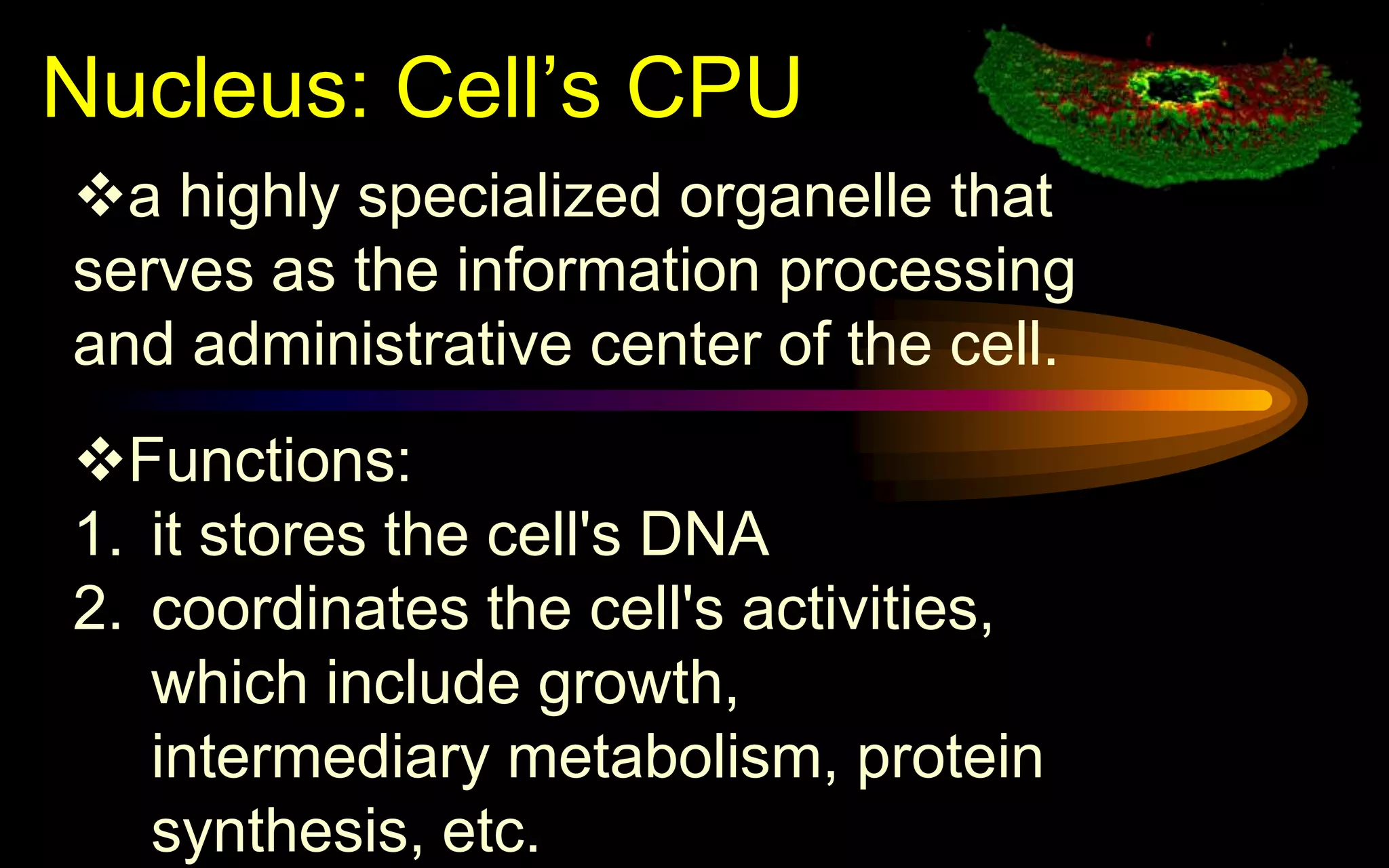
Nucleus: Cell’s CPU
a highly specialized organelle that
serves as the information processing
and administrative center of the cell.
Functions:
1. it stores the cell's DNA
2. coordinates the cell's activities,
   which include growth,
   intermediary metabolism, protein
   synthesis, etc.
Nucleolus: Ribo-Factory
a membrane-less organelle
Through the microscope, the
within the looks like a large dark spot
nucleolus nucleus that
manufactures ribosomes, the may
within the nucleus. A nucleus
cell's protein-producing
contain up to four nucleoli, but within
structures. the number of nucleoli is
each species
fixed.
Nuclear Envelope: Fence
 double-layered membrane that
 encloses the contents of the
 nucleus during most of the cell's
 lifecycle. The space between the
 layers is called the perinuclear
 space and appears to connect with
 the rough endoplasmic
Nuclear Pores: Gatekeeper
 regulate the passage of molecules
  between the nucleus and cytoplasm,
  permitting some to pass through the
  membrane, but not others. Building
  blocks for building DNA and RNA are
  allowed into the nucleus as well as
  molecules that provide the energy for
  constructing genetic material.
Summary
 Cell is the basic building block of an
  organism. All living things has a cell- it
  is either uni or multicellular. Amazingly,
  this cell was controlled by an intricate
  system called nucleus; which controls
  cellular synthesis, metabolism and
  reproduction.
                    Click Here. . .
Cellular Multimedia Archive


    Mitosis                      Meiosis

              Nucleus in Onion


DNA Replication

Nucleus of a cell

  • 1.
    The Cell’s Nucleus Lecturer: Jonah Reyes (2SED-SC)
  • 2.
    The Parts ofCell’s Nucleus Introduction Nucleolus Nuclear Envelope Chromosomes Nuclear Pores Summary
  • 3.
    Chromosome: Greatest Data Long strands containing hereditary materials, genes and DNA, where all of the information about biological characteristics of an organism is kept.
  • 4.
    Nucleus: Cell’s CPU ahighly specialized organelle that serves as the information processing and administrative center of the cell. Functions: 1. it stores the cell's DNA 2. coordinates the cell's activities, which include growth, intermediary metabolism, protein synthesis, etc.
  • 5.
    Nucleolus: Ribo-Factory a membrane-lessorganelle Through the microscope, the within the looks like a large dark spot nucleolus nucleus that manufactures ribosomes, the may within the nucleus. A nucleus cell's protein-producing contain up to four nucleoli, but within structures. the number of nucleoli is each species fixed.
  • 6.
    Nuclear Envelope: Fence double-layered membrane that encloses the contents of the nucleus during most of the cell's lifecycle. The space between the layers is called the perinuclear space and appears to connect with the rough endoplasmic
  • 7.
    Nuclear Pores: Gatekeeper regulate the passage of molecules between the nucleus and cytoplasm, permitting some to pass through the membrane, but not others. Building blocks for building DNA and RNA are allowed into the nucleus as well as molecules that provide the energy for constructing genetic material.
  • 8.
    Summary Cell isthe basic building block of an organism. All living things has a cell- it is either uni or multicellular. Amazingly, this cell was controlled by an intricate system called nucleus; which controls cellular synthesis, metabolism and reproduction. Click Here. . .
  • 9.
    Cellular Multimedia Archive Mitosis Meiosis Nucleus in Onion DNA Replication