© Cengage Learning 2016
Nutrition Therapy and Pathophysiology | 3e
Nelms | Sucher | Lacey | Roth
Marcia Nahikian-Nelms, PhD, RD, LD
The Ohio State University
Karen Lacey MS, RD, CD
University of Wisconsin—Green Bay
Nutrition Intervention
Chapter 4
© Cengage Learning 2016
Nutrition Prescription
• Concisely states individualized plan for
best meeting nutritional needs
• Drive nutrition intervention or frame
context within which intervention is
implemented
• Based on evidence-based dietetics
practice
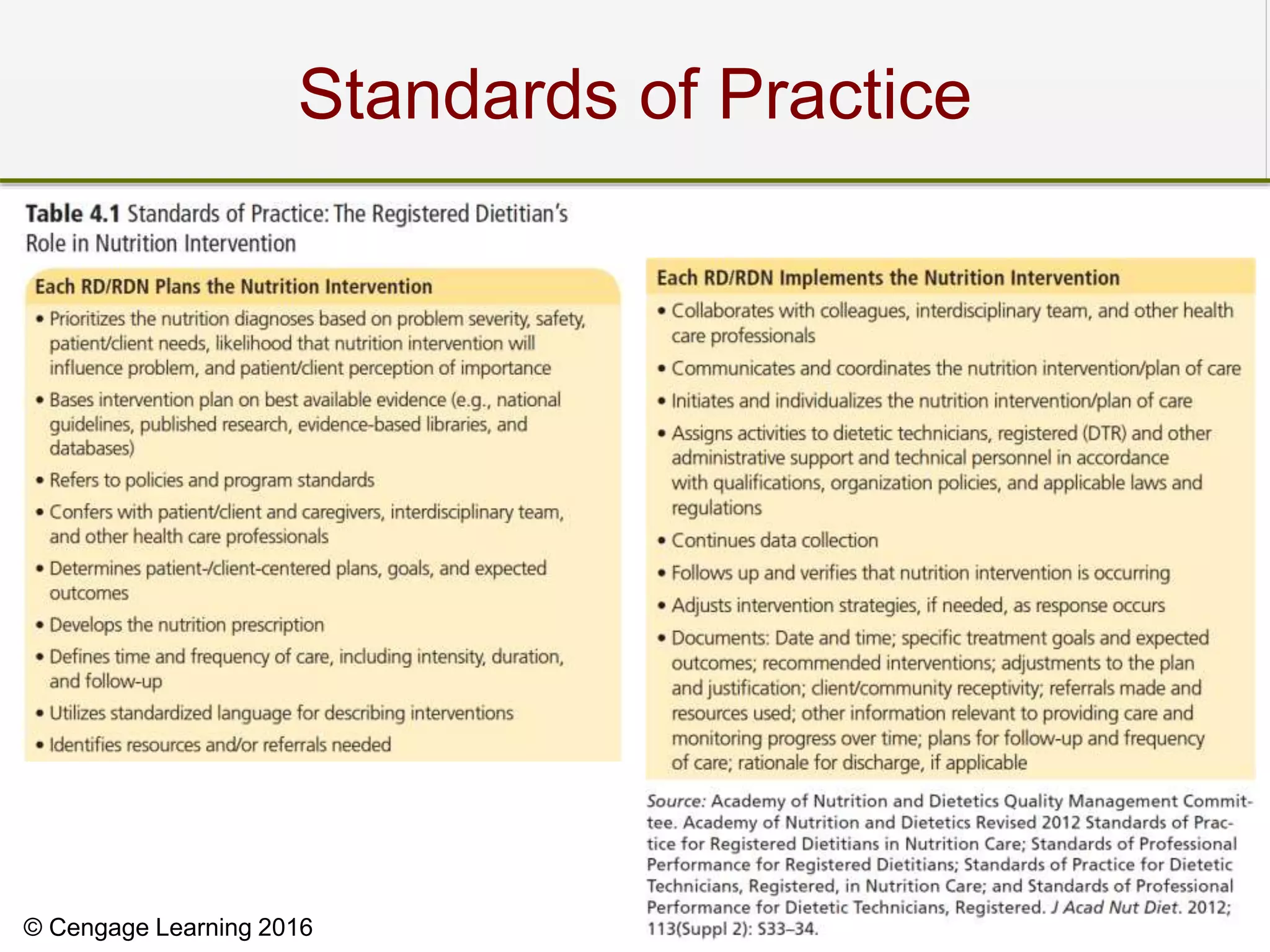
• See Table 4.1
© Cengage Learning 2016
Standards of Practice
© Cengage Learning 2016
Food and/or Nutrient Delivery
(Oral Diets)
• First step in prevention or treatment of
malnutrition
– Adequate supply of acceptable food
composing individualized diet
– See Figure 4.2
© Cengage Learning 2016
Factors Affecting Nutritional Intake
during Illness
© Cengage Learning 2016
“House” or Regular Diet
• Changes to the house diet
– Caloric level
– Consistency
– Single nutrient manipulation
– Preparation
– Food restriction
– Number, size, frequency of meals
– Addition of supplements
© Cengage Learning 2016
Modification of Meals and Snacks
• Texture & consistency modifications for
dysphagia and other conditions
• Soft diets
• Clear or full liquid diets
– Consider osmolality
– Hyperosmolar liquids may not be tolerated
• Preparation for a specific medical test
© Cengage Learning 2016
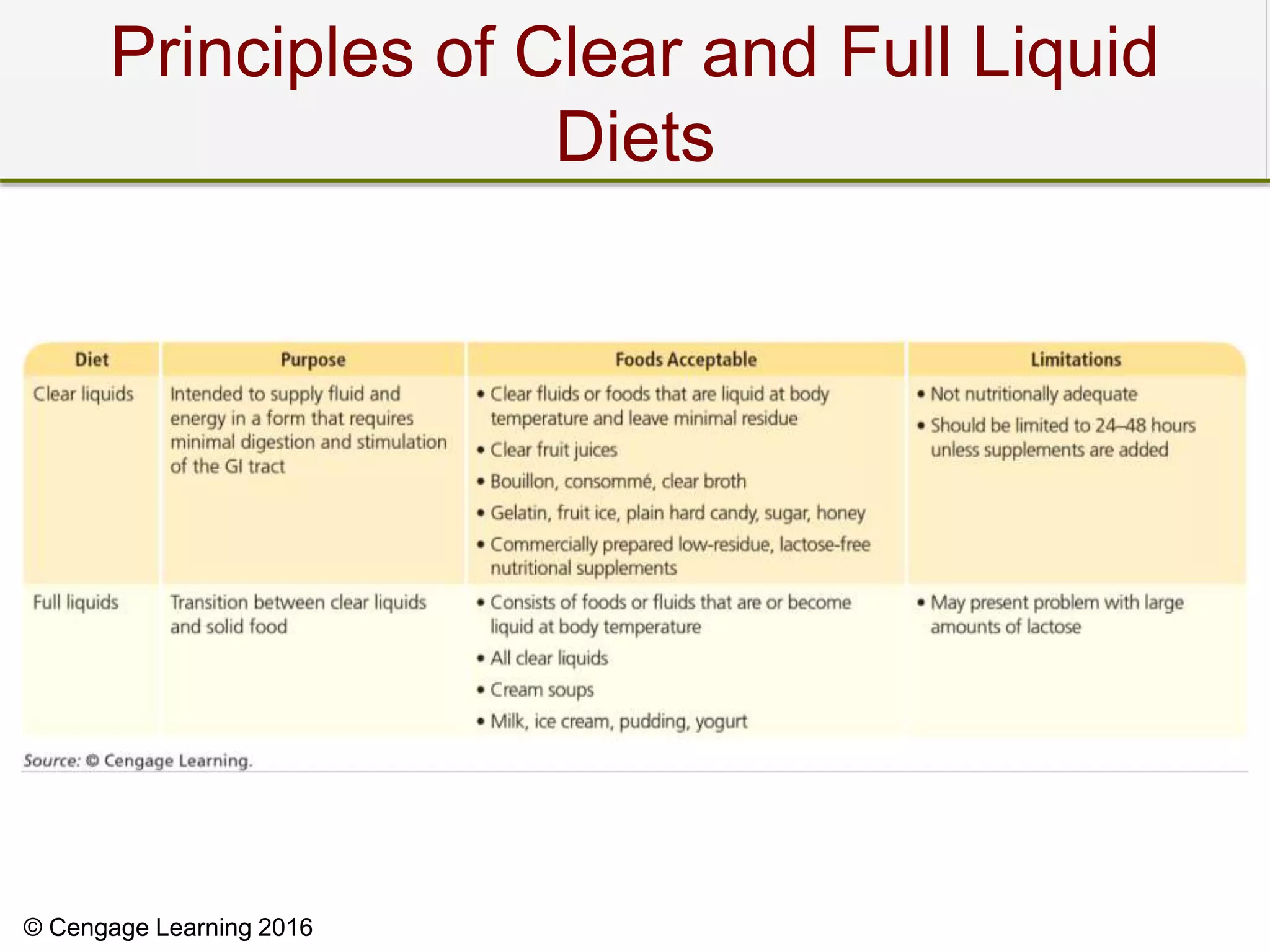
Principles of Clear and Full Liquid
Diets
© Cengage Learning 2016
Nutrition Interventions to Increase
Nutrient Density
© Cengage Learning 2016
Medical Food
Supplements/Modified Foods
• Medical food supplements
– Commercial or prepared foods or beverages
intended to supplement energy, protein,
carbohydrate, fiber, and/or fat intake.
• Modified foods and beverages
– Add single nutrients via modular products
© Cengage Learning 2016
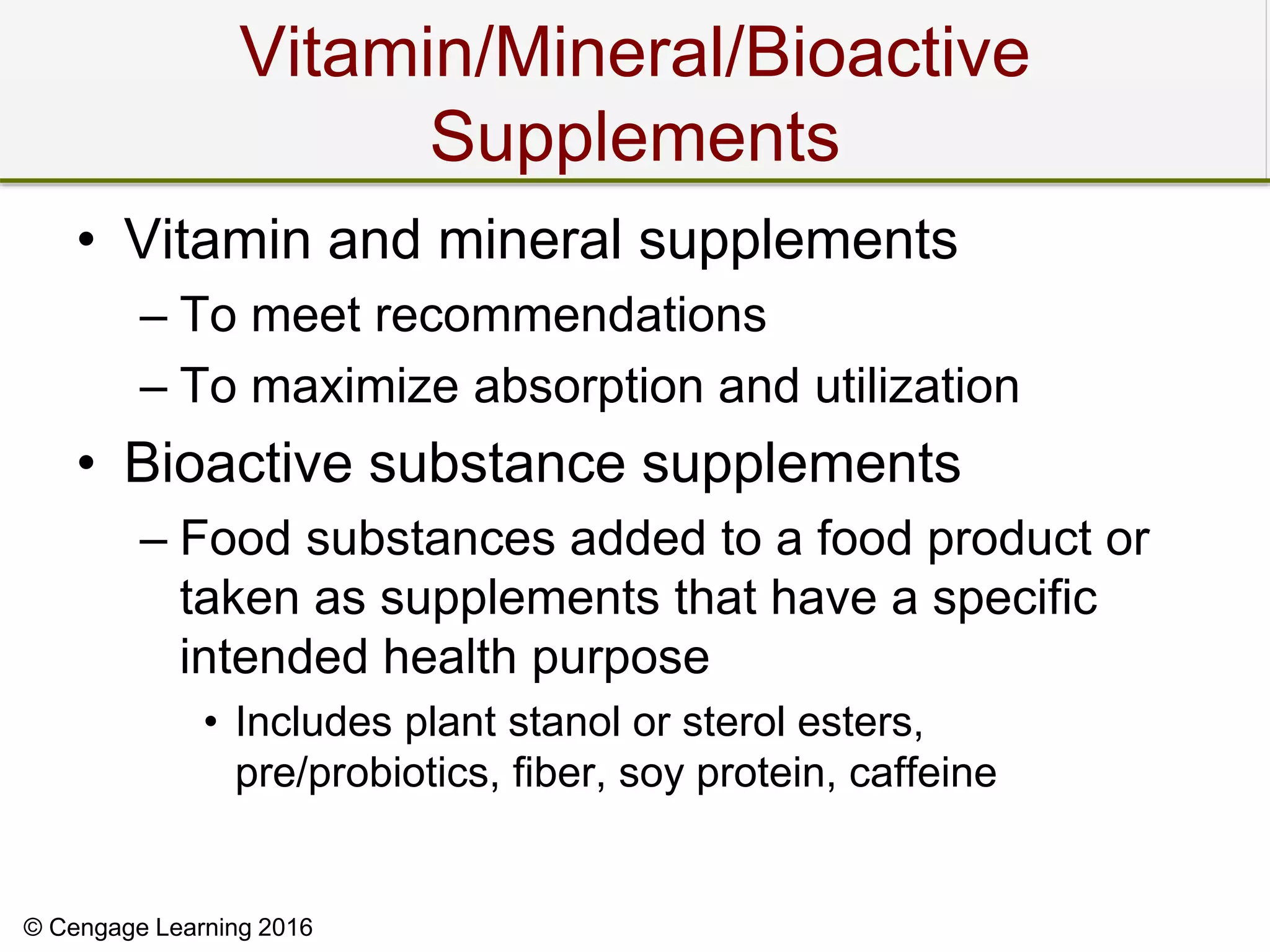
Vitamin/Mineral/Bioactive
Supplements
• Vitamin and mineral supplements
– To meet recommendations
– To maximize absorption and utilization
• Bioactive substance supplements
– Food substances added to a food product or
taken as supplements that have a specific
intended health purpose
• Includes plant stanol or sterol esters,
pre/probiotics, fiber, soy protein, caffeine
© Cengage Learning 2016
Nutrition Intervention: Feeding
Assistance/Environment
• Address diagnoses such as:
– Inadequate energy or oral intake
– Unintended weight loss
– Disordered eating pattern
– Self-feeding difficulty
• May include:
– Changing environment to allow food choice
– Providing adaptive equipment
© Cengage Learning 2016
Nutrition-Related Medication
Management
• Addresses diagnoses such as:
– Altered GI function
– Impaired nutrient utilization
– Altered nutrient-related laboratory values
– Inadequate oral intake
– Food–medication interaction
© Cengage Learning 2016
Nutrition Education
• Instruction or training in a skill or
knowledge
• Group classes, individual instruction,
written instruction, via phone or electronic
communication
• Outpatient setting more conducive to
education
– Most often provided in acute care setting
© Cengage Learning 2016
Nutrition Counseling
• Supportive process, collaborative, goal
setting and individualized action plans
• Ultimate goal is for the patient/client to
take responsibility for behaviors
© Cengage Learning 2016
Nutrition Counseling
• Counseling
– Supportive
– Process
– Collaborative
– Relationship
– Individualized
– Self-care
© Cengage Learning 2016
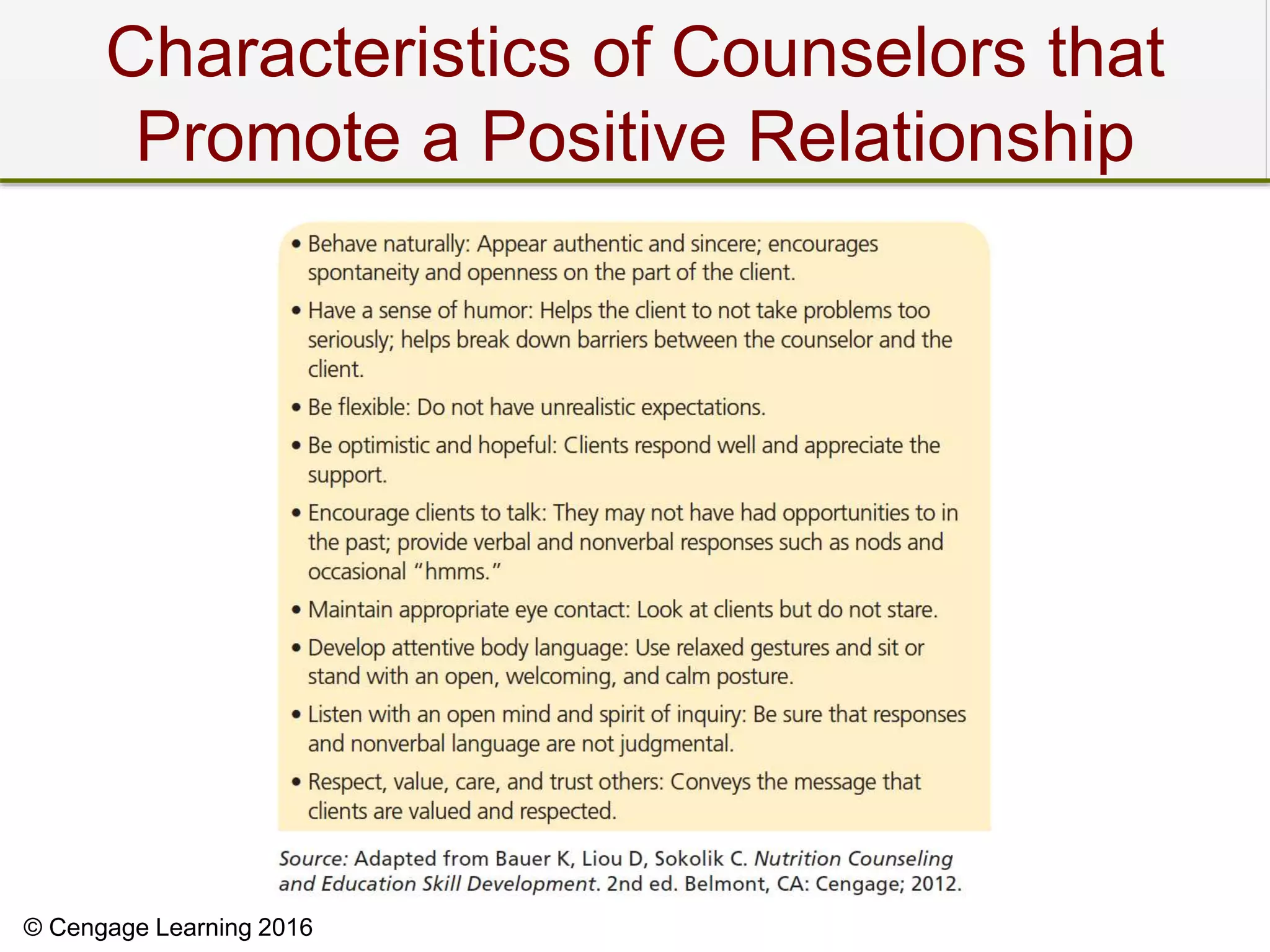
Characteristics of Counselors that
Promote a Positive Relationship
© Cengage Learning 2016
Effective Communication Skills
© Cengage Learning 2016
Theoretical Framework for Nutrition
Counseling
• Theories and models provide research
based rationale for design and tailoring of
interventions
– Guides information needed at different times
in the behavior change process
– Identifies best tools and strategies to use
– Uses outcome measures to determine
effectiveness
© Cengage Learning 2016
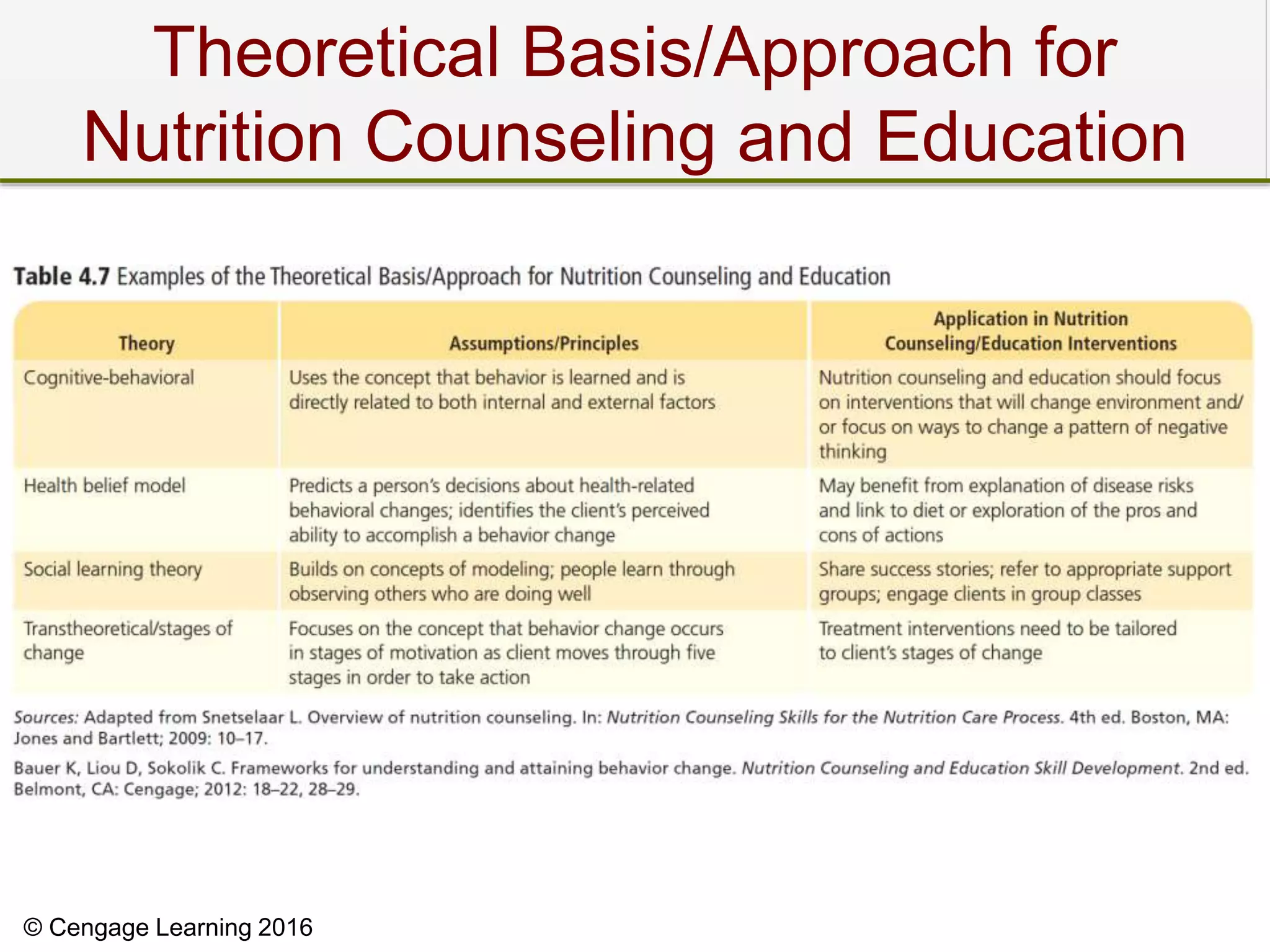
Theoretical Basis/Approach for
Nutrition Counseling and Education
© Cengage Learning 2016
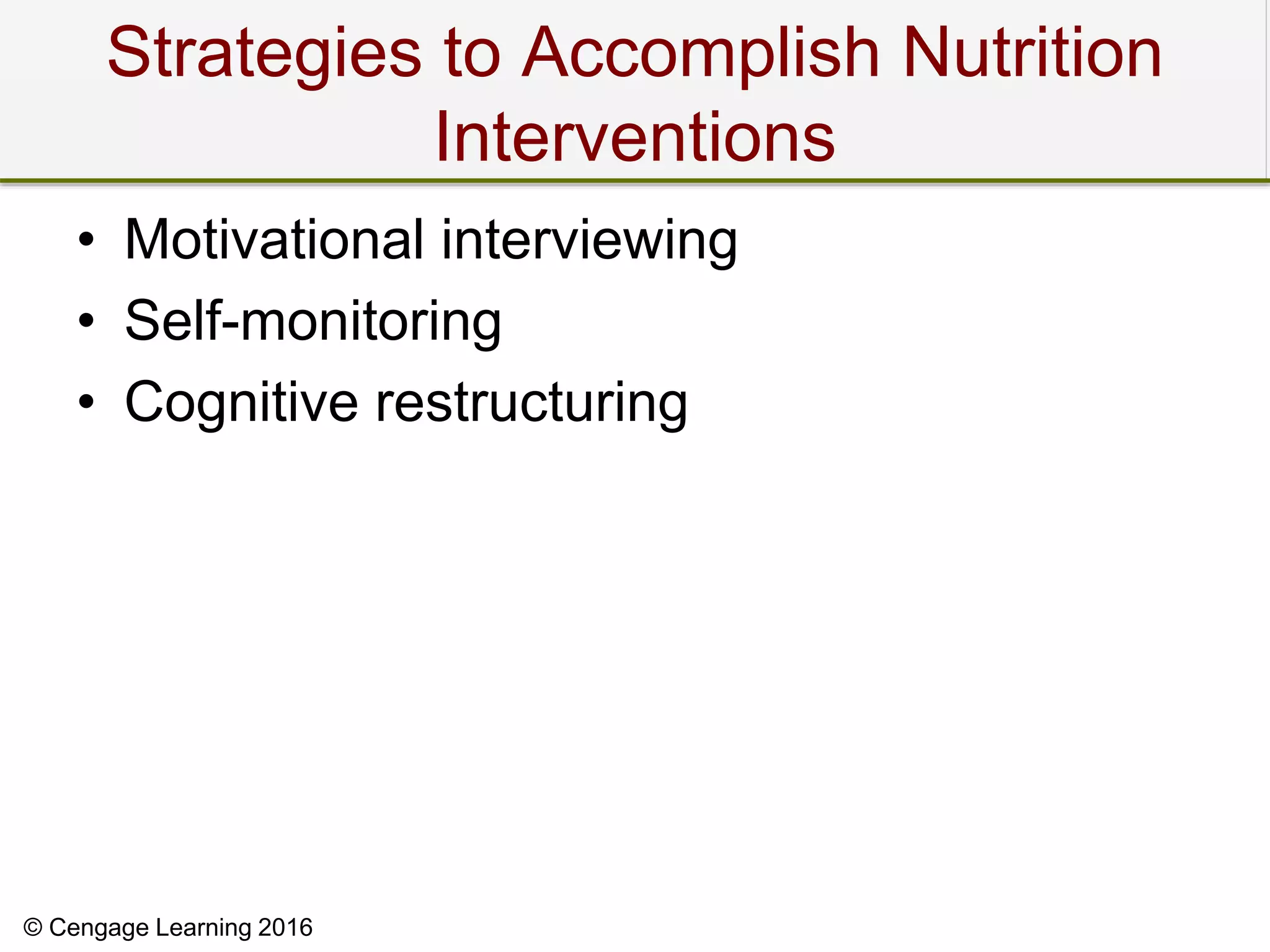
Strategies to Accomplish Nutrition
Interventions
• Motivational interviewing
• Self-monitoring
• Cognitive restructuring
© Cengage Learning 2016
Coordination of Care
• RDs work with numerous other health care
professionals
– To ensure successful transition from the
health care facility to the patient’s home or
other facility
• Activities depend on specific nutrition
interventions
© Cengage Learning 2016
Nutrition Monitoring and Evaluation
• Four domains of nutrition care outcomes
– Food-/nutrition-related history data
– Anthropometrics
– Biochemical data, medical tests, and
procedures
– Nutrition-focused physical findings
© Cengage Learning 2016
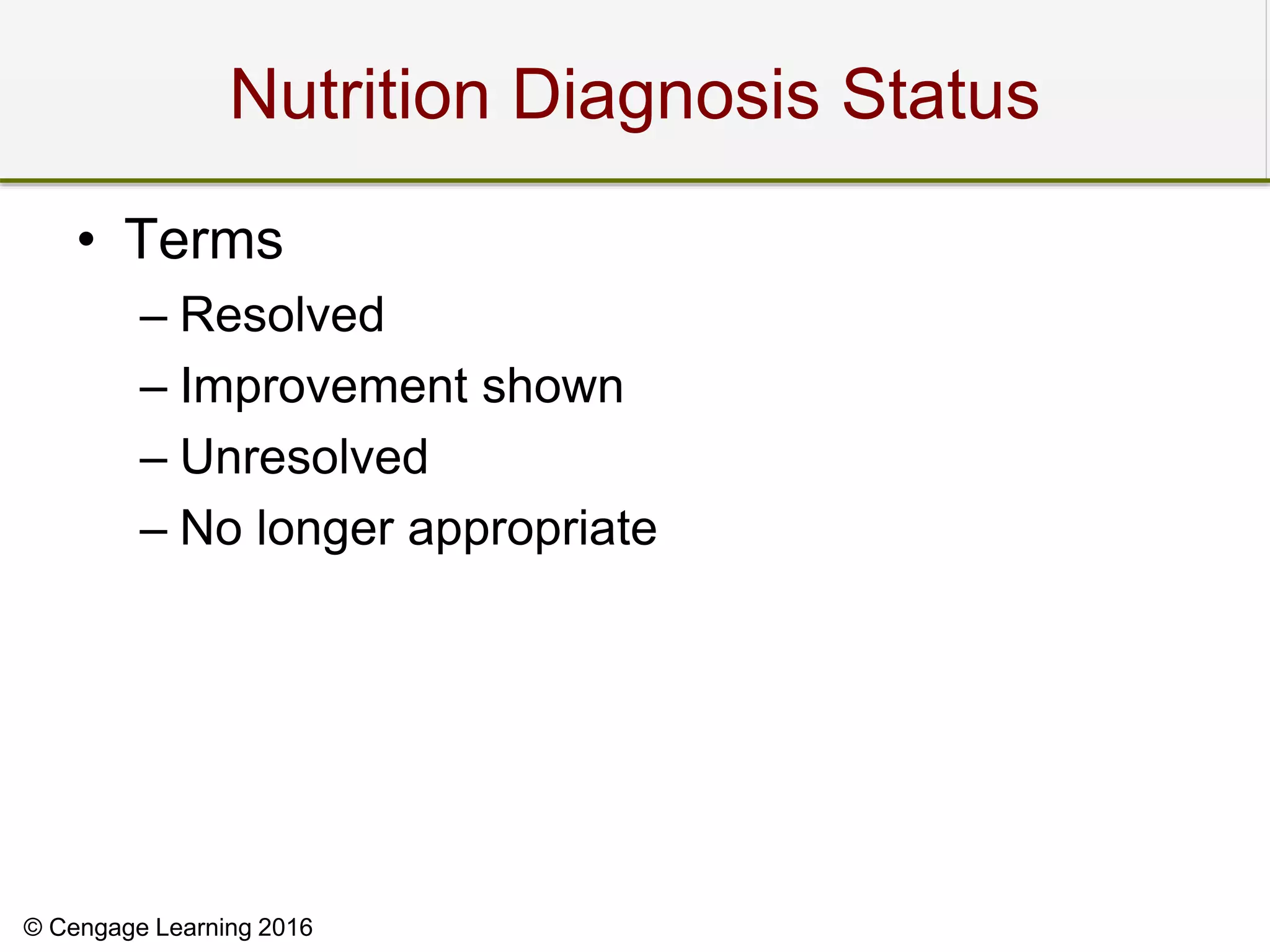
Nutrition Diagnosis Status
• Terms
– Resolved
– Improvement shown
– Unresolved
– No longer appropriate

NTP chapter 4

  • 1.
    © Cengage Learning2016 Nutrition Therapy and Pathophysiology | 3e Nelms | Sucher | Lacey | Roth Marcia Nahikian-Nelms, PhD, RD, LD The Ohio State University Karen Lacey MS, RD, CD University of Wisconsin—Green Bay Nutrition Intervention Chapter 4
  • 2.
    © Cengage Learning2016 Nutrition Prescription • Concisely states individualized plan for best meeting nutritional needs • Drive nutrition intervention or frame context within which intervention is implemented • Based on evidence-based dietetics practice • See Table 4.1
  • 3.
    © Cengage Learning2016 Standards of Practice
  • 4.
    © Cengage Learning2016 Food and/or Nutrient Delivery (Oral Diets) • First step in prevention or treatment of malnutrition – Adequate supply of acceptable food composing individualized diet – See Figure 4.2
  • 5.
    © Cengage Learning2016 Factors Affecting Nutritional Intake during Illness
  • 6.
    © Cengage Learning2016 “House” or Regular Diet • Changes to the house diet – Caloric level – Consistency – Single nutrient manipulation – Preparation – Food restriction – Number, size, frequency of meals – Addition of supplements
  • 7.
    © Cengage Learning2016 Modification of Meals and Snacks • Texture & consistency modifications for dysphagia and other conditions • Soft diets • Clear or full liquid diets – Consider osmolality – Hyperosmolar liquids may not be tolerated • Preparation for a specific medical test
  • 8.
    © Cengage Learning2016 Principles of Clear and Full Liquid Diets
  • 9.
    © Cengage Learning2016 Nutrition Interventions to Increase Nutrient Density
  • 10.
    © Cengage Learning2016 Medical Food Supplements/Modified Foods • Medical food supplements – Commercial or prepared foods or beverages intended to supplement energy, protein, carbohydrate, fiber, and/or fat intake. • Modified foods and beverages – Add single nutrients via modular products
  • 11.
    © Cengage Learning2016 Vitamin/Mineral/Bioactive Supplements • Vitamin and mineral supplements – To meet recommendations – To maximize absorption and utilization • Bioactive substance supplements – Food substances added to a food product or taken as supplements that have a specific intended health purpose • Includes plant stanol or sterol esters, pre/probiotics, fiber, soy protein, caffeine
  • 12.
    © Cengage Learning2016 Nutrition Intervention: Feeding Assistance/Environment • Address diagnoses such as: – Inadequate energy or oral intake – Unintended weight loss – Disordered eating pattern – Self-feeding difficulty • May include: – Changing environment to allow food choice – Providing adaptive equipment
  • 13.
    © Cengage Learning2016 Nutrition-Related Medication Management • Addresses diagnoses such as: – Altered GI function – Impaired nutrient utilization – Altered nutrient-related laboratory values – Inadequate oral intake – Food–medication interaction
  • 14.
    © Cengage Learning2016 Nutrition Education • Instruction or training in a skill or knowledge • Group classes, individual instruction, written instruction, via phone or electronic communication • Outpatient setting more conducive to education – Most often provided in acute care setting
  • 15.
    © Cengage Learning2016 Nutrition Counseling • Supportive process, collaborative, goal setting and individualized action plans • Ultimate goal is for the patient/client to take responsibility for behaviors
  • 16.
    © Cengage Learning2016 Nutrition Counseling • Counseling – Supportive – Process – Collaborative – Relationship – Individualized – Self-care
  • 17.
    © Cengage Learning2016 Characteristics of Counselors that Promote a Positive Relationship
  • 18.
    © Cengage Learning2016 Effective Communication Skills
  • 19.
    © Cengage Learning2016 Theoretical Framework for Nutrition Counseling • Theories and models provide research based rationale for design and tailoring of interventions – Guides information needed at different times in the behavior change process – Identifies best tools and strategies to use – Uses outcome measures to determine effectiveness
  • 20.
    © Cengage Learning2016 Theoretical Basis/Approach for Nutrition Counseling and Education
  • 21.
    © Cengage Learning2016 Strategies to Accomplish Nutrition Interventions • Motivational interviewing • Self-monitoring • Cognitive restructuring
  • 22.
    © Cengage Learning2016 Coordination of Care • RDs work with numerous other health care professionals – To ensure successful transition from the health care facility to the patient’s home or other facility • Activities depend on specific nutrition interventions
  • 23.
    © Cengage Learning2016 Nutrition Monitoring and Evaluation • Four domains of nutrition care outcomes – Food-/nutrition-related history data – Anthropometrics – Biochemical data, medical tests, and procedures – Nutrition-focused physical findings
  • 24.
    © Cengage Learning2016 Nutrition Diagnosis Status • Terms – Resolved – Improvement shown – Unresolved – No longer appropriate

Editor's Notes

  • #4 Table 4.1 Standards of Practice: The Registered Dietitian’s Role in Nutrition Intervention
  • #6 Figure 4.2 Factors Affecting Nutritional Intake during Illness
  • #9 Table 4.2 Principles of Clear and Full Liquid Diets
  • #10 Table 4.4 Nutrition Interventions to Increase Nutrient Density
  • #18 Table 4.5 Characteristics of Counselors that Promote a Positive Relationship
  • #19 Table 4.6 Effective Communication Skills That Demonstrate Active Listening and Undivided Attention to Clients
  • #21 Table 4.7 Examples of the Theoretical Basis/Approach for Nutrition Counseling and Education