Implementing QM at North Park University Online
What is Quality Matters? http://www.qmprogram.org/A quality assurance process to increase student retention, learning and satisfaction in online and hybrid courses by implementing better course designFaculty-centeredResearch-basedAdopted by hundreds of higher education institutions across forty-two states, Canada, Australia and Bermuda
Why Subscribe to QM?Required growth in online and hybrid programs
Fiscally responsible
Solid quality assurance in online and hybrid courses – research-based and widely acceptedWhy Subscribe to QM? (con’t)Accreditation’s increasing focus on assessment of student learning
More of a faculty review process than a process imposed by a university department
Networking opportunitiesNeed to Ensure QualityTrained 2 Office of Distributed Learning (ODL) staff to function asCourse reviewersDevelopment course facilitatorsOnline and hybrid mentors
Need to Ensure Quality (con’t)Trained 2 faculty members to function asReview chairsDevelopment course facilitators Online and hybrid mentors
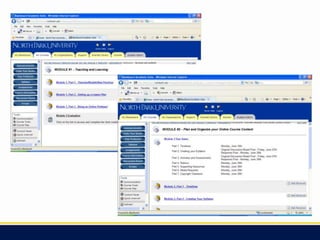
North Park’s Online Development Course Consists of 3 ModulesBased on ADDIE course design model (Analysis, Design, Development, Implementation, Evaluation)Online format; faculty members as studentsConstant communication with facultyIncorporates material from QM rubric throughout
3 Modules
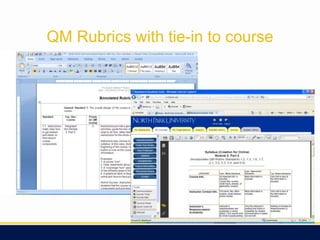
QM Rubrics with tie-in to course
Module 3: Building course content in CMSInternal reviews of new online and hybrid coursesAs the last step in Module 3Review starts 6 weeks before start of termCompleted by a team of 3 QM-trained reviewers2 ODL staff – team members1 faculty member – team chair
Module 3 (con’t)Internal reviews of repeat online and hybrid coursesFaculty with 3-year-old courses will participateAs a last step in Module 3Review starts 6 weeks before start of termCompleted by a team of 3 QM-trained reviewers2 ODL staff – team members1 faculty member – team chair
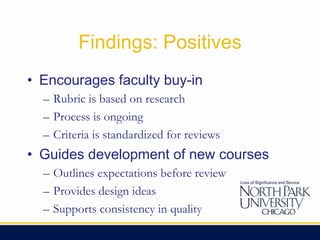
Findings: PositivesEncourages faculty buy-inRubric is based on researchProcess is ongoing Criteria is standardized for reviewsGuides development of new coursesOutlines expectations before reviewProvides design ideasSupports consistency in quality
Findings: Positives (con’t)Faculty member as team review chair aids in communicationEncourages peer-to-peer discussionsCan provide tried-and-true ideas
Findings: Positives (con’t)Online QM rubric tool saves timeInstructor worksheets in one accessible areaRubric includes annotations and space for additional notesAll final rubrics merged at the endCourse amendment formHistory of reviews saved online
Findings: Positives (con’t)After going through development process and internal review, courses are high qualityPer internal peer reviewersPer comparison to QM managed reviews
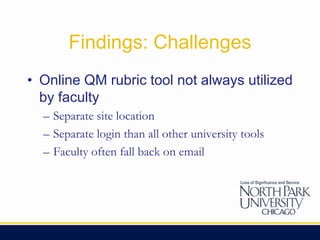
Findings: ChallengesOnline QM rubric tool not always utilized by facultySeparate site locationSeparate login than all other university toolsFaculty often fall back on email
Findings: Challenges (con’t)Not all courses meet standards 1st time Professors feel frustratedRepeat course creators don’t understand why past courses were fine (before QM)Professors don’t see that this is an ongoing process (not a pass/fail situation)
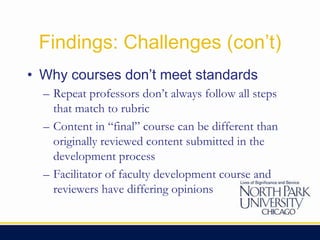
Findings: Challenges (con’t)Why courses don’t meet standardsRepeat professors don’t always follow all steps that match to rubricContent in “final” course can be different than originally reviewed content submitted in the development processFacilitator of faculty development course and reviewers have differing opinions
Future PlansReorganization of the development course based onNeeds assessmentQM team brainstormingUpdated research on other school’s programsReview of team communication

North Park Quality Matters Presentation

  • 1.
    Implementing QM atNorth Park University Online
  • 2.
    What is QualityMatters? http://www.qmprogram.org/A quality assurance process to increase student retention, learning and satisfaction in online and hybrid courses by implementing better course designFaculty-centeredResearch-basedAdopted by hundreds of higher education institutions across forty-two states, Canada, Australia and Bermuda
  • 3.
    Why Subscribe toQM?Required growth in online and hybrid programs
  • 4.
  • 5.
    Solid quality assurancein online and hybrid courses – research-based and widely acceptedWhy Subscribe to QM? (con’t)Accreditation’s increasing focus on assessment of student learning
  • 6.
    More of afaculty review process than a process imposed by a university department
  • 7.
    Networking opportunitiesNeed toEnsure QualityTrained 2 Office of Distributed Learning (ODL) staff to function asCourse reviewersDevelopment course facilitatorsOnline and hybrid mentors
  • 8.
    Need to EnsureQuality (con’t)Trained 2 faculty members to function asReview chairsDevelopment course facilitators Online and hybrid mentors
  • 9.
    North Park’s OnlineDevelopment Course Consists of 3 ModulesBased on ADDIE course design model (Analysis, Design, Development, Implementation, Evaluation)Online format; faculty members as studentsConstant communication with facultyIncorporates material from QM rubric throughout
  • 10.
  • 13.
    QM Rubrics withtie-in to course
  • 14.
    Module 3: Buildingcourse content in CMSInternal reviews of new online and hybrid coursesAs the last step in Module 3Review starts 6 weeks before start of termCompleted by a team of 3 QM-trained reviewers2 ODL staff – team members1 faculty member – team chair
  • 15.
    Module 3 (con’t)Internalreviews of repeat online and hybrid coursesFaculty with 3-year-old courses will participateAs a last step in Module 3Review starts 6 weeks before start of termCompleted by a team of 3 QM-trained reviewers2 ODL staff – team members1 faculty member – team chair
  • 16.
    Findings: PositivesEncourages facultybuy-inRubric is based on researchProcess is ongoing Criteria is standardized for reviewsGuides development of new coursesOutlines expectations before reviewProvides design ideasSupports consistency in quality
  • 17.
    Findings: Positives (con’t)Facultymember as team review chair aids in communicationEncourages peer-to-peer discussionsCan provide tried-and-true ideas
  • 18.
    Findings: Positives (con’t)OnlineQM rubric tool saves timeInstructor worksheets in one accessible areaRubric includes annotations and space for additional notesAll final rubrics merged at the endCourse amendment formHistory of reviews saved online
  • 19.
    Findings: Positives (con’t)Aftergoing through development process and internal review, courses are high qualityPer internal peer reviewersPer comparison to QM managed reviews
  • 20.
    Findings: ChallengesOnline QMrubric tool not always utilized by facultySeparate site locationSeparate login than all other university toolsFaculty often fall back on email
  • 21.
    Findings: Challenges (con’t)Notall courses meet standards 1st time Professors feel frustratedRepeat course creators don’t understand why past courses were fine (before QM)Professors don’t see that this is an ongoing process (not a pass/fail situation)
  • 22.
    Findings: Challenges (con’t)Whycourses don’t meet standardsRepeat professors don’t always follow all steps that match to rubricContent in “final” course can be different than originally reviewed content submitted in the development processFacilitator of faculty development course and reviewers have differing opinions
  • 23.
    Future PlansReorganization ofthe development course based onNeeds assessmentQM team brainstormingUpdated research on other school’s programsReview of team communication

Editor's Notes

  • #7 Due to budget constraints and the continuing development of our stated policy, we have not been able to implement the last two items.
  • #9 (open the fac dev course to show the modules. Especially mod 1 & 2.)