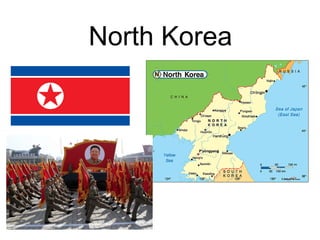
North Korea
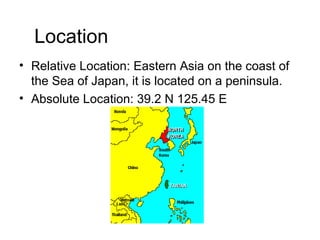
Location
• Relative Location: Eastern Asia on the coast of
the Sea of Japan, it is located on a peninsula.
• Absolute Location: 39.2 N 125.45 E
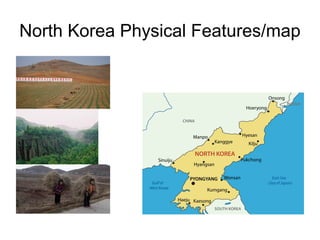
North Korea Physical Features/map
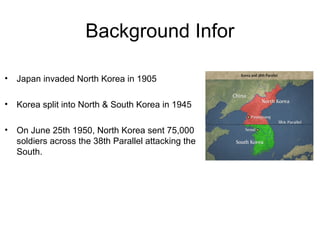
Background Infor
• Japan invaded North Korea in 1905
• Korea split into North & South Korea in 1945
• On June 25th 1950, North Korea sent 75,000
soldiers across the 38th Parallel attacking the
South.
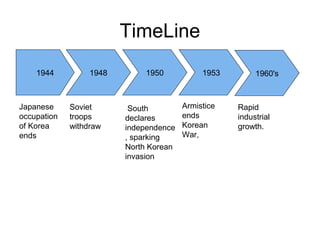
TimeLine
1944 1948 1960's19531950
Japanese
occupation
of Korea
ends
Soviet
troops
withdraw
South
declares
independence
, sparking
North Korean
invasion
Armistice
ends
Korean
War,
Rapid
industrial
growth.
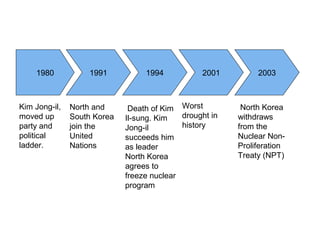
1980 1991 200320011994
Kim Jong-il,
moved up
party and
political
ladder.
North and
South Korea
join the
United
Nations
Death of Kim
Il-sung. Kim
Jong-il
succeeds him
as leader
North Korea
agrees to
freeze nuclear
program
Worst
drought in
history
North Korea
withdraws
from the
Nuclear Non-
Proliferation
Treaty (NPT)
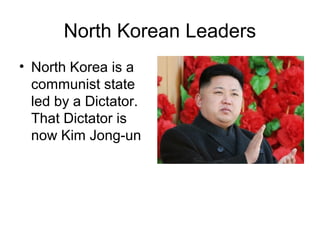
North Korean Leaders
• North Korea is a
communist state
led by a Dictator.
That Dictator is
now Kim Jong-un
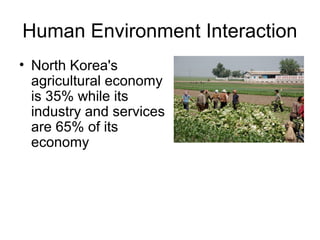
Human Environment Interaction
• North Korea's
agricultural economy
is 35% while its
industry and services
are 65% of its
economy
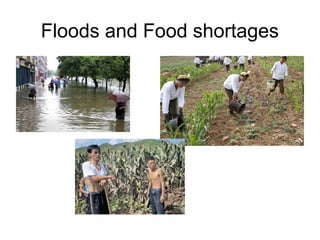
Floods and Food shortages
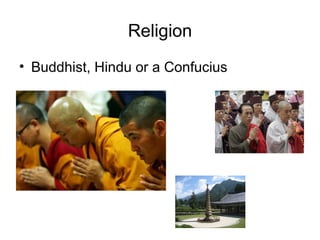
Religion
• Buddhist, Hindu or a Confucius
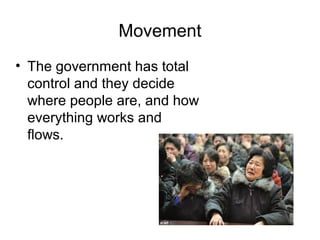
Movement
• The government has total
control and they decide
where people are, and how
everything works and
flows.
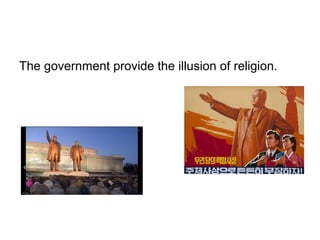
The government provide the illusion of religion.
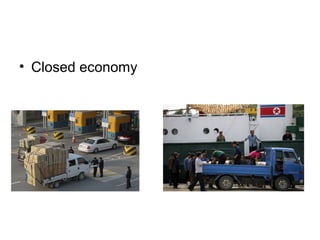
• Closed economy
Continuity Through Change Of
North Korea
• In 1994 : The ‘Arduous March’
• Kim Jong il died in December 2011
• Economy was in meltdown
• Kim Jong Un has become the head of a new collective leadership
that appears firmly in control
Biography Kim Jong-il
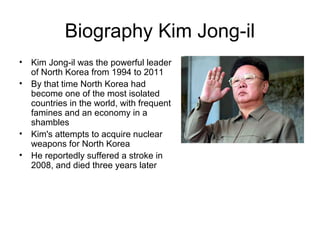
• Kim Jong-il was the powerful leader
of North Korea from 1994 to 2011
• By that time North Korea had
become one of the most isolated
countries in the world, with frequent
famines and an economy in a
shambles
• Kim's attempts to acquire nuclear
weapons for North Korea
• He reportedly suffered a stroke in
2008, and died three years later

North korea introduction

  • 1.
  • 2.
    Location • Relative Location:Eastern Asia on the coast of the Sea of Japan, it is located on a peninsula. • Absolute Location: 39.2 N 125.45 E
  • 3.
  • 4.
    Background Infor • Japaninvaded North Korea in 1905 • Korea split into North & South Korea in 1945 • On June 25th 1950, North Korea sent 75,000 soldiers across the 38th Parallel attacking the South.
  • 5.
    TimeLine 1944 1948 1960's19531950 Japanese occupation ofKorea ends Soviet troops withdraw South declares independence , sparking North Korean invasion Armistice ends Korean War, Rapid industrial growth.
  • 6.
    1980 1991 200320011994 KimJong-il, moved up party and political ladder. North and South Korea join the United Nations Death of Kim Il-sung. Kim Jong-il succeeds him as leader North Korea agrees to freeze nuclear program Worst drought in history North Korea withdraws from the Nuclear Non- Proliferation Treaty (NPT)
  • 7.
    North Korean Leaders •North Korea is a communist state led by a Dictator. That Dictator is now Kim Jong-un
  • 8.
    Human Environment Interaction •North Korea's agricultural economy is 35% while its industry and services are 65% of its economy
  • 9.
    Floods and Foodshortages
  • 10.
  • 11.
    Movement • The governmenthas total control and they decide where people are, and how everything works and flows.
  • 12.
    The government providethe illusion of religion.
  • 13.
  • 14.
    Continuity Through ChangeOf North Korea • In 1994 : The ‘Arduous March’ • Kim Jong il died in December 2011 • Economy was in meltdown • Kim Jong Un has become the head of a new collective leadership that appears firmly in control
  • 15.
    Biography Kim Jong-il •Kim Jong-il was the powerful leader of North Korea from 1994 to 2011 • By that time North Korea had become one of the most isolated countries in the world, with frequent famines and an economy in a shambles • Kim's attempts to acquire nuclear weapons for North Korea • He reportedly suffered a stroke in 2008, and died three years later