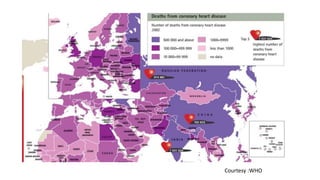
This document discusses the need for non-invasive cholesterol measurement. It notes that heart attacks and strokes account for 30% of deaths from disease. Cholesterol is one of the key factors contributing to vascular diseases but it is difficult to track without invasive blood tests. A non-invasive cholesterol monitor would allow more frequent monitoring of cholesterol levels, similar to other health metrics like weight, blood pressure, exercise and blood sugar. The document provides information on desirable cholesterol scores and their relationship to heart disease risk and outlines some studies showing correlations between cholesterol levels and ECG measurements as well as cardiac membrane potentials.
![Introduction:
• Heart Attack and stroke account for 30% of total death due to
diseases[1]. Death
Heart Attack and stroke Various Diseases](https://image.slidesharecdn.com/non-invasivecholesterolmeasurement-200830081002/85/Non-invasive-cholesterol-measurement-Study-2-320.jpg)
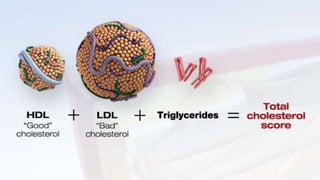
![Cholesterol score[2]:
Total cholesterol
Less than 200 mg/dL: desirable
200-239 mg/dL: borderline high risk
240 and over: high risk
HDL (high density lipoprotein)
Less than 40 mg/dL (men), less than 50
mg/dL (women): increased risk of heart
disease
Greater than 60mg/dL: some protection
against heart disease
LDL (low density lipoprotein)
Less than 100 mg/dL: optimal
100-129 mg/dL: near optimal/above
optimal
130-159 mg/dL: borderline high
160- 189 mg/dL: high
190 mg/dL and above: very high
Triglycerides
Less than n150 mg/dL: normal
150-199 mg/dL: borderline to high
200-499mg/dL: high
Above 500 mg/dL: very high](https://image.slidesharecdn.com/non-invasivecholesterolmeasurement-200830081002/85/Non-invasive-cholesterol-measurement-Study-11-320.jpg)
![Relation between ECG and cholesterol:
• In patients after a myocardial infarction, there is an ST segment
elevation that correlates to higher blood LDL or total cholesterol[3].
• ST segment resolution 30 minutes after successful angioplasty of IRA
was observed in 116 patients (77%), who were classified as group A,
whereas 34 (23%) presented ECG signs of no-reflow (group B).
• Cholesterol increases the open probability of cardiac KACh currents[4].](https://image.slidesharecdn.com/non-invasivecholesterolmeasurement-200830081002/85/Non-invasive-cholesterol-measurement-Study-12-320.jpg)
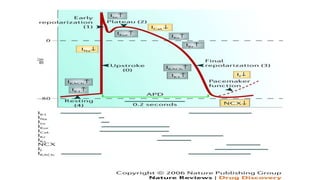
![Relation between Cardiac Membrane
potential and ECG[5].](https://image.slidesharecdn.com/non-invasivecholesterolmeasurement-200830081002/85/Non-invasive-cholesterol-measurement-Study-14-320.jpg)
![References
[1] Dr. Judith MacKay, Dr. George A. Mensah “The Atlas of Heart Disease and Stroke”, World health
organization.
[2] Benjamin Wedro, William C. Shiel Jr, “Cholesterol chart”, http://www.emedicinehealth.com/,
web.
[3] S et al. Dobrzycki, "High Cholesterol in Patients with ECG signs of No-Reflow after Myocardial
Infarction," Rocz Akad Med Bialymst, pp. 118-122.
[4] Anna N. Bukiya, et al. “Chlesterol increases the open probability of cardiac KACh currents” ,
BBAMEM, 2015, pp 2406 – 2413.
[5] Birnbaum SG, Varga AW, Yuan LL, et al. Structure and function of Kv4-family transient potassium
channels. Physiol Rev 2004;84:803-833.](https://image.slidesharecdn.com/non-invasivecholesterolmeasurement-200830081002/85/Non-invasive-cholesterol-measurement-Study-15-320.jpg)


