By-Nokesh prabhakar ,vaibhav singh tomar,
         Aman barma and Agesh sonwani
MATTER – Anything which occupies
         space and have mass are
         called matter

 ACCORDING TO PHYSICAL PROPERTY MATTER HAS 3 STATES –

 1.SOLID .

 2.LIQUID .

 3.GAS .
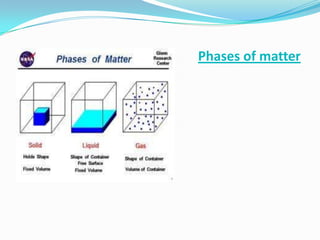
Phases of matter
Solid is one of the three classical states of
matter (the others being gas and liquid). The
matter which has definite mass and structure
is a solid.


In solid Intermolecular force of attraction is
maximum ,so distance between particle and is
minimum in solid.
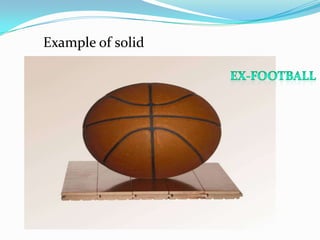
Example of solid
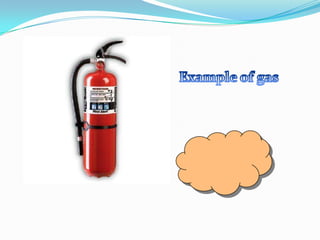
Gases do not have a
    definite shape or
    volume
They fill all the available
 space in a container
The force of attraction is
 maximum ,space between
 particle is minimum in
 gas
ACCORDING TO PHYSICAL
PROPERTY MATTER IS OF 3 TYPES –

1.ELEMENT

2.COMPOUND

3.MIXTURE
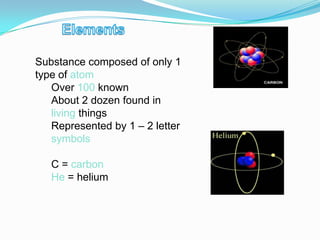
Substance composed of only 1
type of atom
   Over 100 known
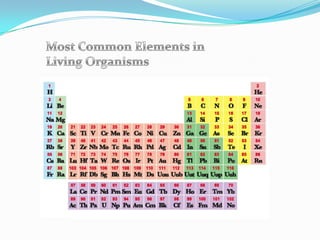
   About 2 dozen found in
   living things
   Represented by 1 – 2 letter
   symbols

   C = carbon
   He = helium
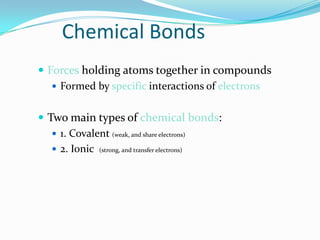
Chemical Bonds
 Forces holding atoms together in compounds
    Formed by specific interactions of electrons


 Two main types of chemical bonds:
    1. Covalent (weak, and share electrons)
    2. Ionic (strong, and transfer electrons)
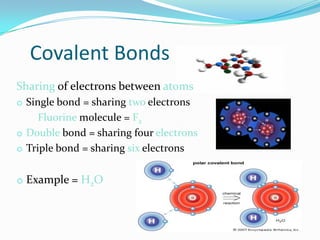
Covalent Bonds
Sharing of electrons between atoms
o Single bond = sharing two electrons
     Fluorine molecule = F2
o Double bond = sharing four electrons
o Triple bond = sharing six electrons


o Example = H2O
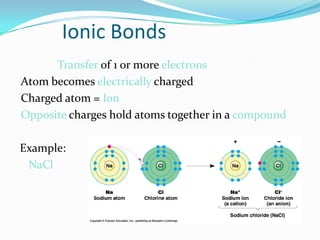
Ionic Bonds
      Transfer of 1 or more electrons
Atom becomes electrically charged
Charged atom = Ion
Opposite charges hold atoms together in a compound

Example:
 NaCl
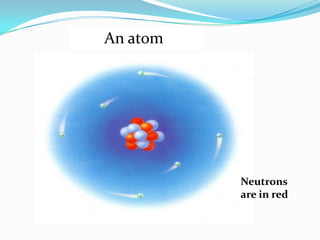
An atom


          Neutrons
          are in red
Pressure
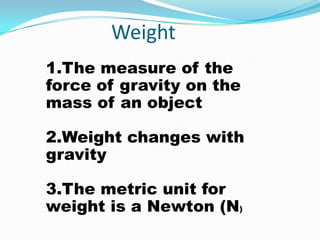
Weight
1.The measure of the
force of gravity on the
mass of an object

2.Weight changes with
gravity

3.The metric unit for
weight is a Newton (N)
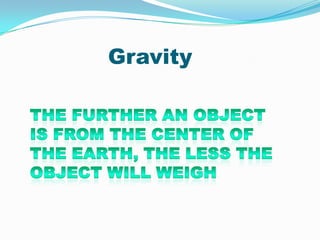
Gravity
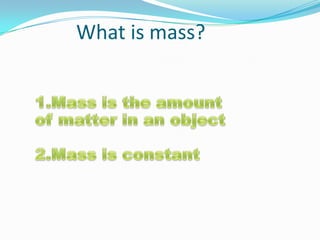
What is mass?
Nokesh

Nokesh

  • 1.
    By-Nokesh prabhakar ,vaibhavsingh tomar, Aman barma and Agesh sonwani
  • 2.
    MATTER – Anythingwhich occupies space and have mass are called matter ACCORDING TO PHYSICAL PROPERTY MATTER HAS 3 STATES – 1.SOLID . 2.LIQUID . 3.GAS .
  • 3.
  • 4.
    Solid is oneof the three classical states of matter (the others being gas and liquid). The matter which has definite mass and structure is a solid. In solid Intermolecular force of attraction is maximum ,so distance between particle and is minimum in solid.
  • 5.
  • 8.
    Gases do nothave a definite shape or volume They fill all the available space in a container The force of attraction is maximum ,space between particle is minimum in gas
  • 10.
    ACCORDING TO PHYSICAL PROPERTYMATTER IS OF 3 TYPES – 1.ELEMENT 2.COMPOUND 3.MIXTURE
  • 11.
    Substance composed ofonly 1 type of atom Over 100 known About 2 dozen found in living things Represented by 1 – 2 letter symbols C = carbon He = helium
  • 14.
    Chemical Bonds  Forcesholding atoms together in compounds  Formed by specific interactions of electrons  Two main types of chemical bonds:  1. Covalent (weak, and share electrons)  2. Ionic (strong, and transfer electrons)
  • 15.
    Covalent Bonds Sharing ofelectrons between atoms o Single bond = sharing two electrons Fluorine molecule = F2 o Double bond = sharing four electrons o Triple bond = sharing six electrons o Example = H2O
  • 16.
    Ionic Bonds Transfer of 1 or more electrons Atom becomes electrically charged Charged atom = Ion Opposite charges hold atoms together in a compound Example: NaCl
  • 17.
    An atom Neutrons are in red
  • 21.
  • 22.
    Weight 1.The measure ofthe force of gravity on the mass of an object 2.Weight changes with gravity 3.The metric unit for weight is a Newton (N)
  • 23.
  • 24.