Downloaded 53 times




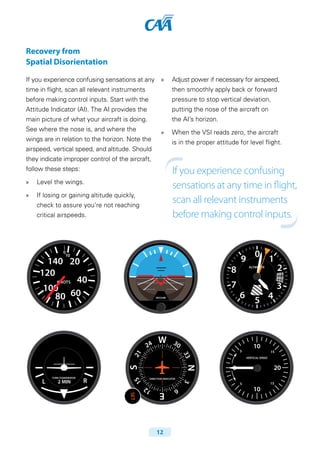


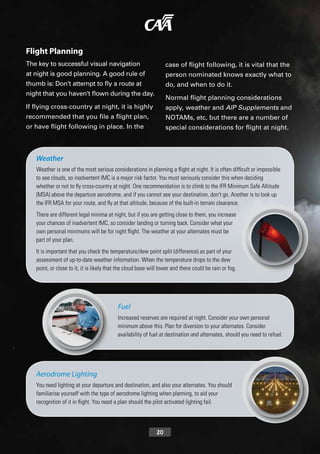

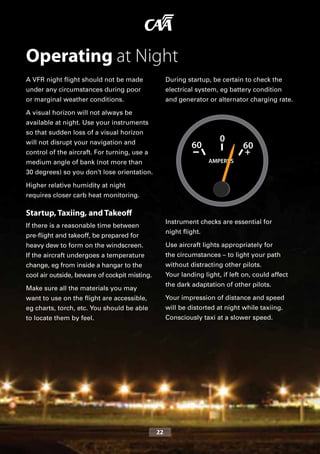




This document discusses night flying and provides guidance on managing risks unique to flying at night. It covers topics such as: - Visual illusions pilots may experience at night like auto-kinesis and confusing ground lights with stars. - The importance of dark adaptation and allowing time for eyes to adjust when transitioning between light levels. - Relying more on peripheral vision at night since central vision is impaired, and scanning outside the aircraft. - Planning considerations like allowing time for dark adaptation and using dim red lighting to preserve night vision. - Common night flying errors like targeting in on a single light source and losing spatial awareness.


