UNIT 1
PHILOSOPHICAL VIEWS
“We don’t receive
wisdom; we must
discover it for ourselves
after a journey
that no one can take for
us or spare us.”
-Marcel Proust
LESSON 1
Concept and the Development in
Philosophy
“Philosophy is a kind of journey, ever
learning yet never arriving at the ideal
perfection of truth.”
- Albert Pike –
TOPICS IN THE LESSON
❖ Meaning and Importance of Philosophy
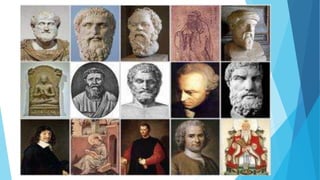
❖ Pioneers in the Various Field of Learning
❖ Philosophical Schools of Thought
❖ Philosophy and the Truth
LEARNING OUTCOMES:
At the end of the lesson, the students should:
❖ Deduce the meaning of philosophy according to how
we understand different phenomena and point out
its importance
❖ Trace the development of philosophy
❖ Identify the pioneers in the different fields of learning
❖ Compare and contrast the different philosophical
schools of thought
❖ Identify the different theories in determining the
truth and discuss its salient points and connection
with philosophy.
As a human being, how do
you apply your knowledge in
philosophy in view of
understanding the different
things you encountered in
your everyday life?
PHILOSOPHY: ITS MEANING, CONCEPTS AND
IMPORTANCE
 Philosophy is derived from Greek words “philo” and “Sophia”as
introduced by Phythagoras. By its etymological definition, philosophy
means “love for wisdom”. Wisdom consists in not merely acquiring
the basic ideas but knowing, learning and ascertaining these ideas to
satisfy one’s quest. This act pertains to the acquisition and possession
of truth gained through one’s perceptivity of the things and facts
around him which an ordinary mind does not readily care to acquire
and accept. Heraclitus, a Greek Philosopher contended that
philosophy did not mean to be the possession of multiple facts along
but a unified view of reality (Terry, in Mendoza & Apolinar, 2008).
 Man is not satisfied by knowing only about things
around him. Inquiry does not end in receiving a
response. After a response is received, another
question follows until one is fully ascertained. Nothing
goes to waste for the quest for deeper knowledge
continues. Followers of Aristotle and St. Thomas
Aquinas defined philosophy as learning the profound
knowledge of the first cause attained by reason (Terry,
in Mendoza & Apolinar, 2008)
An individual will develop satisfaction once he
achieve a vivid meaning derived from a better
outcome of the search being made as well as to a
possible development of a philosophy or belief.
Therefore he will derive the best as soon as he
become cognizant of his own ideas to make
choices and decisions in a wise manner.
By simple definition, Philosophy is a quest answer
to an inquiry. As an individual finds out the correct
answers to his questions, he derives pleasure
arriving at its correct meaning. Philosophy
includes searching, looking into, and seeking.
However, even one might have the prior
information already, they still aim and insist to
know more, to explore and discover further in
searching until finds satisfaction, thus, an
individual feels enriched with more ideas he
possess.
Philosophy involves the study of things within
the reach of man’s power to learn the cause
and the reasons of his quest for ultimate
explanation of his existence. This calls for a
deeper reflection and speculation about the
world and the human beings. Philosophy as
“certa cognito per causas” means it is a kind of
knowledge achieved only through investigation
of its origin and cause.
 Philosophy would mean systematic and logical
explanation to the nature, existence, purpose and
relationship of things including human being in the
universe (Calderon in Mendoza & Apolinar, 2008). It calls
for systematic and logical explanation of the nature.
Base on the formation of a philosophy consist of a well-
arranged and sequential point of views and concepts to
be used as valid foundation in the selection of practices
and plans to be adapted. A better presentation to show
the proper connection of ideas must be included.
Further the philosophers, having passion for
wisdom continue their quest for the meaning of
life, of what could be done and what could be
implemented for the humanity. One must carefully
take note that the goal in the search is one of the
human worth. The unending quest does not end
with a response but the search goes on. For a
philosopher, the query does not end; it continues
and the more he spends time in his quest, the
greater is its return of satisfaction.
Finally Philosophy as a discipline is composed of
three main branches which includes:
a. Metaphysics that tells about human reality. It
discusses about origin and essence of things in
relation to the causes and ends of things.
Examples:
What is the meaning of man’s existence?
What is the purpose of his life?
Is there life after death?
b. Epistemology- discusses about
the truth and knowledge derived
through senses, those formed in the
mind, and those related to feelings.
It also refers to cognitive learning
where reason, inference and caused
are looked into. Logic is included
here.
c. Axiology- deals with the values and reasons
including the science of morality which is Ethics. It
also includes Aesthetic Philosophy dealing with
beauty and its opposite. It deals with questions on
religion, social, and even political aspects.
Examples:
Is man a social being?
What is abortion?
Does God really exist?
IMPORTANCE OF PHILOSOPHY
 Philosophy is considered very essential as one of the fields to study
concepts related to truth and knowledge. The following are the
importance why we need to deal with the study of Philosophy:
 1. People can clarify what they are believing.
 2. We can be stimulated to think of ultimate questions.
 3. Philosophy promises us better understanding of ourselves.
 4. It enables us to think carefully and clearly about important
issues.
 5. Studying philosophy sharpens our analytical abilities, enabling
to identify and evaluate the strengths and weaknesses in any
position.
IMPORTANCE OF PHILOSOPHY
 6. It hones your ability to construct and articulate cogent (easy &
clear) arguments of your own.
 7. In studying philosophy, we learn to take a step back from our
everyday thinking and to explore the deeper, bigger question which
underpins our thoughts.
 8. It prompts you to do work across disciplinary boundaries and to
think flexibly and creatively about problems which do not present
immediate solutions.
 9. Because philosophy is an activity as much a body of knowledge, it
also develops your ability to think and work independently.
 10. The focus in the study of philosophy is to learn not what to
believe, but how to think.
Seatwork:
Give at least three definitions of Philosophy:
 1.
______________________________________________________________
 ______________________________________________________________
 2.
______________________________________________________________
 ______________________________________________________________
3.
_______________________________________________________________
 ______________________________________________________________
After knowing the importance of
philosophy, it is time for you to reflect on
how philosophy gave an impact towards
you as a human person. Share your
thoughts by writing a reflective essay on
how philosophy became important to you
using your experiences or maybe your goals
in life.
 REFLECTIVE ESSAY:

NGEC-10-LESSON-1 Concept of Developement

  • 1.
  • 3.
    “We don’t receive wisdom;we must discover it for ourselves after a journey that no one can take for us or spare us.” -Marcel Proust
  • 4.
    LESSON 1 Concept andthe Development in Philosophy “Philosophy is a kind of journey, ever learning yet never arriving at the ideal perfection of truth.” - Albert Pike –
  • 6.
    TOPICS IN THELESSON ❖ Meaning and Importance of Philosophy ❖ Pioneers in the Various Field of Learning ❖ Philosophical Schools of Thought ❖ Philosophy and the Truth
  • 7.
    LEARNING OUTCOMES: At theend of the lesson, the students should: ❖ Deduce the meaning of philosophy according to how we understand different phenomena and point out its importance ❖ Trace the development of philosophy ❖ Identify the pioneers in the different fields of learning ❖ Compare and contrast the different philosophical schools of thought ❖ Identify the different theories in determining the truth and discuss its salient points and connection with philosophy.
  • 8.
    As a humanbeing, how do you apply your knowledge in philosophy in view of understanding the different things you encountered in your everyday life?
  • 9.
    PHILOSOPHY: ITS MEANING,CONCEPTS AND IMPORTANCE  Philosophy is derived from Greek words “philo” and “Sophia”as introduced by Phythagoras. By its etymological definition, philosophy means “love for wisdom”. Wisdom consists in not merely acquiring the basic ideas but knowing, learning and ascertaining these ideas to satisfy one’s quest. This act pertains to the acquisition and possession of truth gained through one’s perceptivity of the things and facts around him which an ordinary mind does not readily care to acquire and accept. Heraclitus, a Greek Philosopher contended that philosophy did not mean to be the possession of multiple facts along but a unified view of reality (Terry, in Mendoza & Apolinar, 2008).
  • 10.
     Man isnot satisfied by knowing only about things around him. Inquiry does not end in receiving a response. After a response is received, another question follows until one is fully ascertained. Nothing goes to waste for the quest for deeper knowledge continues. Followers of Aristotle and St. Thomas Aquinas defined philosophy as learning the profound knowledge of the first cause attained by reason (Terry, in Mendoza & Apolinar, 2008)
  • 11.
    An individual willdevelop satisfaction once he achieve a vivid meaning derived from a better outcome of the search being made as well as to a possible development of a philosophy or belief. Therefore he will derive the best as soon as he become cognizant of his own ideas to make choices and decisions in a wise manner.
  • 12.
    By simple definition,Philosophy is a quest answer to an inquiry. As an individual finds out the correct answers to his questions, he derives pleasure arriving at its correct meaning. Philosophy includes searching, looking into, and seeking. However, even one might have the prior information already, they still aim and insist to know more, to explore and discover further in searching until finds satisfaction, thus, an individual feels enriched with more ideas he possess.
  • 13.
    Philosophy involves thestudy of things within the reach of man’s power to learn the cause and the reasons of his quest for ultimate explanation of his existence. This calls for a deeper reflection and speculation about the world and the human beings. Philosophy as “certa cognito per causas” means it is a kind of knowledge achieved only through investigation of its origin and cause.
  • 14.
     Philosophy wouldmean systematic and logical explanation to the nature, existence, purpose and relationship of things including human being in the universe (Calderon in Mendoza & Apolinar, 2008). It calls for systematic and logical explanation of the nature. Base on the formation of a philosophy consist of a well- arranged and sequential point of views and concepts to be used as valid foundation in the selection of practices and plans to be adapted. A better presentation to show the proper connection of ideas must be included.
  • 15.
    Further the philosophers,having passion for wisdom continue their quest for the meaning of life, of what could be done and what could be implemented for the humanity. One must carefully take note that the goal in the search is one of the human worth. The unending quest does not end with a response but the search goes on. For a philosopher, the query does not end; it continues and the more he spends time in his quest, the greater is its return of satisfaction.
  • 16.
    Finally Philosophy asa discipline is composed of three main branches which includes: a. Metaphysics that tells about human reality. It discusses about origin and essence of things in relation to the causes and ends of things. Examples: What is the meaning of man’s existence? What is the purpose of his life? Is there life after death?
  • 17.
    b. Epistemology- discussesabout the truth and knowledge derived through senses, those formed in the mind, and those related to feelings. It also refers to cognitive learning where reason, inference and caused are looked into. Logic is included here.
  • 18.
    c. Axiology- dealswith the values and reasons including the science of morality which is Ethics. It also includes Aesthetic Philosophy dealing with beauty and its opposite. It deals with questions on religion, social, and even political aspects. Examples: Is man a social being? What is abortion? Does God really exist?
  • 19.
    IMPORTANCE OF PHILOSOPHY Philosophy is considered very essential as one of the fields to study concepts related to truth and knowledge. The following are the importance why we need to deal with the study of Philosophy:  1. People can clarify what they are believing.  2. We can be stimulated to think of ultimate questions.  3. Philosophy promises us better understanding of ourselves.  4. It enables us to think carefully and clearly about important issues.  5. Studying philosophy sharpens our analytical abilities, enabling to identify and evaluate the strengths and weaknesses in any position.
  • 20.
    IMPORTANCE OF PHILOSOPHY 6. It hones your ability to construct and articulate cogent (easy & clear) arguments of your own.  7. In studying philosophy, we learn to take a step back from our everyday thinking and to explore the deeper, bigger question which underpins our thoughts.  8. It prompts you to do work across disciplinary boundaries and to think flexibly and creatively about problems which do not present immediate solutions.  9. Because philosophy is an activity as much a body of knowledge, it also develops your ability to think and work independently.  10. The focus in the study of philosophy is to learn not what to believe, but how to think.
  • 21.
    Seatwork: Give at leastthree definitions of Philosophy:  1. ______________________________________________________________  ______________________________________________________________  2. ______________________________________________________________  ______________________________________________________________ 3. _______________________________________________________________  ______________________________________________________________
  • 22.
    After knowing theimportance of philosophy, it is time for you to reflect on how philosophy gave an impact towards you as a human person. Share your thoughts by writing a reflective essay on how philosophy became important to you using your experiences or maybe your goals in life.  REFLECTIVE ESSAY: