What is NFC?
Near field communication (NFC) is a wireless technology
that allows the transfer of data between a mobile device
and a transmission device (an NFC tag). It can open a web
page or app, give instructions to authorise a payment
or even open a hotel room door.
How NFC works
NFC tags are small discs of plastic that contain a printed
circuit with an antennae. The NFC tag draws a small
amount of power from an NFC-enabled device when
you tap it. It can transfer up to 1MB of data and can be
standalone or embedded in other objects
(eg posters, product packaging).
The rise and rise of NFC
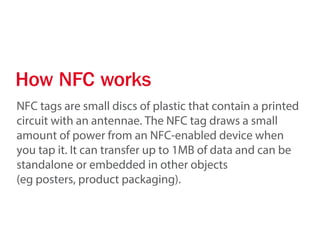
By 2014, 20% of mobile handsets sold
will have NFC technology
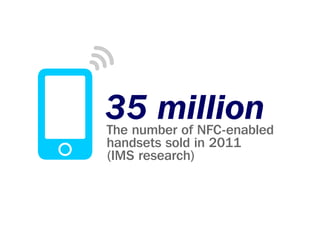
The number of NFC-enabled
handsets sold in 2011
(IMS research)
35 million
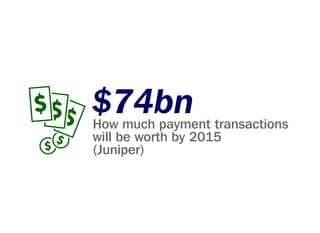
How much payment transactions
will be worth by 2015
(Juniper)
$74bn
What are the marketing opportunities?
NFC allows customers to make a purchase, receive targeted offers,
but also share experiences and view customised rich media.
They just tap the mobile device on a poster, magazine ad
or any other transmission device to activate the NFC technology.
So what could NFC marketing look like in the near future?
A day in the life of an
NFC-enabled consumer…
John loves his mobile
NFC technology is opening up a whole new
channel for him to connect with brands.
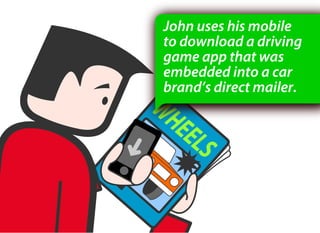
John uses his mobile
to download a driving
game app that was
embedded into a car
brand’s direct mailer.
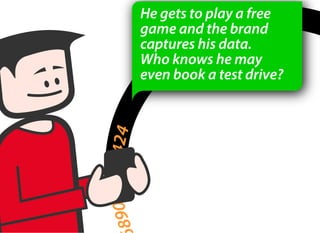
He gets to play a free
game and the brand
captures his data.
Who knows he may
even book a test drive?
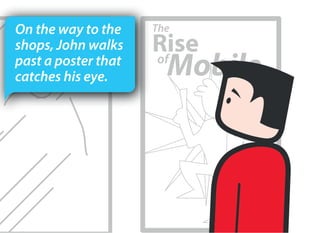
On the way to the
shops, John walks
past a poster that
catches his eye.
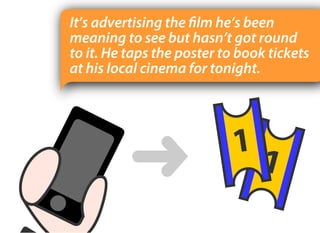
It’s advertising the film he’s been
meaning to see but hasn’t got round
to it. He taps the poster to book tickets
at his local cinema for tonight.
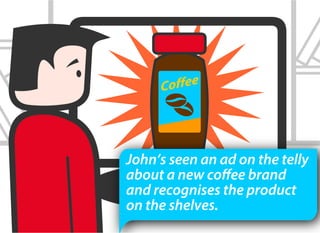
John’s seen an ad on the telly
about a new coffee brand
and recognises the product
on the shelves.
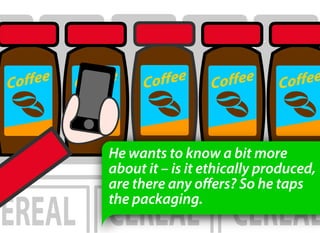
He wants to know a bit more
about it – is it ethically produced,
are there any offers? So he taps
the packaging.
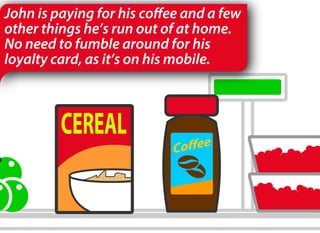
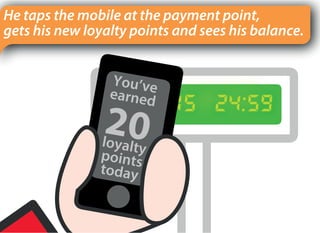
John is paying for his coffee and a few
other things he’s run out of at home.
No need to fumble around for his
loyalty card, as it’s on his mobile.
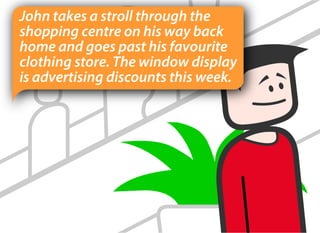
John takes a stroll through the
shopping centre on his way back
home and goes past his favourite
clothing store. The window display
is advertising discounts this week.
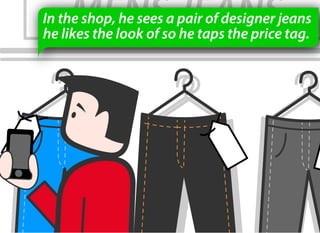
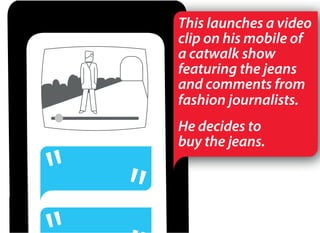
In the shop, he sees a pair of designer jeans
he likes the look of so he taps the price tag.
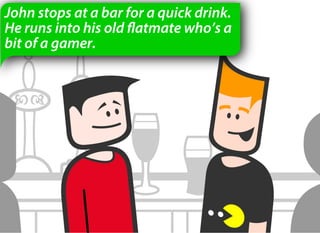
John stops at a bar for a quick drink.
He runs into his old flatmate who’s a
bit of a gamer.
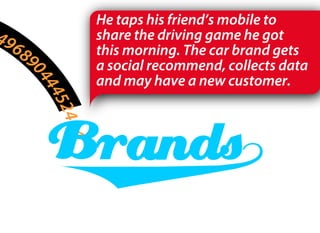
He taps his friend’s mobile to
share the driving game he got
this morning. The car brand gets
a social recommend, collects data
and may have a new customer.
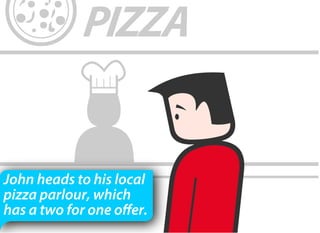
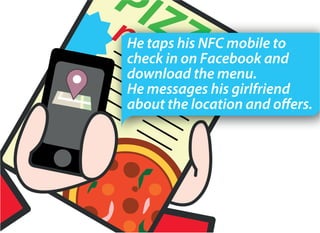
John heads to his local
pizza parlour, which
has a two for one offer.
John and his girlfriend arrive at the cinema,
pick up the cinema tickets and find out that
there’s a deal on popcorn so they buy some
on the way in.
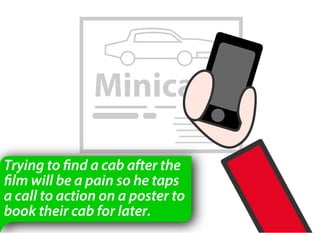
Trying to find a cab after the
film will be a pain so he taps
a call to action on a poster to
book their cab for later.
John tidies up his apps and emails on his mobile.
He looks at his day’s transactions and files stuff
away, changes his opt-in and preferences.
He also looks at offers from other brands and
decides whether or not to subscribe to them.

NFC presentation

  • 1.
    What is NFC? Nearfield communication (NFC) is a wireless technology that allows the transfer of data between a mobile device and a transmission device (an NFC tag). It can open a web page or app, give instructions to authorise a payment or even open a hotel room door.
  • 2.
    How NFC works NFCtags are small discs of plastic that contain a printed circuit with an antennae. The NFC tag draws a small amount of power from an NFC-enabled device when you tap it. It can transfer up to 1MB of data and can be standalone or embedded in other objects (eg posters, product packaging).
  • 3.
    The rise andrise of NFC By 2014, 20% of mobile handsets sold will have NFC technology
  • 4.
    The number ofNFC-enabled handsets sold in 2011 (IMS research) 35 million
  • 5.
    How much paymenttransactions will be worth by 2015 (Juniper) $74bn
  • 6.
    What are themarketing opportunities? NFC allows customers to make a purchase, receive targeted offers, but also share experiences and view customised rich media. They just tap the mobile device on a poster, magazine ad or any other transmission device to activate the NFC technology. So what could NFC marketing look like in the near future?
  • 7.
    A day inthe life of an NFC-enabled consumer…
  • 8.
  • 10.
    NFC technology isopening up a whole new channel for him to connect with brands.
  • 12.
    John uses hismobile to download a driving game app that was embedded into a car brand’s direct mailer.
  • 13.
    He gets toplay a free game and the brand captures his data. Who knows he may even book a test drive?
  • 15.
    On the wayto the shops, John walks past a poster that catches his eye.
  • 16.
    It’s advertising thefilm he’s been meaning to see but hasn’t got round to it. He taps the poster to book tickets at his local cinema for tonight.
  • 18.
    John’s seen anad on the telly about a new coffee brand and recognises the product on the shelves.
  • 19.
    He wants toknow a bit more about it – is it ethically produced, are there any offers? So he taps the packaging.
  • 20.
    John is payingfor his coffee and a few other things he’s run out of at home. No need to fumble around for his loyalty card, as it’s on his mobile.
  • 22.
    John takes astroll through the shopping centre on his way back home and goes past his favourite clothing store. The window display is advertising discounts this week.
  • 23.
    In the shop,he sees a pair of designer jeans he likes the look of so he taps the price tag.
  • 25.
    John stops ata bar for a quick drink. He runs into his old flatmate who’s a bit of a gamer.
  • 26.
    He taps hisfriend’s mobile to share the driving game he got this morning. The car brand gets a social recommend, collects data and may have a new customer.
  • 27.
    John heads tohis local pizza parlour, which has a two for one offer.
  • 30.
    John and hisgirlfriend arrive at the cinema, pick up the cinema tickets and find out that there’s a deal on popcorn so they buy some on the way in.
  • 31.
    Trying to finda cab after the film will be a pain so he taps a call to action on a poster to book their cab for later.
  • 32.
    John tidies uphis apps and emails on his mobile. He looks at his day’s transactions and files stuff away, changes his opt-in and preferences. He also looks at offers from other brands and decides whether or not to subscribe to them.