My newspaper advert
analysis…
Ella Chapman
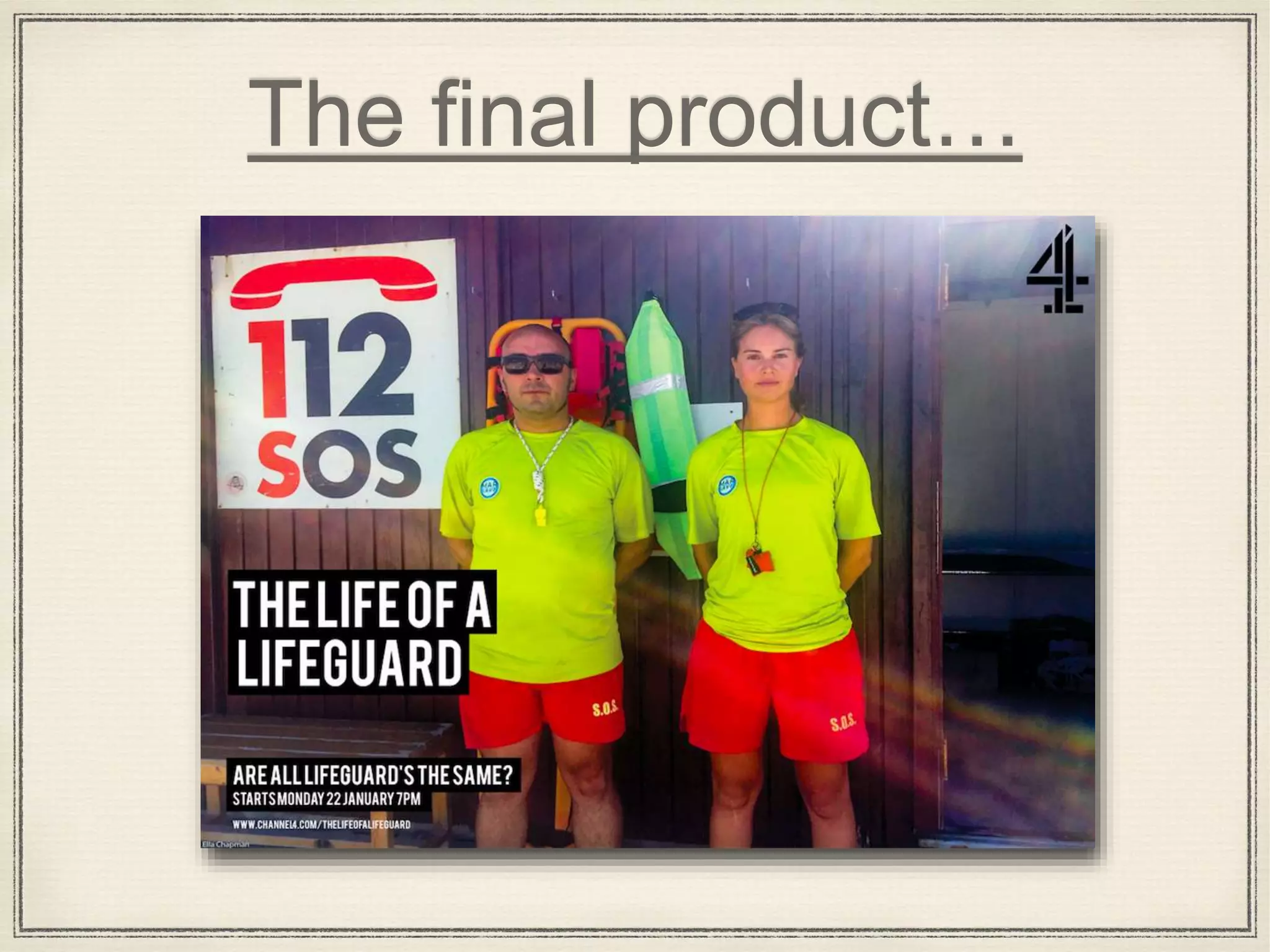
The final product…
Did I follow the flat-plan?
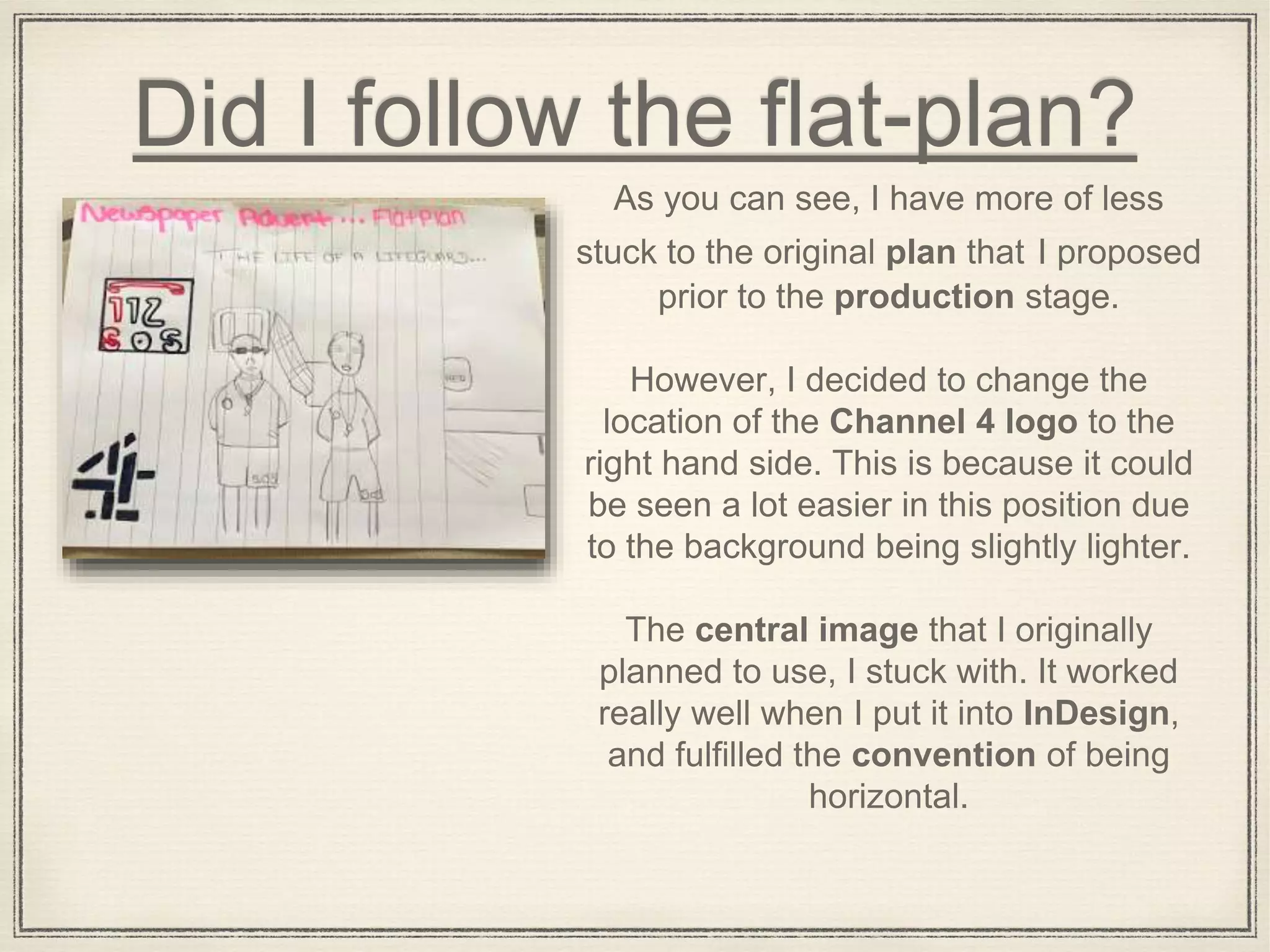
As you can see, I have more of less
stuck to the original plan that I proposed
prior to the production stage.
However, I decided to change the
location of the Channel 4 logo to the
right hand side. This is because it could
be seen a lot easier in this position due
to the background being slightly lighter.
The central image that I originally
planned to use, I stuck with. It worked
really well when I put it into InDesign,
and fulfilled the convention of being
horizontal.
The image…
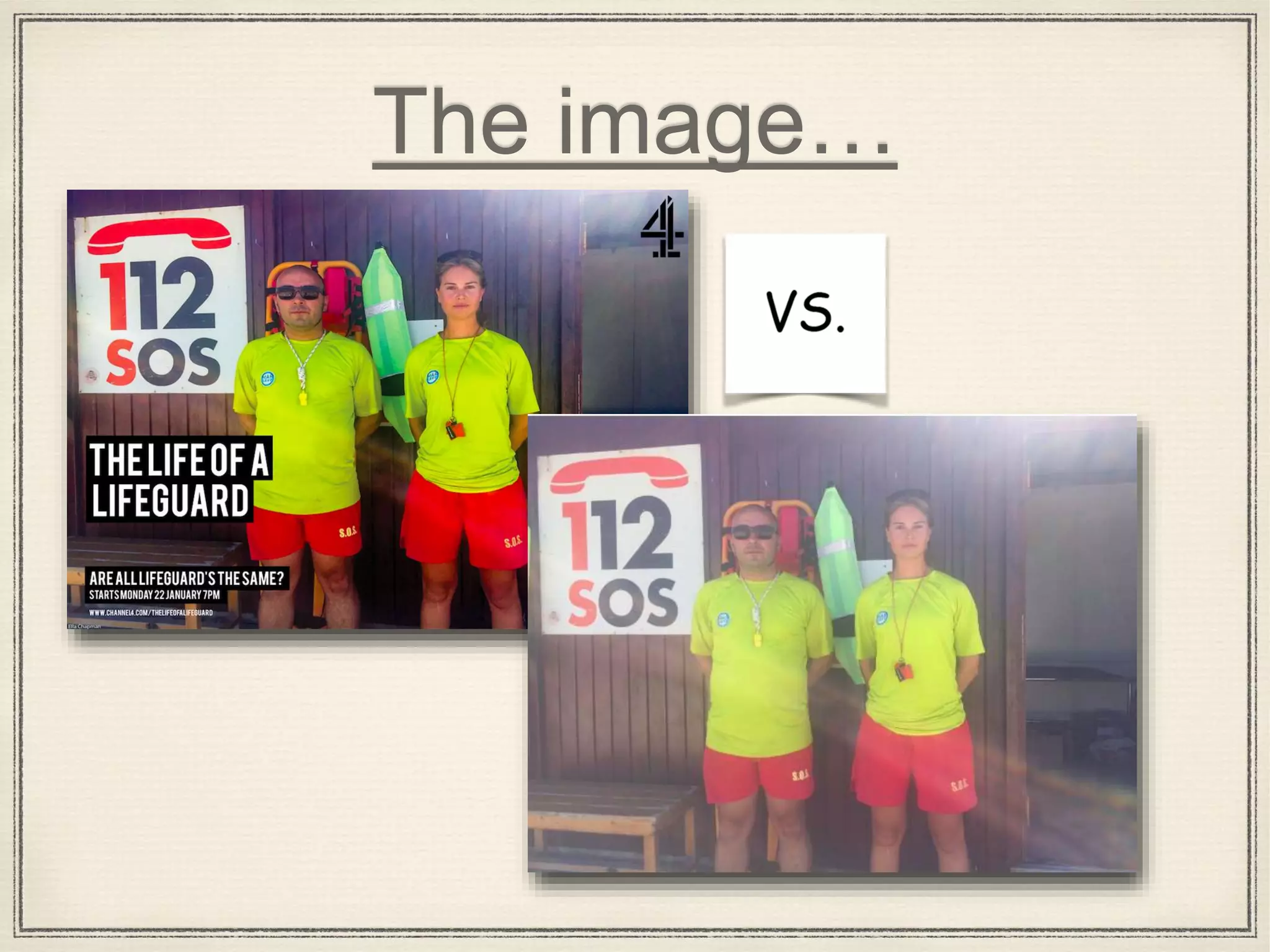
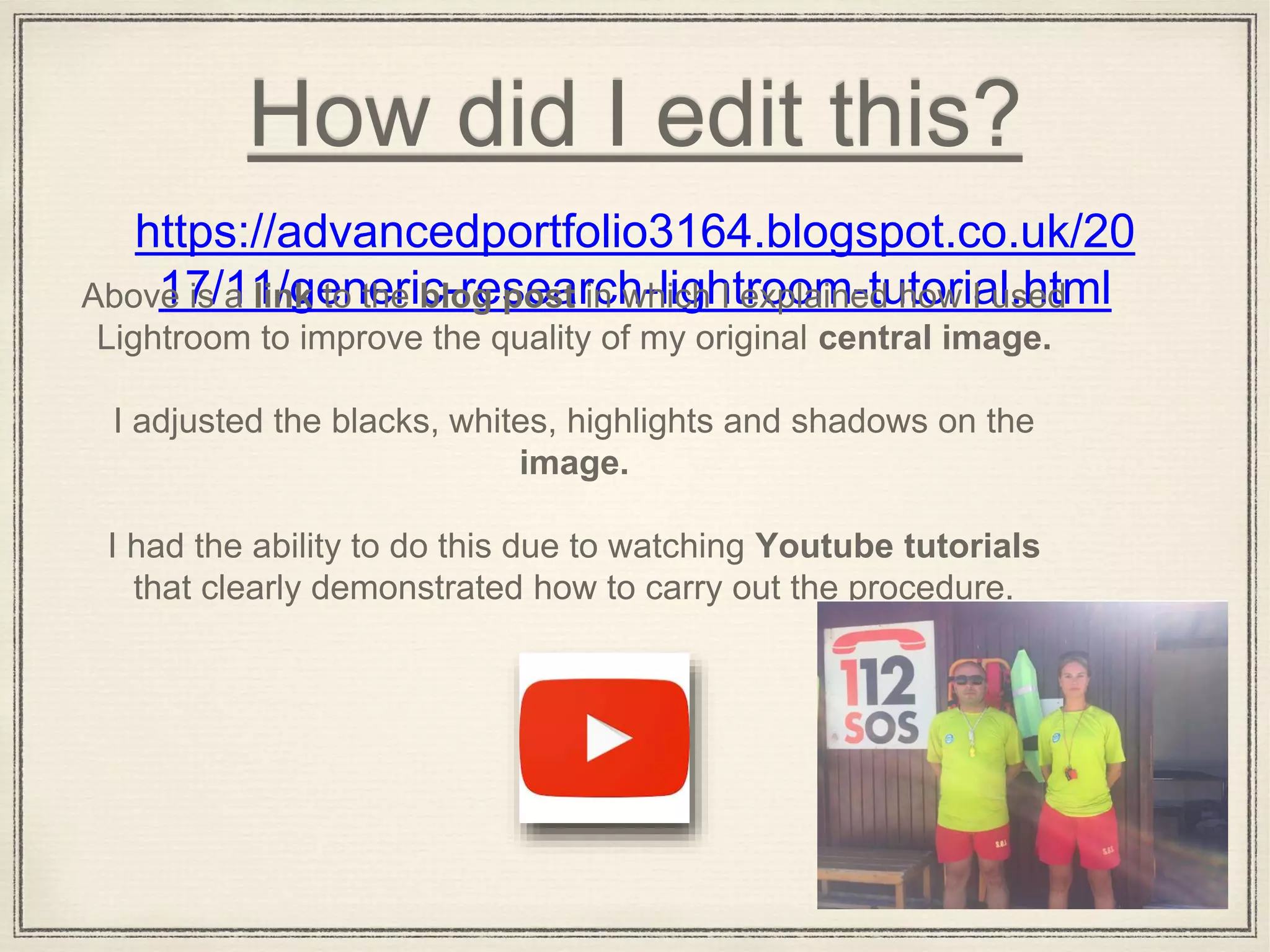
How did I edit this?
https://advancedportfolio3164.blogspot.co.uk/20
17/11/generic-research-lightroom-tutorial.htmlAbove is a link to the blog post in which I explained how I used
Lightroom to improve the quality of my original central image.
I adjusted the blacks, whites, highlights and shadows on the
image.
I had the ability to do this due to watching Youtube tutorials
that clearly demonstrated how to carry out the procedure.
The colour palette…
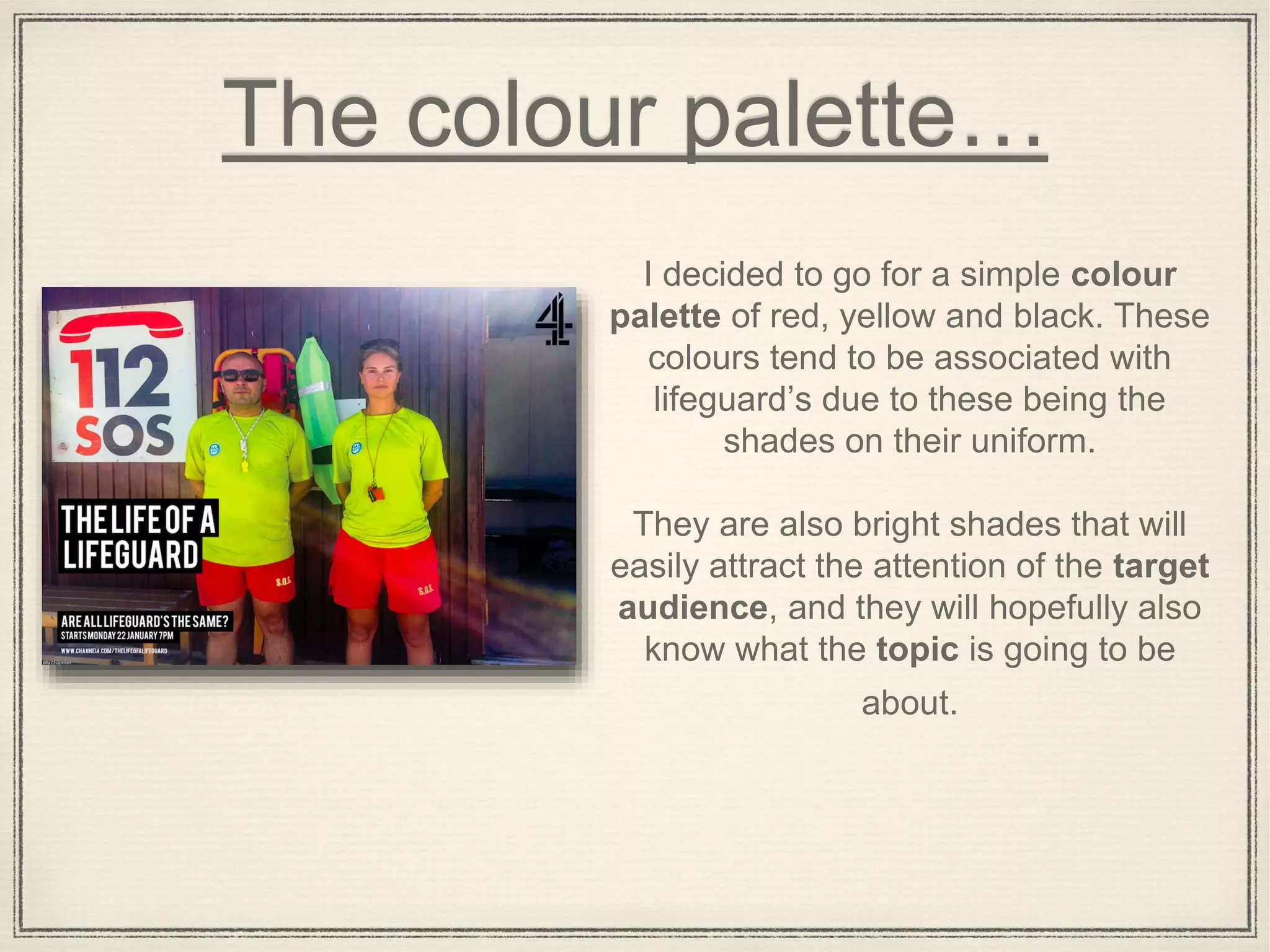
I decided to go for a simple colour
palette of red, yellow and black. These
colours tend to be associated with
lifeguard’s due to these being the
shades on their uniform.
They are also bright shades that will
easily attract the attention of the target
audience, and they will hopefully also
know what the topic is going to be
about.
The typography…
https://advancedportfolio3164.blogspot.co.uk/2017/1
1/production-downloading-font-to-my-imovie.html
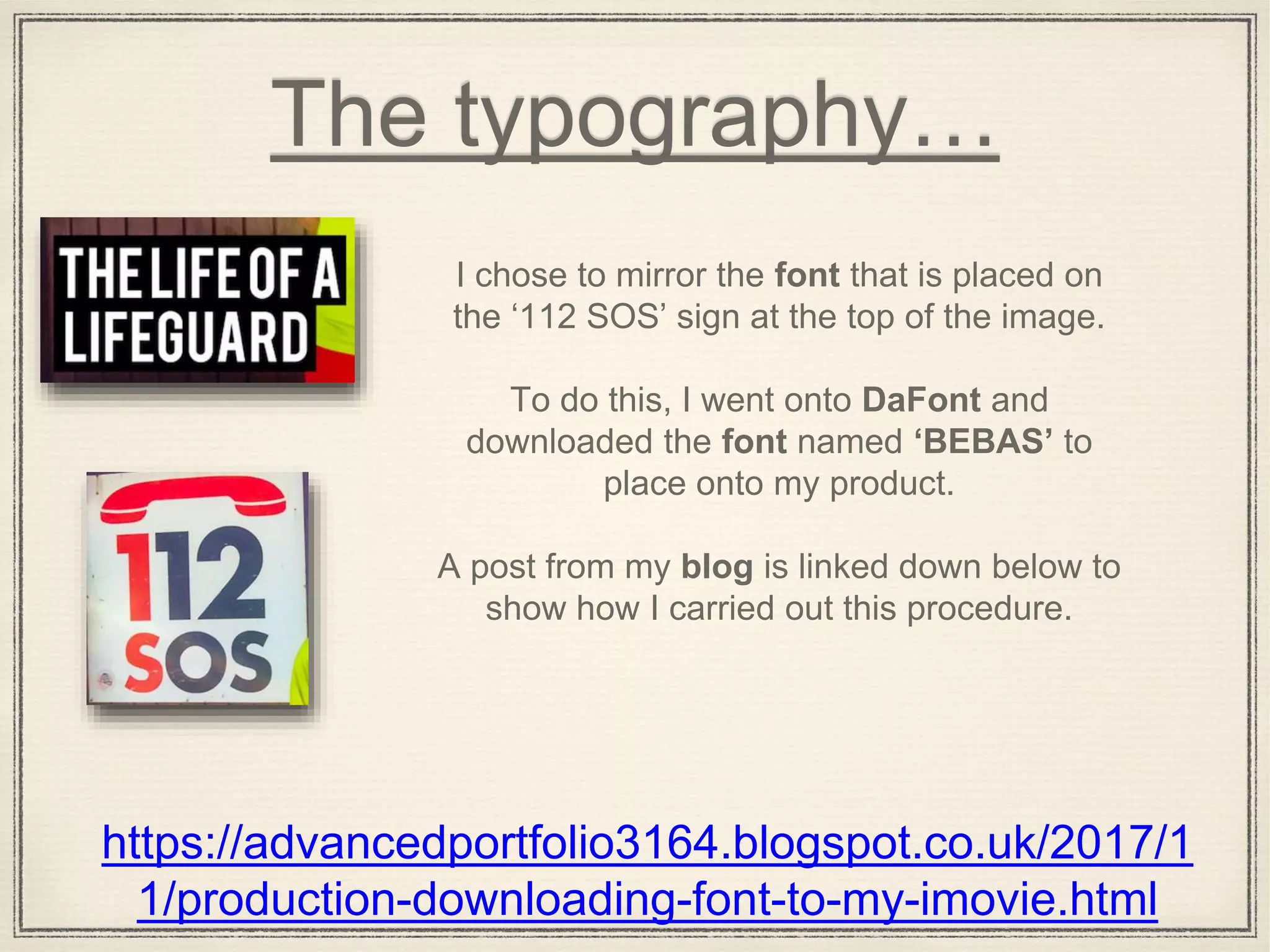
I chose to mirror the font that is placed on
the ‘112 SOS’ sign at the top of the image.
To do this, I went onto DaFont and
downloaded the font named ‘BEBAS’ to
place onto my product.
A post from my blog is linked down below to
show how I carried out this procedure.
How did my focus group help
me?
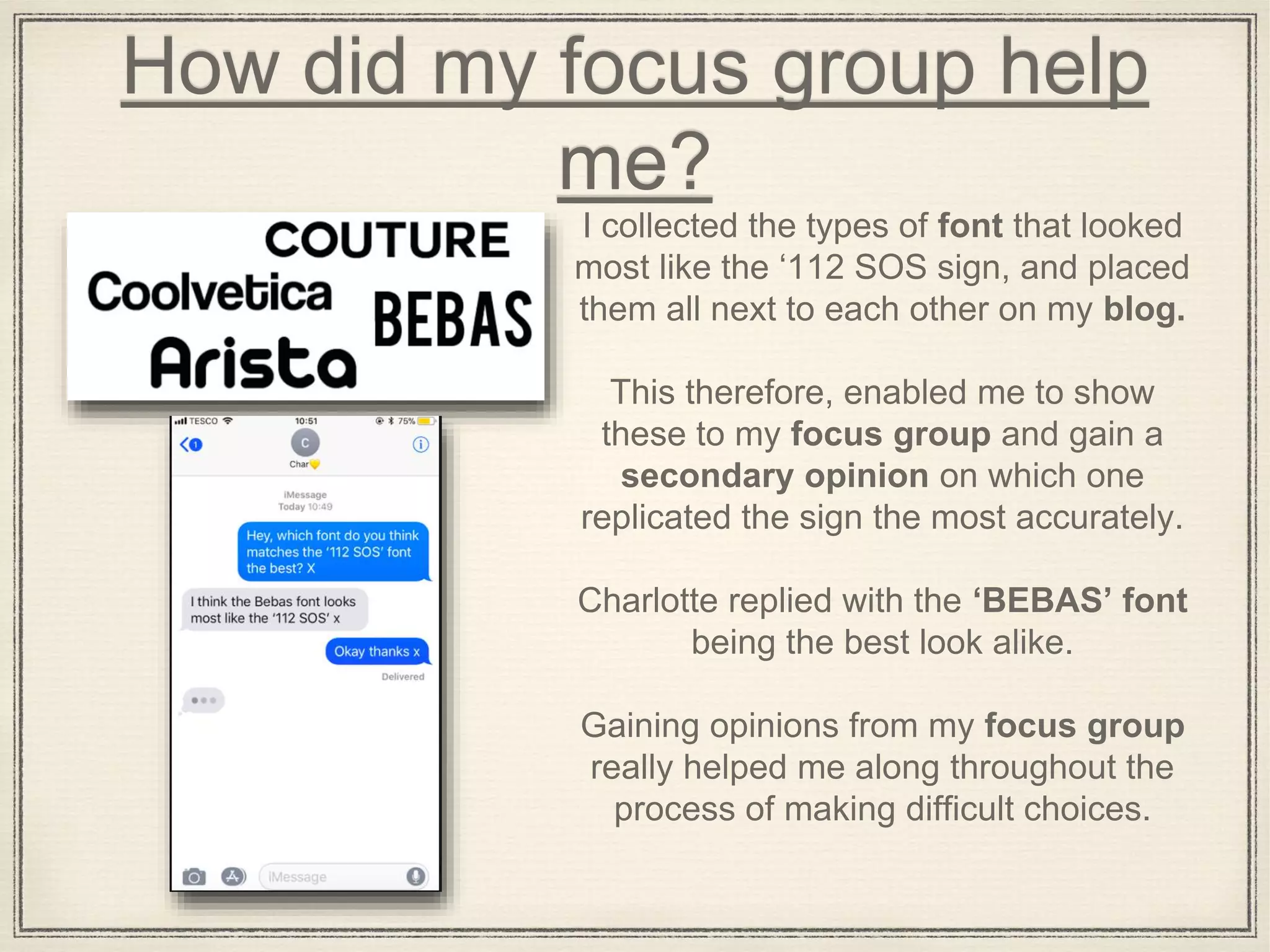
I collected the types of font that looked
most like the ‘112 SOS sign, and placed
them all next to each other on my blog.
This therefore, enabled me to show
these to my focus group and gain a
secondary opinion on which one
replicated the sign the most accurately.
Charlotte replied with the ‘BEBAS’ font
being the best look alike.
Gaining opinions from my focus group
really helped me along throughout the
process of making difficult choices.
How I have presented the
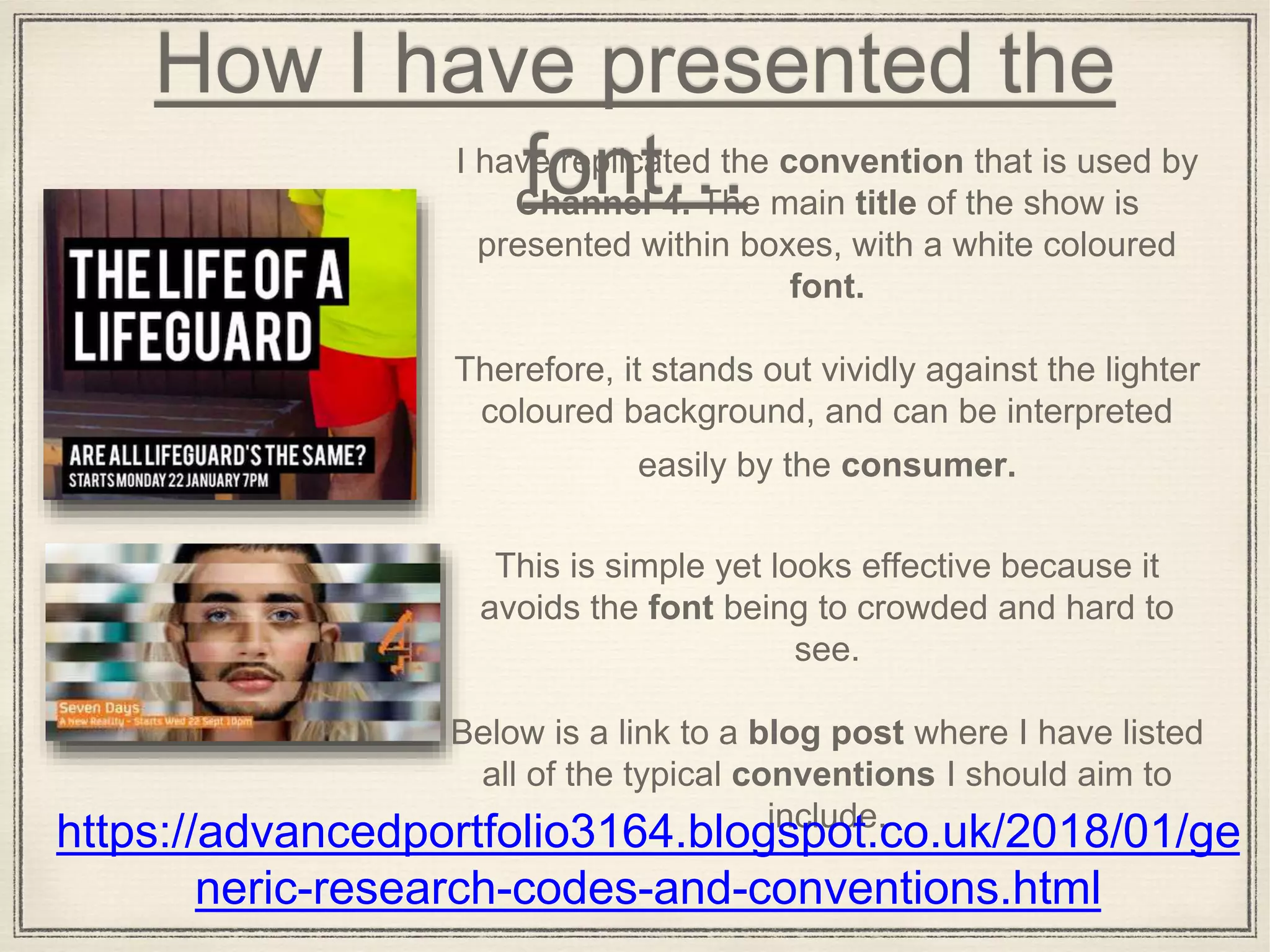
font…I have replicated the convention that is used by
Channel 4. The main title of the show is
presented within boxes, with a white coloured
font.
Therefore, it stands out vividly against the lighter
coloured background, and can be interpreted
easily by the consumer.
This is simple yet looks effective because it
avoids the font being to crowded and hard to
see.
Below is a link to a blog post where I have listed
all of the typical conventions I should aim to
include.
https://advancedportfolio3164.blogspot.co.uk/2018/01/ge
neric-research-codes-and-conventions.html
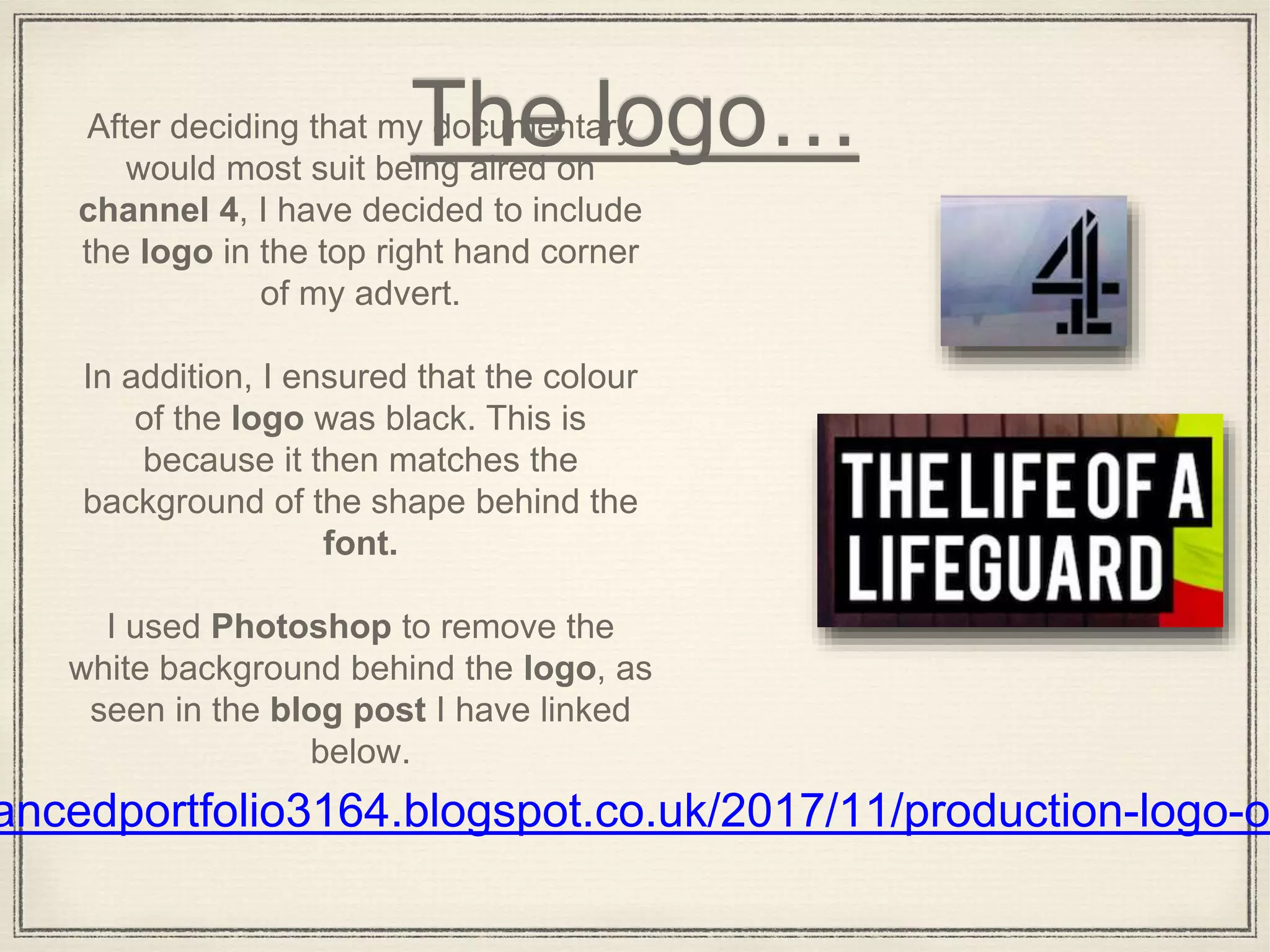
The logo…After deciding that my documentary
would most suit being aired on
channel 4, I have decided to include
the logo in the top right hand corner
of my advert.
In addition, I ensured that the colour
of the logo was black. This is
because it then matches the
background of the shape behind the
font.
I used Photoshop to remove the
white background behind the logo, as
seen in the blog post I have linked
below.
ancedportfolio3164.blogspot.co.uk/2017/11/production-logo-o
The tag-line…
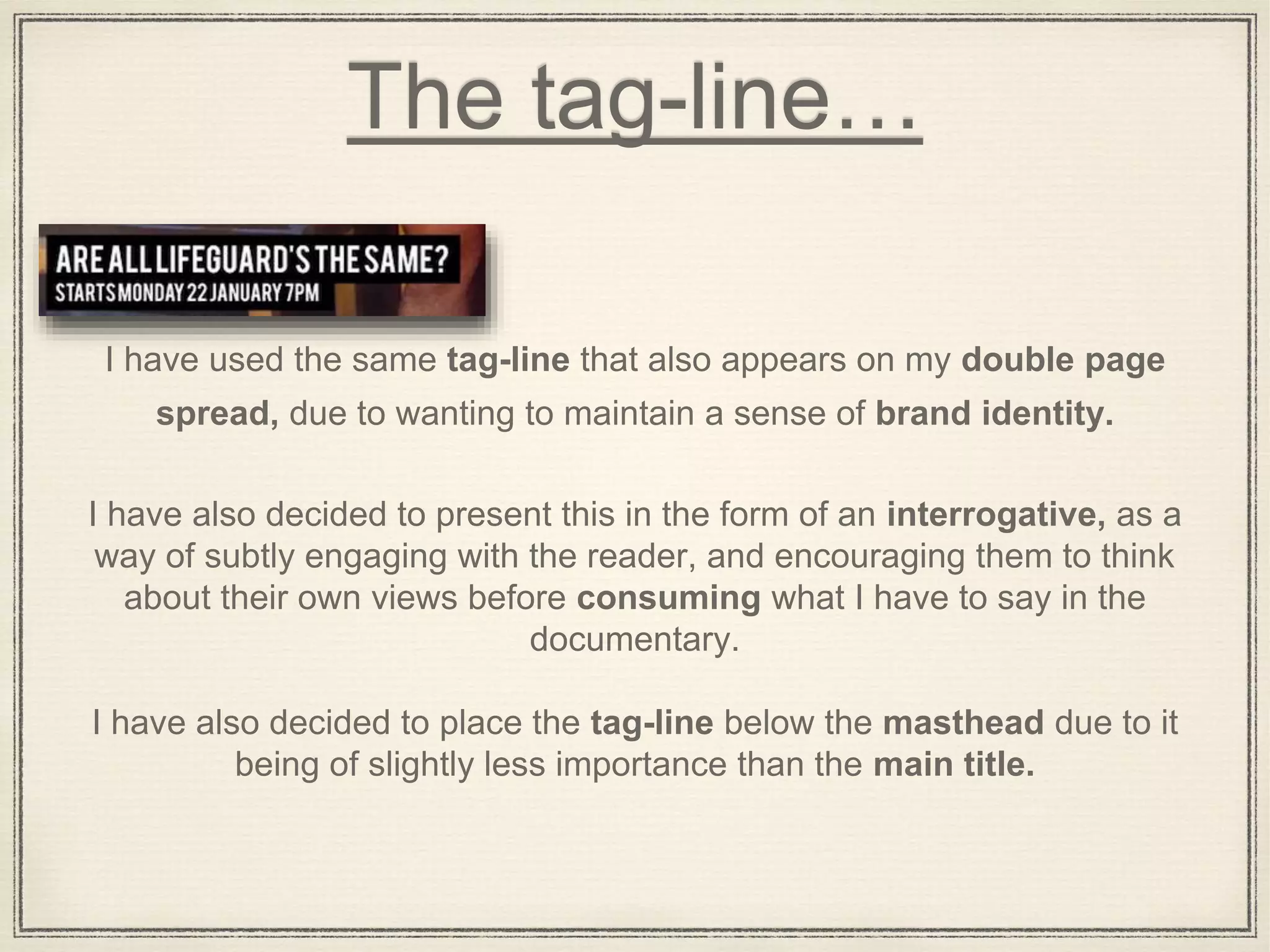
I have used the same tag-line that also appears on my double page
spread, due to wanting to maintain a sense of brand identity.
I have also decided to present this in the form of an interrogative, as a
way of subtly engaging with the reader, and encouraging them to think
about their own views before consuming what I have to say in the
documentary.
I have also decided to place the tag-line below the masthead due to it
being of slightly less importance than the main title.
The date and time…
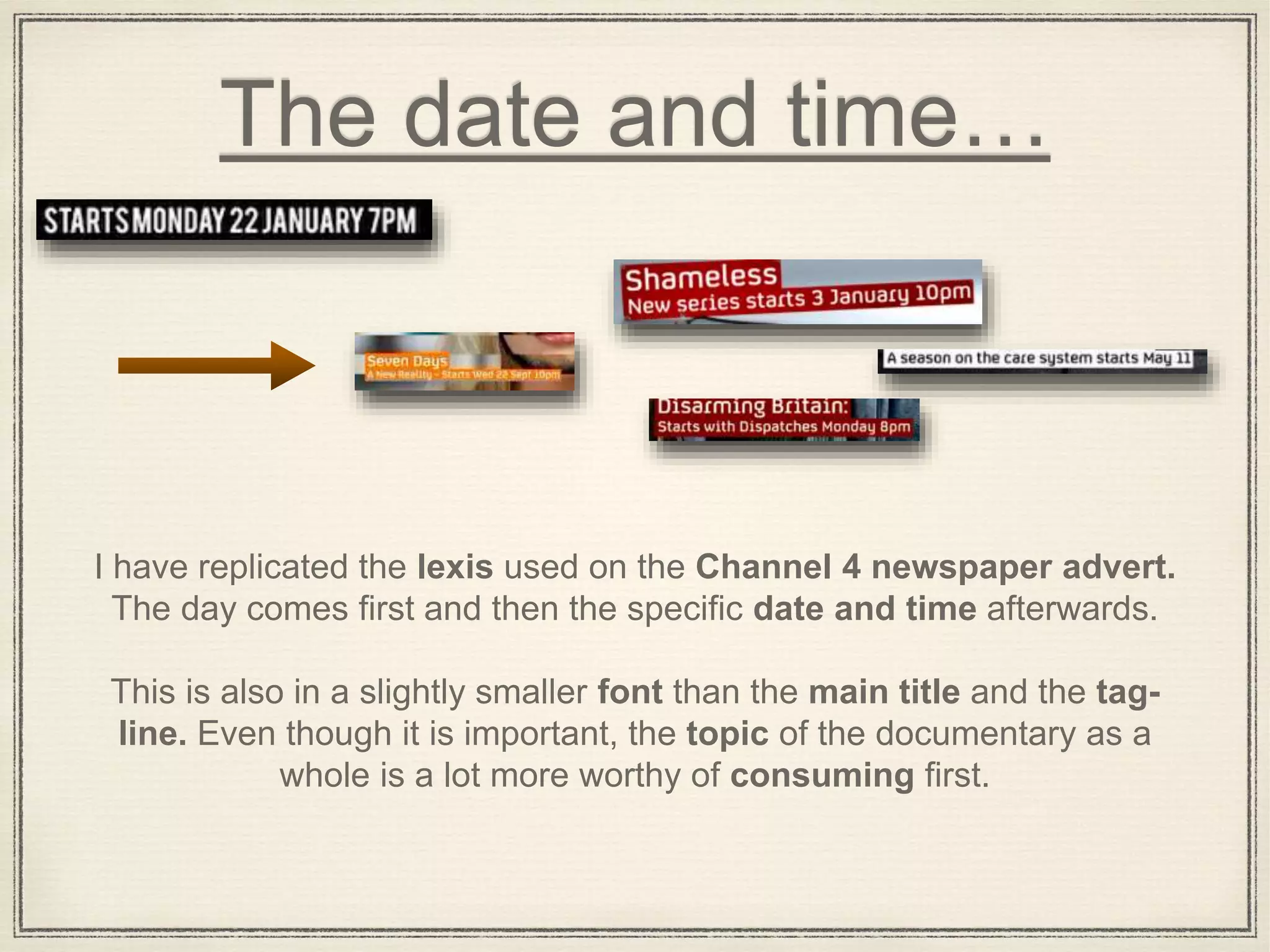
I have replicated the lexis used on the Channel 4 newspaper advert.
The day comes first and then the specific date and time afterwards.
This is also in a slightly smaller font than the main title and the tag-
line. Even though it is important, the topic of the documentary as a
whole is a lot more worthy of consuming first.
The web-address…
I have incorporated the web address for my documentary
in small font at the bottom of the advert. This is not the
main focus of my advert however, it adds to the sense of
brand identity that I wish to achieve.
Consumers can then go to the web address to find out
more information about lifeguards. They can choose
whether or not they wish to do this, depending on how
interested they become.
Other Channel 4 adverts have also placed a web address
onto their product, as a way of encouraging the consumer
to interact with the topic more.
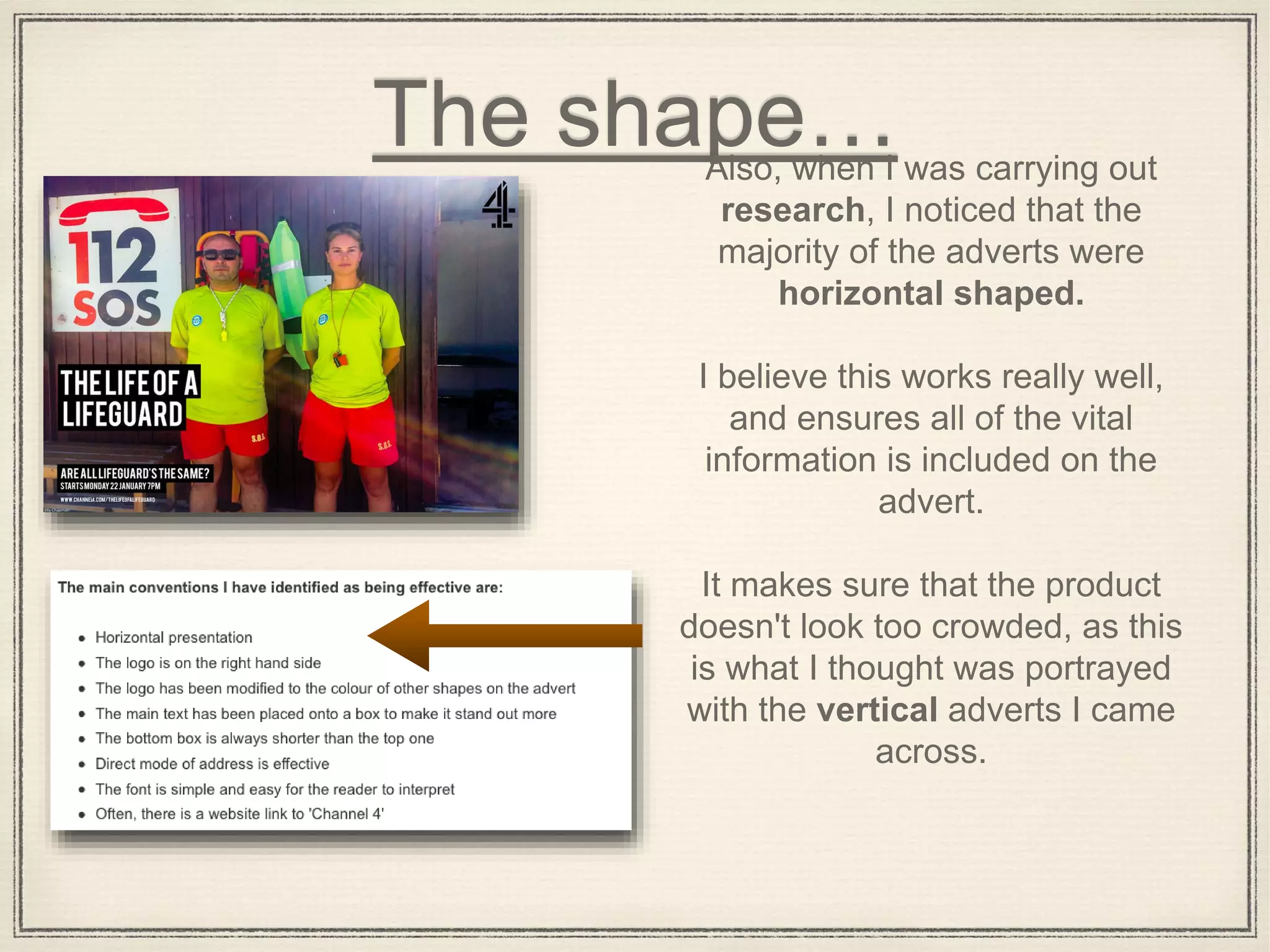
The shape…Also, when I was carrying out
research, I noticed that the
majority of the adverts were
horizontal shaped.
I believe this works really well,
and ensures all of the vital
information is included on the
advert.
It makes sure that the product
doesn't look too crowded, as this
is what I thought was portrayed
with the vertical adverts I came
across.
What did others think?
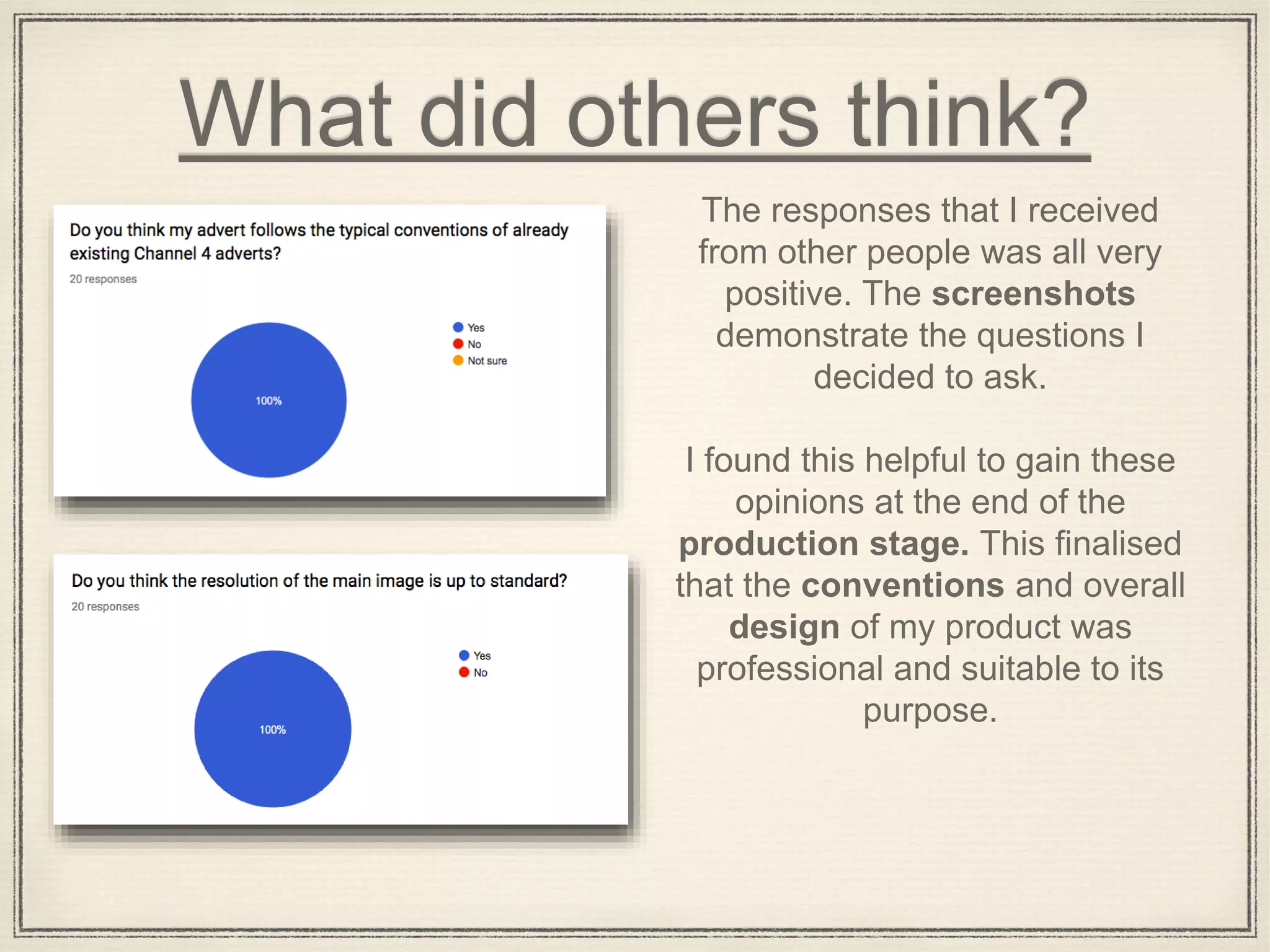
The responses that I received
from other people was all very
positive. The screenshots
demonstrate the questions I
decided to ask.
I found this helpful to gain these
opinions at the end of the
production stage. This finalised
that the conventions and overall
design of my product was
professional and suitable to its
purpose.
In conclusion…
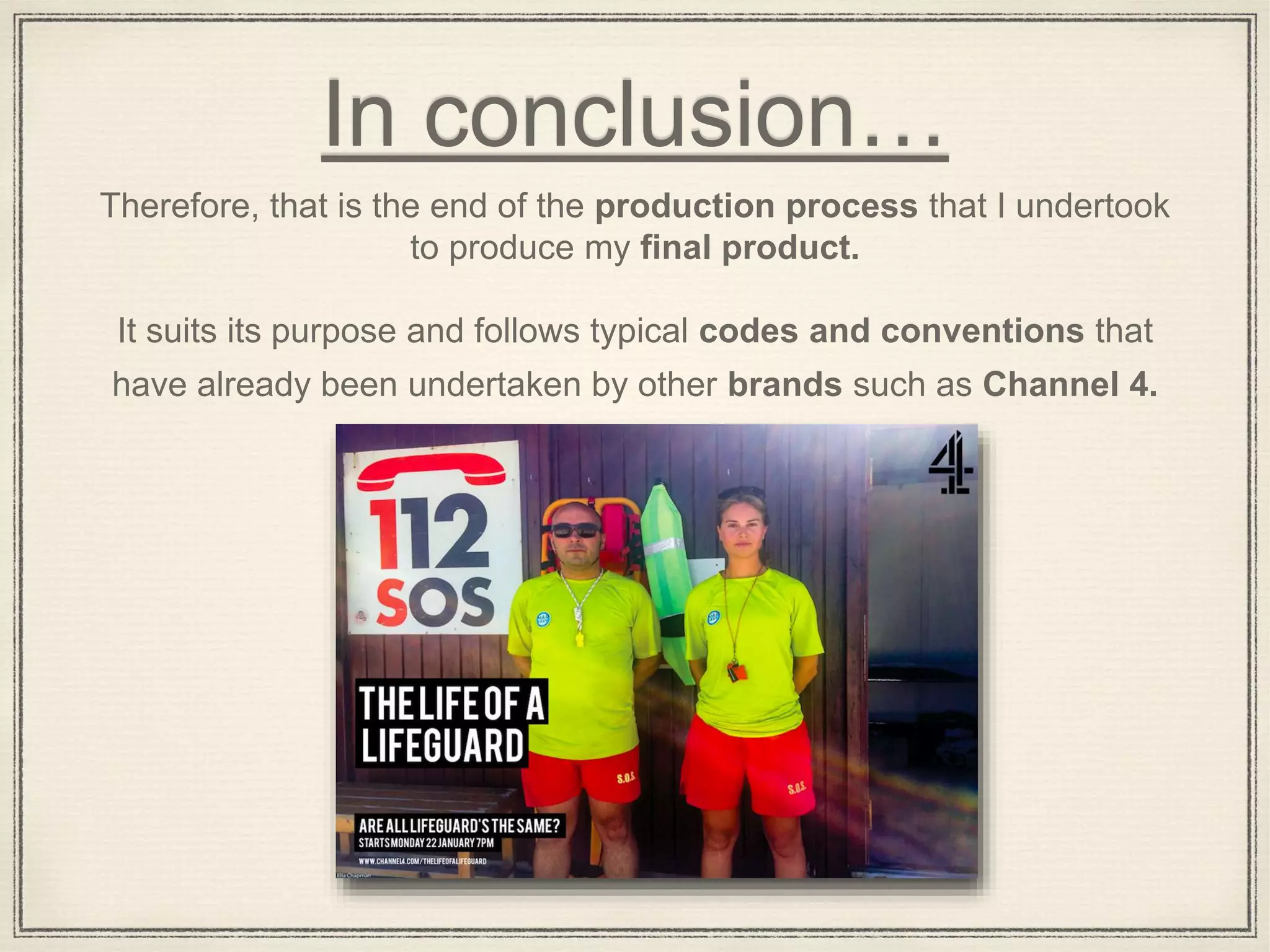
Therefore, that is the end of the production process that I undertook
to produce my final product.
It suits its purpose and follows typical codes and conventions that
have already been undertaken by other brands such as Channel 4.

Newspaper ad analysis -slide share

  • 1.
  • 2.
  • 3.
    Did I followthe flat-plan? As you can see, I have more of less stuck to the original plan that I proposed prior to the production stage. However, I decided to change the location of the Channel 4 logo to the right hand side. This is because it could be seen a lot easier in this position due to the background being slightly lighter. The central image that I originally planned to use, I stuck with. It worked really well when I put it into InDesign, and fulfilled the convention of being horizontal.
  • 4.
  • 5.
    How did Iedit this? https://advancedportfolio3164.blogspot.co.uk/20 17/11/generic-research-lightroom-tutorial.htmlAbove is a link to the blog post in which I explained how I used Lightroom to improve the quality of my original central image. I adjusted the blacks, whites, highlights and shadows on the image. I had the ability to do this due to watching Youtube tutorials that clearly demonstrated how to carry out the procedure.
  • 6.
    The colour palette… Idecided to go for a simple colour palette of red, yellow and black. These colours tend to be associated with lifeguard’s due to these being the shades on their uniform. They are also bright shades that will easily attract the attention of the target audience, and they will hopefully also know what the topic is going to be about.
  • 7.
    The typography… https://advancedportfolio3164.blogspot.co.uk/2017/1 1/production-downloading-font-to-my-imovie.html I choseto mirror the font that is placed on the ‘112 SOS’ sign at the top of the image. To do this, I went onto DaFont and downloaded the font named ‘BEBAS’ to place onto my product. A post from my blog is linked down below to show how I carried out this procedure.
  • 8.
    How did myfocus group help me? I collected the types of font that looked most like the ‘112 SOS sign, and placed them all next to each other on my blog. This therefore, enabled me to show these to my focus group and gain a secondary opinion on which one replicated the sign the most accurately. Charlotte replied with the ‘BEBAS’ font being the best look alike. Gaining opinions from my focus group really helped me along throughout the process of making difficult choices.
  • 9.
    How I havepresented the font…I have replicated the convention that is used by Channel 4. The main title of the show is presented within boxes, with a white coloured font. Therefore, it stands out vividly against the lighter coloured background, and can be interpreted easily by the consumer. This is simple yet looks effective because it avoids the font being to crowded and hard to see. Below is a link to a blog post where I have listed all of the typical conventions I should aim to include. https://advancedportfolio3164.blogspot.co.uk/2018/01/ge neric-research-codes-and-conventions.html
  • 10.
    The logo…After decidingthat my documentary would most suit being aired on channel 4, I have decided to include the logo in the top right hand corner of my advert. In addition, I ensured that the colour of the logo was black. This is because it then matches the background of the shape behind the font. I used Photoshop to remove the white background behind the logo, as seen in the blog post I have linked below. ancedportfolio3164.blogspot.co.uk/2017/11/production-logo-o
  • 11.
    The tag-line… I haveused the same tag-line that also appears on my double page spread, due to wanting to maintain a sense of brand identity. I have also decided to present this in the form of an interrogative, as a way of subtly engaging with the reader, and encouraging them to think about their own views before consuming what I have to say in the documentary. I have also decided to place the tag-line below the masthead due to it being of slightly less importance than the main title.
  • 12.
    The date andtime… I have replicated the lexis used on the Channel 4 newspaper advert. The day comes first and then the specific date and time afterwards. This is also in a slightly smaller font than the main title and the tag- line. Even though it is important, the topic of the documentary as a whole is a lot more worthy of consuming first.
  • 13.
    The web-address… I haveincorporated the web address for my documentary in small font at the bottom of the advert. This is not the main focus of my advert however, it adds to the sense of brand identity that I wish to achieve. Consumers can then go to the web address to find out more information about lifeguards. They can choose whether or not they wish to do this, depending on how interested they become. Other Channel 4 adverts have also placed a web address onto their product, as a way of encouraging the consumer to interact with the topic more.
  • 14.
    The shape…Also, whenI was carrying out research, I noticed that the majority of the adverts were horizontal shaped. I believe this works really well, and ensures all of the vital information is included on the advert. It makes sure that the product doesn't look too crowded, as this is what I thought was portrayed with the vertical adverts I came across.
  • 15.
    What did othersthink? The responses that I received from other people was all very positive. The screenshots demonstrate the questions I decided to ask. I found this helpful to gain these opinions at the end of the production stage. This finalised that the conventions and overall design of my product was professional and suitable to its purpose.
  • 16.
    In conclusion… Therefore, thatis the end of the production process that I undertook to produce my final product. It suits its purpose and follows typical codes and conventions that have already been undertaken by other brands such as Channel 4.