+

Tunisian Diaspora Fund
April 2011. Lotfi Saibi and Mondher ben Hamida
High Level Overview
+

2

Contents


Background



Objectives



Preliminary Engagement Model



Next Steps
+

3

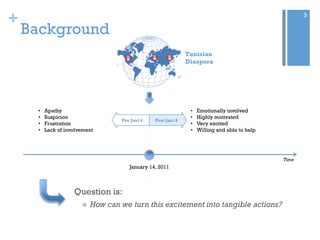
Background
Tunisian
Diaspora

•
•
•
•

Apathy
Suspicion
Frustration
Lack of involvement

Pre Jan14

Post Jan14

•
•
•
•

Emotionally involved
Highly motivated
Very excited
Willing and able to help

Time

January 14, 2011

Question is:


How can we turn this excitement into tangible actions?
+

4

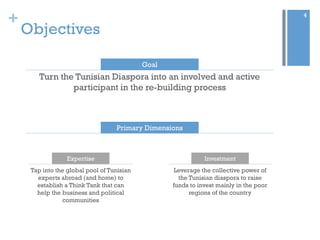
Objectives
Goal

Turn the Tunisian Diaspora into an involved and active
participant in the re-building process

Primary Dimensions

Expertise

Investment

Tap into the global pool of Tunisian
experts abroad (and home) to
establish a Think Tank that can
help the business and political
communities

Leverage the collective power of
the Tunisian diaspora to raise
funds to invest mainly in the poor
regions of the country
+

5

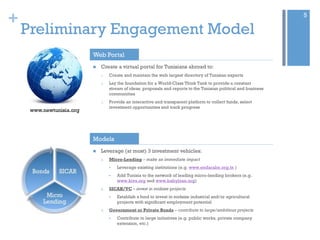
Preliminary Engagement Model
Web Portal


Create a virtual portal for Tunisians abroad to:
1.

Create and maintain the web largest directory of Tunisian experts

2.

Lay the foundation for a World-Class Think Tank to provide a constant
stream of ideas, proposals and reports to the Tunisian political and business
communities

3.

Provide an interactive and transparent platform to collect funds, select
investment opportunities and track progress

www.newtunisia.org

Models


Leverage (at most) 3 investment vehicles:
1.

Micro-Lending – make an immediate impact



2.

Leverage existing institutions (e.g. www.endarabe.org.tn )
Add Tunisia to the network of leading micro-lending brokers (e.g.
www.kiva.org and www.babyloan.org)

SICAR/VC – invest in midsize projects


3.

Establish a fund to invest in midsize industrial and/or agricultural
projects with significant employment potential

Government or Private Bonds – contribute to large/ambitious projects


Contribute to large initiatives (e.g. public works, private company
extension, etc.)
+

6

Next Steps


Set up and launch www.newtunisia.org



Define a execute a fund raising campaign under the banner
“$1,000 per Tunisian Abroad”



Define and build an ‘Expertise Repository’



Organize a ‘Reboot Tunisia’ conference (before end of 2011)
to set up think tank groups, review funded initiatives and
define final framework
+

Sustainability issues


Declining interest after initial set up period - especially when there
is disagreement on what and where to fund a project.



Funding too slow to come by - causing projects to be on hold for long
periods.



Sustainable maintenance - As Diaspora funds tend to usually pay for and
upgrade schools and hospitals, little attention is paid to training and staffing these
facilities.



Lack of local resources – local resources and innovation is marginalized at
the expense of foreign resources.



Lack of training - needs assessment, fundraising strategies, designing project
proposals, planning, accessing information and identifying potential sources of support.
+

Recommendations


Collaboration with local government leaders with the sincere interest of
improving their communities.



Engage the communities – communication and information sharing with
local groups, leading to community ownership.



Strong Multiplier-Effect – training educators and health professionals must be
accomplished for the building and rehabilitation projects to succeed.



Training of Associations in mastering the technical skills of project
management, fundraising, and planning.
+

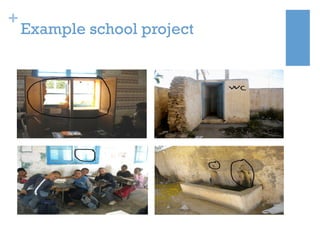
Example school project
+

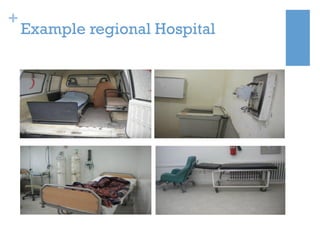
Example regional Hospital

New tunisiafoundation

  • 1.
    + Tunisian Diaspora Fund April2011. Lotfi Saibi and Mondher ben Hamida High Level Overview
  • 2.
  • 3.
    + 3 Background Tunisian Diaspora • • • • Apathy Suspicion Frustration Lack of involvement PreJan14 Post Jan14 • • • • Emotionally involved Highly motivated Very excited Willing and able to help Time January 14, 2011 Question is:  How can we turn this excitement into tangible actions?
  • 4.
    + 4 Objectives Goal Turn the TunisianDiaspora into an involved and active participant in the re-building process Primary Dimensions Expertise Investment Tap into the global pool of Tunisian experts abroad (and home) to establish a Think Tank that can help the business and political communities Leverage the collective power of the Tunisian diaspora to raise funds to invest mainly in the poor regions of the country
  • 5.
    + 5 Preliminary Engagement Model WebPortal  Create a virtual portal for Tunisians abroad to: 1. Create and maintain the web largest directory of Tunisian experts 2. Lay the foundation for a World-Class Think Tank to provide a constant stream of ideas, proposals and reports to the Tunisian political and business communities 3. Provide an interactive and transparent platform to collect funds, select investment opportunities and track progress www.newtunisia.org Models  Leverage (at most) 3 investment vehicles: 1. Micro-Lending – make an immediate impact   2. Leverage existing institutions (e.g. www.endarabe.org.tn ) Add Tunisia to the network of leading micro-lending brokers (e.g. www.kiva.org and www.babyloan.org) SICAR/VC – invest in midsize projects  3. Establish a fund to invest in midsize industrial and/or agricultural projects with significant employment potential Government or Private Bonds – contribute to large/ambitious projects  Contribute to large initiatives (e.g. public works, private company extension, etc.)
  • 6.
    + 6 Next Steps  Set upand launch www.newtunisia.org  Define a execute a fund raising campaign under the banner “$1,000 per Tunisian Abroad”  Define and build an ‘Expertise Repository’  Organize a ‘Reboot Tunisia’ conference (before end of 2011) to set up think tank groups, review funded initiatives and define final framework
  • 7.
    + Sustainability issues  Declining interestafter initial set up period - especially when there is disagreement on what and where to fund a project.  Funding too slow to come by - causing projects to be on hold for long periods.  Sustainable maintenance - As Diaspora funds tend to usually pay for and upgrade schools and hospitals, little attention is paid to training and staffing these facilities.  Lack of local resources – local resources and innovation is marginalized at the expense of foreign resources.  Lack of training - needs assessment, fundraising strategies, designing project proposals, planning, accessing information and identifying potential sources of support.
  • 8.
    + Recommendations  Collaboration with localgovernment leaders with the sincere interest of improving their communities.  Engage the communities – communication and information sharing with local groups, leading to community ownership.  Strong Multiplier-Effect – training educators and health professionals must be accomplished for the building and rehabilitation projects to succeed.  Training of Associations in mastering the technical skills of project management, fundraising, and planning.
  • 9.
  • 10.