Self-Directed Support
creating a European network
Self-Directed Support
•

It is not new - it has been
growing since the 1960s.

•

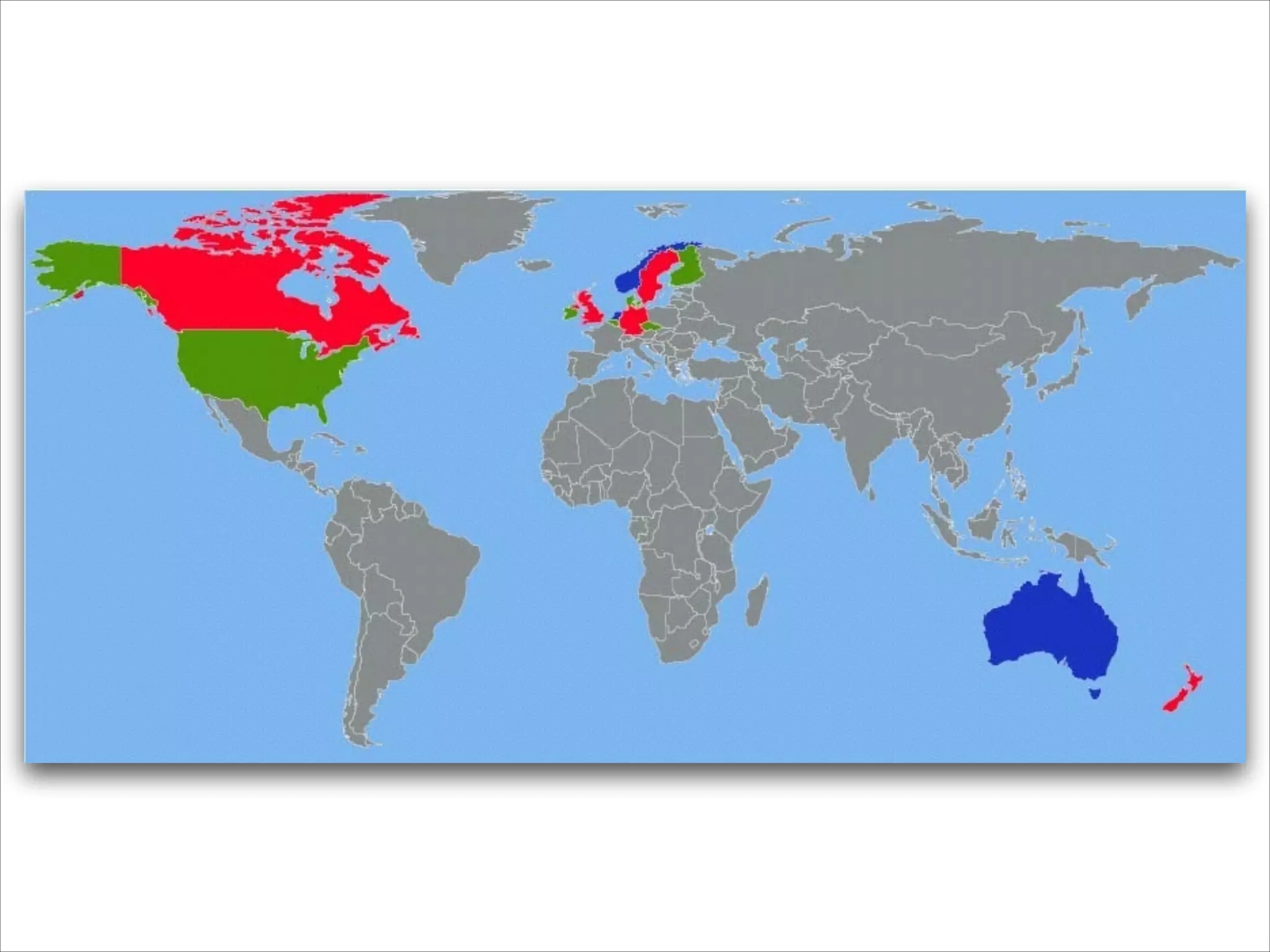
It can be found in lots of
places around the world.

•

It has been successful,
but slow to grow.

•

It creates new
opportunities and new
risks.
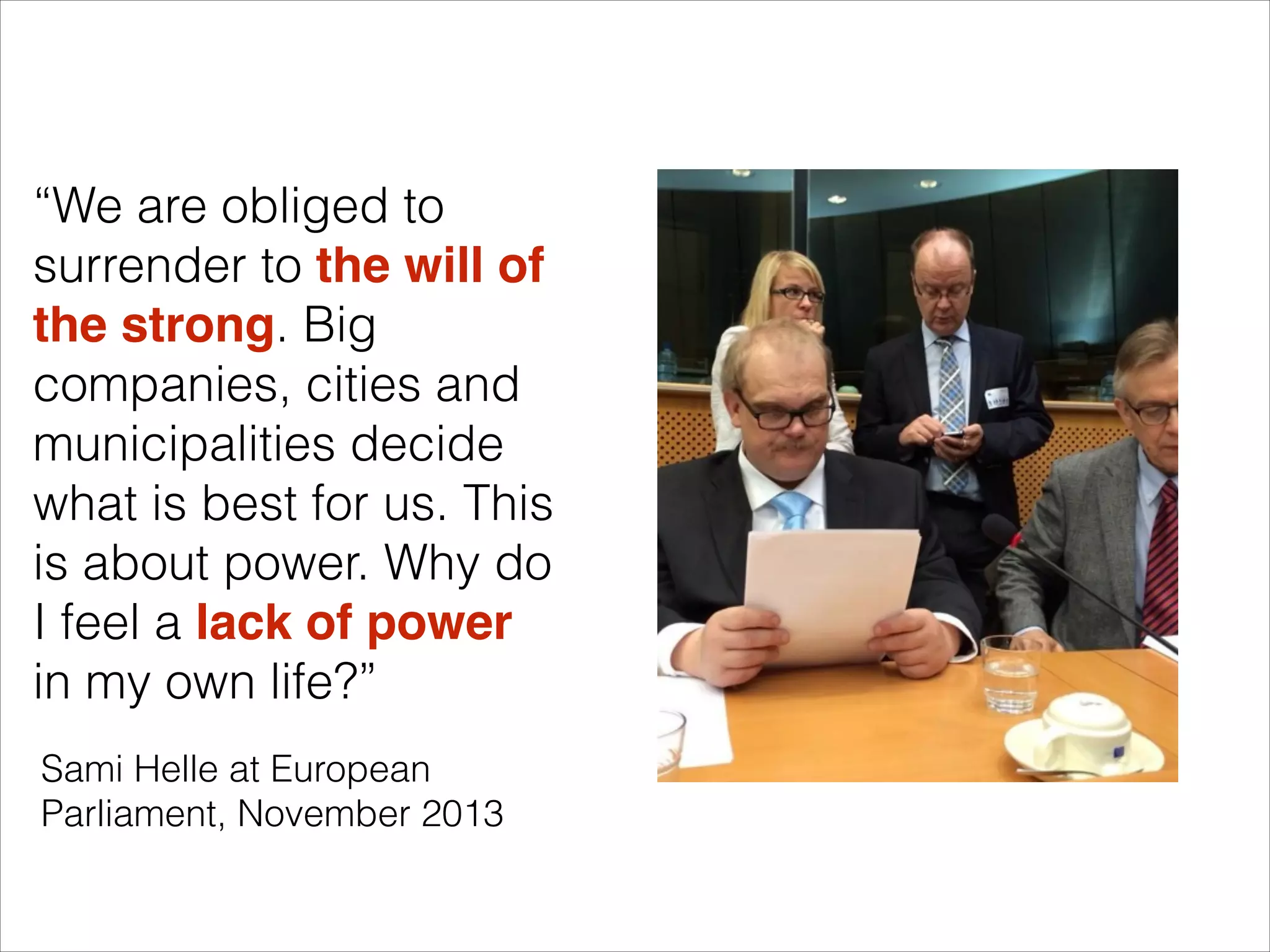
“We are obliged to
surrender to the will of
the strong. Big
companies, cities and
municipalities decide
what is best for us. This
is about power. Why do
I feel a lack of power
in my own life?”
Sami Helle at European
Parliament, November 2013
Research
•

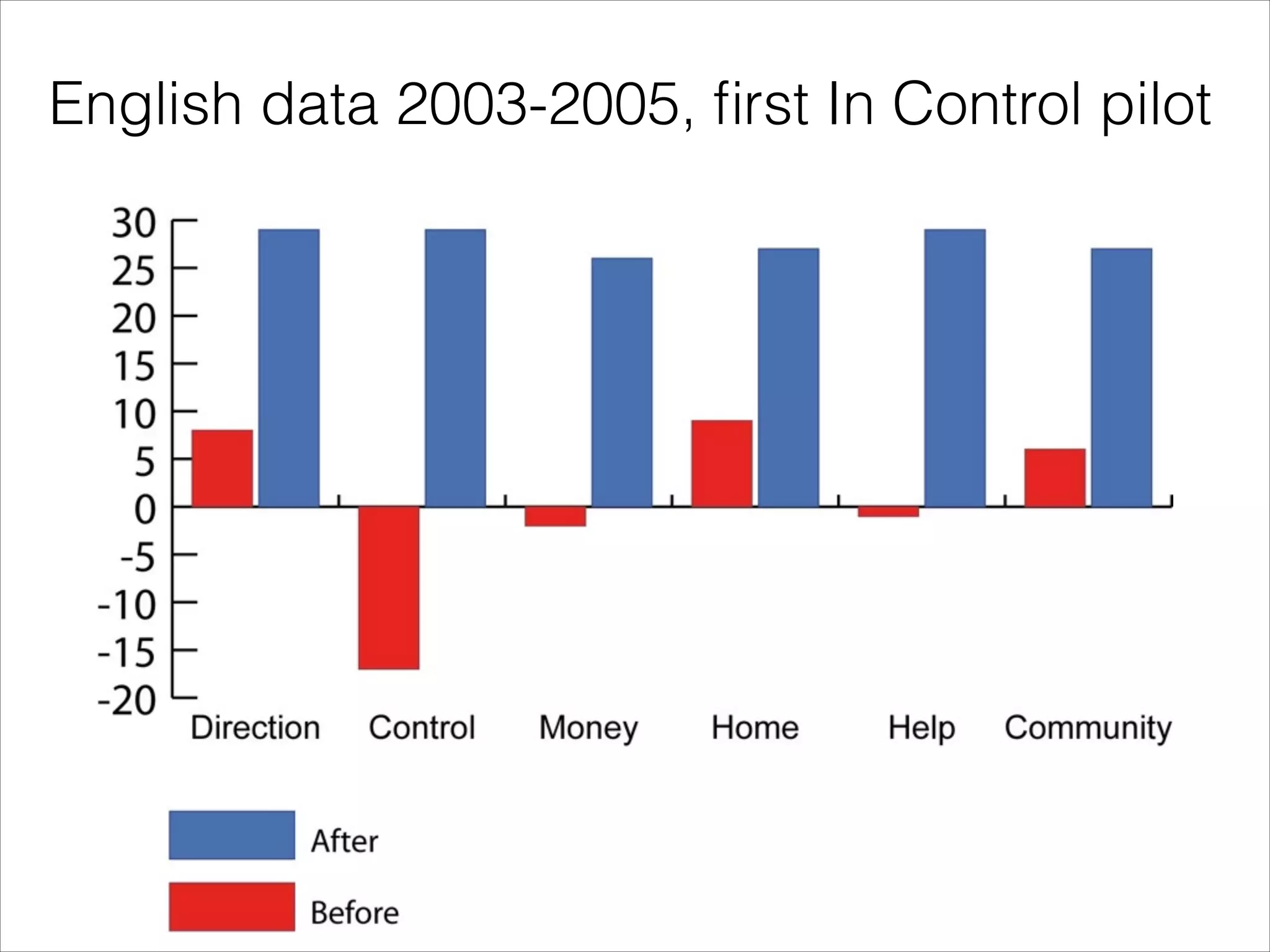
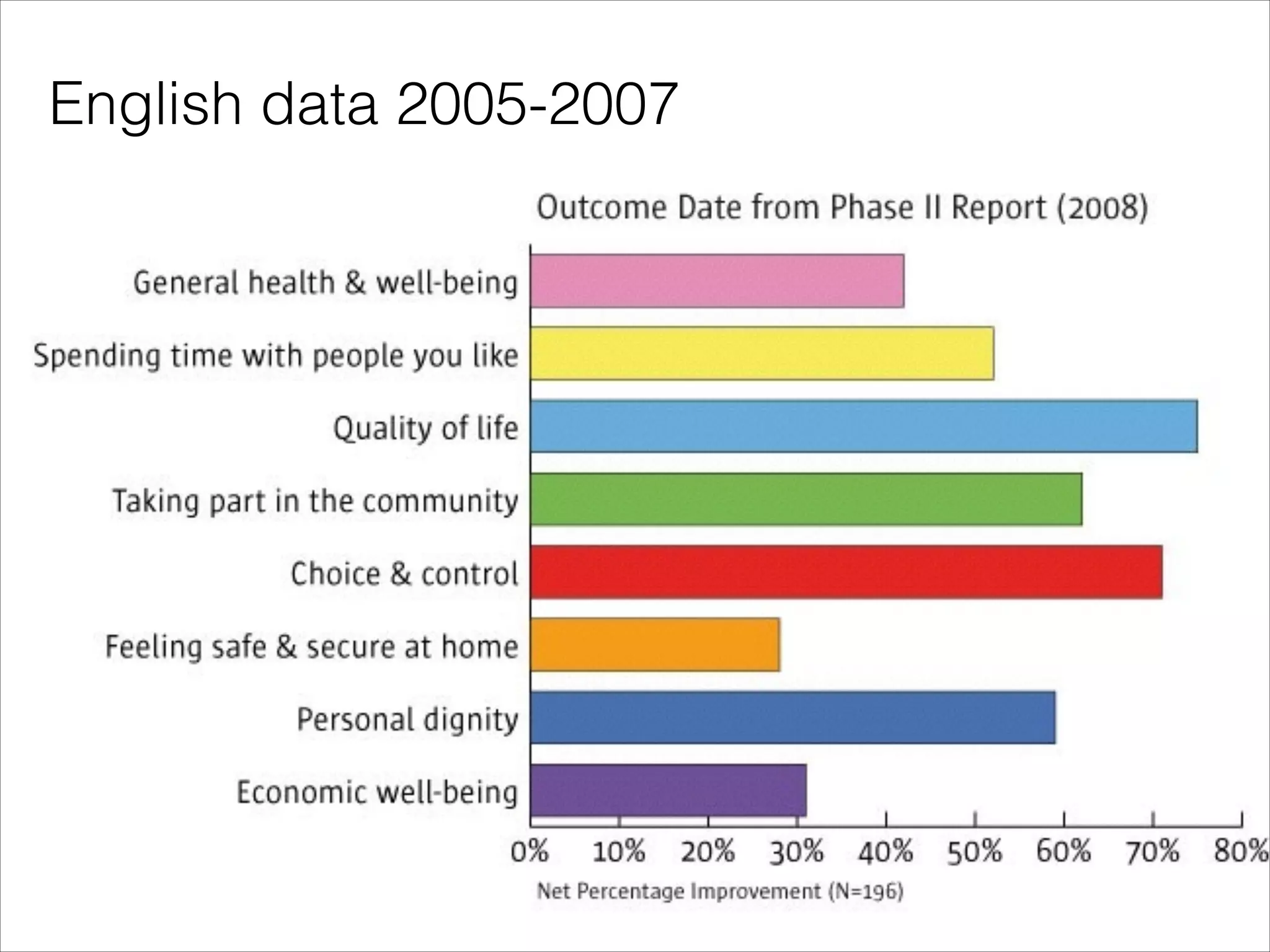
Positive outcomes (often)
negative outcomes (never)

•

Can cost less, can cost more

•

Tends to increase demand

•

Design matters - there are
big differences between
different systems
English data 2003-2005, first In Control pilot
English data 2005-2007
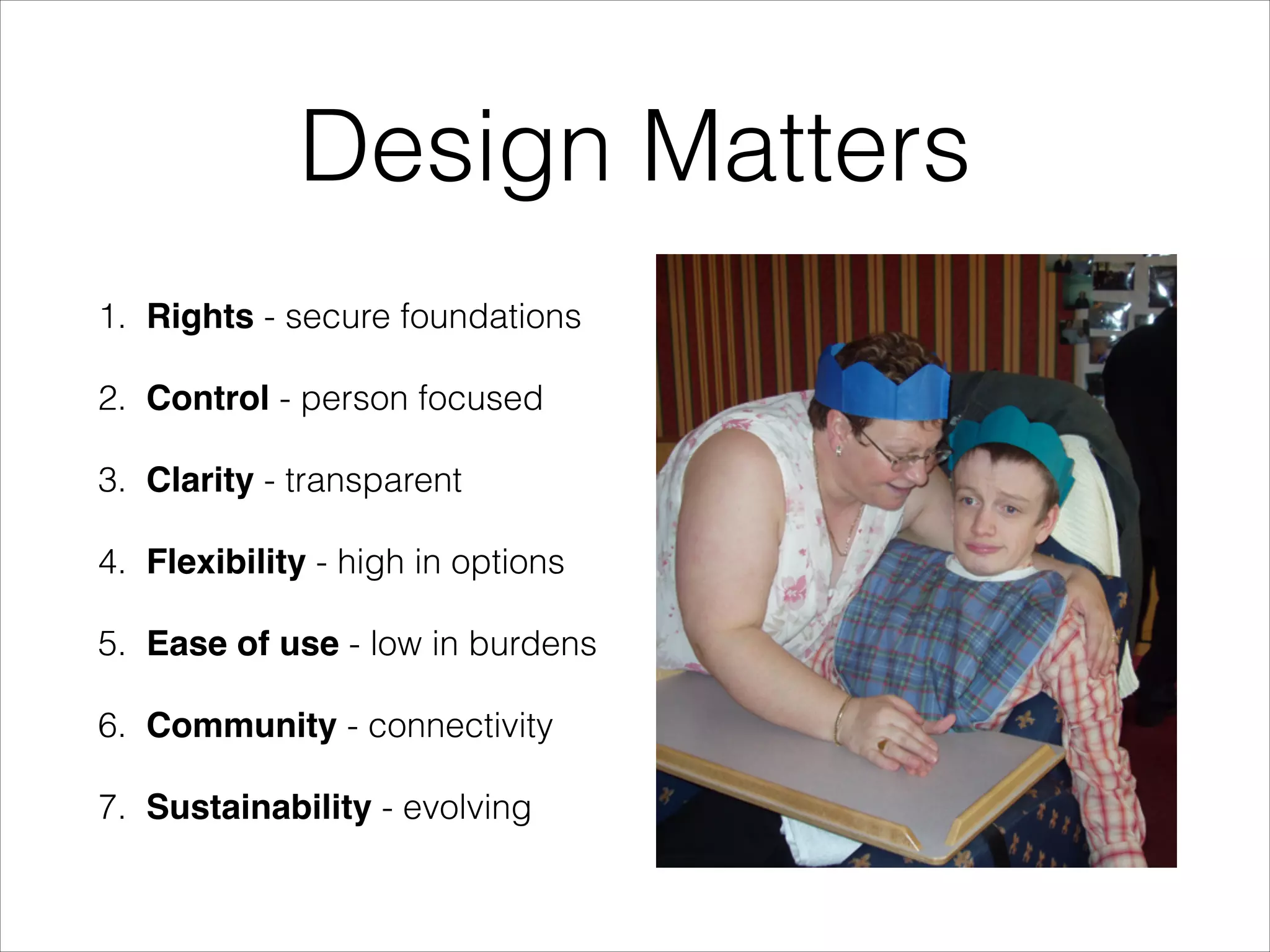
Design Matters
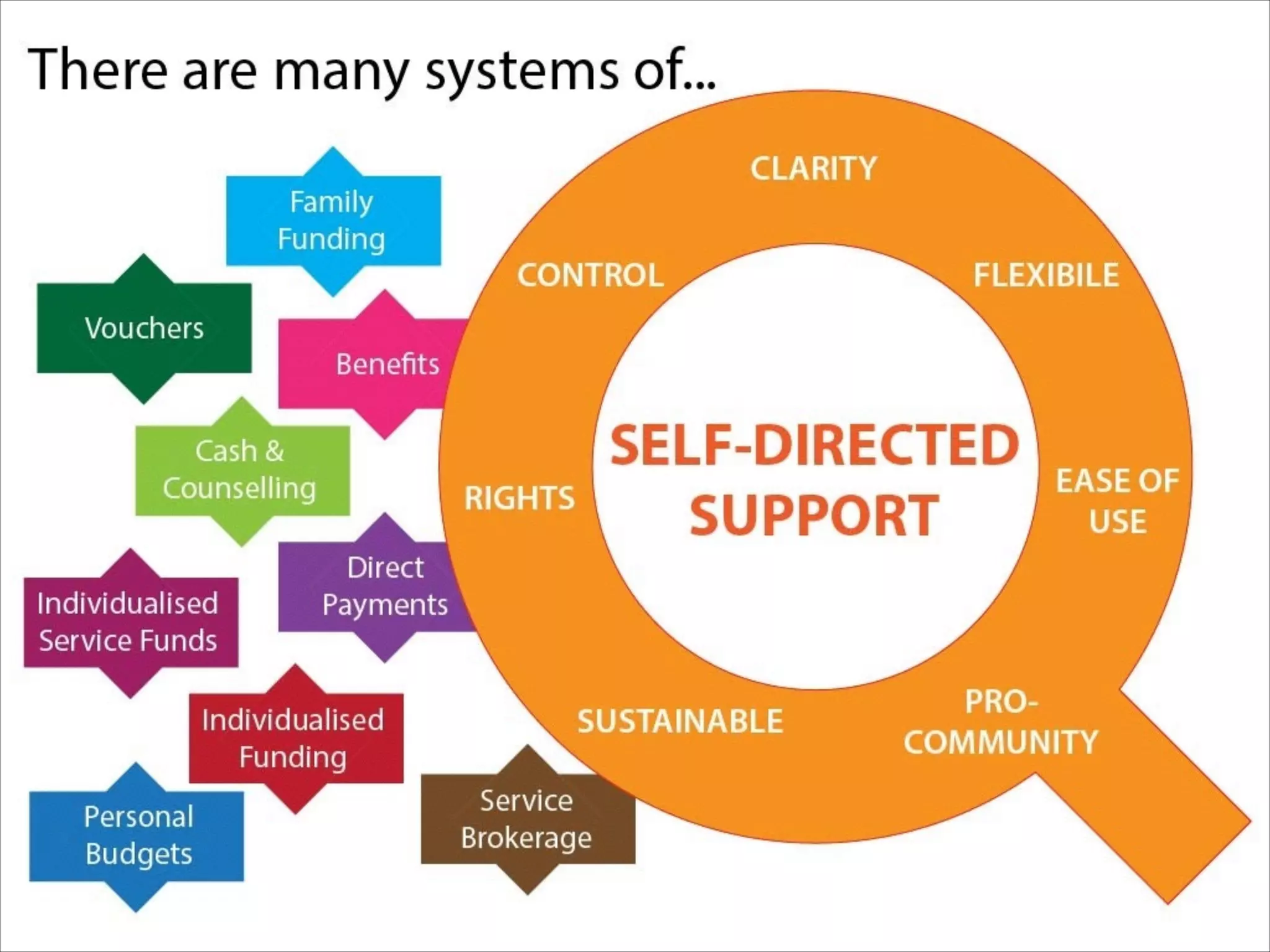
1. Rights - secure foundations
2. Control - person focused
3. Clarity - transparent
4. Flexibility - high in options
5. Ease of use - low in burdens
6. Community - connectivity
7. Sustainability - evolving
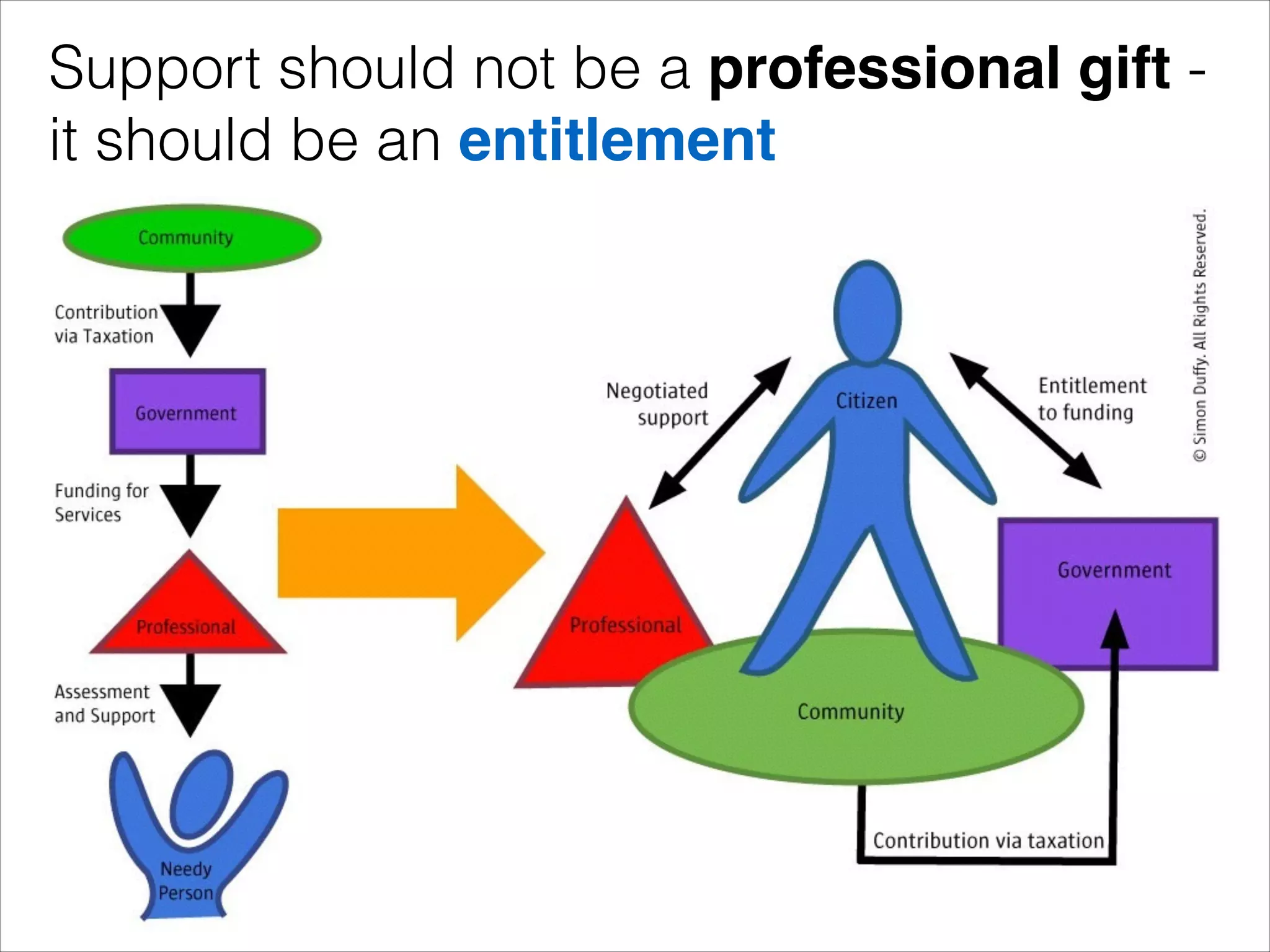
1. Rights
Support should not be a professional gift it should be an entitlement
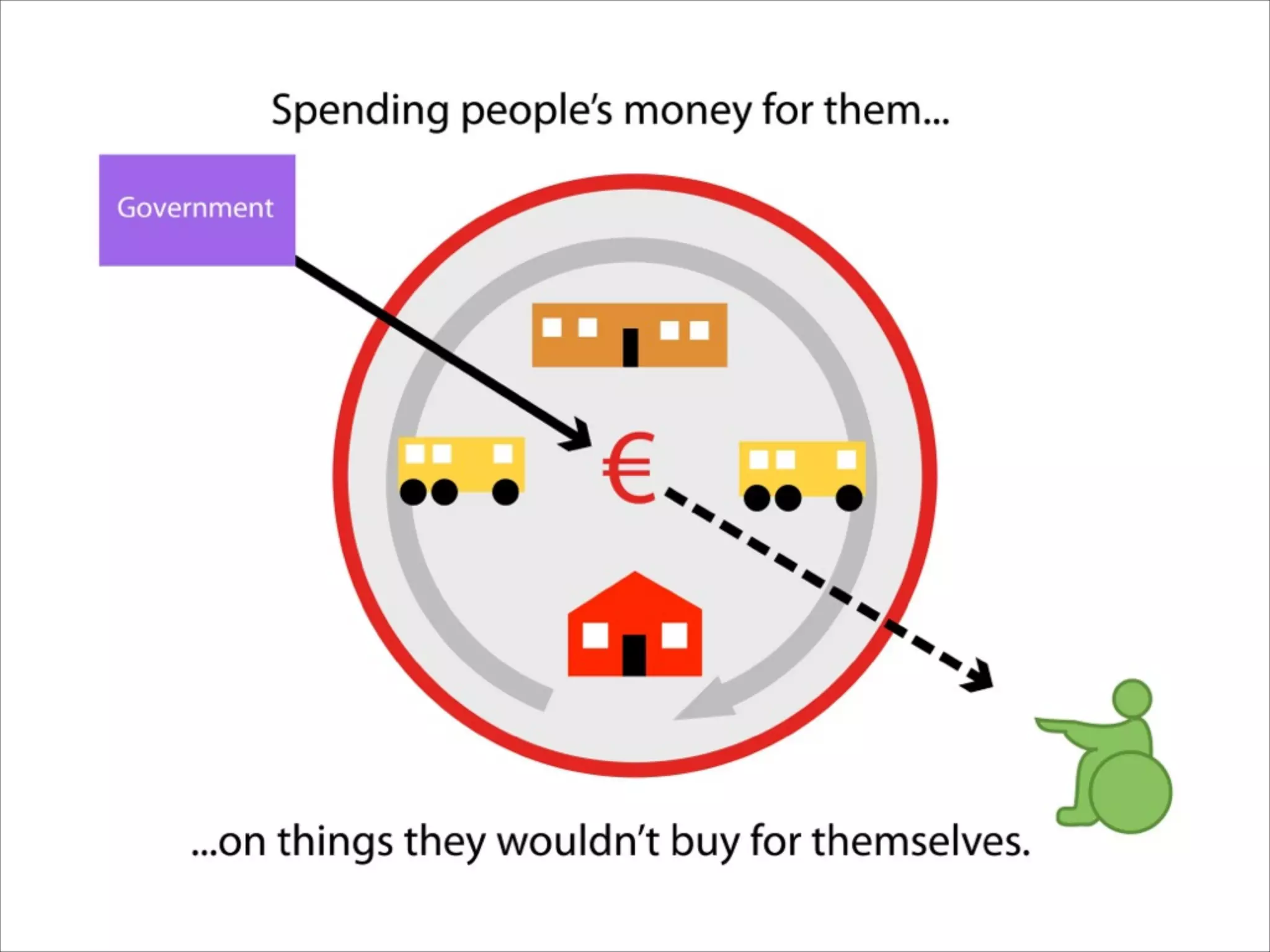
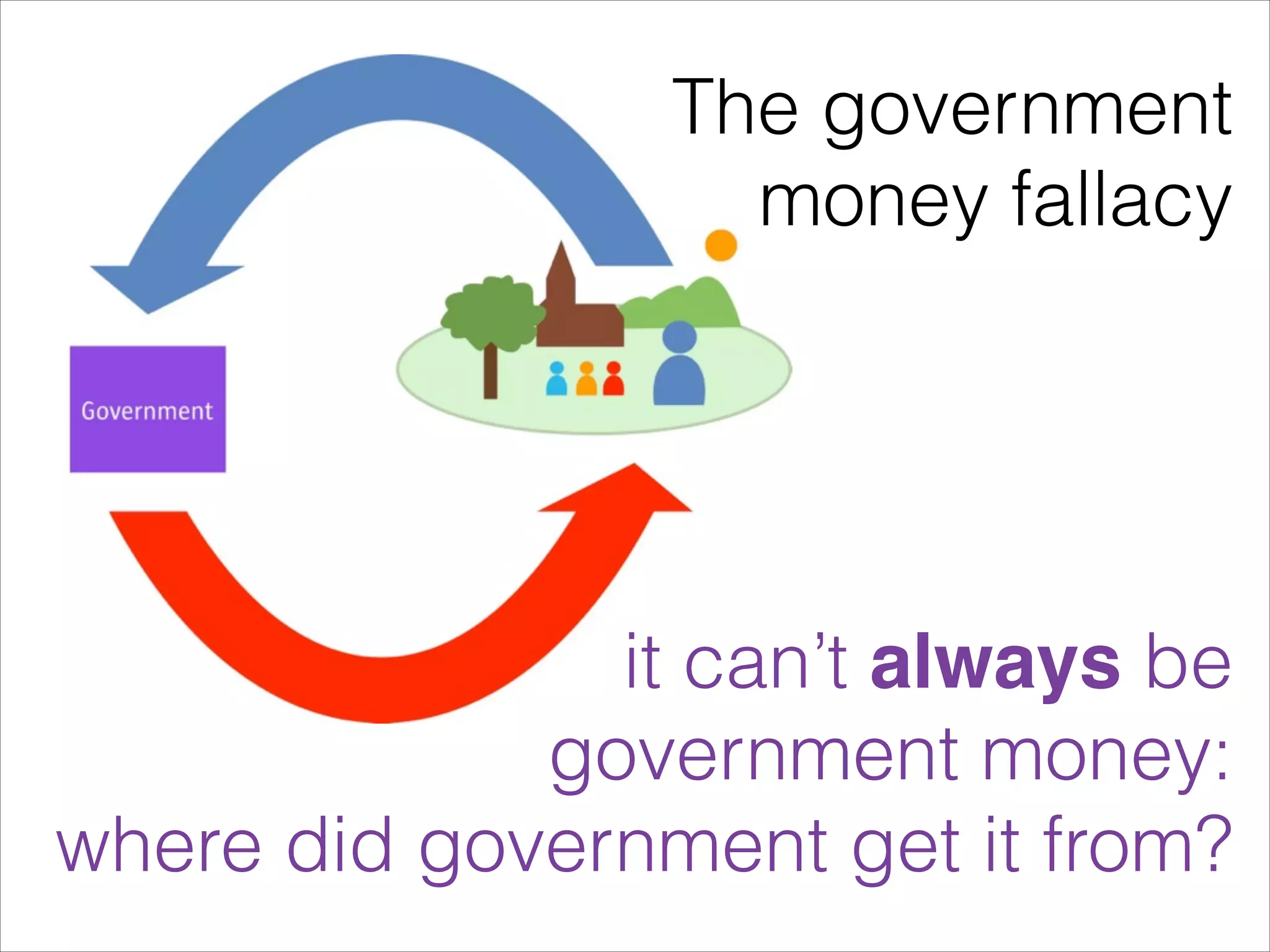
The government
money fallacy

it can’t always be
government money:
where did government get it from?
2. Control
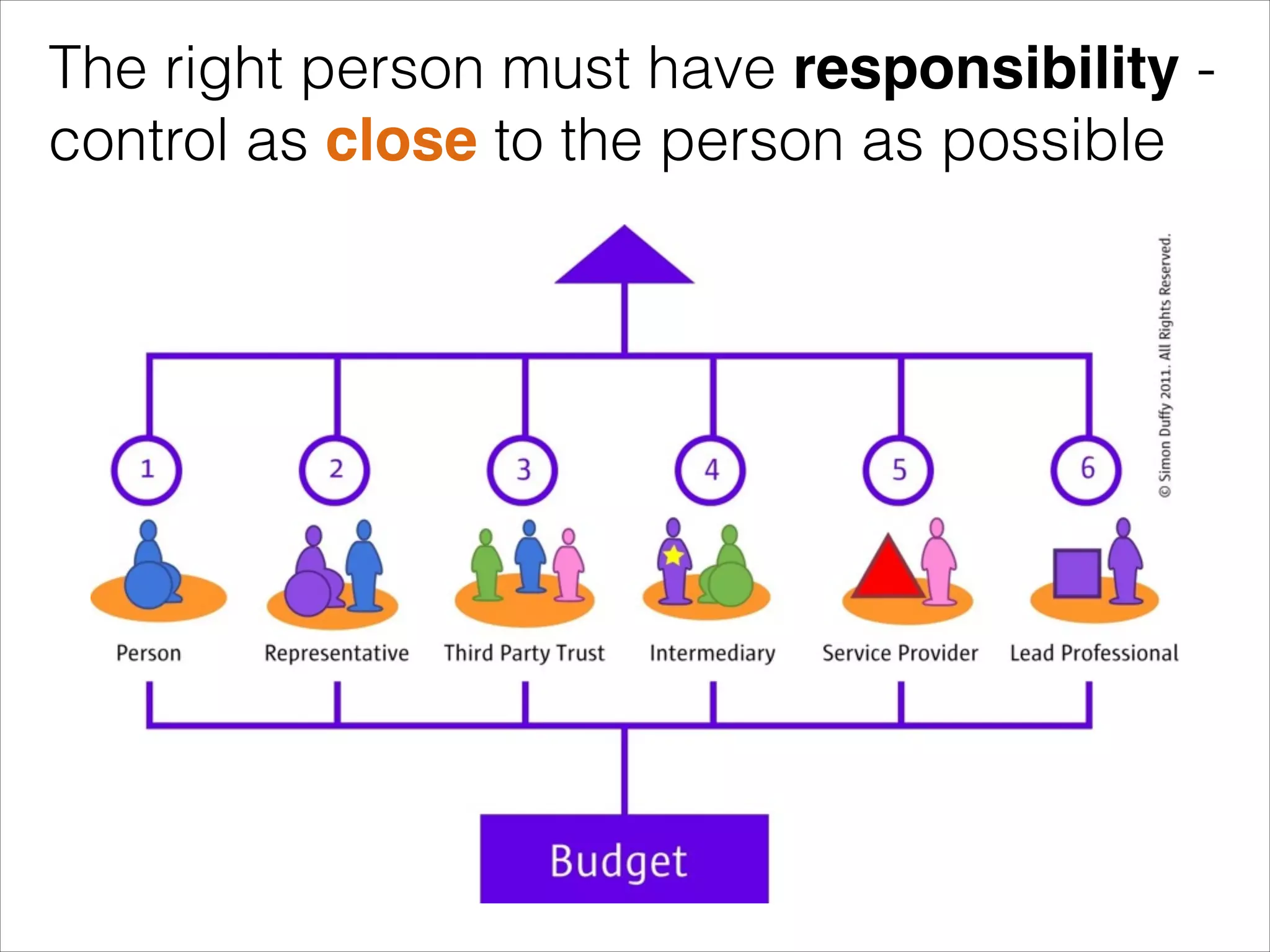
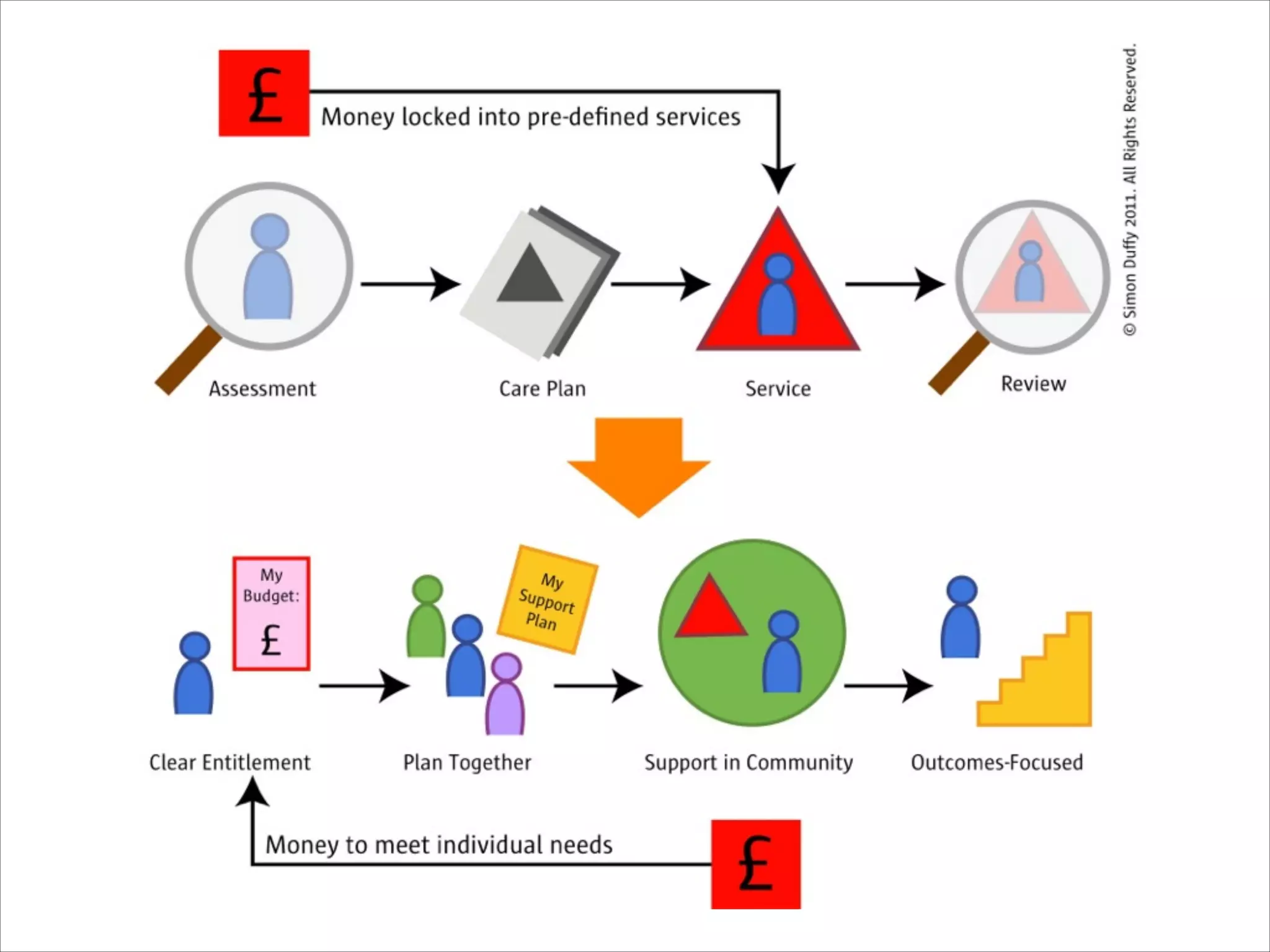
The right person must have responsibility control as close to the person as possible
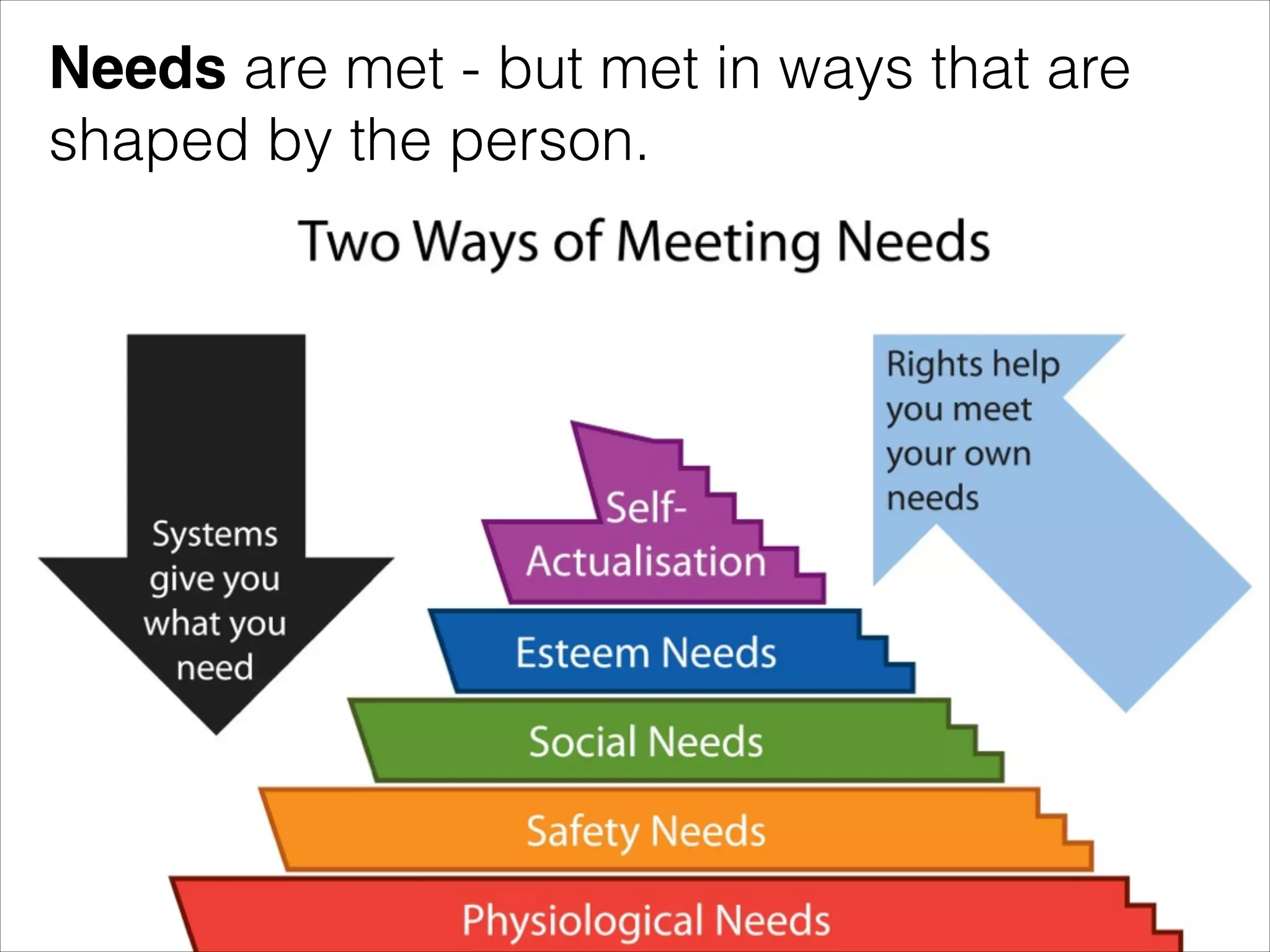
Needs are met - but met in ways that are
shaped by the person.
3. Clarity
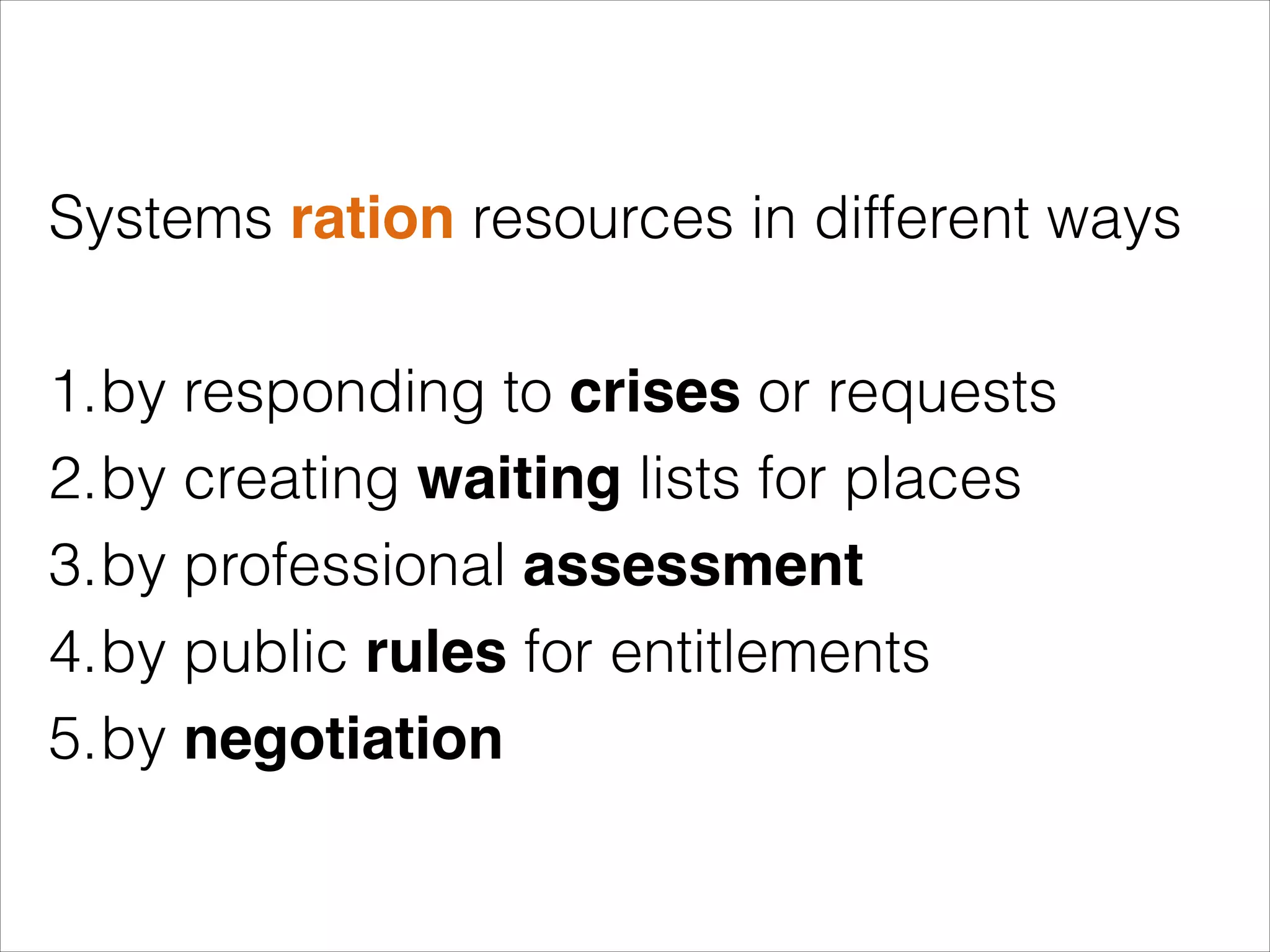
Systems ration resources in different ways
!

1.by responding to crises or requests
2.by creating waiting lists for places
3.by professional assessment
4.by public rules for entitlements
5.by negotiation
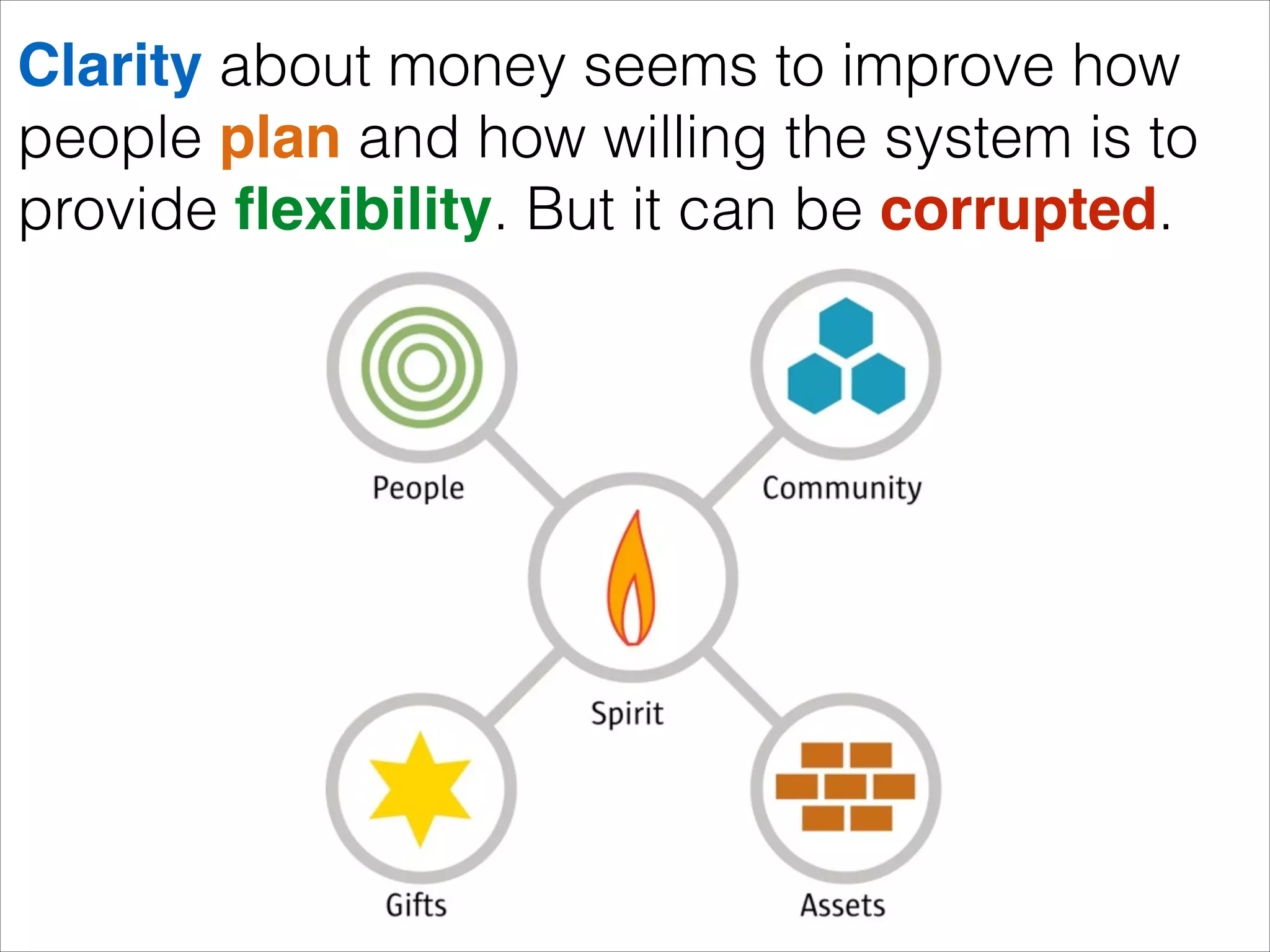
Clarity about money seems to improve how
people plan and how willing the system is to
provide flexibility. But it can be corrupted.
4. Flexibility
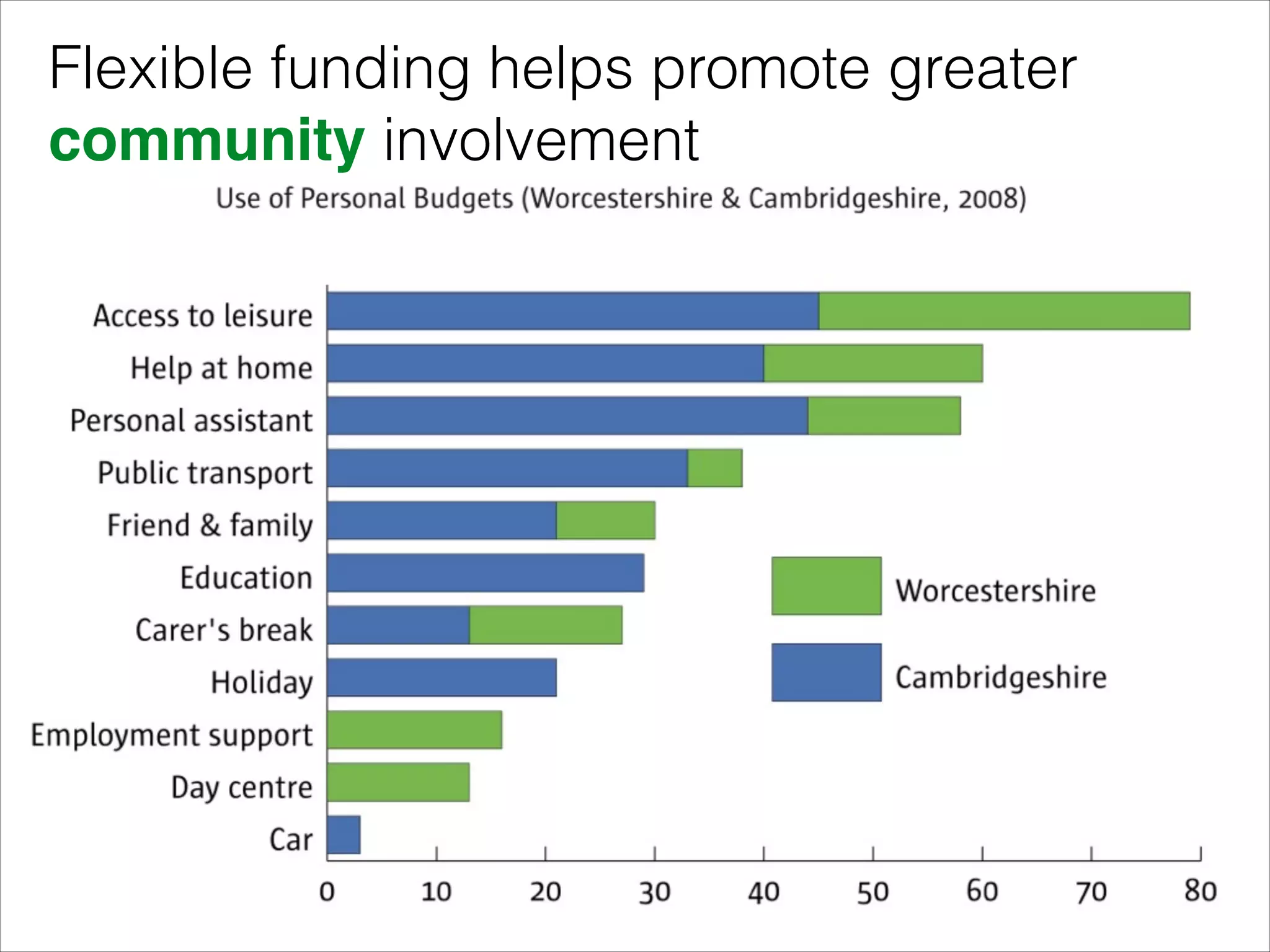
Flexible funding helps promote greater
community involvement
5. Easy to use
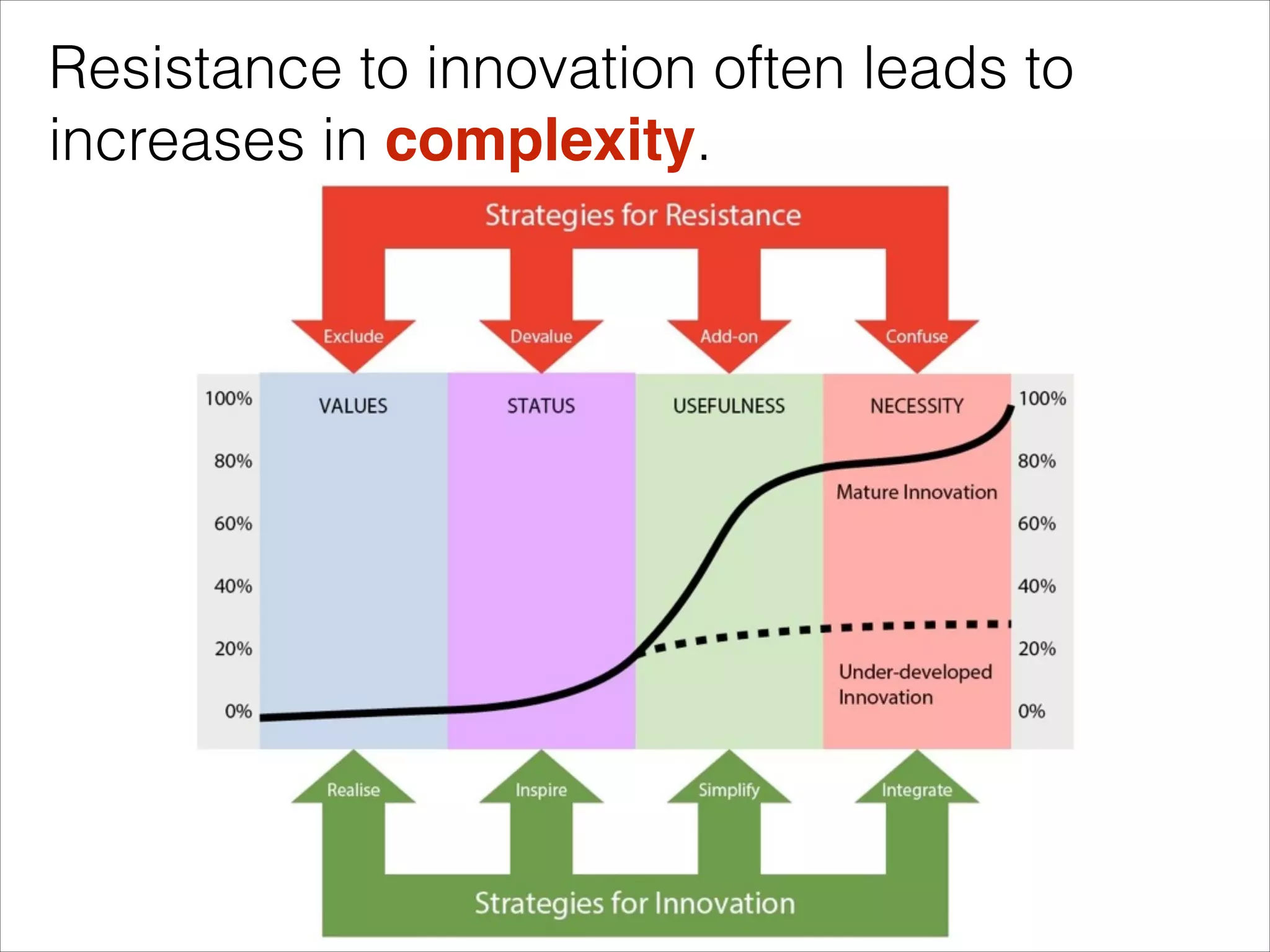
Resistance to innovation often leads to
increases in complexity.
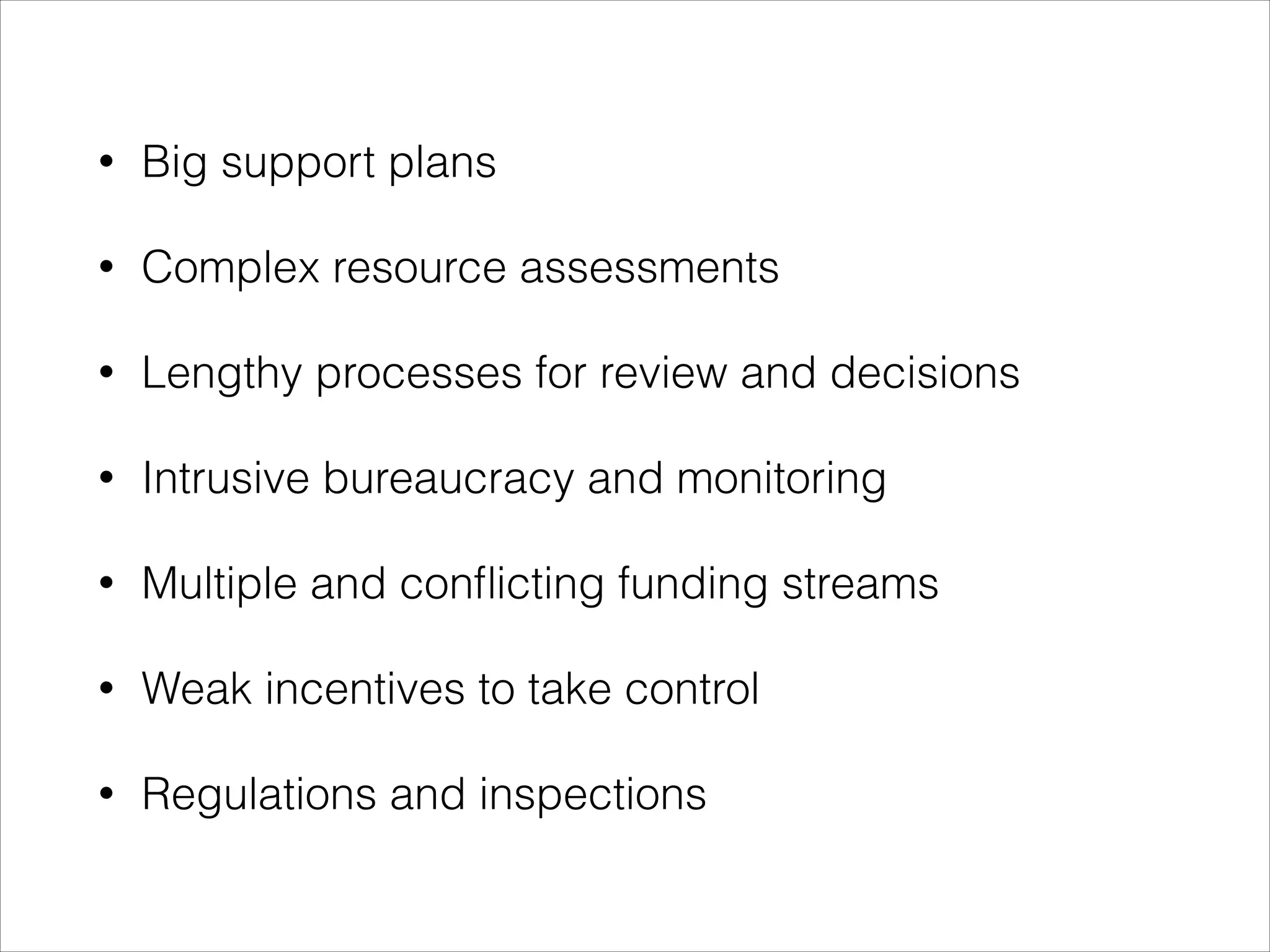
•

Big support plans

•

Complex resource assessments

•

Lengthy processes for review and decisions

•

Intrusive bureaucracy and monitoring

•

Multiple and conflicting funding streams

•

Weak incentives to take control

•

Regulations and inspections
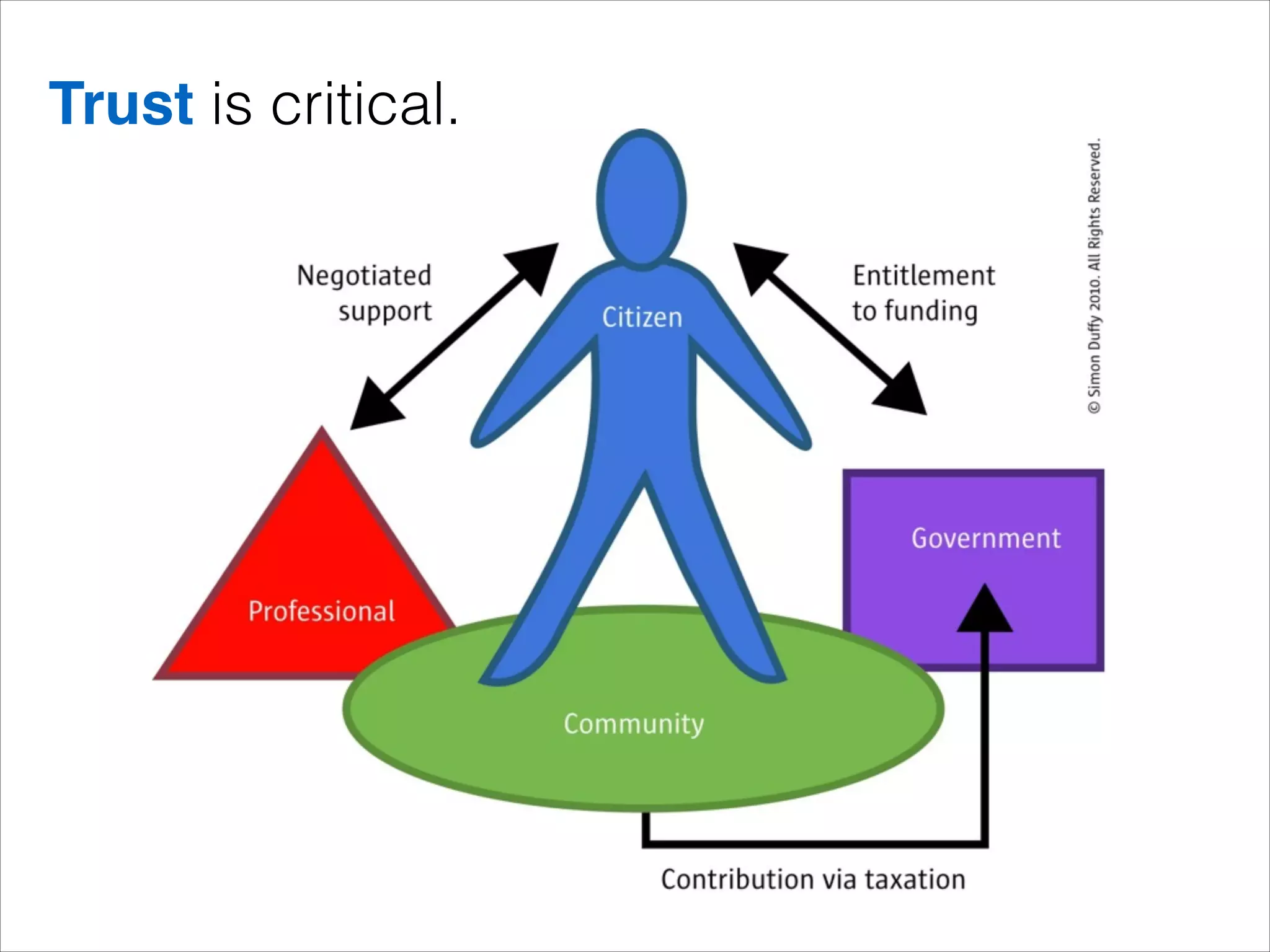
Trust is critical.
6. Community
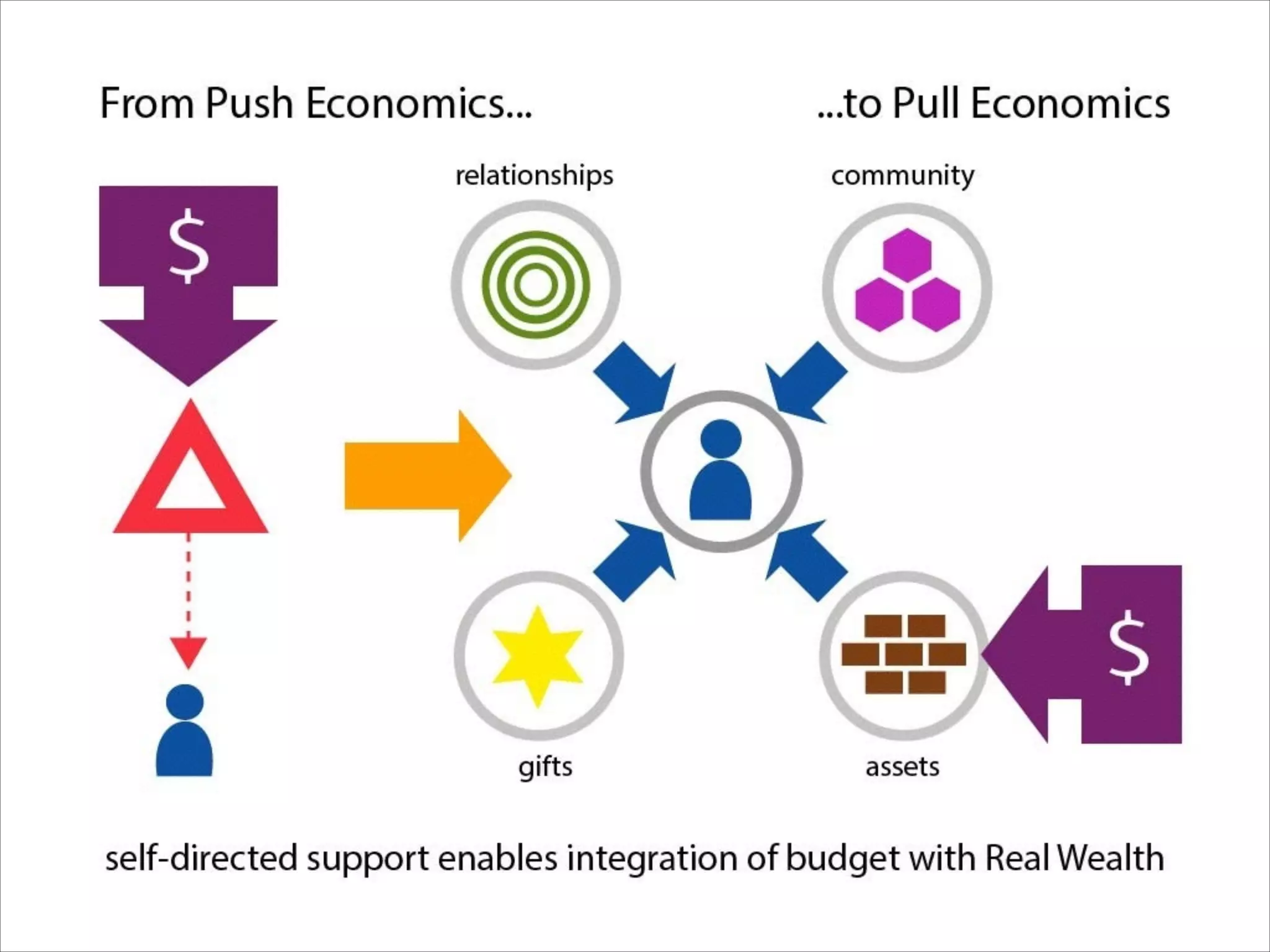
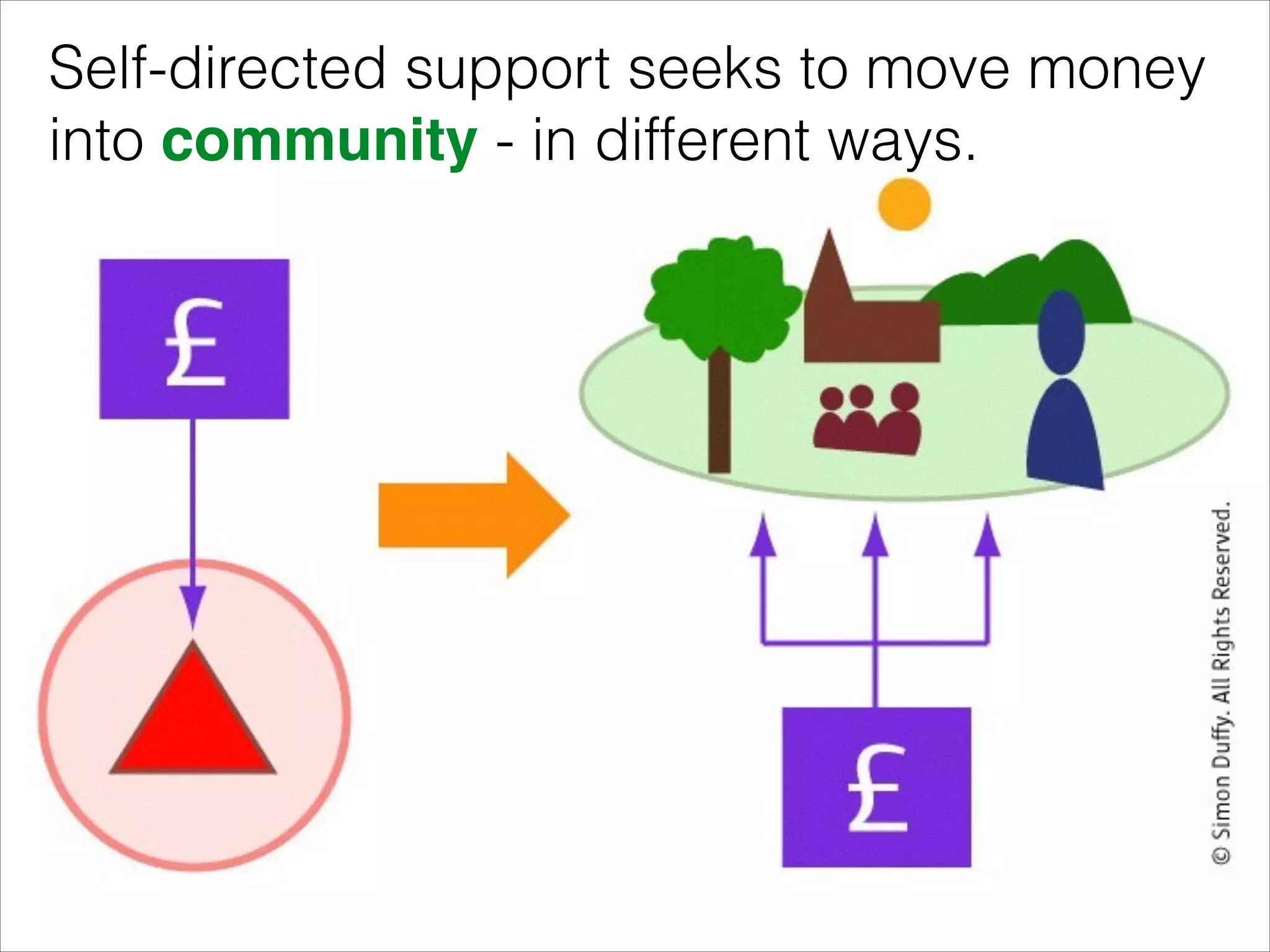
Self-directed support seeks to move money
into community - in different ways.
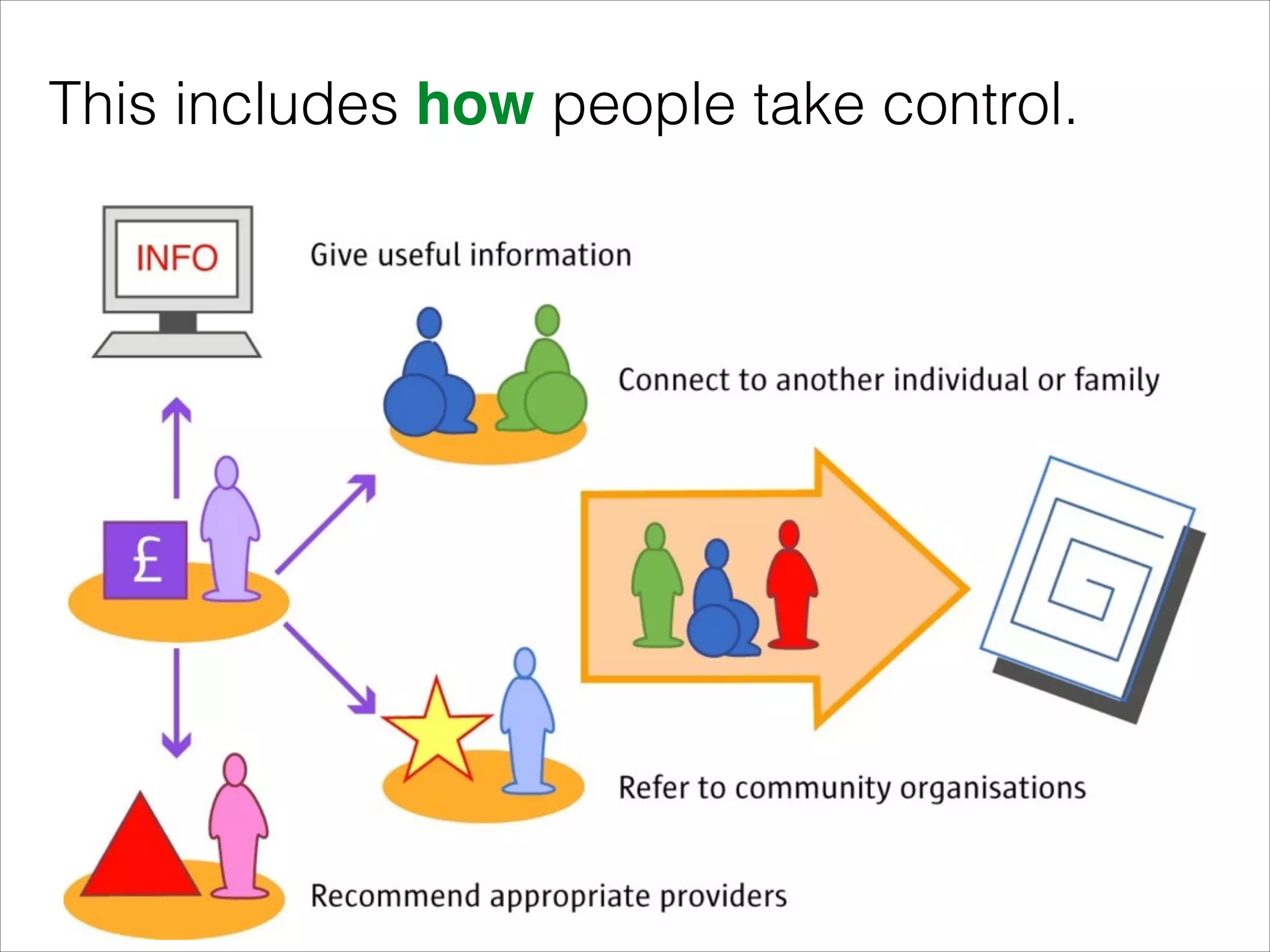
This includes how people take control.
7. Sustainability
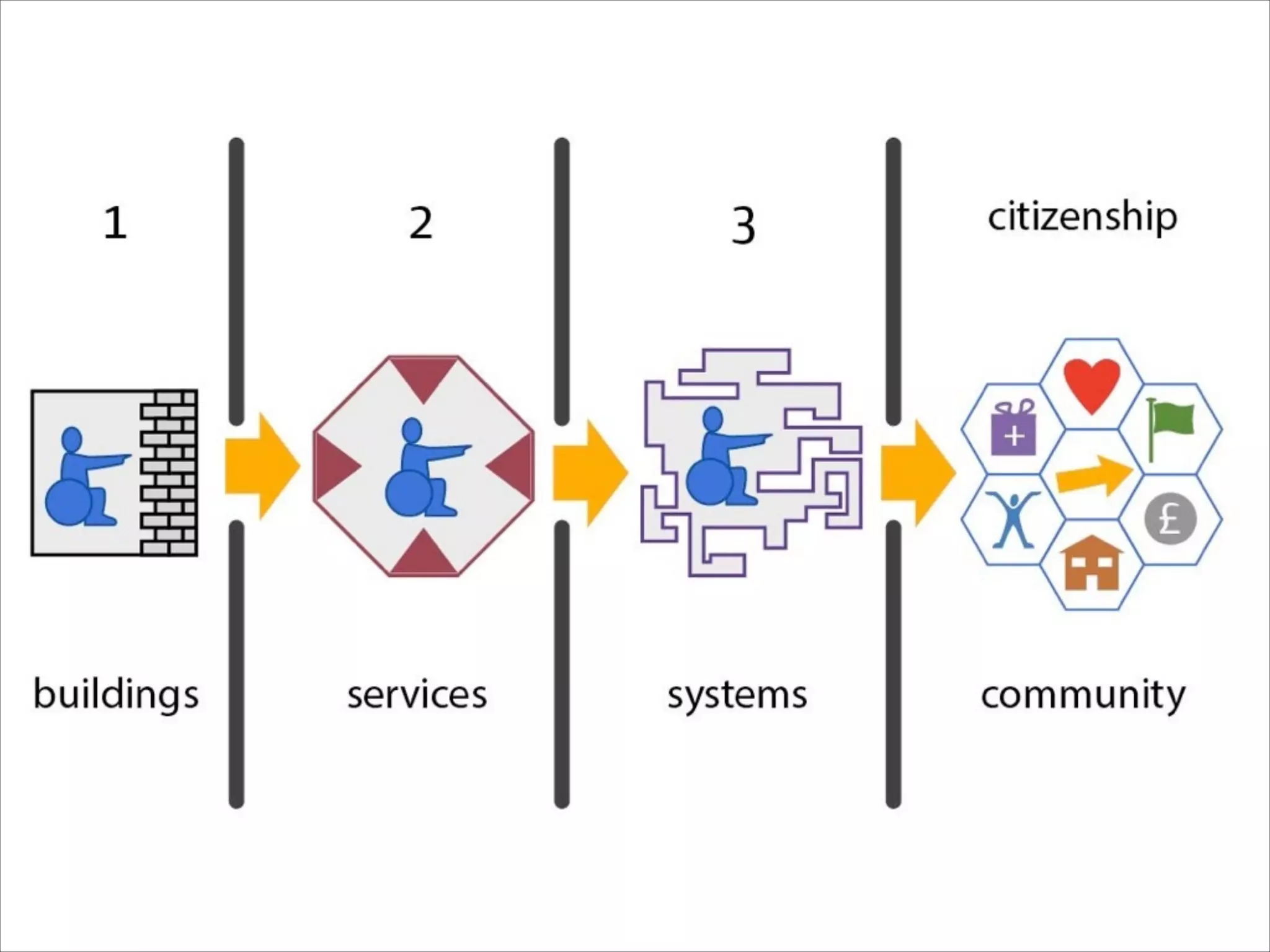
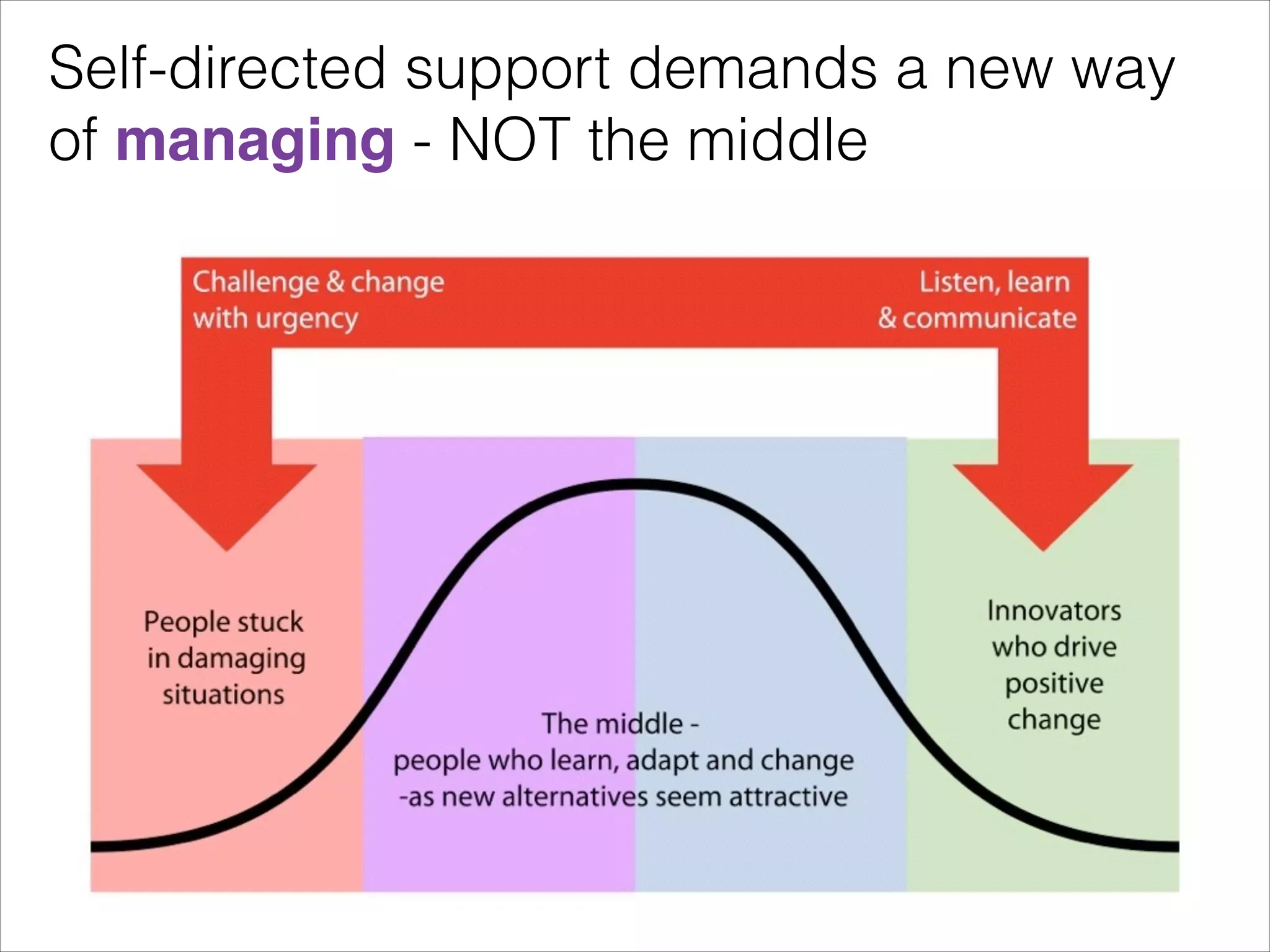
Self-directed support demands a new way
of managing - NOT the middle
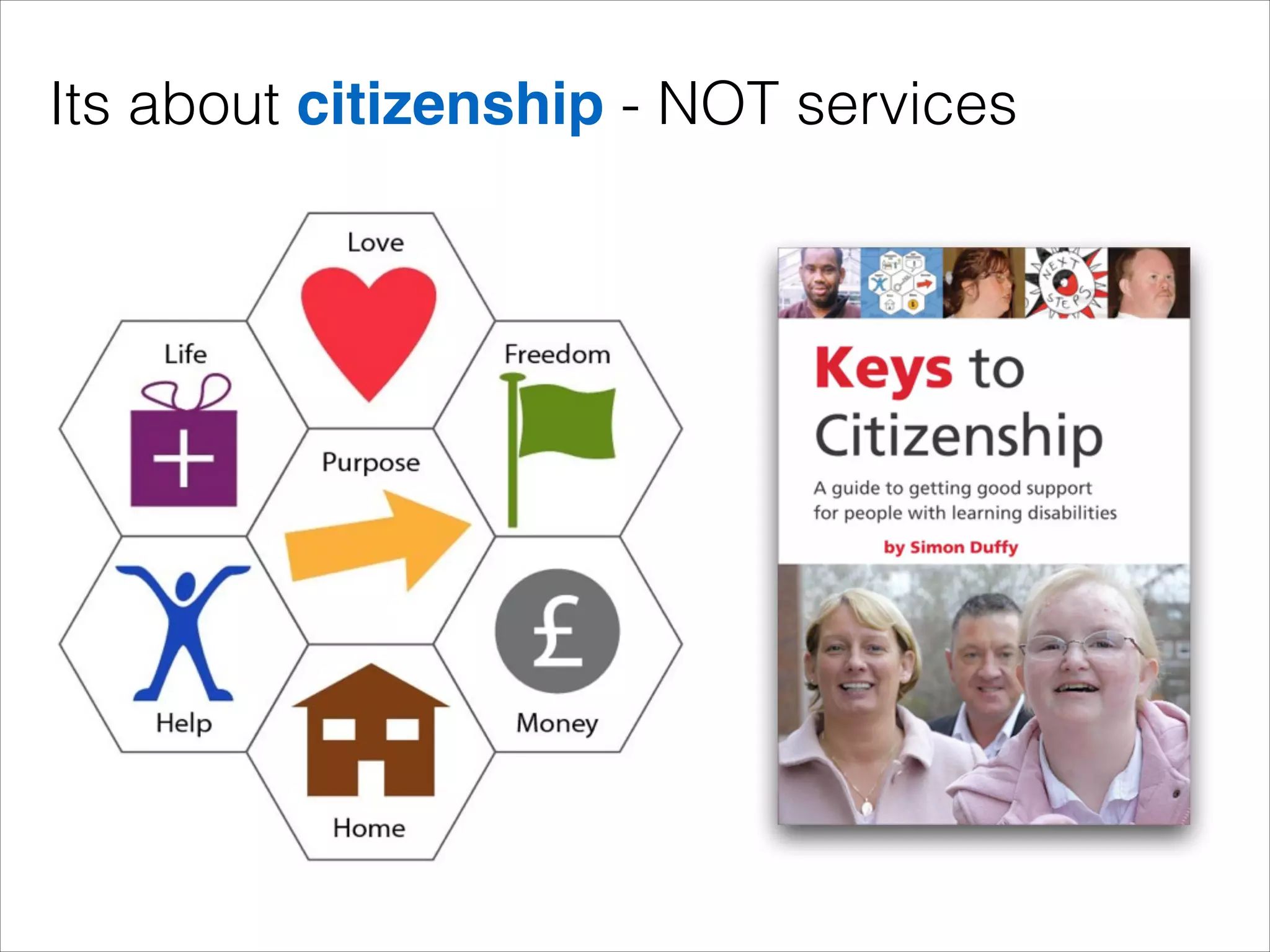
Its about citizenship - NOT services
Questions
There are some
important risks
•

The efficiencies can be turned into cuts
not improvements

•

Service providers can be cut out of the
process and not encouraged to play a
full part

•

The system can burden people with
unnecessary burdens and confusion
Service providers led
the move to
self-directed support
and can play a
positive role
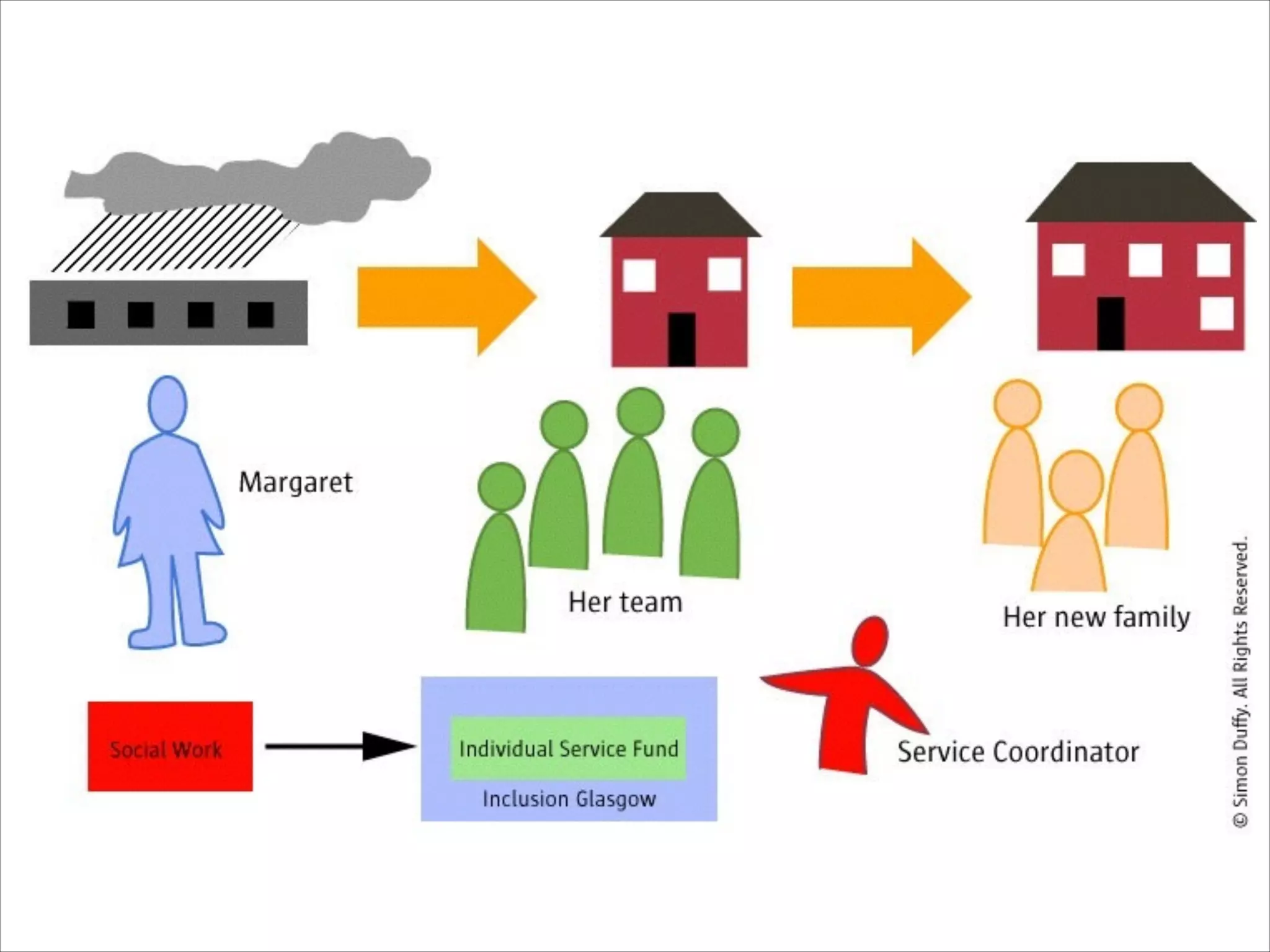
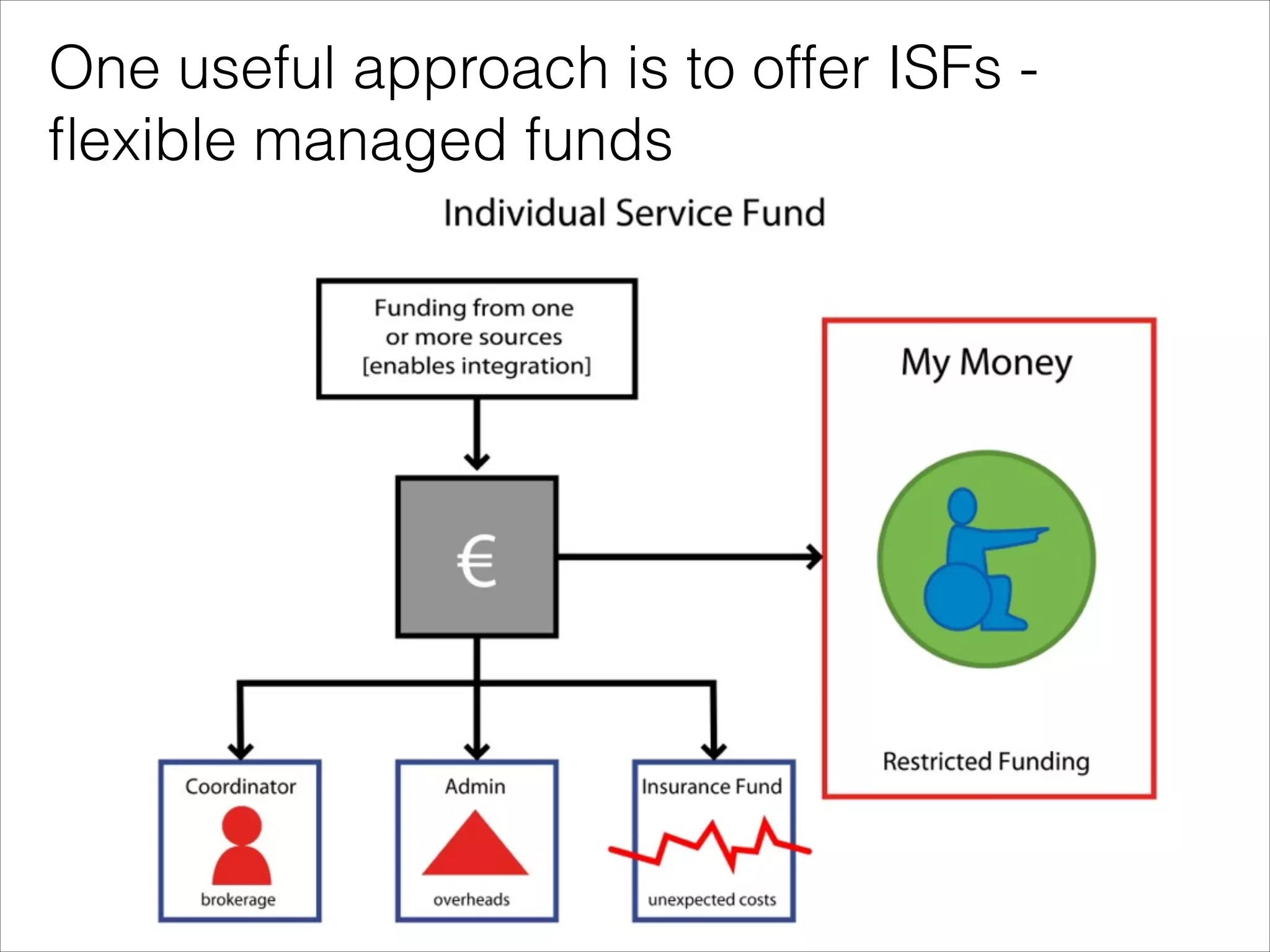
One useful approach is to offer ISFs flexible managed funds
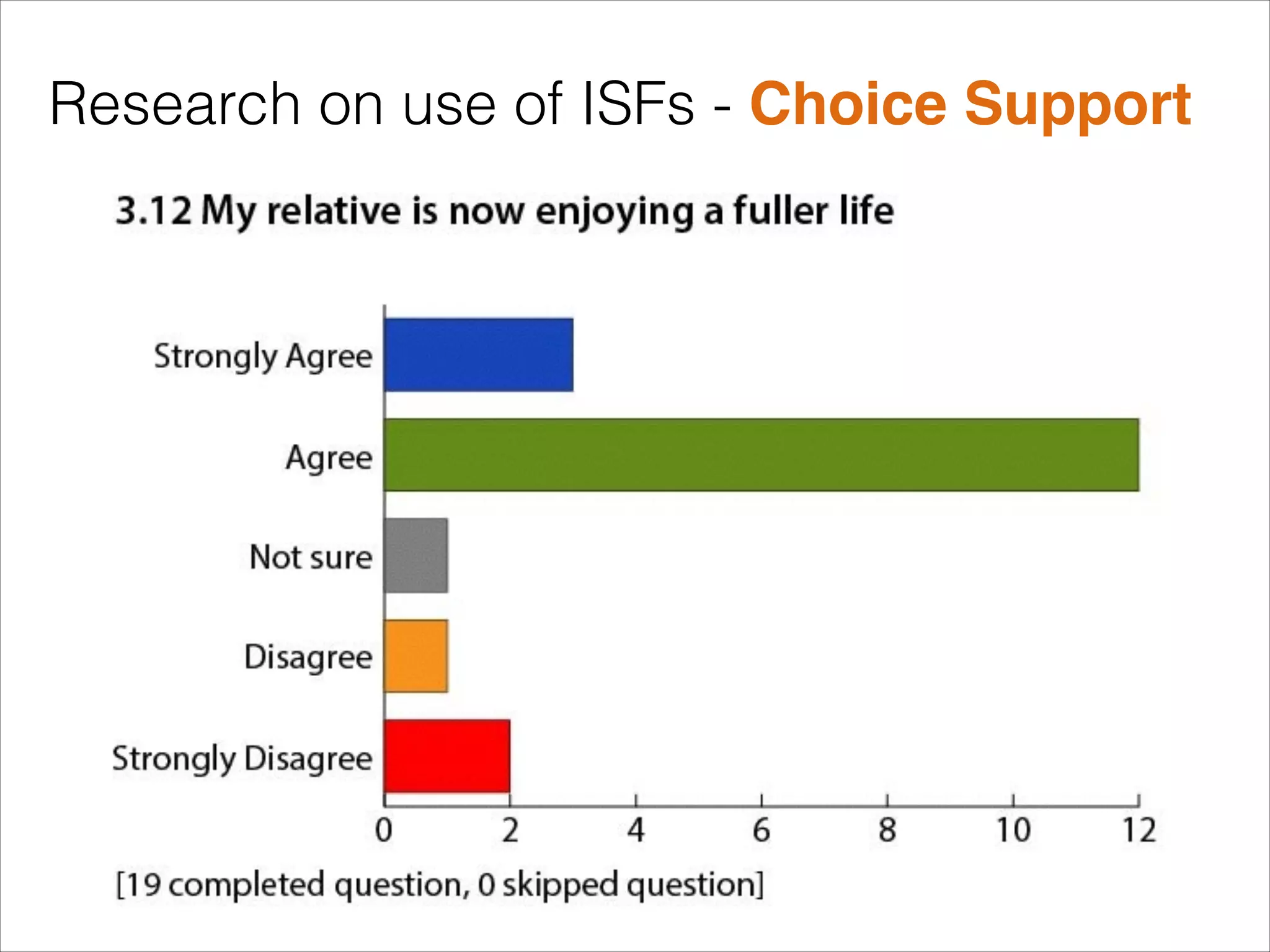
Research on use of ISFs - Choice Support
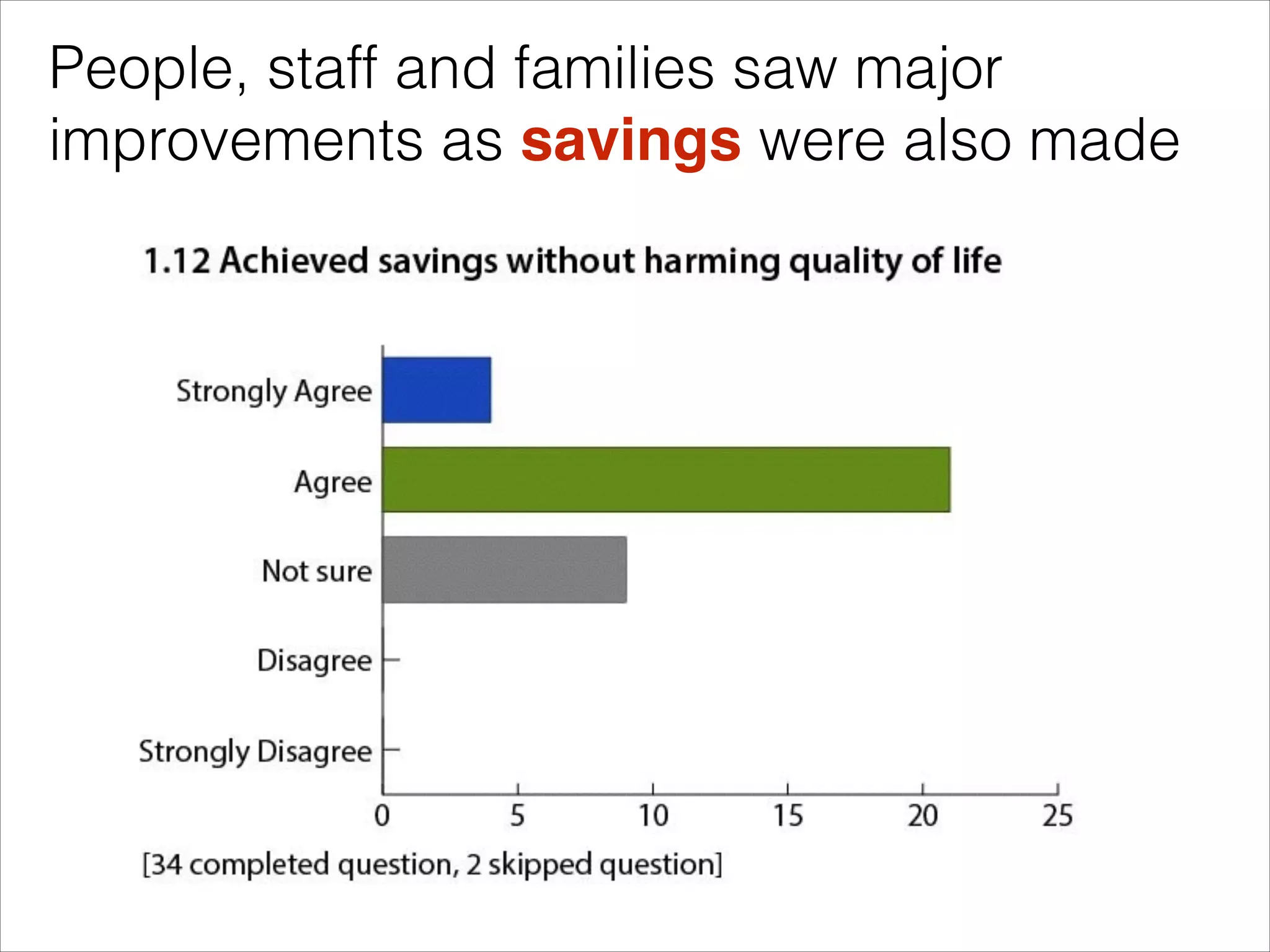
People, staff and families saw major
improvements as savings were also made
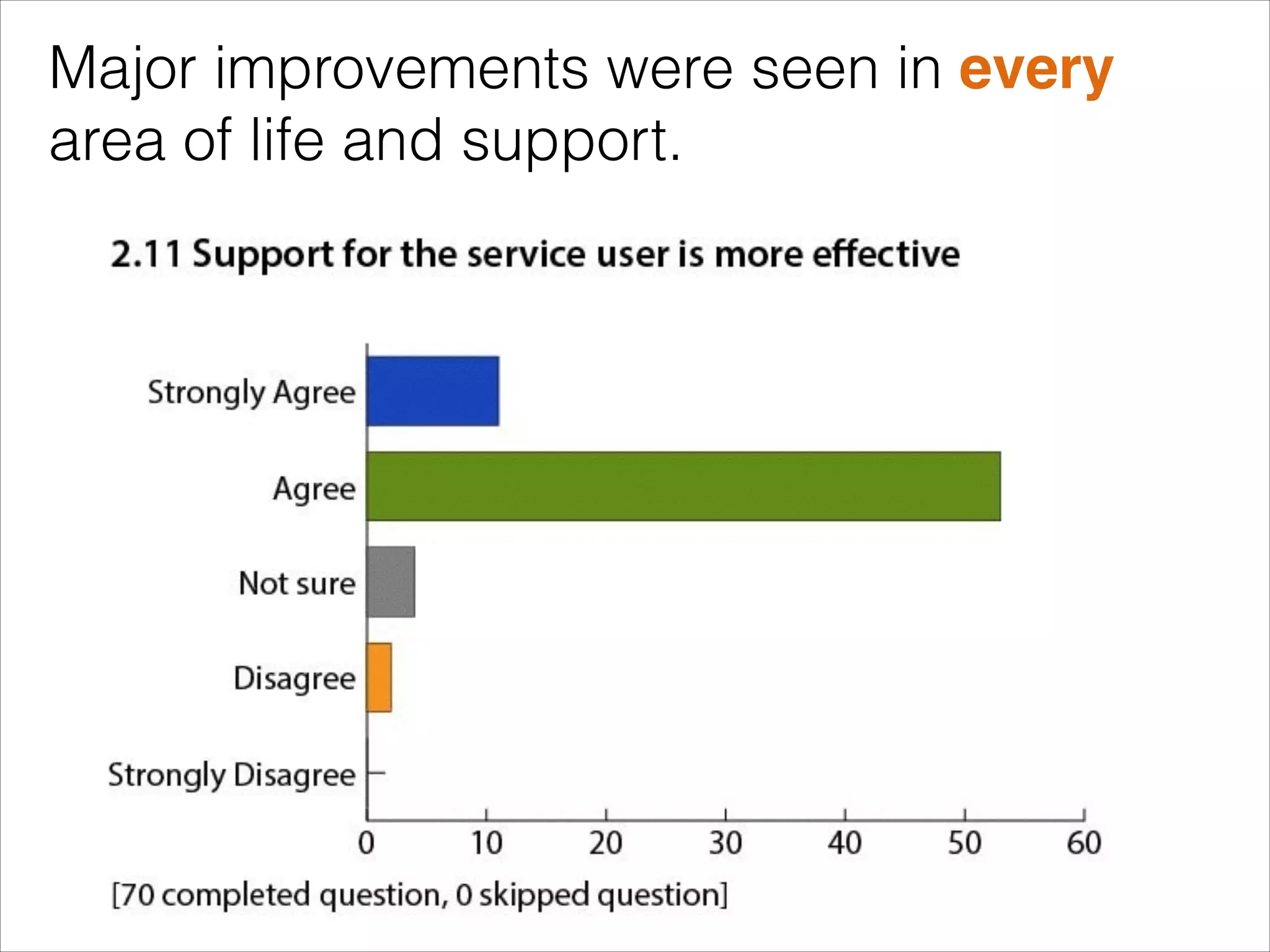
Major improvements were seen in every
area of life and support.
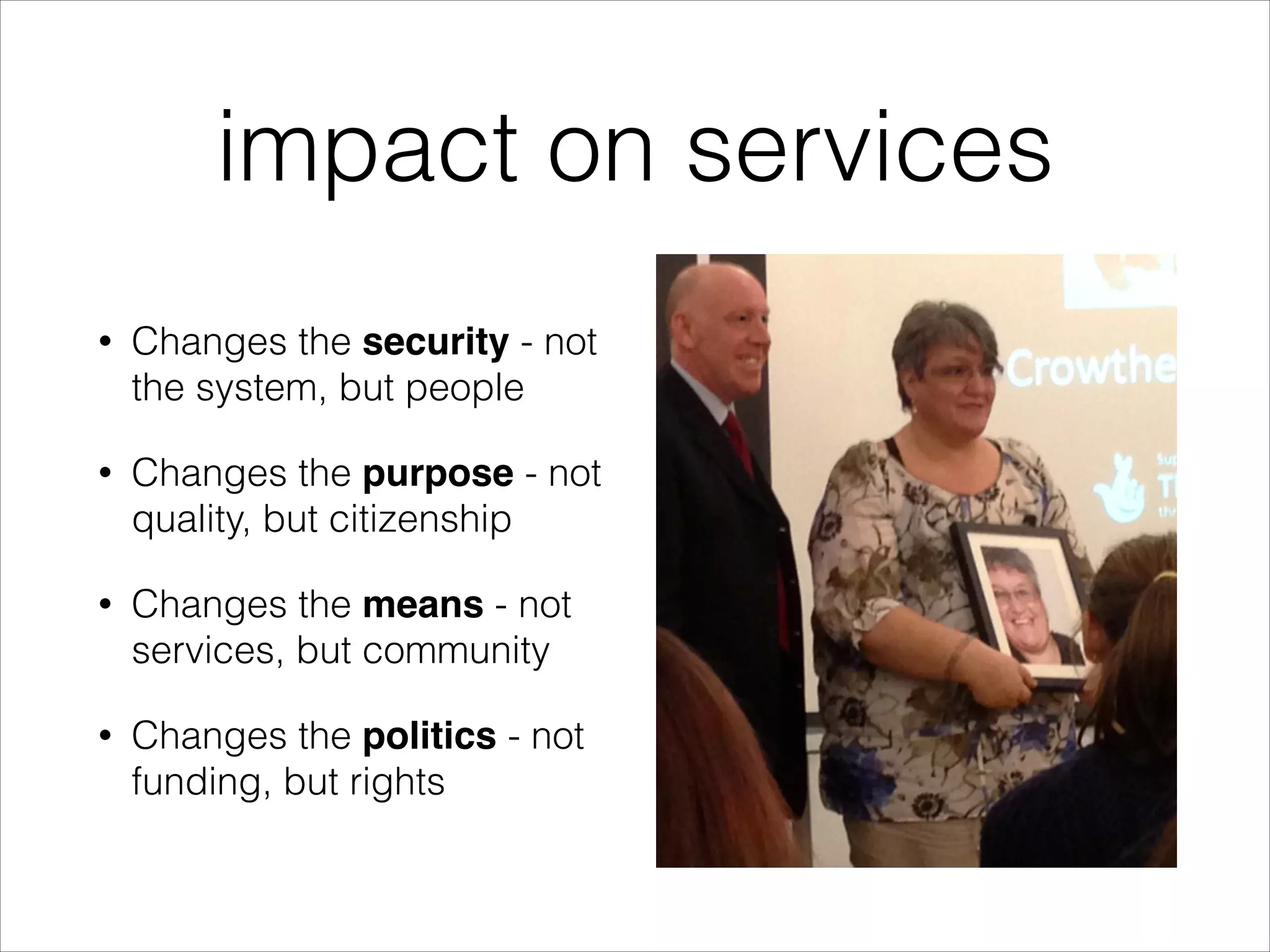
impact on services
•

Changes the security - not
the system, but people

•

Changes the purpose - not
quality, but citizenship

•

Changes the means - not
services, but community

•

Changes the politics - not
funding, but rights
We want to explore
how best Europe can
embrace self-directed
support and ensure it
promotes citizenship
and community
•

Can we create a European movement for selfdirected support to focus on the right things?

•

Can we put civil society, community and persons
with disabilities at the heart of the movement?

•

Can we encourage experimentation and learning
between European countries?

•

Can we help the European Union strengthen their
support for real human rights and inclusion?
Ideas for
European Self-Directed Support
Network
!

Mission
!

To help persons with disabilities across
Europe to achieve full citizenship by reforming
systems for funding assistance and meeting
the human rights of people with disabilities.
Ideas for
European Self-Directed Support
Network
Objectives
1.To identify systems of self-directed support used in Europe

2.To identify and share good practice
3.To identify obstacles to good practice

4.To create a network of champions for self-directed
support across Europe (of interested organisations, people
with disabilities and families)

5.To build alliances with other groups who are using selfdirected support (not just people with disabilities)

6.To help improve European policy-making on self-directed
support
Partnership
We need partners in all of the objectives.
We need to 

• meet, share, learn 

• make research, build strategies 

• grow a network 

• use social media and easy to access -tools 

• organise events, lobby, publish papers

• find ways for service producers to help

• work together to promote people’s right to access
full citizenship
The	
  European	
  Self-­‐Directed	
  Support	
  Network	
  

Do	
  you	
  want	
  to	
  join	
  in?	
  
Contacts
Aarne	
  Rajalahti	


Development	
  Manager	


Service	
  Foundation	
  for	
  People	
  with	
  
Intellectual	
  Disabilities	
  
aarne.rajalahti@kvps.fi	
  
+358	
  40	
  517	
  4447

Dr	
  Simon	
  Duffy	
  
Director	
  
The	
  Centre	
  for	
  Welfare	
  Reform	
  
simon@centreforwelfarereform.org	
  	
  
+44	
  7729	
  7729	
  41

Your	
  logo	
  here?	
  ☺
© Simon Duffy. Rights Reserved. Full copyright details at www.centreforwelfarereform.org

Launch of ESDSN - European SDS Network

  • 1.
  • 2.
    Self-Directed Support • It isnot new - it has been growing since the 1960s. • It can be found in lots of places around the world. • It has been successful, but slow to grow. • It creates new opportunities and new risks.
  • 3.
    “We are obligedto surrender to the will of the strong. Big companies, cities and municipalities decide what is best for us. This is about power. Why do I feel a lack of power in my own life?” Sami Helle at European Parliament, November 2013
  • 4.
    Research • Positive outcomes (often) negativeoutcomes (never) • Can cost less, can cost more • Tends to increase demand • Design matters - there are big differences between different systems
  • 6.
    English data 2003-2005,first In Control pilot
  • 7.
  • 13.
    Design Matters 1. Rights- secure foundations 2. Control - person focused 3. Clarity - transparent 4. Flexibility - high in options 5. Ease of use - low in burdens 6. Community - connectivity 7. Sustainability - evolving
  • 14.
  • 15.
    Support should notbe a professional gift it should be an entitlement
  • 16.
    The government money fallacy itcan’t always be government money: where did government get it from?
  • 17.
  • 18.
    The right personmust have responsibility control as close to the person as possible
  • 19.
    Needs are met- but met in ways that are shaped by the person.
  • 20.
  • 21.
    Systems ration resourcesin different ways ! 1.by responding to crises or requests 2.by creating waiting lists for places 3.by professional assessment 4.by public rules for entitlements 5.by negotiation
  • 23.
    Clarity about moneyseems to improve how people plan and how willing the system is to provide flexibility. But it can be corrupted.
  • 24.
  • 25.
    Flexible funding helpspromote greater community involvement
  • 27.
  • 28.
    Resistance to innovationoften leads to increases in complexity.
  • 29.
    • Big support plans • Complexresource assessments • Lengthy processes for review and decisions • Intrusive bureaucracy and monitoring • Multiple and conflicting funding streams • Weak incentives to take control • Regulations and inspections
  • 30.
  • 31.
  • 32.
    Self-directed support seeksto move money into community - in different ways.
  • 33.
    This includes howpeople take control.
  • 34.
  • 35.
    Self-directed support demandsa new way of managing - NOT the middle
  • 36.
    Its about citizenship- NOT services
  • 37.
  • 38.
  • 39.
    • The efficiencies canbe turned into cuts not improvements • Service providers can be cut out of the process and not encouraged to play a full part • The system can burden people with unnecessary burdens and confusion
  • 40.
    Service providers led themove to self-directed support and can play a positive role
  • 41.
    One useful approachis to offer ISFs flexible managed funds
  • 42.
    Research on useof ISFs - Choice Support
  • 43.
    People, staff andfamilies saw major improvements as savings were also made
  • 44.
    Major improvements wereseen in every area of life and support.
  • 45.
    impact on services • Changesthe security - not the system, but people • Changes the purpose - not quality, but citizenship • Changes the means - not services, but community • Changes the politics - not funding, but rights
  • 46.
    We want toexplore how best Europe can embrace self-directed support and ensure it promotes citizenship and community
  • 47.
    • Can we createa European movement for selfdirected support to focus on the right things? • Can we put civil society, community and persons with disabilities at the heart of the movement? • Can we encourage experimentation and learning between European countries? • Can we help the European Union strengthen their support for real human rights and inclusion?
  • 48.
    Ideas for European Self-DirectedSupport Network ! Mission ! To help persons with disabilities across Europe to achieve full citizenship by reforming systems for funding assistance and meeting the human rights of people with disabilities.
  • 49.
    Ideas for European Self-DirectedSupport Network Objectives 1.To identify systems of self-directed support used in Europe 2.To identify and share good practice 3.To identify obstacles to good practice 4.To create a network of champions for self-directed support across Europe (of interested organisations, people with disabilities and families) 5.To build alliances with other groups who are using selfdirected support (not just people with disabilities) 6.To help improve European policy-making on self-directed support
  • 50.
    Partnership We need partnersin all of the objectives. We need to • meet, share, learn • make research, build strategies • grow a network • use social media and easy to access -tools • organise events, lobby, publish papers • find ways for service producers to help • work together to promote people’s right to access full citizenship
  • 51.
    The  European  Self-­‐Directed  Support  Network  
 Do  you  want  to  join  in?   Contacts Aarne  Rajalahti           Development  Manager       Service  Foundation  for  People  with   Intellectual  Disabilities   aarne.rajalahti@kvps.fi   +358  40  517  4447 Dr  Simon  Duffy   Director   The  Centre  for  Welfare  Reform   simon@centreforwelfarereform.org     +44  7729  7729  41 Your  logo  here?  ☺
  • 52.
    © Simon Duffy.Rights Reserved. Full copyright details at www.centreforwelfarereform.org