1 . HIS BUNDLE PACING
2. CARDIAC CONTRACTILITY MODULATION
New Frontier in the Treatment of Heart
Failure
Dr. Najeeb Ullah Sofi
LPS Institute of Cardiology
 Biventricular pacing has revolutionised the treatment of heart failure in patients with sinus rhythm
and left bundle branch block, however, left ventricular-lead placement is not always technically
possible.
 Rates of nonresponse to CRT remain high—between 30% and 40% . In addition, rates of implant
failure for CRT range between 5% and 9%, in part due to high rates of CS lead dislodgement.
 Furthermore, biventricular pacing does not fully normalise ventricular activation and, therefore,
the ventricular resynchronisation is imperfect.
 Approximately 30% of those who meet the criteria donot experience improvement with CRT.
Moreover, about 50% of individuals with advanced HF do not meet criteria for CRT
 Right ventricular pacing for bradycardia may cause or worsen heart failure in some patients by
causing dyssynchronous ventricular activation.
 His bundle pacing activates the ventricles via the native His-Purkinje system, resulting in true
physiological pacing, and, therefore, is a promising alternate site for pacing in bradycardia and
traditional CRT indications in cases where it can overcome left bundle branch block.
 Furthermore, it may open up new indications for pacing therapy in heart failure, such as targeting
patients with PR prolongation, but a narrow QRS duration
 Furthermore, when biventricular pacing is delivered to patients with a narrow QRS duration, or
moderate QRS prolongation, it may actually prolong ventricular activation time and worsen
dyssynchronous activation.
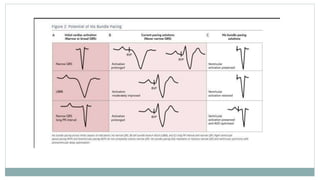
 His bundle pacing is an alternative technique for delivering cardiac resynchronisation therapy. It
can dramatically shorten QRS duration and restore normal intrinsic activation patterns in some
patients with ventricular conduction delays
Potential role of HIS pacing in Heart Failure
1. His Pacing to Prevent Right Ventricular Pacing-induced Cardiomyopathy
2. Heart Failure Patients with AF and AV Node Ablation
3. Used as an alternative to biventricular pacing in patients with heart failure and LBBB
4. May extend pacing therapy in Heart Failure in Patients with Narrow QRS and PR Prolongation
by providing AV synchrony without inducing ventricular dyssynchrony.
Anatomy of the His Bundle and Implant Technique
 The bundle of His extends from the compact AV node to the membranous interventricular septum,
and measures approximately 20 mm in length. The bundle is a cord-like structure made up of multiple
strands, which, even before the branching, are predestined to become the right or left bundle
branches
 The most commonly used lead for His bundle pacing is the 69 cm Select Secure™ 3830 (Medtronic).
This is a non-stylet-driven active fixation lead. Importantly, the screw forms part of the tip electrode
allowing penetration of the capsule of the bundle of His and, therefore, direct stimulation of the His
bundle fibres.
 The lead can be delivered to the His bundle region using either the specially designed non-
deflectable His delivery sheath (C315 43 cm; Medtronic) or a deflectable sheath (C304 69 cm;
Medtronic).
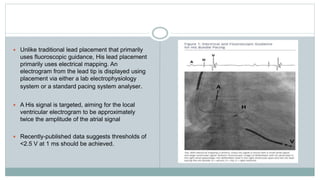
 Unlike traditional lead placement that primarily
uses fluoroscopic guidance, His lead placement
primarily uses electrical mapping. An
electrogram from the lead tip is displayed using
placement via either a lab electrophysiology
system or a standard pacing system analyser.
 A His signal is targeted, aiming for the local
ventricular electrogram to be approximately
twice the amplitude of the atrial signal
 Recently-published data suggests thresholds of
<2.5 V at 1 ms should be achieved.
 His bundle capture may be either selective or non-selective.
1. With selective capture, only the His bundle fibres are stimulated
and, therefore, activation occurs entirely via the His-Purkinje
system.
2. With non-selective capture both the His bundle fibres and local
myocardium are captured. During non-selective capture a pseudo
delta wave on the surface ECG is formed from local myocardial
capture.
1. His Pacing to Deliver Ventricular
Resynchronisation in Patients with LBBB
 Biventricular pacing delivers imperfect ventricular resynchronisation, with only modest reductions
in QRS duration, and does not return left ventricular activation times to those seen in individuals
with intrinsically narrow QRS.
 Furthermore, when biventricular pacing is delivered to patients with a narrow QRS duration, or
moderate QRS prolongation, it may actually prolong ventricular activation time and worsen
dyssynchronous activation.
 His bundle pacing is an alternative technique for delivering cardiac resynchronisation therapy. It
can dramatically shorten QRS duration and restore normal intrinsic activation patterns in some
patients with ventricular conduction delays.
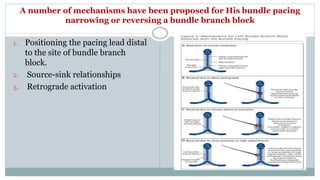
A number of mechanisms have been proposed for His bundle pacing
narrowing or reversing a bundle branch block
1. Positioning the pacing lead distal
to the site of bundle branch
block.
2. Source-sink relationships
3. Retrograde activation
 Reductions in QRS duration have been observed in 70–92 % of patients
with LBBB
 The reductions in QRS duration appear to be maintained even with
chronic pacing, and mean thresholds are similar to those seen for left
ventricular leads; for example, in one study thresholds to achieve this
are 2.0 V at 1 ms (mean threshold 1.4 V at 1 ms)
 No large randomised trial has been conducted comparing His pacing
with biventricular pacing
 The mean QRS reduction with His
pacing is 46 ms. This compares
with typical values of 20 ms seen
with biventricular pacing.
 Improvements in left ventricular
ejection fraction and symptoms
have been observed with His
pacing.
 His pacing was initially assessed as
a rescue strategy in cases where
biventricular pacing failed and
some authors have shown that His
pacing is feasible as a primary
strategy for cardiac
resynchronisation.
 In a crossover study, His pacing
was more effective than
biventricular pacing at reducing
QRS duration in 72 % of patients
 With improved technology and
experience, permanent His pacing
achieved QRS narrowing in 90 %
of patients.
 In about 10% to 30% of patients,
LBBB may not be correctable by
permanent HBP.
 The reasons for failure in
achieving QRS narrowing is not
fully understood. It is possible this
subgroup of patients have
1. Abnormal left ventricular
conduction due to disease outside
of the His bundle and, therefore,
cannot be treated with His pacing
2. Block is too severe to overcome
 His pacing has the advantage that it does not require the use of contrast and can often be
performed more quickly than left ventricular lead placement. However, adequately powered
randomised studies are required to compare this strategy for resynchronisation therapy with
biventricular pacing.
 In 2016 recruitment started for the His Bundle Pacing Versus Coronary Sinus Pacing for Cardiac
Resynchronisation Therapy (His-SYNC; NCT02700425) study, which is aiming to randomise 40
patients to either His pacing or biventricular pacing and will look at time to first cardiovascular
hospitalisation or death.
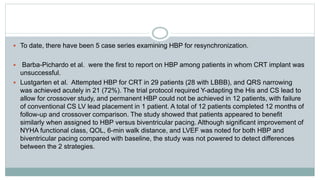
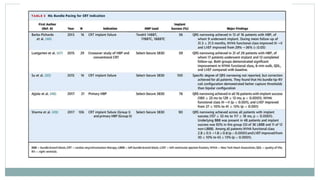
 To date, there have been 5 case series examining HBP for resynchronization.
 Barba-Pichardo et al. were the first to report on HBP among patients in whom CRT implant was
unsuccessful.
 Lustgarten et al. Attempted HBP for CRT in 29 patients (28 with LBBB), and QRS narrowing
was achieved acutely in 21 (72%). The trial protocol required Y-adapting the His and CS lead to
allow for crossover study, and permanent HBP could not be achieved in 12 patients, with failure
of conventional CS LV lead placement in 1 patient. A total of 12 patients completed 12 months of
follow-up and crossover comparison. The study showed that patients appeared to benefit
similarly when assigned to HBP versus biventricular pacing. Although significant improvement of
NYHA functional class, QOL, 6-min walk distance, and LVEF was noted for both HBP and
biventricular pacing compared with baseline, the study was not powered to detect differences
between the 2 strategies.
 Ajijola et al. reported on the first case series of primary HBP (HBP lead in lieu of traditional LV lead) in
CRT-eligible patients . Among 21 patients LBBB, 4 right bundle branch block [RBBB]), permanent HBP was
achieved in 16 patients (76%). The majority of patients demonstrated QRS narrowing with nonselective
capture, with an average QRS reduction of approximately 30%, but not to <120 ms for the majority of
patients.
 Most recently, Sharma et al. pooled data from 5 centers and compiled the largest retrospective case series
of CRT-eligible patients thus far. They recognized 2 important cohorts:
1. Group I, patients in whom prior CRT had been attempted but was unsuccessful and HBP was used as a bail-out
strategy; and
2. Group II, primary HBP for CRT-eligible patients (AV block, post-AV junction ablation, underlying BBB, or patients
undergoing planned upgrade due to >40% RV pacing). Over a mean follow-up period of 14 months, patients
demonstrated QRS narrowing, improvement in NYHA functional class, and LVEF. Implant success was high (95 of 106
patients, 90%) and lead-related complication rate was overall low (7 of 95 patients, 7.3%). Importantly, BBB was present
in 48 patients (45%), and HBP was effective in this group (92% implant success).
2. Heart Failure in Patients with Narrow QRS and PR Prolongation
 PR prolongation results in impaired left
ventricular filling, and in patients with heart
failure it is associated with a higher risk of
death than those whose AV delay was
within normal limits.
 COMPANION trial, patients with a long PR
interval had a 17 % greater relative risk
reduction in heart failure admissions and
death compared with those with a normal
PR interval.
 Biventricular pacing requires a compulsory
shortening of the AV delay to ensure
biventricular capture. This shortening of the
AV delay appears to be one of the
mechanisms by which biventricular pacing
delivers its beneficial effect
 Delivering biventricular pacing to this group
of patients may induce ventricular
dyssynchrony relative to normal intrinsic
activation, which may offset some of the
beneficial effects of AV delay shortening.
 In the context of a normal QRS,
biventricular pacing can increase mortality.
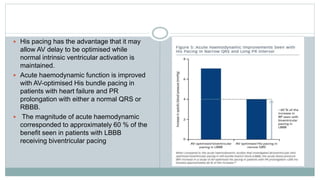
 His pacing has the advantage that it may
allow AV delay to be optimised while
normal intrinsic ventricular activation is
maintained.
 Acute haemodynamic function is improved
with AV-optimised His bundle pacing in
patients with heart failure and PR
prolongation with either a normal QRS or
RBBB.
 The magnitude of acute haemodynamic
corresponded to approximately 60 % of the
benefit seen in patients with LBBB
receiving biventricular pacing
 The His Optimised Pacing Evaluated for Heart Failure Trial HOPE-HF trial is a multicentre,
double-blind, randomised, crossover study that aims to randomise 160 patients with PR
prolongation (≥200 ms), left ventricular impairment (ejection fraction ≤40 %), and either narrow
QRS (≤140 ms) or RBBB. Participants are first randomised to either 6 months with the His lead
programmed on or off before crossing over to the alternate arm. The primary endpoint is
exercise capacity measured using cardiopulmonary exercise testing. When randomised to the
His pacing arm, the patients are set to an AV delay determined by our high resolution
haemodynamic optimisation protocol.
 If the results are positive then this would offer the potential of a new therapeutic option to a
cohort of patients with heart failure who are not currently eligible for pacing therapy for heart
failure.
3.His Pacing to Prevent Right Ventricular Pacing-induced Cardiomyopathy
 Right ventricular apical pacing results in non-physiological dyssynchronous ventricular
activation. This may lead to reverse ventricular remodelling and impaired cardiac function.
 In the Dual Chamber and VVI Implantable Defibrillator (DAVID) trial, programming that
promotes right ventricular pacing was associated with increased mortality and hospitalisations
for heart failure in patients with a standard ICD indication, no pacing indication and impaired LVF.
 Biventricular Pacing for Atrioventricular Block to Prevent Cardiac Desynchronisation (BIOPACE)
trial, biventricular pacing failed to demonstrated superiority to right ventricular pacing in patients
with normal LVF. This was defined as left ventricular ejection fraction >45 %, but did not exclude
patients with symptoms of heart failure.
 Therefore, right ventricular pacing should
be avoided in patients with impaired LVF
but biventricular pacing may not be the
optimal way to prevent the adverse
consequences since it does not produce
true physiological pacing.
 Furthermore, some patients with normal
baseline ventricular function who received
high percentages of right ventricular pacing
develop pacing-induced cardiomyopathy
 His pacing offers an elegant solution to
potentially avoid pacing induced deterioration
in cardiac function. Since activation occurs
via the normal conduction system, it does not
result in ventricular dyssynchrony. Compared
with right ventricular pacing, His pacing
results in improved LVF both acutely and with
chronic pacing. Pacing-avoidance algorithms
may be unnecessary, which has the
advantage of allowing physiological AV delays
to be programmed.
 Data from observational studies show chronic
His pacing, in patients with a bradycardia
pacing indication, appears to be feasible and
safe.
4. Heart Failure Patients with Atrial Fibrillation and Atrioventricular Node Ablation
 His bundle pacing may deliver substantial
benefits in patients with heart failure after
AV node ablation for AF.
 Observational data have suggested some
benefit of AV node ablation and left
ventricular lead implantation in this group
to ensure 100 % biventricular pacing.
 Permanent His bundle pacing may yet
allow a more elegant solution if His bundle
pacing allows reversal of LBBB.
 Theoretically, His pacing is a better method
for delivering pacing since the lead can be
positioned distal to the ablation site, and
can maintain normal conduction via the
His-Purkinje system.
 This is also an option in patients with a
narrow QRS where inadequate rate-
controlled AF contributes to poor LVF.
Conclusion
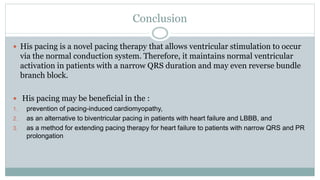
 His pacing is a novel pacing therapy that allows ventricular stimulation to occur
via the normal conduction system. Therefore, it maintains normal ventricular
activation in patients with a narrow QRS duration and may even reverse bundle
branch block.
 His pacing may be beneficial in the :
1. prevention of pacing-induced cardiomyopathy,
2. as an alternative to biventricular pacing in patients with heart failure and LBBB, and
3. as a method for extending pacing therapy for heart failure to patients with narrow QRS and PR
prolongation
Cardiac Contractility Modulation
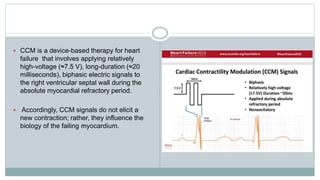
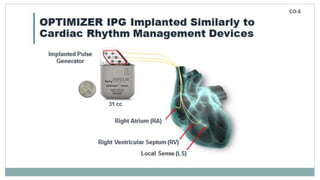
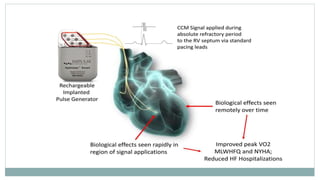
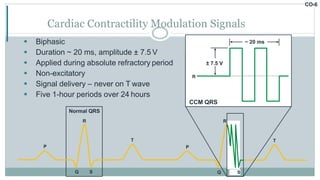
 CCM is a device-based therapy for heart
failure that involves applying relatively
high-voltage (≈7.5 V), long-duration (≈20
milliseconds), biphasic electric signals to
the right ventricular septal wall during the
absolute myocardial refractory period.
 Accordingly, CCM signals do not elicit a
new contraction; rather, they influence the
biology of the failing myocardium.
CO-6
 Biphasic
 Duration ~ 20 ms, amplitude ± 7.5 V
 Applied during absolute refractory period
 Non-excitatory
 Signal delivery – never on T wave
 Five 1-hour periods over 24 hours
Cardiac Contractility Modulation Signals
P
Q S
T
P
Q S
T
R
~ 20 ms
± 7.5 V
R
CCM QRS
S
Normal QRS
R
CO-7
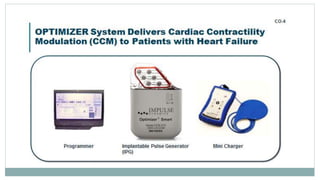
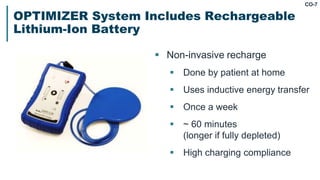
OPTIMIZER System Includes Rechargeable
Lithium-Ion Battery
 Non-invasive recharge
 Done by patient at home
 Uses inductive energy transfer
 Once a week
 ~ 60 minutes
(longer if fully depleted)
 High charging compliance
CO-9
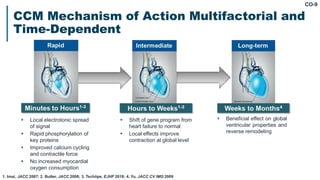
CCM Mechanism of Action Multifactorial and
Time-Dependent
 Local electrotonic spread
of signal
 Rapid phosphorylation of
key proteins
 Improved calcium cycling
and contractile force
 No increased myocardial
oxygen consumption
 Shift of gene program from
heart failure to normal
 Local effects improve
contraction at global level
 Beneficial effect on global
ventricular properties and
reverse remodeling
1. Imai, JACC 2007; 2. Butter, JACC 2008; 3. Tschöpe, EJHF 2018; 4. Yu, JACC CV IMG 2009
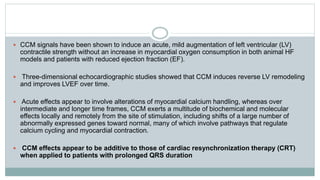
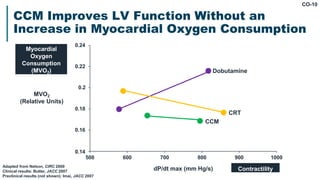
 CCM signals have been shown to induce an acute, mild augmentation of left ventricular (LV)
contractile strength without an increase in myocardial oxygen consumption in both animal HF
models and patients with reduced ejection fraction (EF).
 Three-dimensional echocardiographic studies showed that CCM induces reverse LV remodeling
and improves LVEF over time.
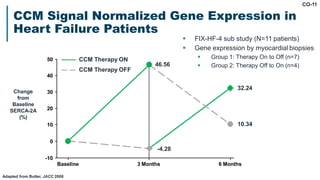
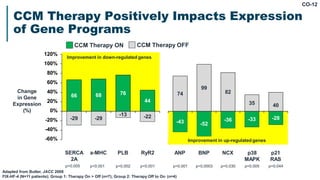
 Acute effects appear to involve alterations of myocardial calcium handling, whereas over
intermediate and longer time frames, CCM exerts a multitude of biochemical and molecular
effects locally and remotely from the site of stimulation, including shifts of a large number of
abnormally expressed genes toward normal, many of which involve pathways that regulate
calcium cycling and myocardial contraction.
 CCM effects appear to be additive to those of cardiac resynchronization therapy (CRT)
when applied to patients with prolonged QRS duration
CO-10
Adapted from Nelson, CIRC 2000
Clinical results: Butter, JACC 2007
Preclinical results (not shown): Imai, JACC 2007
CCM Improves LV Function Without an
Increase in Myocardial Oxygen Consumption
0.16
0.14
0.18
0.2
MVO2
(Relative Units)
0.22
0.24
500 600 700 800
dP/dt max (mm Hg/s)
900 1000
CRT
CCM
Dobutamine
Contractility
Myocardial
Oxygen
Consumption
(MVO2)
CO-11
CCM Signal Normalized Gene Expression in
Heart Failure Patients
-10
Baseline
0
10
20
30
40
50
Change
from
Baseline
SERCA-2A
(%)
3 Months 6 Months
32.24
-4.28
10.34
46.56
CCM Therapy ON
CCM Therapy OFF
Adapted from Butter, JACC 2008
 FIX-HF-4 sub study (N=11 patients)
 Gene expression by myocardial biopsies
 Group 1: Therapy On to Off (n=7)
 Group 2: Therapy Off to On (n=4)
CO-12
Improvement in up-regulated genes
74
99
82
35 40
-43 -52
-36 -33 -28
66 68 76
44
-29 -29
-13 -22
120%
100%
80%
60%
40%
20%
0%
-20%
-40%
-60%
CCM Therapy Positively Impacts Expression
of Gene Programs
p<0.001 p=0.002 p<0.001 p=0.001 p=0.0003 p=0.030
p38
MAPK
p=0.005
p21
RAS
p=0.044
Change
in Gene
Expression
(%)
CCM Therapy ON CCM Therapy OFF
Improvement in down-regulated genes
SERCA
2A
p=0.005
Adapted from Butter, JACC 2008
FIX-HF-4 (N=11 patients); Group 1: Therapy On > Off (n=7); Group 2: Therapy Off to On (n=4)
a-MHC PLB RyR2 ANP BNP NCX
 Three randomized prospective studies have compared patients treated with guideline-directed
optimal medical therapy (including an implanted cardiac defibrillator, when indicated) with those
treated with optimal medical therapy plus CCM.
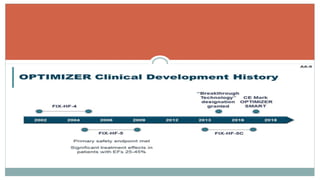
 The earliest of these, the FIX-HF-4 study, which was conducted in European Union, showed that
3 months of CCM treatment improved exercise tolerance and quality of life
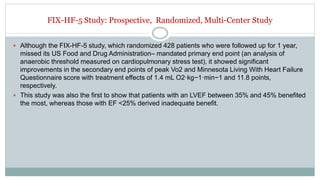
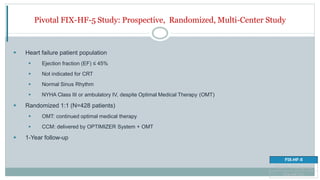
FIX-HF-5 Study: Prospective, Randomized, Multi-Center Study
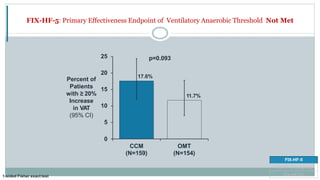
 Although the FIX-HF-5 study, which randomized 428 patients who were followed up for 1 year,
missed its US Food and Drug Administration– mandated primary end point (an analysis of
anaerobic threshold measured on cardiopulmonary stress test), it showed significant
improvements in the secondary end points of peak Vo2 and Minnesota Living With Heart Failure
Questionnaire score with treatment effects of 1.4 mL O2·kg−1·min−1 and 11.8 points,
respectively.
 This study was also the first to show that patients with an LVEF between 35% and 45% benefited
the most, whereas those with EF <25% derived inadequate benefit.
FIX-HF-5 Study
FIX-HF-5C (Confirmatory) Study
Study Design
Total Cohort Results
FIX-HF-5 Subgroup (EF ≥ 25%)
Study Design
Primary Effectiveness Results
Secondary and Additional Effectiveness Results
Safety Results FIX-HF-5
FIX-HF-5 Subgroup
FIX-HF-5C
CO-28
FIX-HF-5 Study
FIX-HF-5C (Confirmatory) Study
Study Design
Total Cohort Results
FIX-HF-5 Subgroup (EF ≥ 25%)
Study Design
Primary Effectiveness Results
Secondary and Additional Effectiveness Results
Safety Results FIX-HF-5
FIX-HF-5 Subgroup
FIX-HF-5C
Pivotal FIX-HF-5 Study: Prospective, Randomized, Multi-Center Study
 Heart failure patient population
 Ejection fraction (EF) ≤ 45%
 Not indicated for CRT
 Normal Sinus Rhythm
 NYHA Class III or ambulatory IV, despite Optimal Medical Therapy (OMT)
 Randomized 1:1 (N=428 patients)
 OMT: continued optimal medical therapy
 CCM: delivered by OPTIMIZER System + OMT
 1-Year follow-up
FIX-HF-5
FIX-HF-5 Subgroup
FIX-HF-5C
CO-30
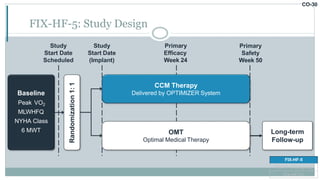
FIX-HF-5: Study Design
Randomization1:1
CCM Therapy
Delivered by OPTIMIZER System
OMT
Optimal Medical Therapy
Baseline
Peak VO2
MLWHFQ
NYHA Class
6 MWT
Primary
Efficacy
Week 24
Primary
Safety
Week 50
Study
Start Date
(Implant)
Study
Start Date
Scheduled
Long-term
Follow-up
FIX-HF-5
FIX-HF-5 Subgroup
FIX-HF-5C
CO-31
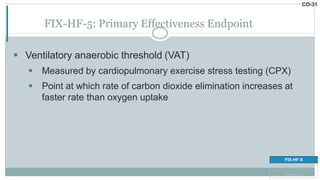
FIX-HF-5: Primary Effectiveness Endpoint
 Ventilatory anaerobic threshold (VAT)
 Measured by cardiopulmonary exercise stress testing (CPX)
 Point at which rate of carbon dioxide elimination increases at
faster rate than oxygen uptake
FIX-HF-5
FIX-HF-5 Subgroup
FIX-HF-5C
FIX-HF-5: Primary Effectiveness Endpoint of Ventilatory Anaerobic Threshold Not Met
17.6%
11.7%
5
0
10
15
20
25
CCM
(N=159)
OMT
(N=154)
Percent of
Patients
with ≥ 20%
Increase
in VAT
(95% CI)
p=0.093
FIX-HF-5
FIX-HF-5 Subgroup
FIX-HF-5C1-sided Fisher exact test
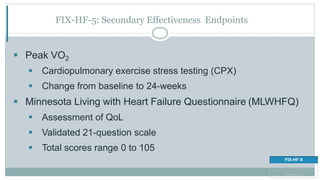
FIX-HF-5: Secondary Effectiveness Endpoints
 Peak VO2
 Cardiopulmonary exercise stress testing (CPX)
 Change from baseline to 24-weeks
 Minnesota Living with Heart Failure Questionnaire (MLWHFQ)
 Assessment of QoL
 Validated 21-question scale
 Total scores range 0 to 105
FIX-HF-5
FIX-HF-5 Subgroup
FIX-HF-5C
FIX-HF-5: Clinically Meaningful Improvements in Peak VO2 and QoL
0.24
-0.41
-0.75
-0.50
-0.25
0.00
0.25
0.50
0.75
CCM
(N=179)
OMT
(N=168)
∆
Peak VO2
(mL/kg/min)
[SD]
0.65 mL/kg/min
Nominal p=0.024
-15.4
-5.7
-20
-15
-10
-5
0
CCM
(N=196)
OMT
(N=184)
∆
MLWHFQ
(Total Score)
[SD]
-9.66 Total Score
Nominal p < 0.0001
FIX-HF-5
FIX-HF-5 Subgroup
FIX-HF-5C
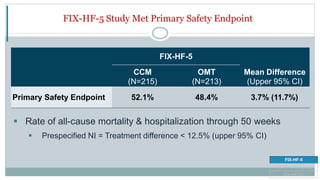
FIX-HF-5 Study Met Primary Safety Endpoint
 Rate of all-cause mortality & hospitalization through 50 weeks
 Prespecified NI = Treatment difference < 12.5% (upper 95% CI)
FIX-HF-5
CCM
(N=215)
OMT
(N=213)
Mean Difference
(Upper 95% CI)
Primary Safety Endpoint 52.1% 48.4% 3.7% (11.7%)
FIX-HF-5
FIX-HF-5 Subgroup
FIX-HF-5C
FIX-HF-5 Study
FIX-HF-5C (Confirmatory) Study
Study Design
Total Cohort Results
FIX-HF-5 Subgroup (EF ≥ 25%)
Study Design
Primary Effectiveness Results
Secondary and Additional Effectiveness Results
Safety Results
FIX-HF-5 Subgroup
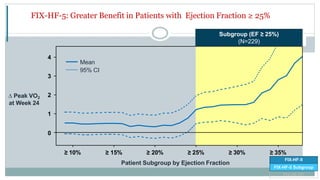
≥ 10% ≥ 15% ≥ 20% ≥ 25% ≥ 30% ≥ 35%
1
0
2
3
4
∆ Peak VO2
at Week 24
Patient Subgroup by Ejection Fraction
Mean
95% CI
FIX-HF-5: Greater Benefit in Patients with Ejection Fraction ≥ 25%
FIX-HF-5
FIX-HF-5 Subgroup
FIX-HF-5C
Subgroup (EF ≥ 25%)
(N=229)
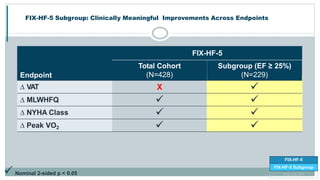
FIX-HF-5 Subgroup: Clinically Meaningful Improvements Across Endpoints
FIX-HF-5
Endpoint
Total Cohort
(N=428)
Subgroup (EF ≥ 25%)
(N=229)
∆ VAT X 
∆ MLWHFQ  
∆ NYHA Class  
∆ Peak VO2  
FIX-HF-5
FIX-HF-5 Subgroup
FIX-HF-5C Nominal 2-sided p < 0.05
CO-40
FIX-HF-5 Study
Study Design
Total Cohort Results
FIX-HF-5 Subgroup (EF ≥ 25%)
FIX-HF-5C (Confirmatory) Study
Study Design
Primary Effectiveness Results
Secondary and Additional Effectiveness Results
Safety Results FIX-HF-5
FIX-HF-5 Subgroup
FIX-HF-5C
FIX-HF-5C : Prospective, Randomized, Multicenter Study
 Most recently, the FIX-HF-5C study (n=160), conducted in sites in the United States and European Union,
was designed to confirm findings that CCM improves peak Vo2 and Minnesota Living With Heart Failure
Questionnaire score in patients with LVEF between 25% and 45% and, secondarily, to confirm even larger
effects in patients with LVEF of 35% to 45%.4 The study used a bayesian statistical design, meaning that
there was statistically appropriate pooling of data from the prior FIX-HF-5 study conducted in the United
States.
 Study showed an ≈50% reduction in the composite end point of cardiovascular death and HF
hospitalizations.
 FIX-HF-5C met its primary and secondary end points, showing treatment effects in the entire cohort (LVEF,
25%–45%) amounting to 0.84– mL O2·kg−1·min−1 improvements in peak Vo2 (P=0.011) and 11.7-point
incremental improvement over the control group in Minnesota Living With Heart Failure Questionnaire
score (P<0.001), as well as a 24.6-m improvement in the 6-minute walk test (P=0.006). For patients with
LVEF of 35% to 45%, the incremental improvements were 1.8 mL O2·kg−1·min−1 for peak Vo2 (P=0.009),
14.9 points for the Minnesota Living With Heart Failure Questionnaire score (P=0.003), and 57.1 m for the
6-minute walk test (P=0.003). This study also showed an ≈50% reduction in the composite end point of
death and HF hospitalizations
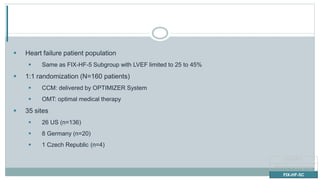
 Heart failure patient population
 Same as FIX-HF-5 Subgroup with LVEF limited to 25 to 45%
 1:1 randomization (N=160 patients)
 CCM: delivered by OPTIMIZER System
 OMT: optimal medical therapy
 35 sites
 26 US (n=136)
 8 Germany (n=20)
 1 Czech Republic (n=4)
FIX-HF-5
FIX-HF-5 Subgroup
FIX-HF-5C
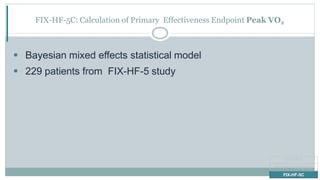
FIX-HF-5C: Calculation of Primary Effectiveness Endpoint Peak VO2
 Bayesian mixed effects statistical model
 229 patients from FIX-HF-5 study
FIX-HF-5
FIX-HF-5 Subgroup
FIX-HF-5C
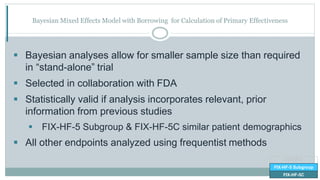
Bayesian Mixed Effects Model with Borrowing for Calculation of Primary Effectiveness
 Bayesian analyses allow for smaller sample size than required
in “stand-alone” trial
 Selected in collaboration with FDA
 Statistically valid if analysis incorporates relevant, prior
information from previous studies
 FIX-HF-5 Subgroup & FIX-HF-5C similar patient demographics
 All other endpoints analyzed using frequentist methods
FIX-HF-5
FIX-HF-5 Subgroup
FIX-HF-5C
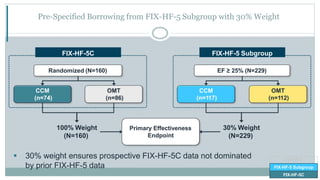
OMT
(n=86)
CCM
(n=74)
Randomized (N=160)
FIX-HF-5C
CCM
(n=117)
OMT
(n=112)
EF ≥ 25% (N=229)
FIX-HF-5 Subgroup
Pre-Specified Borrowing from FIX-HF-5 Subgroup with 30% Weight
 30% weight ensures prospective FIX-HF-5C data not dominated
by prior FIX-HF-5 data
Primary Effectiveness
Endpoint
30% Weight
(N=229)
100% Weight
(N=160)
FIX-HF-5
FIX-HF-5 Subgroup
FIX-HF-5C
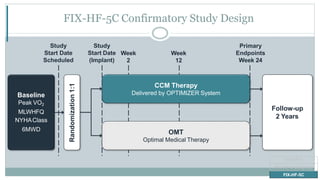
FIX-HF-5C Confirmatory Study Design
Randomization1:1
CCM Therapy
Delivered by OPTIMIZER System
OMT
Optimal Medical Therapy
Follow-up
2 Years
Baseline
Peak VO2
MLWHFQ
NYHAClass
6MWD
Week
2
Week
12
Primary
Endpoints
Week 24
Study
Start Date
(Implant)
Study
Start Date
Scheduled
FIX-HF-5
FIX-HF-5 Subgroup
FIX-HF-5C
CO-48
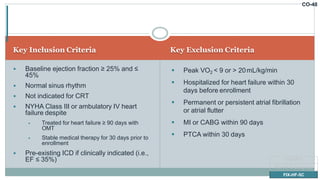
Key Inclusion Criteria Key Exclusion Criteria
 Baseline ejection fraction ≥ 25% and ≤
45%
 Normal sinus rhythm
 Not indicated for CRT
 NYHA Class III or ambulatory IV heart
failure despite
 Treated for heart failure ≥ 90 days with
OMT
 Stable medical therapy for 30 days prior to
enrollment
 Pre-existing ICD if clinically indicated (i.e.,
EF ≤ 35%)
 Peak VO2 < 9 or > 20mL/kg/min
 Hospitalized for heart failure within 30
days before enrollment
 Permanent or persistent atrial fibrillation
or atrial flutter
 MI or CABG within 90 days
 PTCA within 30 days
FIX-HF-5
FIX-HF-5 Subgroup
FIX-HF-5C
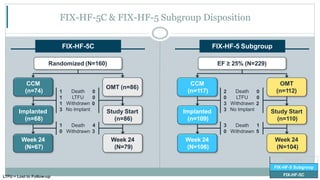
FIX-HF-5C & FIX-HF-5 Subgroup Disposition
OMT (n=86)
CCM
(n=74)
Randomized (N=160)
FIX-HF-5C
Study Start
(n=86)
Implanted
(n=68)
1 Death 0
1 LTFU 0
1 Withdrawn 0
3 No Implant
Week 24
(N=79)
1 Death 4
0 Withdrawn 3
Week 24
(N=67)
Week 24
(N=106)
CCM
(n=117)
OMT
(n=112)
EF ≥ 25% (N=229)
Implanted
(n=109)
Study Start
(n=110)
FIX-HF-5 Subgroup
2 Death 0
0 LTFU 0
3 Withdrawn 2
3 No Implant
3 Death 1
0 Withdrawn 5
Week 24
(N=104)
FIX-HF-5
FIX-HF-5 Subgroup
FIX-HF-5CLTFU = Lost to Follow-up
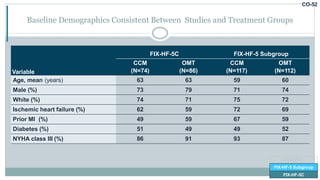
CO-52
Variable
FIX-HF-5C FIX-HF-5 Subgroup
CCM
(N=74)
OMT
(N=86)
CCM
(N=117)
OMT
(N=112)
Age, mean (years) 63 63 59 60
Male (%) 73 79 71 74
White (%) 74 71 75 72
Ischemic heart failure (%) 62 59 72 69
Prior MI (%) 49 59 67 59
Diabetes (%) 51 49 49 52
NYHA class III (%) 86 91 93 87
Baseline Demographics Consistent Between Studies and Treatment Groups
FIX-HF-5
FIX-HF-5 Subgroup
FIX-HF-5C
Variable
FIX-HF-5C FIX-HF-5 Subgroup
CCM
(N=74)
OMT
(N=86)
CCM
(N=117)
OMT
(N=112)
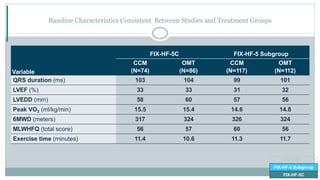
QRS duration (ms) 103 104 99 101
LVEF (%) 33 33 31 32
LVEDD (mm) 58 60 57 56
Peak VO2 (ml/kg/min) 15.5 15.4 14.6 14.8
6MWD (meters) 317 324 326 324
MLWHFQ (total score) 56 57 60 56
Exercise time (minutes) 11.4 10.6 11.3 11.7
Baseline Characteristics Consistent Between Studies and Treatment Groups
FIX-HF-5
FIX-HF-5 Subgroup
FIX-HF-5C
CO-54
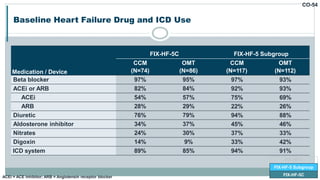
Baseline Heart Failure Drug and ICD Use
FIX-HF-5
FIX-HF-5 Subgroup
FIX-HF-5CACEi = ACE inhibitor; ARB = Angiotensin receptor blocker
Medication / Device
FIX-HF-5C FIX-HF-5 Subgroup
CCM
(N=74)
OMT
(N=86)
CCM
(N=117)
OMT
(N=112)
Beta blocker 97% 95% 97% 93%
ACEi or ARB 82% 84% 92% 93%
ACEi 54% 57% 75% 69%
ARB 28% 29% 22% 26%
Diuretic 76% 79% 94% 88%
Aldosterone inhibitor 34% 37% 45% 46%
Nitrates 24% 30% 37% 33%
Digoxin 14% 9% 33% 42%
ICD system 89% 85% 94% 91%
CO-55
FIX-HF-5 Study
Study Design
Total Cohort Results
FIX-HF-5 Subgroup (EF ≥ 25%)
FIX-HF-5C (Confirmatory) Study
Study Design
Primary Effectiveness Results
Secondary and Additional Effectiveness Results
Safety Results FIX-HF-5
FIX-HF-5 Subgroup
FIX-HF-5C
CO-56
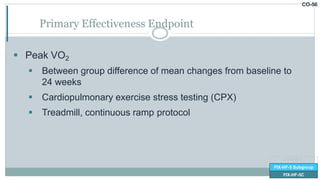
Primary Effectiveness Endpoint
 Peak VO2
 Between group difference of mean changes from baseline to
24 weeks
 Cardiopulmonary exercise stress testing (CPX)
 Treadmill, continuous ramp protocol
FIX-HF-5
FIX-HF-5 Subgroup
FIX-HF-5C
CO-58
Primary Effectiveness Met Demonstrating Significant Improvement in Peak VO2
Difference (95% CI)
Mean Peak VO2
Difference
(mL/kg/min)
Posterior
Probability
Benefit
Bayesian Model 0.84 (0.12, 1.55) 0.989
-1 0 1 2
Favors OMT Favors CCM
 Success = Posterior Probability > 0.975
FIX-HF-5
FIX-HF-5 Subgroup
FIX-HF-5C
ITT Population
FIX-HF-5 Subgroup [CCM=117, OMT=112]
FIX-HF-5C [CCM=74, OMT=86]
Peak VO2 in Treatment Effect inCCM Maintained Across 24 Weeks
Peak VO2
(mL/kg/min)
Week
17
16
15
14
13
0 12 24
∆ = 0.675 ∆ = 0.836
OMT
CCM
FIX-HF-5
FIX-HF-5 Subgroup
FIX-HF-5C
ITT Population
FIX-HF-5 Subgroup [CCM=117, OMT=112]
FIX-HF-5C [CCM=74, OMT=86]
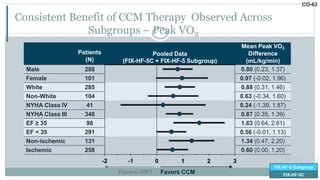
CO-63
Consistent Benefit of CCM Therapy Observed Across
Subgroups – Peak VO2
Patients
(N)
Pooled Data
(FIX-HF-5C + FIX-HF-5 Subgroup)
Mean Peak VO2
Difference
(mL/kg/min)
Male 288 0.80 (0.23, 1.37)
Female 101 0.97 (-0.02, 1.96)
White 285 0.88 (0.31, 1.46)
Non-White 104 0.63 (-0.34, 1.60)
NYHA Class IV 41 0.24 (-1.39, 1.87)
NYHA Class III 348 0.87 (0.35, 1.39)
EF ≥ 35 98 1.63 (0.64, 2.61)
EF < 35 291 0.56 (-0.01, 1.13)
Non-ischemic 131 1.34 (0.47, 2.20)
Ischemic 258 0.60 (0.00, 1.20)
-2 -1 0 1 2 3
Favors CCMFavors OMT
FIX-HF-5
FIX-HF-5 Subgroup
FIX-HF-5C
CO-64
Presentation Agenda
FIX-HF-5 Study
Study Design
Total Cohort Results
FIX-HF-5 Subgroup (EF ≥ 25%)
FIX-HF-5C (Confirmatory) Study
Study Design
Primary Effectiveness Results
Secondary and Additional Effectiveness Results
Safety Results FIX-HF-5
FIX-HF-5 Subgroup
FIX-HF-5C
CO-65
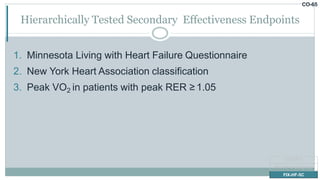
Hierarchically Tested Secondary Effectiveness Endpoints
1. Minnesota Living with Heart Failure Questionnaire
2. New York Heart Association classification
3. Peak VO2 in patients with peak RER ≥ 1.05
FIX-HF-5
FIX-HF-5 Subgroup
FIX-HF-5C
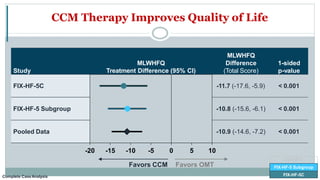
CCM Therapy Improves Quality of Life
Study
MLWHFQ
Treatment Difference (95% CI)
MLWHFQ
Difference
(Total Score)
1-sided
p-value
FIX-HF-5C -11.7 (-17.6, -5.9) < 0.001
FIX-HF-5 Subgroup -10.8 (-15.6, -6.1) < 0.001
Pooled Data -10.9 (-14.6, -7.2) < 0.001
0-20 -15 -10 -5
Favors CCM
5 10
Favors OMT
FIX-HF-5
FIX-HF-5 Subgroup
FIX-HF-5CComplete CaseAnalysis
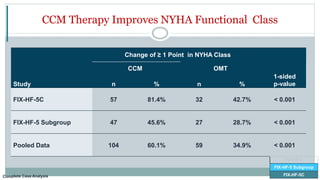
CCM Therapy Improves NYHA Functional Class
Com
Change of ≥ 1 Point in NYHA Class
CCM OMT
Study n % n %
1-sided
p-value
FIX-HF-5C 57 81.4% 32 42.7% < 0.001
FIX-HF-5 Subgroup 47 45.6% 27 28.7% < 0.001
Pooled Data 104 60.1% 59 34.9% < 0.001
plete CaseAnalysis
FIX-HF-5
FIX-HF-5 Subgroup
FIX-HF-5C
CO-69
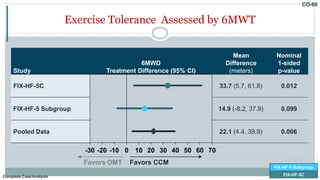
Exercise Tolerance Assessed by 6MWT
Study
6MWD
Treatment Difference (95% CI)
Mean
Difference
(meters)
Nominal
1-sided
p-value
FIX-HF-5C 33.7 (5.7, 61.8) 0.012
FIX-HF-5 Subgroup 14.9 (-8.2, 37.9) 0.099
Pooled Data 22.1 (4.4, 39.9) 0.006
-30 -20 -10 0 10 20 30 40 50 60 70
Favors CCMFavors OMT
FIX-HF-5
FIX-HF-5 Subgroup
FIX-HF-5CComplete CaseAnalysis
Change from Baseline to 24 Weeks in 6MWD
FIX-HF-5C
FIX-HF-5
FIX-HF-5 Subgroup
FIX-HF-5C
43.0
9.3
0
20
40
60
80
CCM
(N=69)
OMT
(N=72)
∆
6MWD
(Meters)
[95% CI]
33.7 meters
Nominal p=0.012
Complete CaseAnalysis
FIX-HF-5
FIX-HF-5 Subgroup
FIX-HF-5
FIX-HF-5 Subgroup
FIX-HF-5C
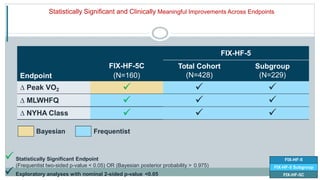
Statistically Significant and Clinically Meaningful Improvements Across Endpoints
Bayesian
Statistically Significant Endpoint
(Frequentist two-sided p-value < 0.05) OR (Bayesian posterior probability > 0.975)
 Exploratory analyses with nominal 2-sided p-value <0.05
FIX-HF-5
Endpoint
FIX-HF-5C
(N=160)
Total Cohort
(N=428)
Subgroup
(N=229)
∆ Peak VO2   
∆ MLWHFQ   
∆ NYHA Class   
Frequentist
FIX-HF-5C
CCM
(N=68)
OMT
(N=86) p-value
Freedom from All-Cause Death 98.3% 95.3% 0.255
Freedom from Cardiac Death 100% 96.5% 0.120
Freedom from All-Cause Death or Hospitalization 77.7% 78.1% 0.944
Freedom from CV Death or HF Hospitalization 97.1% 89.2% 0.066
Secondary Safety Endpoints Demonstrated No Significant Safety Concerns
FIX-HF-5
FIX-HF-5 Subgroup
FIX-HF-5C
Per Protocol Population
FIX-HF-5C [CCM=68, OMT=86]
CO-79
FIX-HF-5C: 97% CCM Patients Free From Cardiovascular Death or HF Hospitalization
FIX-HF-5C
CCM OMT
Freedom from
Cardiac Death or
HF Hospitalization
97.1% (66/68) 89.2% (75/84)
2-sided logrank p=0.066
Patients
with
Event
(%)
Week 24
50
43
Week 12
66
76
Week 0
CCM 68
OMT 84
20%
15%
OMT
CCM
0%
5%
10%
HR=0.26
FIX-HF-5
FIX-HF-5 Subgroup
FIX-HF-5C
Per Protocol Population
FIX-HF-5C [CCM=68, OMT=86]
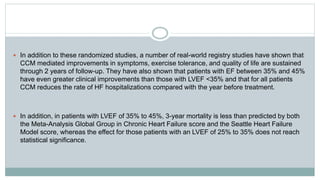
 In addition to these randomized studies, a number of real-world registry studies have shown that
CCM mediated improvements in symptoms, exercise tolerance, and quality of life are sustained
through 2 years of follow-up. They have also shown that patients with EF between 35% and 45%
have even greater clinical improvements than those with LVEF <35% and that for all patients
CCM reduces the rate of HF hospitalizations compared with the year before treatment.
 In addition, in patients with LVEF of 35% to 45%, 3-year mortality is less than predicted by both
the Meta-Analysis Global Group in Chronic Heart Failure score and the Seattle Heart Failure
Model score, whereas the effect for those patients with an LVEF of 25% to 35% does not reach
statistical significance.
 As a result of the earliest of the studies noted above, CCM has been made available to patients in
countries that recognize the CE Mark and in China, India, Brazil, the Middle East, and Australia.
CCM was already mentioned in the European Society of Cardiology guidelines for the
management of patients with HF.
 CCM got approval by the US Food and Drug Administration (FDA ) in march 2019.
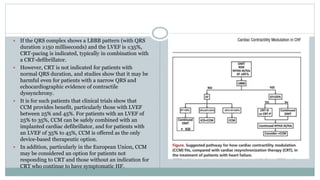
 If the QRS complex shows a LBBB pattern (with QRS
duration ≥150 milliseconds) and the LVEF is ≤35%,
CRT-pacing is indicated, typically in combination with
a CRT-defibrillator.
 However, CRT is not indicated for patients with
normal QRS duration, and studies show that it may be
harmful even for patients with a narrow QRS and
echocardiographic evidence of contractile
dyssynchrony.
 It is for such patients that clinical trials show that
CCM provides benefit, particularly those with LVEF
between 25% and 45%. For patients with an LVEF of
25% to 35%, CCM can be safely combined with an
implanted cardiac defibrillator, and for patients with
an LVEF of 35% to 45%, CCM is offered as the only
device-based therapeutic option.
 In addition, particularly in the European Union, CCM
may be considered an option for patients not
responding to CRT and those without an indication for
CRT who continue to have symptomatic HF.

New Heart Failure modalities: HIS Bundle Pacing & Cardiac Contractility Modulation

  • 1.
    1 . HISBUNDLE PACING 2. CARDIAC CONTRACTILITY MODULATION New Frontier in the Treatment of Heart Failure Dr. Najeeb Ullah Sofi LPS Institute of Cardiology
  • 2.
     Biventricular pacinghas revolutionised the treatment of heart failure in patients with sinus rhythm and left bundle branch block, however, left ventricular-lead placement is not always technically possible.  Rates of nonresponse to CRT remain high—between 30% and 40% . In addition, rates of implant failure for CRT range between 5% and 9%, in part due to high rates of CS lead dislodgement.  Furthermore, biventricular pacing does not fully normalise ventricular activation and, therefore, the ventricular resynchronisation is imperfect.  Approximately 30% of those who meet the criteria donot experience improvement with CRT. Moreover, about 50% of individuals with advanced HF do not meet criteria for CRT  Right ventricular pacing for bradycardia may cause or worsen heart failure in some patients by causing dyssynchronous ventricular activation.
  • 3.
     His bundlepacing activates the ventricles via the native His-Purkinje system, resulting in true physiological pacing, and, therefore, is a promising alternate site for pacing in bradycardia and traditional CRT indications in cases where it can overcome left bundle branch block.  Furthermore, it may open up new indications for pacing therapy in heart failure, such as targeting patients with PR prolongation, but a narrow QRS duration
  • 4.
     Furthermore, whenbiventricular pacing is delivered to patients with a narrow QRS duration, or moderate QRS prolongation, it may actually prolong ventricular activation time and worsen dyssynchronous activation.  His bundle pacing is an alternative technique for delivering cardiac resynchronisation therapy. It can dramatically shorten QRS duration and restore normal intrinsic activation patterns in some patients with ventricular conduction delays
  • 5.
    Potential role ofHIS pacing in Heart Failure 1. His Pacing to Prevent Right Ventricular Pacing-induced Cardiomyopathy 2. Heart Failure Patients with AF and AV Node Ablation 3. Used as an alternative to biventricular pacing in patients with heart failure and LBBB 4. May extend pacing therapy in Heart Failure in Patients with Narrow QRS and PR Prolongation by providing AV synchrony without inducing ventricular dyssynchrony.
  • 7.
    Anatomy of theHis Bundle and Implant Technique  The bundle of His extends from the compact AV node to the membranous interventricular septum, and measures approximately 20 mm in length. The bundle is a cord-like structure made up of multiple strands, which, even before the branching, are predestined to become the right or left bundle branches  The most commonly used lead for His bundle pacing is the 69 cm Select Secure™ 3830 (Medtronic). This is a non-stylet-driven active fixation lead. Importantly, the screw forms part of the tip electrode allowing penetration of the capsule of the bundle of His and, therefore, direct stimulation of the His bundle fibres.  The lead can be delivered to the His bundle region using either the specially designed non- deflectable His delivery sheath (C315 43 cm; Medtronic) or a deflectable sheath (C304 69 cm; Medtronic).
  • 8.
     Unlike traditionallead placement that primarily uses fluoroscopic guidance, His lead placement primarily uses electrical mapping. An electrogram from the lead tip is displayed using placement via either a lab electrophysiology system or a standard pacing system analyser.  A His signal is targeted, aiming for the local ventricular electrogram to be approximately twice the amplitude of the atrial signal  Recently-published data suggests thresholds of <2.5 V at 1 ms should be achieved.
  • 9.
     His bundlecapture may be either selective or non-selective. 1. With selective capture, only the His bundle fibres are stimulated and, therefore, activation occurs entirely via the His-Purkinje system. 2. With non-selective capture both the His bundle fibres and local myocardium are captured. During non-selective capture a pseudo delta wave on the surface ECG is formed from local myocardial capture.
  • 10.
    1. His Pacingto Deliver Ventricular Resynchronisation in Patients with LBBB
  • 11.
     Biventricular pacingdelivers imperfect ventricular resynchronisation, with only modest reductions in QRS duration, and does not return left ventricular activation times to those seen in individuals with intrinsically narrow QRS.  Furthermore, when biventricular pacing is delivered to patients with a narrow QRS duration, or moderate QRS prolongation, it may actually prolong ventricular activation time and worsen dyssynchronous activation.  His bundle pacing is an alternative technique for delivering cardiac resynchronisation therapy. It can dramatically shorten QRS duration and restore normal intrinsic activation patterns in some patients with ventricular conduction delays.
  • 12.
    A number ofmechanisms have been proposed for His bundle pacing narrowing or reversing a bundle branch block 1. Positioning the pacing lead distal to the site of bundle branch block. 2. Source-sink relationships 3. Retrograde activation
  • 13.
     Reductions inQRS duration have been observed in 70–92 % of patients with LBBB  The reductions in QRS duration appear to be maintained even with chronic pacing, and mean thresholds are similar to those seen for left ventricular leads; for example, in one study thresholds to achieve this are 2.0 V at 1 ms (mean threshold 1.4 V at 1 ms)  No large randomised trial has been conducted comparing His pacing with biventricular pacing
  • 14.
     The meanQRS reduction with His pacing is 46 ms. This compares with typical values of 20 ms seen with biventricular pacing.  Improvements in left ventricular ejection fraction and symptoms have been observed with His pacing.  His pacing was initially assessed as a rescue strategy in cases where biventricular pacing failed and some authors have shown that His pacing is feasible as a primary strategy for cardiac resynchronisation.  In a crossover study, His pacing was more effective than biventricular pacing at reducing QRS duration in 72 % of patients
  • 15.
     With improvedtechnology and experience, permanent His pacing achieved QRS narrowing in 90 % of patients.  In about 10% to 30% of patients, LBBB may not be correctable by permanent HBP.  The reasons for failure in achieving QRS narrowing is not fully understood. It is possible this subgroup of patients have 1. Abnormal left ventricular conduction due to disease outside of the His bundle and, therefore, cannot be treated with His pacing 2. Block is too severe to overcome
  • 16.
     His pacinghas the advantage that it does not require the use of contrast and can often be performed more quickly than left ventricular lead placement. However, adequately powered randomised studies are required to compare this strategy for resynchronisation therapy with biventricular pacing.  In 2016 recruitment started for the His Bundle Pacing Versus Coronary Sinus Pacing for Cardiac Resynchronisation Therapy (His-SYNC; NCT02700425) study, which is aiming to randomise 40 patients to either His pacing or biventricular pacing and will look at time to first cardiovascular hospitalisation or death.
  • 17.
     To date,there have been 5 case series examining HBP for resynchronization.  Barba-Pichardo et al. were the first to report on HBP among patients in whom CRT implant was unsuccessful.  Lustgarten et al. Attempted HBP for CRT in 29 patients (28 with LBBB), and QRS narrowing was achieved acutely in 21 (72%). The trial protocol required Y-adapting the His and CS lead to allow for crossover study, and permanent HBP could not be achieved in 12 patients, with failure of conventional CS LV lead placement in 1 patient. A total of 12 patients completed 12 months of follow-up and crossover comparison. The study showed that patients appeared to benefit similarly when assigned to HBP versus biventricular pacing. Although significant improvement of NYHA functional class, QOL, 6-min walk distance, and LVEF was noted for both HBP and biventricular pacing compared with baseline, the study was not powered to detect differences between the 2 strategies.
  • 18.
     Ajijola etal. reported on the first case series of primary HBP (HBP lead in lieu of traditional LV lead) in CRT-eligible patients . Among 21 patients LBBB, 4 right bundle branch block [RBBB]), permanent HBP was achieved in 16 patients (76%). The majority of patients demonstrated QRS narrowing with nonselective capture, with an average QRS reduction of approximately 30%, but not to <120 ms for the majority of patients.  Most recently, Sharma et al. pooled data from 5 centers and compiled the largest retrospective case series of CRT-eligible patients thus far. They recognized 2 important cohorts: 1. Group I, patients in whom prior CRT had been attempted but was unsuccessful and HBP was used as a bail-out strategy; and 2. Group II, primary HBP for CRT-eligible patients (AV block, post-AV junction ablation, underlying BBB, or patients undergoing planned upgrade due to >40% RV pacing). Over a mean follow-up period of 14 months, patients demonstrated QRS narrowing, improvement in NYHA functional class, and LVEF. Implant success was high (95 of 106 patients, 90%) and lead-related complication rate was overall low (7 of 95 patients, 7.3%). Importantly, BBB was present in 48 patients (45%), and HBP was effective in this group (92% implant success).
  • 20.
    2. Heart Failurein Patients with Narrow QRS and PR Prolongation  PR prolongation results in impaired left ventricular filling, and in patients with heart failure it is associated with a higher risk of death than those whose AV delay was within normal limits.  COMPANION trial, patients with a long PR interval had a 17 % greater relative risk reduction in heart failure admissions and death compared with those with a normal PR interval.  Biventricular pacing requires a compulsory shortening of the AV delay to ensure biventricular capture. This shortening of the AV delay appears to be one of the mechanisms by which biventricular pacing delivers its beneficial effect  Delivering biventricular pacing to this group of patients may induce ventricular dyssynchrony relative to normal intrinsic activation, which may offset some of the beneficial effects of AV delay shortening.  In the context of a normal QRS, biventricular pacing can increase mortality.
  • 21.
     His pacinghas the advantage that it may allow AV delay to be optimised while normal intrinsic ventricular activation is maintained.  Acute haemodynamic function is improved with AV-optimised His bundle pacing in patients with heart failure and PR prolongation with either a normal QRS or RBBB.  The magnitude of acute haemodynamic corresponded to approximately 60 % of the benefit seen in patients with LBBB receiving biventricular pacing
  • 22.
     The HisOptimised Pacing Evaluated for Heart Failure Trial HOPE-HF trial is a multicentre, double-blind, randomised, crossover study that aims to randomise 160 patients with PR prolongation (≥200 ms), left ventricular impairment (ejection fraction ≤40 %), and either narrow QRS (≤140 ms) or RBBB. Participants are first randomised to either 6 months with the His lead programmed on or off before crossing over to the alternate arm. The primary endpoint is exercise capacity measured using cardiopulmonary exercise testing. When randomised to the His pacing arm, the patients are set to an AV delay determined by our high resolution haemodynamic optimisation protocol.  If the results are positive then this would offer the potential of a new therapeutic option to a cohort of patients with heart failure who are not currently eligible for pacing therapy for heart failure.
  • 23.
    3.His Pacing toPrevent Right Ventricular Pacing-induced Cardiomyopathy  Right ventricular apical pacing results in non-physiological dyssynchronous ventricular activation. This may lead to reverse ventricular remodelling and impaired cardiac function.  In the Dual Chamber and VVI Implantable Defibrillator (DAVID) trial, programming that promotes right ventricular pacing was associated with increased mortality and hospitalisations for heart failure in patients with a standard ICD indication, no pacing indication and impaired LVF.  Biventricular Pacing for Atrioventricular Block to Prevent Cardiac Desynchronisation (BIOPACE) trial, biventricular pacing failed to demonstrated superiority to right ventricular pacing in patients with normal LVF. This was defined as left ventricular ejection fraction >45 %, but did not exclude patients with symptoms of heart failure.
  • 24.
     Therefore, rightventricular pacing should be avoided in patients with impaired LVF but biventricular pacing may not be the optimal way to prevent the adverse consequences since it does not produce true physiological pacing.  Furthermore, some patients with normal baseline ventricular function who received high percentages of right ventricular pacing develop pacing-induced cardiomyopathy  His pacing offers an elegant solution to potentially avoid pacing induced deterioration in cardiac function. Since activation occurs via the normal conduction system, it does not result in ventricular dyssynchrony. Compared with right ventricular pacing, His pacing results in improved LVF both acutely and with chronic pacing. Pacing-avoidance algorithms may be unnecessary, which has the advantage of allowing physiological AV delays to be programmed.  Data from observational studies show chronic His pacing, in patients with a bradycardia pacing indication, appears to be feasible and safe.
  • 26.
    4. Heart FailurePatients with Atrial Fibrillation and Atrioventricular Node Ablation  His bundle pacing may deliver substantial benefits in patients with heart failure after AV node ablation for AF.  Observational data have suggested some benefit of AV node ablation and left ventricular lead implantation in this group to ensure 100 % biventricular pacing.  Permanent His bundle pacing may yet allow a more elegant solution if His bundle pacing allows reversal of LBBB.  Theoretically, His pacing is a better method for delivering pacing since the lead can be positioned distal to the ablation site, and can maintain normal conduction via the His-Purkinje system.  This is also an option in patients with a narrow QRS where inadequate rate- controlled AF contributes to poor LVF.
  • 28.
    Conclusion  His pacingis a novel pacing therapy that allows ventricular stimulation to occur via the normal conduction system. Therefore, it maintains normal ventricular activation in patients with a narrow QRS duration and may even reverse bundle branch block.  His pacing may be beneficial in the : 1. prevention of pacing-induced cardiomyopathy, 2. as an alternative to biventricular pacing in patients with heart failure and LBBB, and 3. as a method for extending pacing therapy for heart failure to patients with narrow QRS and PR prolongation
  • 29.
  • 30.
     CCM isa device-based therapy for heart failure that involves applying relatively high-voltage (≈7.5 V), long-duration (≈20 milliseconds), biphasic electric signals to the right ventricular septal wall during the absolute myocardial refractory period.  Accordingly, CCM signals do not elicit a new contraction; rather, they influence the biology of the failing myocardium.
  • 34.
    CO-6  Biphasic  Duration~ 20 ms, amplitude ± 7.5 V  Applied during absolute refractory period  Non-excitatory  Signal delivery – never on T wave  Five 1-hour periods over 24 hours Cardiac Contractility Modulation Signals P Q S T P Q S T R ~ 20 ms ± 7.5 V R CCM QRS S Normal QRS R
  • 35.
    CO-7 OPTIMIZER System IncludesRechargeable Lithium-Ion Battery  Non-invasive recharge  Done by patient at home  Uses inductive energy transfer  Once a week  ~ 60 minutes (longer if fully depleted)  High charging compliance
  • 36.
    CO-9 CCM Mechanism ofAction Multifactorial and Time-Dependent  Local electrotonic spread of signal  Rapid phosphorylation of key proteins  Improved calcium cycling and contractile force  No increased myocardial oxygen consumption  Shift of gene program from heart failure to normal  Local effects improve contraction at global level  Beneficial effect on global ventricular properties and reverse remodeling 1. Imai, JACC 2007; 2. Butter, JACC 2008; 3. Tschöpe, EJHF 2018; 4. Yu, JACC CV IMG 2009
  • 37.
     CCM signalshave been shown to induce an acute, mild augmentation of left ventricular (LV) contractile strength without an increase in myocardial oxygen consumption in both animal HF models and patients with reduced ejection fraction (EF).  Three-dimensional echocardiographic studies showed that CCM induces reverse LV remodeling and improves LVEF over time.  Acute effects appear to involve alterations of myocardial calcium handling, whereas over intermediate and longer time frames, CCM exerts a multitude of biochemical and molecular effects locally and remotely from the site of stimulation, including shifts of a large number of abnormally expressed genes toward normal, many of which involve pathways that regulate calcium cycling and myocardial contraction.  CCM effects appear to be additive to those of cardiac resynchronization therapy (CRT) when applied to patients with prolonged QRS duration
  • 38.
    CO-10 Adapted from Nelson,CIRC 2000 Clinical results: Butter, JACC 2007 Preclinical results (not shown): Imai, JACC 2007 CCM Improves LV Function Without an Increase in Myocardial Oxygen Consumption 0.16 0.14 0.18 0.2 MVO2 (Relative Units) 0.22 0.24 500 600 700 800 dP/dt max (mm Hg/s) 900 1000 CRT CCM Dobutamine Contractility Myocardial Oxygen Consumption (MVO2)
  • 39.
    CO-11 CCM Signal NormalizedGene Expression in Heart Failure Patients -10 Baseline 0 10 20 30 40 50 Change from Baseline SERCA-2A (%) 3 Months 6 Months 32.24 -4.28 10.34 46.56 CCM Therapy ON CCM Therapy OFF Adapted from Butter, JACC 2008  FIX-HF-4 sub study (N=11 patients)  Gene expression by myocardial biopsies  Group 1: Therapy On to Off (n=7)  Group 2: Therapy Off to On (n=4)
  • 40.
    CO-12 Improvement in up-regulatedgenes 74 99 82 35 40 -43 -52 -36 -33 -28 66 68 76 44 -29 -29 -13 -22 120% 100% 80% 60% 40% 20% 0% -20% -40% -60% CCM Therapy Positively Impacts Expression of Gene Programs p<0.001 p=0.002 p<0.001 p=0.001 p=0.0003 p=0.030 p38 MAPK p=0.005 p21 RAS p=0.044 Change in Gene Expression (%) CCM Therapy ON CCM Therapy OFF Improvement in down-regulated genes SERCA 2A p=0.005 Adapted from Butter, JACC 2008 FIX-HF-4 (N=11 patients); Group 1: Therapy On > Off (n=7); Group 2: Therapy Off to On (n=4) a-MHC PLB RyR2 ANP BNP NCX
  • 42.
     Three randomizedprospective studies have compared patients treated with guideline-directed optimal medical therapy (including an implanted cardiac defibrillator, when indicated) with those treated with optimal medical therapy plus CCM.  The earliest of these, the FIX-HF-4 study, which was conducted in European Union, showed that 3 months of CCM treatment improved exercise tolerance and quality of life
  • 43.
    FIX-HF-5 Study: Prospective,Randomized, Multi-Center Study  Although the FIX-HF-5 study, which randomized 428 patients who were followed up for 1 year, missed its US Food and Drug Administration– mandated primary end point (an analysis of anaerobic threshold measured on cardiopulmonary stress test), it showed significant improvements in the secondary end points of peak Vo2 and Minnesota Living With Heart Failure Questionnaire score with treatment effects of 1.4 mL O2·kg−1·min−1 and 11.8 points, respectively.  This study was also the first to show that patients with an LVEF between 35% and 45% benefited the most, whereas those with EF <25% derived inadequate benefit.
  • 44.
    FIX-HF-5 Study FIX-HF-5C (Confirmatory)Study Study Design Total Cohort Results FIX-HF-5 Subgroup (EF ≥ 25%) Study Design Primary Effectiveness Results Secondary and Additional Effectiveness Results Safety Results FIX-HF-5 FIX-HF-5 Subgroup FIX-HF-5C
  • 45.
    CO-28 FIX-HF-5 Study FIX-HF-5C (Confirmatory)Study Study Design Total Cohort Results FIX-HF-5 Subgroup (EF ≥ 25%) Study Design Primary Effectiveness Results Secondary and Additional Effectiveness Results Safety Results FIX-HF-5 FIX-HF-5 Subgroup FIX-HF-5C
  • 46.
    Pivotal FIX-HF-5 Study:Prospective, Randomized, Multi-Center Study  Heart failure patient population  Ejection fraction (EF) ≤ 45%  Not indicated for CRT  Normal Sinus Rhythm  NYHA Class III or ambulatory IV, despite Optimal Medical Therapy (OMT)  Randomized 1:1 (N=428 patients)  OMT: continued optimal medical therapy  CCM: delivered by OPTIMIZER System + OMT  1-Year follow-up FIX-HF-5 FIX-HF-5 Subgroup FIX-HF-5C
  • 47.
    CO-30 FIX-HF-5: Study Design Randomization1:1 CCMTherapy Delivered by OPTIMIZER System OMT Optimal Medical Therapy Baseline Peak VO2 MLWHFQ NYHA Class 6 MWT Primary Efficacy Week 24 Primary Safety Week 50 Study Start Date (Implant) Study Start Date Scheduled Long-term Follow-up FIX-HF-5 FIX-HF-5 Subgroup FIX-HF-5C
  • 48.
    CO-31 FIX-HF-5: Primary EffectivenessEndpoint  Ventilatory anaerobic threshold (VAT)  Measured by cardiopulmonary exercise stress testing (CPX)  Point at which rate of carbon dioxide elimination increases at faster rate than oxygen uptake FIX-HF-5 FIX-HF-5 Subgroup FIX-HF-5C
  • 49.
    FIX-HF-5: Primary EffectivenessEndpoint of Ventilatory Anaerobic Threshold Not Met 17.6% 11.7% 5 0 10 15 20 25 CCM (N=159) OMT (N=154) Percent of Patients with ≥ 20% Increase in VAT (95% CI) p=0.093 FIX-HF-5 FIX-HF-5 Subgroup FIX-HF-5C1-sided Fisher exact test
  • 50.
    FIX-HF-5: Secondary EffectivenessEndpoints  Peak VO2  Cardiopulmonary exercise stress testing (CPX)  Change from baseline to 24-weeks  Minnesota Living with Heart Failure Questionnaire (MLWHFQ)  Assessment of QoL  Validated 21-question scale  Total scores range 0 to 105 FIX-HF-5 FIX-HF-5 Subgroup FIX-HF-5C
  • 51.
    FIX-HF-5: Clinically MeaningfulImprovements in Peak VO2 and QoL 0.24 -0.41 -0.75 -0.50 -0.25 0.00 0.25 0.50 0.75 CCM (N=179) OMT (N=168) ∆ Peak VO2 (mL/kg/min) [SD] 0.65 mL/kg/min Nominal p=0.024 -15.4 -5.7 -20 -15 -10 -5 0 CCM (N=196) OMT (N=184) ∆ MLWHFQ (Total Score) [SD] -9.66 Total Score Nominal p < 0.0001 FIX-HF-5 FIX-HF-5 Subgroup FIX-HF-5C
  • 52.
    FIX-HF-5 Study MetPrimary Safety Endpoint  Rate of all-cause mortality & hospitalization through 50 weeks  Prespecified NI = Treatment difference < 12.5% (upper 95% CI) FIX-HF-5 CCM (N=215) OMT (N=213) Mean Difference (Upper 95% CI) Primary Safety Endpoint 52.1% 48.4% 3.7% (11.7%) FIX-HF-5 FIX-HF-5 Subgroup FIX-HF-5C
  • 53.
    FIX-HF-5 Study FIX-HF-5C (Confirmatory)Study Study Design Total Cohort Results FIX-HF-5 Subgroup (EF ≥ 25%) Study Design Primary Effectiveness Results Secondary and Additional Effectiveness Results Safety Results
  • 54.
    FIX-HF-5 Subgroup ≥ 10%≥ 15% ≥ 20% ≥ 25% ≥ 30% ≥ 35% 1 0 2 3 4 ∆ Peak VO2 at Week 24 Patient Subgroup by Ejection Fraction Mean 95% CI FIX-HF-5: Greater Benefit in Patients with Ejection Fraction ≥ 25% FIX-HF-5 FIX-HF-5 Subgroup FIX-HF-5C Subgroup (EF ≥ 25%) (N=229)
  • 55.
    FIX-HF-5 Subgroup: ClinicallyMeaningful Improvements Across Endpoints FIX-HF-5 Endpoint Total Cohort (N=428) Subgroup (EF ≥ 25%) (N=229) ∆ VAT X  ∆ MLWHFQ   ∆ NYHA Class   ∆ Peak VO2   FIX-HF-5 FIX-HF-5 Subgroup FIX-HF-5C Nominal 2-sided p < 0.05
  • 56.
    CO-40 FIX-HF-5 Study Study Design TotalCohort Results FIX-HF-5 Subgroup (EF ≥ 25%) FIX-HF-5C (Confirmatory) Study Study Design Primary Effectiveness Results Secondary and Additional Effectiveness Results Safety Results FIX-HF-5 FIX-HF-5 Subgroup FIX-HF-5C
  • 57.
    FIX-HF-5C : Prospective,Randomized, Multicenter Study  Most recently, the FIX-HF-5C study (n=160), conducted in sites in the United States and European Union, was designed to confirm findings that CCM improves peak Vo2 and Minnesota Living With Heart Failure Questionnaire score in patients with LVEF between 25% and 45% and, secondarily, to confirm even larger effects in patients with LVEF of 35% to 45%.4 The study used a bayesian statistical design, meaning that there was statistically appropriate pooling of data from the prior FIX-HF-5 study conducted in the United States.  Study showed an ≈50% reduction in the composite end point of cardiovascular death and HF hospitalizations.  FIX-HF-5C met its primary and secondary end points, showing treatment effects in the entire cohort (LVEF, 25%–45%) amounting to 0.84– mL O2·kg−1·min−1 improvements in peak Vo2 (P=0.011) and 11.7-point incremental improvement over the control group in Minnesota Living With Heart Failure Questionnaire score (P<0.001), as well as a 24.6-m improvement in the 6-minute walk test (P=0.006). For patients with LVEF of 35% to 45%, the incremental improvements were 1.8 mL O2·kg−1·min−1 for peak Vo2 (P=0.009), 14.9 points for the Minnesota Living With Heart Failure Questionnaire score (P=0.003), and 57.1 m for the 6-minute walk test (P=0.003). This study also showed an ≈50% reduction in the composite end point of death and HF hospitalizations
  • 58.
     Heart failurepatient population  Same as FIX-HF-5 Subgroup with LVEF limited to 25 to 45%  1:1 randomization (N=160 patients)  CCM: delivered by OPTIMIZER System  OMT: optimal medical therapy  35 sites  26 US (n=136)  8 Germany (n=20)  1 Czech Republic (n=4) FIX-HF-5 FIX-HF-5 Subgroup FIX-HF-5C
  • 59.
    FIX-HF-5C: Calculation ofPrimary Effectiveness Endpoint Peak VO2  Bayesian mixed effects statistical model  229 patients from FIX-HF-5 study FIX-HF-5 FIX-HF-5 Subgroup FIX-HF-5C
  • 60.
    Bayesian Mixed EffectsModel with Borrowing for Calculation of Primary Effectiveness  Bayesian analyses allow for smaller sample size than required in “stand-alone” trial  Selected in collaboration with FDA  Statistically valid if analysis incorporates relevant, prior information from previous studies  FIX-HF-5 Subgroup & FIX-HF-5C similar patient demographics  All other endpoints analyzed using frequentist methods FIX-HF-5 FIX-HF-5 Subgroup FIX-HF-5C
  • 61.
    OMT (n=86) CCM (n=74) Randomized (N=160) FIX-HF-5C CCM (n=117) OMT (n=112) EF ≥25% (N=229) FIX-HF-5 Subgroup Pre-Specified Borrowing from FIX-HF-5 Subgroup with 30% Weight  30% weight ensures prospective FIX-HF-5C data not dominated by prior FIX-HF-5 data Primary Effectiveness Endpoint 30% Weight (N=229) 100% Weight (N=160) FIX-HF-5 FIX-HF-5 Subgroup FIX-HF-5C
  • 62.
    FIX-HF-5C Confirmatory StudyDesign Randomization1:1 CCM Therapy Delivered by OPTIMIZER System OMT Optimal Medical Therapy Follow-up 2 Years Baseline Peak VO2 MLWHFQ NYHAClass 6MWD Week 2 Week 12 Primary Endpoints Week 24 Study Start Date (Implant) Study Start Date Scheduled FIX-HF-5 FIX-HF-5 Subgroup FIX-HF-5C
  • 63.
    CO-48 Key Inclusion CriteriaKey Exclusion Criteria  Baseline ejection fraction ≥ 25% and ≤ 45%  Normal sinus rhythm  Not indicated for CRT  NYHA Class III or ambulatory IV heart failure despite  Treated for heart failure ≥ 90 days with OMT  Stable medical therapy for 30 days prior to enrollment  Pre-existing ICD if clinically indicated (i.e., EF ≤ 35%)  Peak VO2 < 9 or > 20mL/kg/min  Hospitalized for heart failure within 30 days before enrollment  Permanent or persistent atrial fibrillation or atrial flutter  MI or CABG within 90 days  PTCA within 30 days FIX-HF-5 FIX-HF-5 Subgroup FIX-HF-5C
  • 64.
    FIX-HF-5C & FIX-HF-5Subgroup Disposition OMT (n=86) CCM (n=74) Randomized (N=160) FIX-HF-5C Study Start (n=86) Implanted (n=68) 1 Death 0 1 LTFU 0 1 Withdrawn 0 3 No Implant Week 24 (N=79) 1 Death 4 0 Withdrawn 3 Week 24 (N=67) Week 24 (N=106) CCM (n=117) OMT (n=112) EF ≥ 25% (N=229) Implanted (n=109) Study Start (n=110) FIX-HF-5 Subgroup 2 Death 0 0 LTFU 0 3 Withdrawn 2 3 No Implant 3 Death 1 0 Withdrawn 5 Week 24 (N=104) FIX-HF-5 FIX-HF-5 Subgroup FIX-HF-5CLTFU = Lost to Follow-up
  • 65.
    CO-52 Variable FIX-HF-5C FIX-HF-5 Subgroup CCM (N=74) OMT (N=86) CCM (N=117) OMT (N=112) Age,mean (years) 63 63 59 60 Male (%) 73 79 71 74 White (%) 74 71 75 72 Ischemic heart failure (%) 62 59 72 69 Prior MI (%) 49 59 67 59 Diabetes (%) 51 49 49 52 NYHA class III (%) 86 91 93 87 Baseline Demographics Consistent Between Studies and Treatment Groups FIX-HF-5 FIX-HF-5 Subgroup FIX-HF-5C
  • 66.
    Variable FIX-HF-5C FIX-HF-5 Subgroup CCM (N=74) OMT (N=86) CCM (N=117) OMT (N=112) QRSduration (ms) 103 104 99 101 LVEF (%) 33 33 31 32 LVEDD (mm) 58 60 57 56 Peak VO2 (ml/kg/min) 15.5 15.4 14.6 14.8 6MWD (meters) 317 324 326 324 MLWHFQ (total score) 56 57 60 56 Exercise time (minutes) 11.4 10.6 11.3 11.7 Baseline Characteristics Consistent Between Studies and Treatment Groups FIX-HF-5 FIX-HF-5 Subgroup FIX-HF-5C
  • 67.
    CO-54 Baseline Heart FailureDrug and ICD Use FIX-HF-5 FIX-HF-5 Subgroup FIX-HF-5CACEi = ACE inhibitor; ARB = Angiotensin receptor blocker Medication / Device FIX-HF-5C FIX-HF-5 Subgroup CCM (N=74) OMT (N=86) CCM (N=117) OMT (N=112) Beta blocker 97% 95% 97% 93% ACEi or ARB 82% 84% 92% 93% ACEi 54% 57% 75% 69% ARB 28% 29% 22% 26% Diuretic 76% 79% 94% 88% Aldosterone inhibitor 34% 37% 45% 46% Nitrates 24% 30% 37% 33% Digoxin 14% 9% 33% 42% ICD system 89% 85% 94% 91%
  • 68.
    CO-55 FIX-HF-5 Study Study Design TotalCohort Results FIX-HF-5 Subgroup (EF ≥ 25%) FIX-HF-5C (Confirmatory) Study Study Design Primary Effectiveness Results Secondary and Additional Effectiveness Results Safety Results FIX-HF-5 FIX-HF-5 Subgroup FIX-HF-5C
  • 69.
    CO-56 Primary Effectiveness Endpoint Peak VO2  Between group difference of mean changes from baseline to 24 weeks  Cardiopulmonary exercise stress testing (CPX)  Treadmill, continuous ramp protocol FIX-HF-5 FIX-HF-5 Subgroup FIX-HF-5C
  • 70.
    CO-58 Primary Effectiveness MetDemonstrating Significant Improvement in Peak VO2 Difference (95% CI) Mean Peak VO2 Difference (mL/kg/min) Posterior Probability Benefit Bayesian Model 0.84 (0.12, 1.55) 0.989 -1 0 1 2 Favors OMT Favors CCM  Success = Posterior Probability > 0.975 FIX-HF-5 FIX-HF-5 Subgroup FIX-HF-5C ITT Population FIX-HF-5 Subgroup [CCM=117, OMT=112] FIX-HF-5C [CCM=74, OMT=86]
  • 71.
    Peak VO2 inTreatment Effect inCCM Maintained Across 24 Weeks Peak VO2 (mL/kg/min) Week 17 16 15 14 13 0 12 24 ∆ = 0.675 ∆ = 0.836 OMT CCM FIX-HF-5 FIX-HF-5 Subgroup FIX-HF-5C ITT Population FIX-HF-5 Subgroup [CCM=117, OMT=112] FIX-HF-5C [CCM=74, OMT=86]
  • 72.
    CO-63 Consistent Benefit ofCCM Therapy Observed Across Subgroups – Peak VO2 Patients (N) Pooled Data (FIX-HF-5C + FIX-HF-5 Subgroup) Mean Peak VO2 Difference (mL/kg/min) Male 288 0.80 (0.23, 1.37) Female 101 0.97 (-0.02, 1.96) White 285 0.88 (0.31, 1.46) Non-White 104 0.63 (-0.34, 1.60) NYHA Class IV 41 0.24 (-1.39, 1.87) NYHA Class III 348 0.87 (0.35, 1.39) EF ≥ 35 98 1.63 (0.64, 2.61) EF < 35 291 0.56 (-0.01, 1.13) Non-ischemic 131 1.34 (0.47, 2.20) Ischemic 258 0.60 (0.00, 1.20) -2 -1 0 1 2 3 Favors CCMFavors OMT FIX-HF-5 FIX-HF-5 Subgroup FIX-HF-5C
  • 73.
    CO-64 Presentation Agenda FIX-HF-5 Study StudyDesign Total Cohort Results FIX-HF-5 Subgroup (EF ≥ 25%) FIX-HF-5C (Confirmatory) Study Study Design Primary Effectiveness Results Secondary and Additional Effectiveness Results Safety Results FIX-HF-5 FIX-HF-5 Subgroup FIX-HF-5C
  • 74.
    CO-65 Hierarchically Tested SecondaryEffectiveness Endpoints 1. Minnesota Living with Heart Failure Questionnaire 2. New York Heart Association classification 3. Peak VO2 in patients with peak RER ≥ 1.05 FIX-HF-5 FIX-HF-5 Subgroup FIX-HF-5C
  • 75.
    CCM Therapy ImprovesQuality of Life Study MLWHFQ Treatment Difference (95% CI) MLWHFQ Difference (Total Score) 1-sided p-value FIX-HF-5C -11.7 (-17.6, -5.9) < 0.001 FIX-HF-5 Subgroup -10.8 (-15.6, -6.1) < 0.001 Pooled Data -10.9 (-14.6, -7.2) < 0.001 0-20 -15 -10 -5 Favors CCM 5 10 Favors OMT FIX-HF-5 FIX-HF-5 Subgroup FIX-HF-5CComplete CaseAnalysis
  • 76.
    CCM Therapy ImprovesNYHA Functional Class Com Change of ≥ 1 Point in NYHA Class CCM OMT Study n % n % 1-sided p-value FIX-HF-5C 57 81.4% 32 42.7% < 0.001 FIX-HF-5 Subgroup 47 45.6% 27 28.7% < 0.001 Pooled Data 104 60.1% 59 34.9% < 0.001 plete CaseAnalysis FIX-HF-5 FIX-HF-5 Subgroup FIX-HF-5C
  • 77.
    CO-69 Exercise Tolerance Assessedby 6MWT Study 6MWD Treatment Difference (95% CI) Mean Difference (meters) Nominal 1-sided p-value FIX-HF-5C 33.7 (5.7, 61.8) 0.012 FIX-HF-5 Subgroup 14.9 (-8.2, 37.9) 0.099 Pooled Data 22.1 (4.4, 39.9) 0.006 -30 -20 -10 0 10 20 30 40 50 60 70 Favors CCMFavors OMT FIX-HF-5 FIX-HF-5 Subgroup FIX-HF-5CComplete CaseAnalysis
  • 78.
    Change from Baselineto 24 Weeks in 6MWD FIX-HF-5C FIX-HF-5 FIX-HF-5 Subgroup FIX-HF-5C 43.0 9.3 0 20 40 60 80 CCM (N=69) OMT (N=72) ∆ 6MWD (Meters) [95% CI] 33.7 meters Nominal p=0.012 Complete CaseAnalysis
  • 79.
    FIX-HF-5 FIX-HF-5 Subgroup FIX-HF-5 FIX-HF-5 Subgroup FIX-HF-5C StatisticallySignificant and Clinically Meaningful Improvements Across Endpoints Bayesian Statistically Significant Endpoint (Frequentist two-sided p-value < 0.05) OR (Bayesian posterior probability > 0.975)  Exploratory analyses with nominal 2-sided p-value <0.05 FIX-HF-5 Endpoint FIX-HF-5C (N=160) Total Cohort (N=428) Subgroup (N=229) ∆ Peak VO2    ∆ MLWHFQ    ∆ NYHA Class    Frequentist
  • 80.
    FIX-HF-5C CCM (N=68) OMT (N=86) p-value Freedom fromAll-Cause Death 98.3% 95.3% 0.255 Freedom from Cardiac Death 100% 96.5% 0.120 Freedom from All-Cause Death or Hospitalization 77.7% 78.1% 0.944 Freedom from CV Death or HF Hospitalization 97.1% 89.2% 0.066 Secondary Safety Endpoints Demonstrated No Significant Safety Concerns FIX-HF-5 FIX-HF-5 Subgroup FIX-HF-5C Per Protocol Population FIX-HF-5C [CCM=68, OMT=86]
  • 81.
    CO-79 FIX-HF-5C: 97% CCMPatients Free From Cardiovascular Death or HF Hospitalization FIX-HF-5C CCM OMT Freedom from Cardiac Death or HF Hospitalization 97.1% (66/68) 89.2% (75/84) 2-sided logrank p=0.066 Patients with Event (%) Week 24 50 43 Week 12 66 76 Week 0 CCM 68 OMT 84 20% 15% OMT CCM 0% 5% 10% HR=0.26 FIX-HF-5 FIX-HF-5 Subgroup FIX-HF-5C Per Protocol Population FIX-HF-5C [CCM=68, OMT=86]
  • 82.
     In additionto these randomized studies, a number of real-world registry studies have shown that CCM mediated improvements in symptoms, exercise tolerance, and quality of life are sustained through 2 years of follow-up. They have also shown that patients with EF between 35% and 45% have even greater clinical improvements than those with LVEF <35% and that for all patients CCM reduces the rate of HF hospitalizations compared with the year before treatment.  In addition, in patients with LVEF of 35% to 45%, 3-year mortality is less than predicted by both the Meta-Analysis Global Group in Chronic Heart Failure score and the Seattle Heart Failure Model score, whereas the effect for those patients with an LVEF of 25% to 35% does not reach statistical significance.
  • 83.
     As aresult of the earliest of the studies noted above, CCM has been made available to patients in countries that recognize the CE Mark and in China, India, Brazil, the Middle East, and Australia. CCM was already mentioned in the European Society of Cardiology guidelines for the management of patients with HF.  CCM got approval by the US Food and Drug Administration (FDA ) in march 2019.
  • 84.
     If theQRS complex shows a LBBB pattern (with QRS duration ≥150 milliseconds) and the LVEF is ≤35%, CRT-pacing is indicated, typically in combination with a CRT-defibrillator.  However, CRT is not indicated for patients with normal QRS duration, and studies show that it may be harmful even for patients with a narrow QRS and echocardiographic evidence of contractile dyssynchrony.  It is for such patients that clinical trials show that CCM provides benefit, particularly those with LVEF between 25% and 45%. For patients with an LVEF of 25% to 35%, CCM can be safely combined with an implanted cardiac defibrillator, and for patients with an LVEF of 35% to 45%, CCM is offered as the only device-based therapeutic option.  In addition, particularly in the European Union, CCM may be considered an option for patients not responding to CRT and those without an indication for CRT who continue to have symptomatic HF.