1.To differentiate methods in high-tech
teaching in a low tech classroom.
2.To create own presentation considering
New Designs for Learning
• Research specific topics.
• Communicate with faculty and
classmates via e-mail.
• Collaborate in group activities.
• Use variety of media and formats to
communicate with classmates.
• Process data and report results in
databases, spreadsheets etc.
• Build connections among various
fields of learning.
•Use higher order thinking skills
regularly.
•Share multi- media experiences
with other learners.
• Find alternative learning process
suited to their individual learning
styles.
Don’t let a one-
computer classroom
stop you from
technology integration.
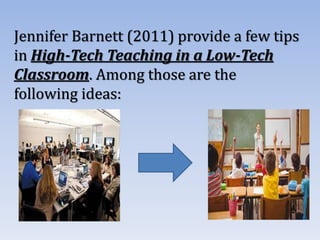
Jennifer Barnett (2011) provide a few tips
in High-Tech Teaching in a Low-Tech
Classroom. Among those are the
following ideas:
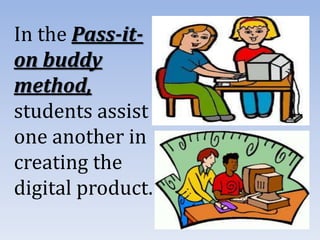
In the Pass-it-
on buddy
method,
students assist
one another in
creating the
digital product.
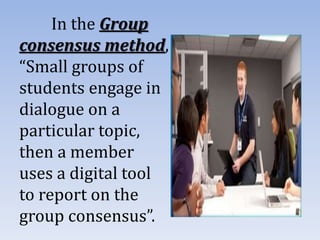
In the Group
consensus method,
“Small groups of
students engage in
dialogue on a
particular topic,
then a member
uses a digital tool
to report on the
group consensus”.
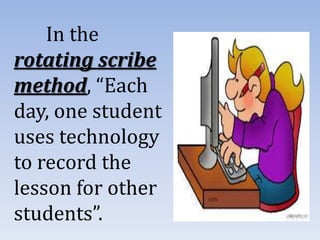
In the
rotating scribe
method, “Each
day, one student
uses technology
to record the
lesson for other
students”.
In a whole class method, the
group (or half of the class at a
time) gathers around the
computer to explore web sites,
tools, games, videos, interactive
quizzes and so on.
In Maximum the Impact: “The Pivotal
Role of Technology in 21st Century
Education System” (2007), the
International Society For Technology in
Education (ISTE), The Partnership for
21st Century Skills, and the State
Educational Technology Directors
Association stated that technology can be
used in nine key areas to assist with
teaching and learning:
•Building conceptual understanding of core
content;
•Addressing misconceptions;
•Fostering inquiry and investigation;
•Applying knowledge and skills to
interdisciplinary challenges;
•Creating and transforming knowledge for
meaningful purposes;
•Collaborating with others;
•Apprenticing with experts;
•Engaging and motivating students; and
•Differentiating instruction to meet
individual needs.

New Designs for Learning

  • 4.
    1.To differentiate methodsin high-tech teaching in a low tech classroom. 2.To create own presentation considering New Designs for Learning
  • 5.
    • Research specifictopics. • Communicate with faculty and classmates via e-mail. • Collaborate in group activities.
  • 6.
    • Use varietyof media and formats to communicate with classmates. • Process data and report results in databases, spreadsheets etc.
  • 7.
    • Build connectionsamong various fields of learning. •Use higher order thinking skills regularly.
  • 8.
    •Share multi- mediaexperiences with other learners. • Find alternative learning process suited to their individual learning styles.
  • 9.
    Don’t let aone- computer classroom stop you from technology integration.
  • 10.
    Jennifer Barnett (2011)provide a few tips in High-Tech Teaching in a Low-Tech Classroom. Among those are the following ideas:
  • 11.
    In the Pass-it- onbuddy method, students assist one another in creating the digital product.
  • 12.
    In the Group consensusmethod, “Small groups of students engage in dialogue on a particular topic, then a member uses a digital tool to report on the group consensus”.
  • 13.
    In the rotating scribe method,“Each day, one student uses technology to record the lesson for other students”.
  • 14.
    In a wholeclass method, the group (or half of the class at a time) gathers around the computer to explore web sites, tools, games, videos, interactive quizzes and so on.
  • 15.
    In Maximum theImpact: “The Pivotal Role of Technology in 21st Century Education System” (2007), the International Society For Technology in Education (ISTE), The Partnership for 21st Century Skills, and the State Educational Technology Directors Association stated that technology can be used in nine key areas to assist with teaching and learning:
  • 16.
    •Building conceptual understandingof core content; •Addressing misconceptions; •Fostering inquiry and investigation; •Applying knowledge and skills to interdisciplinary challenges; •Creating and transforming knowledge for meaningful purposes;
  • 17.
    •Collaborating with others; •Apprenticingwith experts; •Engaging and motivating students; and •Differentiating instruction to meet individual needs.