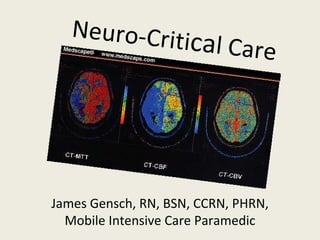
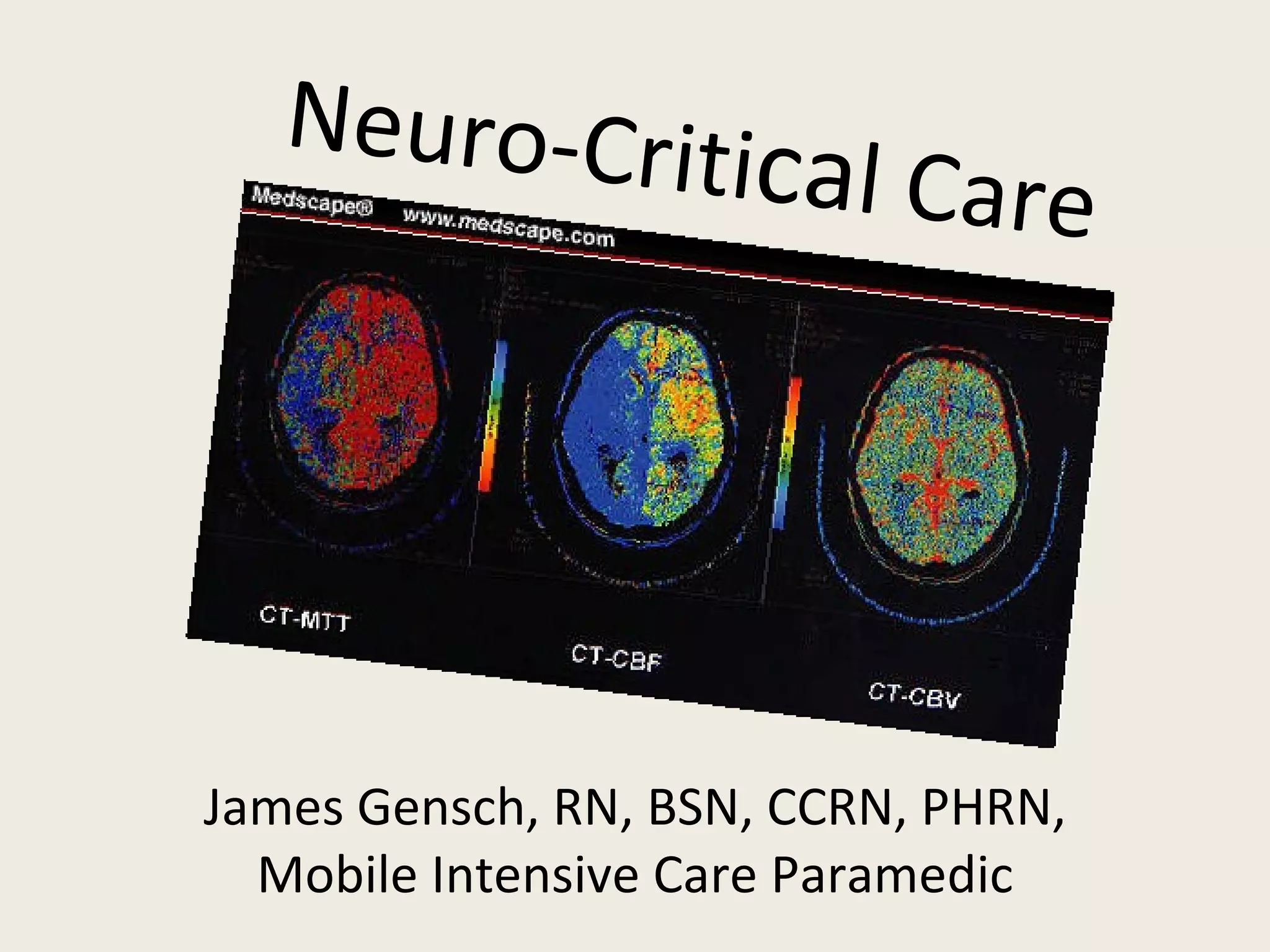
Neuro-Criti ca l Care James Gensch, RN, BSN, CCRN, PHRN, Mobile Intensive Care Paramedic
About me: RN- Neuro ICU Overlook 2 ½ years. Paramedic 8 years Flight Paramedic 3 years FP-C, CCEMTP in past (so you know that I know where you are coming from)   Currently BSN, CCRN, PHRN, MICP,  Class of 2012 TJU MSN-CRNA (what have you done for me lately)
Neurologic Emergencies SAH Ruptured Aneurysm Seizure Meningioma GBM Subdural Hematoma Epidural Hematoma Hypertensive Bleeds Hydrocephalus Thrombo-embolic CVA AVM Herniation
Subarachnoid Hemorrhage 10-15% Angio Gram negative or idiopathic Aneurismal or Vascular Malformation Onset usually WHOL, photophobia, N/V, meningismus, +LOC IVH may result in obstruction and <LOC Increased ICP s/s may be present ICH along with SAH common in MCA aneurysm, or MASS effect from giant aneurysm HTN is usually present and should be well controlled
HUNT AND HESS Classification Patient’s Level of Consciousness is the cardinal determinant of outcome after SAH I asymptomatic; or minimal headache and slight nuchal rigidity II Moderate to severe headache; nuchal rigidity; no neurologic deficit except cranial nerve palsy III Drowsy; minimal neurologic deficit IV Stuporous; moderate to severe hemi paresis; possibly early decerebrate rigidity and vegetative disturbances V Deep coma; decebrate rigidity; moribund appearance
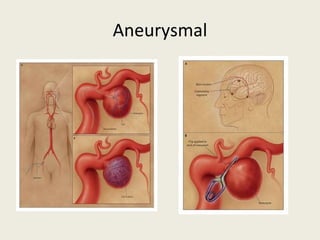
Aneurysmal
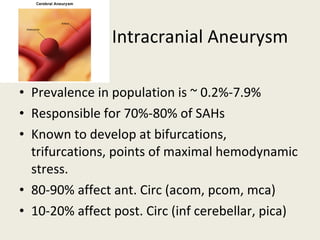
Intracranial Aneurysm Prevalence in population is ~ 0.2%-7.9% Responsible for 70%-80% of SAHs Known to develop at bifurcations, trifurcations, points of maximal hemodynamic stress. 80-90% affect ant. Circ (acom, pcom, mca) 10-20% affect post. Circ (inf cerebellar, pica)
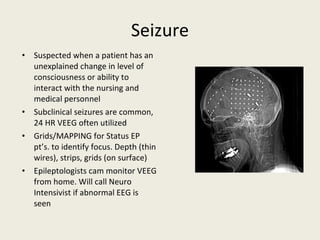
Seizure Suspected when a patient has an unexplained change in level of consciousness or ability to interact with the nursing and medical personnel Subclinical seizures are common, 24 HR VEEG often utilized Grids/MAPPING for Status EP pt’s. to identify focus. Depth (thin wires), strips, grids (on surface) Epileptologists cam monitor VEEG from home. Will call Neuro Intensivist if abnormal EEG is seen
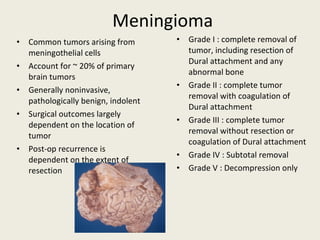
Meningioma Common tumors arising from meningothelial cells Account for ~ 20% of primary brain tumors Generally noninvasive, pathologically benign, indolent Surgical outcomes largely dependent on the location of tumor Post-op recurrence is dependent on the extent of resection Grade I : complete removal of tumor, including resection of Dural attachment and any abnormal bone Grade II : complete tumor removal with coagulation of Dural attachment Grade III : complete tumor removal without resection or coagulation of Dural attachment Grade IV : Subtotal removal Grade V : Decompression only
(GBM) Glioblastoma Multiforme 80% of malignant gliomas Annual incidence of over 5,000 cases Untreated GBM is 3 month survival rate ICP symptoms more frequent then in low grade glios due to rapid growth Malignant gliomas account for 40% of 17,000 new CNS malignancies in US Most studies support cytoreductive (debulking) surgery (craniotomy) for quality of life improvement and survival
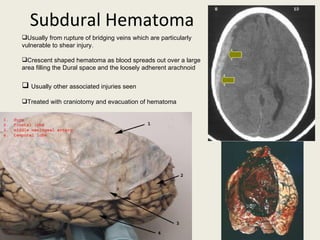
Subdural Hematoma Usually from rupture of bridging veins which are particularly vulnerable to shear injury. Crescent shaped hematoma as blood spreads out over a large area filling the Dural space and the loosely adherent arachnoid Usually other associated injuries seen Treated with craniotomy and evacuation of hematoma
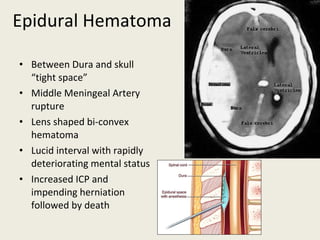
Epidural Hematoma Between Dura and skull “tight space” Middle Meningeal Artery rupture Lens shaped bi-convex hematoma Lucid interval with rapidly deteriorating mental status Increased ICP and impending herniation followed by death
Hypertensive Bleeds Many causes for intraparenchymal hemorrhage Hypertensive hemorrhage if the most common cause Involves small penetrating blood vessels Most common locations for hypertensive bleeds are: basal ganglia, thalamus, cerebellum, pons Some may arise from vessels within the ventricles and are described as intraventricular extension of an intraparenchymal hemorrhage or just intraventricular hemorrhage Rebleed rate is low but hematoma develops for a period after with worsening clinical status. Edema will also gradually develop in surrounding tissue for up to 3 days after onset with clinical worsening associated as well Antihypertensives to keep SBP well controlled is ESSENTIAL in these patients. Vascular fragility is often a cause for lobar hemorrhage (parietal, frontal, occipital, temporal)
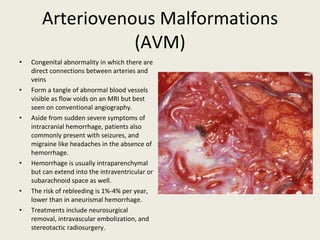
Arteriovenous Malformations (AVM) Congenital abnormality in which there are direct connections between arteries and veins Form a tangle of abnormal blood vessels visible as flow voids on an MRI but best seen on conventional angiography. Aside from sudden severe symptoms of intracranial hemorrhage, patients also commonly present with seizures, and migraine like headaches in the absence of hemorrhage. Hemorrhage is usually intraparenchymal but can extend into the intraventricular or subarachnoid space as well.  The risk of rebleeding is 1%-4% per year, lower than in aneurismal hemorrhage. Treatments include neurosurgical removal, intravascular embolization, and stereotactic radiosurgery.
ICP Cerebral Perfusion Pressure (CPP=mean arterial pressure [MAP]-ICP) 55mmHg or greater is USUALLY adequate Higher ICP from injury will require higher CPP to maintain cerebral blood flow (CBF) Ventriculostomy is the gold standard for monitoring ICP Zeroed at the level of Circle of Willis
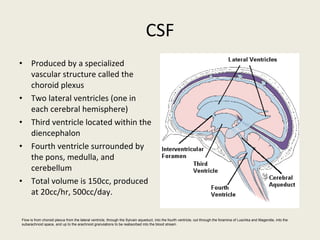
CSF Produced by a specialized vascular structure called the choroid plexus Two lateral ventricles (one in each cerebral hemisphere) Third ventricle located within the diencephalon Fourth ventricle surrounded by the pons, medulla, and cerebellum Total volume is 150cc, produced at 20cc/hr, 500cc/day. Flow is from choroid plexus from the lateral ventricle, through the Sylvain aqueduct, into the fourth ventricle, out through the foramina of Luschka and Magendie, into the subarachnoid space, and up to the arachnoid granulations to be reabsorbed into the blood stream
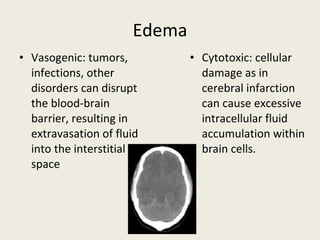
Edema Vasogenic: tumors, infections, other disorders can disrupt the blood-brain barrier, resulting in extravasation of fluid into the interstitial space Cytotoxic: cellular damage as in cerebral infarction can cause excessive intracellular fluid accumulation within brain cells.
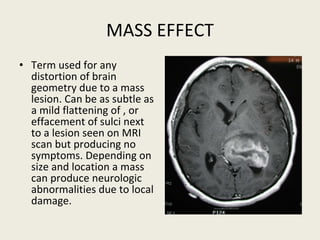
MASS EFFECT Term used for any distortion of brain geometry due to a mass lesion. Can be as subtle as a mild flattening of , or effacement of sulci next to a lesion seen on MRI scan but producing no symptoms. Depending on size and location a mass can produce neurologic abnormalities due to local damage.
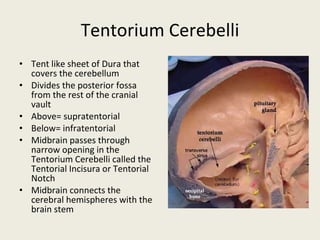
Tentorium Cerebelli Tent like sheet of Dura that covers the cerebellum Divides the posterior fossa from the rest of the cranial vault Above= supratentorial Below= infratentorial Midbrain passes through narrow opening in the Tentorium Cerebelli called the Tentorial Incisura or Tentorial Notch Midbrain connects the cerebral hemispheres with the brain stem
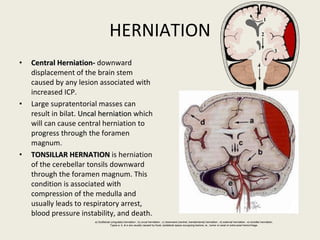
HERNIATION Central Herniation-  downward displacement of the brain stem caused by any lesion associated with increased ICP. Large supratentorial masses can result in bilat.  Uncal herniation  which will can cause central herniation to progress through the foramen magnum. TONSILLAR HERNATION  is herniation of the cerebellar tonsils downward through the foramen magnum. This condition is associated with compression of the medulla and usually leads to respiratory arrest, blood pressure instability, and death.  a) Subfalcial (cingulate) herniation ; b) uncal herniation ; c) downward (central, transtentorial) herniation ; d) external herniation ; e) tonsillar herniation. Types a, b, & e are usually caused by focal, ipsilateral space occupying lesions, ie., tumor or axial or extra-axial hemorrhage.
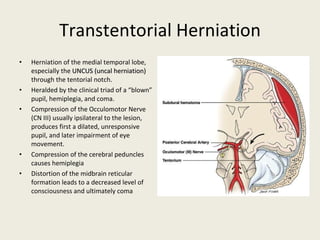
Transtentorial Herniation Herniation of the medial temporal lobe, especially the  UNCUS (uncal herniation)  through the tentorial notch. Heralded by the clinical triad of a “blown” pupil, hemiplegia, and coma. Compression of the Occulomotor Nerve (CN III) usually ipsilateral to the lesion, produces first a dilated, unresponsive pupil, and later impairment of eye movement.  Compression of the cerebral peduncles causes hemiplegia Distortion of the midbrain reticular formation leads to a decreased level of consciousness and ultimately coma
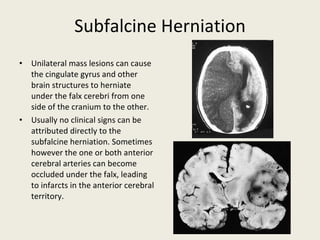
Subfalcine Herniation Unilateral mass lesions can cause the cingulate gyrus and other brain structures to herniate under the falx cerebri from one side of the cranium to the other. Usually no clinical signs can be attributed directly to the subfalcine herniation. Sometimes however the one or both anterior cerebral arteries can become occluded under the falx, leading to infarcts in the anterior cerebral territory.
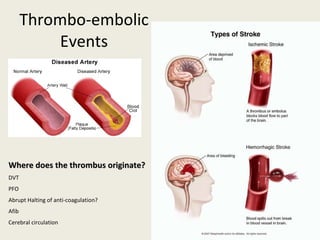
Thrombo-embolic Events Where does the thrombus originate? DVT PFO Abrupt Halting of anti-coagulation? Afib Cerebral circulation
tPA Researchers in the 1990s came up with tissue plasminogen activator, otherwise known as tPA, for the treatment of ischemic stroke. Over 80% of all strokes are of this type, and are commonly caused by blood clots that interrupt blood flow in an area of the brain. tPA acts by dissolving these stroke-causing blood clots.  Its efficacy has been proven by several large clinical trials which show a greater chance of recovery in stroke patients who are treated with it. However, these trials also show that, if given later than three hours after a person first realizes he/she is having stroke symptoms, tPA can cause dangerous bleeding in the brain. Consequently, it is only safe to give tPA within 3 hours of the beginning of stroke symptoms, which is why physicians think of this time as the &quot;golden three hour tPA window&quot;. Injection of TPA, or a similar agent, directly into the blood clot that is causing the stroke. To do this, a special small catheter is inserted into one of the major blood vessels in the leg, and is strategically advanced towards the brain using a special video system. Once the blood clot is found, the small catheter is passed into its center where the injection is delivered.
tPA (cont.) As an enzyme, it catalyzes the conversion of plasminogen to plasmin, the major enzyme responsible for clot breakdown. Because it works on the clotting system, tPA is used in clinical medicine to treat only embolic or thrombolytic stroke. Use is contraindicated in hemorrhagic stroke and head trauma. In tPA overdose, aminocaproic acid works as an antidote Aminocaproic acid works as an anti-fibrinolytic or anti-proteolytic. As a lysine analogue, it binds reversibly to the kringle domain of the enzymogen plasminogen. Thus plasminogen cannot be activated (by its activators) to plasmin, which then cannot split fibrin (anti-fibrinolytic effect).
The MERCI Retriever The Mechanical Embolus Retrieval in Cerebral Ischemia, or MERCI retriever, is a recently developed approach to remove or break up blood clots that have wandered into a small blood vessel causing it to become occluded. This is done by carefully passing a special device from a blood vessel in the leg all the way into the blood vessel in the brain where the blood clot is trapped. The retriever captures the clot and pulls it out of the body, thus returning blood flow to the affected area.
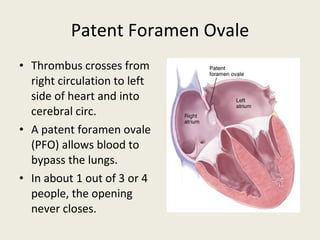
Patent Foramen Ovale Thrombus crosses from right circulation to left side of heart and into cerebral circ. A patent foramen ovale (PFO) allows blood to bypass the lungs.  In about 1 out of 3 or 4 people, the opening never closes.
Neuro Surgical Treatment Craniotomy Coiling Clipping Hematoma Evacuation Gluing Resection of tumors Debulking of tumors EVD placement Lumbar Drains VP shunt Craniectomy Decompressive lobectomy Induced Hypothermia Grids Abscess evacuation tPA HHH Therapy
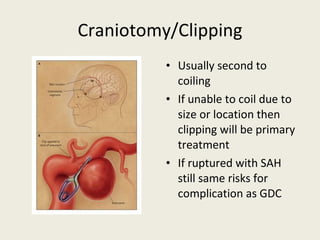
Craniotomy/Clipping Usually second to coiling If unable to coil due to size or location then clipping will be primary treatment If ruptured with SAH still same risks for complication as GDC
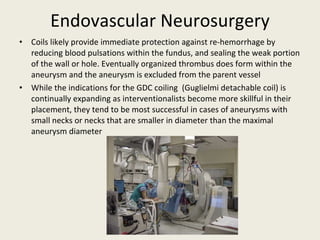
Endovascular Neurosurgery Coils likely provide immediate protection against re-hemorrhage by reducing blood pulsations within the fundus, and sealing the weak portion of the wall or hole. Eventually organized thrombus does form within the aneurysm and the aneurysm is excluded from the parent vessel  While the indications for the GDC coiling  (Guglielmi detachable coil) is continually expanding as interventionalists become more skillful in their placement, they tend to be most successful in cases of aneurysms with small necks or necks that are smaller in diameter than the maximal aneurysm diameter
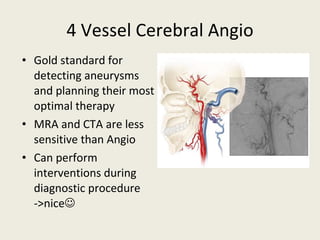
4 Vessel Cerebral Angio Gold standard for detecting aneurysms and planning their most optimal therapy MRA and CTA are less sensitive than Angio Can perform interventions during diagnostic procedure  ->nice 
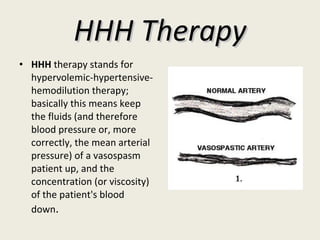
HHH Therapy HHH  therapy stands for hypervolemic-hypertensive-hemodilution therapy; basically this means keep the fluids (and therefore blood pressure or, more correctly, the mean arterial pressure) of a vasospasm patient up, and the concentration (or viscosity) of the patient's blood down .
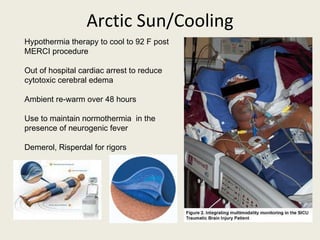
Arctic Sun/Cooling Hypothermia therapy to cool to 92 F post MERCI procedure Out of hospital cardiac arrest to reduce cytotoxic cerebral edema Ambient re-warm over 48 hours Use to maintain normothermia  in the presence of neurogenic fever Demerol, Risperdal for rigors
AVM Gluing NBCA is a liquid polymer which begins to polymerize on contact with an ionic environment, including blood Rate of polymerization is controllable with varying the dilution with Ethiodol- an oil based, radiopaque material With proper dilution and careful control of rate of administration the NBCA can be reliably placed into the nidus of the AVM, causing permanent occlusion of the embolized section Neuro exam performed to test all levels of cortical functioning prior to gluing the AVM Most common complication is intracerebral hemorrhage due to the complex hemodynamic changes in and around the AVM. After confirmation that no apparent neurologic deficit will occur with occlusion of the artery, embolization proceeds. Use Lidocaine and a short acting Barbiturate as test agents of occlusion due to difference of cellular physiology between central and peripheral neurons
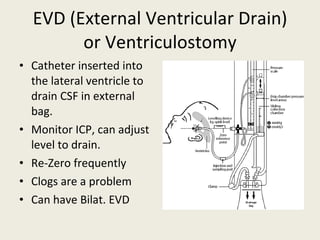
EVD (External Ventricular Drain) or Ventriculostomy Catheter inserted into the lateral ventricle to drain CSF in external bag.  Monitor ICP, can adjust level to drain. Re-Zero frequently Clogs are a problem Can have Bilat. EVD
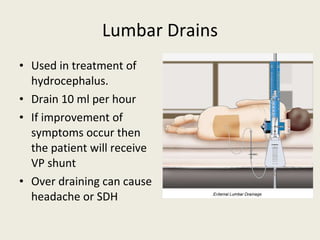
Lumbar Drains Used in treatment of hydrocephalus.  Drain 10 ml per hour If improvement of symptoms occur then the patient will receive VP shunt Over draining can cause headache or SDH
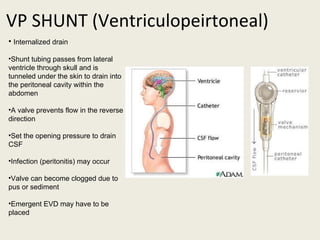
VP SHUNT (Ventriculopeirtoneal) Internalized drain Shunt tubing passes from lateral ventricle through skull and is tunneled under the skin to drain into the peritoneal cavity within the abdomen A valve prevents flow in the reverse direction Set the opening pressure to drain CSF  Infection (peritonitis) may occur Valve can become clogged due to pus or sediment Emergent EVD may have to be placed
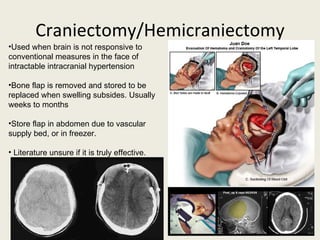
Craniectomy/Hemicraniectomy Used when brain is not responsive to conventional measures in the face of intractable intracranial hypertension Bone flap is removed and stored to be replaced when swelling subsides. Usually weeks to months Store flap in abdomen due to vascular supply bed, or in freezer. Literature unsure if it is truly effective.
Questions (Please) ?????????? Thank You!!! I hope that NEURO patients are a bit more interesting to you now!!

Neuro Critical Care

  • 1.
    Neuro-Criti ca lCare James Gensch, RN, BSN, CCRN, PHRN, Mobile Intensive Care Paramedic
  • 2.
    About me: RN-Neuro ICU Overlook 2 ½ years. Paramedic 8 years Flight Paramedic 3 years FP-C, CCEMTP in past (so you know that I know where you are coming from)  Currently BSN, CCRN, PHRN, MICP, Class of 2012 TJU MSN-CRNA (what have you done for me lately)
  • 3.
    Neurologic Emergencies SAHRuptured Aneurysm Seizure Meningioma GBM Subdural Hematoma Epidural Hematoma Hypertensive Bleeds Hydrocephalus Thrombo-embolic CVA AVM Herniation
  • 4.
    Subarachnoid Hemorrhage 10-15%Angio Gram negative or idiopathic Aneurismal or Vascular Malformation Onset usually WHOL, photophobia, N/V, meningismus, +LOC IVH may result in obstruction and <LOC Increased ICP s/s may be present ICH along with SAH common in MCA aneurysm, or MASS effect from giant aneurysm HTN is usually present and should be well controlled
  • 5.
    HUNT AND HESSClassification Patient’s Level of Consciousness is the cardinal determinant of outcome after SAH I asymptomatic; or minimal headache and slight nuchal rigidity II Moderate to severe headache; nuchal rigidity; no neurologic deficit except cranial nerve palsy III Drowsy; minimal neurologic deficit IV Stuporous; moderate to severe hemi paresis; possibly early decerebrate rigidity and vegetative disturbances V Deep coma; decebrate rigidity; moribund appearance
  • 6.
  • 7.
    Intracranial Aneurysm Prevalencein population is ~ 0.2%-7.9% Responsible for 70%-80% of SAHs Known to develop at bifurcations, trifurcations, points of maximal hemodynamic stress. 80-90% affect ant. Circ (acom, pcom, mca) 10-20% affect post. Circ (inf cerebellar, pica)
  • 8.
    Seizure Suspected whena patient has an unexplained change in level of consciousness or ability to interact with the nursing and medical personnel Subclinical seizures are common, 24 HR VEEG often utilized Grids/MAPPING for Status EP pt’s. to identify focus. Depth (thin wires), strips, grids (on surface) Epileptologists cam monitor VEEG from home. Will call Neuro Intensivist if abnormal EEG is seen
  • 9.
    Meningioma Common tumorsarising from meningothelial cells Account for ~ 20% of primary brain tumors Generally noninvasive, pathologically benign, indolent Surgical outcomes largely dependent on the location of tumor Post-op recurrence is dependent on the extent of resection Grade I : complete removal of tumor, including resection of Dural attachment and any abnormal bone Grade II : complete tumor removal with coagulation of Dural attachment Grade III : complete tumor removal without resection or coagulation of Dural attachment Grade IV : Subtotal removal Grade V : Decompression only
  • 10.
    (GBM) Glioblastoma Multiforme80% of malignant gliomas Annual incidence of over 5,000 cases Untreated GBM is 3 month survival rate ICP symptoms more frequent then in low grade glios due to rapid growth Malignant gliomas account for 40% of 17,000 new CNS malignancies in US Most studies support cytoreductive (debulking) surgery (craniotomy) for quality of life improvement and survival
  • 11.
    Subdural Hematoma Usuallyfrom rupture of bridging veins which are particularly vulnerable to shear injury. Crescent shaped hematoma as blood spreads out over a large area filling the Dural space and the loosely adherent arachnoid Usually other associated injuries seen Treated with craniotomy and evacuation of hematoma
  • 12.
    Epidural Hematoma BetweenDura and skull “tight space” Middle Meningeal Artery rupture Lens shaped bi-convex hematoma Lucid interval with rapidly deteriorating mental status Increased ICP and impending herniation followed by death
  • 13.
    Hypertensive Bleeds Manycauses for intraparenchymal hemorrhage Hypertensive hemorrhage if the most common cause Involves small penetrating blood vessels Most common locations for hypertensive bleeds are: basal ganglia, thalamus, cerebellum, pons Some may arise from vessels within the ventricles and are described as intraventricular extension of an intraparenchymal hemorrhage or just intraventricular hemorrhage Rebleed rate is low but hematoma develops for a period after with worsening clinical status. Edema will also gradually develop in surrounding tissue for up to 3 days after onset with clinical worsening associated as well Antihypertensives to keep SBP well controlled is ESSENTIAL in these patients. Vascular fragility is often a cause for lobar hemorrhage (parietal, frontal, occipital, temporal)
  • 14.
    Arteriovenous Malformations (AVM)Congenital abnormality in which there are direct connections between arteries and veins Form a tangle of abnormal blood vessels visible as flow voids on an MRI but best seen on conventional angiography. Aside from sudden severe symptoms of intracranial hemorrhage, patients also commonly present with seizures, and migraine like headaches in the absence of hemorrhage. Hemorrhage is usually intraparenchymal but can extend into the intraventricular or subarachnoid space as well. The risk of rebleeding is 1%-4% per year, lower than in aneurismal hemorrhage. Treatments include neurosurgical removal, intravascular embolization, and stereotactic radiosurgery.
  • 15.
    ICP Cerebral PerfusionPressure (CPP=mean arterial pressure [MAP]-ICP) 55mmHg or greater is USUALLY adequate Higher ICP from injury will require higher CPP to maintain cerebral blood flow (CBF) Ventriculostomy is the gold standard for monitoring ICP Zeroed at the level of Circle of Willis
  • 16.
    CSF Produced bya specialized vascular structure called the choroid plexus Two lateral ventricles (one in each cerebral hemisphere) Third ventricle located within the diencephalon Fourth ventricle surrounded by the pons, medulla, and cerebellum Total volume is 150cc, produced at 20cc/hr, 500cc/day. Flow is from choroid plexus from the lateral ventricle, through the Sylvain aqueduct, into the fourth ventricle, out through the foramina of Luschka and Magendie, into the subarachnoid space, and up to the arachnoid granulations to be reabsorbed into the blood stream
  • 17.
    Edema Vasogenic: tumors,infections, other disorders can disrupt the blood-brain barrier, resulting in extravasation of fluid into the interstitial space Cytotoxic: cellular damage as in cerebral infarction can cause excessive intracellular fluid accumulation within brain cells.
  • 18.
    MASS EFFECT Termused for any distortion of brain geometry due to a mass lesion. Can be as subtle as a mild flattening of , or effacement of sulci next to a lesion seen on MRI scan but producing no symptoms. Depending on size and location a mass can produce neurologic abnormalities due to local damage.
  • 19.
    Tentorium Cerebelli Tentlike sheet of Dura that covers the cerebellum Divides the posterior fossa from the rest of the cranial vault Above= supratentorial Below= infratentorial Midbrain passes through narrow opening in the Tentorium Cerebelli called the Tentorial Incisura or Tentorial Notch Midbrain connects the cerebral hemispheres with the brain stem
  • 20.
    HERNIATION Central Herniation- downward displacement of the brain stem caused by any lesion associated with increased ICP. Large supratentorial masses can result in bilat. Uncal herniation which will can cause central herniation to progress through the foramen magnum. TONSILLAR HERNATION is herniation of the cerebellar tonsils downward through the foramen magnum. This condition is associated with compression of the medulla and usually leads to respiratory arrest, blood pressure instability, and death. a) Subfalcial (cingulate) herniation ; b) uncal herniation ; c) downward (central, transtentorial) herniation ; d) external herniation ; e) tonsillar herniation. Types a, b, & e are usually caused by focal, ipsilateral space occupying lesions, ie., tumor or axial or extra-axial hemorrhage.
  • 21.
    Transtentorial Herniation Herniationof the medial temporal lobe, especially the UNCUS (uncal herniation) through the tentorial notch. Heralded by the clinical triad of a “blown” pupil, hemiplegia, and coma. Compression of the Occulomotor Nerve (CN III) usually ipsilateral to the lesion, produces first a dilated, unresponsive pupil, and later impairment of eye movement. Compression of the cerebral peduncles causes hemiplegia Distortion of the midbrain reticular formation leads to a decreased level of consciousness and ultimately coma
  • 22.
    Subfalcine Herniation Unilateralmass lesions can cause the cingulate gyrus and other brain structures to herniate under the falx cerebri from one side of the cranium to the other. Usually no clinical signs can be attributed directly to the subfalcine herniation. Sometimes however the one or both anterior cerebral arteries can become occluded under the falx, leading to infarcts in the anterior cerebral territory.
  • 23.
    Thrombo-embolic Events Wheredoes the thrombus originate? DVT PFO Abrupt Halting of anti-coagulation? Afib Cerebral circulation
  • 24.
    tPA Researchers inthe 1990s came up with tissue plasminogen activator, otherwise known as tPA, for the treatment of ischemic stroke. Over 80% of all strokes are of this type, and are commonly caused by blood clots that interrupt blood flow in an area of the brain. tPA acts by dissolving these stroke-causing blood clots. Its efficacy has been proven by several large clinical trials which show a greater chance of recovery in stroke patients who are treated with it. However, these trials also show that, if given later than three hours after a person first realizes he/she is having stroke symptoms, tPA can cause dangerous bleeding in the brain. Consequently, it is only safe to give tPA within 3 hours of the beginning of stroke symptoms, which is why physicians think of this time as the &quot;golden three hour tPA window&quot;. Injection of TPA, or a similar agent, directly into the blood clot that is causing the stroke. To do this, a special small catheter is inserted into one of the major blood vessels in the leg, and is strategically advanced towards the brain using a special video system. Once the blood clot is found, the small catheter is passed into its center where the injection is delivered.
  • 25.
    tPA (cont.) Asan enzyme, it catalyzes the conversion of plasminogen to plasmin, the major enzyme responsible for clot breakdown. Because it works on the clotting system, tPA is used in clinical medicine to treat only embolic or thrombolytic stroke. Use is contraindicated in hemorrhagic stroke and head trauma. In tPA overdose, aminocaproic acid works as an antidote Aminocaproic acid works as an anti-fibrinolytic or anti-proteolytic. As a lysine analogue, it binds reversibly to the kringle domain of the enzymogen plasminogen. Thus plasminogen cannot be activated (by its activators) to plasmin, which then cannot split fibrin (anti-fibrinolytic effect).
  • 26.
    The MERCI RetrieverThe Mechanical Embolus Retrieval in Cerebral Ischemia, or MERCI retriever, is a recently developed approach to remove or break up blood clots that have wandered into a small blood vessel causing it to become occluded. This is done by carefully passing a special device from a blood vessel in the leg all the way into the blood vessel in the brain where the blood clot is trapped. The retriever captures the clot and pulls it out of the body, thus returning blood flow to the affected area.
  • 27.
    Patent Foramen OvaleThrombus crosses from right circulation to left side of heart and into cerebral circ. A patent foramen ovale (PFO) allows blood to bypass the lungs. In about 1 out of 3 or 4 people, the opening never closes.
  • 28.
    Neuro Surgical TreatmentCraniotomy Coiling Clipping Hematoma Evacuation Gluing Resection of tumors Debulking of tumors EVD placement Lumbar Drains VP shunt Craniectomy Decompressive lobectomy Induced Hypothermia Grids Abscess evacuation tPA HHH Therapy
  • 29.
    Craniotomy/Clipping Usually secondto coiling If unable to coil due to size or location then clipping will be primary treatment If ruptured with SAH still same risks for complication as GDC
  • 30.
    Endovascular Neurosurgery Coilslikely provide immediate protection against re-hemorrhage by reducing blood pulsations within the fundus, and sealing the weak portion of the wall or hole. Eventually organized thrombus does form within the aneurysm and the aneurysm is excluded from the parent vessel While the indications for the GDC coiling (Guglielmi detachable coil) is continually expanding as interventionalists become more skillful in their placement, they tend to be most successful in cases of aneurysms with small necks or necks that are smaller in diameter than the maximal aneurysm diameter
  • 31.
    4 Vessel CerebralAngio Gold standard for detecting aneurysms and planning their most optimal therapy MRA and CTA are less sensitive than Angio Can perform interventions during diagnostic procedure ->nice 
  • 32.
    HHH Therapy HHH therapy stands for hypervolemic-hypertensive-hemodilution therapy; basically this means keep the fluids (and therefore blood pressure or, more correctly, the mean arterial pressure) of a vasospasm patient up, and the concentration (or viscosity) of the patient's blood down .
  • 33.
    Arctic Sun/Cooling Hypothermiatherapy to cool to 92 F post MERCI procedure Out of hospital cardiac arrest to reduce cytotoxic cerebral edema Ambient re-warm over 48 hours Use to maintain normothermia in the presence of neurogenic fever Demerol, Risperdal for rigors
  • 34.
    AVM Gluing NBCAis a liquid polymer which begins to polymerize on contact with an ionic environment, including blood Rate of polymerization is controllable with varying the dilution with Ethiodol- an oil based, radiopaque material With proper dilution and careful control of rate of administration the NBCA can be reliably placed into the nidus of the AVM, causing permanent occlusion of the embolized section Neuro exam performed to test all levels of cortical functioning prior to gluing the AVM Most common complication is intracerebral hemorrhage due to the complex hemodynamic changes in and around the AVM. After confirmation that no apparent neurologic deficit will occur with occlusion of the artery, embolization proceeds. Use Lidocaine and a short acting Barbiturate as test agents of occlusion due to difference of cellular physiology between central and peripheral neurons
  • 35.
    EVD (External VentricularDrain) or Ventriculostomy Catheter inserted into the lateral ventricle to drain CSF in external bag. Monitor ICP, can adjust level to drain. Re-Zero frequently Clogs are a problem Can have Bilat. EVD
  • 36.
    Lumbar Drains Usedin treatment of hydrocephalus. Drain 10 ml per hour If improvement of symptoms occur then the patient will receive VP shunt Over draining can cause headache or SDH
  • 37.
    VP SHUNT (Ventriculopeirtoneal)Internalized drain Shunt tubing passes from lateral ventricle through skull and is tunneled under the skin to drain into the peritoneal cavity within the abdomen A valve prevents flow in the reverse direction Set the opening pressure to drain CSF Infection (peritonitis) may occur Valve can become clogged due to pus or sediment Emergent EVD may have to be placed
  • 38.
    Craniectomy/Hemicraniectomy Used whenbrain is not responsive to conventional measures in the face of intractable intracranial hypertension Bone flap is removed and stored to be replaced when swelling subsides. Usually weeks to months Store flap in abdomen due to vascular supply bed, or in freezer. Literature unsure if it is truly effective.
  • 39.
    Questions (Please) ??????????Thank You!!! I hope that NEURO patients are a bit more interesting to you now!!