
Network Scanning with Nmap.
-Ashish jha(CISP)
What is Nmap?
- Nmap is a network mapping tool which
allows us to scan network and gain a
variety of information very
sophisticatedly.
- We can get the information like in a
network how many systems are online
and responding ,and how many are
offline, the ports which are open on those
systems and the operating systems on
them and much more!
-Nmap has two versions of it :-
1. GUI version(zenmap).
2. Command-Line version(nmap).
It really depends on us how to use it
whether the GUI or the command-line,
But the results are the same in both the
cases, But its usually recommended to use
the command-line verison.
- Nmap commands and their working and
the information we get are as follows:-
- The first command is the simple scan
commands (which is more or less the same as the
ping command in general command line) Which
shows that whether the system is up or
not .
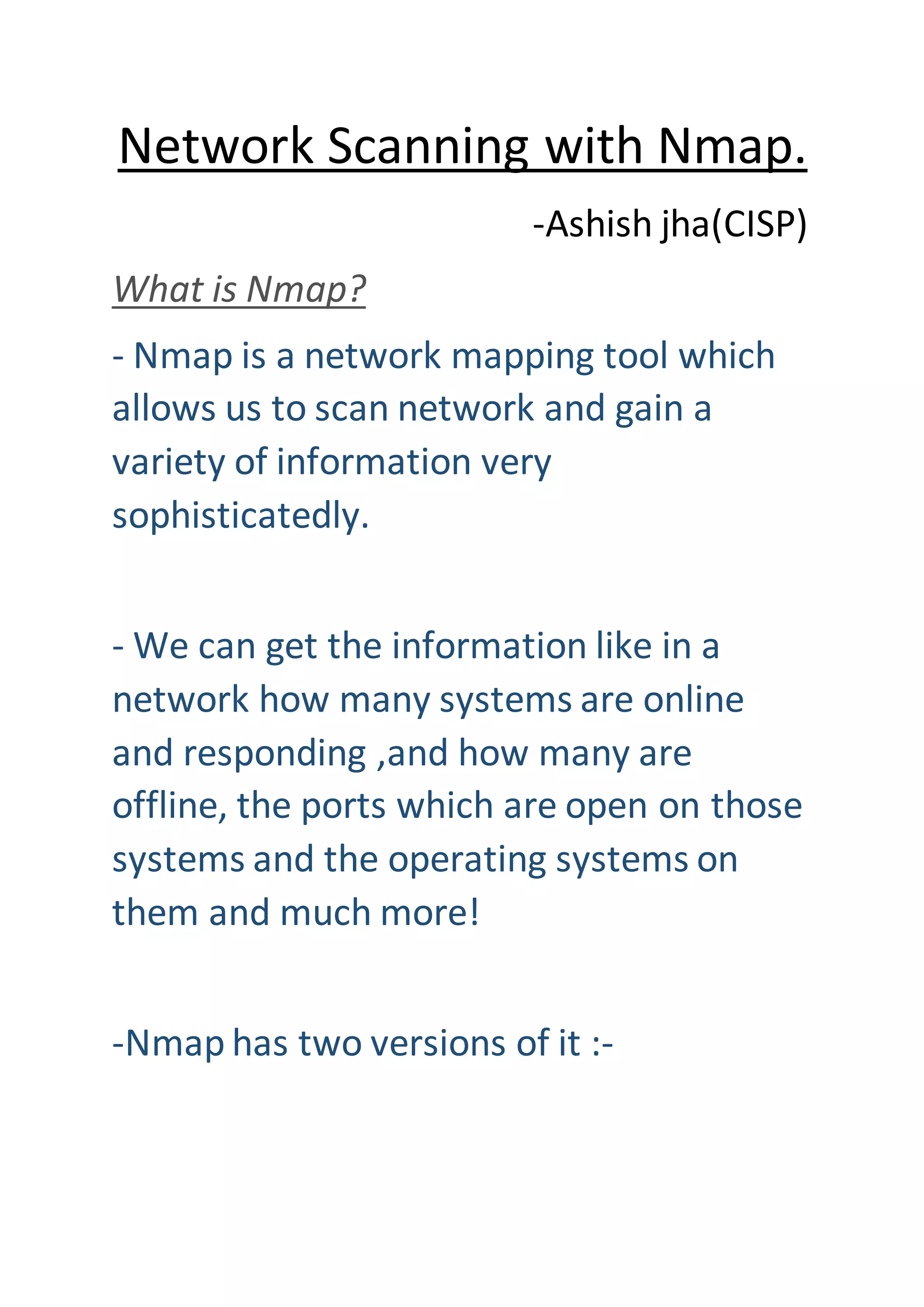
Command: nmap -sn <ip address>
Scaning Multiple Targets.
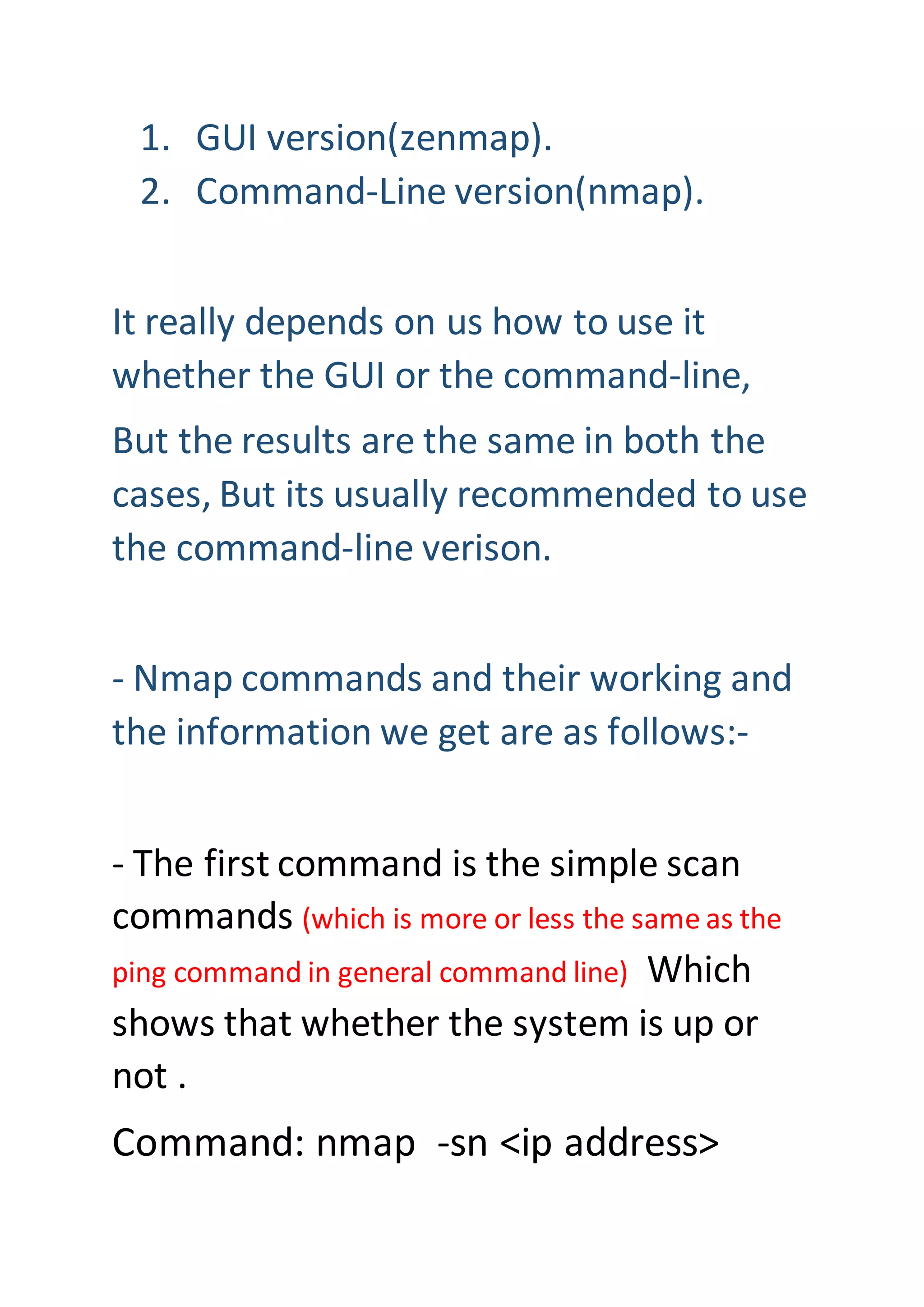
-If the system are on the same Subnet we
can do a multiple scan like this.
Command: nmap -sn
192.168.0.2,15,25,38,……..
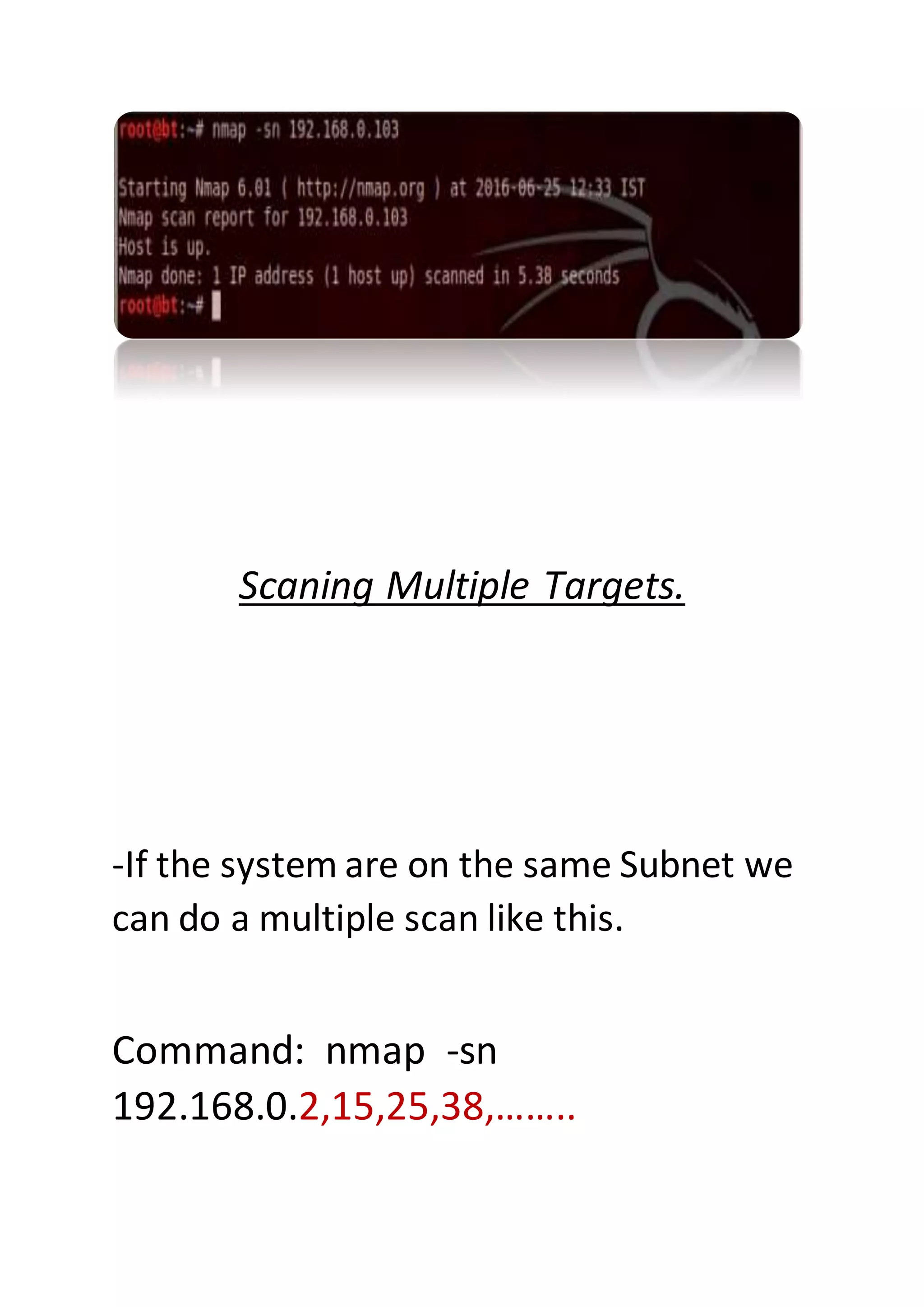
- Now if you want to scan almost every
live systems you can use something like
this.
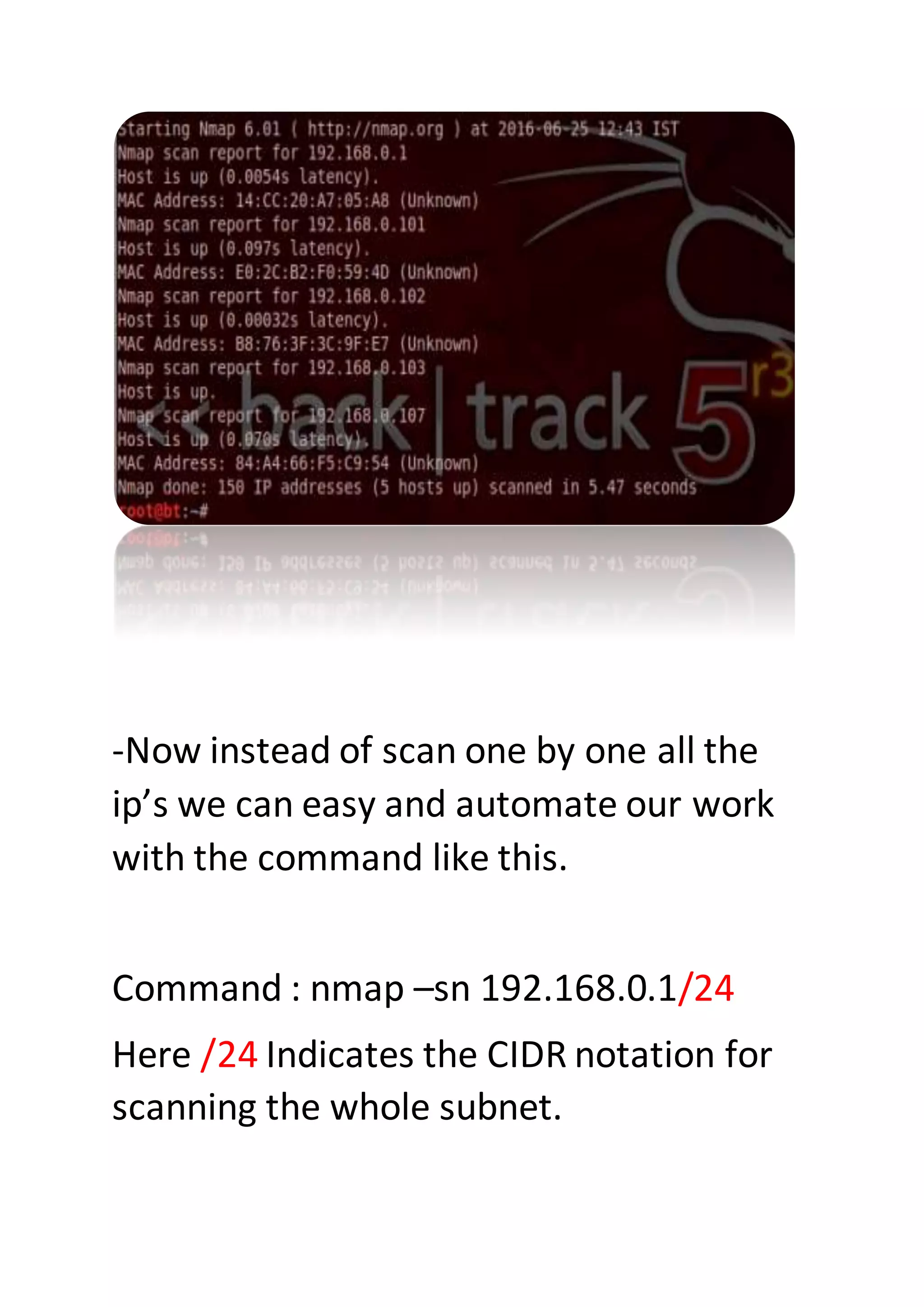
Command: nmap -sn 192.168.0.1-150
It will scan all the ip’s from 1 to 100
which are live or not.
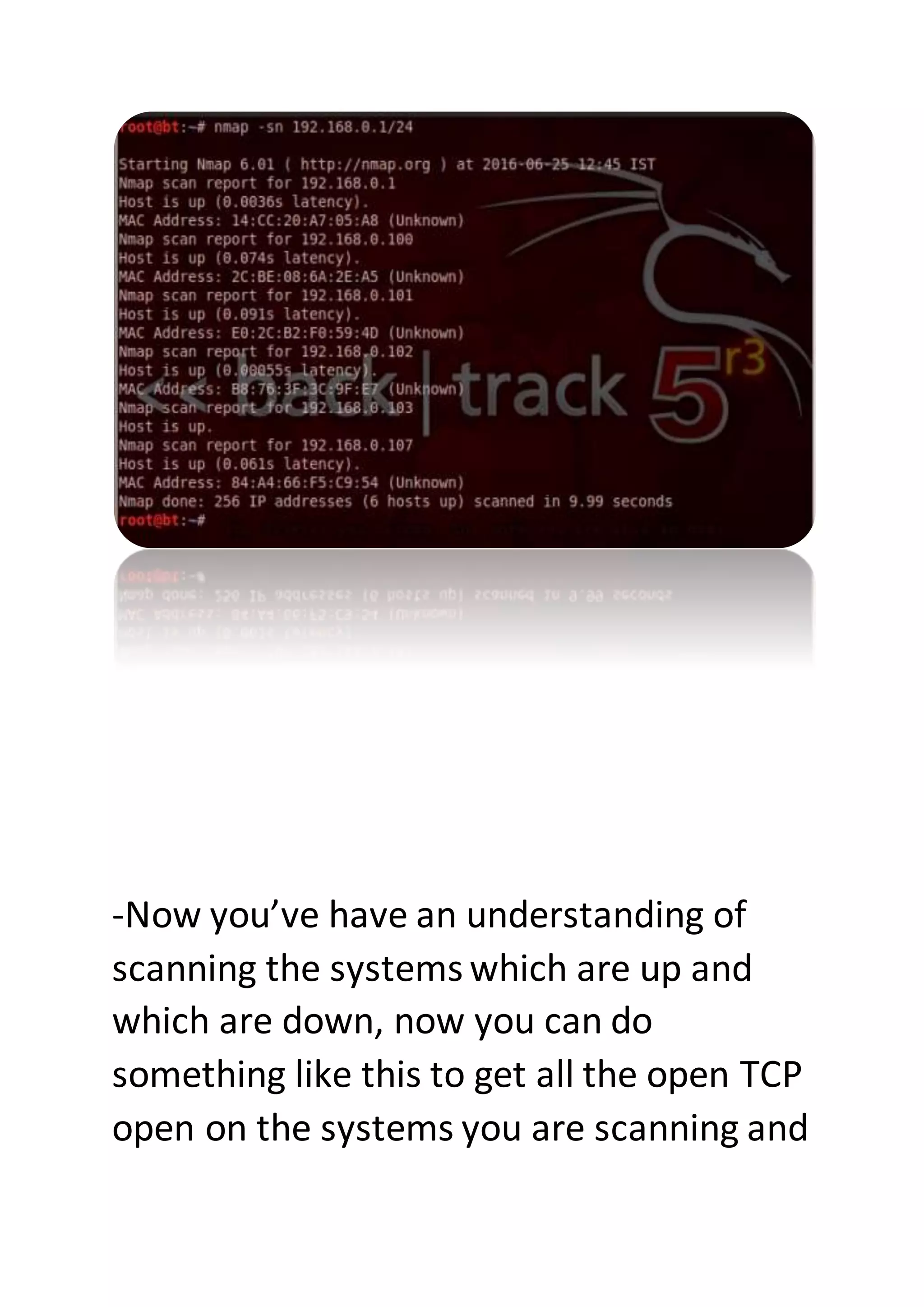
-Now instead of scan one by one all the
ip’s we can easy and automate our work
with the command like this.
Command : nmap –sn 192.168.0.1/24
Here /24 Indicates the CIDR notation for
scanning the whole subnet.
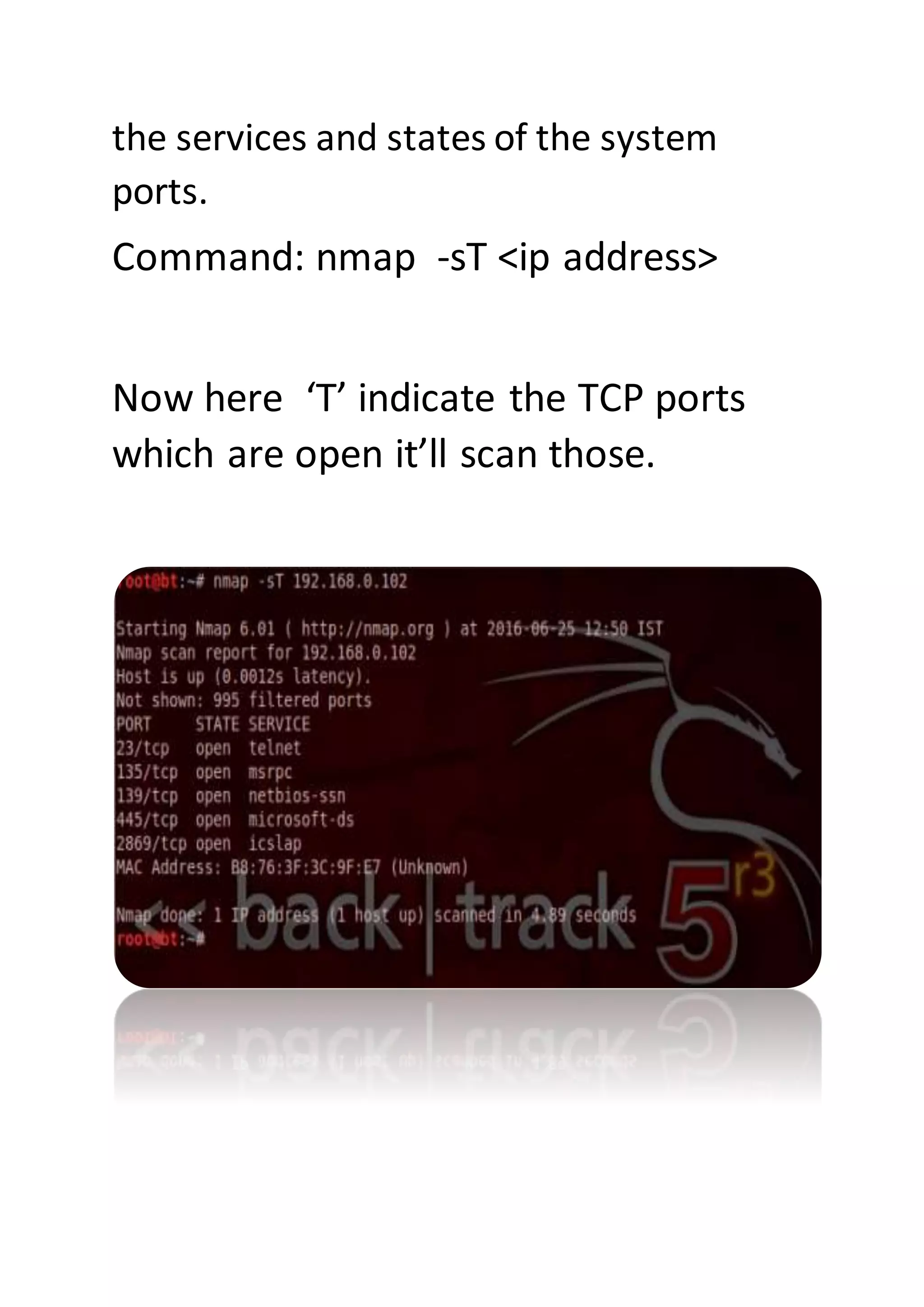
-Now you’ve have an understanding of
scanning the systems which are up and
which are down, now you can do
something like this to get all the open TCP
open on the systems you are scanning and
the services and states of the system
ports.
Command: nmap -sT <ip address>
Now here ‘T’ indicate the TCP ports
which are open it’ll scan those.
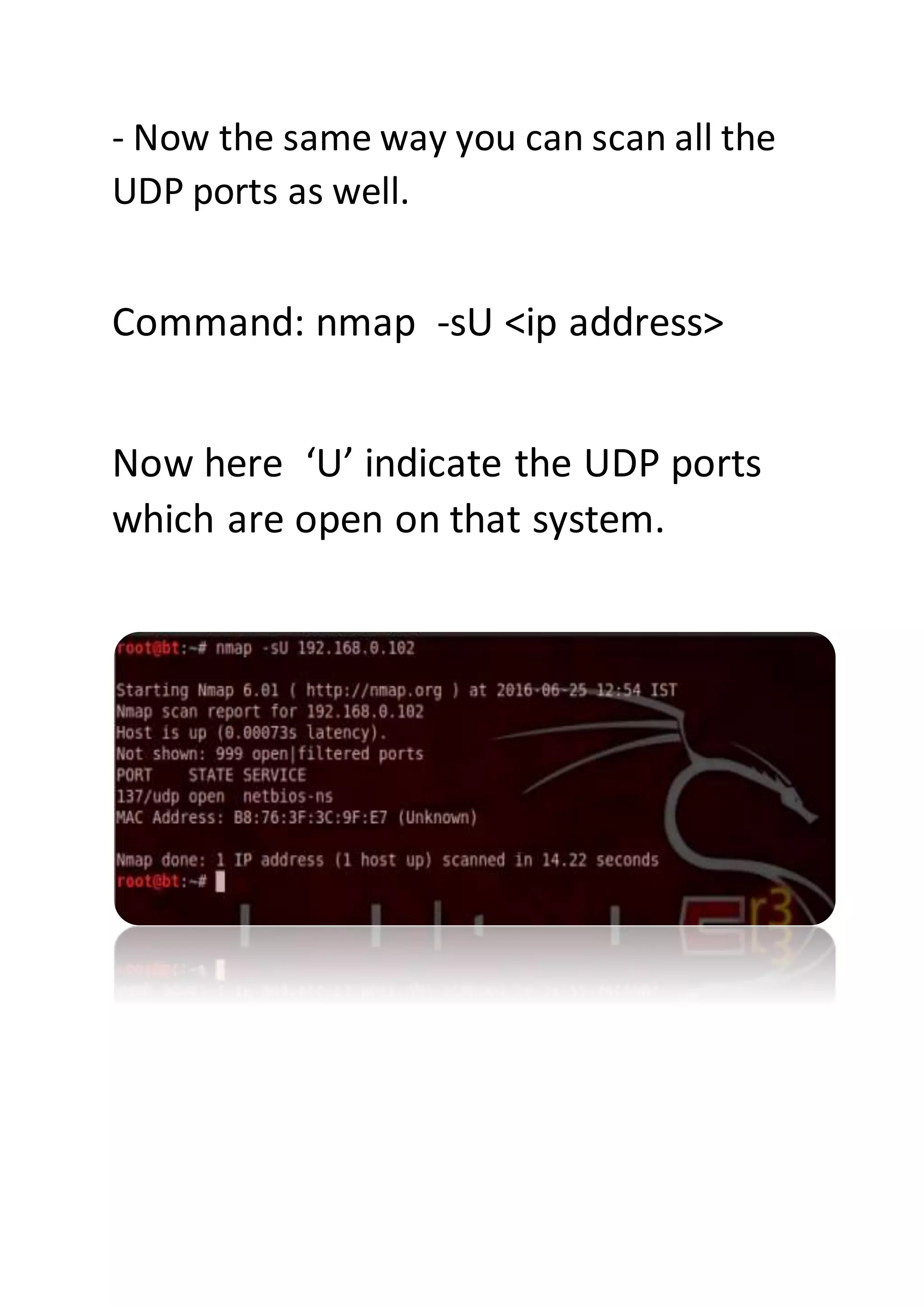
- Now the same way you can scan all the
UDP ports as well.
Command: nmap -sU <ip address>
Now here ‘U’ indicate the UDP ports
which are open on that system.
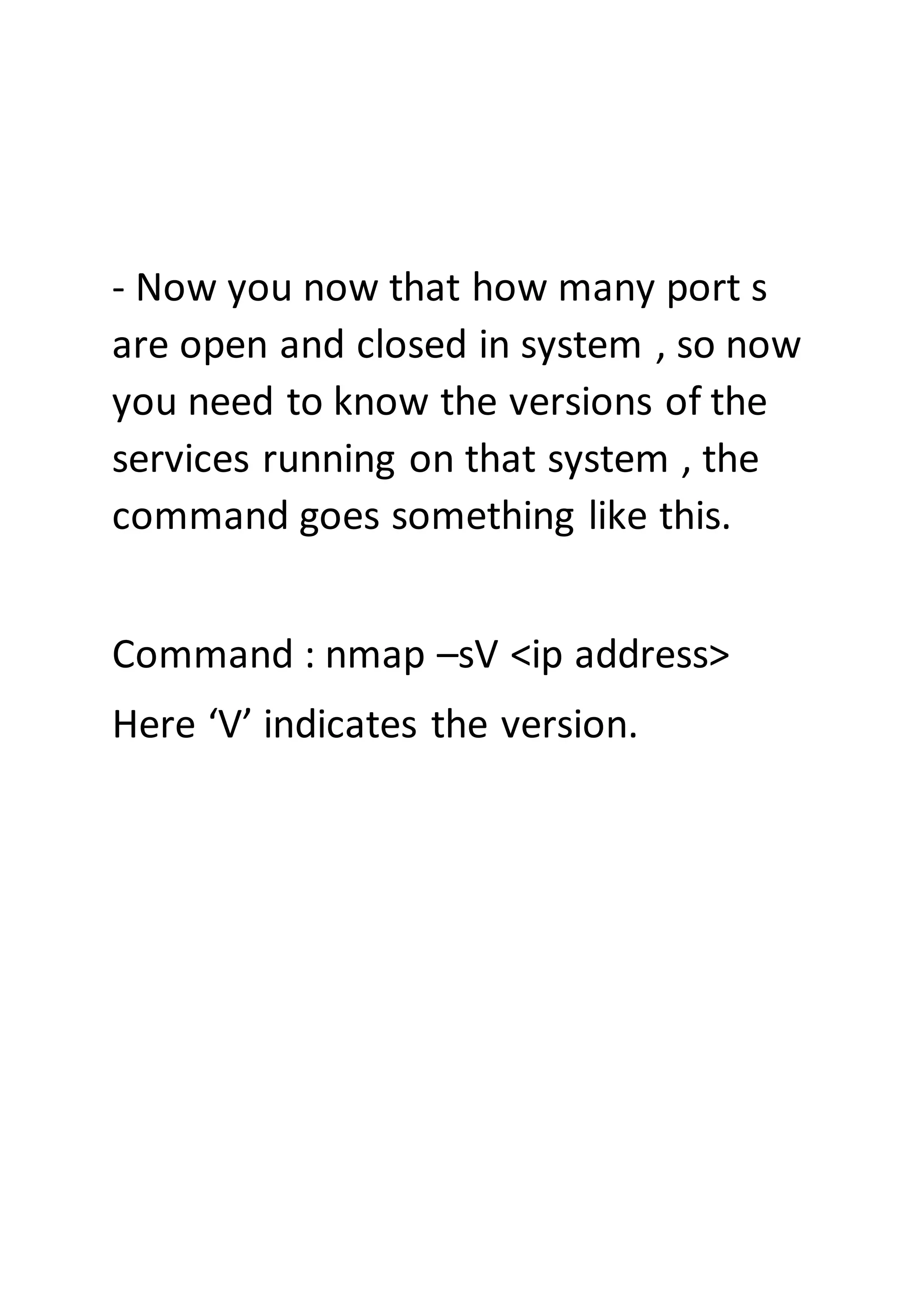
-The next command is that you only
wanted to scan some port in a given
range , so the command is.
Command: nmap –p 80 – 1000 <ip address>
-Next what if you wanted to scan all
the ports of that system , the next
command is for you.
Command : nmap “*” <ip address>
-If you wanted to scan all the top most
ports on that target.
Command:nmap -- top-ports <any number> <ip address>
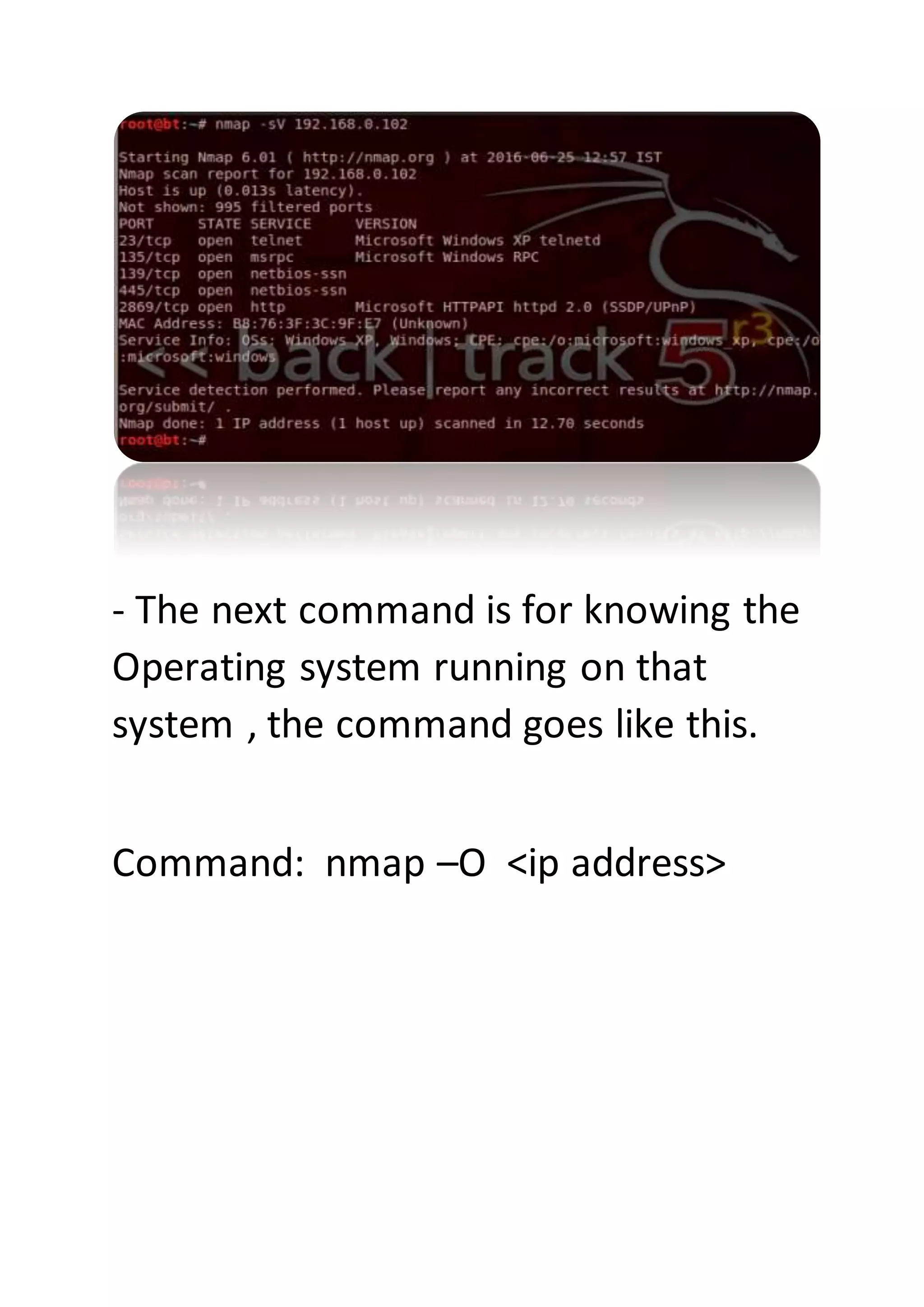
- Now you now that how many port s
are open and closed in system , so now
you need to know the versions of the
services running on that system , the
command goes something like this.
Command : nmap –sV <ip address>
Here ‘V’ indicates the version.
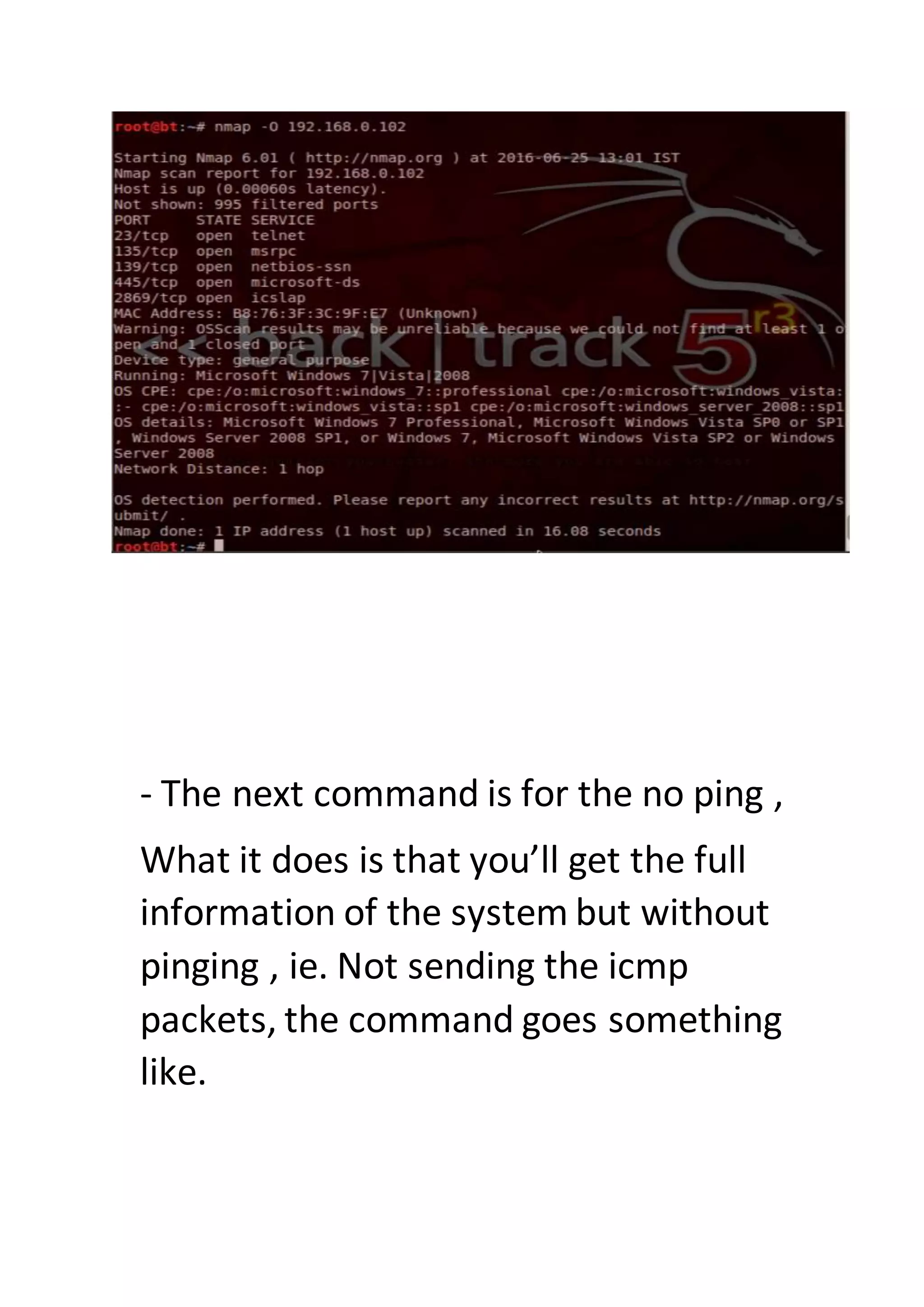
- The next command is for knowing the
Operating system running on that
system , the command goes like this.
Command: nmap –O <ip address>
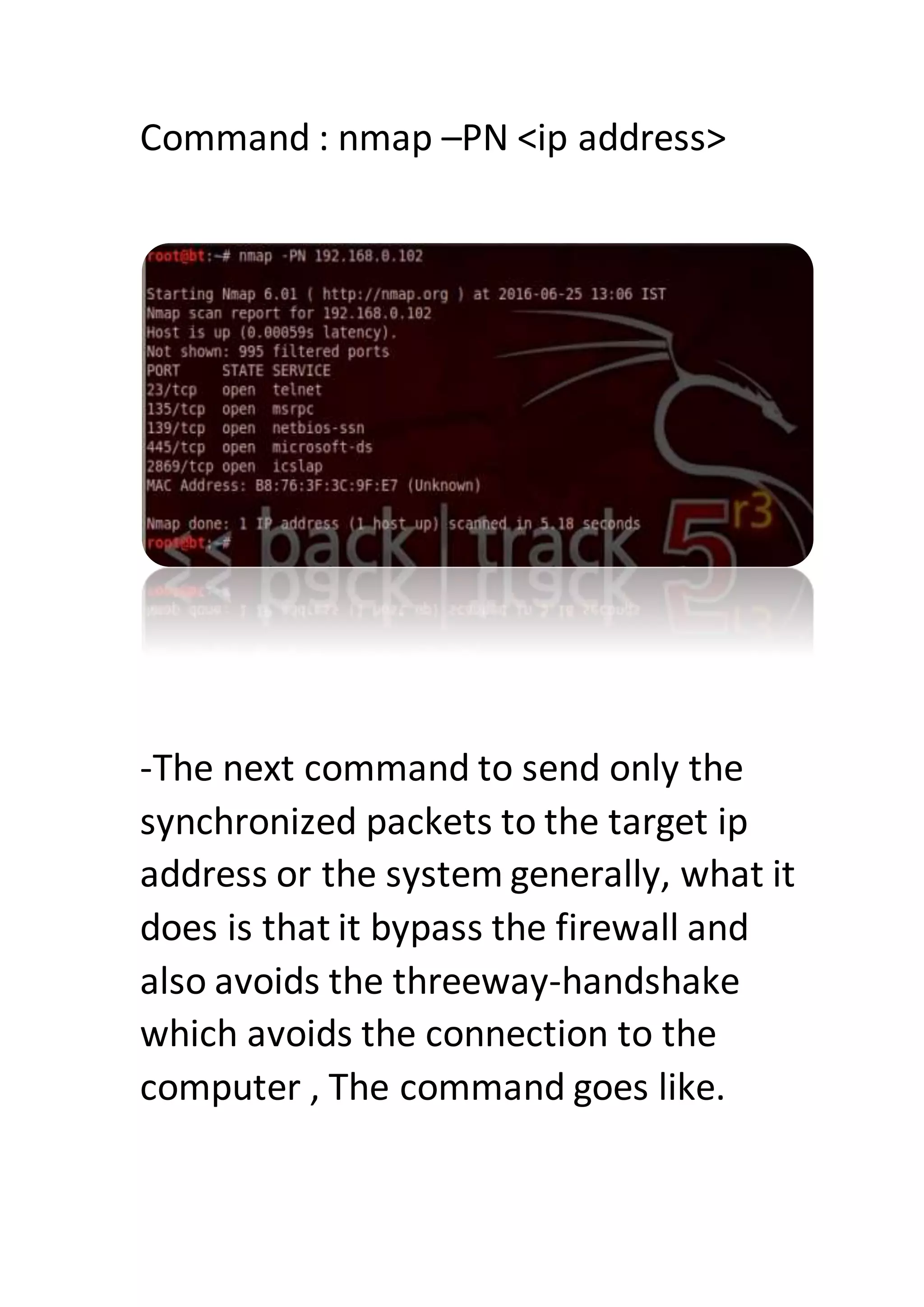
- The next command is for the no ping ,
What it does is that you’ll get the full
information of the system but without
pinging , ie. Not sending the icmp
packets, the command goes something
like.
Command : nmap –PN <ip address>
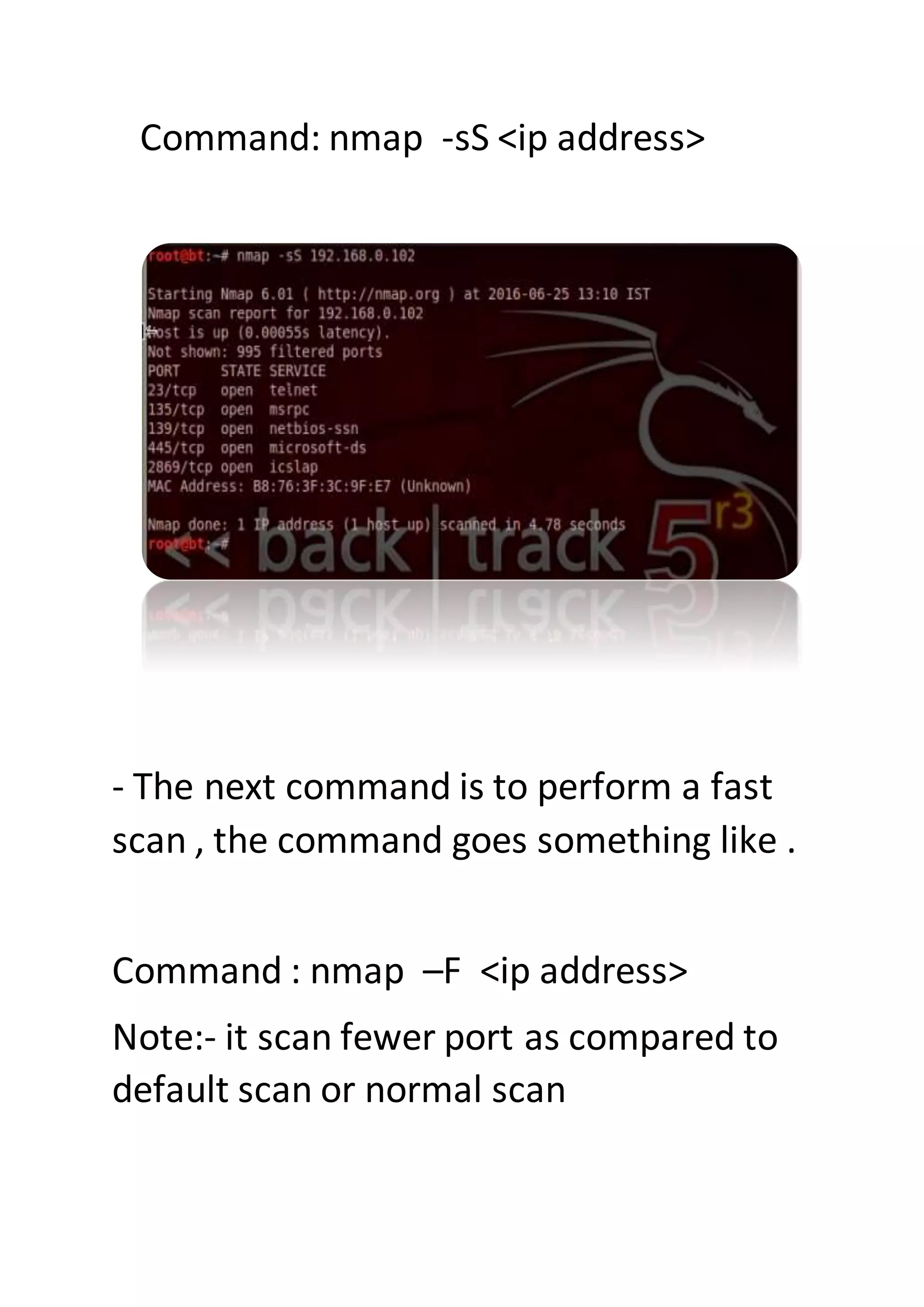
-The next command to send only the
synchronized packets to the target ip
address or the system generally, what it
does is that it bypass the firewall and
also avoids the threeway-handshake
which avoids the connection to the
computer , The command goes like.
Command: nmap -sS <ip address>
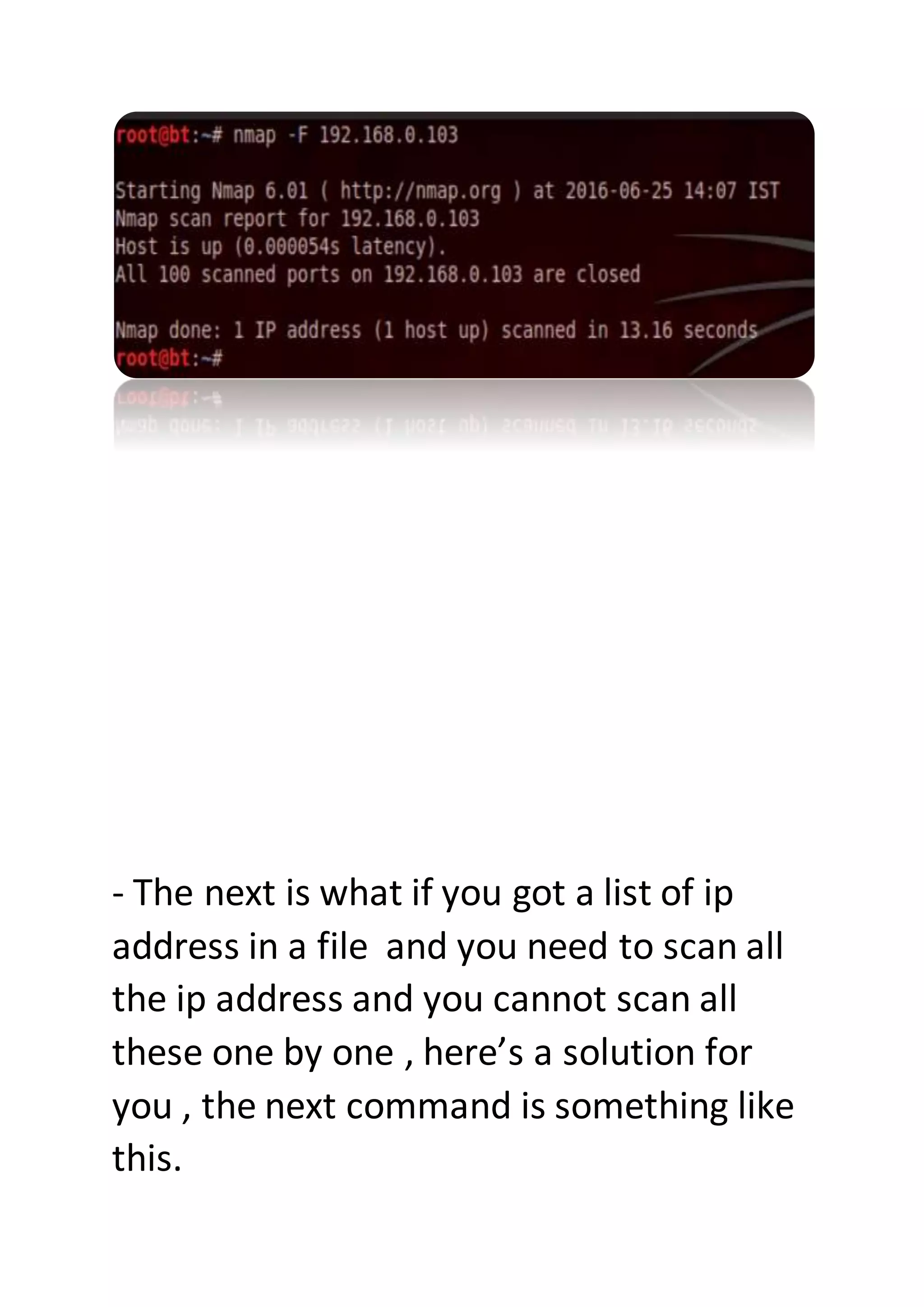
- The next command is to perform a fast
scan , the command goes something like .
Command : nmap –F <ip address>
Note:- it scan fewer port as compared to
default scan or normal scan
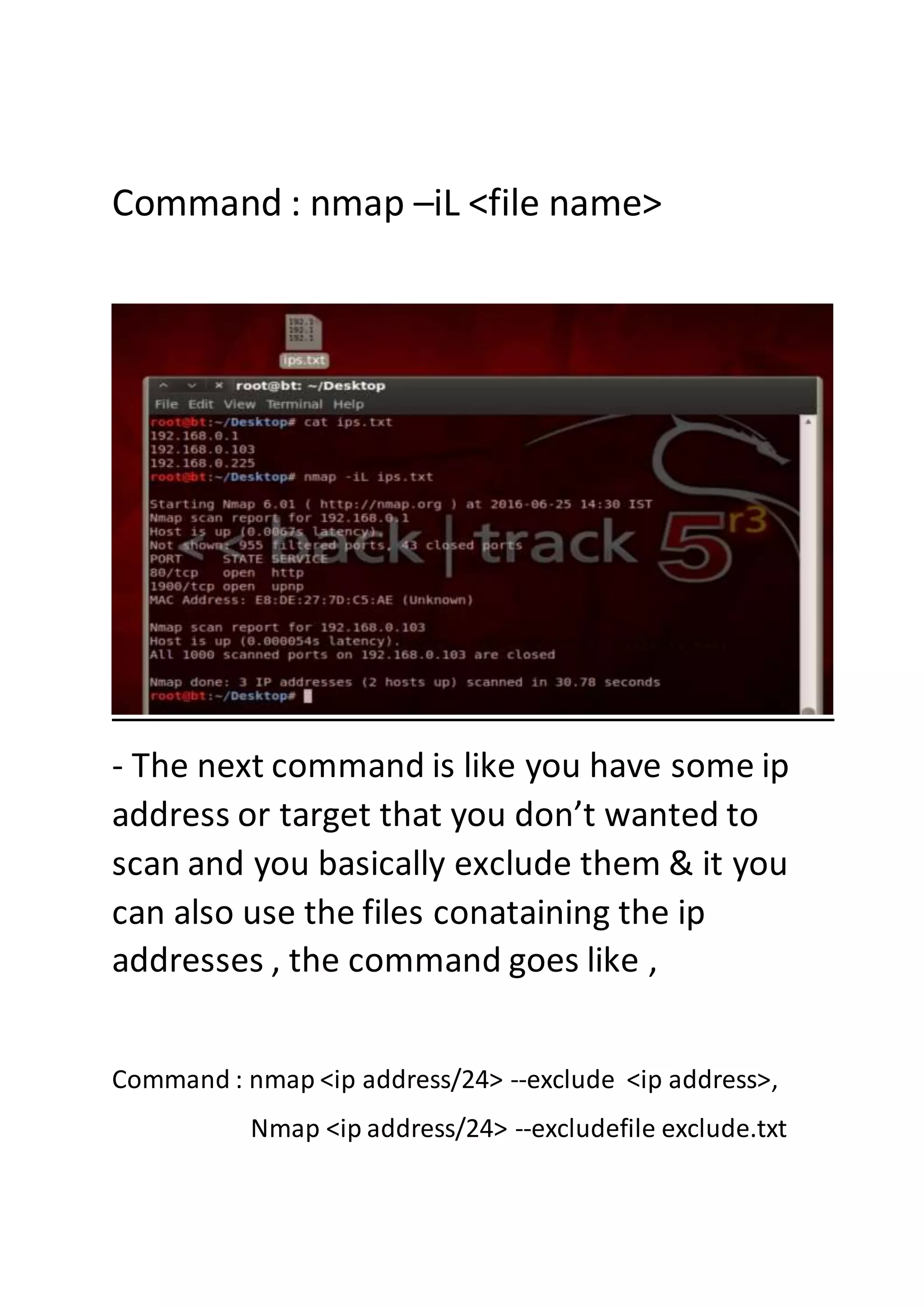
- The next is what if you got a list of ip
address in a file and you need to scan all
the ip address and you cannot scan all
these one by one , here’s a solution for
you , the next command is something like
this.
Command : nmap –iL <file name>
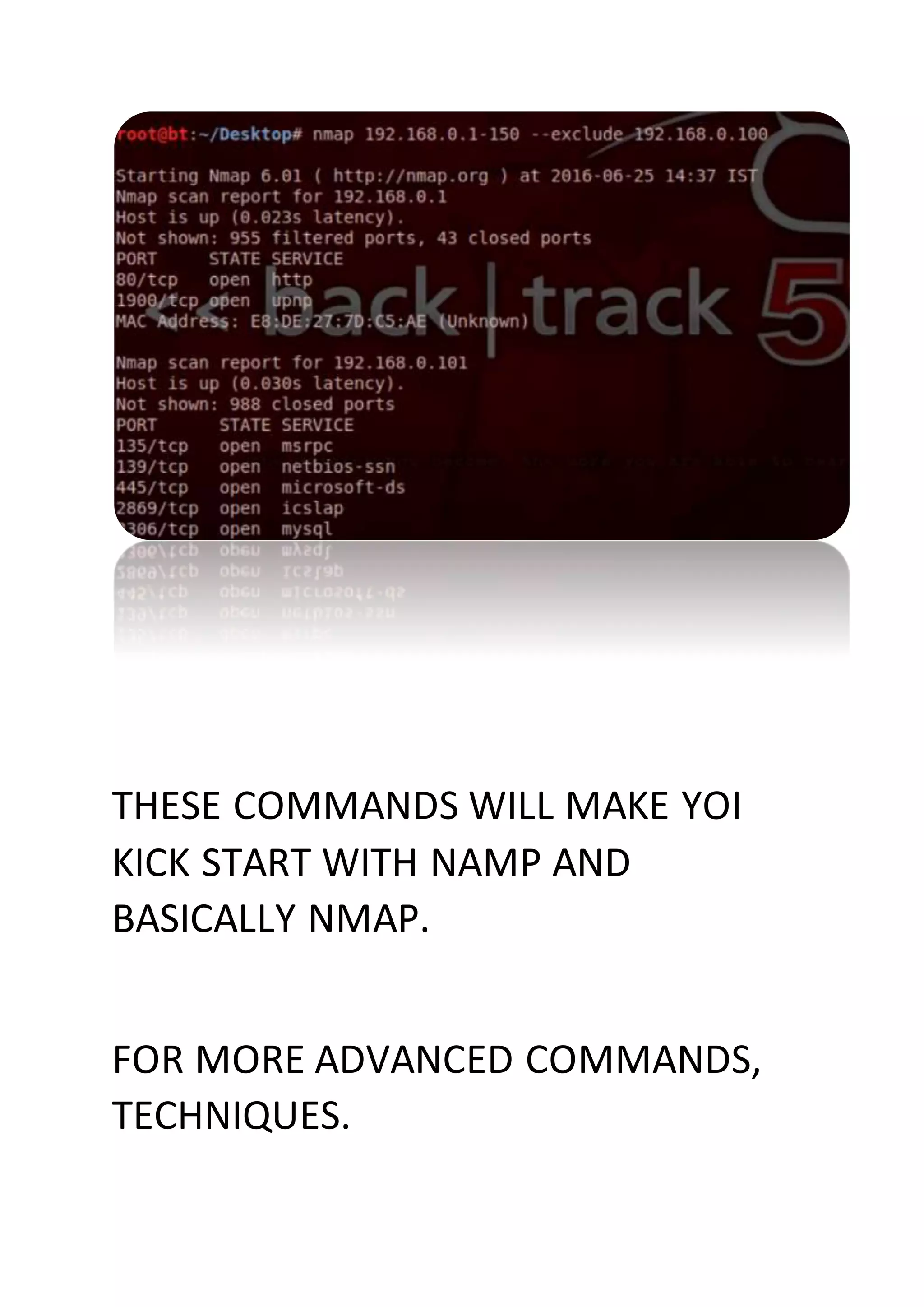
- The next command is like you have some ip
address or target that you don’t wanted to
scan and you basically exclude them & it you
can also use the files conataining the ip
addresses , the command goes like ,
Command : nmap <ip address/24> --exclude <ip address>,
Nmap <ip address/24> --excludefile exclude.txt
THESE COMMANDS WILL MAKE YOI
KICK START WITH NAMP AND
BASICALLY NMAP.
FOR MORE ADVANCED COMMANDS,
TECHNIQUES.
MESSAGE ME AT:-
ashishjha120@gmail.com
follow me on facebook and do like me page.
 facebook.com/ashish.v.jha
 https://www.facebook.com/websitessss
s/
 www.getyourwebsite.in


Network scanning with nmap

  • 1.
    Network Scanning withNmap. -Ashish jha(CISP) What is Nmap? - Nmap is a network mapping tool which allows us to scan network and gain a variety of information very sophisticatedly. - We can get the information like in a network how many systems are online and responding ,and how many are offline, the ports which are open on those systems and the operating systems on them and much more! -Nmap has two versions of it :-
  • 2.
    1. GUI version(zenmap). 2.Command-Line version(nmap). It really depends on us how to use it whether the GUI or the command-line, But the results are the same in both the cases, But its usually recommended to use the command-line verison. - Nmap commands and their working and the information we get are as follows:- - The first command is the simple scan commands (which is more or less the same as the ping command in general command line) Which shows that whether the system is up or not . Command: nmap -sn <ip address>
  • 3.
    Scaning Multiple Targets. -Ifthe system are on the same Subnet we can do a multiple scan like this. Command: nmap -sn 192.168.0.2,15,25,38,……..
  • 4.
    - Now ifyou want to scan almost every live systems you can use something like this. Command: nmap -sn 192.168.0.1-150 It will scan all the ip’s from 1 to 100 which are live or not.
  • 5.
    -Now instead ofscan one by one all the ip’s we can easy and automate our work with the command like this. Command : nmap –sn 192.168.0.1/24 Here /24 Indicates the CIDR notation for scanning the whole subnet.
  • 6.
    -Now you’ve havean understanding of scanning the systems which are up and which are down, now you can do something like this to get all the open TCP open on the systems you are scanning and
  • 7.
    the services andstates of the system ports. Command: nmap -sT <ip address> Now here ‘T’ indicate the TCP ports which are open it’ll scan those.
  • 8.
    - Now thesame way you can scan all the UDP ports as well. Command: nmap -sU <ip address> Now here ‘U’ indicate the UDP ports which are open on that system.
  • 9.
    -The next commandis that you only wanted to scan some port in a given range , so the command is. Command: nmap –p 80 – 1000 <ip address>
  • 10.
    -Next what ifyou wanted to scan all the ports of that system , the next command is for you. Command : nmap “*” <ip address> -If you wanted to scan all the top most ports on that target. Command:nmap -- top-ports <any number> <ip address>
  • 11.
    - Now younow that how many port s are open and closed in system , so now you need to know the versions of the services running on that system , the command goes something like this. Command : nmap –sV <ip address> Here ‘V’ indicates the version.
  • 12.
    - The nextcommand is for knowing the Operating system running on that system , the command goes like this. Command: nmap –O <ip address>
  • 13.
    - The nextcommand is for the no ping , What it does is that you’ll get the full information of the system but without pinging , ie. Not sending the icmp packets, the command goes something like.
  • 14.
    Command : nmap–PN <ip address> -The next command to send only the synchronized packets to the target ip address or the system generally, what it does is that it bypass the firewall and also avoids the threeway-handshake which avoids the connection to the computer , The command goes like.
  • 15.
    Command: nmap -sS<ip address> - The next command is to perform a fast scan , the command goes something like . Command : nmap –F <ip address> Note:- it scan fewer port as compared to default scan or normal scan
  • 16.
    - The nextis what if you got a list of ip address in a file and you need to scan all the ip address and you cannot scan all these one by one , here’s a solution for you , the next command is something like this.
  • 17.
    Command : nmap–iL <file name> - The next command is like you have some ip address or target that you don’t wanted to scan and you basically exclude them & it you can also use the files conataining the ip addresses , the command goes like , Command : nmap <ip address/24> --exclude <ip address>, Nmap <ip address/24> --excludefile exclude.txt
  • 18.
    THESE COMMANDS WILLMAKE YOI KICK START WITH NAMP AND BASICALLY NMAP. FOR MORE ADVANCED COMMANDS, TECHNIQUES.
  • 19.
    MESSAGE ME AT:- ashishjha120@gmail.com followme on facebook and do like me page.  facebook.com/ashish.v.jha  https://www.facebook.com/websitessss s/  www.getyourwebsite.in 