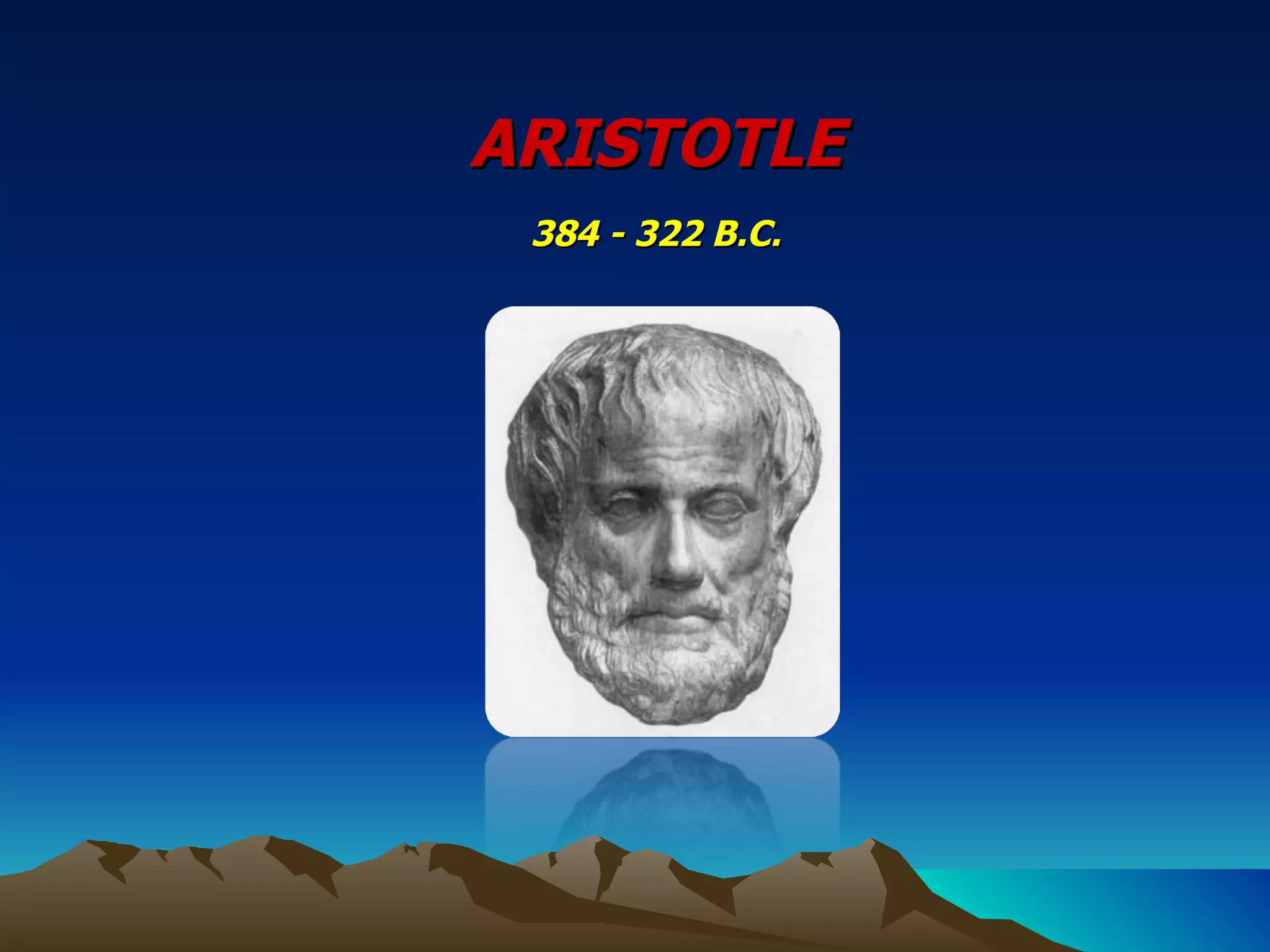
ARISTOTLE 384 - 322 B.C.
THE RHETORIC The Art of Persuasion   Ethical Personal character makes speech credible Emotional Stirring the emotions of the listener Rational Proving a truth by demonstrative argument The Rhetoric is a toolbox for political orators
RATIONAL MODE 1 Western thought processes are Aristotelian We can not hold contradictory points of view Basic logic must be adhered to  Propositions supported by verifiable facts Techniques  Demonstration Refutation Possibility Facts Examples Parallel Degree
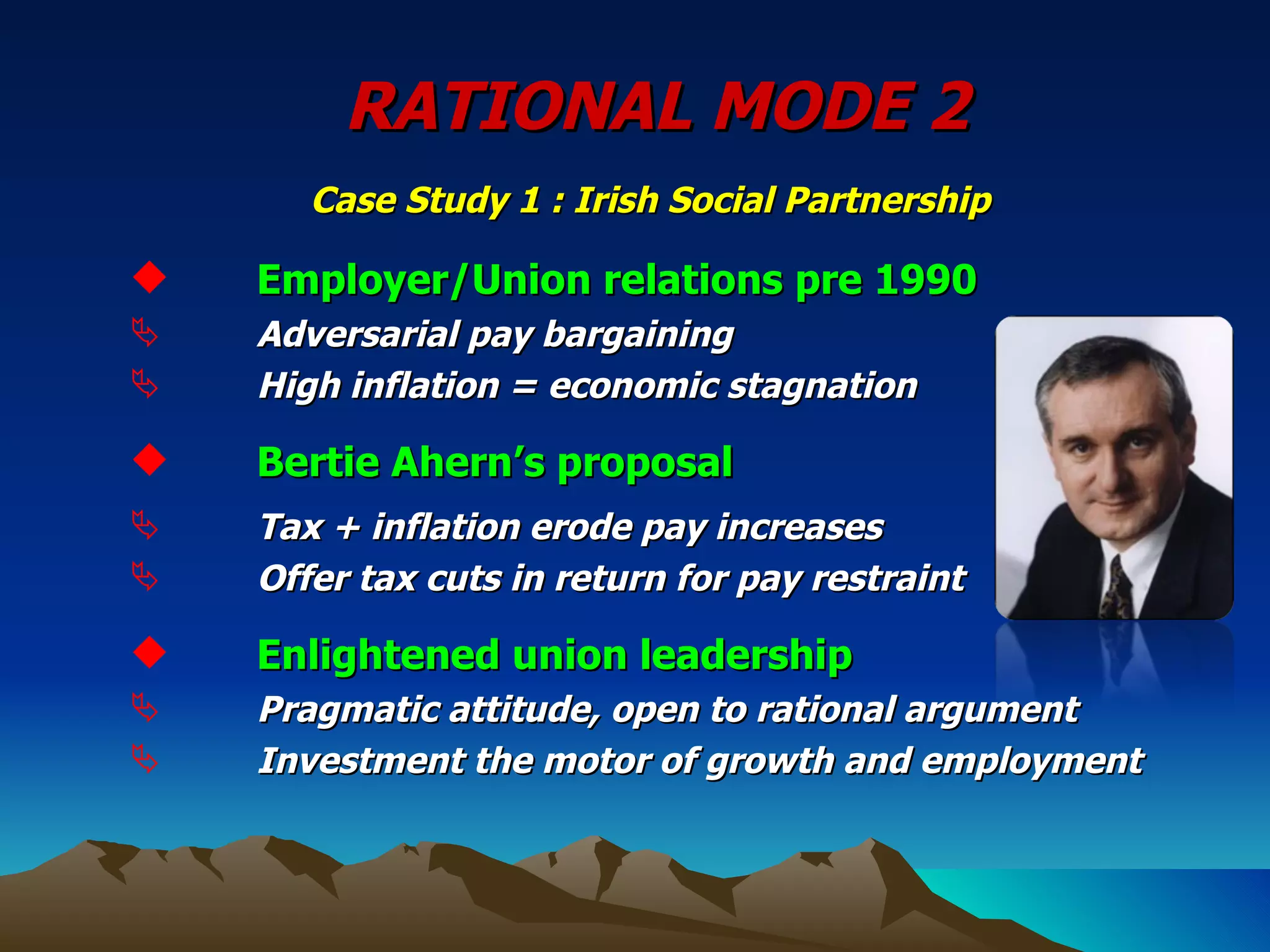
RATIONAL MODE 2   Case Study 1 : Irish Social Partnership   Employer/Union relations pre 1990 Adversarial pay bargaining High inflation = economic stagnation Bertie Ahern’s proposal Tax + inflation erode pay increases Offer tax cuts in return for pay restraint Enlightened union leadership Pragmatic attitude, open to rational argument Investment the motor of growth and employment
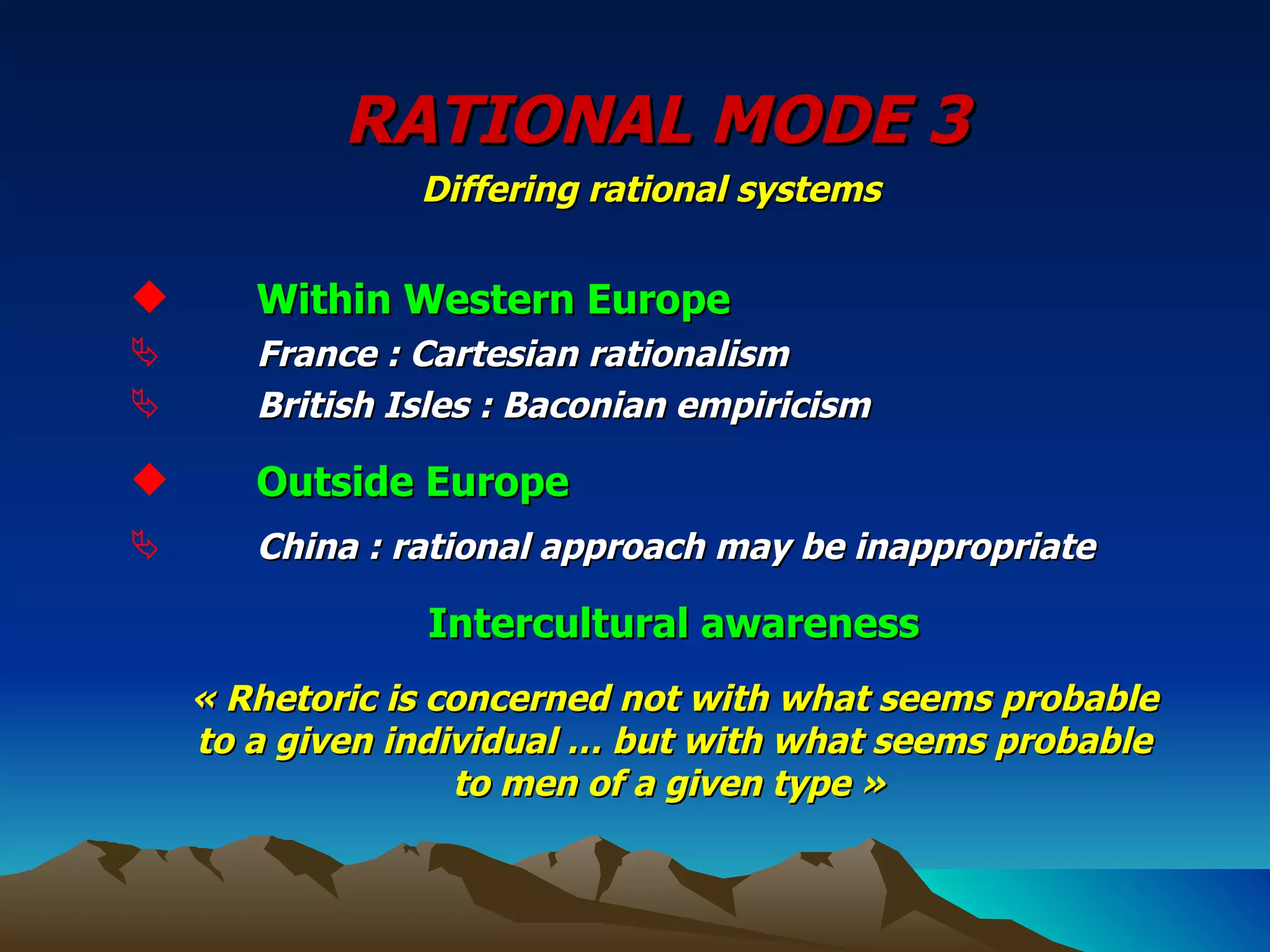
RATIONAL MODE 3   Differing rational systems  Within Western Europe France : Cartesian rationalism British Isles : Baconian empiricism Outside Europe China : rational approach may be inappropriate Intercultural awareness « Rhetoric is concerned not with what seems probable to a given individual … but with what seems probable to men of a given type »
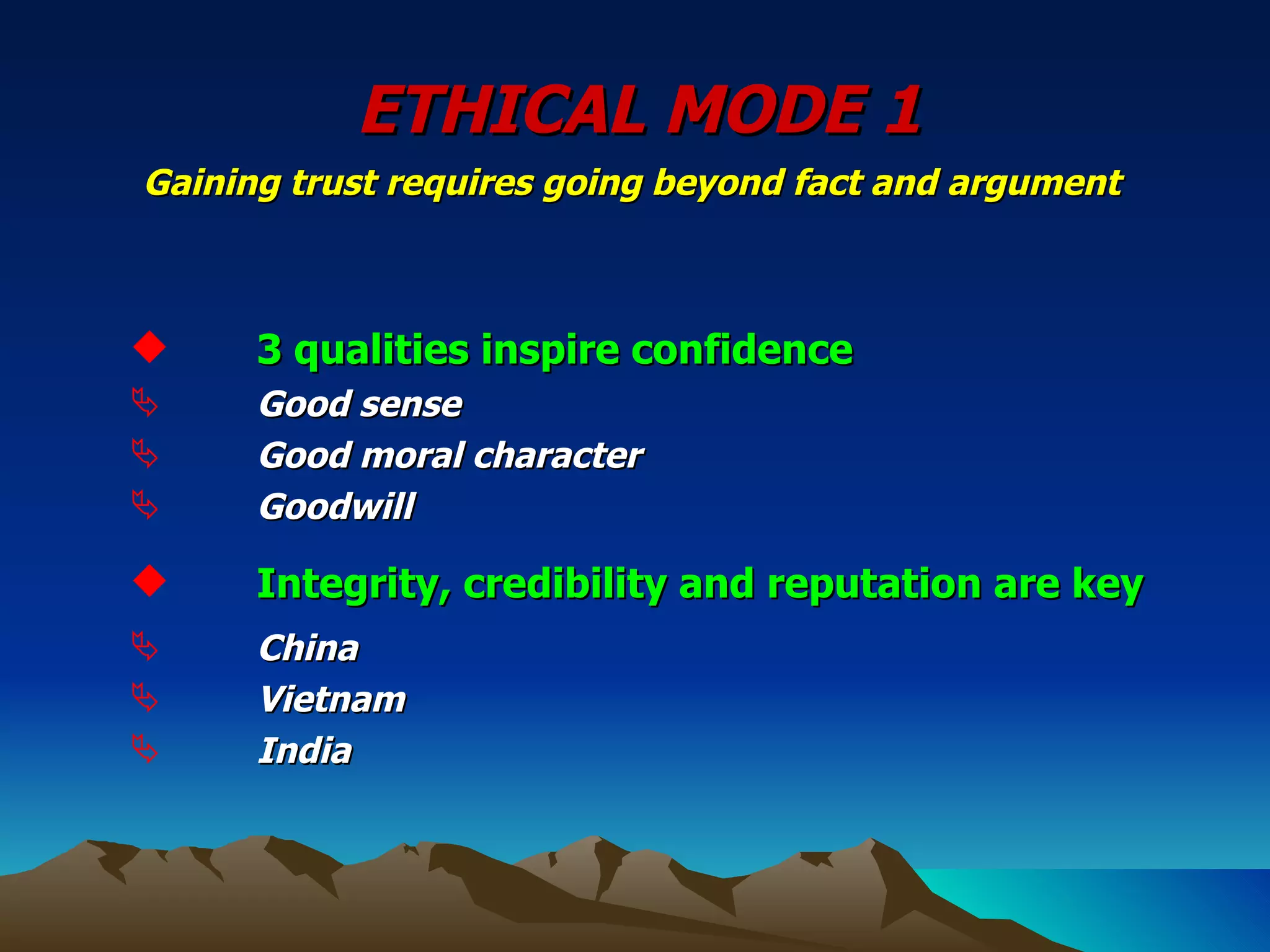
ETHICAL MODE 1 Gaining trust requires going beyond fact and argument   3 qualities inspire confidence Good sense Good moral character Goodwill Integrity, credibility and reputation are key China Vietnam India
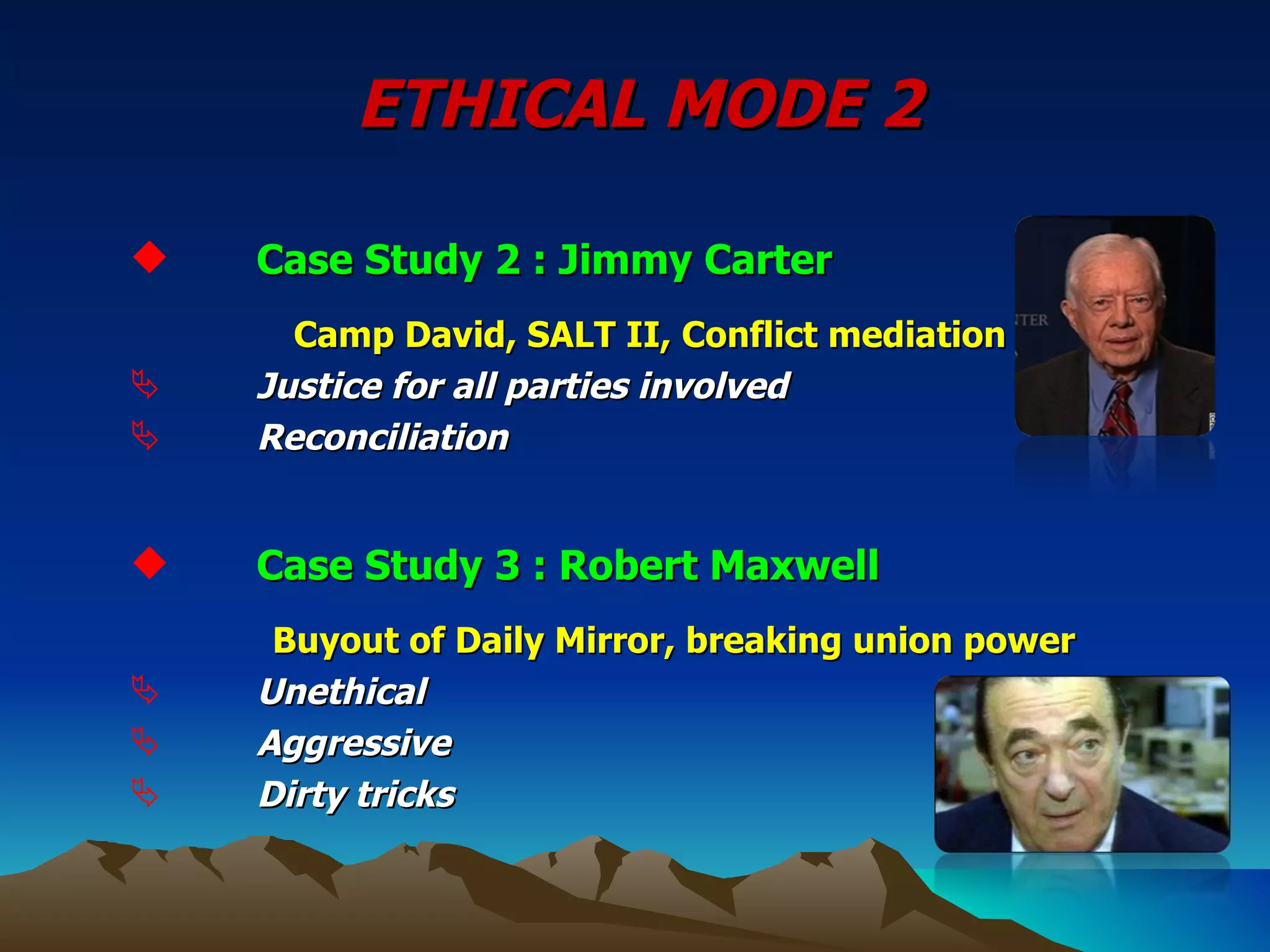
ETHICAL MODE 2 Case Study 2 : Jimmy Carter Camp David, SALT II, Conflict mediation Justice for all parties involved Reconciliation  Case Study 3 : Robert Maxwell Buyout of Daily Mirror, breaking union power Unethical Aggressive Dirty tricks
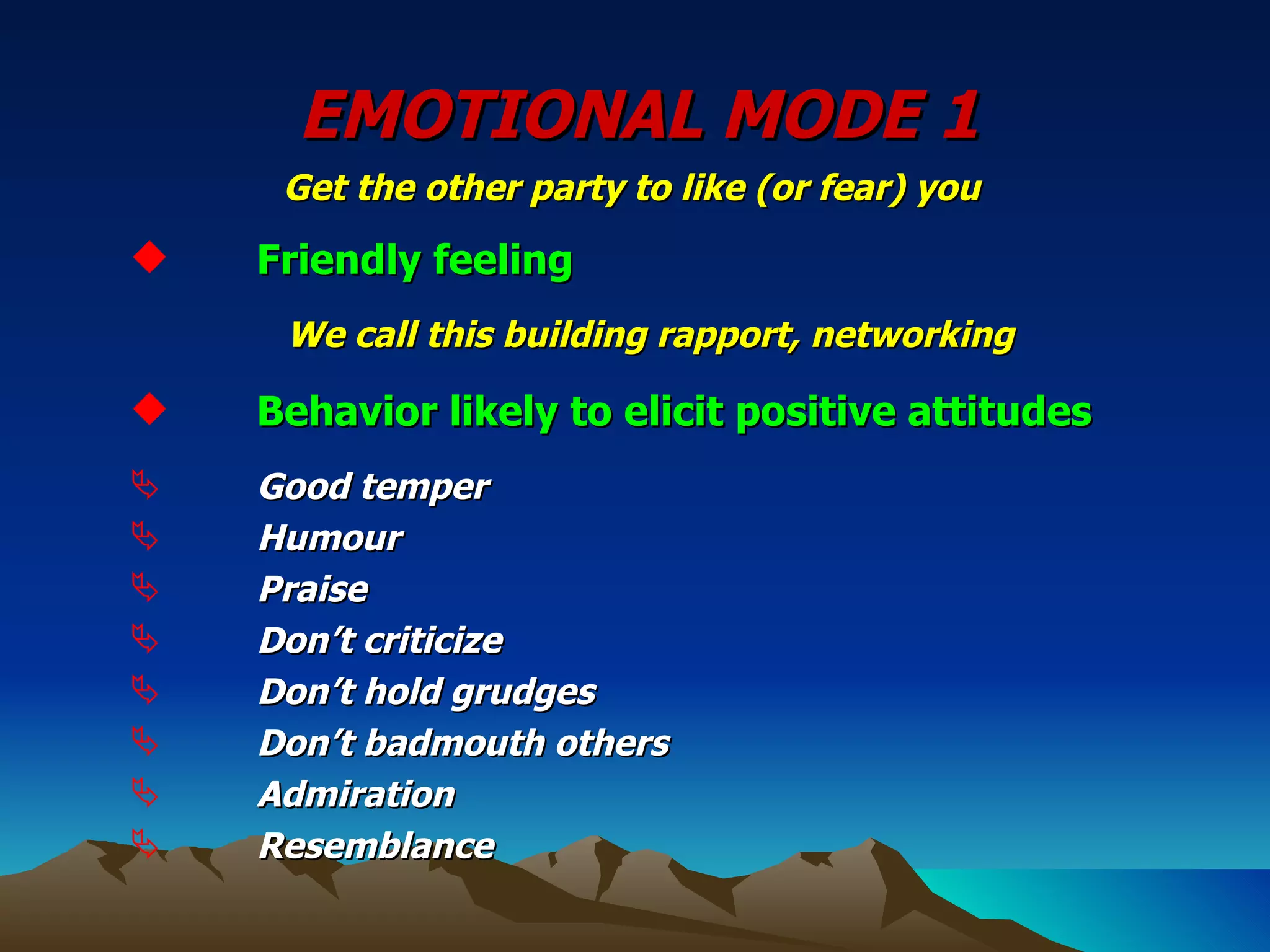
EMOTIONAL MODE 1 Get the other party to like (or fear) you   Friendly feeling We call this building rapport, networking Behavior likely to elicit positive attitudes Good temper Humour Praise Don’t criticize Don’t hold grudges Don’t badmouth others Admiration Resemblance
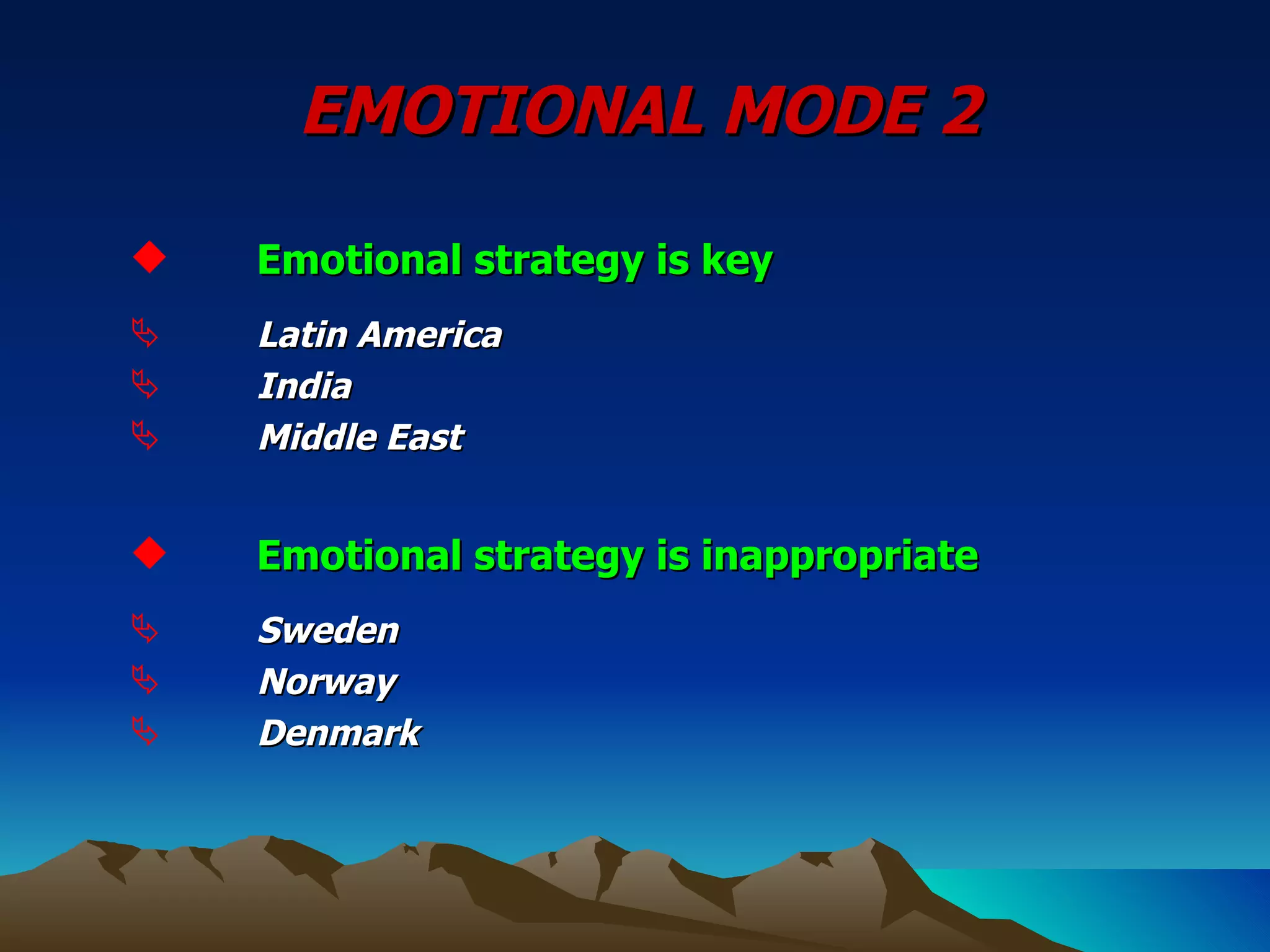
EMOTIONAL MODE 2 Emotional strategy is key Latin America India Middle East Emotional strategy is inappropriate Sweden Norway Denmark
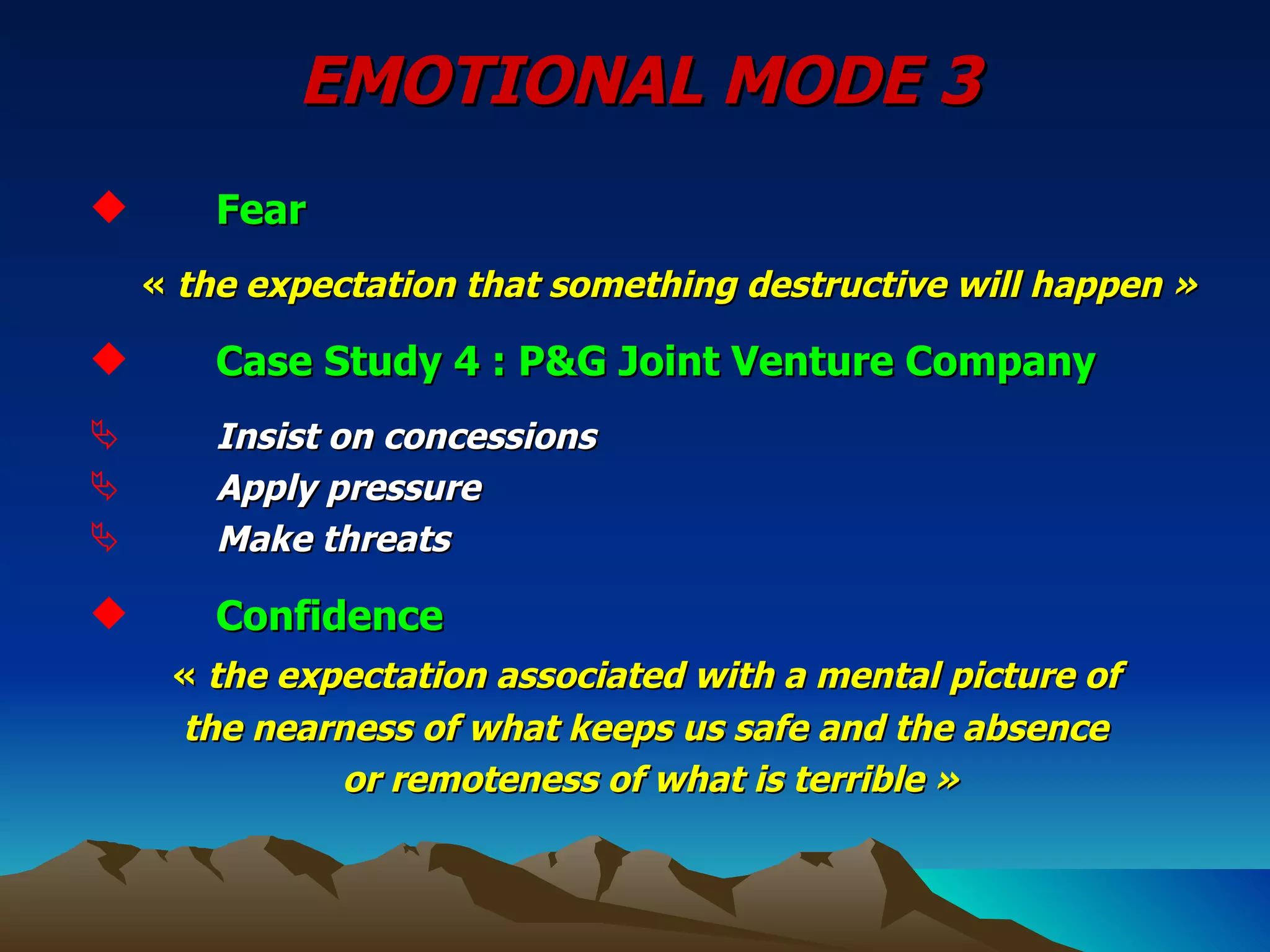
EMOTIONAL MODE 3 Fear  «  the expectation that something destructive will happen » Case Study 4 : P&G Joint Venture Company Insist on concessions Apply pressure Make threats Confidence «  the expectation associated with a mental picture of  the nearness of what keeps us safe and the absence or remoteness of what is terrible »
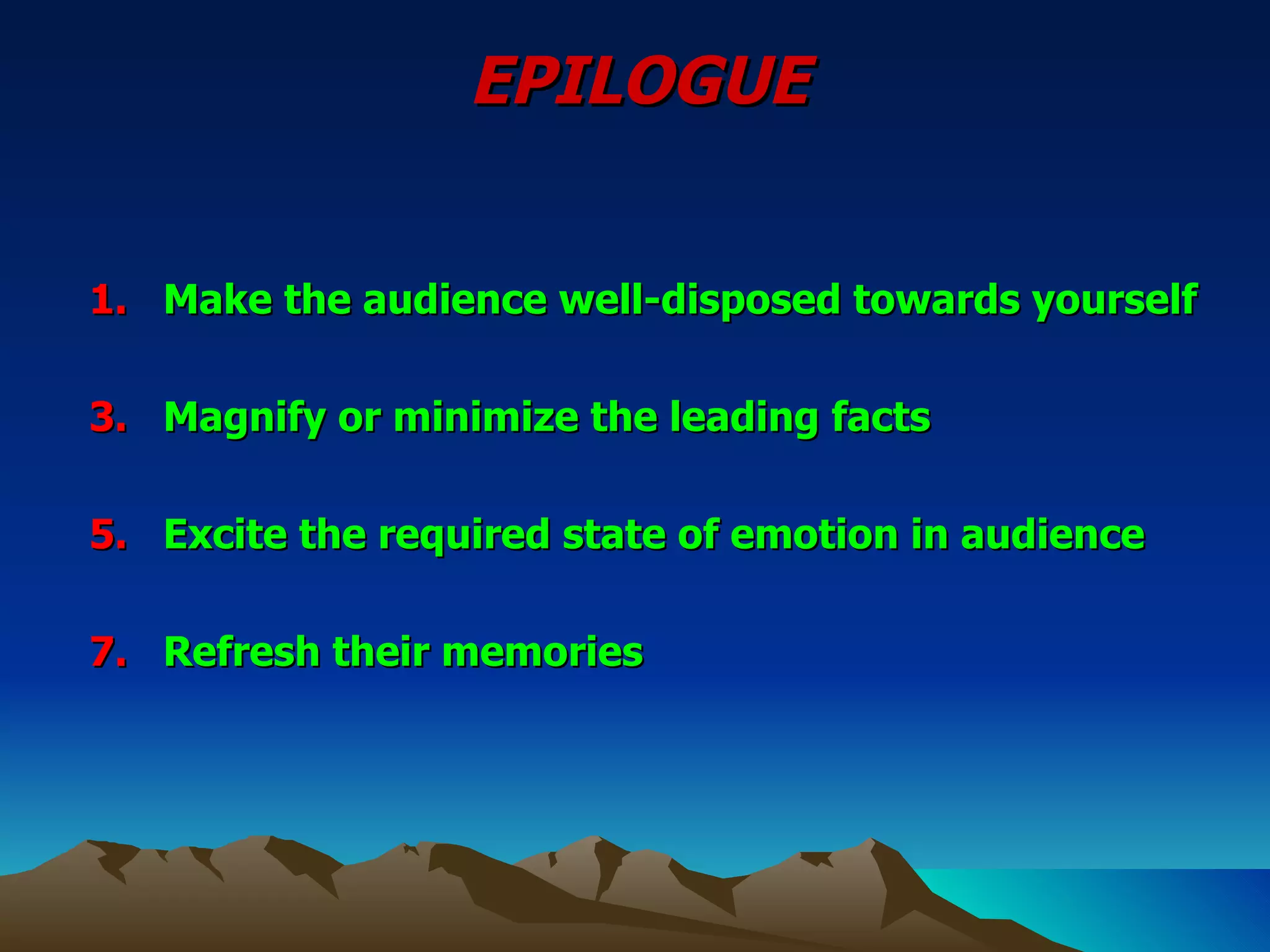
EPILOGUE Make the audience well-disposed towards yourself Magnify or minimize the leading facts Excite the required state of emotion in audience Refresh their memories
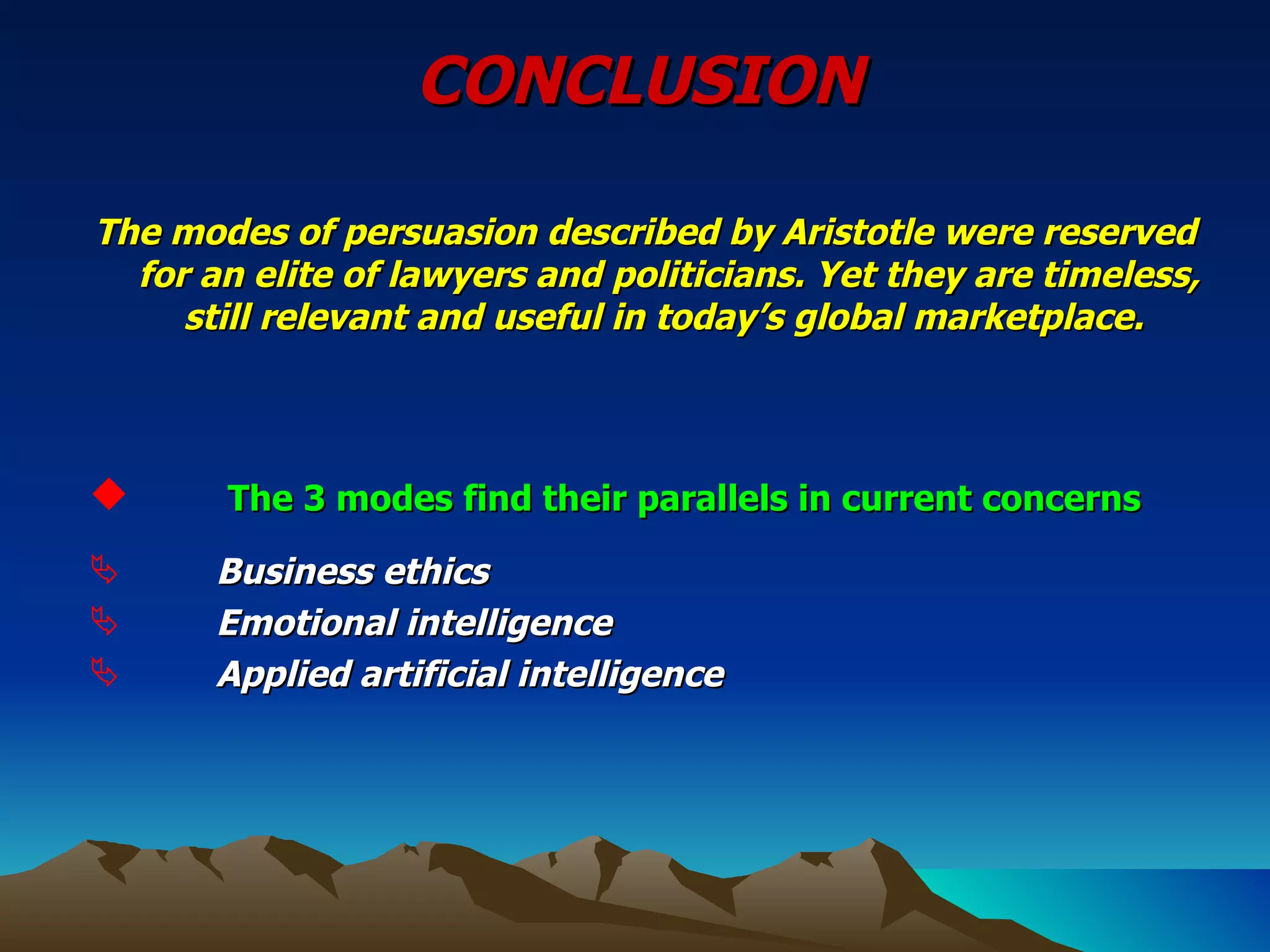
CONCLUSION The modes of persuasion described by Aristotle were reserved for an elite of lawyers and politicians. Yet they are timeless, still relevant and useful in today’s global marketplace.    The 3 modes find their parallels in current concerns   Business ethics Emotional intelligence Applied artificial intelligence
FUTURE OF NEGOTIATION Constructing software agents that will optimally negotiate on behalf of the real world parties that they represent. That will put experienced and poor human negotiators on an equal footing, and save them negotiating effort.  - Tuomas W. Sandholm   This generation of negotiators is required to   Operate in a truly global marketplace Deal with partners from a variety of cultures Be adaptable and flexible Possess a variety of negotiating strategies and styles

Negotiation and Aristotle

  • 1.
  • 2.
    THE RHETORIC TheArt of Persuasion Ethical Personal character makes speech credible Emotional Stirring the emotions of the listener Rational Proving a truth by demonstrative argument The Rhetoric is a toolbox for political orators
  • 3.
    RATIONAL MODE 1Western thought processes are Aristotelian We can not hold contradictory points of view Basic logic must be adhered to Propositions supported by verifiable facts Techniques Demonstration Refutation Possibility Facts Examples Parallel Degree
  • 4.
    RATIONAL MODE 2 Case Study 1 : Irish Social Partnership Employer/Union relations pre 1990 Adversarial pay bargaining High inflation = economic stagnation Bertie Ahern’s proposal Tax + inflation erode pay increases Offer tax cuts in return for pay restraint Enlightened union leadership Pragmatic attitude, open to rational argument Investment the motor of growth and employment
  • 5.
    RATIONAL MODE 3 Differing rational systems Within Western Europe France : Cartesian rationalism British Isles : Baconian empiricism Outside Europe China : rational approach may be inappropriate Intercultural awareness « Rhetoric is concerned not with what seems probable to a given individual … but with what seems probable to men of a given type »
  • 6.
    ETHICAL MODE 1Gaining trust requires going beyond fact and argument 3 qualities inspire confidence Good sense Good moral character Goodwill Integrity, credibility and reputation are key China Vietnam India
  • 7.
    ETHICAL MODE 2Case Study 2 : Jimmy Carter Camp David, SALT II, Conflict mediation Justice for all parties involved Reconciliation Case Study 3 : Robert Maxwell Buyout of Daily Mirror, breaking union power Unethical Aggressive Dirty tricks
  • 8.
    EMOTIONAL MODE 1Get the other party to like (or fear) you Friendly feeling We call this building rapport, networking Behavior likely to elicit positive attitudes Good temper Humour Praise Don’t criticize Don’t hold grudges Don’t badmouth others Admiration Resemblance
  • 9.
    EMOTIONAL MODE 2Emotional strategy is key Latin America India Middle East Emotional strategy is inappropriate Sweden Norway Denmark
  • 10.
    EMOTIONAL MODE 3Fear « the expectation that something destructive will happen » Case Study 4 : P&G Joint Venture Company Insist on concessions Apply pressure Make threats Confidence « the expectation associated with a mental picture of the nearness of what keeps us safe and the absence or remoteness of what is terrible »
  • 11.
    EPILOGUE Make theaudience well-disposed towards yourself Magnify or minimize the leading facts Excite the required state of emotion in audience Refresh their memories
  • 12.
    CONCLUSION The modesof persuasion described by Aristotle were reserved for an elite of lawyers and politicians. Yet they are timeless, still relevant and useful in today’s global marketplace. The 3 modes find their parallels in current concerns Business ethics Emotional intelligence Applied artificial intelligence
  • 13.
    FUTURE OF NEGOTIATIONConstructing software agents that will optimally negotiate on behalf of the real world parties that they represent. That will put experienced and poor human negotiators on an equal footing, and save them negotiating effort. - Tuomas W. Sandholm This generation of negotiators is required to Operate in a truly global marketplace Deal with partners from a variety of cultures Be adaptable and flexible Possess a variety of negotiating strategies and styles